
Bey on tragedy and meaning.

9/11 and the Crisis of Meaning
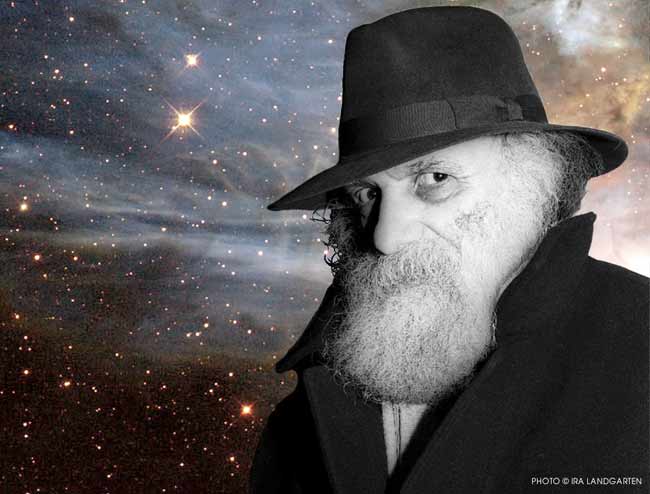
Peter Lamborn Wilson [aka Hakim Bey]

A few days after the “event,” the NY Times ran an interesting article on the advertising “industry” and its crisis. Not only zillions of dollars a day etc. etc., but a weird effect: suddenly it seems impossible to have advertising at all. It seems massively “inappropriate” to move product as per usual with shrieking & insinuating, mocking & sneering, prurience & peeping; with hate & envy masked as fashion, with greed thinly disguised as freedom of choice.

Death and tragedy occur every day, every minute, not only in the former Third World, even in New York, even in America. Why hasn’t advertising ever seemed shameful to anyone ever before? The media — which cannot utter a sound without puking up a cliche — speaks now of the waking of a sleeping giant (meaning that we will no longer tolerate terrorism etc.) — but what was this sleep? And what does it mean to wake into a feeling of shame?

Last week, it seems, we were willing to admit that our highest social values could be expressed in price codes ( the “mark of the Beast” as the cranks say, the “prophets of doom”). This week, we feel shame. In a Times interview a fashion designer expressed doubt that her work had any significance and wondered if she could go on with it. The fashion industry is also ashamed; Hollywood is ashamed; even the news media expressed some fleeting longing for decorum & dignity & decency.

Are we supposed to feel this shame over our triviality, our mean-spiritedness, our PoMo irony, our consumer frenzy, our hatred of the body and of all nature, our obsession with gadgetry & “information”, our degraded pop culture, our vapid or morbid art & lit, & so on & so on? — or should we defend all this as “freedom” and “our way of life”?

Our leaders are telling us to return to normal routines (after a decent period of mourning) in the assurance that they will assign significance to the event, they will embody our hate & desire for revenge, they will mediate for us with the forces of “evil”. But what exactly is this normal life to consist of? Why do we feel this shame?

Schoolchildren (again according to the Times) ask their teachers what it means that the terrorists were willing to die, to kill themselves; and their teachers evade the question, saying that “we don’t understand.” And the ad execs, they don’t understand either — they’re bewildered. Awake but confused by a crisis of meaning. Last week all meanings could be expressed in terms of money. Why should 5000 murders change the meaning of meaning?

A hyperfashionable Italian clothing company uses death to sell its products. Photographs — even huge billboards –showing people dying of AIDS or waiting to be executed — designed to sell woolly jumpers. Is this life as normal? Should we return to it?

For a few days no music was heard in the streets. No thumping bass speakers rattled the air, no chants of hate for women & queers, no “Madison Avenue Choirs” hymning the celestial delites of commodities or vacations in the midst of other peoples’ misery.

For a few hours or days there appeared no official spin on the event, no slogan/logo in the media, no interpretation, no meaning. We watched the cloud drift around the city, first to the East over Brooklyn, then up the west side of Manhattan, finally over the east side as well. With the smell and the poisonous haze around the moon came a nightmare about the occult significance of the cloud: — angry bewildered ghosts in a vast white cloud. And we breathed that cloud into us. We’ll never get it out of our lungs. What the cloud wanted was an explanation, a meaning.

But next day the spin was in, the media had found or been given its answer — “Attack on America”, on our freedom our values, our way of life, carried out by “cowards” who were nevertheless not “physical cowards” (as some official explained to the Times). Perhaps they were moral cowards? He didn’t say.

Why do they hate us? A few people have asked but received no coherent answer. Do “they” hate “us” because we use up 75% of the world’s resources even though we only constitute 20% of its population? because we bomb Baghdad & Belgrade without risking even one American life? because we refuse to discuss pollution or racism? because we demand the destruction of the Alaskan wilderness to fuel our SUVs for thirty more days? because we export a vapid sneering meanspirited culture to the world, video games about death, movies about death, TV shows about death, commodities that are dead, music that kills the spirit? because we’ve made advertizing our highest artform? because we define “freedom” as our freedom to rule & be ruled by money?

The politicians have told us that “they” envy us and our way of life and therefore wish to destroy it. Envy — yes, why not? The whole system of global capital is based on envy. It has to be. No envy, no desire. No desire, no reason to spend. No reason to spend, implosion of global capital, q.e.d. But then why should the ad execs & fashion designers & sports teams & entertainers feel this strange unaccountable shame?

Any why should the terrorists have been willing to die just because they envy our wealth & our way of life & our freedom to buy, and spend, and waste? What does it mean?

After the Holocaust (or Hiroshima, or the Gulag) certain philosophers said that there could be no more art or poetry. But they were wrong apparently. We have poetry again. It may not mean the same thing it meant before. It may not mean anything. But we have it. And who could have dreamed at the gate of Buchenwald or Treblinka that one day we would have — Nike ads or sitcoms about lawyers?

Is any meaning going to emerge from the 9/11 event? Without meaning tragedy ends not in catharsis but simply depression, endless sorrow. Our leaders “seek closure” — perhaps by killing many Afghan children — perhaps by a new Crusade against the Saracens — and of course by a return to normal. We’ll show “them” — by refusing meaning. We will sleep because it is our right not to awake to confusion & shame.

Our sleep will be troubled. We’ll have to “sacrifice a few freedoms” to protect Freedom. We’ll have to fear & hate. But within a few weeks or months we will have buried even the fear & hate, or rather we will have transformed all that emotion to the Image, to the Evil Eye of the media, our externalized unconscious. We’ll have sitcoms again and gangsta rap and arguments about our right to download it all for free into our home computers. We’ll get those airplanes flying, once again polluting “our” skies with noise & carcinogens. We’ll overcome our shame. And that will constitute our revenge. That will be our meaning. Our morality.
The Luddite critique.

from the Brooklyn Rail

An Anarchist in the Hudson Valley
in conversation: Peter Lamborn Wilson
with Jennifer Bleyer
July 2004

It’s been nearly ten years since Peter Lamborn Wilson–nee Hakim Bey–looked at the pitiably state-bound, rule-bound world around him and asked: “Are we who live in the present doomed never to experience autonomy, never to stand for one moment on a bit of land ruled only by freedom?” In a slim, rattling volume called Temporary Autonomous Zone, Wilson intoned that, in fact, freedom is already here. Autonomy exists in time, he said, rather than space. It’s in times of wildness, revelry, abandon and revolution that for even just one brief jail-breaking moment, as sweet as honey to the tongue, one is freed of all political and social control.

Wilson rightly became celebrated as a kind of urban prophet. It was an identity to add the others he bears seamlessly and without contradiction: anarchist, poet, public intellectual, psychedelic explorer, artist, social critic, Sufi mystic. Six years ago he moved upstate from the East Village to New Paltz, New York. The setting is different, but the ideas have only deepened–notably his critique of global capital and “technological determination.” In his green wood-frame house, trees rustling overhead and birds chirping outside, we drank tea and talked.

Jennifer Bleyer: You left New York City six years ago and moved upstate to New Paltz. There’s a lot of art happening here and in the Hudson Valley in general, which seems pretty cool.

Peter Lamborn Wilson: The fact of it happening anywhere makes it more interesting than a kick in the face. But the fact of the matter is that America doesn’t produce anything anymore. A couple of years ago, we passed the halfway mark from being a so-called productive economy to a services economy. What are services? You tell me. Whatever it means, we don’t make pencils. We don’t make cement. We don’t make ladies garments or roll cigars. We don’t even manufacture computers. In other words, we don’t make anything,, especially not around here. There are a few cement factories left up in Greene County, but basically, industry died here in the fifties. It was a long slow death, certainly over by the seventies. There was a depression, so artists, who are certainly blameless in this, discovered low real estate prices and low rents, and they started to move up here. And the gap between the artists and the real estate developers has gotten very small in our modern times, down to where it’s almost nothing.

So for a few years the artists and their friends came up here and got bargains and moved in, and now artists’ studios in Beacon sell for a quarter-million dollars. And we’re talking about a one-room building on a half-acre lot. You want a house? Half-a-million. Do you know any artists who can afford that? The point is that there’s a lot of boosterism for the arts in the Hudson Valley because there’s no other economy. It’s either that or “green tourism,” which in my mind is a disgusting term and something that I don’t want to see promoted in any way. It’s a commodification of nature, turning nature into a source of profit for the managerial caste in the Hudson Valley. That’s not the solution I’m interested in.

We have all these knee-jerk phrases that in the sixties sounded like communist revolution, and now are just corpses in the mouths of real estate developers. “Sustainable development”–that means very expensive houses for vaguely ecologically conscious idiots from New York. It has nothing to do with a sustainable economy or permaculture. They talk about agriculture, they get all weepy about it, but they won’t do anything for the family farms because family farms use pesticides and fertilizers, which is a terrible sin in the minds of these people. So they’re perfectly happy to see the old farms close down and build McMansions, as long as they’re green McMansions, of course, with maybe a little solar power so they can boast about how they are almost off the grid. This is just yuppie poseurism. It’s fashionable to be green, but it’s not at all fashionable to wonder about the actual working class and farming people and families that you’re dispossessing. This is a class war situation, and the artists are unfortunately not on the right side of the battle. If we would just honestly look at what function we’re serving in this economy, I’m afraid we would see that we’re basically shills for real estate developers.

Continue reading

Tripping With Mary Poppins.

From the Dec 24, 2004 New York Times:

Poppins on the Loose: Lock Up Your Children
By VIRGINIA HEFFERNAN

Mary Poppins, in memory, is the ideal nanny. With her cartoony eyelashes, slightly Carnaby style and jauntily splayed feet, she delivers that polemic about sugar, turns chores into pleasure and wins infatuated devotion from her charges. The mother is not threatened by her, the father is not attracted to her and – all in all – the Poppins stint with the Banks family is the most edifying nanny story in a genre that is currently characterized by tales of anxiety and woe.

That’s at least how I remember Walt Disney’s “Mary Poppins,” which had its premiere in 1964 and went on to win five Academy Awards. The reality is somewhat different. If it’s been awhile, see for yourself on the Disney Channel, which will televise the remastered version in convenient time for the movie’s 40th anniversary, the release of the DVD and a new musical that opened earlier this month in London.

In this trippy, effects-heavy, pro-pollution movie – soot is a source of great amusement – the nanny does indeed represent a blessing for Mr. and Mrs. Banks, but not because she’s good at her work (you even get the feeling it’s not a career with her), but because she whisks the kids out of their hair and then manipulates the parents into changing their ways.

She spends no time giving the kids lessons or overseeing their homework. After first cleaning their room, they do almost no chores, and even the room-cleaning is done mostly by magic. Mary Poppins (Julie Andrews) is rather like the nannies on “Nanny 911” and “Supernanny” in that she doesn’t patiently care for children year in and year out; rather, she bosses around an entire family according to modish philosophies of child rearing and then, with a flourish, she’s gone.

The movie is set in 1910, in part among chimney sweeps and the bankers in high, hard collars, but the 60’s come through in just about every scene. If those who most exemplified that decade were the activists and the sybarites, this movie is clearly on the side of the sybarites – the hippies.

Continue reading

Remember everything, understand nothing.

From the Dec 20, 2004 Los Angeles Times:

Sharper minds

by Melissa Healy, Times Staff Writer

It would be hard to imagine improving on the intelligence of computer engineer Bjoern Stenger, a doctoral candidate at Cambridge University. Yet for several hours, a pill seemed to make him even brainier.

Participating in a research project, Stenger downed a green gelatin cap containing a drug called modafinil. Within an hour, his attention sharpened. So did his memory. He aced a series of mental-agility tests. If his brainpower would normally rate a 10, the drug raised it to 15, he said.

“I was quite focused,” said Stenger. “It was also kind of fun.”

The age of smart drugs is dawning. Modafinil is just one in an array of brain-boosting medications — some already on pharmacy shelves and others in development — that promise an era of sharper thinking through chemistry.

These drugs may change the way we think. And by doing so, they may change who we are.

Long-haul truckers and Air Force pilots have long popped amphetamines to ward off drowsiness. Generations of college students have swallowed over-the-counter caffeine tablets to get through all-nighters. But such stimulants provide only a temporary edge, and their effect is broad and blunt — they boost the brain by juicing the entire nervous system.

The new mind-enhancing drugs, in contrast, hold the potential for more powerful, more targeted and more lasting improvements in mental acuity. Some of the most promising have reached the stage of testing in human subjects and could become available in the next decade, brain scientists say.

“It’s not a question of ‘if’ anymore. It’s just a matter of time,” said geneticist Tim Tully, a researcher at Cold Spring Harbor Laboratory on Long Island, N.Y., and developer of a compound called HT-0712, which has shown promise as a memory enhancer. The drug soon will be tested in human subjects.

The new brain boosters stem in part from research to develop treatments for Alzheimer’s disease, spinal cord injuries, schizophrenia and other conditions. But they also reflect rapid advances in understanding the processes of learning and memory in healthy people.

Continue reading

Psychiatric casualties of war.

December 16, 2004 New York Times

A Flood of Troubled Soldiers Is in the Offing, Experts Predict

By SCOTT SHANE

WASHINGTON, Dec. 15 – The nation’s hard-pressed health care system for veterans is facing a potential deluge of tens of thousands of soldiers returning from Iraq with serious mental health problems brought on by the stress and carnage of war, veterans’ advocates and military doctors say.

An Army study shows that about one in six soldiers in Iraq report symptoms of major depression, serious anxiety or post-traumatic stress disorder, a proportion that some experts believe could eventually climb to one in three, the rate ultimately found in Vietnam veterans. Because about one million American troops have served so far in the conflicts in Iraq and Afghanistan, according to Pentagon figures, some experts predict that the number eventually requiring mental health treatment could exceed 100,000.

“There’s a train coming that’s packed with people who are going to need help for the next 35 years,” said Stephen L. Robinson, a 20-year Army veteran who is now the executive director of the National Gulf War Resource Center, an advocacy group. Mr. Robinson wrote a report in September on the psychological toll of the war for the Center for American Progress, a Washington research group.

“I have a very strong sense that the mental health consequences are going to be the medical story of this war,” said Dr. Stephen C. Joseph, who served as the assistant secretary of defense for health affairs from 1994 to 1997.

What was planned as a short and decisive intervention in Iraq has become a grueling counterinsurgency that has put American troops into sustained close-quarters combat on a scale not seen since the Vietnam War. Psychiatrists say the kind of fighting seen in the recent retaking of Falluja – spooky urban settings with unlimited hiding places; the impossibility of telling Iraqi friend from Iraqi foe; the knowledge that every stretch of road may conceal an explosive device – is tailored to produce the adrenaline-gone-haywire reactions that leave lasting emotional scars.

Continue reading