ALEXANDRIA, Egypt — At the first protest, on Jan. 25, Majd Mardini noticed that an ambulance could not get through the crowd of demonstrators. Outgoing, voluble and anything but shy, he began asking people to step aside, parting the crowd so the ambulance could get through.
From this small gesture, Mr. Mardini, 37, and several other men who stepped in to help discussed the fact that citizens would have to work together if the protests against the Egyptian government were going to proceed without tearing their city apart.
Out of these humble beginnings, the Popular Committee for the Protection of Properties and Organization of Traffic was born. “What we tried to do first was protect the electricity, water, gas — even the state-owned ones,” Mr. Mardini said, his voice a hoarse whisper after starting on the street at 8 in the morning on Sunday and finishing at 6:30 a.m. Monday, with a two-hour nap before hitting the road again. His stubble is gaining on his soul patch, and if he does not shave soon he will have a full beard.
Compared with the chaos in Cairo, Alexandria has seemed relatively orderly, though only relatively. In some neighborhoods the only building that has been destroyed is the police station, though there has been looting in others. The streets are filled with volunteers.
“We want to show the world that we can take care of our country, and we are doing it without the government or police,” said Khalid Toufik, 40, a dentist. He said that he also took shifts in his neighborhood watch, along with students and workers. “It doesn’t matter if one is a Muslim or a Christian,” he said, “we all have the same goal.”
“I am glad, that they are all on the streets to protect us from robbers,” said Hannan Selbi, 21, a student. “We are sure that it’s in the interest of the government to create chaos.”
Soon after Mr. Mardini’s first tentative steps, committee members were recognizable by the simple white armbands they wore, often just strips of fabric. They created logos and distributed fliers asking for more help from the public. Some wear photocopied pieces of paper on their chests like marathon runners’ numbers. Mr. Mardini wore a badge that read simply People’s Committee in red Arabic. But the way people walked up to him and began talking, it appeared he needed no introduction.
The civic enterprise is now divided into four branches: traffic, cleanup, protection and emergency response.
Though others refer to him as the head of the committee, Mr. Mardini said: “We don’t have a leader. This is our country, and we all have to protect it.”
Mr. Mardini, of Syrian and Egyptian descent, has lived in Alexandria for 15 years. He studied in Britain and may have unwittingly prepared himself for his current work when he was employed at the Dubai airport in passenger services. His English is quite good, but he kept forgetting the word “demonstration.” “I never actually had to use the word ‘demonstration,’ ” he said, describing himself as apolitical until he became fed up with the police and corruption and joined the protests.
In his black jacket, black jeans and black boots, Mr. Mardini, who cites Che Guevara as a hero, looks like he should be on a motorcycle, but he said that he walks to stay in touch with as many of the youths directing traffic at intersections and manning checkpoints as possible.
“We have water, juice, chocolate for the kids, because we don’t want to scare them,” he said. “Any problem, and we can call the military to handle the situation.”
In his neighborhood, Sidi Bishr, volunteers had caught and turned over 20 accused criminals to the military as they searched vehicles and checked registration papers against identity cards. The young men at the checkpoints look scary holding knives and heavy pipes but are polite, and despite being volunteers, professional.
Mr. Mardini said he was doing it for free elections. Asked what kind of government he wanted, he said he did not care, even if he disagreed with it, as long as it represented the people’s will.
But when those elections come, he said he would be back managing his small computer business and raising his three young sons, not running for office.
“Candidate? No, I don’t want that,” he said. “I’m a normal guy.”
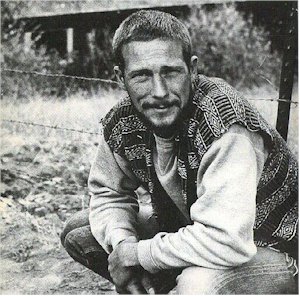
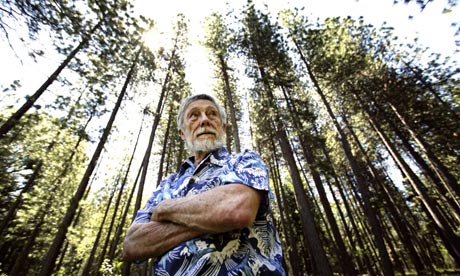
Here is a fantastic essay by Gary Snyder that resonates with a lot of what this column is about. Considering this essay was penned in 1970 it now seems a strange combination of prophetic, slightly naive, and yet still challenging. I recommend checking out more of Snyder’s non-fiction in his book A Place in Space.
Gary Snyder – Four Changes
I. POPULATION
Humanity is but a part of the fabric of life — dependent on the whole fabric for our very existence. As the most highly developed tool-using animal, we must recognize that the unknown evolutionary destinies of other life forms are to be respected, and act as gentle steward of the earth’s community of being.
There are now too many human beings, and the problem is growing rapidly worse. It is potentially disastrous not only for the human race but for most other life forms.
ACTION:
First, a massive effort to convince the governments and leaders of the world that the problem is severe. And that all talk about raising food-production — well intentioned as it is — simply puts off the only real solution: reduce population. Try to correct traditional cultural attitudes that tend to force women into childbearing — remove income tax deductions for more than two children above a specified income level, and scale it so that lower income families are forced to be careful too — or pay families to limit their number. Take a vigorous stand against the policy of the right-wing in the Catholic hierarchy and any other institutions that exercise an irresponsible social force in regard to this question; oppose and correct simple-minded boosterism that equates population growth with continuing prosperity. Work ceaselessly to have all political questions be seen in the light of this prime problem.
Share the pleasure of raising children widely, so that all need not directly reproduce to enter into this basic human experience. Adopt children. Let reverence for life and reverence for the feminine mean also a reverence for other species, and future human lives, most of which are threatened.
II. POLLUTION
Pollution is of two types. One sort results from an excess of some fairly ordinary substance — smoke, or solid waste — which cannot be absorbed or transmuted rapidly enough to offset its introduction into the environment, thus causing changes the great cycle is not prepared for. (All organisms have wastes and by-products, and these are indeed part of the total biosphere: energy is passed along the line and refracted in various ways. This is cycling, not pollution.) The other sort is powerful modern chemicals and poisons, products of recent technology, which the biosphere is totally unprepared for. Such is DDT and similar chlorinated hydrocarbons — nuclear testing fallout and nuclear waste — poison gas, germ and virus storage and leakage by the military; and chemicals which are put into food, whose long-range effects on human beings have not been properly tested.
The human race in the last century has allowed its production and scattering of wastes, by-products, and various chemicals to become excessive. Pollution is directly harming life on the planet: which is to say, ruining the environment for humanity itself. We are fouling our air and water, and living in noise and filth that no “animal” would tolerate, while advertising and politicians try to tell us “we’ve never had it so good.”
ACTION:
Effective international legislation banning DDT and related poisons — with no fooling around. The collusion of certain scientists with the pesticide industry and agribusiness in trying to block this legislation must be brought out in the open. Strong penalties for water and air pollution by industries. Phase out the internal combustion engine and fossil fuel use in general — more research into non-polluting energy sources; solar energy; the tides. No more kidding the public about atomic waste disposal: it’s impossible to do it safely, and nuclear-power generated electricity cannot be seriously planned for as it stands now.
Stop all germ and chemical warfare research and experimentation; work toward a hopefully safe disposal of the present staggering and stupid stockpiles of H-Bombs, cobalt gunk, germ and poison tanks and cans. Laws and sanctions against wasteful use of paper etc. which adds to the solid waste of cities. Develop methods of recycling solid urban waste. Recycling should be the basic principle behind all waste-disposal thinking. Thus, all bottles should be re-usable; old cans should make more cans; old newspapers back into newsprint again. Stronger controls and research on chemicals in foods. A shift toward a more varied and sensitive type of agriculture (more small scale and subsistence farming) would eliminate much of the call for blanket use of pesticides.
Use fewer cars. Cars pollute the air, and one or two people riding lonely in a huge car is an insult to intelligence and the Earth. Share rides, legalize hitch-hiking, and build hitch-hiker waiting stations along the highways. Also — a step toward the new world — walk more. Boycott bulky wasteful Sunday papers which use up trees. It’s all just advertising anyway, which is artificially inducing more mindless consumption.
Refuse paper bags at the store. Organize Park and Street clean-up festivals. Don’t work in any way for or with an industry which pollutes, and don’t be drafted into the military
III. CONSUMPTION
Everything that lives eats food, and is food in turn. This complicated animal, homo sapiens, rests on a vast and delicate pyramid of energy-transformations. To grossly use more than you need to destroy is biologically unsound. Most of the production and consumption of modern societies is not necessary or conducive to spiritual and cultural growth, let alone survival — and is behind much greed and envy, age old causes of social and international discord.
Humanity’s careless use of “resources” and our total dependence on certain substances such as fossil fuels (which are being exhausted, slowly but certainly), are having harmful effects on all the other members of the life-network. The complexity of modern technology renders whole populations vulnerable to the deadly consequences of the loss of any one key resource. Instead of independence we have over-dependence on life-giving substances such as water, which we squander. Many species of animals and birds have become extinct in the service of fashion fads — or fertilizer, or industrial oil. The soil is being used up; in fact humankind has become a locust-like blight on the planet that will leave a bare cupboard for its own children — all the while in a kind of Addict’s Dream of affluence, comfort, eternal progress — using the great achievements of science to produce software and swill.
Goals: Balance, harmony, humility — growth which is a mutual growth with Redwood and Quail (would you want your child to grow up without ever hearing a wild bird?) — to be a good member of the great community of living creatures.
ACTION:
It must be demonstrated ceaselessly that a continually “growing economy” is no longer healthy, but a Cancer. And that the criminal waste which is allowed in the name of competition must be halted totally with ferocious energy and decision. Economics must be seen as a small sub-branch of Ecology, and production/distribution/consumption handled by companies or unions with the same elegance and spareness one sees in nature. Soil banks; open space; phase out logging in most areas.
Plan consumer boycotts in response to dishonest and unnecessary products. Politically, blast both “Communist” and “Capitalist” myths of progress, and all crude notions of conquering or controlling nature.
The inherent aptness of communal life: where large tools are owned jointly and used efficiently. The power of renunciation: If enough Americans refused to buy a new car for one given year it would permanently alter the American economy. Recycle clothes and equipment. Support handicrafts — gardening, home skills, midwifery, herbs — all the things that can make us independent, beautiful and whole. Learn to break the habit of unnecessary possessions — a monkey on everybody’s back — but avoid a self-abnegating, anti-joyous self-righteousness. Simplicity is light, carefree, neat, and loving — not a self-punishing ascetic trip.
It is hard to even begin to gauge how much a complication of possessions, the notions of “my and mine,” stand between us and a true, clear, liberated way of seeing the world. To live lightly on the earth, to be aware and alive, to be free of egotism, to be in contact with plants and animals, starts with simple concrete acts. Simplicity and mindfulness in diet is a starting point for many people.
IV. TRANSFORMATION
We have it within our deepest powers not only to change ourselves but to change our culture. If we are to survive on earth we must transform the five-millennia-long urbanizing civilization tradition into a new ecologically-sensitive, harmony-oriented, wild-minded scientific/spiritual culture.
Goal: Nothing short of total transformation will do much good. What we envision is a planet on which the human population lives harmoniously and dynamically by employing a sophisticated and unobtrusive technology — in a world environment which is “left natural.”
Specific points in this vision:
A healthy and spare population of all races, much less in number than today.
Cultural and individual diversity, unified by a type of world tribal council. Division by natural and cultural boundaries rather than arbitrary political boundaries.
A technology of communication, education, and quiet transportation, land-use being sensitive to the properties of each region.
A basic cultural outlook and social organization that inhibits power and property-seeking, while encouraging exploration and challenge in things like music, meditation, mathematics, mountaineering, magic, and all other ways of authentic being-in-the-world. Women totally free and equal. A new kind of family — responsible, but more festive and relaxed — is implicit.
ACTION:
Since it doesn’t seem practical or even desirable to think that direct bloody force will achieve much, it would be best to consider this a continuing “revolution of consciousness” which will be won not by guns but by seizing the key images, myths, archetypes, eschatologies, and ecstasies so that life won’t seem worth living unless one is on the transforming energy’s side.
New schools, new classes, walking in the woods and cleaning up the streets. Create an awareness of “self” which includes the social and natural environment. Consider what specific language forms, symbolic systems, and social institutions constitute obstacles to ecological awareness. Let no one be ignorant of the facts of biology and related disciplines; bring up our children as part of the wild-life. Some communities can establish themselves in backwater rural areas and flourish — others maintain themselves in urban centers — and the two types work together, a two-way flow of experience, people, money, and home-grown vegetables.
Investigate new lifestyles. Work with political-minded people where it helps, hoping to enlarge their vision, and with people of all varieties of politics or thought at whatever point they become aware of environmental urgencies. Master the archaic and the primitive as models of basic nature-related cultures — as well as the most imaginative extensions of science — and build a community where these two vectors cross.
We are the first human beings in history to have all of humanity’s culture and previous experience available to our study — the first members of a civilized society since the early Neolithic to wish to look clearly into the eyes of the wild and see our selfhood, our family, there. We have these advantages to set off the obvious disadvantages of being as screwed up as we are — which gives us a fair chance to penetrate into some of the riddles of ourselves and the universe.
Thomas Toye is an artist living in Patterson, NY. He and his brother print all kinds of stuff out of a shed in their backyard. They both run Portal Prints. They are watched over by Gumpster Pussy and the Great Cobra.
I came across his art on one of Mickey Z’s blog posts. I thought it was cute that he did two versions of a silkscreen poster, a Sega Genesis version with red blood and a SNES version with green blood.
He has self published 8 issues of Illogical Comics so far. We decided to share issue 7 with you since it is out of print and otherwise unavailable. All other back issues are available for purchase on his blog.
I was nine when I watched my mother cough until she couldn’t breath; I never thought that would be me. Now sixty-three, my lungs collapse and my heart is worn out; a flower fighting to survive slow murderous frost.
I long for just one more cigarette – I sit on the white bench stained with rust on the back porch and imagine the ember blazing against the last cold bite of April air. I would die to feed on the filtered tip, to feel the darkness tingle my tongue.
Instead oxygen is fed to me through a tank like a mother feeds a child.
Husbands? Who needs ‘em? I had a few, I’d be lying if I said they didn’t mean anything. I have all I need now – an oxygen tank, and a daughter who lives in my house, and brings me vodka.
I look up at my soon-to-be garden through an empty glass, vision distorted, the glass used to be filled with a vodka tonic this garden used to be filled with growth my body used to be filled with life.
In a month, “Will I make it another month?” I ask out loud, to make sure I’m still alive. Tina and I will shop for flowers to fill the space the winter cold has taken hostage: Widow’s Tears, Bleeding Hearts, German Irises, Panseys
The world lives to see another spring, everything comes back to life. Curtis, the little black boy from down the street will ride his bike to come chat with me on the back porch. Rebirth and youth come together while emphysema picks another victim to meet Death. What about the grandchildren? I promised the oldest, when she was the only, that I would live forever. She will remember this while she sits at my side…
Here’s a bravo from Krist Novoselic (!): “I’ve downloaded this compilation and enjoy it very much. Well worth the money.”
This new 16-track compilation/mixtape is now available direct from Arthur to your internet connection as a pay-what-you-please digital download. It’s a collection of songs from recent (or forthcoming) releases that we’ve been digging lately that you might not have heard.
Compiled and sequenced by Jay Babcock
Cover photography by Kevin Bauman
Design by Stephanie Smith
Engineered by Bobby Tamkin at The Sound Ranch
Click one of the following links to purchase using a debit card, credit card or Paypal account. A link containing the “Who Knows What Tomorrow Might Bring” zip file (digital music files [192kpbs mp3s], artwork, credits sheet, etc.) will be emailed to you upon payment.
All proceeds help Arthur Magazine to resist economic pressures. Please pay what you can. (All entities on the desert food chain—okay, all price levels—receive the same download.)
“Freeman House is a former commercial salmon fisher who has been involved with a community-based watershed restoration effort in northern California for more than 25 years. He is a co-founder of the Mattole Salmon Group and the Mattole Restoration Council. His book, Totem Salmon: Life Lessons from Another Species received the best nonfiction award from the San Francisco Bay Area Book Reviewers Association and the American Academy of Arts and Letters’ Harold D. Vursell Memorial Award for quality of prose. He lives with his family in northern California.”
That’s the biographical note for Freeman House on the Lannan Foundation website. We would add that earlier in his life, Freeman edited Innerspace, a mid-1960s independent press magazine for the nascent psychedelic community; married Abbie and Anita Hoffman at Central Park on June 10, 1967; and was a member of both New York City’s Group Image and the San Francisco Diggers.
This piece was first published in the Spring 2001 edition of Northern Lights. It is also featured in the 2010 anthology Working the Woods, Working the Sea: An Anthology of Northwest Writing, edited by Jerry Gorsline and Finn Wilcox and published by Empty Bowl Press of Port Townsend, Washington.
You can download this ‘lecture’ as a convenient text-only PDF for $2.00, payable via PayPal, credit card or debit card. Click here to go to the order form. A link containing the PDF will be emailed to you upon payment.
MORE THAN NUMBERS
Twelve or Thirteen Ways of Looking at a Watershed
by Freeman House
(with apologies to Wallace Stevens)
1.
It was evening all afternoon.
It was snowing.
And it was going to snow.
The blackbird sat
In the cedar-limbs.
It’s December again and curdled aluminum cloud cover extends all the way to where it kisses the iron of the ocean horizon. At its mouth, the river runs narrow and clear. If you’ve lived through many winters here, the sight is anomalous; normal December flows are more likely bank to bank, and muddy as corporate virtue. A storm had delivered enough wetness around the time of Hallowe’en to blast open the sand berm that separates the river from the sea all summer and fall. The salmon had been waiting and they came into the river then.
All through November and December the jet stream has been toying with us, diverting Pacific storms either to the north or south. The fish have been trapped in pools downstream, waiting for more rain to provide enough flow to move them up 50 or 60 miles to their preferred spawning habitat. By now many of the gravid hens will have been moved by the pressure of time and fecundity to build their egg nests, called redds, in the gravels in the lower ten miles of the river. Come true winter storms, too much water is likely to move too much cobble and mud through these reaches for the fertile eggs to survive. The redds will be either buried under deep drifts of gravel or washed away entirely.
I have committed the restorationist’s cardinal sin. I have allowed myself a preferred expectation of the way two or more systems will interact. For the last two winters, steady pulses of rain have created flows that were good for the migrating salmon, carrying them all the way upstream before Solstice, but a desultory number of fish had entered the river those years. This year, from all reports, the ocean is full of salmon, more than have been seen in 20 years. So I have allowed myself the fantasy of a terrific return combined with excellent flows.
I know better than to hope for conditions that fit my notion of what’s good. Perhaps as a reaction to my wishful thinking and its certain spirit-dampening consequences, I am suffering from a certain diminution of ardor.
2.
When the blackbird flew out of sight,
It marked the edge
Of one of many circles.
I am suffering from diminished ardor. As I look out the window on the hour-long drive to Cougar Gap [1], I am seeing the glass half-empty. As my eyes wander the rolling landscape, they seek out the raw landslides rather than indulging my usual glass-half-full habit of comparing what I’m seeing with my memory of last year’s patterns of new growth on the lands cut over 40 years ago.
It’s one of the skills you gain in 20 years of watershed restoration work—to see the patterns in the landscape and be able to compare them with a fairly accurate memory of what was there last year. I’ve come to believe that I have restored in myself a pre-Enlightenment neural network that interprets what the eyes see, what the ears hear, what the skin feels in terms of patterns and relationships rather than as isolated phenomena numeralized so that they can be graphed. It’s a skill given little credibility in the world of modern science, but it’s deeply satisfying nonetheless.
Among the raw scars on the landscape to which my eye is drawn today, some are the result of human activities and some are the natural processes of a very wet, earthquake-prone, sandstone geology. Their patterns don’t change that much from year to year; the soil that would allow them to recover rapidly has been washed off the steep slopes and into the river. It’ll take hundreds if not thousands of years for that soil to rebuild itself. It’ll take generations for the mud in the river to be flushed out to sea.
These are patterns with cycles longer than the individual human life. It’s satisfying and useful to be cognizant of them, too. Such knowledge tempers our human tendency to want to fix—read tamper with—everything in sight. Continue reading →
Drag Queens, Borders, Rivers, Death and Transformation by Sonny Smith
Identity is not stable or rational, but an ever conflicting tension between id and ego, conscious and subconscious mind. -Freud
Up til about 13 me, my friends, we were whatever we wanted top be. One day skate rats, the next day kung fu, the next day new waver, next day heavy metal, surfers, baseball players, on and on it went.
High school ends that usually. The ‘group’ starts telling you who you are. If you’re into sports you’re an athlete. If you’re into studies you’re a nerd. If you’re socially awkward you’re a weirdo. When you give up on the whole scene you get called a loner!
The crowd, the community, the society, has ideas about identity. Strict ideas. If you’re outside it, it’s going be rough; you get called a misfit.
After you grow up bigger limitations come in. Careers. Jobs. What are you going to decide to be? You’ve got to pick SOMETHING. Even if you choose nothing you’ve chosen.
I could never choose… so I drifted around. I’ve had a slew of jobs. My resume doesn’t look too reliable I guess. I had a job making copper gutters for two years. One day the foreman on a job says: here comes the copper guy. I didn’t want to be a ‘copper guy’ so I lost interest.
Marriage is tough too. Any relationship is tough. You gotta be the same person day in day out. What if you wake up, you want to be someone else? Most relationships don’t allow for it.
It’s not identity crisis. It’s identity impermanence.* Who are you gonna be today? Maybe today’s the day you start being someone new. At least you’re trying. Hard to do when your job is depending on you to be the same person as yesterday… society is stacked against the new you! It’s stacked against birth! It only knows death!
* We are never just who we are in a given moment but a constantly evolving thing- Heidegger
Therefore, society is not for the living, it is for the dying. To live, to be fully alive, you must be outside society. An outlaw.
You’d think being an artist would allow for a lot of identity exploration. It does. But the art world is a big jail cell for the imagination. The art sellers and the art buyers, and all the media* in between want you to be one thing so they can organize you accordingly and stack you over with the others like you.
* buyers and sellers at the same time
The art ‘community’ is a big joke. Like any society, it believes it celebrates life but it survives on death.
Some artists capitulate to this game of narrow definition.* Or some find ways to keep their narrowed focus fresh. Then, some don’t conform. They keep breaking their own walls down. Art is elusive, evolution is mysterious…
* Their art doesn’t grow but their pocketbooks do!
Of course, one of the biggest limitations of all is what you believe. If you don’t believe in Jesus you’re in a certain stack, if you do believe then you’re in another stack, if it’s Allah, then you’re that, if it’s Buddha it’s that, democrat, republican, middle of the road, lefty…
ZAZEN, Vanessa Veselka’s first novel and Arthur’s first online serialized novel, will finally be available in print in 2011.
In the USA, Zazen will be available May 22, 2011 via Red Lemonade/Cursor, the new publishing house headed up by Richard Nash. Here is the Amazon listing. And here’s the new book cover…
Meanwhile, Zanzibar Editions, a critically acclaimed French publishing house, has picked up ZAZEN after reading it on Arthur, and is translating it for publication in September, 2011, the height of the French literary season.
FIGHTING SHADOWS, FINDING LIGHT A close encounter with enigmatic folk adventurer BEN CHASNY of Six Organs of Admittance By Jay Babcock, with photography by Allison Watkins
Last summer Ben Chasny told me about his plans for the next record he would be making under his Six Organs of Admittance monniker. The upcoming album would be a turning point for him: it’d be the first Six Organs recordings done in a studio and his first album for his new label (Chicago indie perennial Drag City), sure, but he also wanted the record to be a creative step forward. “I told them I want to go in there and have some folky stuff, but I also want to attempt something more freaked-out and free,” he said.
School of the Flower, recorded during those August 2004 sessions with drummer Chris Corsano and released last month, is more freaked out and free than previous Six Organs albums. It’s a front-to-end lovely, beguiling work that alternates simple, emotionally reassuring campfire folk songs with expansive, occasionally ominous instrumental tracks: long, quickly fingerpicked acoustic guitar lines repeat and interlink into infinity, electric guitars toll and squall, drums skitter and bubble underneath. The record is like an owl—it sees and knows all, but is willing to communicate to others only some of what it knows. We are lucky—privileged, really–to hear its voice at all.
The following conversation was constructed from a long phone interview in early January and some follow-up elaboratory emails. Chasny and I had been in touch off and on for the previous year or so by email, mostly hipping each other to recent discoveries: books, records, films. To be honest, Chasny was doing most of the hipping, and I was struck by both his strong passion for other artists’ work and ideas, and the degree of erudition in his reading. His impulse may be towards hermithood and withdrawal, to living alone in the woods, but the reality of his life was more complex: he’s a part of a web of consciousness very much of his own making, one that stretches around the globe and involves many of the planet’s most idiosyncratic, hermetic artists. I soon realized that, just as Timothy Leary had instructed, Chasny had gone and found the others—the Japanese psych-folk group Ghost, the bizarre English goth-folk of Current 93’s David Tibet, the utterly indescribable Sun City Girls, and many more I’d never heard of. And then, in the past whirlwind year, he’d actually toured or recorded with many of them, while, at the same time, continuing to be a full-fledged member of Bay Area combo Comets On Fire, whose 2004 album Blue Cathedral was some kind of acid rock knockout masterpiece.
Here’s how it all happened, in Ben Chasny’s own voice.
Arthur: People often wonder if you’re a practicing Buddhist, because of your band’s name.
Ben Chasny: When I did the first record, I wrote “Six Organs of Admittance” on it because I had just read Road to Heaven by Bill Porter. He goes and explores a mountain range in China, encountering for Buddhist and Taoist hermits. One hermit was such a damn hermit that during the conversation with the author, he stopped and asked, Who’s this Chairman Mao you keep referring to? That’s amazing. And in that book I came across the “six organs” phrase—the five senses and the soul make up the six organs of admittance—and it struck me. I thought it’d look really good on the record cover. I put it out, without saying who was on the record or anything. Later, when I decided to put out more records, I figured I’d just take that name.
Talk a little about where you grew up.
I was born in L.A. My dad was sick of the city, so he moved us way up in the middle of nowhere with redwood trees and chickens and bunnies. It was me, my mom and my sister. I grew up in Elk River Valley, a little south of McKinleyville. My dad was always playing shit on the stereo, pretty good popular stuff from the ‘60s. A lot of good folk too, Nick Drake and stuff, and even some weird experimental records like Tonto’s Expanding Head Band. That was how I lived until I was 13 or 14. Then we moved into the city—well, Eureka’s not really a city, it’s just a little dirty town, or a dirty old town, to give it a Pogues description. After school, there was only ever one other kid around, and I had to hike over a hill and go find him to make tree forts. That’s probably why I’m interested in hermits, because I lived that way for a while. Hermits seem to appear in a lot of the literature that I read; when I come across them, it really sticks out in my head. Like Gaston Bachelard says: “The Hermit’s hut is a theme that needs no variation, for at the slightest mention of it, phenomenological reverberations obliterate all mediocre resonance.”
You talk a lot about writers, quoting them on CD sleeves and such. I know you dig the writing of Peter Lamborn Wilson, aka Hakim Bey.
Yeah. His ideas are not 100% original, but he makes such a beautiful synthesis out of anarchism, surrealism, chaos theory, Sufism and such. He has this essay about how in certain societies, musicians are the scum of the earth. They’re there to serve a purpose, to do music, to give that, sure, but they’re not elevated like stars. And when you think about it, in that situation, only somebody who really believes in the art itself–not about becoming cool or popular or making money–will actually want to make music. So he talks about the importance of art as art, not as buying, not as putting into museums—not that art can’t be sold, but that art in itself is very, very important, just on the basis of giving to somebody else as a gift. It’s not about selling your paintings for $300 at the coffeeshop: it’s for creating this subversive community – that is the way to start looking at this stuff, as subversion.
What did you study in college?
I didn’t go to college. I’m not really that well read or learned—certain books just really grab me, and I become obsessed with certain authors. I have a few people who I like to read who inform my world. And almost everything I listen to or read translates into music in some way, or a reason to not do music. When I play music, that’s just what comes out: it’s the shit of all the books that are the food.
So you’ve been playing acoustic guitar for a long time, since the mid-‘90s. Why not electric guitar? How did you get started down this acid-folk path?
The first three notes of the first Nick Drake record hit pretty heavy, and made me think I should really think about acoustic guitar and put down the electric bass guitar I’d been playing. That opened me up to Leo Kottke, and later, John Fahey. The music just meant more than getting up there and being silly. At the same time I started to get into Fushitusha and Rudolph Grey and KK Null: really noisy electric guitar bands.
Who’s Rudolph Grey?
Rudolph Grey developed action guitar, which is pure extreme playing. It’s not free jazz. I mean, he’s played with free jazz drummers before, and jazz musicians, but I think his music is more accurately described as action guitar. It stems from no-wave and free jazz. HE is the guy who blew my mind. I got this Rudolph Grey record called Mask of Light and I’m thinking I know stuff about music, I’ve heard experimental music, whatever, and I put that on and he just CLEANED the slate. Anything’s possible. It cleared my mind of everything. Then I could listen to folk music, NEW. Any kind of music. Suddenly, Keiji Haino made sense to me. And Leo Kottke as well. Rudolph Grey: no note is more important than any other note. It has a correlation with a lot of kinds of music, but it’s ACTION GUITAR. Now, Keiji Haino is one of my favorite musicans of all time. Pure sound. Pure emotion. Kan Mikami is an absolute hero of mine: he once said that the only true musician is the musician who has been forsaken by God.
Anyways, I didn’t really know how to put together the rock n roll aspect I liked with folk music. So I started listening to acid folk music, which melts the two together: Ghost were a really huge inspiration to me to start playing folk music, and there’s that one Amon Duul record that’s heavily acoustic. Through the Forced Exposure catalog, I found out that PSF [a Japanese record label] had these compilations called Tokyo Flashback, and on the third one, there’s a picture of the guy sitting in what I guessed were the PSF offices, and there’s records stacked to the ceiling, a total mess, with this box in the front that’s labelled “acid folk.” I remember thinking, I don’t know what’s in that box, and I don’t exactly know what it would sound like, but whatever it is, it’s probably really great. I want to make music that you could put in that box.
So I just made what I was looking for. I’m trying to shed it lately, though, trying to go for the folk thing, a more natural song thing. There’s too many traps in trying to do ‘acid folk.’
So it’s more about songwriting at this point?
Kind of. But I’m not even that good of a songwriter. I figure that I’m kind of good at a bunch of stuff. I’m not really that amazing at one thing. I’m kind of good. That’s enough for me. The first step in overcoming one’s mediocrity is to be aware of it. Hopefully at some point I can overcome it. Artists like Tomokawa Kazuki and Kan Mikami play folk music like it is a beautiful knife (and not coincidentally were part of their own political resistance!). I always return to those two when I am in doubt about music. They are fire and a thousand hurricanes and the beautiful mist and the blooming garden. Folk is not some trend for them, but then again, their brand of folk is more volatile than any rock band I can think of. That is something to aspire to: to find the dirt in a melody and a flower in the chaos. I think I am about a million miles away from that. But I hope I can get closer, everyday, to be that strong.
Judging from your facility with the acoustic guitar, I assume you practice a lot…
Not anymore. Ten years ago, when I started getting into acoustic guitar, I was really studying the guitar, learning things about it. I was only working two days a week. That went on for like three years. Then I realized if I studied any more, this is gonna be bullshit. I’m going to make music that’s not interesting to anybody but guitarists. That’s when I realized I better start working on actually communicating—writing songs and all that. At that time I was playing with this violinist who’d been playing since she was four. We’d duet, that’s where I learned a lot of finger picking techniques. (Finger picking is using your right hand to play the strings and usually using your thumb to play the bass strings in different patterns.) But after that, it wasn’t very interesting to me at all. There are other people out there who are really good guitarists and are doing really good things with guitar, pushing it out. But it just doesn’t interest me. I’d rather become good at playing rocks. I’d like to be a fucking virtuoso of stone playing; knowing the right stones that resonate, how big, where to play them, things like that. That’s much more interesting than guitar. I don’t respect the guitar the way guitarists do. You can ask Ethan. [laughs] Even my new acoustic that I just bought now has a big crack in it from me putting my fist into it.
You know, I was talking with Stephen O’Malley [guitarist in SUNNO))) and Khanate] a few months ago about how there was a time when the acoustic guitar was an instrument of resistance. I don’t mean in the naive ‘60s, when to most people resistance meant putting up a picture of a Hindu god, smoking some grass and singing about getting it together. That wasn’t the real musical resistance of the ‘60s (though the folks singing about getting it together really were resistant to a fucked war. I’m talking about a resistance of culture rather than a resistance of political stupidity and death). The resistance was in feedback and a wall of destruction from rock ‘n’ roll, the very simulacrum of resistance today. But sometime in the late ‘90s, for me anyway, the acoustic guitar was a part of the culture of resistance, even against a resistant culture. Tomokawa Kazuki, Kan Mikami, and Ghost were right up there as my heroes. At the time, everyone was making noise records and noise from Masonna, Solmania, Hijokaidan ruled the underground. A lot of them were great, like the aforementioned and Michael Morley and Rudolph Grey and A.N.P. But like any trend, there became more and more derivative versions of it all. And so even though I loved Bob Banister and the Noggin records, I didn’t want to join the pack, and I knew that my version would just be a derivative of a copy of a notion of wanting acceptance. To resist, I picked up the acoustic guitar. And that’s it! That’s the origin of it all. Now, years later, everything is flowing the other way. It makes me want to make that noise guitar record I always wanted to make, and I will.
And that’s what I love about John Fahey. He was a man of resistance, even against himself. I could give a fuck about his finger picking or melody. I love his writing more than his playing. If you can’t understand that his world was one of absolute hurt and resistance you will never understand any part of how beautiful his music was. He would burn it all, in his memory, again and again. That is a personal resistance.
You seem simultaneously attracted to these resistant individuals, who are almost like modern hermits, and also to the idea of a community, which necessarily involves others.
I’d like to have a place to live where I lived all by myself somewhere, but…I’ve realized I need friends. Hanging out, community, is really good. I don’t think I couldn’t live all by myself, I’d get pretty depressed. All we have is our friends, and giving, and making things as our hope. I may be making records for a few people to listen to, but you better know that there are things going on that are much more important. Like dinners and gatherings against all the bullshit of the world. Like a letter for one. If it doesn’t hold a trace of possibility, it is worthless. That is how I judge what is made, whether for the public or private. Because it is all worthless when it comes down to it. There is only inspiration—which is our analogue for the WANT TO LIVE in Eastern thinking—and there is Nothing, which we will all be faced with at some point. So hold on to your friends and laughter and family and hope. Nothing else exists.
You’ve told me before that you considered your records to be dark records but that you always tried to put a hint of light in there. The new record, though, doesn’t seem as dark to me, overall.
The new one isn’t dark in that way, and that’s why—I think—I was able to explore musical ideas on School of the Flower that I wasn’t able to explore before. Because before I was dealing with emotional ideas and emotions, trying to wrestle with this or that. When I did Dark Noontide, I was really inspired by Current 93. I was listening to Thunder Perfect Mind pretty religiously for a while. They’re always pegged as gothic, especially cuz [Current 93’s] David Tibet’s earlier life is influenced by Crowley, which he has totally renounced since then… Thunder Perfect Mind is the record where he started talking about more personal things. When I first heard it, I was really disappointed. His delivery was a little too dramatic for me at the time. I didn’t get into it for a full year. Then I went through a super bad space where I quit my job, because I really couldn’t communicate, I had this really bad bout of depression, and Thunder Perfect Mind was pretty much the only kind of music I could listen to for some reason…I kind of just suddenly got it. It was as if his vocals where a veil to keep the listener away, and once the veil was lifted, his vocals became AMAZING to me. To me, it’s not about magic or the gothic side or anything that a lot of people peg him as, but like, inside of all of that, inside of the darkest time, he’s always looking for some little fraction of light. So when I started listening to it I felt pretty close to that.
About the same time I started getting into Current 93, I made the pinnacle of the crazy, emotional records that I’ve done is Nightly Trembling. It’s called that because that’s what was happening. Originally it came out in an edition of 33, just on lathe cut. (It was recently reissued on Time-Lag Records. We only did 500 of them. Eventually it’ll be available.) The reasoning was… You know how when you have to take a piss really bad while driving a car, your consciousness focuses on one point, and you’re not aware of much else? It’s the same thing when you’re depressed: your consciousness focuses on one point and it becomes a feedback loop, and it’s really hard to get out of that. Which is really similar to what Bruce Kapferer talks about in Feast of the Sorcerer, which is about Sri Lankan Buddhist sorcery and anti-sorcery. When you’re under a sorcery attack, you get this feedback loop that you can’t get out of. So, they have these anti-sorcery rites that allow people to break out in certain ways. The ritual is called a Suniyama and it encompasses theater and music as well as the destruction and exhaustion of wealth, much like a potlatch. I thought that was what I needed to do. So I made this record. It was based on that book, and also on Marcel Mauss’ The Gift, which is about potlatches: you know how certain cultures in the South Pacific islands, instead of warring, they give gifts! That idea—the power of the gift—and Hakim Bey is always talking about that—this project was totally based on all that. I made 33 of these records and I handpainted all of them. I got this beautiful paper from China. Every one had handwritten liner notes. The same liner notes, but on a whole page. Wrote out all the liner notes, painted them, and then just gave every single one of them away to different points that I knew where people were: one in Australia, Germany, London, New Zealand. If I had had friends at the poles I would have sent them there! The idea was to set up this web of consciousness around the world in order to reverse my own consciousness loop. And that’s a kind of reverse—well, Anthony Braxton talks about creating webs of consciousness around the world. For good, not for your own personal bullshit like I was doing. He talks about doing particular concerts at particular places to create a web of consciousness. So I did sort of a reverse Anthony Braxton-style thing. But what happened was, it helped!
There’s a certain person that kind of triggered all of this. I wasn’t talking to them at the time—now we’re best friends—but years later, they told me that they’d figured out that at that exact same time that record was released, they’d actually suffered a pretty bad, pretty weird breakdown: they’d started suffering from all the same things I was suffering from—couldn’t go out of the house, couldn’t talk to anybody, bed-ridden, they had to go into therapy for a while. Maybe that’s coincidence, I don’t know. [laughs] It was pretty weird shit. I’m never gonna do that again. That’s one of the reasons I reissued it was to make those records a lot less powerful – reverse a lot of the power. That project was definitely the pinnacle of the depression.
But I’ve been feeling really good lately. Between that and going into a studio, I was able to do stuff that I’ve always wanted to do on the new album. Like that long song.
Still, some things stay the same for Six Organs, live: you always play solo acoustic guitar…
That’s going to change. The new record has more elecric guitar. Live, I want to loop the acoustic guitar and then pick up the electric guitar.
And you’ve always sat down.
That might change too! Cuz my girlfriend just got me a strap for my acoustic guitar…
Next thing you’ll have a harmonica set-up like Dylan…
The strap and the acoustic guitar is a tricky thing, because you could end up looking like Ani di Franco—or you could end up looking like Neil Young. It’s tricky. I usually prefer to sit so people can’t see me at all.
Live it seems like you’re on a tightrope… I can never tell what you’re going to do next.
I rarely go up with a setlist. I just don’t want it to get boring. I come up with setlists if I know there’s going to be a lot of people out there, and I want a safety net, you know? But I think things are gonna change a little bit. I want it to be interesting for me, too—I’ve always been looking at performance from an improvisor’s point of view. It could fail, but when it’s great, it’s amazing—you really break through something, you really feel something you wouldn’t’ve done if you knew exactly what was happening. Mark Twain, when he had to go out on the lecture circuit, he just hated it. He only did it to make money. He was still great, just because his natural stuff was good, but he wasn’t trying to improvise, to search inside of himself. The time for that was sitting at the table, writing something. I don’t know. I’m not the most emotionally stable person, so I can get really bummed out onstage. Somewhere down South I just broke down and had this attack. That was my most shameful show, ever. Sometimes weird things happen when I play. I stopped playing and I told the audience that what they’d heard was NOTHING, it was NO GOOD. Just preaching nihilism and death. It was just horrible. Sometimes things get ahold of me. This year I’ve realized that there are shadows. Sometimes the shadows are really intense, they can take up a lot of space. Sometimes I’m fighting shadows… Sometimes the room is filled with shadows. I can’t describe it, really. Once when I played in L.A., I don’t mean to be all hocus pocus, but really, I was playing and there was only a few people there and I swear to God there were weird shadow entities, non-friendly shadows there, and I started to get super-freaked out.
Are you able to meditate at all?
I don’t meditate — I drink. [laughs] But, by the time I was playing in San Francisco, on that tour last year with Ghost, I wasn’t agitated at all. Everything was so peaceful and quiet. I wasn’t stomping. Ghost have this internal peace within them. I would talk to Batoh after shows and he would ask me why I was so agitated on stage [laughs], he’d tell me that I should try and calm down. He taught me a lot about being peaceful onstage. Then of course a week after that I played with Sun City Girls and they just destroyed all of that. I’d see them just TAKE it. It was THEIR stage. You’re gonna have a good time, and if not, man, you’re gonna get fucked with. They taught me that it’s war on stage. Which I knew it was. [laughs] Once Ghost left the country, I felt like my parents had gone and I could party it up. But of course Sun City Girls have a kind of self-confidence that I’m lacking.
How’s it going playing with Comets On Fire? That allows you to do something different.
It’s hard to divide my time between Six Organs and Comets. If I had my way I’d just tour with both of them, non-stop. We’re all strong personalities, we don’t write a whole lot of music. We’d rather jam out bar band songs and drink beers.
You were working on a free-noise thing with Noel Harmonson thing the other day.
It’s fun to do that. It’s really important. It’s important to be aware of sound as music, rather than music as a nominal and deterministic exercise or science. For me anyway. All things must be possible, at all times. Otherwise, what magic could music even hold? If I want a bunch of laws and rules, I’ll go stand in line at the Oakland DMV! But…I think we should have some sort of disclaimer here to let the folks know that I don’t think anything I say has really much of an importance to anyone. It’s just bullshit. But at least I recognize that. During the day I like to listen to Sun Ra, drink coffee and read about chaos linguistics. And at night I get drunk, and start raging and getting pissed off. And listen to Tomokawa Kazuki or Townes Van Zandt. For the last couple of years, Townes Van Zandt, he’s just my buddy. He feels like my brother. I don’t have a brother, but… I mean, he got really depressed. You listen to his studio records—they’re super-happy! But he was dealing with a lot of stuff. On a music level I like him because, even today, I’ve listened to this one song for years, and just today I figured out these two lines and how fucking brilliant they were “mother was a golden girl, slit her throat just to get her pearls, cast myself into a world, before a bunch of swine” from “Dollar Bill Blues”—and they’d just passed me by because he speaks this language that isn’t flowery. He’s speaking everyday language but then a couple years later, you go, Holy fuck I get it, I can’t believe he put those two words together. He’s absolutely brilliant—anyone can listen to him and get more and more into him. Anytime I hear any music, I’m thinking about it in terms of, Oh that’s a good idea, that’s a bad idea, how does this relate to anything I do. Townes is the only person where I never, ever do that. He’s the only musician I just listen to.
Longtime Arthur contributor Trinie Dalton sent this over…
BANQUET OF THE BLACK JACKAL
What happens when mankind ends? How will history, cultural objects, and relationships between the elements be remembered or reinterpreted? The artists in this exhibition tackle the notion of history—be it personal, cultural or philosophic—in their multimedia installations. The questions at play in this exhibition are informed by the writings of Hegelian philosopher Alexandre Kojève and contemporary science fiction.
Participating artists: Eduardo Consuegra, Adam D. Miller, Ruby Neri, Devon Oder, Amanda Ross-Ho, Liz Craft, Shio Kusaka, and Matthew Greene
The opening reception for Banquet of the Black Jackal will be from 6-8pm on Saturday, January 22.
exhibition curated by Adam D. Miller
exhibition runs from January 22 – March 19. Gallery hours monday-thursday & saturday noon to 5pm. Gallery closed on friday and sunday.
A catalog has been published to accompany the exhibition with essays by Adam D Miller, Mark Von Shlegell, Lia Cheyenne Trinker Browner and Evan Calder Williams. Hand silk-screened covers, and full-color artist pages. Please bring a couple bucks to the opening to get a copy.
The Harriet and Charles Luckman Fine Arts Complex
5151 State University Drive
Los Angeles, CA, 90032
California State University, Los Angeles
323-343-6600 http://www.luckmanarts.org








 Arthur Magazine