
PAUL KRASSNER GOES TO CAMP MOGUL
Monthly Archives for July 2008
CHRIS HEDGES: ENTER THE CORPORATE STATE
Bad Days for Newsrooms—and Democracy
Posted on Jul 21, 2008 at TruthDig
By Chris Hedges
The decline of newspapers is not about the replacement of the antiquated technology of news print with the lightning speed of the Internet. It does not signal an inevitable and salutary change. It is not a form of progress. The decline of newspapers is about the rise of the corporate state, the loss of civic and public responsibility on the part of much of our entrepreneurial class and the intellectual poverty of our post-literate world, a world where information is conveyed primarily through rapidly moving images rather than print.
All these forces have combined to strangle newspapers. And the blood on the floor, this year alone, is disheartening. Some 6,000 journalists nationwide have lost their jobs, news pages are being radically cut back and newspaper stocks have tumbled. Advertising revenues are dramatically falling off with many papers seeing double-digit drops. McClatchy Co., publisher of the Miami Herald, has seen its shares fall by 77 percent this year. Lee Enterprises Inc., which owns the St. Louis Post-Dispatch, is down 84 percent. Gannett Co., which publishes USA Today, is trading at nearly a 17-year low. The San Francisco Chronicle is now losing $1 million a week.
The Internet will not save newspapers. Although all major newspapers, and most smaller ones, have Web sites, and have had for a while, newspaper Web sites make up less than 10 percent of newspaper ad revenue. Analysts say that although Net advertising amounts to $21 billion a year, that amount is actually relatively small. So far, the really big advertisers have stayed away, either unsure of how to use the Internet or suspicious that it can’t match the viewer attention of older media.
Newspapers, when well run, are a public trust. They provide, at their best, the means for citizens to examine themselves, to ferret out lies and the abuse of power by elected officials and corrupt businesses, to give a voice to those who would, without the press, have no voice, and to follow, in ways a private citizen cannot, the daily workings of local, state and federal government. Newspapers hire people to write about city hall, the state capital, political campaigns, sports, music, art and theater. They keep citizens engaged with their cultural, civic and political life. When I began as a foreign correspondent 25 years ago, most major city papers had bureaus in Latin America, the Middle East, Europe, Asia and Moscow. Reporters and photographers showed Americans how the world beyond our borders looked, thought and believed. Most of this is vanishing or has vanished.
We live under the happy illusion that we can transfer news-gathering to the Internet. News-gathering will continue to exist, as it does on this Web site and sites such as ProPublica and Slate, but these traditions now have to contend with a new, widespread and ideologically driven partisanship that dominates the dissemination of views and information, from Fox News to blogger screeds. The majority of bloggers and Internet addicts, like the endless rows of talking heads on television, do not report. They are largely parasites who cling to traditional news outlets. They can produce stinging and insightful commentary, which has happily seen the monopoly on opinion pieces by large papers shattered, but they rarely pick up the phone, much less go out and find a story. Nearly all reporting—I would guess at least 80 percent—is done by newspapers and the wire services. Take that away and we have a huge black hole.
Those who rely on the Internet gravitate to sites that reinforce their beliefs. The filtering of information through an ideological lens, which is destroying television journalism, defies the purpose of reporting. Journalism is about transmitting information that doesn’t care what you think. Reporting challenges, countermands or destabilizes established beliefs. Reporting, which is time-consuming and often expensive, begins from the premise that there are things we need to know and understand, even if these things make us uncomfortable. If we lose this ethic we are left with pandering, packaging and partisanship. We are left awash in a sea of competing propaganda. Bloggers, unlike most established reporters, rarely admit errors. They cannot get fired. Facts, for many bloggers, are interchangeable with opinions. Take a look at The Drudge Report. This may be the new face of what we call news.
When the traditional news organizations go belly up we will lose a vast well of expertise and information. Our democracy will suffer a body blow. Not that many will notice. The average time a reader of The New York Times spends with the printed paper is about 45 minutes. The average time a viewer spends on The New York Times Web site is about seven minutes. There is a difference between browsing and reading. And the Web is built for browsing rather than for reading. When there is a long piece on the Internet, most of us have to print it out to get through it.
The rise of our corporate state has done the most, however, to decimate traditional news-gathering. Time Warner, Disney, Rupert Murdoch’s News Corp., General Electric and Viacom control nearly everything we read, watch, hear and ultimately think. And news that does not make a profit, as well as divert viewers from civic participation and challenging the status quo, is not worth pursuing. This is why the networks have shut down their foreign bureaus. This is why cable newscasts, with their chatty anchors, all look and sound like the “Today” show. This is why the FCC, in an example of how far our standards have fallen, defines shows like Fox’s celebrity gossip program “TMZ” and the Christian Broadcast Network’s “700 Club” as “bona fide newscasts.” This is why television news personalities, people like Katie Couric, have become celebrities earning, in her case, $15 million a year. This is why newspapers like the Los Angeles Times and Chicago Tribune are being ruthlessly cannibalized by corporate trolls like Sam Zell, turned into empty husks that focus increasingly on boutique journalism. Corporations are not in the business of news. They hate news, real news. Real news is not convenient to their rape of the nation. Real news makes people ask questions. They prefer to close the prying eyes of reporters. They prefer to transform news into another form of mindless amusement and entertainment.
A democracy survives when its citizens have access to trustworthy and impartial sources of information, when it can discern lies from truth. Take this away and a democracy dies. The fusion of news and entertainment, the rise of a class of celebrity journalists on television who define reporting by their access to the famous and the powerful, the retreat by many readers into the ideological ghettos of the Internet and the ruthless drive by corporations to destroy the traditional news business are leaving us deaf, dumb and blind.
We are cleverly entertained during our descent. We have our own version of ancient Rome’s bread and circuses with our ubiquitous and elaborate spectacles, sporting events, celebrity gossip and television reality shows. Societies in decline, as the Roman philosopher Cicero wrote, see their civic and political discourse contaminated by the excitement and emotional life of the arena. And the citizens in these degraded societies, he warned, always end up ruled by a despot, a Nero or a George W. Bush.
Note: Chris Hedges was interviewed by Jonathan Shainin in the anti-war/anti-Empire Arthur No. 5 (2003)
HE IS THE GARBAGE WARRIOR
Arthur No. 30 is at the printer

How a brush with death, a haunted guitar and filmmaker Harmony Korine helped Spiritualized’s JASON (SPACEMAN) PIERCE wrestle a new album of narcotic gospel music into being. By Jay Babcock, with photography by Stacy Kranitz.
In an exclusive excerpt from his new book, legendary film director/author/poet ALEJANDRO JODOROWSKY (El Topo, Holy Mountain) reflects on his encounters with Zen teacher EJO TAKATA and Surrealist master LEONORA CARRINGTON in late-Sixties Mexico City.
NANCE KLEHM salutes weeds—in particular, Artemesia vulgaris, aka mugwort.
The Center for Tactical Magic tells us HOW TO THROW A HEX—and why.
GREG SHEWCHUK on how the continuous prospect of eating shit on a skateboard can keep you humble—and awake.
ERIK DAVIS takes a stand against Cory Doctorow-style iPodiphilia and other data processing-marketed-as-pleasure.
A howl for America’s long-gone liberal media, by DAVE REEVES.
New work by poet MICHAEL BROWNSTEIN.
Psychonaut lookers Guy Blakeslee, Paz Lenchantin and Derek James are THE ENTRANCE BAND. Salubriously styled by the singular ALIA PENNER.
Writer-scholar EDDIE DEAN waxes lovingly about Argentinian bandoneon master Chango
Spasiuk, American rock n roll band Howlin Rain, the Maryland Redbud Tree, the Olympic Hi-Fi Stereo Console and other stuff rubbing him right lately.
Comics artist Joseph Remnant on author Patrick Rosenkrantz’s gorgeous book of underground comix history.
Bull Tongue columnists BYRON COLEY & THURSTON MOORE review choice finds from the deep underground.
JULIAN COPE on an extraordinary art statement of cavernous Detroit Psychedelic soul.
The Melvins’ BUZZ “KING BUZZO” OSBORNE joins C & D as they examine stuff by Endless Boogie, Al Green, Dennis Wilson, King Darves, Buffalo Killers, Hercules and Love Affair, Free Kitten, Arp, Awesome Color, Seun Kuti and Jex Thoth.
HEY BO DIDDLEY!: In Memorium by Plastic Crimewave.
Arthur No. 30 is at the printer, but you can download the entire 72-page magazine as two PDFs now:
Arthur No. 30 Part 1 of 2 (7.2mb)
Arthur No. 30 Part 2 of 2 (4.3mb)
Click here to subscribe to Arthur now via PayPal and receive Arthur for a year, starting with this issue.
Or, order only Arthur No. 30, via PayPal (credit cards ok!):
USA – $6 postpaid
Canada – $8 postpaid
World – $11 airmail
Action techniques that work…
AIDS activists put a giant condom on the home of anti-gay Senator Jesse Helms in 1991…
courtesy John Coulthart!
How to determine if your republic is headed toward despotism…
“Despotism & Democracy” (11 min, Encyclopaedia Britannica Films, 1946)
“Measures how a society ranks on a spectrum stretching from democracy to despotism. Explains how societies and nations can be measured by the degree that power is concentrated and respect for the individual is restricted. Where does your community, state and nation stand on these scales?”
courtesy Will Swofford!
JIMMY JOE ROCHE ("Ultimate Reality" filmmaker) at Rare Gallery NYC

Little Faith, 2008
Acrylic on cotton rag paper
106″ x 2″ x 78″

Delirium, 2008
Acrylic on cotton rag paper
43.25″ x 2.75″ x 40.25″
June 26 – July 26
“For his first gallery solo show, seventh-generation Floridian Jimmy Joe Roche presents a series of painstakingly hand-cut, obsessively hand-painted, and intricately hand-woven paper works. For Roche, they serve as conceptual talismans for the collective American unconscious while capturing the spirit and energy of the Baltimore art collective & warehouse music scenes that play a central role in his life.”
Rare Gallery
521 W. 26th Street
New York 10001
212.268.1520
GENERATION PWNED
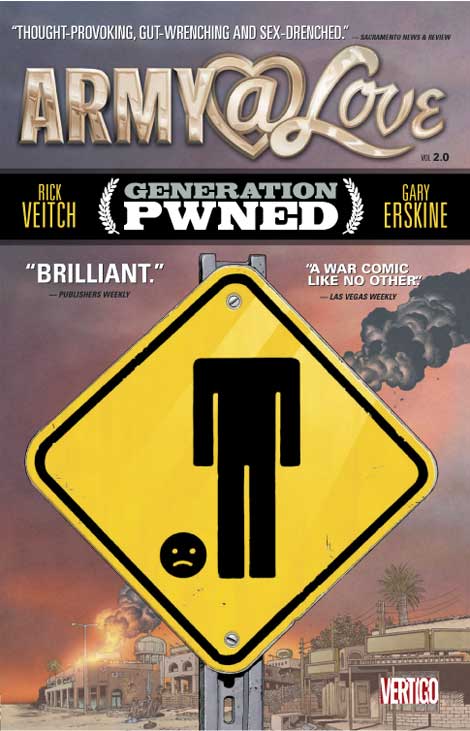
BRAND SPANKING NEW HAKIM BEY (aka PETER LAMBORN WILSON)…

HYPE: New poetic rants and prose poems from the author of TAZ and Millennium, among many other influential incendiary texts. This volume includes selected Communiques of the Cro-Magnon Liberation Front.
BACK COVER TEXT: “Black Fez is the emblem of our intransigent disgust with the lukewarm necromantic vacuum of dephlogisticated corpse breath that passes nowadays for Empire and organic death.”
Peter Lamborn Wilson’s essays have appeared in Arthur No. 16 (‘Secessionism’) and Arthur No. 29 (‘Endarkenment’).
TIMOTHY LEARY history with Joanna Harcourt Smith…
 Arthur Magazine