Peter Lamborn Wilson – Utopian poetics – Naropa, 1993

Peter Lamborn Wilson class, Utopian poetics, part 1, July 19, 1993.

94:18

“First half of part 1, of a two-part class, by Peter Lamborn Wilson on utopian poetics. Wilson contrasts the authoritarian utopian tradition, from Plato to urban planning, with the anti- or non-authoritarian utopian tradition, beginning in paleolithic hunter-gatherer societies. A discussion of paleolithic and neolithic societies follows, including the role of linear time, cruelty, and calendars. Wilson then discusses the artist in her/his shamanic role, surviving as the role of the bard in Irish culture. He discusses William Blake and describes the alienation of the poet’s social function and its subsumption into media and advertising. A student question prompts a discussion of apocalyptic ideas. (Continues on 93P067)”


More Peter Lamborn Wilson talks at Naropa: https://archive.org/search.php?query=creator%3A%22Wilson%2C+Peter+Lamborn%22&and[]=collection%3A%22naropa%22

L.A. I LOVE YOU BUT YOU WERE BRINGING ME DOWN

Hey dudes,

Last week, I talked by telephone to an LATimes journalist named August Brown about why Arthur Magazine had left L.A. for New York.

This was a long conversation. I now regret that I did not set a pre-condition for this interview: I should have insisted on seeing the quotations he was planning to run in his story, to check their accuracy, especially as he was not audiotape recording the conversation — an interview situation, I’ve learned from being a journalist and editor, that virtually ensures significant errors of omission and misrepresentation.

Next time, I will be much more careful. I am now readying a formal demand to the Times for a retraction of the article and a public apology. In the meantime, I want to try to clear the air, as best I can.

Arthur is not a hipster lifestyle publication. It’s an all ages counterculture mag about ideas, and manifestations of those ideas. And counterculture isn’t just in a single place or city or scene or neighborhood anymore — it’s all over the country, all over the world. It’s distributed, a beautiful constellation of enclaves and loners.

Arthur-as-a-magazine aims to serve those folks, wherever they are.

But Arthur-as-a-magazine is made possible by Arthur-as-a-business. Since, somewhat unfortunately, I own 100 percent of Arthur, and I carry all of its debt, I have to do what’s best for the business, and what seems best for me, personally.

At the most basic level, that means that I have to locate myself in the best possible place I can find for Arthur-as-a-business to grow so that Arthur-as-a-magazine can continue to publish.

For better or worse, the fact is that if you’re doing national magazine publishing, you’ve got a far higher chance of making it work as-a-business if you are based in NYC, where you can do the highest number of significant business meetings in the shortest amount of time. It’s not the ONLY place you can do this, of course, but it’s certainly the cheapest — I can get anywhere I need to go for $2 in NYC. And I gotta do that, cuz Arthur has never been big enough for the businesspeople-with-money to come to us–we have to go to them! And almost all of them are in NYC, or travel through it regularly.

So, I figured I would have a better chance of getting Arthur-as-a-business to be self-sustaining, as well as the magazine remaining autonomous and independent and on-target, if I were to be in NYC. The environment here is more hospitable for Arthur-as-a-business. And it has other things that I enjoy, on a personal level, like great pizza and lotsa creative folks and so on. So, here I am, and here we are.

That said!!!! Lemme just say I’m really gonna miss A LOT that is going on in L.A. So I wanna SALUTE organizations, nay INSTITUTIONS, like BEYOND BAROQUE in Venice, the LA CONSERVANCY people who are trying to save the good stuff, the wonderful FAMILY store on Fairfax, the absolutely world-class CINEFAMILY operation on Fairfax, MCCABE’S GUITAR SHOP in Santa Monica (50 years old!), the ELF CAFE in Echo Park, the ZIGGURAT THEATer people, all the wonderful vendors at the local farmers’ markets, FRIENDS OF THE L.A. RIVER, the weekly DUBCLUB (a real accomplishment!), the DUBLAB crew of sweethearts, Chris Ziegler and the L.A. RECORD gang, the valiant folks of SOUTH CENTRAL FARMERS (still going!), the FARMLAB organization, Flea’s SILVERLAKE MUSIC CONSERVANCY, Calarts and REDCAT, the UCLA Live people, whoever’s booking those great shows at the Hollywood Bowl and the Disney Hall, FRITZ HAEG and his visionary projects (although I’m not sure Fritz is really around much anymore), Machine Project (most exciting art space in L.A.), TIM DUNDON (the guru of doo-doo!) in Pasadena, NEW IMAGE ART, Wendy and OOGA BOOGA, VAMP SHOES, MATRUSHKA, the NEW ENERGY folks, ECHO PARK FILM CENTER, John Wyatt’s CINESPIA project, HOPE GALLERY, the nice people at ANTI/Epitaph, SOUTHERN LORD and EVERLOVING and BOMP/ALIVE and IN THE RED independent record labels, great independently owned and operated shops like the PULL MY DAISY (R.I.P. Bingo!) boutique in Silver Lake, PANTY RAID and FLOUNCE in Echo Park, the eternal CAFE TROPICAL in Silver Lake, the upstart INTELLIGENTSIA in Silver Lake, AMOEBA Music, MELTDOWN in Hollywood, DON’S RECORDS in Eagle Rock…

And then there’s Mr. T’s Bowl, THE NUART and NEW BEVERLY and the AMERICAN CINEMATHEQUE and films at MOMA, the Herbst brothers’ projects, whatever Kristine McKenna is up to, THE SMELL of course, SELF-HELP GRAPHICS in East L.A., the L.A. FREE CLINIC folks, the LEGAL AID people, the way-ahead-of-the-game BIKE KITCHEN and BIKE OVEN groups, the gigantic dutch oven apple pancakes at DINAH’S on Sepulveda, TITO’S TACOS, the $1 masala chai tea at INDIA SWEETS AND SPICES in Atwater, TACOS VILLA CORONA, the people of the canyons, all the ATWATER PAGANS and experimental chefs, CINEFILE and VIDEO JOURNEYS, Joe McGraw’s wild bar and wilder hair, the courageous people at SPACELAND PRODUCTIONS who produced three adventurous festivals with Arthur, whatever mischief Don Bolles and Nora Keyes are cooking up somewhere, Scott Sterling at the Fold who took so many risks, the overburdened and underpaid TEACHERS of L.A. Unified, the volunteers who keep AMIR’S GARDEN going in Griffith Park, all the lawyers doing PRO BONO work, the possibly revolutionary ECHO PARK TIME BANK, the independent merchants going for it on their own all over town…

I am TOTALLY gonna miss IN-N-OUT, esp the weird one in Glendale. And the GLENDALE NARROWS area of the L.A. RIVER. And Chuck Taggart’s GUMBO show on KCSN. (Thanks too to Chuck P. on Indie and Barry Smolin at KPFK for always looking our for local artists.) And MAN ONE’s crew of beautiful, inspiring graffiti artists. And PHILIPS BBQ off Crenshaw. Doing C-shots at VIET SOY. The pizza at FLORE. And all the great THAI FOOD… the amazing scene that is TOMMY’S on Temple, the Farmers Market downtown, the CARACOL herbal garden in East L.A. ELYSIAN PARK. The 2 FREEWAY. Jerome and the gang at BRAND BOOKS. The good folks of SKYLIGHT. And so many more!!!! All the great underheard bands and ignored poets and out-of-work journalists and artists and scholars and photographers and filmmakers and cartoonists and playwrights and actors and editors and gardeners and designers and botanists and scientists and teachers and historians and clothes designers, and union organizers, and all the life-lovers, all the amazing craftspeople, autonomous/independent individuals all, faced (like all such folks on this planet) with ever-worsening survival odds because of encroaching corporatization/homogenization…

So much good stuff survives, in spite of everything else that’s horrible about L.A.: the drive-you-nuts traffic and the increasing atomization that results, the fucked up health care system (MLK hospital, full-up ER rooms everywhere, etc), the closing of bookstores everywhere (ACRES OF BOOKS, RIP; DUTTON’S, RIP; etc), the dumbing down of schools (yes I know it’s national), the tasteless and foolish overdevelopment (RICK CARUSO’s Grove and Americana malls are abominations), soul-killing ads and billboards for endless crap that this city’s mind-destroying ‘entertainment industry’ churns out, lack of GOOD parks for everyone, oblivious rich people, petty Councilpeople and Supervisors (esp Gloria Molina for going after muralists and taco trucks!), cruel bureaucrats, dumb celebrities and people who care about them, bonehead street gangs killing people over stupid shit, bad policing, the unwillingness to deal with the inevitability of the next earthquake and/or Hollywood Hills fire [check out Dave Gardetta’s Nov 2007 Los Angeles Magazine article, “In the Line of Fire”], Sam Zell’s ongoing destruction of the LATimes, L.A.’s absolutely disgraceful prison system, the awful stuff on the public airwaves of tv and radio — I could go on for a long time.

My hat’s off to all of you who carry on doing your thing in the L.A. area DESPITE ALL OF THIS CRAP (which I refer to as the “psychic death hole”).

I’m really going to miss you, your spirit and your work. And I look forward to seeing you again soon.

Thanks for your interest in Arthur. If you have any questions, you know where to reach me.

All love,

Jay Babcock


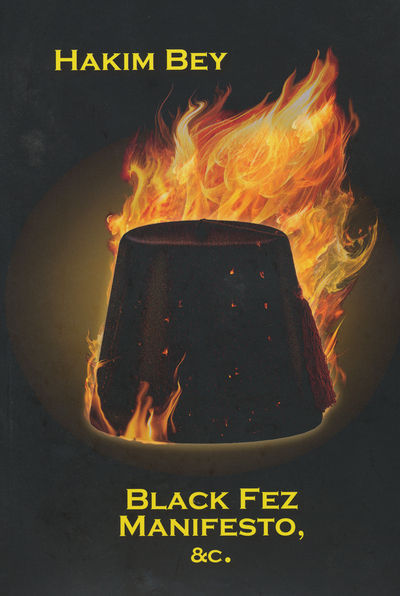
BRAND SPANKING NEW HAKIM BEY (aka PETER LAMBORN WILSON)…

5083_popup.jpg

HYPE: New poetic rants and prose poems from the author of TAZ and Millennium, among many other influential incendiary texts. This volume includes selected Communiques of the Cro-Magnon Liberation Front.

BACK COVER TEXT: “Black Fez is the emblem of our intransigent disgust with the lukewarm necromantic vacuum of dephlogisticated corpse breath that passes nowadays for Empire and organic death.”

Peter Lamborn Wilson’s essays have appeared in Arthur No. 16 (‘Secessionism’) and Arthur No. 29 (‘Endarkenment’).


ARTHUR BEST OF 2007 LISTS No. 7: Trinie Dalton

TOP stuff all of equal greatness
by Trinie Dalton

Valerie Project is a live re-soundtracking by members of Espers, Fursaxa, and Fern Knight of Czech New Wave film Valerie and Her Week of Wonders. Live, the orchestra kills the original sound and plays their own magic, creepy score to this goth horror fairy tale about a girl losing her virginity. Lubos Fiser’s OG soundtrack has been recently re-released on CD and that is a treat as well. But live, the show is stunning, with full instrumentation beyond the average rock band, including Mary Lattimore’s lovely harp playing. CD’s out on Drag City if you miss the live show.

Meramec Caverns in Stanton, Missouri: killer caves, unreal cave classroom in which boy scouts learn speleology and geology, and an annual gospel retreat accommodating 600 people underground that I REALLY want to go to. There is also a disco ball in the cave entrance. Won’t spoil the highlights of the tour, but let’s just say it’s an hour and a half of mind-blowing wonder.

Salt Point State Park in Sonoma County, California: land holdings include one of the last protected pygmy forests, in which topsoil has eroding, causing nutrient-starved plants to flourish despite stunting conditions. This mixed conifer and redwood forest is ideal for mushroom hunting as well, not psychedelics but other showy varieties.

Gore (Picture Box Inc.) by Black Dice and Jason Frank Rothenberg: features collages by the talented Bjorn Copeland. Psychedelic humor and bold color palette.

Ariel Pink: new album recorded this year, unreleased as of yet? Played several spot-on Los Angeles shows, such as an opening gig for Gang Gang Dance at the Henry Fonda Theater and a rooftop blowout in Echo Park the same night Devendra Banhart closed his long Smokey Rolls Down Thunder Canyon Tour at the Orpheum. Catch him live.

Les Mangalepa: Endurance

New American Writing series at the Hammer Museum: hosted by Benjamin Weissman is the best reading series and is even better now that the Hammer’s hot pink-seated Billy Wilder theater has opened. Highlight shows in this venue were Miranda July reading from her new book and artist Jim Shaw performing with orchestra of handmade instruments for the closing of the Eden’s Edge exhibit.

Panda Bear: Person Pitch

Family Books: the bookstore hosted many fun events, including a mini-reading series I curated, and continuously offers new titles to browse while visiting. Brings the boutique-style, niche-shop of New York to Los Angeles, and also proves to me that there’s a younger generation who read.

Denise Emmer: Canto Lunar

Kenneth Anger Volumes I & II released on DVD: my favorite director now has DVDs available with Anger-approved soundtracks and film quality. Director’s commentaries on each film are invaluable. Scorpion Rising, Puce Moment, two versions of Rabbit’s Moon, a letter Bobby Beausoleil wrote about his trials and tribulations battling Satan while recording the Invocation soundtrack from prison, the list of greatness continues.

The Killing Kind: this lost-classic directed by Curtis Harrington is now easy to watch, and wow, is it a creepy tale of a serial killer and his psychotic mother. Best Horror Film 2007!

Oaxaca: visiting Oaxaca City and taking day trips out into each of the four mountain ranges that form its basin gave me a lifetime of inspiration. Monte Alban, the hub of Zapotec culture, was a highlight, as were visiting a calcified waterfall called Hierve el Agua and hiking into the montane cloud forest to caves, wild orchids, and several bromeliad species.

Olympic Spa in L.A.’s Koreatown: $15 gets you a pass into a world of hot baths, dry saunas, steam rooms, and a heated jade-tiled floor to lie on. Ladies only.

Diving Bell and the Butterfly: directed by Julian Schnabel makes you want to give the egomaniac another chance. This retelling of Jean-Dominique Bauby’s paralyzing stroke and his struggle to write a book by learning a blinking alphabet to spell each letter out to a secretary for transcription is completely tragic and beautifully filmed.

Fit To Print: Printed Media in Recent Collage at Gagosian: was my favorite group show this year, solidifying collage’s recent return into the art critical spotlight. Fifty people in this show, but highlights were Jim Drain, Rachel Harrison, Richard Prince’s nurse novel book covers, Bjorn Copeland, Paul McCarthy & Benjamin Weissman, Christian Holstad, Jason Meadows, and many more. Coincides with the collage portion of New Museum’s (Un)Monumental exhibit, inaugurating their new space on the Bowery.

Liz Craft at Marianne Boesky: best solo show starred maybe twenty new all-white painted bronze and mixed media Aztec-style boxes with windows, terraces, and various objects attached inside, outside, above, below, and around these intriguing forms. These surreal dream objects reminded me of Magritte, Cornell, Duchamp, Oppenheim, though with more Mexican-California flair.

The Art of Raising A Puppy
(Little, Brown, and Company) by the Monks of New Skete: was a book that taught me a lot about fostering the pup I adopted from the pound. Written by Eastern Orthodox Monks in upstate New York, this book describes positive-reward method training techniques for German Sheperds, though the theories apply to all canines.

LAMA annual mushroom fair: this year’s was totally dried up due to drought, but usually the display tables feature all the species people find and bring in for I.D., some dudes with microscopes identifying, slide lectures, and displays showing all the native Southern California fungus varieties.

Wanda, directed by Barbara Loden, was screened at the Redcat in conjunction with the WACK! exhibition at MOCA. This great, 1970s feminist-era film, turns the then-popular ideas of feminism on their head, starring an incompetent, redneck loser, Wanda, who continuously digs herself into holes she can’t get out of. She is a charming, funny protagonist who actually convinces the viewer that males are the ones who make the most sense sometimes. This film presents a complex view of gender politics, rejecting stereotypes either way, and can be hard to see, though hopefully one day it will be released on DVD.

TRINIE DALTON is an author, artist, mushroom enthusiast and longtime contributor to Arthur Magazine. Her most recent books are the illustrated novella A Unicorn Is Born (with artist Kathrin Ayers) (Abrams), the short story collection Wide Eyed (Akashic) and a collection of confiscated schoolroom notes, Dear New Girl or Whatever Your Name Is (McSweeney’s). She profiled Ethan Miller of Comets on Fire and Howlin Rain in Arthur No. 24, Delia and Gavin in Arthur No. 21, Animal Collective in Arthur No. 19, Henry Darger documentary filmmaker Jessica Yu in Arthur No. 15, RTX in Arthur No. 12 and both Devendra Banhart and CocoRosie in Arthur No. 10. Trinie just moved to New York and is working on at least three secret projects.


"We had a war in 1968 and we lost but apparently we haven’t realized it, so instead of retreating we do this ritual of repeating the prayers of the 1960s."

bey_small.jpg

This is a Spring 2005 conversation between Hakim Bey (pseudonym for scholar/poet Peter Lamborn Wilson) and Sasha Miltsov posted online

======

Hakim Bey:…automobiles used to look quite beautiful, some of them. Now, even the cars of the very rich – you can hardly tell them from the cars of the bourgeoisie. They’re all the same boring, puffy-looking cars: No flare, no aerodynamics, no daring art deco. What is a modern “Bugatti”? It’s nothing. Even the Arab sheiks don’t dare to have beautiful cars like before. Why? Nobody knows how to make them? What’s the big deal?

Of course, it’s all just cars. It’s all just disgusting shit, but within that bad technology, which started so nice…

Alexandre Miltsov:It’s just getting worse and worse.

HB:Yeah.

AM:Nowadays, they do “retromobiles”. They take a “Chrysler” like it used to be 50-60 years ago and rebuild it with all the modern gadgets. It looks even more repulsive.

HB:It’s just post-modernism. It’s not good or new design.

AM:What still amazes me in America, even though I’ve lived in Canada for five years, is this tremendous amount of cars everywhere. Public transportation is basically dead. And, as we know, it has been maliciously removed.

HB: It is true. It’sabsolutely true. I don’t own a car – it’s not because I am so virtuous but rather because of circumstances. But I’m glad I don’t own a car – many times when I think about that – it’s horrible. At least I’m not adding to that particular misery. But if I didn’t go into other people’s cars – I would never get anywhere, except on a few rare bus stops.

AM:Since we’re talking about cars, what do you think about the projected “World Oil Peak”? It’s not a big secret that there is no real substitute for oil to run the existing gigantic world-industry. There’s a countless list of things running on and demanding oil; cars, of course, are on the top. So what do you think about oil depletion and all that?

HB:What a lot of people would say, primarily the “techno-optimists”, is that when the oil runs out – the other technologies will become economically feasible. So, they will have to run all the cars on hydrogen, or salad oil, or sunshine. But we will still have cars. It’s a horrible thought but they may be right. They may solve the problem. 

AM: But most probably it’s not going to happen that way. There are no real alternatives. There’s not enough sunshine to power all these cars,there’s not enough salad oil – I mean you need to grow crops to get it – a lot of it! And almost all the good land is already in use. It has been paved over by these gigantic roads – you have Eisenhower Interstate Highway system here. And  the so-called “hydrogen economy” is a myth, of course.

HB: That’s right. I’m just saying that we ought to think about all this from the “techno-fix” point of view. So far, they’ve always come up with something. History leads us to believe that they’ll figure something out. At least, we have to take it into consideration. After all, they have all the money in the world to spend on the most brilliant scientists and technologists.

But it seems that they’re not preparing. And that’s the interesting part. They’re acting as if there’s no tomorrow: they don’t think like American Indians or the Chinese for seven generations – they think for seven minutes. If you’re lucky – 15 minutes! That makes you think that there won’t be any smooth transition, brokered by the usual technological and capitalistic bla-bla. And maybe some crisis will occur, some fracture in this happy story. Should we hope for that or should we be incredibly afraid because of that? It’s hard to say. Anything short of the complete breakdown of civilization – nothing is working anymore – it’s going to be war, plague, horrible. Or can you still believe in a situation where the proponents of “the alternatives” have seized power in time to prevent it from happening? Can we really talk about “seizing power” in a context like that?

AM: Well, yes and no. “Power” is so obscure these days. I mean, “seizing” what? A TV or a radio-station?

HB: Yes, and you can have 2 billion dollars and think that you can change the world, and there’s nothing, no effect at all. Nothing seems to work.

AM: There is a popular and rather naïve belief that when the whole system, the Spectacle, will start to run out of energy – oil, gas and other resources – it will gradually loosen its grip on people’s minds and throats. The Media may still be there, the Capital will be there but they will be weak and disintegrated, and so society will inevitably break down into small autonomous collectives, not controlledby the outside world.

HB: Well, the attitudes are changing but the problem is – and now I can speak about the situation here locally – since I have been living here for 6-7 years, I have some insights – and that is that these attitudes are informed by reformism. They are not informed by a critique of capitalism or even of technology. The Green Party is a good example; basically, it’s a hobby group for losers. Here, by strange circumstances, we have a Green Party village government. I am still glad for that, I guess, but so far they haven’t accomplished anything here, except for some symbolic stuff. And the reason for this, I think, is that people of this reformist tendency are not really interested in building real alternative institutions.

For example, this movement is not taking place through labor unions, or food-cooperatives, or producers-cooperatives; it’s not taking place through free schools or alternative schools. It’s not taking place through autonomous action!

Look at the organic food situation: the big companies have already discovered that the organic food is a market and they’re in it, they’re marketing it. And for most of the consumers of organic food this is not a political issue. It’s a health issue. So they don’t care; if Monsanto is going to sell them health food – they’ll buy it from Monsanto. In other words, these nice impulses, these changing attitudes – some of which are forced on people by economic difficulties, as you pointed out, and some of which are voluntary, assumed out of a lifestyle or even out of consumerist attitude towards the “authentic” and the “organic” and the “alternative”, which after all is a market – it all runs into the sand, all the energy runs into the sand.

People with wonderful attitudes and desires that are good desires; but since there is no comprehensive movement, there’s nothing other than these “positive attitudes” and there’s no way to focus them.

I went to a Peace March yesterday – it was the anniversary of the beginning of the war in Iraq. I swear it was like being back in the 60s again: same clothes, same slogans:

“- What do we want?
– Peace!
– When do we want it?
– Now!”

We’ve been saying this for 40 years and we still haven’t realized that symbolic action and symbolic discourse is NOT Action!

And this is even better: there was a counter-demonstration, and the anti-demonstrators were yelling at us that we were communists! This is like a civil war reenactment; it’s like people in medieval costumes pretending to be knights and ladies. Totally bizarre. I haven’t been going to demonstrations lately, so I thought maybe a few things have changed. But no! It’s just “a blast from the past” – for everybody, including the fascists who thought that they were still living in 1979. Very strange.

And this is it! You go, you have a march, you say: “Not in my name!” And then you go home and watch TV. You don’t then go out and start an alternative institution: a church, a farm, a commune…

AM: A pleasure club.

HB: Or even a pleasure club! Instead, they just go home and watch TV.

AM: And then they go to work and get their salaries from the same people who are waging the war. And the taxes go to war, of course.

HB: Exactly! And of course, you NEED your SUV; you NEED your cellular phone. These are real needs. So all these so-called “green people” around here are sucking up gasoline and cement… Just “not in my backyard” – that’s what they say. They are not going to swear off using cement. They will say: “Move the cement plant to Mexico”. I can’t participate in this pseudo-politics; there is no entry-point for me here.

AM: Back to the “Peace March”: the Iraq war looks like it is going to last long. We don’t really know what’s happening there; there are all sorts of media, mainstream and alternative, producing all sorts of  “news” and speculations. But who in his or her sane mind will trust them? They are the media after all. The notion I have is that it’s going to be a big, long and ugly war for the last remnants of oil and for the control of the Gulf region. What do you think?

HB: I think you’re right or you might as well be right. We might as well plan on what you’ve just said; because it would be foolish to think that they’re going to stop just because we don’t like it. They’ve already proved that it’s not going to happen.

Let me try to be an “anti-pessimist” here and point out that if you are right, and I think you are, this will also involve a continuation of this unbelievable deficit spending and going into debt that we are practicing here in the US, both on the personal and the national level. And it must eventually lead to an economic collapse, as far as I can see. For one thing, Europe is going to be driven a little bit further to the left by anti-Americanism, so you will get more things like the mayor of Paris or the Spanish government happening -kind of nostalgic social-democratic, but still no longer interested in playing the global game with America as the sole superpower.

In fact, the whole ten years of globalism and neo-liberalism are already over. We are at a new stage now. That is why the anti-globalist movement suddenly seems so dead and irrelevant.

Going further with the scenario: A couple of other major things can happen, like China shifting its economic activities from the dollar to the euro and OPEC is, of course, practically out, and so forth.

So America is isolated economically: we don’t produce anything here anymore – we can’t be self-sufficient in terms of industry. We don’t make shoes here; we don’t make umbrellas, pencils. We make entertainment and information. We don’t even make the fucking computers! We produce the ideas that occupy the computers. That’s why artists are so important right now – it’s one of the few things that we actually produce. So the arts are hot, some artists are successful – this whole area around here is full of artists, and they drove the real estate prices up. So, now you can’t move into this county for less then 250,000 dollars. Thanks to the artists! You wonder why people get angry at artists – it’s not our fault – we’re just looking for low rent but the real-estate developers are following us, sniffing our butts wherever we go to find out where the next beautiful cheap real-estate is going to be…

So on with the scenario: in 1984 if somebody had asked “would the Soviet Union break up”, everybody would go “ha-ha-ha” – nonsense; it will never happen! In 1984, if people asked whether the United Kingdom would break up, if Scotland would be independent again – “Oho-ho-ho! – This would be a joke!” Just 20 years ago, it would be a total joke. Well, it happened  – and to Yugoslavia too. So, it could happen here. Things move so quickly. It’s possible that with the neo-liberal period already over, we’re now into something new –
the American Empire, and maybe that will only last for 8 years -10 years.

That’s why recently I have taken an interest in the idea of separatism and secession. Because, I think that the only optimistic or anti-pessimistic way of reading the American future is to see the breakup of the American Empire, meaning a political breakup, just like in the USSR. And, as you know very well, this is a mixed blessing – to put it mildly. But there is one advantage to it, and that is that you get a small social unit that you can deal with – maybe, if you’re lucky.

It can very well happen in America, and people have already started to talk about it. I’m writing articles trying to push that idea. If I’m wrong – I’ll be wrong. To me it’s just a tactic, because from an anarchist point of view, secession is good because you get a smaller unit to deal with and eventually – this is straight Proudhon – you will break it down into autonomous regions, and then you confederate them in an anarcho-federalist union, completely voluntarily and based on popular democracy with revocable delegates. And as he put, it is necessary to organize for production and if necessary defense. This is an anarchist ideal, and secession could be a step towards it. As we know, it can also end up in a fascist nightmare. This is a dangerous idea, I admit, but I don’t see any other interesting political possibility for America.

Continue reading

ALEJANDRO JODOROWSKY interviewed by Mark Pilkington

Alejandro Jodorowsky
A brief meeting with the magus of cinema
By Mark Pilkington for Fortean Times

A legless gunslinger crosses the desert atop an armless man’s shoulders; a thirsty hippo quenches itself at the fountain of youth; the invisible man wrestles an enormous anaconda in a mobile pharmacy: every great Jodorowsky film confronts the viewer with a riotous cavalcade of symbols drawn from the collective unconscious. Or at least the collective unconscious as imagined by Jodorowsky…

These days, aged 77, he’s busy writing and directing plays, writing comic books, performing his Psychomagikal healings, reading tarot cards in a Paris café and, when I caught up with him, promoting the new, extremely welcome, box set of his first three films: Fando y Lis (1967), El Topo (1970) and The Holy Mountain (1973).

Given the brief window of time available, and the fact that there’s plenty of information about his career available elsewhere, I tried to steer conversation – as much as it is possible to steer a conversation with Jodorowsky – in other directions…

MP: You’ve described your films as ‘initiation cinema’ and ‘healing cinema’, can you talk about what this means.

AJ: In order to talk about initiation and healing cinema, we need to talk about the ‘industry’ of movies. The movie industry is a business for entertainment. And who controls this business?… The tastes and demands of normal people, no? But normal people represent mediocrity, not art; their entertainment is vulgar and gives you nothing with which to change your life. It’s like a cigarette; you smoke tobacco, and it gives you nothing, unlike marijuana, which always gives you something. That is the industrial picture.

In order to think about the ‘initiatic’ picture, we need to break with industry. The goal of industry is to make a lot of money – this is the measure of a film’s art. Three hundred million dollars – it’s a masterwork! If it doesn’t make money, it’s an awful picture, a failure. But the initiatic picture doesn’t work with money, it works with soul, with spirituality. A lot of spirituality is a good picture, lack of spirituality is a bad picture. It’s different.

And then, what is it to heal somebody? In reality, the biggest illness is not to be what you are but to be what the other wants you to be – the family, the society, the culture. They tell you “You need to be like this, with these morals, with these feelings, with this economy, with this political thing, with this religion”. And then, you go and sign a form that puts you into a spiritual jail for your entire life. The initiation, initiatic cinema, frees you from all these forms, from the artificial world where you started out in the belly of your mother.

Initiating – the art initiation – reveals to you the hell, this prison, and shows you how to escape from it. And to heal you is to give you the opportunity to be yourself and to have your own opinion. Hitchcock, in movies, is an ill person. Why? Because he has disguised himself as a genius of movies, but in reality, he’s making his movies in jail, because he’s saying, “That is a system that will make terror. This, the public will love. There, they will be anguished.” He’s directing your emotions; everything is done to hypnotize you in order to react in a certain way.

In a healing picture, they don’t say you need to react like that. You will react as you react!

MP: So, Hollywood film is mind control?

AJ: Yes, mind control. And all American pictures are US propaganda, it’s a form of imperial power.

Look at 300. First it is propaganda against Iran. Second, it deifies physical strength. It is preparing the young person to kill for his country in the anti-Islamic kamikaze! 300 is also racist towards black people – the bad people are monsters and black. And the emperor of the bad guys is also gay! Your initiation comes when you begin asking “Why? Why?! Why a gay? Why [is he] the biggest black person? The Persians are not like that! Why?!” It’s a critical initiation; that is when you start to know the limits of the jail we are born into.

But we need to go in another direction – we need to go see The Holy Mountain after that, The Holy Mountain criticizes, but then it proposes a possible path to liberation.

MP: Do you think ‘The Holy Mountain’, ‘El Topo’, ‘Fando y Lis’ – could have been made at all today? Is it even possible to make films like that anymore?

AJ: People say, ‘Ah, it was nice back in the day, because you could make films like this.’ But, actually, it was worse than today. Making Fando y Lis I almost got killed, really killed. The Mexican Minister of Defense called to threaten me, saying he wanted to kill me, I had to escape, they wanted to lynch me. It was not easy, but I did it. But if someone [like me] at 40 years old, 30 years old wants to do that, he will do something like that, but he needs to have enough courage and enough desire to make art as I have.

MP: And do you see anybody doing this today?

AJ: It’s difficult because my friends who are big talents get destroyed by Hollywood. Guillermo del Toro, I like him because he’s the next generation, but I knew him before his recent success – he’s full of talent, but now he’s obliged to do Hollywood style, mediocre films. Or Sam Raimi – now he’s making Spiderman, you know? It’s a shame! And all the big directors in the Asian movement, of Hong Kong, Japan, Korea, their talents are absorbed into Hollywood. And even the story, for example, for the original The Infernal Affairs is fantastic, but the Hollywood remake, The Departed, it’s awful, just a display of big egos, no?

MP: I completely agree. Did you see Mel Gibson’s Apocalypto?

AJ: No, I didn’t see that.

MP: It’s good – the central sequence of that, when they visit the Mayan city, is one of the wildest things I’ve seen since your own films. You should see it.

AJ: Sometimes, there are things that inspire me. For example, in the film The Prestige. I find something there that is metaphysical. Like Borges, no? The guy who was killing himself. That was something good. The mystery of prestidigitation was something that interested me there. Sometimes you don’t ask a picture to completely work. In an awful picture, you can find something fantastic. Takashi Miike, for me, is some kind of genius in some moments, and very terrible in other moments – it’s terrible! But in some moments he is incredible! I don’t admire Miike Takashi completely, but I admire a piece of Miike Takashi.

MP: Is the act of directing and producing a film closer to mediumship, priesthood, or neither?

AJ: Everything! When I made Santa Sangre, for example, I didn’t see a single person. Not one friend, no women, no nothing. I slept five or six hours a day because I worked until midnight and woke at 5 or 6 o’clock in the morning. I ate very little. I didn’t speak with anyone from the outside world. I just made my film. For me to make a picture is a kind of vital thing – you do it or you die. You need to be there. And when I came in the morning, then I gave the shot of the day. And when we finished shooting, all the technical people said, ‘What is the first shot for tomorrow?’ Ah, that made me angry, but I would tell them, and then I changed it in the morning!

MP: And how did you choose your crews?

AJ: It’s always some kind of compromise, it’s a searching process. The most important choice for me is the cinematographer. And they will help me to shoot the person he needs. Etc. And the actor is an encounter. But the most passionate thing for me is [finding] the places where I shoot. I travel in a jeep always, traveling into the city…

Shooting Santa Sangre we found a site where they were demolishing a house and creating a huge dust cloud. It was terrible, dirty, dirty! But I thought, ‘Go inside the cloud.’ And we went inside the cloud, we crossed the cloud, and there was the church. It was exactly what I needed, it was a church built specially for prostitutes. They all sat nearby and charged three dollars for their services. One dollar for the woman, one dollar for the pimp, and one dollar for the priest! Incredible, no?!! One dollar for the priest for every fuck!

MP: In your life, you’ve done many things – mime, filmmaking, theatre, writing, music, mysticism, therapy – is there anything you can’t do?

AJ: In my life, what is the most important for me – I work a lot – is what is the least commercialism: to make poetry. That for me is important, no? Very few people can read that. Poetry? Nobody reads poetry now. And I am lucky, they publish me. And I like to write theatre, now I am writing theatre, and I am directing a play in Turin, Italy. Then later in Naples, then in Belgium.

MP: Do you consider yourself to be of a particular nationality?

AJ: Well, I like Chile, because I was born there, but I don’t feel myself to be any nationality at all. In reality, I don’t have any one definition, no name, no nationality. This is good because every country I go to I like the country, it’s very good.

MP: Were psychedelics ever part part of your work?

AJ: No, the audience who came to see El Topo was full of people smoking marijuana. When they came to see The Holy Mountain, it was LSD. Myself, no. Because I was making the picture – why would I need that myself? I had one experience on mushrooms, and one experience with LSD, in order to know what they were like. It was with my master, Oscar Ichazo, who ran the Arica school of analysis. He initiated me one night, for eight hours – only one time. I think every person, starting from Bush and Blair and all that, they [should] take mushrooms one time, in order to open the mind – just one time. Because these dirty politicians only speak about materiality, not one word about spirituality. They need to open their minds.

MP: Have you ever experienced things that you could not explain or things that seemed mystical or paranormal?

AJ: This is my assistant, a kind of bodyguard. Ask him because he’s the person who sees more of the magic my life.

Assistant: Yes, there are many unexplainable things. You know, Alejandro has been reading Tarot for like 40 years, and he’s healed many people who stutter. Like ten or eleven! It’s very strange. I’ve seen him doing psycho-shamanic operations; and then when you discuss with the people afterward, it’s like they’ve been healed of something! It’s not really visible, though if you have the eye, if you look really closely and concentrate on the thing…

AJ: Now it’s a form of art for me. I do it… I do what I need to do. Now when I start to read the Tarot for a person, the person says something, and then we go on. I say to the person, ‘There, you are economizing two years of psychoanalysis’, because psychoanalysis doesn’t heal you, but helps you to live. But in order to heal – we need to do something more. But for me, life is weird, it’s full of little miracles!

MP: Do you pray? And if so, to who or to what?

AJ: No, I don’t believe in praying to an external god, but I think in the interior of ourselves, we have what I call the interior world. A world which is a clear point of light, which is not you, but it is the fountain of life within yourself. When they discovered America, there was a fountain where you wash and get young – the fountain of youth. The fountain of health is inside you. And every night, I try to approach there. That for me is to pray, to make emptiness and to come to the centre of yourself, to try to go there.

MP: Do you think it’s possible for the mind to exist separately from the body?

AJ: Yes. In my youth, I was a body who had a soul. Now I am a soul who has a body. For example, now I am having a little problem with asthma because I have the flu – and in the moments when I feel bad, I say, Okay, I will go inside myself. In order to let the body live his life, I will live my life. But, anyway, we are very, very, very mixed in our bodies. But in another way, we think the body is our servant, but our master also.

MP: You’re 77 now. How are you coping with growing older?

AJ: It’s fantastic! I like it a lot. I don’t want to change myself. If you said, Do you want to be 40 years old [again] and I would say, maybe my body, but not my mind. It’s a nightmare, a social nightmare to get old – to get Parkinson’s, to become an idiot, but every day the brain is making new connections and is developing, like the universe. Your soul is getting better and better because you are losing what is not necessary. It’s fantastic to get old! It’s an incredible feeling of freedom, incredible!

Now, for example, to make love, sometimes I have erectile problems. Sometimes it’s not so easy. But it’s not [a problem] because I can use my hands, I can caress – you can satisfy a woman in an incredible way, as the lesbians do it! What is the problem? Even at 80 years old, you don’t have sexual problems! [Laughter]

MP: We’ll print that! Death is a recurring theme in your films…

AJ: Not anymore… because in the past, I knew what despair was. Every night, I despaired that my life as over. And suddenly I opened my eyes… I don’t know how many times I’ve slept since. Death is the same. You die and there’s nothing – so you don’t suffer. And if there is something, immediately you will know.

MP: You have no fear of death?

AJ: Not anymore. I am completely prepared to die – spiritually, not corporally. My body wants to live. The body always wants to be immortal, not to die. And the soul accepts death – that is good. But it’s not good if my body wants to die, because my life is shorter. You menace me with a knife, and I will defend myself, I will ask somebody to protect me, no? Even if I say [to myself], “I can die.” I understand that.

MP: Do have any beliefs about what happens afterwards?

AJ: Why? Why be curious about what will happen, it will happen anyway, it will happen! Either I’ll go there or there – everything will happen. It’s fantastic – the future is fantastic! Anything that will happen will happen!

MP: Are you optimistic about humankind’s future?

AJ: Civilization can come to an end. But I believe that if man was created, it’s not because man wanted to exist, it’s because the universe wants consciousness. And there are all these threads of the universe working for us in order to make a new mutation. We are creating a new brain. Because we have three brains, no? The Reptilian, the mammalian and the cerebral cortex. We will make a fourth brain.

We are monkeys now, but this will be rearranged. If we don’t do that, our children will do it. Without a revolution, without anything. The next generation will change everything…

The Jodorowsky Collection is available now from Tartan DVD. It contains beautifully remastered editions of Fando y Lis, El Topo and The Holy Mountain, the three films that cemented Jodorowsky’s reputation as one of cinema’s great iconoclasts. A wealth of extras includes short films, documentaries, symbolic commentaries and, the icing on the cake, complete soundtracks to both El Topo and The Holy Mountain – the latter a collaboration between Jodorowsky and jazz trumpeter Don Cherry. Bravo!

With thanks to Alyssa Joye.

"A British TV company invited a small tribe called the Kastam, from the tiny South Pacific island of Tanna, to send a delegation to England, a country none of its people had ever visited before. They spent a month living here, learning our customs, and making a film about the way the strange and alien inhabitants of a modern western democracy live."

Pacific tribesmen come to study Britain in Vanuatuan costume: l-r Posen, Joel, Albi, Yapa and JJ

Strange island: Pacific tribesmen come to study Britain

For centuries, anthropologists have travelled overseas to live among ‘strange’ tribes and observe their ‘colourful’ ways. But rarely has it been tried the other way round. So what happened when a group of South Pacific islanders spent a month in Britain to study our own odd little lives?

By Guy Adams
Published: 08 September 2007

One bright morning in St James’s Park and a stream of tourists approaches Buckingham Palace, where trumpets will shortly herald the Changing of the Guard. In the middle of the crowd walk five very short, very odd-looking men. They carry camcorders, gesticulate wildly, and talk in a language no one can understand. In the heart of picture-postcard London, this bizarre group stands out like a sore thumb.

Further investigation reveals that a film crew is tracking the party, at a discreet distance. Something is going on. In fact, the cameras are bearing witness to a historic event: the odd-looking group, whose skin is dark and whose smiles are wide, and who all measure around five feet tall, are on the verge of completing an extraordinary social experiment.

In March this year, a British TV company invited a small tribe called the Kastam, from the tiny South Pacific island of Tanna, to send a delegation to England, a country none of its people had ever visited before. They spent a month living here, learning our customs, and making a film about the way the strange and alien inhabitants of a modern western democracy live. The five men walking up the Mall are this delegation. We are witnessing the final chapter of their incredible journey.

The film, in the form of a three-part documentary called Meet the Natives, appears on Channel 4 later this month. It will mark a scientific first: for generations, western anthropologists have travelled to faraway lands to live among native tribes and document their way of life. But, until now, anthropology has always been a one-way street; alien cultures have never ” gone native” over here. The project was an experiment in what one might call reverse anthropology.

A very strange experiment it was too. The five men, whose names are Yapa, Joel, JJ, Posen and Albi, come from a small hillside village on Tanna, which is the southern tip of the archipelago that makes up the island nation of Vanuatu. At home, they live in mud huts, wear nothing but penis sheaths made from grass, and while away days conforming to a sort of tropical cliché: tending crops, looking after pigs and sitting contentedly in the shade of the banyan tree.

The hurly-burly of central London, where I was invited to follow the group for a day, couldn’t be more different. For men who had grown up in a place where the only form of currency is pigs, and innovations such as electricity, television and the internal combustion engine never caught on, the land of skyscrapers and unbridled capitalism isn’t just another country. It might as well be another planet.

In a strange way, however, Yapa, Joel, JJ, Posen and Albi were ideally equipped to study our frenetic society: as the ultimate outsiders, their take on everything from household

gadgets to domestic relations and workplace convention promised to be as quaintly amusing as it was unique. Only very few peoples on the face of our globalised planet could pull off an anthropological study of the UK, and the Kastam were one of them.

There was, however, to be a twist; a faintly extraordinary one, too. Kastam religion has it that England and Tanna were once the same nation. They believe that our islands emerged, like twins, from a volcano at the time of creation. Some time afterwards, England drifted away to the far side of the globe. But today, the tribe reckon, the Brits remain their lost brothers. When the delegation arrived in the UK, and met its people, they were treating them as long-lost brothers.

Stranger still, for viewers of the documentary, is the fact that (for reasons that will be fully explained later) the Kastam worship a very famous inhabitant of England, who once visited their island on board a very smart yacht. That man is Prince Philip. Incredibly, the Kastam believe that the husband of our Queen is the Son of God.

All of which explains why Yappa, Joel, JJ, Posen and Albi are jabbering so wildly, and walking so excitedly up the Mall towards Buckingham Palace on a sun-dappled morning. They are experiencing a moment of religious revelation. The building before them, which they call “the big house”, is home to a man who they have spent their entire lives worshipping. Prince Philip, they reckon, is God made flesh.

The five reverse anthropologists are engaged in nothing less splendid than fulfilling a religious prophecy: that the Son of God will one day meet with them and agree to return to live with his brothers in the South Pacific. The men believe, to adapt a song from the football terraces they have visited (to study sporting culture) only days earlier, that the Duke of Edinburgh is finally about to be coming home. Watching a group of Kastam come to terms with our customs is both instructive and very, very funny. Many of the things you’d expect to leave them flummoxed duly do: at meal-times, for example, the group struggle to cope with sitting at table, and using plates, knives and forks (they are used to dining with their hands, cross-leggeed on the floor). In one early scene, when they attend a dinner party, Yapa tucks into the contents of the butter dish, with some gusto. He is either too polite, or too confused, to stop until the entire slab is finished.

In another, the group attends a rural pub on a Friday evening, which they describe as the white man’s version of the “nakamal”, or village meeting place. They are perturbed by how noisy it is. JJ remarks that the white man’s fire-water (Adnams bitter) makes everyone behave in a strangely boisterous manner. Yet although the Kastam are uncomfortable with drunkenness, they turn out to be extremely handy at another English pub tradition: darts.

Over its three episodes, Meet the Natives billets the group with the three great English tribes: the middle-class, upper-class and working-class. They spend a week on a Norfolk pig farm, a week on a Manchester housing estate (where they sample the twin delights of bingo and KFC), and a week at Chillingham Castle in Northumberland, seat of Sir Humphry Wakefield, Bt.

“I didn’t want to stereotype the UK,” says Will Anderson, the series producer, “but at the same time we had four weeks to give them a sense of the enormous diversity of England, and decided this was the best way to show them a snapshot of what was here.

“Before the group visited, we spent a lot of time talking to them. They had a lot of questions about food and farming and pigs, so we obviously wanted to show that. They also wanted to see a city, which was something they’d never experienced before, so we went for Manchester. Obviously, trying to meet Prince Philip was another priority, so we decided to give them experience of people who lived in some way like him.”

Most surprising is what Yapa, Joel, JJ, Posen and Albi find either enjoyable, or shocking. In the Norfolk countryside, they were deeply upset by the practice of artificially inseminating pigs (“a crazy thing … undignified … goes against nature”), but delighted by ferreting for rabbits, which they considered a sort of land-based fishing.

In Manchester they were staggered by the phenomenon of homelessness (in Tanna, your family provides a home, come what may), but felt relatively at home in a nightclub, since ritual dancing is an important part of their culture. In London, where they spent a week in a penthouse flat in Docklands, they learnt to love Marlboro Lights and fish and chips, but were left cold by the hustle and bustle of city living.

The Kastam are also strangers to the sexual revolution, finding it hard to comprehend how a man and a woman can be equal partners in a f marriage. They are staggered at the amount of time Britons spend cleaning and washing up, which is regarded as a waste of time and effort.

The most extraordinary aspect of their visit, though, revolved around Prince Philip. On the day I met the group outside Buckingham Palace, we set off on a whistle-stop tour of London’s tourist attractions, including Madame Tussauds. Here, statues of Tom Cruise and other Hollywood stars provoked not a flicker of recognition. Graham Norton’s waxwork left them cold. The world of modern celebrity was clearly alien.

Until, that is, we entered a room housing life-size replicas of our current Royal Family. Yapa, Joel, JJ, Posen and Albi became animated to the point of frenzy. They rushed up to the waxwork Prince Philip, and hugged it. They held his hand, and looked deep into his marble eyes. It was an extraordinary moment. During the hour that the group spent admiring this one model, I learnt a little about the events that led to our Duke of Edinburgh becoming a God in the South Pacific.

The story runs something like this: at the start of the last century, English missionaries visited Tanna in an effort to convert them to Christianity. This angered the Kastam God, who sent his eldest son over to the UK to try to stop them. On Tanna, this son was a spirit, but in England they believe that this spirit has taken on the form of a man. When the Royal yacht Britannia visited their island in the 1970s, they decided that this man was Prince Philip. Shortly afterwards, the tribe sent the Duke of Edinburgh a club, by way of a gift. Several months later, Buckingham Palace returned the favour, posting them a framed picture of a smiling Prince Philip holding the club. In such gestures are legends born. Today, that photograph is a religious icon, their equivalent of an altar at a church.

As a result, Meet the Natives boasts an intriguing sub-plot: the group is anxious to meet with the man they believe to be the Son of God, and ask him to return home. Much of the series revolves around the question of whether they will be granted an audience with Prince Philip. Without revealing what does happen, it all reaches a show-stopping denouement at Windsor Castle. Fascinating and hilarious as this exercise turned out to be, it will not be without its detractors. Within the anthropological community, there are many who now believe that the exercise threatened to corrupt a unique tribal culture. Still more believed that attempting to introduce the visitors to Prince Philip was fraught with danger: in one slip of his tongue, he would after all be capable of shaking their entire religion to its foundations – and the Duke is not, let’s face it, a man renowned for tact.

The creators of Meet the Natives are evangelical about the project, though. ” There is indeed a view that they are human beings who shouldn’t be corrupted by outside influences,” says Anderson. “That was one of the things I was most worried about when we started making the programme. But having watched them settle back into their community, I would say that it’s definitely not altered anything. They were delighted to have visited England, and said that it was a fascinating place, but it wasn’t somewhere for them. They prefer life under the banyan tree. So if anything, Kastam culture is stronger than ever.”

British culture, meanwhile, can also learn a thing or two from watching Meet the Natives. The visitors from a village in the hills of Tanna are also able to educate us in some of the things we may have got wrong. They are, for example, amazed at the fact we spend most of our lives working; they are also staggered by a current political hot potato – the apparent breakdown of family life in sections of our society.

In one of the most instructive episodes of the show, they spent half an hour on London Bridge during rush hour, attempting to film pedestrians and engage commuters in a conversation, with predictably unsuccessful results. This they thought was “crazy”. A rejection of the most important things in life, which they believe to be: “love, happiness, peace and respect” .

“One of the problems of our modern world is that for too long we’ve regarded these cultures as a sort of exotic creature, thinking how primitive they are,” says the Sydney-based anthropologist Kirk Huffman, who acted as a consultant to the project. “But I’ve spent 18 years living with them, and there’s a lot we can learn. They are much more open-minded, and interested in the big questions. In the West, we are obsessed by little things. Our culture is all about how: to travel faster, to live longer, and make more money. Smart cultures are more about why. They are more reflective. That’s what they can teach us.”

And that, really, is what science should be all about. It should inform us about ourselves, for we have much to learn from so-called primitive societies. In their strange journey towards Buckingham Palace, and the adulation with which they revere Prince Philip in all his forms, Yapa, Joel, JJ, Posen and Albi have actually given us a glimpse of what we lost.

Everything you want to know about Vanuatu (but were too afraid to ask)

Population: 209,000
Capital: Port Vila
GDP per capita: $3,346
Timezone: GMT +11
Motto: “Long God yumi stanap” (In God We Stand)

*The first island in the Vanuatu group discovered by Europeans was Espiritu Santo in 1606 by the Portuguese explorer Pedro Fernandez De Quiros

*Vanuatu means “land eternal”. It became independent from France and the UK on 30 July 1980

*It is an archipelago of more than 80 islands, 65 of which are populated. Most are mountainous, of volcanic origin and have a tropical or sub-tropical climate. The economy is based on subsistence agriculture, which provides a living for two-thirds of the population

*There is no income tax, no capital-gains tax and no inheritance tax

*In 2006, the New Economics Foundation and Friends of the Earth rated Vanuatu as the happiest place to live of all the world’s 178 nations using the Happy Planet Index, which reflects the average years of happy life produced by a given society, nation or group of nations, per unit of planetary resources consumed

*Last week, Vanuatu cruised to a 15-0 victory over American Samoa at the 13th South Pacific Football games

*The arrival of US forces during the Second World War saw the emergence of a belief in a mythical messianic figure named John Frum. It was the basis for another indigenous cult to rival the one surrounding Prince Philip. Today, John Frum is both a religion and a political party with a member in Parliament

‘Meet the Natives’ begins on Channel 4, at 9pm on 27 September

"A lot of people did not look three years out" says oopsy Mayor ("Towns Rethink Laws Against Illegal Immigrants" – New York Times)

The New York Times – September 26, 2007

Towns Rethink Laws Against Illegal Immigrants

By KEN BELSON and JILL P. CAPUZZO

RIVERSIDE, N.J., Sept. 25 — A little more than a year ago, the Township Committee in this faded factory town became the first municipality in New Jersey to enact legislation penalizing anyone who employed or rented to an illegal immigrant.

Within months, hundreds, if not thousands, of recent immigrants from Brazil and other Latin American countries had fled. The noise, crowding and traffic that had accompanied their arrival over the past decade abated.

The law had worked. Perhaps, some said, too well.

With the departure of so many people, the local economy suffered. Hair salons, restaurants and corner shops that catered to the immigrants saw business plummet; several closed. Once-boarded-up storefronts downtown were boarded up again.

Meanwhile, the town was hit with two lawsuits challenging the law. Legal bills began to pile up, straining the town’s already tight budget. Suddenly, many people — including some who originally favored the law — started having second thoughts.

So last week, the town rescinded the ordinance, joining a small but growing list of municipalities nationwide that have begun rethinking such laws as their legal and economic consequences have become clearer.

“I don’t think people knew there would be such an economic burden,” said Mayor George Conard, who voted for the original ordinance. “A lot of people did not look three years out.”

In the past two years, more than 30 towns nationwide have enacted laws intended to address problems attributed to illegal immigration, from overcrowded housing and schools to overextended police forces. Most of those laws, like Riverside’s, called for fines and even jail sentences for people who knowingly rented apartments to illegal immigrants or who gave them jobs.

In some places, business owners have objected to crackdowns that have driven away immigrant customers. And in many, ordinances have come under legal assault by immigration groups and the American Civil Liberties Union.

In June, a federal judge issued a preliminary injunction against a housing ordinance in Farmers Branch, Tex., that would have imposed fines against landlords who rented to illegal immigrants. In July, the city of Valley Park, Mo., repealed a similar ordinance, after an earlier version was struck down by a state judge and a revision brought new challenges. A week later, a federal judge struck down ordinances in Hazleton, Pa., the first town to enact laws barring illegal immigrants from working or renting homes there.

Muzaffar A. Chishti, director of the New York office of the Migration Policy Institute, a nonprofit group, said Riverside’s decision to repeal its law — which was never enforced — was clearly influenced by the Hazleton ruling, and he predicted that other towns would follow suit.

“People in many towns are now weighing the social, economic and legal costs of pursuing these ordinances,” he said.

Indeed, Riverside, a town of 8,000 nestled across the Delaware River from Philadelphia, has already spent $82,000 defending its ordinance, and it risked having to pay the plaintiffs’ legal fees if it lost in court. The legal battle forced the town to delay road paving projects, the purchase of a dump truck and repairs to town hall, officials said. But while Riverside’s about-face may repair its budget, it may take years to mend the emotional scars that formed when the ordinance “put us on the national map in a bad way,” Mr. Conard said.

Rival advocacy groups in the immigration debate turned this otherwise sleepy town into a litmus test for their causes. As the television cameras rolled, Riverside was branded, in turns, a racist enclave and a town fighting for American values.

Some residents who backed the ban last year were reluctant to discuss their stance now, though they uniformly blamed outsiders for misrepresenting their motives. By and large, they said the ordinance was a success because it drove out illegal immigrants, even if it hurt the town’s economy.

“It changed the face of Riverside a little bit,” said Charles Hilton, the former mayor who pushed for the ordinance. (He was voted out of office last fall but said it was not because he had supported the law.)

“The business district is fairly vacant now, but it’s not the legitimate businesses that are gone,” he said. “It’s all the ones that were supporting the illegal immigrants, or, as I like to call them, the criminal aliens.”

Many businesses that remain are having a hard time. Angelina Guedes, a Brazilian-born beautician, opened A Touch From Brazil, a hair and nail salon, on Scott Street two years ago to cater to the immigrant population. At one point, she had 10 workers.

Business quickly dried up after the law against illegal immigrants. Last week, on what would usually be a busy Thursday afternoon, Ms. Guedes ate a salad and gave a friend a manicure, while the five black stylist chairs sat empty.

“Now I only have myself,” said Ms. Guedes, 41, speaking a mixture of Spanish and Portuguese. “They all left. I also want to leave but it’s not possible because no one wants to buy my business.”

Numerous storefronts on Scott Street are boarded up or are empty, with For Sale by Owner signs in the windows. Business is down by half at Luis Ordonez’s River Dance Music Store, which sells Western Union wire transfers, cellphones and perfume. Next door, his restaurant, the Scott Street Family Cafe, which has a multiethnic menu in English, Spanish and Portuguese, was empty at lunchtime.

“I came here looking for an opportunity to open a business and I found it, and the people also needed the service,” said Mr. Ordonez, who is from Ecuador. “It was crowded and everybody was trying to do their best to support their families.”

Some have adapted better than others. Bruce Behmke opened the R & B Laundromat in 2003 after he saw immigrants hauling trash bags full of clothing to a laundry a mile away. Sales took off at his small shop, where want ads in Portuguese are pinned to a corkboard and copies of the Brazilian Voice sit near the door.

When sales plummeted last year, Mr. Behmke started a wash-and-fold delivery service for young professionals.

“It became a ghost town here,” he said.

Immigration is not new to Riverside. Once a summer resort for Philadelphians, the town became a magnet a century ago for European immigrants drawn to its factories, including the Philadelphia Watch Case Company, whose empty hulk still looms over town. Until the 1930s, the minutes of the school board meetings were recorded in German and English.

“There’s always got to be some scapegoats,” said Regina Collinsgru, who runs The Positive Press, a local newspaper, and whose husband was among a wave of Portuguese immigrants who came here in the 1960s. “The Germans were first, there were problems when the Italians came, then the Polish came. That’s the nature of a lot of small towns.”

Immigrants from Latin America began arriving around 2000. The majority were Brazilians attracted not only by construction jobs in the booming housing market but also by the presence of Portuguese-speaking businesses in town. Between 2000 and 2006, local business owners and officials estimate, more than 3,000 immigrants arrived. There are no authoritative figures about the number of immigrants who were — or were not — in the country legally.

Like those waves of earlier immigrants, the Brazilians and Latinos triggered conflicting reactions. Some shopkeepers loved the extra dollars spent on Scott and Pavilion Streets, the modest thoroughfares that anchor downtown. Yet some residents steered clear of stores where Portuguese and Spanish were plainly the language of choice. A few contractors benefited from the new pool of cheap labor. Others begrudged being undercut by rivals who hired undocumented workers.

On the town’s leafy side streets, some residents admired the pluck of newcomers who often worked six days a week, and a few even took up Capoeira, the Brazilian martial art. Yet many neighbors loathed the white vans with out-of-state plates and ladders on top parked in spots they had long considered their own. The Brazilian flags that flew at several houses rankled more than a few longtime residents.

It is unclear whether the Brazilian and Latino immigrants who left will now return to Riverside. With the housing market slowing, there may be little reason to come back. But if they do, some residents say they may spark new tensions.

Mr. Hilton, the former mayor, said some of the illegal immigrants have already begun filtering back into town. “It’s not the Wild West like it was,” he said, “but it may return to that.”