Mike Patton’s “Carne Crude Squarciata Dal Suono Di Sassofono” (Arthur, 2005)

COME ON IN MY KITCHEN

What Mike Patton learned in his days of toil at Benihana’s

Originally published in Arthur No. 16 (May 2005)


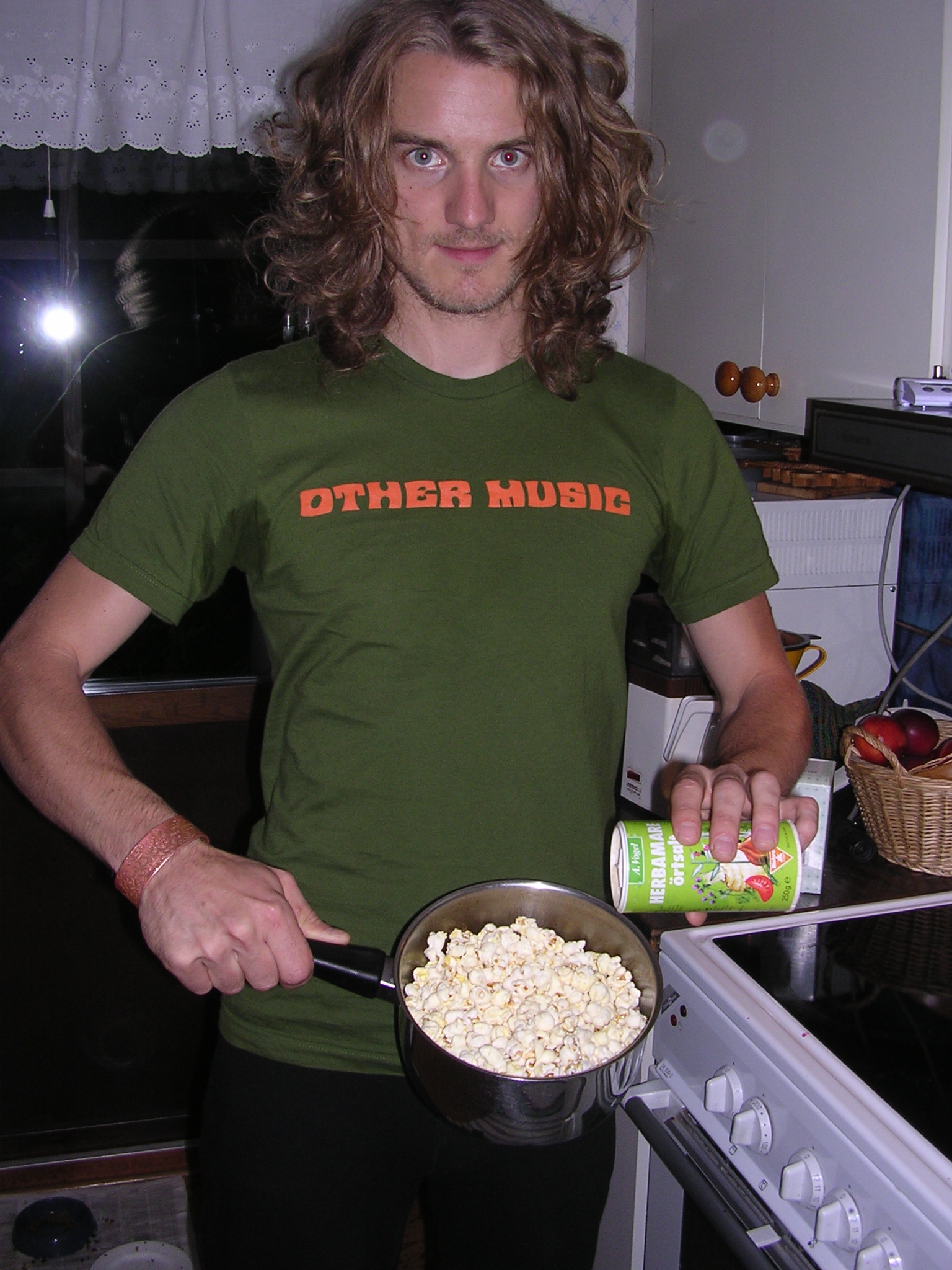
Few working vocalists have done as much with their vocal chords as ex-Faith No More frontman Mike Patton. In the years since that Bay Area bizarro rock band’s demise, Patton has built an impressively wide-ranging C. V., including collaborations with jazz composer John Zorn, Japanese noisegod Merzbow and hip-hop concept squad the Handsome Boy Modeling School. His latest projects to see release through Ipecac Recordings, the post-genre label he co-founded and co-owns, are Suspended Animation—a bonkers 30-track tribute to the month of April by his band Fantomas (featuring members of Slayer, Mr. Bungle and Melvins)—and the battle album, General Patton vs The X-ecutioners, featuring turntablists DJ Rob Swift, Grandmaster Roc Raida and DJ Total Eclipse. For his turn in the Arthur kitchen, Patton selected a dish that was featured on his record of futurist recipes Pranzo Oltranzista: Musica da Ravola per Cinque (Banquet Piece for Five Players), released on Zorn’s Tzadik label in 1997. The tracks were instrumental but had sounds associated with cooking and eating—chopping, slicing, chewing, etc.—while the booklet contained recipes. Says Patton, “This is one of my favorites.”


Carne Crude Squarciata Dal Suono Di Sassofono

(tr. “Raw meat torn by saxophone blasts”)

Cubes of beef marinated in rum, cognac and white vermouth are served on a bed of black pepper and snow. Each mouthful is separated by saxophone blasts blown by the eater himself.

Have a Cup of Brendan Benson’s Tea (Arthur, 2005)

Come On In My Kitchen

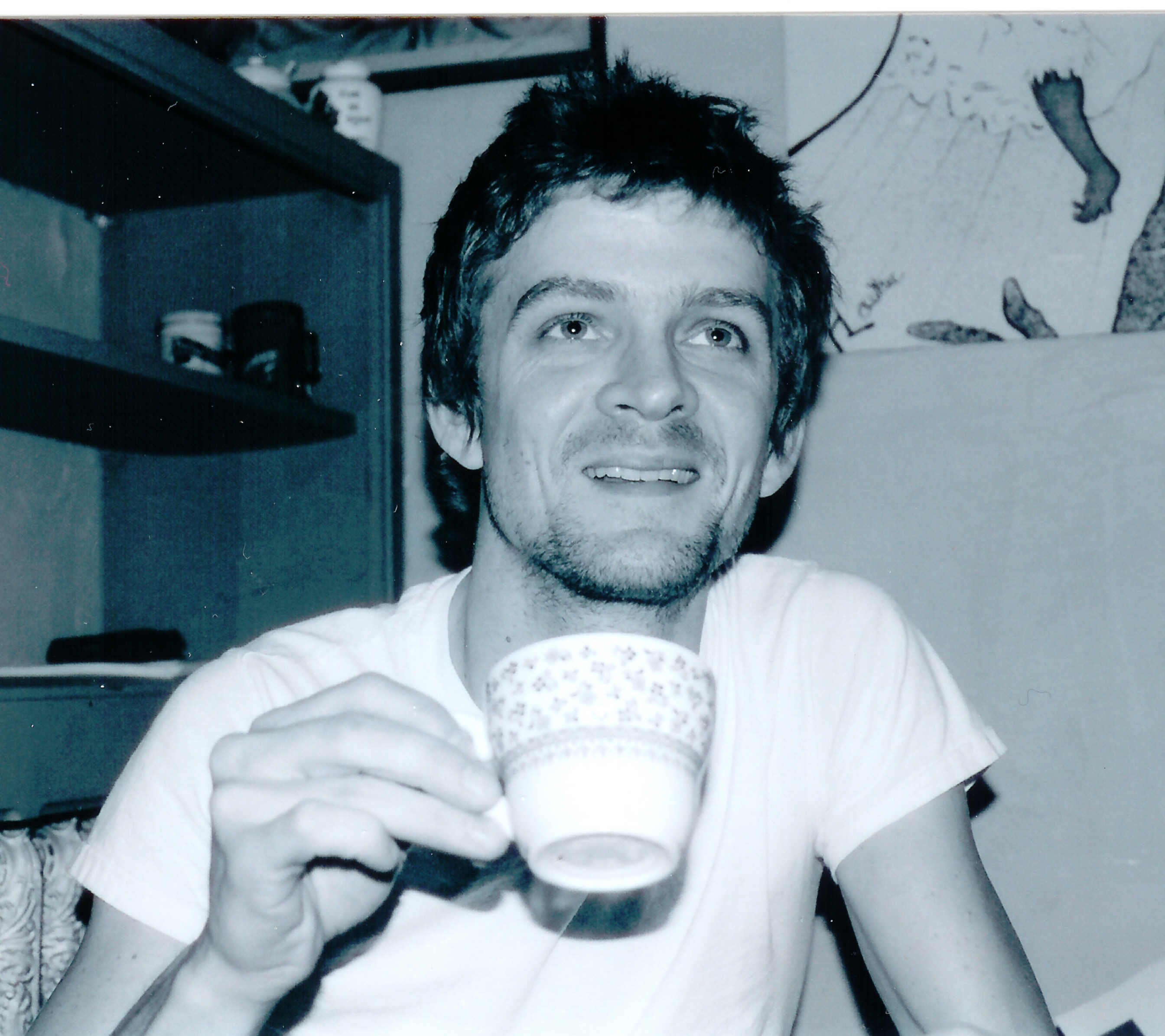
Have a Cup of Brendan Benson’s Tea 

Originally published in Arthur No. 15 (March, 2005)


It’s nice to know that the meticulous and charming nature of Brendan Benson’s songwriting carries over to his kitchen as well. Thanks to the track “Tea” on his debut album, letters from die-hard Japanese fans are usually coupled with a bag or two for Benson’s boiling. His latest album, Alternative to Love, is out March 22 on V2. Here’s how to make the perfect cup of tea, as told to Ben Cass.

What you’ll need

Water: This is the most important ingredient. It should be clean, but not loaded with chlorine or other such additives. I take it from the tap, but I’m fortunate to live in a city which boasts a premium grade drinking water. Others may not be so lucky and therefore should substitute using bottled water (just remember: no Coke or Pepsi products, as they undergo a heavy treatment process and are stripped of all character. I recommend Evian or Volvic). Water has flavor, however subtle it may be, and a little of that “regional essence” in the water is a good thing when making tea. If you dislike the taste of your tap water, you might try letting it stand or “mellow” in a clean glass for an hour prior to boiling, thereby allowing the detergents to evaporate and the particles to settle. Pour the water into your kettle, taking care to not disturb the sediment.

A kettle: I have the electric variety which I like very much. You may also use the stovetop variety. I don’t recommend using a cooking pot as it only provides for a poor aesthetic. Attention to such detail is critical in the tea-making process.

Tea bag: I’ve chosen to use the tea bag over the teapot for our purposes. Although the teapot method is more desirable, the tea bag will do just fine as long as it is of the highest quality. Twinnings, Red Rose and Lipton, contrary to popular belief, are not teas suitable for drinking at any time by any man. Avoid these brands at all costs. Ideally your tea should be purchased somewhere in the UK from an ordinary grocery store. Brands such as PG Tips and Tetley are good. Barry’s is a wonderful tea but not as common. If it’s not convenient for you to travel abroad to buy tea then I suggest you search the Internet. I’m sure there is a service from which you can order tea from the UK. Yet another option is to buy Tetley “British Blend” bags if you can find them. Nothing else will do.

Milk and Sugar: Your tea must contain milk in order for it to be deemed proper.  Milk neutralizes the tannic acid found naturally in tea. Cream should never be used. Organic, 2% milkfat is ideal; whole milk may be used, but often eclipses the delicate flavor of the tea. Skimmed milk should be avoided. If you are lactose intolerant perhaps you might try an herbal tea (which I personally despise) instead, but under no circumstances should lemon be used as a substitute. Sugar, on the other hand, is an option which you may choose to forgo. I take a little sugar to excel and enhance the effects of the tea.

What to do

Bring water to a rolling boil and let stand for 30 seconds. Swish a little in your cup to warm it and pour it out. Drop the tea bag in and pour the water gently over the bag. Let steep, undisturbed for exactly four minutes. Do not stir. Use a small spoon to remove the tea bag, letting the water drain from the bag. Do not squeeze the bag and do not let the spoon remain in the cup, as it conducts precious heat and will prematurely cool the tea. Add sugar if you’d like, then milk. Stir and enjoy.

Some thoughts about tea: Tea has been enjoyed for centuries throughout the world by the elite and affluent as well as pauper and common man alike. For this reason, I believe its reputation should be upheld, its tradition maintained and the very ceremonious and calming properties, for which it is so loved, preserved.

Wayne Coyne’s Coffee Recipe and Philosophy (Arthur, 2004)

Come On In My Kitchen

This issue’s chef: Wayne Coyne of Flaming Lips

Originally published in Arthur No. 12 (Sept. 2004)


Wayne Coyne’s Coffee Recipe and Philosophy

To begin with, I have not willingly become a “coffee snob.” It was not something I ever aspired to. Christ, we used to drink coffee at Denny’s…and we liked it!!! But it’s not simply a matter of flavor. The process of preparing it seems to have become significant as well… Like any addiction there is a sense of pride associated with being so enslaved.

1. First: my choice of apparatus is the “french press” that holds about six cup-size cups…about 50 ounces….

2. Use freshly roasted beans, if this can be done. If not, roast some, say, on Monday and use them through, oh maybe, Friday…

3. I like to use a lot of coffee, you know, to get more flavor. But the unfortunate side-effect is absorbing too much caffeine…this is easily fixable by mixing de-caf with regular beans. This, to some coffee snobs, may seem like poor judgement…they will claim de-caf’s flavor is inferior. But this argument is only valid in a purists’ agenda-type debate, kind of like trying to hear the difference between analog and digital. If you know what you are doing, it’s imperceptible; in other words the regular and the de-caf taste virtually the same. Anyway, like I said, I like to use a lot of coffee. So in a “french press” that holds about five or six cups, use about a cup’s worth of coffee.

4. Grind these beans as fine as they can be ground, making it appear like black Kool-Aid. Plus you can wash these down the kitchen sink without worrying too much about clogging.

5. Part of what is enjoyable about making coffee is the smell of it. Freshly ground beans are a wonderful pleasure trigger. So try not to have too many other smells competing with it, stuff like bacon…wait till the coffee’s done, then cook it. Nail polish, wet dogs and potent perfumes can collide with the coffees’ aroma creating a horrible combination. Kind of like playing a Belle and Sebastian CD and a Miles Davis CD at the same time—both are great on their own—but together, probably unpleasant.

6. Pour the boiling water over the black powder. DO NOT POUR TOO MUCH, for the beans will expand quite a bit…so pour ‘til about half full. Wait a couple of minutes…shake and wiggle the “french press”…this will gently blend the water and coffee together. DO NOT STIR. Once it has settled pour some more water—do some more wiggling.

7. Use wide-mouthed coffee cups, so the smell can go more easily into the nostrils. Small cups are better, not little espresso cups, but small enough that the coffee stays hot for the duration of the drinking.

8. Use dark brown sugar and thick half and half mixture at your liking.

9. Drink five to ten cups… be close to a bathroom…enjoy life…..

Holly’s Mashed Roots — a recipe from Holly Golightly (Arthur, 2004)

Art direction by W.T. Nelson.

Originally published in Arthur No. 8 (Jan. 2004).


Holly’s Mashed Roots

Submitted by Holly Golightly of London, England.

In the winter I like to make this dish whenever I roast poultry or game. I have fed some minor celebrities on it and thrown it at boyfriends. It’s very versatile that way. And very tasty.

Four large carrots and four large parsnips

Large knob of butter

Ground black and red pepper

Peeled, crushed garlic to taste

Peel and cut vegetables in evenly sized discs along the length, place in pan and cover with cold water. Add a pinch of salt. Bring to boil and simmer until soft (about 8-10 minutes) on low heat. Strain off water and chop roughly with a sharp knife. Add butter, pepper and crushed garlic and mash until smooth.

Serve piping hot with roasted poultry or game (stuffed with chestnuts and apricots) and slow roasted potatoes, bread sauce, green beans and port gravy.

Some Kind of Megalomaniac: James Parker on the Dandy Warhols-Brian Jonestown Massacre documentary Dig! (Arthur, 2004)

Some Kind of Megalomaniac

The unfamous also feud, as James Parker finds in Dig!, a feature-length film documenting the decade-long love/hate thing between the leaders of the Dandy Warhols and the Brian Jonestown Massacre

Originally published in Arthur No. 12 (Sept. 2004)


Reviewed:

DIG!

(Palm Pictures, released October 1)

Directed by Ondi Timoner

In order to really dig DIG!—an intimate, warmly detailed portrait of the decade-long love/hate thing between Courtney Taylor (of the Dandy Warhols) and Anton Newcombe (of the Brian Jonestown Massacre)—you have to buy into the idea that Newcombe is a genius. It’s important, this, and just about everyone onscreen testifies to it sooner or later: Newcombe is a GENIUS. He pushes the boundaries, burns with a hard, gem-like flame, is monstrous in his talent, must be compared with Manson, God, Hitler and Lou Reed, and so on. It’s the one point on which this otherwise swinging, confident movie insists a little anxiously.

The Dandy Warhols and the BJM were, very briefly, artistic confederates. Fellow retro-ites and stylists, they played together, swapped ideas and—doubtless—pairs of trousers, and their careers advanced in parallel for about two minutes before the Dandys got the major label deal which still eludes the BJM. Thereafter, the two bands were each other’s nemeses. Anton Newcombe became the unrewarded GENIUS raging in obscurity, Courtney Taylor the limelit, slightly guilt-afflicted music-biz hustler. DIG!, narrated by Taylor (because history is written by the winners), covers just about every key point in the relationship, from Newcombe’s innocent rhapsodies about “this really rad band, the Dandy Warhols” to his first anti-Dandy song “Not If You Were the Last Dandy On Earth” (a riposte to the Dandys’ radio hit “Not if You Were the Last Junkie on Earth”) to the moment he sends the band a box of individually wrapped shotgun shells with their names on them.

Success, in our imaginations at least, is just success —static, constant,some sort of white-lit plane, like heaven. Failure on the other hand is many things, a very mulchy and soulful state, and so DIG is inevitably more interested in the disastrous trajectory of the BJM, about whom the first thing you notice is not the blurting and blustering Newcombe—“I play 80 instruments. Yeah! Weird fuckin’ Chinese shit!”— but the amazingly pointless Joel Gion. Gion (hairstyle, cigarettes) is one these extra or ‘trophy’ members that a lot of your more berserk bands seem to have, to signal the sheer anarchic superfluity of their energy—like Bez in Happy Mondays, or almost any of the Butthole Surfers. In Gion’s case he implements the BJM aesthetic by standing at stage-front looking down his nose and half-arsedly wagging a tambourine. A very pure artist, untainted by actual creation, Gion’s main job seems to be keeping his balance after monster ingestion of drugs. On his little Chelsea bootsoles he teeter-totters, sneering. His clothes are black, his hair is classic through-a-hedge-backwards, and on his pear-shaped face is that expression of somnolent haughtiness we associate with Dr Seuss characters; in fact the longer you look at him the more Seussian he gets—remote, effete, insolent, with tassels for hands, and a name like the Fazoon or the Sprong . ‘Do not look long on the infamous Sprong/ The tilt of his chin is wrong wrong wrong’…

Anyway, Gion turns out to be a witty fellow and quite undeluded—the yang of BJM, if such a thing could be said to exist. Newcombe on the other hand has no sense of humor—none. You can’t be a megalomaniac perfectionist and have a sense of humor.

Continue reading

TRUST AND LOVE: Ladies and Gentlemen, the Fabulous Sharp Ease (Chris Ziegler, Arthur, 2006)


The Sharp Ease: Dana Barenfeld, Christene Kings, Paloma Parfrey and Aaron Friscia.

Trust and Love

Ladies and Gentlemen, the Fabulous Sharp Ease

By Chris Ziegler

Photography by Molly Frances

Originally published in Arthur No. 24 (August 2006)


A slightly injured and slightly drunk Sunday afternoon with the Sharp Ease: singer Paloma Parfrey is tipsy with a beer and a bent trumpet and one sprained ankle, still limping after the part in last night’s show when she fell into a hole in the stage. But Sharp Ease write off injuries instantly. Two shows ago, Paloma had scribbled some broken glass all over her arm, and she was completely recovered within hours. That’s the resilience of the Los Angeles native—the same thing that keeps coyotes and deer poking around the edge of Echo Park also keeps the Sharp Ease alive and thriving. Early 45s like “T-Spin” and first album Going Modern (released last year on olFactory Records in cooperation with LA’s landmark all-ages space the Smell) outlined the Sharp Ease sound: Pixies and Slits with sax (by Anika Stephen) and keys (by Paloma’s brother Isaac) and cut-above lyrics by Paloma, who grew up in a commune and graduated into teenage rock ‘n’ roll band the Grown-Ups before she even graduated high school. Newest EP Remain Instant finds Sharp Ease recovering after a line-up shake-up (longtime producer/supporter Rod Cervera played guitar on this one, following original guitarist Sara Musser) for seven of their best new songs about life in still-unheard Los Angeles—the never-seen-on-TV co-ops and galleries and collectives that keep an out-of-breath outsider community breathing, where the Sharp Ease play their shows and sprain their ankles. Paloma and bassist Dana Barenfeld, drummer Christene Kings and new guitarist Aaron Friscia meet for beer and photographs at Paloma’s 1957 Airstream trailer.

Arthur: Paloma, exactly what kind of commune did you grow up in?

Paloma: My parents were both extremely politically active and they decided to join this commune after I was six months old to be able to protest regularly and feed the homeless. It was this thing in East LA—the Catholic Worker. It’s Christian-oriented, but not like hyper-Christian. Their work is to serve the hungry and protest nuclear weapons. So I’ve been protesting since I was six months old.

Christene: Paloma came out of the womb with a NO NUKES sign.

Continue reading

“It’s Medicinal!: The Hand-Sewn Power Of Little Wings” by Trinie Dalton (Arthur, 2008)

It’s Medicinal!: The Hand-Sewn Power Of Little Wings

by Trinie Dalton

Originally published Jan 16, 2008 on Arthur’s Yahoo blog


Soft Pow’r, the new Little Wings album, wields its quietude like a sword. Lead singer Kyle Field rambles through tunes pondering solitude and longing, but his sad songs have an acidic, transformative edge: gentle guitar lullabies strummed underneath harmonized, twangy vocals that are often compared to Neil Young’s. Current bandmates Lee Baggett, Curtis Knapp, Adam Forkner, and Jona Bechtolt amp up the enterprise in parts; some songs, like “Free Bird,” have a simple country edge, while others, like “Beep About,” are more jazzy and abstract. Field mentions via email that he likes playing loud live, but hadn’t had the desire to record loud music in awhile. He says Soft Pow’r has a “mediciney” feel.

Soft Pow’r is less wizard-inflected than Little Wings’ previous album, Magic Wand: there’s more direct lyrics about the songwriter’s moods, and the musings detail specific people and settings. In the past Field has eschewed blunt narrative messages, mostly declining interviews in favor of writing songs cryptic or whimsical enough to encourage interpretive guessing.

Listening to Magic Wand, I’d suspected that Little Wings were mellow, canyon-dwelling elves who played crystal-powered, ancient machines for their songs featuring whale mountains and a wand who hides inside someone’s robe. Field has described exploring mystical themes through harmonic music as his desire “to study the patterns and relationships between lines, and to think of singing as weaving the sound’s fabric.”

But with Soft Pow’r‘s first line, “Totally lost in the fog, who’s not?” Little Wings launch into several tracks about memory—remembering the past to grasp the present. “Gone Again,” a bluesy tune about someone sitting on a beach, “out of touch,” conjures up a narrator lamenting a missing loved one. The lyric, “I feel a breath but it’s not from my mouth,” in “Warming” evokes an image of a ghost searching for signs of life.

Nature is the buoy keeping characters afloat in Little Wings’ music, providing the free, open space where one discovers feelings long buried. Emotional states in Field’s music have always been conveyed through nature metaphors. Throughout my favorite Soft Pow’r song, “Scuby,” about a boy mysteriously departed, sun slants through windows, pumpkins are carved and candlelit, and tall trees sway in an Autumn tribute heralding a change of season as much as change of friendship. Field feels that describing human conditions through nature’s cues creates timeless songs that remind the listener of mortality. Soft Pow’r offers nature as solace: self-reflecting and medicinal, like the album itself.

Soft Pow’r, just released on Field’s new imprint RAD with upstream support from Marriage Records, links Field’s visual talents with the musical. Field is an exhibiting artist who makes earthy yet ethereal colored pencil and watercolor drawings–he has already designed a skateboard deck for RAD, and his friend Richard Swan has artfully hand-sewn Soft Pow’r promotional patches to sell on RAD’s website. These are no average patches; Swan once mailed me a customized wool sweater covered with Sasquatch patches, including a giant, brown foot with a question mark cut out of it, and a patchwork Bigfoot scene depicting the beast caught by a camera lens. I love men who sew!

Check out RAD: marriagerecs.com/rad/ rad.html

Check out Kyle Field’s drawings: www.kyledraws.com

http://www.littlewingsnow.com/


TRINIE DALTON is an author and frequent contributor to the free transgenerational counterculture bimonthly Arthur Magazine. Her latest books are the illustrated novella A Unicorn Is Born (Rizzoli) and Wide Eyed (Akashic), a collection of short stories.

“Destroying Britney For Profit: Notes On Jann Wenner, Clive Davis And Other Vampires In Decline” by Joe Carducci (Arthur, 2008)

Destroying Britney For Profit: Notes On Jann Wenner, Clive Davis And Other Vampires In Decline

by Joe Carducci

Originally published Mar 5, 2008 on Arthur’s Yahoo blog


It was a bit much to read Rolling Stone’s recent cover story on Britney Spears. It was probably written by Vanessa Grigoriadis, though three others are accused of “additional reporting.” But none of these wrote this sentence:

“She’s the perfect celebrity for America in decline: Like President Bush, she just doesn’t give a f**k, but at least we won’t have to clean up after her mess for the rest of our lives.”

That one’s gotta be by Jan Wenner. (His byline has been Jann Wenner since he went skiing in Gstaad in the early seventies and fell in love with Alpine Teutonic machismo.) But this particular issue’s real offenses were:

1. Wenner Media’s corrupt humility in the Britney piece, where Rolling Stone is counterposed to OK magazine, a Brit competitor just rolling out an American edition. You’d never know that it was Jan himself who brought the fleet street scumbag sensibility up from the Florida-based drugstore tabloids and onto supermarket shelves via his own Us Weekly. “Us!” As if! The PR media began to turn on its celebrity subjects when the movies, TV and music that featured them began to be faked even more cynically in the 1980s. It’s Jan’s cash that keeps those jackals with their digicams running through the streets of Los Angeles after Britney whether she’s coming from or going to rehab, court, or the mall. He debased the People magazine formula and now the Brits are setting up directly to chase him downmarket.

2. The same issue’s piece on Clive Davis wherein Rich Cohen attempts to fob off this pop vampire as the last of the “record men.” It’s right there in the article: He was the first of the suits, not the last of the record men! He made Barry Manilow record “Mandy” which don’t you know made his whole career possible! Who edits this rag?! Clive Davis was last seen trying to break down Kelly Clarkson with the promise of turning her into a Mariah Carey or Whitney Houston! Sounds like an actionable threat to me. Only a true record man would hire Mike Watt to play on a pop session, and Davis opposed it.

Wenner is the perfect mogul for a Media in decline.

According to the new issue of The Atlantic (again a Britney cover), the gossip sites see their heavy traffic “during the corporate lunch hour, from women between the ages of 16 and 34.” What is Britney exploring for her audience? Author David Samuels writes,

“In the dark sewer of misanthropic, gynophobic, and Rabelaisian epithets running through the comments section of celebrity blogs, one can also find gems of authentic emotional connection to celebrity foibles… A good number of readers seem to write in the openly delusional… belief that if their post is sincere or hateful enough, the walls separating their own lives from the lives of celebrities will dissolve, transporting them from the backlit world of their LCD screens to the super-pollinated atmosphere of the media daisy chain.”

Samuels claims the blog-staff at X17, the leading paparazzi agency with a new retail blog, are “USC film-school graduates who prefer to conceal their real names in order to preserve their future viability in the rapidly disintegrating Hollywood system.” Good thinking, kids. I can somehow picture the films you will one day make.

Nowhere in this Britney coverage high and low is any consideration of what she is doing in her roomful of mirrors. She did more than “give it up” in the paparazzi parlance as other stars that subtly position or pose to help them create their shots. She seems to have doubled down on stardom just as it’s dissolving from something once as concrete as George Clooney’s bone structure into something ambient or liquid. Additionally, within the secret world of young women, new rapidly normalizing options like anti-depressants, cosmetic surgery, and period-suppression are whirling into the still unsettled breakthroughs of contraception and abortion. Lindsay Lohan’s sad reprise of Marilyn Monroe’s final photo session before her suicide in a recent issue of New York, and Heath Ledger’s simple drug O.D. seem small compared to the level Britney is operating on. She’s the new media supernaut; I hope she escapes their death watch and lives to tell, or dies in private.


Joe Carducci is the author of Rock and the Pop Narcotic and Enter Naomi: SST, L.A. and All That…. This is his first blog post for Arthur Magazine.

More Now Than Retro: Erik Davis On Lysergic Blues Rockers The Entrance Band (Arthur, 2008)

More Now Than Retro: Erik Davis On Lysergic Blues Rockers The Entrance Band

Originally published March 13, 2008 on Arthur’s Yahoo blog


A few nights ago I swung by San Francisco’s Café Du Nord to catch the Entrance Band, a psychedelic trio from LA that is riding a wave equally composed of fuzz and buzz. It’s the Noise Pop festival up here, and the crowd was full of groovy twentysomethings moving and shaking, in denim and suits and skirts, with thin-brimmed fedoras making a particularly notable showing. I hunkered down in front of the stage with my pint of bitter, chatting with bearded young men who were most psyched for what we were about to witness.

Trios are the most musically honest of rock combos: the singing is often secondary, and the guitarist has to carry a huge load. All sorts of interesting modulations between riff and solo are possible, with the wank potential of the latter restrained by the need to sustain the flow with a thickness of tone and a rhythmic sinuousness. In a trio, everyone has to be up to snuff, and all three of these characters–guitarist Guy Blakeslee, drummer Derek James, and bassist Paz Lenchantin–were up to their nostrils in the stuff. Ferocious entertainment.

Usually I only stick around past the first couple songs if the drummer is actually saying something, or at least respects the groove and does not rely on cymbals and bash to conjure up energy. Derek James was definitely on–he played with intensity but without slop, he held the beats tight while shifting the center within and between songs. But I didn’t really pay a lot of attention to the guy because I was getting all weak-kneed before Blakeslee’s guitar.

A lanky lefty with long hair and skinny wrists, Blakeslee’s one of the best young rock players I have seen in a while. His restless intensity is balanced with a methodical cool, and he managed to fuse far more eras and styles than your more typical devotion to ’60s blues-rock requires. Along with reviving the bends and boogie of Fillmore West lysergia, he also explored a raft of later metal and psych styles, including some minor key and middle-eastern modes that added witchiness to the bemushroomed killin floor. He also milked much fun from dense clusters of melodic hammer-ons that reminded me of, believe it or not, Eddie Van Halen (and that’s a compliment, chumps!). And while Blakeslee coaxed lots of delicious analog-sounding spooge out of his rack of FX, he was also perfectly willing to exploit the more crystalline echo labyrinth of fully digital effects.

Looking past the long hair and the classic Fenders, I saw a band that was way more Now that retro. Just the way that Brett Morgan’s new animated doc has rebranded the Chicago Seven as the Chicago Ten, the Entrance Band has rebranded ‘60s political and sonic clamor into something that a slicker, media-saturated era can embrace. Their riffs are not pop, but the band has an infectious charm that will, I hope, take them beyond the velvet ghetto of contemporary psych.

I mostly chalk up to this charm to their sense of the beat, which has definitely passed through the eras of disco and New Wave and survived. Bassist Paz Lenchantin, who both fulfilled and transcended the archetype of the chick bassist, devoted herself to a steady pulse that communicated both conviction and pop propulsion. A couple times, and without the usual feel-good grin, she raised her hands over her head to clap out the beat with the crowd. There was something almost communal about it, like she wanted to draw the audience back into the Movement through shared fusion in the beat. The band’s political lyrics–“M.L.K.,” etc.–were similarly earnest but mostly seemed kinda dumb to me. But I didn’t care. I just sipped my ale and waited for Blakeslee’s squalls to bust their moves. Okay, I clapped along with everyone too.

Erik Davis has a pretty spiffy website at www.techgnosis.com. He writes a column for Arthur Magazine called “The Analog Life.”

What The Heck Is Arthur Anyway?: A Quick Introduction by Jay Babcock (Arthur, 2007)

What The Heck Is Arthur Anyway?: A Quick Introduction

by Jay Babcock

Originally posted Oct 25, 2007 on Arthur’s Yahoo blog


What the heck is Arthur anyway?

Arthur is a critically acclaimed, transgenerational global counterculture magazine. We’ve been publishing it once every two months since 2002, giving it away free at record shops, used bookstores, coffeehouses, art galleries, movie theaters, shoe stores, hair salons, nightclubs, divebars, libraries, opium dens, juicerias, yoga studios, punk houses, all-ages venues, meditation spaces, ice cream trucks, colleges, food co-ops and other freak hideouts across North America. (If you haven’t seen Arthur before, you can order a hard copy from arthurmag.com. Of course if you need it NOWNOWNOW, you can download our latest issue as a PDF from our website also — but I gotta say the hard copy is really where it’s at — paper is portable, you don’t have to squint at it, the pages are designed to be viewed in a space bigger than most computer monitors anyway, and best of all, you can read magazines in the great outdoors — without using up any energy).

Arthur‘s mission is… um… Well, the main thing is it’s a labor of love. We cover what we want to cover. We write about what we want to write about. Generally speaking, we’re interested in the eternal underground, the edge of the envelope where freedom is freer, that tricky territory where new, progressive modes of art and behavior are tried out, whatever the period, whatever the mode. Kalakuta, Haight-Ashbury, Fort Thunder, Sao Paolo, Bolinas, the Lower Eastside, WhamCity: every interesting scene, or personage, is eligible. In each issue of Arthur, we gather together the best available talent — writers and photographers, artists and connoisseurs, filmmakers and video game designers, political actionists and festival organizers, ground-level poets and high-altitude observers — and let them share with us what they’ve found that is of particular interest, value, use. The idea is to bring stuff to the public’s attention — for free — that isn’t the dreary pop gunk that’s in our faces 24/7.

We’re not doing anything new, really. Just last week, The New Yorker ran a feature on the great learned historian Jacques Barzun, which included this tidbit: “In 1951, Barzun, [Lionel] Trilling, and W. H. Auden started up the Readers’ Subscription Book Club, writing monthly appreciations of books they thought the public would benefit from reading. The club lasted for eleven years, partly on the strength of the recommended books, which ranged from Kenneth Grahame’s The Wind in the Willows to Hannah Arendt’s The Human Condition and partly on the strength of the editors’ reputations.”

That’s not to suggest that Arthur‘s team of contributors is of that stature, only that we share the same general program of cultural uplift — a desire to be something of more use than the general consumer guide that masquerades as a magazine in these sad, devolving times. In the last few years, Arthur‘s contributors have included Byron Coley & Sonic Youth’s Thurston Moore, whose regular “Bull Tongue” review column has been absolutely essential reading for anyone interested in contemporary underground culture; authors Trinie Dalton, Douglas Rushkoff, Erik Davis, Brian Evenson and Daniel Pinchbeck; veteran journalists Kristine McKenna, Peter Relic, Gabe Soria, Daniel Chamberlin, Dave Reeves, Sorina Diaconescu, John Payne and Eddie Dean; photographers Melanie Pullen, Eden Batki and Susannah Howe; and countless other writers, cartoonists, photographers, poets and –of course– designers.

Has Arthur made a difference? Not as much as we’d like. A magazine’s cultural impact is always going to be hard to measure in quantitative terms. But, that said, it’s been interesting to watch how artists–and ideas–that got their first airing in a national magazine in Arthur‘s pages have subsequently entered the dim edges of the mainstream’s consciousness. Devendra Banhart? Read the first interview he ever gave anywhere in the pages of December 2002’s Arthur No. 2, or check out the cover feature on him in Arthur No. 10–which also featured the first long-form interview anywhere with Joanna Newsom, who herself would be covered in even greater depth in an award-winning piece by Erik Davis in Arthur No. 25. Ohioan blues rawkers The Black Keys, comics genius and magus Alan Moore, quixotic rock sibling duo Fiery Furnaces, drone-metal band Sunn 0))), avant-psych-pop group Animal Collective, M.I.A., West Coast psychedelic roarers Comets on Fire, the uncategorizable Six Organs of Admittance, the good ol’ Howlin’ Rain, comics genius Grant Morrison and woozy psychedelic soul nomads Brightblack Morning Light all received serious, substantial coverage in Arthur a while ago — not because we’re trendspotters or hypesmiths, but because we simply dug what they were doing while everybody else was busy covering…well, something else.

As for why the magazine is named Arthur…well, that would be telling. Have a guess in the Comments section below.


Jay Babcock is editor/owner of Arthur Magazine