More vintage Charlie Nothing pics

from the late Charlie Nothing‘s website at charlesmartinsimon.com


“The Superfabulous Dingulators – mid-70-s
Patrick Bisconti with his own superfabulous thing;
John Kertisz, bamboo flute
the late great Jesse Ward Jr., percussion
Charlie Nothing, Ocean Floor Dingulator™”


“Nearly Naked Nothing”


“All New CD – 2007
All new songs
All new Dingalator”


“Dingulatin Clown” – 1993

“We just have an unorthodox approach to doing good.”

heroes600.jpg

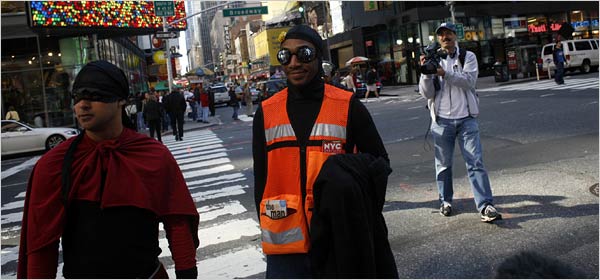
Red Justice, left, and Direction Man, so-called real-life superheroes, on patrol in Times Square.

Dressed for Halloween? No, to Clean Up Times Square
By TRYMAINE LEE
October 29, 2007 New York Times

She calls herself Street Hero, says she is a former prostitute, knows martial arts and takes to the city’s underbelly to protect women who work the streets. Her uniform includes a black eye mask, a black bustier and black knee-high boots.

A Brooklyn man who calls himself Direction Man prefers helping lost tourists and locals. He wears a bright orange vest, a pair of thick black goggles and has numerous maps spilling from his pockets.

Then there is Red Justice, a substitute teacher from Woodside, Queens, who wears red boxer briefs over jeans, a red cape made from an old T-shirt and a sock with eyeholes to mask his identity. He trolls the subways encouraging young people to give their seats to those who need them more.

They call themselves real-life superheroes, and they were just a few of the do-gooders who gathered near Times Square yesterday for what was billed as the first meeting of a group called Superheroes Anonymous. They all declined to give their real names because they said they wanted to protect their identities.

The meeting was part news conference, part documentary film shoot and part patrol duty. There were locals and out-of-towners, most were in uniform (don’t dare call them costumes) and all said they were serious about helping make their respective communities cleaner, safer and kinder places.

The 13 or so who gathered yesterday are part of a growing community of activists across the country and beyond who use the Internet to communicate.

Chaim Lazaros, 23, a student at Columbia University and an independent filmmaker, founded Superheroes Anonymous to bring to New York as many superheroes as he could for interviews and to record them for a documentary he is making about the movement.

“I found these people on MySpace,” Mr. Lazaros said, referring to the social networking Web site, “and I knew I had to tell the story.”

Shortly after noon yesterday, Mr. Lazaros stood at a lectern in a park on West 48th Street where the attendees gathered before going on patrol in Times Square to pick up litter and hand out crime prevention literature.

“This is a serious job,” Mr. Lazaros said. “We are out in the streets fighting crime in a legal way. But most of all we are fighting the worst crime of all, apathy.”

“We’re not these crazy people,” said one man, Geist, who traveled to New York from Minnesota. “We just have an unorthodox approach to doing good.”

As the group walked down Broadway in Times Square, a Manhattan woman known as the Cleanser picked up soggy debris and errant paper bags. She wore a white cape and yellow rubber gloves.

The woman who calls herself Street Hero was with the group. She says she decided to stop being a prostitute after she was arrested. Now she offers to help prostitutes in whatever way she can. “I do it on my own,” she said. “Mostly after dark. Around the city.”

The Super is a superintendent of a building in Crown Heights, Brooklyn, who fixes faucets and does electrical work for people in need. Yesterday, he wore a red cape, a yellow shirt, green suspenders and green tights under black soccer shorts.

The Super, who also declined to give his real name, said he took on the alter ego after a friend was hurt by debris that had fallen from scaffolding. “I said to myself, if we have to wait around for the city or the mayor to fix everything wrong or dangerous in this city, it’ll never get done,” the Super said.

He acknowledged that his self-proclaimed role — as well as what he wears — has drawn derision.

He said he had been laughed at, stared at, egged and stoned. Once, he said, someone in a high-rise apartment building threw a frozen piece of meat at him.

“I don’t have many friends,” he said. “A lot of real-life superheroes stumble along the way. And part of it can definitely make you feel isolated, like nobody understands you.”

charlie nothing R.I.P.


above:
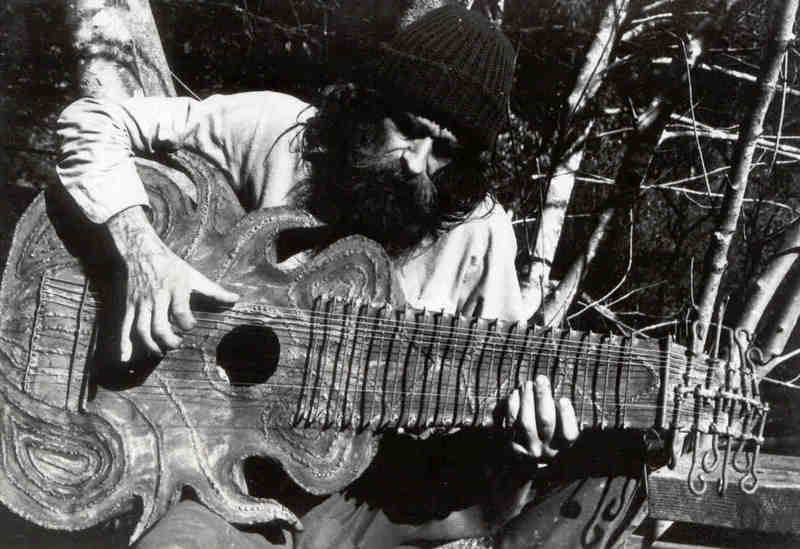
Charlie Nothing and the Big Ding
circa 1975
1954 Chevrolet redesigned
“I make my guitars out of American Cars”

from Clint Simonon of De Stijl Records:

“so sadly, i´m writing, that on oct 23rd at 930 pm in his soquel, california home, charlie nothing passed away.

“charlie was a monolith of life and creation, and it was not until wednesday that i realized i’d begun to think of him as this elemental entity, like wisdom, or experience, and certainly not something that would cease to be. you and i may have a watch, but charlie always had the time.

“i last saw charlie in the brussels airport, after finishing a short string of european dates with jakob olausson, charlie’s first time abroad. he was invigorated with the realization that there were new sets of young ears, eagerly interested in what he’d been creating for the past 40-plus years. It’s a sad and cruel twist that 40 years of the ding : a charlie nothing anthology will be released in posterus; he so excitedly anticipated its arrival.

“so, too late, but, soon, 40 years of the ding : a charlie nothing anthology, a collection comprised of charlie’s recordings for takoma, as well as a privately pressed LP, three singles, cuts from about a million privately released cassettes, and even a few tracks recorded while enjoying time spent in the venice county jail, with a nod / wink, it’s a project with the aspirational intent of answering the question, ‘who the fuck is charlie nothing?'”


FIND THE OTHERS: Hippie/bohemian/enlightened rural enclaves in North America…

Hey folks let’s get a list going of hippie/bohemian rural enclaves/outposts in North America [and beyond] like the one written about below. Email editor at arthurmag dot com with your tips, or leave a comment. Thanks! — Jay Babcock, Arthur editor

In Colorado, a ‘Hippie Mayberry’

By ANDY NEWMAN
October 19, 2007 New York Times

MYSTERIOUS forces draw people to Manitou Springs, Colo., a little jewel box of a village at the foot of Pikes Peak; mysterious forces inform even their mundane errands around town.

Donna Laffoon, a former jockey who works behind the counter of a gem shop on Manitou Avenue, the town’s main street, originally arrived looking for help with a rare skin disease. She found not only a cure — drinking the lithium-laced waters of one of the 10 fizzy mineral springs that burble up through the town — but a home.

One afternoon last month, in a lull at the shop, she took time to help her 11-year-old daughter, Christina, prepare for a homework session by handing her a chunk of lepidolite, an amethyst-colored stone purported to help the mind focus, and a bit of further instruction: “Now take your rock across the street to Eagle Dancer and go get a medicine bag.”

“Mom,” Christina asked, “after that, can I go meet Kelsey at the Maté?” She meant the Maté Factor, a nearby teahouse specializing in a Brazilian stimulant drink and run by a commune-dwelling Christian sect. Ms. Laffoon assented, excused her daughter and took a sip from her own iced lemon maté.

“Welcome to the hippie Mayberry,” she said.

Manitou, an artsy, charmingly eccentric town of 5,000 residents, has a many-layered history — sacred ground to several Indian tribes, gold-rush-era resort, tuberculosis treatment center and Old West mountainside tourist trap as well as 1960s hippie haven. A 752-building swath of town was declared a national historic district in 1983, and many of its late-19th-century buildings are now bed-and-breakfasts.

Manitou is also defined by what it is not — its neighbor Colorado Springs, a sprawling, chain-stored center of conservative evangelical Christianity looming just beyond the Garden of the Gods, a 1,300 acre array of Gaudíesque red-rock formations that acts as a sort of buffer between the towns.

“Manitou is very different from Colorado Springs,” said a soft-spoken Manitou restaurant manager, Frog Rainbowstar (not quite his real name — that, according to his Colorado driver’s license, is Purplefrog Eightoak Rainbowstar).

Manitou is busiest in summer but draws plenty of visitors in the fall and through the Christmas season. On Oct. 27 it will hold its biggest annual event, the Emma Crawford Coffin Races, named for a 19th-century spiritualist, buried on a mountaintop, whose coffin, according to local legend, slid downhill in a flood. All across central Colorado, racing teams are preparing homemade wheeled coffins for a 250-yard sprint up Manitou Avenue, which curves gently up toward Pikes Peak.

Other than in a coffin, the best way to see Manitou is on foot, spending a day or two sampling shops and restaurants as you tour the springs, which are scattered across the town. Each issues from a spigot installed in a unique font — a small pavilion, a mosaic wall, a pedestal guarded by a statue. Begin with a swig from the sulfurous Seven-Minute Spring at the foot of El Paso Boulevard, and proceed up Manitou Avenue.

Across the street from the Dulcimer Shop, run by a tie-dyed former mayor, a sign beckons: “Angel’s Crossing: A Co-op of Energy Information Services/Palmist /Runes/Medium/Classes/Come in for a Cup of Tea and Great Conversation with Me.” The Me in question is Maria McGill, an effusive redhead who one recent morning was wearing a necklace made with a Tibetan healing stone wrapped in copper wire — “It’s an etheric weaver,” she explained. She arrived in Manitou two years ago, after her car broke down in Garden of the Gods. “Nine days it took to get a distributor cap,” she said, “and on the seventh day I rented an apartment. Ever since then my lifeline has grown.”

A few paces farther on is Shoshone Spring, its waters rich in fluoride and natural radioactivity, and half a block from there is Arcade Amusements, housing one of the nation’s most impressive collections of working vintage games, all playable at their original prices. For a penny, stiff, threadbare, monkish-looking soccer players kick a silver marble across a lumpy metal field. For a nickel, you can try a crane that deposits a load of lentils into a miniature grain hopper. The air is filled with the glorious chuck-thunk of pre-electronic pinball machines — two five-ball plays for a quarter!

Adjoining is Patsy’s, purveyor of fine popcorn and salt-water taffy since 1903. The current owner, Jack Johns, said he tried making lemonade with the water from Navajo Spring, which is just behind the store. “But when we test-sampled it out to the customers,” he said, “they said it was too carbonated, too many minerals in it, just yucky. They said, ‘Pfoo!’ ” To demonstrate, he procured a glass of Navajo water from the tap at the back of the building, mixed in lemon juice and sugar and, voilà! — an effervescently putrid flavor clash.

Across Manitou Avenue from Patsy’s, two miniature yellow octagonal buildings contain a sort of condensed history of Manitou. Former tuberculosis quarantine huts, they now house a Mexican restaurant called the Tiny House Grill, along with an impossibly small trinket shop. Inside, the 10-year-old son of the owners, Zak Cabello, when he’s not helping out in the restaurant, makes bone-and-bead necklaces that sell briskly down the street at All My Relations Creations, which claims to be Manitou’s only native-owned native craft store.

JUST down Canon Avenue, Manitou’s other shop-lined street, a sun-drenched storefront displays a fantastic multitiered diorama of hobbit huts and pink trees and twig staircases and pebble walls. Inside, the sculpture’s creator, C. H. Rockey, 75, labors away at his masterwork, a profusely illustrated storybook about 64 types of love.

Nothing is for sale there, but you can buy the work of more than 30 local potters, painters and fabric artists at Commonwheel Artists Co-op, one of about a dozen galleries in town. Just past it is the Crystal Wizard shop, a great place to pick up some fairy balls or a glitter-covered ceramic dragon.

A lovely place for dinner is Adams Mountain Café, although many locals say they refuse to enter its new home because of the curse. The restaurant moved this year to a former spring-fed bathhouse known as the Spa Building, said to have been damned by Indian spirits enraged at the white man’s attempt to profit from the healing waters. The curse does not seem to be working. “Our business is up 60 percent,” said the owner, Farley McDonough.

When day dawns again, fuel up with a yerba maté, a pleasantly woody-tasting concoction, at the Maté Factor, a 24-hour-a-day hangout (except from Friday at 6 p.m. to Saturday at 2 p.m.). Its proprietors, members of a pacifistic sect called the 12 Tribes, favor flowing beards for men and flowing pants and peasant dresses for women.

Next, take a quick tour of Miramont Castle, the 42-room brick-and-mortar hallucination of an aristocratic 19th-century French priest, comprising no fewer than nine architectural styles and now home of the Manitou Springs Historical Society. Pause for a bracingly metallic drink from the Iron Spring.

Half a mile uphill is the head of the Barr Trail up Pikes Peak, maintained, according to the sign, by the Earth Spirit Pagans. The parking lot is full — it has been since 6 a.m., which is how early you need to start to make the 13-mile, 7,500-vertical-foot trek up the mountain and get back down in one day.

Why not take the train instead? The Pikes Peak Cog Railway is Manitou’s biggest draw by far, carrying more than a quarter-million people a year up the mountain. You will notice on the platform that all the artsy, New-Agey types have vanished, magically replaced by conventional-looking tourists.

Up, up goes the little train, through surprisingly lush pine forests that thin out, then give way to an endless, barren boulder field that looks like Mordor.

THE train reaches the summit. You are 14,110 feet above sea level. Of course there is a well-stocked gift emporium, along with what may be the world’s highest-altitude doughnut shop. Unless you make this sort of ascent every day, you are dizzy and lightheaded. You are not alone. All around you, tourists stumble uncertainly, clutching their Pikes Peak refrigerator magnets and commemorative T-shirts, blindly scarfing down fresh warm doughnuts, which the body suddenly seems to crave. There’s not a vegetarian wizard or a sulfurous lemonade in sight.

Now this place is weird.

VISITOR INFORMATION

Manitou Springs is west of Colorado Springs on Highway 24, about 15 miles from Colorado Springs Municipal Airport. Maps showing the mineral springs are available from the Chamber of Commerce (354 Manitou Avenue; 719-685-5089; http://www.manitousprings.org).

Blue Skies Inn (402 Manitou Avenue; 719-685-3899; http://www.blueskiesinn.com) has 10 rooms (from $145), including the Indian Rock Art suite with walls decorated with an Indian pictograph mural.

The Bed and Breakfast at Historic Onaledge (336 El Paso Boulevard; reservations, 719-685-2505; http://www.onaledge.net) is a 1912 Arts and Crafts lodge said to be inhabited by at least five ghosts, including a kindly gentleman named Stew. Rooms start at $115.

At Adams Mountain Cafe (934 Manitou Avenue; 719-685-1430; http://www.adamsmountain.com), the delicious, mostly meatless fare includes specialties like ginger-peanut-sauced Senegalese vegetables ($13).

Maté Factor (966 Manitou Avenue; 719-685-3235; http://www.matefactor.com) serves the Brazilian stimulant tea yerba maté in lattes and other configurations more commonly associated with coffee.

The Garden of the Gods (1805 North 30th Street, Colorado Springs; 719-634-6666; http://www.gardenofthegods.com) is a free 1,300-acre park with dramatic red sandstone formations.

Manitou Springs Mineral Water, from one of Manitou’s springs, is bottled commercially (www.manitoumineral.com) and exported to South Korea and Japan. In this country, it is sold only in a few pharmacies in Korean neighborhoods in New York and in California (and not in Manitou).

Recommended, unheard, without reservation…

New Orleans Funk: The Original Sound of Funk 1960-75
(Soul Jazz Records)

Tracklisting
1. The Meters – Handclapping Song
2. The Explosions – Hip Drop
3. LEE DORSEY – WHO’S GONNA HELP BROTHER GET FURTHER
4. GENTLEMEN JUNE GARDNER – IT’S GONNA RAIN
5. Eddie Bo – Check Your Bucket
6. Professor Longhair – Big Chief
7. Huey Piano Smith & His Clowns – Free, Single & Disengaged
8. Aaron Neville – Hercules
9. Chuck Carbo – Can I Be Your Squeeze
10. MARY JANE HOOPER – I’VE GOT REASONS
11. The Gaturs – Gator Bait
12. Allen Toussaint – Get Out Of My Life
13. CYRIL NEVILLE – TELL ME WHAT’S ON YOUR MIND
14. Bo Dillis & The Wild Magnolias – Handa Wanda
15. Lee Dorsey & Betty Harris – Love Lots Of Lovin
16. The Explosions – Garden Of Four Trees
17. Ernie And The Top Notes – Dap Walk
18. The Meters – Just Kissed My Baby
19. Marilyn Barbarin – Reborn
20. Dr John – Mama Roux
21. Danny White – Natural Soul Brother
22. Eddie Bo – Hook & Sling Pt2
23. Ernie K. Doe – Here Come The Girls
24. Robert Parker – Hip-huggin

“This is a definitive collection of New Orleans Funk featuring acknowledged masters of funk next to some of the earlier artists who shaped the meaning of funk. The album is also filled with many rare, sought after and undiscovered funk tracks. It covers the period from the emergence of New Orleans Funk in the early 1960’s through to the mid-seventies.

“The record is an essential part of anyone in any way interested in Funk’s record collection. It has some vital ingredients in it that you can’t find elsewhere. With the sound of the New Orleans Funeral March Bands, Mardi Gras Indian Tribes and Saturday Night Fish Fries all as inspiration New Orleans Funk developed into a unique sound.

“New Orleans is a port town. Originally owned by the French, this was where many slaves were brought from the West Indies. Many of these slaves came from Haiti and brought with them the religion of Voodoo and its drums and music. It became one of the first parts of America to develop a strong African-American culture leading to the invention of Jazz in the early 1900s. A main feature of Jazz in New Orleans were the Jazz Funeral Marching bands. Solemn Brass bands accompanying a coffin would, on burial, be joined by a second line of drummers and dancers which would turn the event into a celebration of the spirit cutting free from earth. This African tradition is strong in New Orleans and still goes on to this day. The backline drums play a syncopated style that is neither on the beat nor the off-beat. It is these rhythms that are the basis of New Orleans Funk. The album comes with a booklet presenting a historical explanation to how and why this music came about, and with lots of information about the people involved.”

Interview with a Master

KTVU.com Talks To Goon Moon’s Chris Goss
By David Pehling

UPDATED: 12:55 am PDT October 26, 2007

http://www.ktvu.com/entertainment/14424829/detail.html

He may not be a household name, but guitarist, songwriter and producer Chris Goss has had a sizeable influence on the sound of underground hard rock over the past two decades. His band Masters of Reality was one of uber-producer Rick Rubin’s great discoveries in the ’80s, showing a depth and level of songwriting rarely heard hard-rock groups of the era on its eponymous debut for Rubin’s Def American label.

Though the band dissolved soon after the release of the album, Goss would later resurrect the band with such illustrious members as former Cream and Blind Faith drummer Ginger Baker. Around this time the musician would enter into another line of work after providing his services as producer for downtuned Palm Desert band Kyuss. The three early ’90s Kyuss albums he helmed in the studio — Blues for the Red Sun, Welcome to Sky Valley and …And The Circus Leaves Town — would become hugely influential to legions of so-called “stoner rock” bands that would follow, mixing elements of psychedelia and monolithic, Sabbath-flavored heaviness.

Goss would continue his collaboration with Kyuss guitarist Josh Homme as producer on several Queens of the Stone Age albums and as a principle player on recordings for Homme’s Desert Sessions side project. The songwriter has continued to use Masters of Reality as a creative outlet, but Goss takes to the road for the first time in ages with his latest band, Goon Moon. Teaming with former Marilyn Manson/A Perfect Circle and current Nine Inch Nails band member Jeordie White (aka Twiggy Ramirez) as well as an A-list group of players including Homme, frequent Desert Session member David Catching and monster drummers Zach Hill (of the band Hella) and Josh Freese (Guns N’ Roses, The Vandals and both NIN and A Perfect Circle with White), the group’s sophomore effort on Ipecac Records Licker’s Last Leg ranges from noisy, experimental dissonance to bracing, hook-filled heavy songs that would sound perfectly at home on modern rock radio. In advance of playing their second show ever at Mezzanine in San Francisco opening for acclaimed British electronic act UNKLE (who’s latest album he produced), Goss took time out to talk to KTVU.com about his rich history in music and his latest projects.

KTVU.com: The songs on Masters of Reality’s debut album were much more sophisticated than the material being recorded by most hard-rock bands in Los Angeles at the time. You managed to sound much more seasoned than the legions of late ’80s bands copying AC/DC or Aerosmith. You were in your late 20s when the debut came out; what previous band experience did you have and had you put out anything prior to Masters of Reality? Were you just working in various bands that never quite got to that level leading up to that band?

Chris Goss: Yeah, basically that was it. I was a club DJ too.

KTVU.com: Really? DJing in rock clubs?

Chris Goss: No, I liked really early electronic stuff. I started spinning records when I was 20 years old. I was spinning Kraftwerk, early industrial stuff and the Psychedelic Furs. Early ’80s all the way through mid ’80s dance music. I was actually one of the first DJs in the country to play Madonna’s stuff.

KTVU.com: Was that after you’d moved to LA?

Chris Goss: No, that was in New York.

KTVU.com: Maybe I should go back a little further. I don’t think of Masters of Reality as from the LA rock scene, but I guess I always associated you with Southern California because of the link to Rick Rubin and American Records.

Chris Goss: When Rick moved from New York and moved his base from Def Jam to Def American, I came out with him.

KTVU.com: So you knew him already in New York?

Chris Goss: Just prior to him putting out our first record, we started hanging out.

KTVU.com: So you were DJing in New York at the same time you were playing guitar in bands?

Chris Goss: I originally came from Syracuse. That was my hometown and I started spinning records there. I’d also played in some punk band in the late 1970s. But my roots go back to when I started listening to music when I was really, really little. I bought my first Beatles album when I was six years old. So it really started early; going out and buying records and aping them as much as I could. I think one of the reasons Masters of Reality stood out at the time is that the water ran a little deeper than most bands as far as the background and the musicianship and what our influences were.

We were never a dumb-ass metal band. I was actually repulsed by that. The championship wrestling kind of quality to metal that Spinal Tap made fun of, you know? And as the ’80s progressed, I realized where my roots were really was classic rock. I was weaned on Beatles, Stones, Zeppelin and other classic rock records. That’s were I felt comfortable. So after going through all these different stages over all the years and listening to lots of stuff, applying all these different aesthetics from different styles of music, that’s what made it what it was. And probably what made it not as big as other things that were going on (laughs).

KTVU.com: It was definitely a very refined distillation of a lot of influences…

Chris Goss: I think Jimmy Page and Robert Plant – to reach back as obvious examples people can relate to – were musicians who were playing hard rock music but when they went home at night, what they listened to wasn’t other hard rock bands. They were listening to more exotic music. I mean, you can hear James Brown and Barry White in mid-70s Zeppelin stuff. You could tell they were listening to the soul music that was going on at the time. And that kind of gets ignored by the dumbed down metal press. These guys don’t go home and listen to Judas Priest. Robert Plant is a musicologist; he keeps up with everything. It’s a matter of keeping aware. You never go stale that way.

KTVU.com: As a respected producer now, is there anything you took away from your experience working with Rick Rubin that has carried over into your own processes as far as producing bands or producing your own material?

Chris Goss: I think I learned what not to do more than what to do. That first record that Rick did, the band was at odds with each other. It wasn’t a very fun record to do. It had a lot to do with where we were all at personally with each other. At that point, I decided that this wasn’t what I’d worked all these years to do and that I wanted to have more fun doing it. The process shouldn’t be belabored or miserable. That record still rings of a very difficult period for me. So from that point on, I’ve gauged the quality of what I’m working on to how much I enjoy doing it. Very few times do miserable records come out well.

KTVU.com: I’m surprised there was so much tension surrounding that album. It’s one of my favorite hard-rock records of the last two decades. There’s a great resonance to it and I still listen to it regularly today. Though I guess the fact that the original band split up not long after it came out hinted that there were some problems. When you decided to put Masters of Reality back together a few years later, you end up working with former Cream drummer Ginger Baker. How did that come about?

Chris Goss: I met him at a barbeque and someone suggested that we jam. And a few days later, we did. We got along really wonderfully musically. It was instantaneous, really. At the end of the jam that day, he said “We should do something together.” So we did.

KTVU.com: Your association with Josh Homme from Queens of the Stone Age dates way back to your production work on several albums with his hugely influential “desert rock” band Kyuss back in the early ’90s. How did you end up meeting the band and producing them?

Chris Goss: Actually, my wife had received a demo of theirs from a friend and she loved it. And then I caught on to it. We went and saw them play their first LA show, I believe in 1990. There were just a few people there in a really small club. And it was such a breath of fresh air; there wasn’t much metal or hard rock out there at the time that was doing it for me. And they swung; I think that was the thing that made the difference to me. It wasn’t that uptight, staccato style of rhythm. It was very swinging and slow moving. I just think of swing when I think about why I loved Kyuss so much. And they were tuned down lower than anybody at the time. The reason that I got involved with it is that they were tuned down so low and were so original sounding, I was afraid some metal producer – whatever that means – would get a hold of them and ruin it. You know, make them tune up and play more like the flavor of the day whether it was Megadeth or Pantera or whatever was going on at the time.

And so I just really wanted to get it the way they were playing it and record it that way as I was sitting there watching these kids. I hadn’t planned on being a rock producer; I was pretty much content being a songwriter and a guitarist/singer. At this point Ginger was in the band and I pretty much had a course set for myself. Then I saw Kyuss and thought ‘Well, let me be the guy who turns the tape recorder on for them and allows them to be themselves.’ And that was the whole story really.

KTVU.com: Something that’s always struck me about Kyuss is the wealth of great songwriters they had. Usually in a hard rock band you have one or two people writing songs, but here you had Josh Homme and drummer Brant Bjork coming up with great material as well as John Garcia and at various points Nick Oliveri and Scott Reeder. To what extent did you have a hand in determining what songs would make it onto the albums?

Continue reading

A Summer in the Cage


A Summer in the Cage began with a chance meeting between the filmmaker, Ben Selkow, and the subject, Sam Murchison, in the summer of 2000. What began as their collaboration to document life on and around the West 4th Street basketball courts in Manhattan – affectionately referred to as “the Cage” – evolved into a portrait of Sam’s battle with bipolar illness as seen through the lens of Ben’s camera. Using interviews and personal video diaries shot on mini-DV, Hi8 and Super 8mm cameras, as well as archival video and film footage from the last six years, A Summer in the Cage is highly subjective storytelling. The film begins by depicting the seeds of the original street basketball story, with Sam as collaborator and his photographs as the storytelling device. But once Ben (and, by extension, the audience) witnesses Sam’s increasingly manic behavior, caught by accident on video, the film transforms into the story of Sam’s illness. The film subsequently follows Sam over seven years as he lives with this disease, retraces his father’s battle with mental illness and his ultimate suicide, develops an intimate confidence with Ben through their periods of filming together, flirts with suicide himself, and tries to come to terms with the uncertainty of his future. The filmmaker-subject relationship explodes in 2006 with Sam’s third manic episode. Ultimately, the film asks the question, When do you turn the camera off?


Powered by ScribeFire.

"Idiocracy" in our lifetime! Part 34

American kids, dumber than dirt

Warning: The next generation might just be the biggest pile of idiots in U.S. history

By Mark Morford, SF Gate Columnist

Wednesday, October 24, 2007

I have this ongoing discussion with a longtime reader who also just so happens to be a longtime Oakland high school teacher, a wonderful guy who’s seen generations of teens come and generations go and who has a delightful poetic sensibility and quirky outlook on his life and his family and his beloved teaching career.

And he often writes to me in response to something I might’ve written about the youth of today, anything where I comment on the various nefarious factors shaping their minds and their perspectives and whether or not, say, EMFs and junk food and cell phones are melting their brains and what can be done and just how bad it might all be.

His response: It is not bad at all. It’s absolutely horrifying.

My friend often summarizes for me what he sees, firsthand, every day and every month, year in and year out, in his classroom. He speaks not merely of the sad decline in overall intellectual acumen among students over the years, not merely of the astonishing spread of lazy slackerhood, or the fact that cell phones and iPods and excess TV exposure are, absolutely and without reservation, short-circuiting the minds of the upcoming generations. Of this, he says, there is zero doubt.

Nor does he speak merely of the notion that kids these days are overprotected and wussified and don’t spend enough time outdoors and don’t get any real exercise and therefore can’t, say, identify basic plants, or handle a tool, or build, well, anything at all. Again, these things are a given. Widely reported, tragically ignored, nothing new.

No, my friend takes it all a full step — or rather, leap — further. It is not merely a sad slide. It is not just a general dumbing down. It is far uglier than that.

We are, as far as urban public education is concerned, essentially at rock bottom. We are now at a point where we are essentially churning out ignorant teens who are becoming ignorant adults and society as a whole will pay dearly, very soon, and if you think the hordes of easily terrified, mindless fundamentalist evangelical Christian lemmings have been bad for the soul of this country, just wait.

It’s gotten so bad that, as my friend nears retirement, he says he is very seriously considering moving out of the country so as to escape what he sees will be the surefire collapse of functioning American society in the next handful of years due to the absolutely irrefutable destruction, the shocking — and nearly hopeless — dumb-ification of the American brain. It is just that bad.

Now, you may think he’s merely a curmudgeon, a tired old teacher who stopped caring long ago. Not true. Teaching is his life. He says he loves his students, loves education and learning and watching young minds awaken. Problem is, he is seeing much less of it. It’s a bit like the melting of the polar ice caps. Sure, there’s been alarmist data about it for years, but until you see it for yourself, the deep visceral dread doesn’t really hit home.

He cites studies, reports, hard data, from the appalling effects of television on child brain development (i.e.; any TV exposure before 6 years old and your kid’s basic cognitive wiring and spatial perceptions are pretty much scrambled for life), to the fact that, because of all the insidious mandatory testing teachers are now forced to incorporate into the curriculum, of the 182 school days in a year, there are 110 when such testing is going on somewhere at Oakland High. As one of his colleagues put it, “It’s like weighing a calf twice a day, but never feeding it.”

But most of all, he simply observes his students, year to year, noting all the obvious evidence of teens’ decreasing abilities when confronted with even the most basic intellectual tasks, from understanding simple history to working through moderately complex ideas to even (in a couple recent examples that particularly distressed him) being able to define the words “agriculture,” or even “democracy.” Not a single student could do it.

It gets worse. My friend cites the fact that, of the 6,000 high school students he estimates he’s taught over the span of his career, only a small fraction now make it to his grade with a functioning understanding of written English. They do not know how to form a sentence. They cannot write an intelligible paragraph. Recently, after giving an assignment that required drawing lines, he realized that not a single student actually knew how to use a ruler.

It is, in short, nothing less than a tidal wave of dumb, with once-passionate, increasingly exasperated teachers like my friend nearly powerless to stop it. The worst part: It’s not the kids’ fault. They’re merely the victims of a horribly failed educational system.

Then our discussion often turns to the meat of it, the bigger picture, the ugly and unavoidable truism about the lack of need among the government and the power elite in this nation to create a truly effective educational system, one that actually generates intelligent, thoughtful, articulate citizens.

Hell, why should they? After all, the dumber the populace, the easier it is to rule and control and launch unwinnable wars and pass laws telling them that sex is bad and TV is good and God knows all, so just pipe down and eat your Taco Bell Double-Supremo Burrito and be glad we don’t arrest you for posting dirty pictures on your cute little blog.

This is about when I try to offer counterevidence, a bit of optimism. For one thing, I’ve argued generational relativity in this space before, suggesting maybe kids are no scarier or dumber or more dangerous than they’ve ever been, and that maybe some of the problem is merely the same old awkward generation gap, with every current generation absolutely convinced the subsequent one is terrifically stupid and malicious and will be the end of society as a whole. Just the way it always seems.

I also point out how, despite all the evidence of total public-education meltdown, I keep being surprised, keep hearing from/about teens and youth movements and actions that impress the hell out of me. Damn kids made the Internet what it is today, fer chrissakes. Revolutionized media. Broke all the rules. Still are.

Hell, some of the best designers, writers, artists, poets, chefs, and so on that I meet are in their early to mid-20s. And the nation’s top universities are still managing, despite a factory-churning mentality, to crank out young minds of astonishing ability and acumen. How did these kids do it? How did they escape the horrible public school system? How did they avoid the great dumbing down of America? Did they never see a TV show until they hit puberty? Were they all born and raised elsewhere, in India and Asia and Russia? Did they all go to Waldorf or Montessori and eat whole-grain breads and play with firecrackers and take long walks in wild nature? Are these kids flukes? Exceptions? Just lucky?

My friend would say, well, yes, that’s precisely what most of them are. Lucky, wealthy, foreign-born, private-schooled … and increasingly rare. Most affluent parents in America — and many more who aren’t — now put their kids in private schools from day one, and the smart ones give their kids no TV and minimal junk food and no video games. (Of course, this in no way guarantees a smart, attuned kid, but compared to the odds of success in the public school system, it sure seems to help). This covers about, what, 3 percent of the populace?

As for the rest, well, the dystopian evidence seems overwhelming indeed, to the point where it might be no stretch at all to say the biggest threat facing America is perhaps not global warming, not perpetual warmongering, not garbage food or low-level radiation or way too much Lindsay Lohan, but a populace far too ignorant to know how to properly manage any of it, much less change it all for the better.

What, too fatalistic? Don’t worry. Soon enough, no one will know what the word even means.

Bound to Lose – Starring the Holy Modal Rounders

Note from the the director!  please help get this film available via Netflix!!

Dear Friends,

At the end of this year we will be self-distributing THE HOLY MODAL ROUNDERS… BOUND TO LOSE theatrically and on DVD.  Currently we are working to get Netflix to carry our film.  If any of you are Netflix subscribers you can help make this possible by requesting the film.

It’s easy and only takes a minute.  If you’re a member of Netflix, all you have to do is sign in, go to the “Contact Us” link at the bottom of the home page, then the “Title Request” link, and then enter the name of our film in the dialogue box that follows.

We really appreciate any help.  And stay tuned for some exciting theatrical and DVD news.

Thanks!


Powered by ScribeFire.