Heliotrope Drive: A Crusty, Pedal-Powered Center of Post-Carbon Los Angeles

All the best things are washing up on Heliotrope by LACC. They split-open, germinate and flower as some fun, accessible, full-fledged post-carbon culture. The souls of dead outposts of everything great but gone (331/3 Bookstore Collective, Luna Sol Cafe, The Print Kitchen, art in action space) are now a part of the expanding LA bicycle universe. Bike culture in LA is categorically people-powered. So many amazing and interesting artist, writers, poets, musicians, environmentalists and visionaries are involved, a book needs to be written.

This weekend the Bicycle Film Festival happened in LA. To celebrate, a party shut down Heliotrope. 400-plus bicycles rode in: dainty cruisers, chopped-down one gears, imported multi-gears, bikes with bamboo peace flags, bikes with sound systems, dirt bikes too. There was this skid competition: folks would tear down Melrose, whip around the corner onto Heliotrope and jam on their breaks- trying to see if they could slide the distance between two wooden towers. Those who did skid got to advance, those who didn’t ended up head-over-heals with road rash. A weird way to spend the afternoon, but the crowd was into it and just being there–bikes!

null

The co-op bicycle kitchen used to be housed in the eco-village, but then moved onto Heliotrope. The Kitchen offers a place to fix up or build a bike. Part of the Kitchen’s mission is to expand bicycle culture in LA. Beyond fostering and supporting many bike and non-bike events and scenes, they’ve been doing this by getting more bikes between the legs of people, young and old. They have also been taking over their neighborhood, literally. Scoops, the least expensive and most “experimental” gelato shop moved in down the block. Across the street a commercial bikeshop, in league with the Kitchen, opened up. And now if you need another excuse to get on your two wheels, newly opened by members of the Kitchen family is the equally inexpensive brew joint and vegan restaurant Pure Luck. They have a solid selection of beers on tap and offer local visionaries a seat to re-imagine the city from. But then again they are all ready doing that.

Take it to the streets, er The Mall.

from The Reporters Committee for Freedom of the Press (via Dave Lippman):

“… In 1968, the U.S. Supreme Court held that a shopping mall was the modern equivalent of main street, the “normal municipal business district.” It concluded that the landowner could not “limit the use of that property by members of the public in a manner that would not be permissible were the property owned by a municipality.” (Amalgamated Foods Employees Union Local 590 v. Logan Valley Plaza)

But in a subsequent decision the Court retreated from this position, stating that property does not “lose its private character merely because the public is generally invited to use it for designated purposes.” (Lloyd Corp. v. Tanner)

Then, in 1980, the U.S. Supreme Court essentially left the question of access to malls up to the states, holding that the federal Constitution affords no general right to free speech in privately-owned shopping centers. (PruneYard Shopping Center v. Robins)

However, state constitutions may be interpreted to provide greater protection for expression, and therefore newsgathering, than the U.S. Constitution. States may therefore afford the public greater protection for expression in a shopping mall, even at the expense of the owner’s property interest. Since the high court’s decision in PruneYard, several state supreme and appellate courts have ruled on the issue of whether their state constitutions give people the right to enter shopping malls for noncommercial purposes such as political campaigning or gathering signatures for an initiative petition.

Courts that have found constitutional protection for these activities have given a variety of reasons for their decisions.

For example, the Colorado Supreme Court found that a town’s financial support of a shopping mall, and the range of non-shopping activities allowed there, made the center the equivalent of a public forum. This finding was sufficient to trigger the state constitution’s free speech clause, which prevented the mall owners from excluding citizens involved in nonviolent political speech. Courts have also ruled that if a shopping mall allows some political opinions to be expressed, it must allow speakers of all types onto the premises.

Almost all courts that have found a right of access to shopping malls have also said that center owners may promulgate reasonable time, place and manner regulations on noncommercial speech activities. Under the three-part test discussed earlier, these rules must be content neutral, narrowly tailored to serve a significant state interest and leave open ample channels of communication.

Continue reading

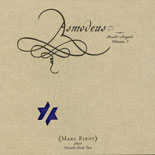
New Ribot on Tzadik


ribot.jpg

MARC RIBOT
“Asmodeus: Book of Angels Volume 7”

Tzadik
Cat. # 7362
Released Jun 2007
cd time – 38:30
US Price $16.00

1. Kalmiya
2. Yezriel
3. Kezef
4. Mufgar
5. Armaros
6. Cabriel
7. Zakun
8. Raziel
9. Dagiel
10. Sensenya

Personnel:
John Zorn: Composer, Conductor
Trevor Dunn: Bass
Marc Ribot: Guitar
G. Calvin Weston: Drums

“Three of the most intense musicians on the planet come together in one of the most explosive and rockin’ ensembles around. An original member of the Masada family since its inception, no one is more keenly equipped to handle a rock trio interpretation of the Book of Angels than Marc Ribot. Joined here by the versatile Trevor Dunn (Fantomas, Moonchild) on bass and the legendary G.Calvin Weston (Ornette Coleman, James Blood Ulmer) on drums, Marc plays like never before, referencing Hendrix, Sharrock, McLaughlin, Ulmer and more. Masada music takes on a whole new dimension. Passionate and powerful, this is one of the most compelling installments in the entire Masada series and contains some of Ribot’s wildest and best playing ever. This CD will blow your mind.”

The Drama Review (TDR) number 43: Spring 1969, The Living Theater Issue

lt1.jpg

from the Stefan Brecht’s Article: Revolution at the Brooklyn Academy.

The Living Theater’s four splendid spectacles were a great event. Like an astonishing portion of the country’s popular music, they proved to be in content and form outside the social system, not structured by it nor, except as outlet, implementing it: liberated territory.

Below is a script for the anti-theater masterpiece(?) Paradise Now.
ltd.jpg
“This chart is the map. The essentail trip is the voyage from the many to the one. The plot is revolution.”

In the film Paradise Now documenting a performance of the piece in Brussels and Berlin, the “actors” after haranguing the audience for hours, with naked calisthenics and existential questions like “why can’t I smoke marijuana”, yell something like, “leave the theater, the real theater is in the streets”. People tumble toward the door, presumably heading for some kind of barricade.

ltb.jpg

The Living Theatre at Ground Zero – July 1 and 4

(above: The Brig cast protest in Times Square)

“Join us to demonstrate our refusal to be complicit in this unjust war.

Two free street theatre performances of THE BRIG

Ground Zero: Church Street (at entrance to PATH train)

Sunday July 1 4pm

Wednesday July 4 2pm

Dear friends,
The Living Theatre has a long history of political street theatre: from the slums of Brazil (where the company was imprisoned for 2 months) to the steel factories in Pittsburg our political theater work against violence in all its forms continues with plays like Not In My Name (1994) against the death penalty and more recently No Sir! which we play in front of the Armed Forces recruiting station in Times Square.
We also have chosen to open our new theatre here on Clinton Street (LES) with the revival of The Brig: a play written by a Marine in the late fifties and presented by the Living in 1963. It not only won many awards but Howard Taubman and other critics called for a congressional investigation which led to policy changes in the treatment of Marines in their own brigs. It has again received an Obie as well a many incredible reviews, many writing about its pertinence to today’s war climate and specifically about Guantanamo and Abu Grav.
But this is not enough! Not enough to simply work for a paying public. Thus in these last weeks we have been presenting The Brig in the street: in Union Square and also Columbus Circle. Now we are going to Ground Zero where this new cycle of violence and war has started.
I don’t have to tell you guys about the worsening situation in Iraq, or Afghanistan. Our banners say: Support the troops AND Stop the war. If in your busy schedules you would like to collaborate with us we would be more than happy. We could do a benefit performance here on Clinton Street for your group but, to the point, we invite you to join us at Ground Zero for two showings of The Brig.

We are inviting lots of friends and reaching out to other groups. We believe also that some press will be there, and some “friends” from the other side.
See you there!

Gary Brackett
The Living Theatre
garyliving@yahoo.com

info
The Living Theatre
212 792 8050
www.livingtheatre.org

Green Hermeticism

Green Hermeticism: Alchemy and Ecology


Peter Lamborn Wilson, Christopher Bamford, Kevin Townley
Introduction by Pir Zia Inayat-Khan
ISBN: 9781584200499
Book (Paperback)
Lindisfarne Books
$25.00
6 x 9 inches
224 pages
September 2007

“In Alchemy, there is an injunction to quicken, or revive, the dead, which is illustrated by a dead tree growing verdant again. That is exactly what this wonderful and rare work does in awakening human consciousness to its Divine potential and Ultimate Destiny. Art thus helps Nature to achieve its ideal Perfection. The authors must be congratulated for their insightful words. I wholeheartedly recommend reading it again and again, and again.” —Stanislas Klossowski de Rola, author Alchemy: The Secret Art and The Golden Game: Alchemical Engravings of the Seventeenth Century

“Environmental solutions today are largely technical, but the planetary crisis is also a crisis of soul—or better yet, of the Imagination. Too tricky for religion, too poetic for reductionist science, Green Hermeticism reheats a prophetic imagination still in love with the material world—a new alchemy of ancient nature.” —Erik Davis, author, The Visionary State: A Journey through California’s Spiritual Landscape

“Just when you felt numb and disenfranchised, thinking the world had become bleak and dead, along comes this rare, much needed book to remind us that there is still some sanity, depth, and creative energy percolating up from the heart of Reality. Thank God (and the Goddess Nature) for this smart and inspiring breath of fresh air! Green Hermeticism is where the wasteland ends—and where the world becomes re-enchanted with genuine living thought that goes beyond superficialities. It’s a rare pleasure to be in the presence of living minds who actually know something wonderful and have not been deadened by the opiates of capital or the tenure track. Very highly recommended.” —David Fideler,publisher (Phanes Press) editor (Alexandria), author of Jesus Christ, Sun of God and translator of Love’s Alchemy: Poems from the Sufi Tradition (with Sabrineh Fideler)

“The publication of Green Hermeticism has the sense we so rarely get, of a genuine moment in cultural history. It is not just the eloquence of its authors’ knowledge and arguments or that they are showing us, once again, the depth and range and beauty of alchemy, and the Hermetic tradition, and what Peter Lamborn Wilson calls Romantic Science. Nor is it even the links they establish between the Hermetic tradition and ecology, and the value of a science that perceives the world as alive rather than a machine. What makes this work significant is the sense that it shows us how we can use these ideas and knowledge to create a genuine counter to destruction and despair, an alchemy of our politics as well as of our spirit.” —Rachel Pollack, author of 78 Degrees of Wisdom: A Book of Tarot

“Green Hermeticism reminds us that the art of the Great Work is to enter more deeply into the dynamic and practical wisdom of the universe, which is our laboratory, where work and prayer combine. When we engage with the All, we know ourselves to be one kindred with all in the viriditas—God’s greening power—where body, soul, and spirit honor each other.” —Caitlín & John Matthews, authors of Walkers Between the Worlds: The Western Mysteries from Shaman to Magus

Hermeticism, or alchemy, is the ancient, primordial mystery science of nature through which people in all times and places have, for the sake of world evolution, sought to unite Heaven and Earth—divinity, cosmos, earth, and humanity, as a single whole. Selfless, intimate, dedicated to healing and harmony, Hermeticism has accompanied and sustained every religious epoch and revelation. It may be found in all historical cultures, from the traditions of India and China in the East to the Judeo-Christian West. It could even be said that Hermeticism is the primal cosmological revelation and the common ground of all spiritual traditions.

Nevertheless, in the great revival of mystical, esoteric traditions and practices during the last century, Hermetic tradition—in fact, Nature herself—has been largely ignored. Today, when the Earth seems most under attack, Green Hermeticism is especially appropriate. The book explores not only the ancient Masters’ inner science, but also their science of Nature.

During spring and summer 2006, Pir Zia Khan convened a series of gatherings to begin to unfold the contemporary meaning of ancient, sacred science for our time. Green Hermeticism is a partial record of that meeting. Peter Lamborn Wilson, explores the many ramifications of the alternative worldview offered by Hermeticism; Christopher Bamford provides a broad historical overview of the tradition from the Ancient Mysteries to contemporary manifestations of the alchemical tradition; while Kevin Townley brings a practical dimension to the gathering teaching the preparation of herbal elixirs and demonstrating that cosmology and philosophy can become a truly healing path for the Earth.

Green Hermeticism is necessary reading for anyone seeking a spiritual and cultural path for the healing of the current ecological and cultural crisis.

Peter Lamborn Wilson (b.1945) is a scholar of Sufism and Western Hermeticism and (under the pseudonym “Hakim Bey”) a well-known radical-anarchist social thinker. His books include Sacred Drift: Essays on the Margins of Islam (City Lights, 1993) and Escape from the Nineteenth Century and Other Essays (Autonomedia, 1998).

Christopher Bamford is the editor in chief of SteinerBooks and its imprints. A Fellow of the Lindisfarne Association, he has lectured, taught, and written widely on Western spiritual and esoteric traditions and is the author of The Voice of the Eagle: The Heart of Celtic Christianity and An Endless Trace: The Passionate Pursuit of Wisdom in the West. He has also translated and edited numerous books, including Celtic Christianity, Homage to Pythagoras, and The Noble Traveller (all published by Lindisfarne Books). HarperSanFrancisco included an essay by Mr. Bamford in its anthology Best Spiritual Writing 2000.

Kevin Townley has been a lifelong student of Western Hermeticism. Early on in his studies, he was drawn to the writings of Dr. Paul Foster Case and has been a member of the Builders of the Adytum (B.O.T.A.) for eleven years. Kevin is currently the Vice President of LPN- USA, an esoteric organization dedicated to the study and practice of Qabalah and Laboratory Alchemy. His studies have led him around the world seeking original Rosicrucian and alchemical texts, as well as individuals who practice this royal art. He is the author of The Cube of Space: Container of Creation (Archive Press, 1993) and Meditations on the Cube of Space (Archer Books, 2002).

Pir Zia Inayat-Khan is the spiritual leader of the Sufi Order International (established by Hazrat Inayat Khan in London, 1917) and founding director of the Suluk Academy, an esoteric school in upstate New York. His initiatory heritage integrates the sacred transmissions of the Chishti, Suhrawardi, Qadiri, and Naqshbandi lineages within a post-denominational, inter-spiritual goal. Pir Zia holds a master’s degree in religion from Duke University.