Today's Autonomedia Jubilee Saint — Armando Perez

perez
NOVEMBER 3 — ARMANDO PEREZ
Slain New York City community, social justice activist.

NOVEMBER 3 HOLIDAYS AND FESTIVALS
U.S.: ELECTION DAY. Belgium: ST. HUBERT’S DAY,celebrated with deer
hunt in medieval costume. Communion wafers stamped with hunting
horns were given to the dogs before hunt. Ancient Rome: ISIS CULT.
Feasting & licentious celebration of restoration of Osiris.

ALSO ON NOVEMBER 3 IN HISTORY…
1755 — Massachusetts offers £20 bounty for scalps
of female and male Indians under age 12.
1883 — U.S. Supreme Court decides Native Americans are “aliens.”
1926 — American sharpshooter Annie Oakley dies, Greenville, Ohio.
1957 — Wilhelm Reich dies in prison (won’t stop sale of orgone accumulators).
1979 — Five radicals killed by KKK/Nazis, later exonerated, Greensboro, N.C.

Excerpted from The 2009 Autonomedia Calendar of Jubilee Saints: Radical Heroes for the New Millennium by James Koehnline and the Autonomedia Collective

LESTER BOWIE on Fela Kuti (1999)

This article was originally published in Mean Magazine (October 1999), with art direction by Camille Rose Garcia, and an overview of Fela’s catalog by Michael Veal; the main article text, and sidebars, were later reprinted in full in the Da Capo Best Music Writing 2000 book (thank you Douglas Wolk and Peter Guralnick). Main article text is online here: http://www.arthurmag.com/2009/11/02/fela-king-of-the-invisible-art

LESTER BOWIE
by Jay Babcock

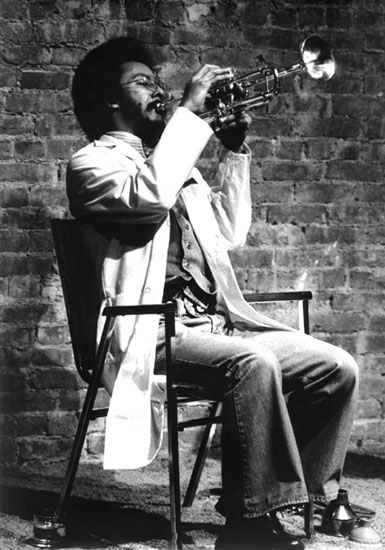
Lester Bowie, who died Nov. 8, 1999 of complications from liver cancer, was one of America’s most acclaimed trumpet players and jazz composers. He is best known for his work with the adventurous avant garde troupe Art Ensemble of Chicago. Less than two months before Lester joined the great orchestra on the other side, I was privileged to visit the great lab-coated trumpeter at his Brooklyn home. As we shared half a watermelon, Lester recalled his 1977 trip to Nigeria…

Continue reading

BILL LASWELL on Fela Kuti (1999)

This article was originally published in Mean Magazine (October 1999), with art direction by Camille Rose Garcia, and an overview of Fela’s catalog by Michael Veal; the main article text, and sidebars, were later reprinted in full in the Da Capo Best Music Writing 2000 book (thank you Douglas Wolk and Peter Guralnick). Main article text is online here: http://www.arthurmag.com/2009/11/02/fela-king-of-the-invisible-art

BILL LASWELL
by Jay Babcock

Bill Laswell is a bassist, producer and, having worked with countless important musicians from dozens of countries, one of the vortex points around which the musical universe revolves. I spoke with Laswell about his controversial work with Fela…

Continue reading

GINGER BAKER on Fela Kuti (1999)

This article was originally published in Mean Magazine (October 1999), with art direction by Camille Rose Garcia, and an overview of Fela’s catalog by Michael Veal; the main article text, and sidebars, were later reprinted in full in the Da Capo Best Music Writing 2000 book (thank you Douglas Wolk and Peter Guralnick). Main article text is online here: http://www.arthurmag.com/2009/11/02/fela-king-of-the-invisible-art

GINGER BAKER
by Jay Babcock

Best known for his work with Cream, Ginger Baker is one of the all-time great drummers, a versatile master at ease in a number of the world’s drumming traditions. He also has a reputation as an imposing interview subject. Still, at his wife’s recommendation, I called Ginger at his South African home at 7am, interrupting his morning bath. Here’s how the conversation went.

Continue reading

BOOTSY COLLINS on Fela Kuti (1999)

Bootsy live with the JBs
Bootsy from his days in James Brown’s band.

This article was originally published in Mean Magazine (October 1999), with art direction by Camille Rose Garcia, and an overview of Fela’s catalog by Michael Veal; the main article text, and sidebars, were later reprinted in full in the Da Capo Best Music Writing 2000 book (thank you Douglas Wolk and Peter Guralnick). Main article text is online here: http://www.arthurmag.com/2009/11/02/fela-king-of-the-invisible-art

BOOTSY COLLINS
by Jay Babcock

Bootsy Collins is one of the greatest bassists of all time: a member of the baddest version of the JB’s, a funk-force with the Parliament-Funkadelic empire in the ’70s and leader of his own impossibly stanky group, Bootsy’s Rubber Band. Currently at work at his home studio (which he jokingly calls “the Bootzvilla Rehab”) on multiple projects—including a new Rubber Band album, a new Funkadelic album and a reunion with all of the surviving members of the original JB’s—Bootsy took a few minutes to speak with me about the JB’s’ famous visit to Nigeria in 1970…


Continue reading

TONY ALLEN on Fela Kuti, Afrobeat, solo career, more (1999)

This article was originally published in Mean Magazine (October 1999), with art direction by Camille Rose Garcia, and an overview of Fela’s catalog by Michael Veal; the main article text, and sidebars, were later reprinted in full in the Da Capo Best Music Writing 2000 book (thank you Douglas Wolk and Peter Guralnick). Main article text is online here: http://www.arthurmag.com/2009/11/02/fela-king-of-the-invisible-art

TONY ALLEN
by Jay Babcock

Tony Allen is the original funky drummer. As a member of Fela’s ’60s highlife group Koola Lobitos, Allen, Tony traveled with Fela to the U.S., where Fela developed Afrobeat. Allen’s complex, seemingly eight-armed and eight-legged drum parts—an encyclopedia of inventive groove spread over dozens of albums—were the only parts of Fela songs not composed by Fela himself. Allen released an incredible series of solo albums in the late-70s and early ’80s, three of which featured Fela and the Afrika 70.

Continue reading

FELA: KING OF THE INVISIBLE ART by Jay Babcock (1999)

This article was originally published in Mean Magazine (October 1999), which I was editing at the time, with art direction by Camille Rose Garcia. The piece was accompanied by a set of sidebar interviews and an overview of Fela’s catalog by Michael Veal [who was finishing his work on the manuscript that would be published as Fela: The Life And Times Of An African Musical Icon]. The main article text, and sidebars, were later reprinted in full in the Da Capo Best Music Writing 2000 book (thank you Douglas Wolk and Peter Guralnick).

FELA: King of the Invisible Art
by Jay Babcock

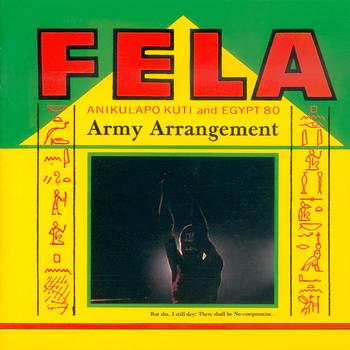
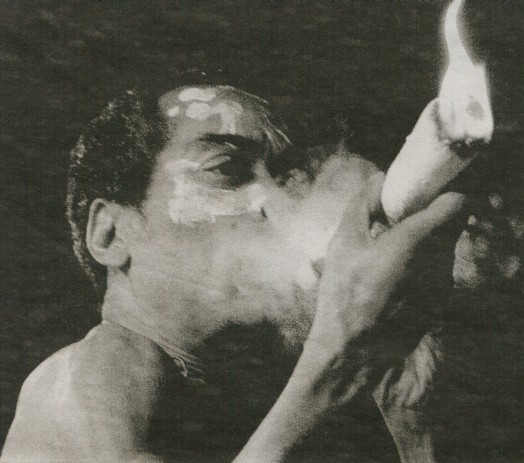
Fela Anikulapo Kuti: 77 albums, 27 wives, over 200 court appearances. Harassed, beaten, tortured, jailed. Twice-born father of Afrobeat. Spiritualist. Pan-Africanist. Commune king. Composer, saxophonist, keyboardist, dancer. Would-be candidate for the Nigerian presidency. There will never be another like him. This is the sensational story of Fela, the greatest pop musician of the 20th century, featuring the words of Fela’s friends, fans and the Ebami Eda himself.

“What can I say? I wasn’t Hildegart!”
Fela always knew the power of a name.

If you are African—and especially if you work with music, which shares a link of common invisibility with the spirit world—you must have a spiritually meaningful, beneficial name. Without the correct name, Fela explained, “a child can’t really enter the world of the living.”

He didn’t like the name he was given when he was first born, in 1935: his Nigerian parents had followed a local German missionary’s suggestion. So Fela died and was born a second time, on October 15, 1938; this time his parents called him Fela.

“Bear the name of conquerors?” he asked Carlos Moore, author of Fela: This Bitch of a Life, in 1981. “Or reject this first arrival in the world? The orishas [spirits] they heard me. And they spared me. What can I say? I wasn’t Hildegart! It wasn’t for white man to give me name. So it’s because of a name that I’ve already known death.”

In 1975, at the height of his popularity and power, Fela changed his middle name. “I got rid of ‘Ransome.’ Why was my name ‘Ransome’ in the first place? Me, do I look like Englishman?” Fela’s full name was now Fela Anikulapo-Kuti, which meant in whole, ‘He who emanates greatness, who has control over death and who cannot be killed by man.’

That same year Fela also started to cheekily call himself Black President, eventually releasing an album bearing the same title in the midst of a thwarted campaign. And sometime in 1986, following his release from Nigerian prison after serving 20 months on trumped-up charges, Fela began to call himself the Ebami Eda, which translates roughly as “the weird one,” or more delicately, as “the one touched by divine hand.”

Fela was touched, alright. But he was not only a visionary musician who created a whole new style of music—Afrobeat—and left behind an incomparable body of recorded music. No. Fela also simultaneously spoke truth to power, and then recorded it as a 12-minute dance-funk song, with a title like “Government Chicken Boy” or “Coffin for Head of State.” He endured brutal physical punishment and constant imprisonment. In the end, he died from complications associated with the AIDS virus. His heart was broken: he had sung so much, fought so hard, amassed such popularity, and still, hardly anything changed for the better in his beloved, heart-shaped continent of Africa. So: following is the story of that big generous, humorous, creative, divine heart that Fela had: from its early heartbeats, to Afrobeat, to the beatings it took, to its final, slow heartbreak.

Continue reading

Notes from the Editorial Office

atlantis

Happy monday,

Just a quick catch-up on Arthur doings.

We’ve got some new comics up on the blog, including an outta-nowhere submission from cartoonist Owen Cook remembering the great Dickie Peterson, bassist-vocalist of Blue Cheer, who R.I.P.’d on October 15. For an appreciation-in-text, have a good gander at Julian Cope’s just-posted “The Godlike Genius of Blue Cheer”, with its attendant Cheer stream. That’ll do ya.

“Weedeater” columnist Nance Klehm talks to folks who’ve been communicating with plants recently. ‘Nuff said.

Speaking of plant/human communication… Arthur proudly presents, or welcomes, or something, the Emerald Triangle Tour ’09 band of troubadours traveling around California this week celebrating the annual marijuana harvest. Catch the four chaps—Farmer Dave Scher, Andy Cabic (Vetiver), Jonathan Wilson and Johnathan Rice—playing their own and each other’s songs this week at a roadhouse near you.

Byron Coley and Thurston Moore claim they are prepping another Bull Tongue Top Ten, after their return to the electrofold just two weeks ago. Stay on your toes, ladies and gents.

“Do the Math” columnist Dave Reeves will be back with Part IV of his controversial “Defend Brooklyn” expose after he’s done with his latest gypsy roaming. Commentability has been restored to this series of posts, against our better judgment. I guess we’re hoping against hope that somebody will post something interesting in the Comments section, which does occasionally happen—see reader J. Reed clueing us in to his newly posted Lionel Ziprin videos

We’re posting Chapters 5-8 of Vanessa Veselka’s incendiary new novel Zazen, this week, one a day from Monday to Thursday. Because it sucks to read longer texts on the internet, we’re offering each chapter as a downloadable, fully printable PDF. Print em out, you’ve got a book.

One more thing: yeah I know it says on the FAQ that Arthur is returning as a print magazine this fall ’09 but that ain’t happening, not with the economy the way it is. We don’t have the $$$ to start this baby up again and lose money month after month while we wait for things to “return”—especially when the ability to pay minimal bills via advertising and merch revenue may never return (not that it was ever enuff in the first place—oy vey!). But, hope springs eternal. Like, hope that people will buy ad space, or purchase a DVD or a CD or a back issue or a poster at the Arthur Store, or perhaps even tax-deductibly donate whatever they can spare. That’ll help keep Arthur in motion, on one plane or another…

Gratefully,
Jay