For the final episode of Arthur Radio we bring you a live set by Baltimore’s Lower Dens, filmed and recorded in glorious hi-fi at Swan 7 Studios in Bushwick, Brooklyn, co-presented by Newtown Radio | Swan 7 Studio Sessions, and cushioned by an excerpt from a 5 hour DJ set recorded one joyous night in the depths of winter by Hairy Painter, Ivy Meadows and friends, re-broadcasted and cycled through a tunnel of radio feedback last week in the Newtown Radio studio.
We would like to say THANK YOU to the many guests who have graced the show with their talents (in backwards chronological order): Lower Dens, Salvia Plath, Gustav Ernst, Bryce Hackford, Laurel Halo, Saadi, Evie Elman, Mountainhood, kA, Mia Theodoratus, Spectre Group, A R P, Alice Cohen, Sonny Smith, Messages, Ami Dang, Ramble Tamble, James Ferraro, Up Died Sound, Prince Rama, Thomas (Ted) Rees, Nonhorse, The Beets, DJ Ron Like Hell, Gabe Soria, Bow Ribbons, Love Like Deloreans, Blondes, Overture Brown, Bobby Bouzouki, Excepter, The Holy Experiment, Visitation Rites, Chocolate Bobka and Tyler McWilliams. All episodes can be found in the Arthur Radio archive.
Ivy Meadows will continue to record radio shows with Arthur’s universal mutant Will S. Cameron, to be released in a similar format over at Perfect Wave Magazine.
Arthur ran a two page sample of Steve Aylett’s bizarro masterpiece in one of their back issues and I thought it was hilarious. Years later after opening my own comic shop I contacted Steve to see about reprinting THE CATERER in vintage comic form. I also emailed Jay and mentioned the project to him. A lightbulb must’ve gone on in Jay’s head. He put together that I was the publisher of Diamond Comics, a free comics newspaper anthology and he emailed me a few weeks later asking if I’d like to be comics editor for Arthur Magazine.
In the years since we’ve published work by dozens of incredible artists, interviewed folks, shared trippy animation and hopefully given a sense of what’s good and interesting in the international art comics scene. Will started collaborating with me later and introduced the full screen Greenermags format which I really dig.
We’re going to transfer all the Arthur Comics to my store’s website and I plan on curating more “Arthur Comics” there in the future.
I want to thank all the wonderful poets who allowed us to post their poetry on Arthur while I was the Poetics Editor. I had a wonderful time reading the work and comments and helping bring a poetic flavor to the content posted here. Many people asked me how I was chosen for this position and I tell them it was my resume. When asked to provide more color I refer them to my resume which I’ve posted here.
Thanks to everyone for a great ride into the world of Arthur poetry.
Probably the first private individual to manufacture LSD, Augustus “Bear'” Owsley Stanley III produced more than1.25 million doses of LSD between 1965 and 1967. Stanley was the grandson of one-time Kentucky governor and senator Augustus Owsley Stanley. He served in the U.S. Air Force for 18 months, studied ballet in Los Angeles and then enrolled at UC Berkeley. In addition to producing and advocating LSD, he adhered to an all-meat diet. His pioneering role made the name “Owsley,” a popular slang term for the drug. Also an accomplished sound engineer, Bear was the longtime sound man and financier for psychedelic rock band the Grateful Dead. Stanley designed some of the first high-fidelity sound systems for rock music, culminating in the massive “Wall of Sound” electrical amplification system used by the Grateful Dead in their live shows, at the time a highly innovative feat of engineering. Hendrix’s song “Purple Haze” was reputedly inspired by a batch of Stanley’s product, though the guitarist denied any drug link. The ear-splitting psychedelic-blues combo Blue Cheer took its named from another batch. He was involved with the founding of high-end musical instrument maker Alembic Inc and concert sound equipment manufacturer Meyer Sound.
Along with his close friend Bob Thomas, he designed the Lightning Bolt Skull Logo, often referred to by fans as “Steal Your Face”. The 13-point lightning bolt was derived from a stencil Stanley created to spray-paint on the Grateful Dead’s equipment boxes.
A naturalized Australian citizen since 1996, Stanley and his wife Sheilah lived in the bush of Far Northern Tropical Queensland where he worked to create sculpture, much of it wearable art. Bear moved to Australia in the 1980s after growing convinced that the northern hemisphere would be subsumed by another ice age and sold enamel sculptures on the Internet. He was killed when the car he was driving swerved off a highway Saturday during a storm and down an embankment into a tree. His wife, who was with him in the car, suffered minor injuries. He is survived by two sons and two daughters by four different women; Peter (1957), Nina (1962), Starfinder and Redbird (1970).
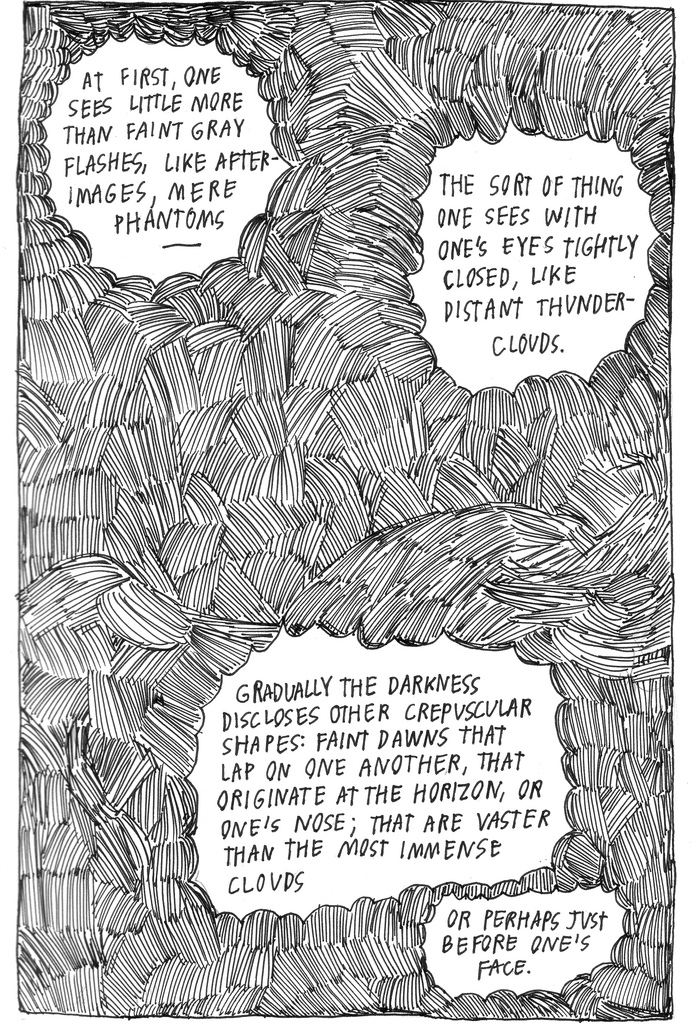
“Just because it is totally dark does not mean there is nothing to see.”
Maria Sputnik does the pictures. She’s been living in New York studying science writing and thinking about chromosomes and the moon. She misses Oregon. Van Choojitarom collaborated on the writing. He’s in Bangkok preparing to join a monastery. — Jason Leivian
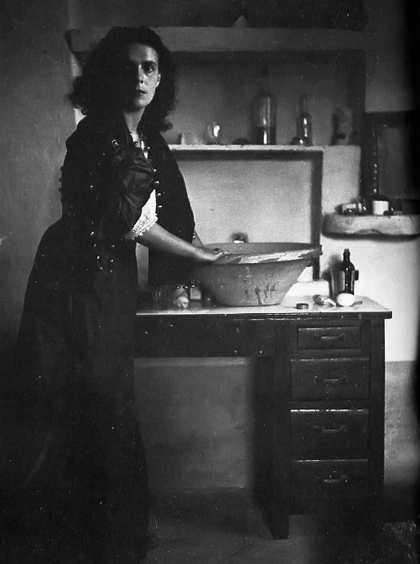
This poem by Peter Lamborn Wilson was published as a letter to the editor in the final issue of Arthur, No. 31 (Oct 2008). It was in response to the piece by Alejandro Jodorowsky in the previous issue, an excerpt from his newly translated memoirs, The Spiritual Journey of Alejandro Jodorowsky, detailing his informal apprenticeship to Leonora Carrington in Mexico City in the late ’50s…
FOR LEONORA CARRINGTON
# 1 Mexico City is absolutely. Or was. With a claridad that would’ve seemed glossy as bone except for the fecality of its plutonian fruit. Especially Leonora Carrington – the secret hardness of colonial baroque – its refusal to be reasonable – its crown of owls
#2 Chocolate is Mexico’s great contribution to Surrealism. With unbroken incantations in the voice of a lion prepare (on wild rocks) a soup made of half a pink onion, a bit of perfumed wood, some grains of myrrh, a large branch of green mint, 3 belladonna pills covered with white swiss chocolate, a huge compass rose (plunge in soup for one minute) Just before serving add Chinese “cloud” mushroom which has snail-like antennae & grown on owl dung
#3 As modern Hermeticist she ranks with Fulcanelli a Madame Paracelsa who tells yr fortune in the sense of buried treasure. It seems you yourself have psychic gifts which are only exacerbated by her soups. Molé as Dalí realized surrealizes all dishes via its resemblance to excrement e. g. over boiled lobsters (serve with pink champagne). Shit you can sculpt.
#4 Like gunpowder which was invented solely to exorcize demons – a secret passed along the Silk Road to Roger Bacon who unfortunately leaked the recipe to the uninitiated – Carrington embodies both the siesta & the anti-siesta. A Madam Adam with a handcranked gramophone with a horn lacquered black with gold pinstriping that plays only beeswax cylinders of Erik Satie or Gesualdo. Here alone exile attains an elegance & impassibility known only to stoned Rosicrucians.
#5 To live absolutely. A tricky trajectory between clinical dementia & the sloppy lace curtain Irish kitchen gemütlichkeit that usually passes (present company excepted of course) for life outside literature & even for true love. Or else it’s the altitude — mushrooms & chocolate — under the asphalt the bloodsoaked landfill — cactus cowskulls & drunken fusillades of flowers.
HIGH FIVE Detroit’s visionary MC5 receive a film tribute that aims to rewrite rock history By Steffie Nelson
On New Year’s Eve, 1972, the MC5 took the stage at Detroit’s Grande Ballroom, a vast psychedelic venue where they’d held court as the “house band” between 1966 and 1969. Their live shows had been so incendiary, the five band members so arrogant, that even a huge star like Janis Joplin, no slouch in the live department, once refused to go on after them. This gig, their swan song as it were, was sloppy and dispassionate; the ghosts of past glories even more unforgiving than the sparse, cynical crowd. Guitarist Wayne Kramer took off mid-performance to go cop dope, and the MC5 never played again. Kramer and guitarist Fred “Sonic” Smith were 22; singer Rob Tyner and drummer Dennis Thompson were 24; bassist Michael Davis was 26. In the end they’d effectively been “pulled apart by the killer forces of capitalism and competition,” which their manager John Sinclair had railed against, perhaps presciently, in the liner notes to their now-legendary debut album Kick Out The Jams.
The MC5 hold a curious place in rock history. Their ascendance represented a moment in America when art and commerce converged, when all that was vital and visceral was also the pinnacle of hip. As the flamboyant and badass musical mouthpiece of the White Panther Party, the MC5 did embody the soul of the late ‘60s counterculture: one foot in the optimistic past and the other in the disillusioned, deadly future; one hand holding a guitar, the other a shotgun. It’s an irresistible image, one which was unappetizingly co-opted by Levis last spring for a series of T-shirts. A promotional performance in London by the three surviving Five (Rob Tyner suffered a fatal heart attack in 1991; Fred Smith died of heart failure in 1994) was seen by detractors as a final, sad sellout.
The question of whether or not the MC5 failed at the end of the day is much debated in the riveting feature-length documentary MC5: A True Testimonial, directed by David Thomas and produced by Laurel Legler. All parties agree, however, that for a fleeting, incandescent moment the MC5 were “at the center of the yin-yang,” as Michael Davis philosophizes in the film, “and it was our job to keep it going in a positive direction.”
But the proverbial yin-yang was already spinning into darkness, and it took the MC5 with it. Like fireworks on the fourth of July, they rose with a bright, beautiful bang and, as far as mainstream America was concerned, disappeared with a puff of smoke into the night. They were, ultimately, sacrificial – the artistic entity that was the MC5 didn’t survive more than seven years—but their legacy has continually inspired legions of punks, rockers, artists and freaks, who got turned on to their music through word-of-mouth, or more than likely though the persistent echo of a call to arms that rings with timeless resonance: “kick out the jams, motherfucker.”
As David Thomas says, “The people who know, know. The other people don’t get it.” The Chicago-based Thomas and his wife Laurel Legler began working on MC5: A True Testimonial in 1995, spurred on through financial troubles and licensing hassles by sheer love and respect and the determination to do justice to these American legends. As Legler points out, few bands have received this sort of filmic treatment, and if they have their way MC5: A True Testimonial will revise rock history. On the eve of a limited theatrical release and the worldwide release of a nearly four-hour DVD edition of the film (including deleted scenes, complete live performances, interview outtakes and fan testimonials), David Thomas and Laurel Legler are ready to testify.
Recently Discovered Musical and Sundry Delights By Eddie Dean
Chango Spasiuk, free concert at the Millennium Stage, Kennedy Center “I refuse to look like an old woman knitting,” said tango great Astor Piazolla, who broke tradition by always playing his bandoneon while standing. And here’s Chango Spasiuk, another Argentinian bandoneon master, sitting in a chair onstage with his instrument slinking over his knees draped with—a QUILT. But the wild-eyed, long-haired son of Ukrainian immigrants by way of Misiones province looks more like Rasputin than a knitter, like he’s ready to ambush the black-tie Bushcovites gathering down the red-carpeted Hall of Nations at another gala benefit for the masters of war. This isn’t the city music of Piazzolla. This is chamame, a down-home country music like the kind you’d hear at a backwoods wedding in northern Argentina when everybody’s had too much vino tinto and a summer storm’s brewing and the bride and groom have fled the scene. Spasiuk’s chamame has his own touches, a Marc Chagall-fiddler and “cajon peruano” percussionist. His bandoneon is a magic box that breathes, stirring the stilted, conditioned air inside the Kennedy Center, as the chandeliers weep and even the ushers prick up their ears, while outside the Potomac River turns into the coffee-hued, snaking Rio Parana. After the show, Spasiuk talks about his influences: “My father was a carpenter and musician who played at local dances and parties, and my uncle was a singer. I grew up listening to the music from the region of the rivers, the folk music, the polkas and the shotis, and chamame is the strongest color of this mestizo music. I didn’t become a musician after I saw or heard music being played on TV or in a movie or on a stage. Music was everywhere, in every social situation. My music is an utterly happy music but at the same time melancholic and sad.” His favorite musician, he says, is Beethoven.
Magnificent Fiend, Howlin Rain (Birdman/American, 2008) The Black Crowes have been trying to make a record this good for 20 years, and these young bucks nail it right out of the shoot. Horns of plenty, and heaping helpings from the bottomless well of deep groove. As Greg Allman sang, “The road goes on forever.”
Country Music Originals: The Legends and the Lost by Tony Russell (Oxford Press, 2007) You’ve already heard about Jimmie Rodgers and the Carter Family, now meet their kinfolk, the thousand-and-one tongues of pre-Nash Trash hillbilly music: Seven Foot Dill and his Dill Pickles, South Georgia Highballers, Bascam Lamar Lunsford, Red Fox Chasers, Dr. Smith’s Champion Hoss Hair Pullers. They’re all here looking alive as you and me. Old-time music fiend Tony Russell came from England to travel the dusty backroads and knock on many a screen door to find the stories behind the mysterious names emblazoned on the old 78s. The meaty bios are salted with rare photos and period illustrations, such as a Depression-Era newspaper ad for a $3.85 Disston Hand Saw (“Mirror polish, striped back, beautifully etched, Applewood handle, fully carved”) of the sort played by Highballer Albert Eldridge, whose expert bowing “produced a sweet otherworldly humming that anticipates the oscillating electronic sounds of the Theremin.” Seems like it’s always Brits like Russell and Dickens and D.H. Lawrence with the keenest insights into the old, weird America.
Death Comes for the Archbishop by Willa Cather (Vintage, 1990) Before Sam Peckinpah and Cormac McCarthy, the Spanish-American Southwest had Willa Cather to make an epic of its bleak and beautiful landscape. Instead of horse rustlers and outlaws, the male-bonding celebrated in this novel is the friendship between a pair of French Catholic priests out to save souls in mid-19th-century New Mexico. They’re not just packing Bibles and rosary beads, though, they’re packing heat: “‘You dare go into my stable, you [blank] priest.’ The Bishop drew his pistol: ‘No profanity, Senor. We want nothing from you but to get away from your uncivil tongue.’” Gimme that old-time religion, it’s good enough for me.
The U.S. Navy Band Brass Quartet show at Rockville Town Center Good to hear the tuba out in the open. A century ago, it was the original Miami Bass, and it can still get to the bottom like nothing else. Except Bootsy.
C & D: Two guys who will remain pseudonymous reason together about new records
C: [While rummaging through the teeming mail bin.] Hey, look at this. It must be from that new guy who’s always lurking around. What’s his dealio anyway? He’s what my gran would call a nosey nelly.
D: I think he’s here to like, streamline shit. [Reading aloud] To Whom It May Concern: “In my private meetings with Arthur staff and contributors, we have received many disturbing reports regarding the personal, professional and spiritual-energetic conduct of C & D, or as they fancy themselves, ‘The Arthur Music Potentate.’
“There is widespread unease amonst Arthur staff about C & D’s taste in mucic, which has been described to us as ‘bewildering,’ ‘psychedelic parochial,’ ‘arguably harmful,’ ‘contrary to the public’s interest,’ ‘more narrow than their trousers’ and ‘frankly vampiric.’ I don’t quite know what all that means but it’s interesting.
“Moving forward, I have been unable to confirm that C & D are receiving payola from 86 record companies and nineteen out of our fair nation’s top twenty coolmaking marketing firms, but verification of such nefarious activity is only a matter of time.
“I am also unable to confirm their membership in the ‘Brownie-Meinhaus gang.’
“However, in my own cross-examination sessions with C & D, in which, I am preparted to testify, we did not waterboard at all 😉 , I was able to determine that they have indeed ‘lost the keys’—their words—for two of Arthur humor/motorcycle advisor Peter Alberts’ Royal Enfield motorcycles; they have indeed borrowed Arthur contributor Paul Cullum’s all-region DVD player for an ‘increasingly indefinite period’; they confess to doing two cut-and-runs at Sugar Hair Salon in Silver Lake; plainly abused Mandy Kahn’s standing offer to drive them to and from various watering holes of ill repute; and, as you may have surmised, it was indeed they — or them? I can never remember ;-( — who affixed ‘Ex Libris C &/or D’ label-plates to all the reference books in the staff library.
“Furthermore, C & D have charged 38 parking tickets to the Arthur expense account since last June. Woe betide their decision to start chillaxing out in Malibu. “C & D have presumptuously intercepted others’ mail, especially advance vinyls from the Holy Mountain label. They play the Carbonas self-titled LP at bicuspid-crushing volume everyday before lunch. They crack each other up at staff meetings by prefacing every statement with ‘You must learn, we are the Gods of this magazine!’ They are always ordering curry. Plus they’ve used up all the paperclips, and not, I am saddened to report, in a fashion that paperclips were designed to be used.
“The Editor-in-chief, art directors and even the printer have complained that C & D are always late with their copy, which in turns holds up production of the magazine and inhibits crucial cashflow, all for something that, quoting the Editor, ‘nobody really reads or cares about anyway.’
“In my many years of optimal-sizing firms, I have been forced to make many difficult and even gut-wrenching decisions. This however is not one of them! ;-)- C & D should be shown the door, and the sooner the better. We will call it a suspension of enduring duration. Now would really be the time to pull the trigger on this. I know people who can do it.
“JUST SAY THE WORD.”
D: [gulps] Doh! C: I always told you we would are the men who knew too much. [puzzles] But how did they find out about the brownies? I told you to watch out for those new surveillance cams. D: I thought they were fake. And chicken tikka is not a curry. C: Ha! And neither is lamb biryani. Wait a second… Fake surveillance cams? That’s a GREAT idea. D: I know a guy! Just say the word! C: [cackling] Okay but first let’s get one more column in, shall we? “They” never read this so we can say whatever we like and they won’t know til it’s at the printer, hahaha! The funny thing is we REALLY ARE the potentate around here. But if our services are no longer required here, we’d like to say one thing: D: SAYONARA BITCHES!!! C: Because we are in control of the horizontal. We’re the last people that see this bad boy before it’s sent to the printer… D: Oh yeah! Heh heh. C: …which means whatever we type here gets printed. D: Which means…
The Carbonas The Carbonas (Goner) C: They come from Memphis, they sound like Wire and the Buzzcocks, nine songs in 22 minutes. You know what you have to do. D: Wire and the Buzzcocks? More like attach a wire to your bollocks! [helpfully] And they have a song called “Assvogel.” C: That’s not a song, it’s a movement. And I think you know what kinda movement I mean… D: Ahem. It is on the Goner record label. Which is what we are now. Goners. C: Memphis is the one place I’d be interested in moving to. Start the car, I’ll get my duffel. Here’s to life in exile after abdication! D: [brightens] I’ve been a goner since the beginning. C: Being a goner is a serious thing. Who do you think is the original goner? D: Robert Mitchum, no question. Yeah, that’s it, the Carbonas are the Robert Mitchum of rock!
Dead Meadow Old Growth (Matador) C: I’ve been into these guys since before everyone else! D: Except for me. I invented these guys. I put a bunch of purple pills in a blender along with a soiled Led Zep patch from my older sister’s jean jacket. Shazam! C: ‘Old Growth’ is on the shortlist for greatest album title ever, and it’s a pretty good description of the music. D: Here’s a better one: take a grandfather clock made of diamond-cut crystal, fill it with molasses and drop in on your head! C: I can’t believe they’re firing you, D. You just keep getting better. Woah, this song is some serious blues shufflage. It’s like a beer commercial for really stinky homebrew. D: There’s something about this guy’s voice that hits me like a arctic wind. Pass me my mittens. And the b-o-n-g. It’s been a bong time since I rock ‘n’ rolled!
Graveyard Graveyard (Tee Pee) D: Graveyard, eh. Must be a Goth band. C: Actually they’re not Goth. They’re not even American! D: [listening to first track, ‘Evil ways’] Right away you know that no matter what happens, you’re gonna at least hear good tone guitar. This is far too good to be American. C: You are correct sir. They are in fact Swedish. D: The world’s greatest mimcs. The arch-inhabitors. C: He pitches his vocal a bit Danzig, a little bit Bobby from Pentgaram. A little bit Jim Morrison. A little bit of the mighty John Garcia. D: And it must be admitted, a little Cornell. C: A little bit’ll do ya. This is Ween-quality mimicry here! Reminds me of that band Witchcraft in that they’re going further out. [listening to “Lost In Confusion”] That’s basically the Doors, right there. D: It is like Witchcraft, but this singer has more hair on his chest. C: … So, what do you think of that drumming? D: Kinda…jazzy. C: Well you know, all those old rock drummers used to play jazz drums too: Ginger, Graham… D: Keith, Charlie… C: I listened to this album several times without realizing it. Just kept coming back. I keep coming back to the Graveyard, D. D: That’s where you’re gonna end up. Might as well get there early and check it out.
Harmonia Live 1974 (Water) C: Vintage live recording from krautrock greats Harmonia, never-before-released! D: How is this possible? Harmonia are some of the original electronic goners. C: If you turn it up loud enough you can hear people talking— D: I can’t hear anything except analog electronic perfection. C: Frankly I am perplexed by the liners which talk that like this Harmonia are barely known, even to konfirmed krautrock fans. Says here, these guys exist somewhere out beyond the “how to buy Krautrock section in your local record shop.” Is this guy insane??? D: There is no local record shop! C: No, I mean I don’t think I’ve ever seen a Krautrock section at a record store that DIDN’T include Harmonia. And there is a local record shop, actually. It’s not final for vinyl just yet, my friend.
Originally published in Arthur No. 25 (Winter 2006)
White Magic: Meanwhile, outside the city gates…
Black Hole White Magic By Chris Ziegler
Reviewed: Sunn O))) & Boris Altar (Southern Lord)
White Magic Dat Rosa Mel Apibus (Drag City)
I had Altar complete in my head before I ever heard it: Sunn O))) and Boris together to make the heaviest thing ever, an album that would burst cochlear membranes and the confines of three-dimensional spacetime. Modern music’s two most immovable objects: what would happen when they met? Maybe nothing—in fact, hopefully nothing, and Altar would be pure void, a subatomic drone that would go beyond Sunn O))) and Earth and Flood to the low slow B-flat hum NASA heard coming from a black hole around the same time Sunn O)))’s White 1 came out. “A million billion times lower than the lowest sound audible to the human ear!” NASA said, complete with exclamation point. That was the true sound of the universe, and if any humans could play along, well, here they were: two bands with discographies so colossal that you couldn’t deploy anything less than three syllables per adjective without feeling cheap and weak. (Cyclopean? Titanic? Hephaestean?) NASA called this new science “black hole acoustics” and that was the best explanation yet—better than the New York Times’ cutesy ‘heady metal,’ anyway.
But Altar is the un-heaviest. Six or seven minutes into opener “Etna” (played in the spirit of the volcano that will devour Sicily) presents the riff-vs.-drone grappling match the collaboration demanded, and it is satisfactorily hephaestean. Last year’s Black One and Pink anticipate these moments—Pink’s intro “Parting” especially, though Boris drummer Atsuo rarely pushes a straight 4/4 rock beat, instead mating drums to drone with a rush/recede dynamic that must have cheered the Coltrane students in Sunn O))). Black hole acoustics is science for space and gravity and not amplifier athleticism, though, so credit to Boris and Sunn O))) for Altar’s sidewise moves. Sunn O))) provokes orgasm and Boris melts minds—we know that and so do they, so let’s improv something else.
“Sinking Belle (Blue Sheep)” is probably the songiest thing to ever bear a Sunn O))) stamp; Internet drones are straight-facedly calling it “folk pop” and while that’s a bit broad, it’s … understandable. Earth’s Hex had passages of twilight-zone quiet and “Sinking Belle” collects them together: reverbed piano that blooms and dissolves like ink into water with Jesse Sykes (singer from Seattle’s Sweet Hereafter) sounding like Nico at her frowniest, or actually sounding a lot like Sybille Baier, another dissipated ‘60s teuton-chanteuse. After that is “Akuma No Kuma,” an all-synth-no-guitar track (with Joe Preston growling through a vocoder) that fits the fire-and-fog Blade Runner opening, and after that the desolate “Fried Eagle Mind,” a wave of tube tone washing over Boris guitarist Wata’s ghost vocals. “Blood Swamp” has to float back home: rumble finally turns to roar as Soundgarden’s Kim Thayil gets a guitar to sound like something that breathes mud—or blood?—to stay alive. A hephaestean finale, sure, but not the truncated concussion both bands favor. There is clear-to-cloudy precedent for everything on Altar in the million billion minutes of discography belonging to Boris and Sunn O))), but it’s softness as much as the UNNNNNNNNNNNNNNNNNworgworgUNNNNNNNNNN we’ve known and absorbed. Three songs into Altar, the album start to float. Heavy is light.
* * *
I would hate to just bluntly ask White Magic if they actually believe in magic—too obvious, too impolite. But even a lump like me can tell that Mira Billotte’s songs about trees and wine and sun and sea refer to more than just a holiday fit for Fairport Convention. White Magic sings one thing and secretly means another, or several secret other things aligned in symbolic harmony. The band put a labyrinth on the back cover where they could have put a map. So I can’t say I wasn’t warned.
Billotte and a new set of supporters—including partner Douglas Shaw, Jim White from Dirty Three, Tim DeWit from Gang Gang Dance and noted New York percussionist Tim Barnes—built White Magic’s first full-length Dat Rosa Mel Apibus around her famously agile voice and the cascading piano melodies she plays to match Bert Jansch’s precision fingerpicking. Rosa is gentle on solemn guitar-and-voice songs like “Katie Cruel” (also covered by probable White Magic inspiration Karen Dalton) and “What I See,” but spins into psychedelic experiment like the sitar raga on “All The World Went” and the dub/reggae arrangement (and production!) for finale “Song of Solomon,” which is almost an Althea and Donna song until the accordion starts pumping toward climax. That’s a dizzy finish to a record that begins with a single piano note, and a happy release for the ideas half-hatched on 2004’s Through The Sun Door EP.
Billotte’s voice is (as always) a bird in flight, and she writes lyrics in careful camouflage, packing love songs and lonely songs with loaded notions of sleep and night and sun and light. It’s potent imagery that just begs projection from the listener. One verse of “Hold Your Hand In The Dark” and I was convinced we’d read the same Philip K. Dick essay: he said, “Sleepers awake!” and she sings, “You’ve been sleeping well, my friends/sleeping well/but if you wake, it may be too late.” Her tense mention of hands in chains and waiting in secret are from a particular idea Dick had about … well, too much of this might put this review to sleep. Different listeners discover different things.
Maybe that means Billotte is just writing easy absolutes—like everyone else, she loves love and dislikes… chains? But of course not. That seven-petaled rose on the cover is too close a copy of a Rosicrucian engraving; the translated title “the rose gives the bees honey” was a line used by alchemists to distinguish the search for spiritual truth from the search for worldly gain, and on Rosa’s second song Billotte sings, “Gone was our need for the things of this world/all we had was love.” Rosa feels full of these century-to-century connections. Hidden in this post-Pentangle piano-psych record is something ferociously righteous. White Magic believes in good research.







 Arthur Magazine