
No more Taildraggin’…
Author Archives for Jay Babcock
Ohhhhhhh…. new MAZZY STAR
HE MEANS IT
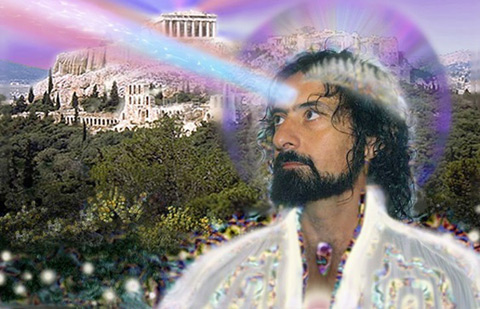
Foundational New Ager IASOS in first-ever multimedia show in L.A., at Cinefamily July 26… via Cinespia, Numero Group and Spaceways Radio…
MORE INFO: Cinefamily website
1979 documentary…
POSTERS FROM THE FREAK SIDE OF TEXAS
Selections from the Texas Poster Art Collection — 404 vintage TX concert posters — now online at UT Austin’s Briscoe Center for American History…



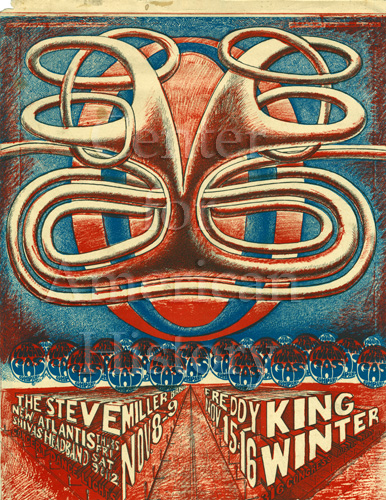

Hipped to this collection by The Comics Reporter
“Do not burn yourselves out.”
Edward Abbey: “Do not burn yourselves out. Be as I am — a reluctant enthusiast… a part-time crusader, a half-hearted fanatic. Save the other half of yourselves and your lives for pleasure and adventure. It is not enough to fight for the land; it is even more important to enjoy it. While you can. While it’s still here.”
WOODS KOVERING A GREAT UNDERHEARD ETERNAL KINKS KLASSIC
This is the beautiful Ray Davies-written b-side to the new Woods 7″ out next week. The Kinks originally released it in 1971 as part of the soundtrack for Percy, a very odd (and little-seen) film…
And here’s the a-side, a re-recording with new Woods drummer Aaron Neveu of a song off their 2011 album, Sun and Shade…
Woods say: “The recording of these songs serves as a farewell to Rear House, Woods’ home, recording studio, creative refuge and beloved shithole for ten long years.”
More on the 7-inch: woodsist.com
Woods are touring the East Coast, then Europe, then the West Coast in the coming months.
Info: woodsist.com
EVENING SMOKETIME WITH BEACHWOOD SPARKS
IT WAS A LIVING PIECE OF GOD
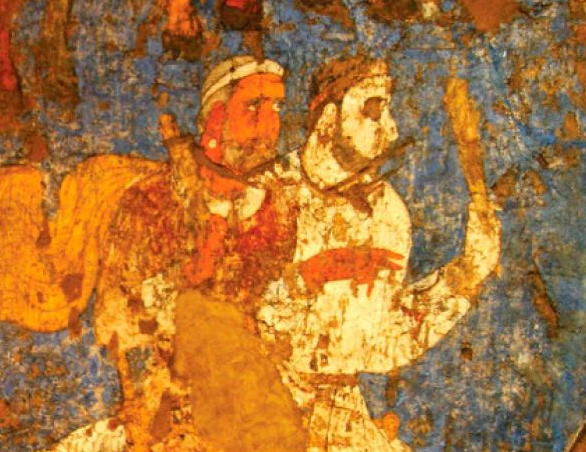
From a review by Peter Brown in the New York Review of Books of “The Nativist Prophets of Early Islamic Iran: Rural Revolt and Local Zoroastrianism” by Patricia Crone (Cambridge University Press):
…As [Crone] presents it, Zoroastrianism as practiced preserved one basic principle: the world was good. It was good because it was suffused with an energy of light that was a direct continuation of the energy of God himself. As Crone puts it with memorable crispness: to Zoroastrians, the light of the sun and of the holy fires that they worshiped was not a symbol—it was a sample. It was a living piece of God. A world permeated with so precious a substance had to be kept pure. The safety of a divine order, fully present in the here and now, was at stake in every aspect of nature and of human society.
This amounted to a call to action. A Zoroastrian was a militant for the right order of things. Given the ravages of a constant, opposing force of evil, the order of things had to be defended and restored by means of constant efforts of reform. The world demanded not flight but perpetual vigilance, even social engineering. Only in this way would creation recover its original, undamaged radiance. It would shine again like gold, “excellent, without decay.”
And the Zoroastrians of the villages had no doubt as to how this radiance would be restored—by community of property combined with equal access to women. To outside observers, Christian or Muslim, this seemed either hilarious or obscene: “abstemious wife-sharing is always reported as if it were a merry free-for-all.” But this was not how the villagers saw it. What mattered for them was how to keep together the precious deposit of family land. For family land to break up; for each portion to follow a separate household; worse than that, for these portions to be irrevocably lost to outsiders, through the violence of the powerful and the pressure of agrarian debt: this was the sure way to impoverishment and the death of the village. Polyandrous marriage was the solution. For the Zoroastrians of the village, only a community of women could maintain the divine integrity of the land.
In reflecting on these topics, many Zoroastrians proved themselves to be far from boneheads. They examined the origins of private property with considerable moral rigor. They claimed that private property had been caused by the cold, life-denying impulse of “desire”—by an antisocial lust for land. They also denounced the swaggering “resource polygyny” of the nobility—the corralling of women as wives and concubines at the expense of potential non-noble spouses. Both desires caused “envy.” And envy lay at the root of the conflicts that destroyed the harmony of God’s creation. This was what a shadowy intellectual, Zardūsht son of Khrōsak, had thought already in the mid-third century. These ideas were taken up by Mazdak in the 530s. As a result of the preaching of Mazdak, a protracted jacquerie rocked the Iranian plateau. The villagers emptied the granaries and the harems of the nobility, until the Mazdakites were suppressed with exemplary (and much-praised) savagery by the great shah Khosrau I (531–579).
Zig-Zag ZAPPED: Chris Ziegler on California free rockers FEEDING PEOPLE (Arthur, 2013)
Originally published in Arthur No. 34 (April, 2013)

Zig-Zag Zapped
Orange County, California psych rockers FEEDING PEOPLE left the church and entered the void. Now they’ve returned to sing their tales in glorious reverb. Chris Ziegler investigates.
Photography by Ward Robinson
Feeding People come from the Adolescents’ “Kids of the Black Hole” country, the un-Disneyfied side of Orange County, California. They met in a church band and then spiraled off into the cosmos, putting out a record in 2010 on heroic hometown emporium Burger Records that out-freaked almost all the other extremely accomplished freaks already on that label. It sounded like the battle of all battles—trying to go psychedelic in a place where it would have been so much easier to go plastic.
Don’t get me wrong. They weren’t obviously frothing at the mouth. If you didn’t know your contemporary Orange County bandspotting minutiae, you’d probably have a hard time in the wilds of Fullerton figuring out who exactly is a Feeding Person and who is in Audacity or Cosmonauts or who works buying used vinyl at Burger, indisputable ground zero of Southern California’s teenage weirdo renaissance. They’re all on the thrift store/swap meet vibe, kids who spend weekends prying out the last surviving cool shit from the tar pits of suburbia. Maybe that’s Goodwilled punk and psych records or leather boots, maybe just a decent jean jacket. (Plus band shirts bought from the band, at the show, of course.) You wouldn’t be able to tell if Feeding People were there to play or just there to watch if you saw them hanging out by a stage.
Today, founder and singer Jessie Jones and guitarist Louis Filliger are the last ones left from the first line-up of Feeding People. And even though they’re 72 hours away from the release of their new album, Island Universe, they haven’t quite left that earlier era behind. It’s like they’ve still got ash and dust on them. They’ve … experienced things. They’ve got extra energy so they can muster extra quickness, extra brightness so they can see a little farther into the dark. When they start to talk, it’s like a door is thrown open—you’ll feel the air rush past, hear the slam.
Jessie is dark-haired, slim but not slight because of some not-quite-nameable quality of presence. Even two tables away, it seems like she’s right next to you. She talks less than Louis, but when she does, everybody else shuts up. Louis has the answers, the theories, the explanations. During the French Revolution, he says, they’d start their speeches with certain words that would really HIT. (He pushes some extra power into the word—THUD.) He’s been waiting to get these stories out, he says.
Everybody with sense who writes about Feeding People talks about how something else is coming THROUGH this band. They channel, they incarnate, they let something strange and cosmic come scorching through. It’s like Philip K. Dick—in 1974, he got zapped by some power cosmic just five driving minutes from where the Burger Records stand is now, and it led him to write two million words searching for ultimate truth. (“A: The enigma remains. Q: We have learned nothing,” Dick decided.)
Trailer for upcoming MASSIVE ATTACK (feat Liz Fraser and Horace Andy) v ADAM CURTIS multimedia gig in Manchester…
You have to go here to watch it.
 Arthur Magazine