Why the narrative Arts matter

Scientific American Mind – September 18, 2008

The Secrets of Storytelling: Why We Love a Good Yarn

Our love for telling tales reveals the workings of the mind

By Jeremy Hsu

When Brad Pitt tells Eric Bana in the 2004 film Troy that “there are no pacts between lions and men,” he is not reciting a clever line from the pen of a Hollywood screenwriter. He is speaking Achilles’ words in English as Homer wrote them in Greek more than 2,000 years ago in the Iliad. The tale of the Trojan War has captivated generations of audiences while evolving from its origins as an oral epic to written versions and, finally, to several film adaptations. The power of this story to transcend time, language and culture is clear even today, evidenced by Troy’s robust success around the world.

Popular tales do far more than entertain, however. Psychologists and neuroscientists have recently become fascinated by the human predilection for storytelling. Why does our brain seem to be wired to enjoy stories? And how do the emotional and cognitive effects of a narrative influence our beliefs and real-world decisions?

The answers to these questions seem to be rooted in our history as a social animal. We tell stories about other people and for other people. Stories help us to keep tabs on what is happening in our communities. The safe, imaginary world of a story may be a kind of training ground, where we can practice interacting with others and learn the customs and rules of society. And stories have a unique power to persuade and motivate, because they appeal to our emotions and capacity for empathy.

Storytelling is one of the few human traits that are truly universal across culture and through all of known history. Anthropologists find evidence of folktales everywhere in ancient cultures, written in Sanskrit, Latin, Greek, Chinese, Egyptian and Sumerian. People in societies of all types weave narratives, from oral storytellers in hunter-gatherer tribes to the millions of writers churning out books, television shows and movies. And when a characteristic behavior shows up in so many different societies, researchers pay attention: its roots may tell us something about our evolutionary past.

To study storytelling, scientists must first define what constitutes a story, and that can prove tricky. Because there are so many diverse forms, scholars often define story structure, known as narrative, by explaining what it is not. Exposition contrasts with narrative by being a simple, straightforward explanation, such as a list of facts or an encyclopedia entry. Another standard approach defines narrative as a series of causally linked events that unfold over time. A third definition hinges on the typical narrative’s subject matter: the interactions of intentional agents—characters with minds—who possess various motivations.

However narrative is defined, people know it when they feel it. Whether fiction or nonfiction, a narrative engages its audience through psychological realism—recognizable emotions and believable interactions among characters.

“Everyone has a natural detector for psychological realism,” says Raymond A. Mar, assistant professor of psychology at York University in Toronto. “We can tell when something rings false.”

But the best stories—those retold through generations and translated into other languages—do more than simply present a believable picture. These tales captivate their audience, whose emotions can be inextricably tied to those of the story’s characters. Such immersion is a state psychologists call “narrative transport.”

Continue reading

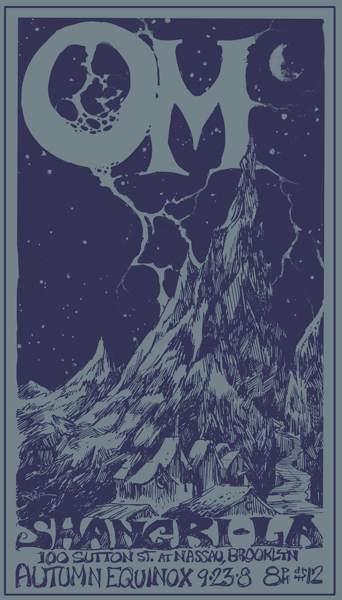
OM with Koen Holtkamp – All-Ages – NYC – Autumnal equinox TONIGHT (Tues, Sept 23)

SHARE AUTUMNAL EQUINOX with OM

TUESDAY SEPTEMBER 23rd.

at

SHANGRI LA – 100 Sutton Street @ NASSAU, Greenpoint, Brooklyn, NY 11222

Doors open at 8PM.

KOEN HOLTKAMP (Mountains, Aero) plays at 845pm
OM at 930PM

Be there early – NO presales. $12. BYOB, ALL AGES!!!!!!! This loft space is also a home. PLEASE BE RESPECTFUL! NO LOITERING OUTSIDE, TAKE YOUR TRASH WITH YOU……THANK YOU….


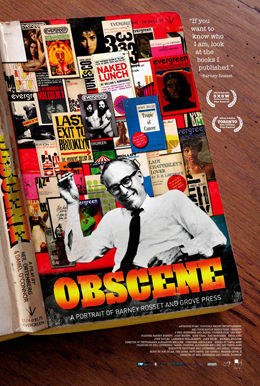
New doc on Evergreen Review's BARNEY ROSSET!


1400.jpg

Opens Friday, Sept 26 at Cinema Village

Obscene: a Portrait of Barney Rosset and Grove Press

“OBSCENE is the definitive film biography of Barney Rosset, the influential publisher of Grove Press and the Evergreen Review. He acquired the then fledgling Grove Press in 1951 and soon embarked on a tumultuous career of publishing and political engagement that continues to inspire today’s defenders of free expression. Not only was he the first American publisher of acclaimed authors Samuel Beckett, Kenzaburo Oe, Tom Stoppard, Che Guevara, and Malcolm X, but he also battled the government in the highest courts to overrule the obscenity ban on groundbreaking works of fiction such as Lady Chatterley’s Lover, Tropic of Cancer and Naked Lunch. Ultimately he won and altered the course of history, but not without first enduring lawsuits, death-threats, grenade attacks, government surveillance, and the occupation of his premises by enraged feminists.

“But the same unyielding and reckless energy Rosset used to publish and distribute controversial works such as Allen Ginsberg’s Howl, the Swedish film I AM CURIOUS (YELLOW), and the provocative Evergreen Review, also brought him perilously close to destruction. Featuring music by Bob Dylan, The Doors, Warren Zevon, and Patti Smith, and never-before-seen footage, OBSCENE is directed by first time filmmakers Neil Ortenberg and Daniel O’Connor.”

Music By:
Bob Dylan – I Threw It All Away
The Doors – Back Door Man
Patti Smith – Spell
Warren Zevon – Lawyers, Guns, and Money
Jim Carroll – Falling Down Laughing
X – Adult Books
Ella Fitzgerald – All The Things You Are

Cast:
Barney Rosset
with
Amiri Baraka
Jim Carroll
Lawrence Ferlinghetti
Al Goldstein
Erica Jong
Ray Manzarek
Michael McClure
John Rechy
Ed Sanders
John Sayles
Gore Vidal
John Waters

and
Lenny Bruce
William S. Burroughs
Allen Ginsberg
Henry Miller
Malcolm X


"Handmade Portraits: Wood Mosaics" by Tara Young at etsy

“Robin and Kathy Tucker of woodmosaics stopped working in town back in 1986. After Robin’s intricate wood-inlayed work was featured in The Best of Missouri Hands catalog and commissioned by Ralston Purina, they were on their way to full time crafting. Influenced by Amish quilt patterns, Robin’s excellent woodworking uses exotic natural woods that range from Satinwood from Sri Lanka to Purpleheart from Central and South America. All of the wood is completely natural, with only a clear finish added to punctuate the beauty of the wood’s innate color.

“Choosing to live as off the grid as much as possible, Robin built a windmill so the family could hand pump their own water. Kathy made their clothes for years and they slaughter their own meat from the goats and chickens they raise. However, the one amenity they can’t live without is the internet. After a dozen years of craft shows across the country, Robin and Kathy prefer to stay at home, tend to the farm and sell their goods via laptop rather than mall shows. While the juxtaposition of an outhouse and high speed internet would seem strange to most folks, the Tuckers have chosen to make certain sacrifices to keep costs down while in pursuit of a self sustained lifestyle. Living in the middle the country in Spickard, Missouri, the Tuckers keep connected through the latest in social networking via their Myspace and flickr sites, with a solar powered back-up generator in case the electricity goes out.”

http://www.etsy.com/storque/section/thisHandmadeLife/article/handmade-portraits-wood-mosaics/2588/


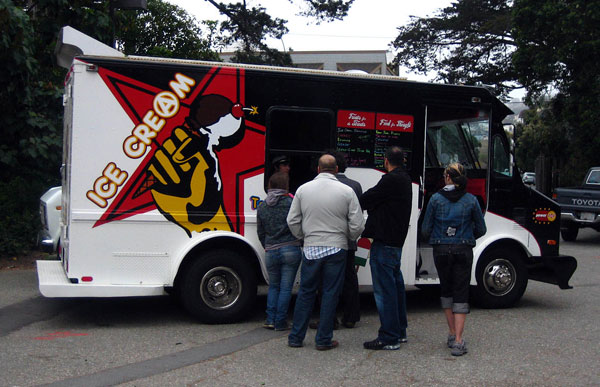
TODAY: The Center for Tactical Magic's Tactical Ice Cream Unit at DEMOCRACY IN AMERICA in NYC


ctm_feature.jpg

The Center for Tactical Magic’s Tactical Ice Cream Unit (TICU) rolls through the city in an act of intervention that replaces cold stares with frosty treats and nourishing knowledge. Combining a number of successful activist strategies into one mobile ice cream truck, the TICU is the alter ego of the police force’s mobile command center. Although the TICU appears to be a mild-mannered vending vehicle, it harbors a host of high-tech surveillance devices⎯including a 12-camera video surveillance system, acoustic amplifiers, GPS, satellite internet, and a media transmission studio capable of disseminating live audio/video⎯and of course, ice cream. With every free cone handed out, the sweet-toothed citizenry also receives printed information developed by local progressive groups…”

Encounter the Arthur Magazine “Applied Magic(k)” columnists The Center for Tactical Magic and their Tactical Ice Cream Unit at…

DEMOCRACY IN AMERICA: CONVERGENCE CENTER AT PARK AVENUE ARMORY IN NEW YORK CITY

“SEPTEMBER 21 TO 27
12 TO 10 PM DAILY*

OPENING RECEPTION: SEPTEMBER 21, 2 TO 10 PM

643 PARK AVENUE BETWEEN 66TH AND 67TH STREETS

PRESENTED IN ASSOCIATION WITH THE PARK AVENUE ARMORY
*Open from 2 to 10 pm on September 21 and from 12 to 6:30 pm on September 23.

After traveling across the country to glean perspectives from artists and activists on the state of democracy, Creative Time’s year-long program Democracy in America: The National Campaign culminates in the “Convergence Center”: a major exhibition, participatory project space, and meeting hall mounted in New York City’s Park Avenue Armory. The Convergence Center at Park Avenue Armory will provide an activated space to both reflect on and perform democracy and will be punctuated by speeches by leading political thinkers as well as community leaders and activists throughout the run of its program. These orations are organized by Creative Time in collaboration with The Nation Institute. As one of the largest unobstructed spaces in New York, the non-traditional setting of the Armory features interiors—such as its vast drill hall and historic period rooms—that are ideal for artists presenting multifaceted visual and performing arts productions.

Work by more than 40 artists will fill the Armory’s period rooms on the first, second, and fourth floors as well as Wade Thompson Drill Hall. Creative Time will present the four performative national public art commissions made for Democracy in America in the Convergence Center at Park Avenue Armory. Some of the projects featured include giant, silvered surveillance balloons by Jon Kessler; wearable art by dBFoundation; an installation by Critical Art Ensemble and the Institute for Applied Autonomy of the physical artifacts of the 2004 FBI investigation of Steve Kurtz; a 20-foot-tall counter-surveillance tower by Jenny Polak; a nine-foot wooden hobbyhorse sculpture by Allison Smith; and Duke Riley’s functional replica of America’s first submarine. In addition, curator Sofía Hernández Chong Cuy organized the inclusion of work by four international artists that will offer incisive viewpoints on the notion of democracy and some of its core principles: nation building, freedom of speech, and labor rights. Three participatory projects will travel to parks in Queens and Brooklyn in early September before convening at the Convergence Center.

A diverse group of political thinkers, writers, theorists, and activists will be invited to deliver speeches on various subjects—including local city politics, the war on “terror,” the art world, and cultural production. Speeches will occur throughout each day the Convergence Center is open, punctuating the activity of the Wade Thompson Drill Hall’s participatory projects and social space. As speakers approach the front of the hall, they will be invited to select a podium from an array designed by artist Paul Ramirez Jonas—from a modest soapbox to an intimidating rostrum. A 40-foot backdrop by artist Chris Stain will frame the speakers in a social realist scene rendered through the technique of hand-cut stencils. In addition, select artists from the show—including Rachel Mason, and Pia Lindman—will give special performances. Lastly, local activist organizations will be invited to distribute information from tables set up throughout the space. ”

EXHIBITION AND SPEECH SERIES WITH OVER 40 ARTISTS, INCLUDING:
Erick Beltrán, Arthur Magazine “Applied Magic(k)” columnists The Center for Tactical Magic, Critical Art Ensemble and the Institute for Applied Autonomy, Annabel Daou, dBFoundation, Hasan Elahi, Feel Tank, Luca Frei, Chitra Ganesh & Mariam Ghani, Group Material, John Hawke, Sharon Hayes, Kenneth Tin-Kin Hung, InCUBATE, Magdalena Jitrik, Matt Keegan, Jon Kessler, Olga Koumoundouros & Rodney McMillian, Steve Lambert, Ligorano/Reese, Pia Lindman, Rachel Mason, Carlos Motta, Angel Nevarez & Valerie Tevere, Trevor Paglen, Cornelia Parker, Jenny Polak, Steve Powers, Greta Pratt, Paul Ramírez Jonas, Red76, Duke Riley, Martha Rosler, Dread Scott, Allison Smith, Chris Sollars, Chris Stain, Mark Tribe, United Victorian Workers, Chu Yun, and more.


TONIGHT: "Signs of Change" opening in mid-town at Exit Art

SIGNS OF CHANGE: SOCIAL MOVEMENT CULTURES 1960s TO NOW
September 20 – November 22, 2008
SATURDAY, September 20, 7-10pm: Opening Reception with live screen printing and ice cream from the Tactical Ice Cream Unit (operated by Arthur Magazine’s “Applied Magic(k)” columnists The Center for Tactical Magic)
Exit Art
475 Tenth Avenue
New York, NY 10018
T: 212.966.7745 ext. 15
www.exitart.org

In “Signs of Change: Social Movement Cultures 1960s to Now,” hundreds of posters, photographs, moving images, audio clips, and ephemera bring to life over forty years of activism, political protest, and campaigns for social justice. Curated by Dara Greenwald and Josh MacPhee as part of Exit Art’s Curatorial Incubator, this important and timely exhibition surveys the creative work of dozens of international social movements.

Organized thematically, the exhibition presents the creative outpourings of social movements, such as those for Civil Rights and Black Power in the United States; democracy in China; anti-apartheid in Africa; squatting in Europe; environmental activism and women’s rights internationally; and the global AIDS crisis, as well as uprisings and protests, such as those for indigenous control of lands; against airport construction in Japan; and student and worker revolution in France. The exhibition also explores the development of powerful counter-cultures that evolve beyond traditional politics and create distinct aesthetics, life-styles, and social organization.

Although histories of political groups and counter-cultures have been written, and political and activist shows have been held, this exhibition is a groundbreaking attempt to chronicle the artistic and cultural production of these movements. Signs of Change offers a chance to see relatively unknown or rarely seen works, and is intended to not only provide a historical framework for contemporary activism, but also to serve as an inspiration for the present and the future.

During the exhibition, there will be ongoing screenprinting workshops with guest artists and activists in collaboration with the Lower East Side Printshop as well as the following programs and events.

“In addition to the extensive material presented in the exhibition, the curators have organized numerous special programs throughout the exhibition period including a two-panel symposium on Thursday September 25, featuring creators, lenders and theorists from social movement cultures around the world, and a weekend of film screenings and discussions at Exit Art and 16beaver, featuring the rarely-seen film Narita: Peasants of the Second Fortress, of which only two copies with English subtitles are known to exist.”

WEEKLY SCREENING SERIES

(schedule and program is subject to change)

Tuesday, Wednesday, Thursday at 3:30pm

Friday and Saturday at 5:30pm

WEEK ONE: September 23 – 27
Newe Segobia is Not for Sale: The Struggle for Western Shoshone Land (1993)
The Land Belongs to Those Who Work It/La tierra es de quien la trabaja (2005)
To Walk Naked (1995)
Break and Enter (1970)

WEEK TWO: September 30 – October 4
Stronger than Before (1983)
Carry Greenham Home (1984)

WEEK THREE: October 7 – 11
Korea: Until Day Break (Excerpt from …will be televised) (1990)
Un Poquito de Tanta Verdad / A Little Bit of So Much Truth (2008)

WEEK FOUR: October 14 – 18
What the Fuck Are These Red Squares? (1970)
The Columbia University Divestment Struggle: Paper Tiger at Mandela Hall (1985)
Standing with Palestine (2004)

WEEK FIVE: October 21– 25
Films TBA.

WEEK SIX: October 28 – November 1
Five Days for Peace (1973)
Indonesia: Art, Activism, Rock ‘n’ Roll (2002)
People’s Park (1969)

WEEK SEVEN: November 4 – 8
Excerpt from Lanesville Overview I 9 (1972)
Be a DIVA (1990)
I the Film (2006)

WEEK EIGHT: November 11 – 15
Films TBA.

WEEK NINE: November 18 – 22
A Very Big Train Called the Other Campaign/Un tren muy grande que se llama: La Otra Campaña (2006)
Crowd Bites Wolf (2001)
Fourth World War (2003)

SIGNS OF CHANGE EVENTS

TWO-PANEL SYMPOSIUM
THURSDAY, September 25: Signs of Change Symposium
6 pm: Producing and Distributing Social Movement Culture
Panelists include: Yustoni Volunteero/Taring Padi Collective (Indonesia), illcommonz (Japan), Favianna Rodriguez/Tumis Design (Oakland, CA) and others TBA. Moderated by Gregory Sholette, Assistant Professor Queens College Department of Art, Co-Founder PAD/D & REPOhistory/New York.

8 pm: Assessing the History and Future of Social Movement Culture: A Critical Analysis
Panelists include: Sasha Roseneil/Professor of Sociology and Social Theory, Director, Birkbeck Institute for Social Research, Birbeck, University of London (UK), Sandy Kaltenborn/image-shift berlin (Germany), Mary Patten/Artist & Professor, School of the Art Institute (Chicago), and others TBA. Moderated by Kazembe Balagun, Brecht Forum/blogger: blackmanwithalibrary.com (New York, NY).

COLUMBUS DAY WEEKEND
Saturday, OCTOBER 11 to Monday, OCTOBER 13:
Weekend of Screenings and Discussion, co-sponsored by 16beaver group. Curated in collaboration with Benj Gerdes and Paige Sarlin.
SATURDAY, October 11 at Exit Art, 475 10th Ave @ 36th Street
4 pm: Finally Got the News (1970, 16mm, League of Revolutionary Black Workers).
7:30 pm: Narita: The Peasants of the Second Fortress (Sanrizuka: Dainitoride no hitobito) (1971). In Japanese with English subtitles.
Introduced by Sabu Kohso, Japan-born writer and activist, and Barbara Hammer, filmmaker. Screening Co-sponsored by Asian/Pacific/American Institute and Tisch Department of Photography & Imaging at NYU in conjunction with The Uses of 1968: Legacies of Art and Activism Symposium and 1968: Then and Now Exhibition. $5 at the door

SUNDAY, October 12 at 16beaver group, 16 Beaver Street, Fourth Floor $5 – $10 donation
12 pm – 9 pm: Featuring Diva TV (1989); Queen Mother Moore Speech at Green Haven Prison (1971); Winter Soldier (1972); Winter Soldier: Iraq and Afghanistan (2008); Stronger Than Before (1983); Fourth World War (2003) and others TBA. Discussions to follow.

MONDAY, October 13 at 16beaver group, 16 Beaver Street, Fourth Floor $5 – $10 donation
12 pm – 9 pm: Featuring Happy Anniversary San Francisco, March 20-21 (2003); What the Fuck Are These Red Squares? (1970); U.S. Premiere of Five Days for Peace (1973); Crowd Bites Wolf (2001); A Very Big Train Called the Other Campaign (2006); U.S. Premiere of What Would It Mean to Win? (2008); Kanehsatake: 270 Years of Resistance (1993); and others TBA. Discussions to follow.

For more information on the programs at 16Beaver, please visit http://www.16beavergroup.org or call 212-480-2093.

16beaver group is located at 16 Beaver Street, Fourth Floor, New York City.

PREMIERE SCREENING
FRIDAY, October 24, 6–8 pm: Premiere screening of newly subtitled short films and footage of the 1960s Dutch Provo movement, and book release of Richard Kempton’s Provo: Amsterdam’s Anarchist Revolt (in collaboration with Autonomedia Press).

SCREEN PRINTING WORKSHOPS
In collaboration with the Lower East Side Printshop the exhibition will feature ongoing screen printing workshops with guest artists and activists. Check http://www.exitart.org for schedule and participating artists.

ELECTION NIGHT AT EXIT ART Save the date November 4, 2008. Please check http://www.exitart.org for more details.