'Psychiatric mortality' of the wars…

Post-War Suicides May Exceed Combat Deaths, U.S. Says

By Avram Goldstein

May 5 (Bloomberg) — The number of suicides among veterans of wars in Iraq and Afghanistan may exceed the combat death toll because of inadequate mental health care, the U.S. government’s top psychiatric researcher said.

Community mental health centers, hobbled by financial limits, haven’t provided enough scientifically sound care, especially in rural areas, said Thomas Insel, director of the National Institute of Mental Health in Bethesda, Maryland. He briefed reporters today at the American Psychiatric Association’s annual meeting in Washington.

Insel echoed a Rand Corporation study published last month that found about 20 percent of returning U.S. soldiers have post- raumatic stress disorder or depression, and only half of them receive treatment. About 1.6 million U.S. troops have fought in the two wars since October 2001, the report said. About 4,560 soldiers had died in the conflicts as of today, the Defense Department reported on its Web site.

Based on those figures and established suicide rates for similar patients who commonly develop substance abuse and other complications of post-traumatic stress disorder, “it’s quite possible that the suicides and psychiatric mortality of this war could trump the combat deaths,” Insel said.

Post-traumatic stress disorder, known as PTSD, is the failure to cope after a major shock, such as an auto accident, a rape or combat, Insel said. PTSD may remain dormant for months or years before it surfaces, and in about 10 percent of cases people never recover, he said.

“We don’t yet know how to predict who is going to be the person to be most concerned about,” Insel said.

The Pentagon didn’t dispute Insel’s remark.

“The department takes the issue of suicide very seriously, and one suicide is too many,” said spokeswoman Cynthia Smith in an e-mail.

The department has expanded efforts to encourage soldiers and veterans not to feel stigmatized if they seek mental health treatment, Smith said.

Soldiers who’d been exposed to combat trauma were the most likely to suffer from depression or PTSD, the Rand report said. About 53 percent of soldiers with those conditions sought treatment during the past year. Half of those who got care were judged by Rand researchers to have received inadequate treatment.

Failure to adequately treat the mental and neurological problems of returning soldiers can cause a chain of negative events in the lives of affected veterans, the researchers said. About 300,000 soldiers suffer from depression or PTSD, the report said.

Researchers aren’t sure whether it’s appropriate to treat such patients with selective serotonin reuptake inhibitors, a class of medications that include Prozac, and other anti- depressants, Insel said. His institute is examining that question and novel treatments for PTSD, including using so-called virtual reality technology.

The psychiatric association reported last week that a survey of 191 military members and their spouses found 32 percent said their duty hurt their mental health, and six in 10 believed seeking treatment would damage their careers.

More than 15,000 psychiatrists are attending the professional group’s meeting.


HANON REZNIKOV, REST IN PEACE

malinareznikov.jpg

May 5, 2008 email from the Living Theatre:

“Dear Friends:

“Hanon Reznikov, Judith Malina’s husband and the co-director of The Living Theatre since Julian Beck’s death in 1985, passed away last night. He suffered a stroke a little more than two weeks ago, followed this week by pneumonia.

“To send cards or notes of condolence to Judith, please email to
contact at livingtheatre dot org”

The Living Theatre’s Mission
To call into question
who we are to each other in the social environment of the theater,
to undo the knots
that lead to misery,
to spread ourselves
across the public’s table
like platters at a banquet,
to set ourselves in motion
like a vortex that pulls the
spectator into action,
to fire the body’s secret engines,
to pass through the prism
and come out a rainbow,
to insist that what happens in the jails matters,
to cry “Not in my name!”
at the hour of execution,
to move from the theater to the street and from the street to the theater.
This is what The Living Theatre does today.
It is what it has always done


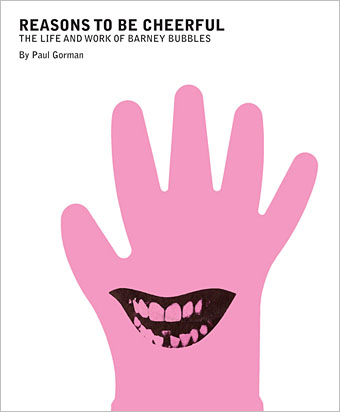
Reasons To Be Cheerful: The Life and Work of Barney Bubbles

reasons.jpg

“He was so good I couldn’t have really competed with him.”
Sir Peter Blake

Reasons To Be Cheerful is a celebration of the life and work of one of the greatest designers of recent times: Barney Bubbles.

Bubbles—real name Colin Fulcher—was a giant of graphic design whose prodigious output is revered by musicians, artists, fellow designers and music and pop culture fans.

Reasons To Be Cheerful is published November 2008 to coincide with the 25th anniversary of the artist’s death. Author Paul Gorman is also curating a companion exhibition with Sir Paul Smith.

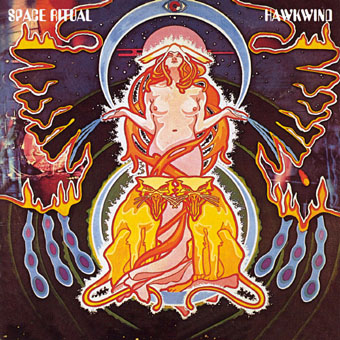
space_ritual.jpg

Space Ritual by Hawkwind (1973).

Barney Bubbles’ body of work included early posters for the Rolling Stones, brand and product design for Sir Terence Conran, psychedelic art with poster maestro Stanley Mouse, layouts for underground magazines OZ and Friends and collaborations with many bands and performers, from counter-culture collective Hawkwind to new wave stars Elvis Costello, Ian Dury, Nick Lowe, Graham Parker, The Damned and Billy Bragg.

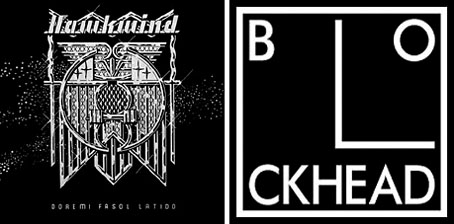
bb.jpg

left: Doremi Fasol Latido by Hawkwind (1972).
right: Ian Dury & the Blockheads logo design (late 70s).

Bubbles links the colourful underground optimism of the 60s to the sardonic and manipulative art which accompanied punk’s explosion from 1976 onwards, and influenced a generation of design talent including Neville Brody, Malcolm Garrett and Peter Saville.

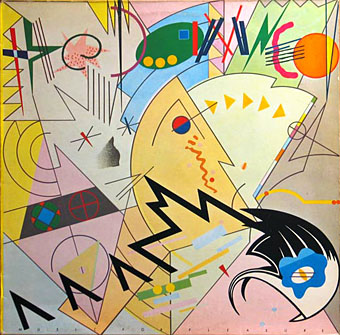
music_for_pleasure.jpg

Music For Pleasure by The Damned (1977).

The lavishly illustrated Reasons To Be Cheerful will contain hundreds of images and many full-colour plates.

About the Author
Paul Gorman is a popular culture historian and author of The Look: Adventures in Rock & Pop Fashion, and the top ten bestselling Straight with Boy George.


Arthur presents Cinefamily's "FOLK AMERICANA" music film series Thursdays in May and June

http://www.cinefamily.org/calendar/thursday.html#may

FOLK AMERICANA / Music Thursdays in May & June at 8pm
Folk songs are everybody’s songs, music learned firsthand from family and friends, and passed on person to person and from generation to generation. In these songs are the oral history of America, our traditions, our feelings, our sufferings and joys. We are thankful that there were devoted songcatchers who saw the significance and beauty of this music, who not only recorded the sounds, but also the sights, of last remaining echoes of this untouched authenticity. These filmmakers and musicologists understood and appreciated that long before we worshipped false American Idols, we listened to the root and heard the trees singing songs of the sea.

Presented by Arthur Magazine

Thursday, May 8, 8pm: Alan Lomax: Songhunter
“I thought of Alan as a Minotaur — half man, half supernatural — who defied life as we know it.” – Bill Ferris, friend of Alan Lomax

Known as the “song hunter”, Alan Lomax was one of the world’s most prolific and well-known musicologists and folklorists. He is most famous for his recordings from the deep South in the ’30s, ’40s and ’50s at penitentiaries, plantations and farms of the Mississippi Delta. He also traveled extensively throughout the U.S., Caribbean, Europe, and North Africa capturing live field performances, and helped to establish the Library of Congress’s Archive of American Folk Song. Tonight, we celebrate Lomax’s career by showing a Dutch documentary on his career, as well as selections from his own incredible film archive, including footage of the New Lost City Ramblers at Carnegie Hall, Willie Dixon, Howling Wolf, and more.
Dir. Rogier Kappers, 2004, digital presentation, 93 min.
Tickets – $10

Thursday, May 15 – 8pm: The Old, Weird America: Harry Smith’s Anthology of American Folk Music
Imagine a world without rock and roll, or without that obsessive breed of cultural anthropology that favors the margins over the center. That’s the world you’d get without Harry Smith. No one better anticipated the sea change of the ’60s and its post-revolutionary landscape than this son of Theosophists, experimental filmmaker, Native American ethnographer, alchemical evangelist, speed freak, town crier and collector extraordinaire. His three-volume Anthology of American Folk Music, with its archive of “blues singers, hillbilly musicians and gospel chanters,” in the words of Greil Marcus (whose Old Weird America lends its title), launched Bob Dylan, the Grateful Dead and the folk revival of the early ‘60s, just for starters. This loving portrait by Rani Singh, Smith’s one-time assistant and co-curator of his archives, blends biography with concert footage of Beck, Elvis Costello, Lou Reed, Nick Cave and other musical archaeologists performing songs from the Anthology, to capture the life of one of America’s secular saints.
Dir. Rani Singh, 2006, DigiBeta, 90 min.
Tickets – $10

Thursday, May 22 – 8pm: John Cohen Films
John Cohen, founding member of the ‘50s folk troupe the New Lost City Ramblers, started making films in order to bring together the two disciplines he was heavily active in: music and photography. His first film, The High Lonesome Sound, is a love letter to Appalachia and features the amazing banjo picker Roscoe Holcomb as the anchor for this gem of cultural anthropology. Next, The End of an Old Song brings us to North Carolina, and demonstrates the power of old English ballads sung with gusto while soused in a saloon. Sara and Maybelle is a rare filmed performance of the two titular members of the Carter Family, Musical Holdouts is an expansive survey of American musical subcultures that steadfastly refuse to be blanded by mainstream consciousness, and Post Industrial Fiddle explores the importance of music-making in the life of a pulp mill worker in rural Maine. All deceptively simple, but profound stuff.
Dir. John Cohen, 1962-82, various formats, 120 min.
Tickets – $10

Thursday, May 29 – 8pm: Hootenanny Hoot
Far away from the smoky boho coffee klatches of New York, wild college kids of the early ‘60s had their own fun singing and dancing down by the river in bikinis and short shorts at hootenannies, big jam sessions with great musicians. These were taken so seriously that B-movie mogul Sam Katzman (Rock Around The Clock) capitalized on the phenomenon with Hootennany Hoot. In it, two randy Madison Ave. ad men travel up the Hudson River Valley in search of fresh faces and become betwitched by the Hoot. The frivolity is fun and goes down easy, but the reasons not to miss HH are the key performances: Johnny cash sings “Frankie and Johnny” from out of the back seat of his car, Judy Henske (“Queen of the Beatniks”) taps the root and awakens the beast within for “Wade In The Water”, and suggestive ballads by Joe and Eddie hint at how the times would be a-changin’.
Dir. Gene Nelson, 1963, 16mm, 91 min.
Tickets – $10

Thursday, June 5 – 8pm: Folk Shorts by Les Blank
We present three folk film classics by Les Blank, who’s spent nearly 50 years documenting on film the tastes, sounds and rituals of both regional America and points abroad. His singular freewheeling viewpoint of celebrating “simple, loving people of the Earth” has garnered him countless awards, including AFI’s Maya Deren Award for Outstanding Lifetime Achivement in 1990. The Blues Accordin’ To Lightnin’ Hopkins is a loving portrait of blues legend Hopkins, serving a heaping helping of live performances at both a community barbeque in his hometown of Centerville, Texas, and an all-black rodeo. The Sun’s Gonna Shine is a brief lyrical recreation of Hopkins’ decision at age eight to stop chopping cotton and start singing for a living, and Sprout Wings And Fly is a poignant tribute to Appalachian fiddler Tommy Jarrell, whose unpretentious folk wisdom is interlaced with family scenes and reminiscences, plus plenty of old-time music.
Dir. Les Blank, 1969-83, 35mm, 80 min.
Tickets – $10

Thursday June 12, 8pm – Bound for Glory
Hal Ashby’s epic, simple and understated biopic of Woody Guthrie, detailing his exodus from the Midwest to California, is a masterpiece of ‘70s cinema, not only for its depiction of Guthrie’s music, but also for its portrayal of Dust Bowl despair. The story of a small-town farmer seeking prosperity in the West, Guthrie instead finds himself an able-bodied singer-songwriter. His lyrics and songs speak to the unspoken truths of the wage-slave poor working in the fields struggling against wealthy landowners. Inspired by Guthrie’s autobiography, Bound for Glory won two Oscars for Haskell Wexler’s cinematography (the film was the first ever to utilize the Steadicam) and for Leonard Rosenman’s music. David Carradine’s performance is uncompromising as he breathes life into Woody’s songs and the late Ronny Cox (Ozark Bule) as Woody’s trusted union confidant deserves mention.
Dir. Hal Ashby, 1976, 35mm, 147 min.
Tickets – $10

Thursday June 19, 8pm: Festival, shown with The Other Side of the Mirror: Bob Dylan at the Newport Folk Festival
Two from documentarian Murray Lerner, best known today for his work in music films. First up is Festival, Lerner’s priceless document of the whole Newport festival scene from ’63-’65. Alongside clips of Joan Baez, Bob Dylan and Donovan are many performances by veteran blues musicians of the day like Howlin’ Wolf and Son House, who received at the festival their first exposure to white audiences outside of their respective home bases. Next is The Other Side of the Mirror, a deeper examination of Dylan’s performances at the Newport Folk Festival from that same period, 1963-65. Early on, Dylan captured the imagination of the Newport crowds, but his infamous ’65 appearance in which he “went electric” earned him the wrath of some of the more vocal members of the crowd, and he left the stage after three songs. The Other Side presents footage from this incident, as well as great renditions of “Mr. Tambourine Man,” “Blowin’ In The Wind” and “Like A Rolling Stone.”
Festival Dir. Murray Lerner, 1967, 35mm, 95 min
The Other Side Of The Mirror Dir. Murray Lerner, 2007, 35mm, 83 min.
Tickets – $10

Thursday June 26, 8pm: Celebration at Big Sur
In 1971, everyone did it. And they did it for love. Filmed at the legendary West Coast philosophical retreat The Esalen Institute (which gave birth to EST and which counted Henry Miller as a regular guest), the very rarely screened Celebration at Big Sur is a terrific document of this formerly annual concert, featuring the sounds of CSNY, Joan Baez and her sister Mimi Farina, Dorothy Morrison, John Sebastian and Joni Mitchell, all performing on a cliff overlooking the Pacific Ocean. Like Woodstock, the Celebration was a free festival that had major quirks, which in turn made for great filmic moments. Highlights include Steven Stills getting into a fight with a heckler, experimental Jordan Belson-like bits during Joni’s piano playing, and David Crosby skinny-dipping with Carl Gottlieb (the film’s producer and the co-writer of Jaws) in the infamous Esalen baths while chanting up a storm. Purify yourself at the sea of madness!
Dirs. Baird Bryant & Johanna Demetrakas, 1971, 35mm, 82 min.
Tickets – $10


Greensburg, Kansas: "A modern survival guide for rural America"

Kansas Town’s Green Dreams Could Save Its Future

by Frank Morris
NPR – All Things Considered

December 27, 2007 · Greensburg, a tiny town on the vast, flat prairie of western Kansas, is at the center of a grand experiment. In May, a tornado obliterated nearly every house, tree and business.

The twister — among the strongest on record — killed 10 people and displaced almost 1,400 residents. The community had been in steep decline before the storm, but city leaders quickly saw opportunity in the disaster. Perhaps they could revive Greensburg and sustain it for generations to come by making it the greenest town in America.

Less than two days after the tornado, as huge machines began to tear into the wreckage of his hometown, School Superintendent Darren Hedrick managed to put a brave face on.

“Towns are about people, they’re not about buildings. And it’s a huge opportunity to rebuild — not just rebuild it the way it was but maybe rebuild it a little bit better than it was,” Hedrick said.

Though buildings, books and records were gone, Hedrick pledged to open school on time in the fall.

He did.

First-graders recently celebrated the end of an odd semester. Classes were held in small, white trailers lined up a quarter-mile from where most of the students now live. Their teacher, Laura Proser, says winter break marks a welcome milestone.

“We just got our stoplight yesterday, and everybody’s excited about that,” Proser said.

Townhomes are beginning to rise from the ragged tree trunks, weeds and ruins off Main Street. They mark a radical departure from traditional low-income housing, according to Duncan Prahl, who is from Pennsylvania and on contract with the National Renewable Energy Labs.

The townhomes are “LEED gold certified,” Prahl said. LEED stands for Leadership in Energy and Environmental Design. The rating is based on a system which rewards energy savings. Prahl said gold certification means these places will be almost twice as efficient as they used to be.

Building to this standard for working-class families is unusual, Prahl said.

“A lot of what’s happening in Greensburg is some of the first in the country,” Prahl said.

Danny Wallach began rallying the effort to make the city more energy efficient just days after the tornado hit.

“I mean, it literally struck me, green — Greensburg — and at the time, I wasn’t aware of just how perfect the timing in the national green movement was,” Wallach said. Wallach heads Greensburg Greentown, a nonprofit group leading the push for environmental sustainability in Greensburg.

Leaders in the environmental movement have embraced the plan. The Discovery Channel is filming a show here, called Greensburg Eco-town, and green architects are working overtime.

Wallach says residents here embraced environmental sustainability as good old-fashioned thrift and independence.

“They really get it, and they say ‘OK, it’s not this crazy tree-hugger agenda.’ It’s common sense, and it’s what these people are really about,” Wallach said.

About 43 miles from Greensburg is a new wind farm in Spearville, Kan.

Lynn Billman of the Department of Energy believes that the force of nature that obliterated Greensburg could play a major role in sustaining its attempt to recover.

One of the turbines on the wind farm would be plenty to power Greensburg most days. Billman says the area also has great solar and geothermal potential. Even manure from nearby feedlots could be tapped for energy.

As the city weighs options for generating its own energy, it’s also getting serious about saving it. Greensburg City Council resolved that all new city buildings should meet the very highest environmental standard — LEED platinum.

City manager Steve Hewitt says the town will come back stronger than ever. Before the tornado, Greensburg was shedding 2 percent of its population every year. Those who left for college rarely returned to stay. It was death by a thousand cuts.

Now, Hewitt is thinking big: office space for new businesses, the high school and an art center are all being designed LEED platinum, a move he hopes will boost Greensburg’s appeal.

“Maybe it’s a little crazy. There’s only 14 platinum buildings in the country. When it’s all said and done, I’d like four or five here in Greensburg,” Hewitt said.

An energy company has announced plans to build a biodiesel plant in Greensburg. Google is considering building a wind-powered data center here. Several other companies are watching closely. Meanwhile, 100 new homes are going up, all of them more efficient than those they replaced.

About 200 Greensburg residents — one-third of the town’s current population — recently congregated in the new school gym to talk over the progress.

Robert Kilgore said he and his wife are rebuilding their home with extra insulation, better windows and hot water on demand.

“To be successful, we just have to do it,” Kilgore said.

But there’s a lot of uncertainty. FEMA will cover 75 percent of the cost of restoring city buildings to their pre-storm level. Other federal and state grants will help cover most of the rest of that cost.

But city leaders aren’t talking about restoring things to their old level.

Resident Ed Stauth fears a big tax hike.

“My wife says, ‘Oh don’t be negative,’ but doggone it, I look at it from the financial part of it. I’m all for everything for Greensburg, but everything’s got its price. There’s no freebies,” Stauth said.

Despite its murky future, Greensburg has already done something few small towns can: inspire its youth.

“Before the tornado, I was not going to come back. I was going to go to college, and who knows where. This community was dying. Now I’m definitely coming back, and I know a good majority of my friends are,” said 15-year-old Levi Schmidt.

For all the optimism here though, nobody thinks that reviving Greensburg is going to be easy.

School superintendent Hedrick remains optimistic, though perhaps a bit more circumspect now.

“A lot of little towns are dying a slow death,” Hedrick said. “We had a fork put in us pretty hard. We have to find a way to resurrect, and we hope we’re making good decisions to do that.”

As Greensburg tries to leverage environmentalism to rebuild and sustain itself in the wake of near total destruction, it just may unwittingly be writing a modern survival guide for rural America.


WILLING DUPES: Douglas Rushkoff on the credit crisis

“Riding Out the Credit Crisis” by Douglas Rushkoff

from Arthur Magazine No. 29/May 2008

There’s two kinds of people asking me about the economy lately: people with money wanting to know how to keep it “safe,” and people without money, wanting to know how to keep safe, themselves.

Maybe it’s the difference between those two concerns that best explains the underlying nature of today’s fiscal crisis.

Is what’s going on in the economy right now really worse than anything that’s happened in the past few decades? Are we heading towards a bank collapse like what happened in 1929? Or something even worse?

On a certain level, none of these questions really matter. Not as they’re being phrased, anyway. What we think of as “the economy” today isn’t real, it’s virtual. It’s a speculative marketplace that has very little to do with getting real things to the people who need them, and much more to do with providing ways for passive investors to grow their capital.

This economy of markets was created to give the rising merchant class in the late middle ages a way to invest their winnings. Instead of actually working, or even injecting capital into new enterprises, they learned to “make markets” in things that were scarce. Or, rather, in things that could be made scarce, like land.

That’s how speculation was born. Speculation in land, gold, coal, food…pretty much anything. Because the wealthy had such so much excess capital to invest, they made markets in stuff that the rest of us actually used. The problem is that when coal or corn isn’t just fuel or food but also an asset class, the laws of supply and demand cease to be the principal forces determining their price. When there’s a lot of money and few places to invest it, anything considered a speculative asset becomes overpriced. And then real people can’t afford the stuff they need.

The speculative economy is related to the real economy, but more as a parasite than a positive force. It is detached from the real needs of people, and even detached from the real commerce that goes on between humans. It is a form of meta-commerce, like a Las Vegas casino betting on the outcome of a political election. Only the bets, in this case, change the real costs of the things being bet on.

That’s what happened in the housing market and the credit market—which, these days, are actually the same thing. Here’s the story, in the simplest terms:

Bush’s tax cuts and other measures favoring the rich led to the biggest redistribution of wealth from poor to rich in American history. The result was that the wealthy—the investment class—had more money to invest, or lend, than there were people and businesses looking to borrow.

The easiest way to bring more borrowers into the system—and to create more of a market for money—was to promote homeownership in America. This is precisely what the Bush administration did, touting home ownership as an American right. Of course, they weren’t talking about home ownership at all, but rather pushing people to borrow money tied to the value of a house. If people could be persuaded to take mortgages on homes, real estate values would go up for those already invested (like land trusts and real estate funds) and banks would have a market for the excess money they had accumulated.

In short, there was a surplus of credit in the system. Americans were encouraged to borrow in the form of mortgages, which created demand for the credit banks wanted to sell. In many cases the credit itself wasn’t even real, but leveraged off some other inflated commodity that the bank or investor may have owned.

Banks and mortgage companies invented some really shady and difficult-to-understand mortgage contracts, designed to get people to borrow more money than they could. Banks didn’t care so much about lending money to people who wouldn’t be able to pay it back, because that’s not how they were going to earn their money, anyway. They provided the money for mortgage companies to lend, and in return won the rights to underwrite the loans when they were packaged and sold to other people and institutions.

So a bank might provide the cash for a bunch of loans, but then get it back, plus a huge commission, when those loans were packaged and sold to someone else.

Lots of people take out mortgages, and housing prices rise. This is used as evidence to convince more people that real estate is a great investment, and more people buy into the housing bubble. Lots of these people put little or no money down, and buy mortgages whose interests rates are going to change for the worse. But they believe the price of their home is inevitably going to go up, and pin their futures on the idea that they can refinance their mortgage before their rate changes. Since the house will be worth more, the mortgage for what they owe should be easier to get; it will represent a smaller percentage of the new total cost of the house.

Of course, this was dumb. Banks didn’t really care (because they weren’t holding the bad paper) but the people investing in those “mortgage-backed securities” were slowly getting wise to the fact that many of the borrowers were in over their heads. What to do? The credit industry went ahead and lobbied Washington to change the bankruptcy laws. While corporations could claim bankruptcy and stop paying for their retirees’ health coverage, individuals would no longer be able to claim bankruptcy, and even if they did, they would still owe their creditors the money they borrowed, forever. The credit industry spent over $100 million lobbying lawmakers for the new provisions.

Then, just like the credit industry predicted, loans start going bad. (The industry labels these loans “sub prime” because they want to make it look like the borrowers were somehow less-than-respectable people. But the term really just refers to a less-than-respectable loan.) As homeowners default on their mortgages, housing prices start to go down. This, in turn, makes it impossible for people to refinance their mortgages when they thought they would; in fact, now many homeowners actually owe more on their home than the home is worth. How can you refinance a million-dollar loan on a house that is only worth half that? You can’t, so instead you have to hold onto the variable-rate loan that you foolishly bought from the predatory lender. The rate rises higher and faster than you can pay it.

Lenders go ahead and start foreclosing on properties, kicking out the mortgage holders who can’t pay. But this creates another problem: what to do with the house? It’s not even worth the outstanding portion of the loan, in many cases. And even if they can sell it, how to distribute the money? No one even really knows whose mortgages belong to whom, as they’ve been sold as parts of packages, again and again, to different lenders, pension funds, money markets…you name it.

This leads to what became known as the “credit crunch” or “liquidity crisis.” No one feels good about lending money anymore because so much of it was tied in one way or another to these bad mortgages. The creditors don’t want to take possession of all these foreclosed homes, and they turn to the government for help.

Under the guise of helping homeowners “stay in their homes,” the government starts bandying about various “relief packages.” The Treasury department and the Fed are actually taking a two-pronged strategy towards fixing the problem. One prong is cynical PR, and the other is just plain stupid.

First, they want to create the illusion that something is being done, so they talk about “superfunds” to bail out homeowners, freezes on rate hikes, checks mailed to every taxpayer, and other useless gestures. They do all this to appease angry consumers and consumer advocates because they won’t want real lending industry regulation (like what Barney Frank and other progressives are pushing for) to gain any traction.

Second, they want to make more money available to the creditors (banks), so they can keep lending money—because this is their business. So the Fed lowers interest rates again and again. Banks get more money, and guess what? We’re back where we started: with tons of money and nowhere to invest it! By lowering the “prime lending rate,” they simply add to the surplus cash that created the problem in the first place.

Of course, both measures serve to stave off panic selling, because it seems as though something real is being done. Homeowners may get a slight delay in the paralyzing rate increases on their mortgages, giving banks and creditors the chance to make a more orderly exit. They will bail from these mortgages while selling the artificially secured credit to the likes of you and me through money market accounts and other retail products. They just need time to make sure the real losses trickle down to someone else.

And remember: this whole mortgage fiasco is just a little preview of what happens next year when the credit card industry faces the very same self-imposed “crunch.” In the case of mortgage lenders, at least the terms of the loans were disclosed. Credit card companies—which are some of the very same banks that are in the mortgage mess today—are busy rewriting their policies, increasing rates, and adding fees to the policies of people already in debt to them.

You know those little ‘inserts’ in your credit card bill? Read them, and you’ll find out, like I did, that some credit card companies have begun charging interest on your purchases from the moment you make the purchase. You pay finance charges even if you pay your whole bill every month. Most people carry big balances, so they won’t notice the additional charges, or at least that’s what the credit card companies are—quite literally—banking on.

* * *

After a certain point, consumers just won’t be able to pay their bills. Even though they’ve paid the cost of their purchases several times over, they’re simply buried in interest and interest on the interest, sometimes compounding at a rate of 30 or 40 percent per year. The creditors know this, which is why they’ve sold a lot of this debt to other banks, pension plans, money market funds…you get the picture: the kinds of places where we invest our retirement money. The banks invested in us; we were the assets. Now that we’re about to go broke, they’re busy selling us to other financial institutions in a game of musical chairs that will cost the last debtholder a lot of money. Of course, unless we can convince some foreign sheiks to buy some lousy US assets with their oil money, that last debt holder will end up being you and me.

Over the past few months I’ve spoken to top strategists at some of the biggest banks in the world, and they share my perception of the scenario. Most of them are “holding cash” as their main investment strategy, spread out over a few of the major currencies. Those making money are doing so by short-selling shares of other companies in the same finance industry that they supposedly work for.

The bigger picture, of course, is that speculation just worked too well for too long. The disparity between the market values and real values (rich people and poor people) got too large. Every asset class, even money itself, got too expensive. We became more valuable for our borrowing power than our labor—which also meant there was no way to work off our debt. Meanwhile, the people using reality as an investment vehicle have overwhelmed the real economy on which their “structured investments” are based.

Sure, this has happened before. It’s just that, traditionally, when wealth disparity got too great and there wasn’t enough money in the right places, the wealthiest bankers temporarily suspended their greed to bail out the system. Or progressive tax policies opened corporate coffers, permitting a “New Deal” that employed people while rebuilding the infrastructure required to make real things and provide real services to citizens.

Today, however, such temporary restraints on greed are systematically untenable and philosophically unthinkable. Conservatives are still so angry about New Deal reforms of the 1930s that that they have infused politics and banking with an economic ideology that sees any regulation of worker exploitation or predatory investment as anti-capitalist, anti-American, and even anti-God.

So instead we are the beneficiaries of “wink” reform: stuff that’s supposed to make us feel good while reassuring the speculators that their interests will remain paramount. A few hundred dollars mailed to every American family creates the illusion that government is lending a helping hand, but this money is not redistributing anything. It’s being taken from the same people who are receiving it, in the hope that they’ll just pump it back into the system at Wal-Mart or the Exxon station.

Whether the coming economic crisis will be deep or shallow is left to be seen. We may be at the start of the kind of depression our grandparents lived through in the ’30s, or we may simply experience what our parents lived through back in the ’70s. Foreign investment trusts may come in and buy our biggest banks and turn us into global citizens through the very World Bank policies we were hoping would turn all of them into US vassals.

Whatever the case, the best thing you can do to protect yourself and your interests is to make friends. The more we are willing to do for each other on our own terms and for compensation that doesn’t necessarily involve the until-recently-almighty dollar, the less vulnerable we are to the movements of markets that, quite frankly, have nothing to do with us.

If you’re sourcing your garlic from your neighbor over the hill instead of the Big Ag conglomerate over the ocean, then shifts in the exchange rate won’t matter much. If you’re using a local currency to pay your mechanic to adjust your brakes, or your chiropractor to adjust your back, then a global liquidity crisis won’t affect your ability to pay for either. If you move to a place because you’re looking for smart people instead of a smart real estate investment, you’re less likely to be suckered by high costs of a “hot” city or neighborhood, and more likely to find the kinds of people willing to serve as a social network, if for no other reason than they’re less busy servicing their mortgages.

The more connected you are to the real world, and the more consciously you reject the lure of the speculative ladder, the less of a willing dupe you’ll be in the pyramid scheme that’s in the process of collapsing all around us at this moment.

Think small. Buy local. Make friends. Print money. Grow food. Teach children. Learn nutrition. And if you do have money to invest, put it into whatever lets you and your friends do those things.

Douglas Rushkoff writes books about media, technology, and values. He’s currently working on a project called “Corporatized,” which will explore how chartered corporations disconnected us from reality. rushkoff.com

Beekeeper builds churches for bees

bees

Some bees,repenting

A spiritual beekeeper in Serbia has built hives in
the shape of monasteries and churches for his insects ‘because bees
have a soul too’.

Slobodan Jeftic is creating his ‘holy honey’ in the northern town of Stari Kostolac.

The 58-year-old said: ‘By doing this, I am bringing together the two great loves of my life – beekeeping and my religion.’

Metro.co.uk