Kratom!

“Mitragyna speciosa – Premium Kratom Leaf

“There is much controversy with this plant due to a crop of fake Kratom from France that was distributed worldwide in the recent past. It was part of the Rubiaceae family of plants, but it had to Mitragynine in it. Our Kratom has been verified as authentic by 2 independent sources, including Daniel Siebert.

“Kratom is legal everywhere except Thailand, and is known to ease the mind and energize the body in smaller amounts, while creating a vivid meditative repose that lasts 4-6 hours in larger amounts. Typically, 14 grams of Mitragyna speciosa was extracted into water, and drank in one gulp as a tea, or made into a resinous ball, then swallowed.

“This very rare herb is found only in very remote areas of South East Asia, Thailand, Malaysia, Myanmar, and elsewhere. Its botanical name is Mitragyna speciosa and is in the same family as the coffee tree Rubiaceae. Kratom leaves have long been used for medicinal purposes to treat diarrhea, worms and in Bangkok tuk-tuk drivers consume Kratom as an amphetamine substitute. In Malaysia an other parts of the world its used to help heal opium addiction.

“Over 25 alkaloids have been isolated from Kratom. The most abundant alkaloids consist of three indoles and two oxindoles. The three indoles are mitragynine, paynanthine, and speciogynine – the first two of which appear to be unique to this species. The two oxindoles are mitraphylline and speciofoline. Other alkaloids present include other indoles, and oxindoles such as ajmalicine, corynanthedine, mitraversine, rhychophylline, and stipulatine.

“Alkaloid content varies from place to place and at different times. Within each location, there is a quantitative variation in alkaloid content from month to month. While indole content seems to be fairly stable, oxindole content shows tremendous variation.

“Mitragynine is the dominant alkaloid in the plant. It was first isolated in 1907 by D. Hooper, a process repeated in 1921 by E. Field who gave the alkaloid its name. Its structure was first fully determined in 1964 by D. Zacharias, R. Rosenstein and E. Jeffrey. It is structurally related to both the yohimbe alkaloids and voacangine. The alkaloid content of the leaves of Mitragyna speciosa is about 0.5%, about half of which is mitragynine. An average leaf weighs about 1.7 grams fresh or 0.43 grams dried. Twenty leaves contain approximately 17mg of mitragynine. All leaves appear to contain mitragynine, speciogynine, paynanthine, and small quantities of speciociliatine. Oxindole alkaloids usually occur only in small or trace ammounts.

“Kratom has quickly become our top selling item here at the shop, and we hope that responsible use of this beautiful plant will help keep it legal indefinitely.

“But, we offer this extracted plant material strictly for external use only as an exotic incense. Not for human consumption.”

From the archives of Anaphoria…

“Orenda”
Archives of Anaphoria AOA 2.5

Orenda-For Three Meta-Slendro Vibraphones
Composed by Kraig Grady- 2005
Performed by Erin Barnes, Kraig Grady, and Ellysa Shalla

Recorded and Mastered by Miriam Kolar
Cover Art by Dori Atlantis

“Orenda is both a Huron and Anaphorian word meaning that kind of power that mortals can summon to combat the blind forces of fate.

“While not a composition from Anaphoria, it is one that is informed by the ambient philosophy that blossoms out of the words and sounds of those people.

“The piece starts at an extremely low volume and listeners might be warned not to increase the level on their sound-producing device.”

Limited Edition of 200 in Two Covers of 100 each

This 3” mini-Cd is the second of a series of pieces conceived directly for this medium.
This is the first to appear on the Archives of Anaphoria label, which plans to continue with a series of like works.

Heliotrope Drive: A Crusty, Pedal-Powered Center of Post-Carbon Los Angeles

All the best things are washing up on Heliotrope by LACC. They split-open, germinate and flower as some fun, accessible, full-fledged post-carbon culture. The souls of dead outposts of everything great but gone (331/3 Bookstore Collective, Luna Sol Cafe, The Print Kitchen, art in action space) are now a part of the expanding LA bicycle universe. Bike culture in LA is categorically people-powered. So many amazing and interesting artist, writers, poets, musicians, environmentalists and visionaries are involved, a book needs to be written.

This weekend the Bicycle Film Festival happened in LA. To celebrate, a party shut down Heliotrope. 400-plus bicycles rode in: dainty cruisers, chopped-down one gears, imported multi-gears, bikes with bamboo peace flags, bikes with sound systems, dirt bikes too. There was this skid competition: folks would tear down Melrose, whip around the corner onto Heliotrope and jam on their breaks- trying to see if they could slide the distance between two wooden towers. Those who did skid got to advance, those who didn’t ended up head-over-heals with road rash. A weird way to spend the afternoon, but the crowd was into it and just being there–bikes!

null

The co-op bicycle kitchen used to be housed in the eco-village, but then moved onto Heliotrope. The Kitchen offers a place to fix up or build a bike. Part of the Kitchen’s mission is to expand bicycle culture in LA. Beyond fostering and supporting many bike and non-bike events and scenes, they’ve been doing this by getting more bikes between the legs of people, young and old. They have also been taking over their neighborhood, literally. Scoops, the least expensive and most “experimental” gelato shop moved in down the block. Across the street a commercial bikeshop, in league with the Kitchen, opened up. And now if you need another excuse to get on your two wheels, newly opened by members of the Kitchen family is the equally inexpensive brew joint and vegan restaurant Pure Luck. They have a solid selection of beers on tap and offer local visionaries a seat to re-imagine the city from. But then again they are all ready doing that.

Take it to the streets, er The Mall.

from The Reporters Committee for Freedom of the Press (via Dave Lippman):

“… In 1968, the U.S. Supreme Court held that a shopping mall was the modern equivalent of main street, the “normal municipal business district.” It concluded that the landowner could not “limit the use of that property by members of the public in a manner that would not be permissible were the property owned by a municipality.” (Amalgamated Foods Employees Union Local 590 v. Logan Valley Plaza)

But in a subsequent decision the Court retreated from this position, stating that property does not “lose its private character merely because the public is generally invited to use it for designated purposes.” (Lloyd Corp. v. Tanner)

Then, in 1980, the U.S. Supreme Court essentially left the question of access to malls up to the states, holding that the federal Constitution affords no general right to free speech in privately-owned shopping centers. (PruneYard Shopping Center v. Robins)

However, state constitutions may be interpreted to provide greater protection for expression, and therefore newsgathering, than the U.S. Constitution. States may therefore afford the public greater protection for expression in a shopping mall, even at the expense of the owner’s property interest. Since the high court’s decision in PruneYard, several state supreme and appellate courts have ruled on the issue of whether their state constitutions give people the right to enter shopping malls for noncommercial purposes such as political campaigning or gathering signatures for an initiative petition.

Courts that have found constitutional protection for these activities have given a variety of reasons for their decisions.

For example, the Colorado Supreme Court found that a town’s financial support of a shopping mall, and the range of non-shopping activities allowed there, made the center the equivalent of a public forum. This finding was sufficient to trigger the state constitution’s free speech clause, which prevented the mall owners from excluding citizens involved in nonviolent political speech. Courts have also ruled that if a shopping mall allows some political opinions to be expressed, it must allow speakers of all types onto the premises.

Almost all courts that have found a right of access to shopping malls have also said that center owners may promulgate reasonable time, place and manner regulations on noncommercial speech activities. Under the three-part test discussed earlier, these rules must be content neutral, narrowly tailored to serve a significant state interest and leave open ample channels of communication.

Continue reading

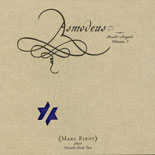
New Ribot on Tzadik


ribot.jpg

MARC RIBOT
“Asmodeus: Book of Angels Volume 7”

Tzadik
Cat. # 7362
Released Jun 2007
cd time – 38:30
US Price $16.00

1. Kalmiya
2. Yezriel
3. Kezef
4. Mufgar
5. Armaros
6. Cabriel
7. Zakun
8. Raziel
9. Dagiel
10. Sensenya

Personnel:
John Zorn: Composer, Conductor
Trevor Dunn: Bass
Marc Ribot: Guitar
G. Calvin Weston: Drums

“Three of the most intense musicians on the planet come together in one of the most explosive and rockin’ ensembles around. An original member of the Masada family since its inception, no one is more keenly equipped to handle a rock trio interpretation of the Book of Angels than Marc Ribot. Joined here by the versatile Trevor Dunn (Fantomas, Moonchild) on bass and the legendary G.Calvin Weston (Ornette Coleman, James Blood Ulmer) on drums, Marc plays like never before, referencing Hendrix, Sharrock, McLaughlin, Ulmer and more. Masada music takes on a whole new dimension. Passionate and powerful, this is one of the most compelling installments in the entire Masada series and contains some of Ribot’s wildest and best playing ever. This CD will blow your mind.”

The Drama Review (TDR) number 43: Spring 1969, The Living Theater Issue

lt1.jpg

from the Stefan Brecht’s Article: Revolution at the Brooklyn Academy.

The Living Theater’s four splendid spectacles were a great event. Like an astonishing portion of the country’s popular music, they proved to be in content and form outside the social system, not structured by it nor, except as outlet, implementing it: liberated territory.

Below is a script for the anti-theater masterpiece(?) Paradise Now.
ltd.jpg
“This chart is the map. The essentail trip is the voyage from the many to the one. The plot is revolution.”

In the film Paradise Now documenting a performance of the piece in Brussels and Berlin, the “actors” after haranguing the audience for hours, with naked calisthenics and existential questions like “why can’t I smoke marijuana”, yell something like, “leave the theater, the real theater is in the streets”. People tumble toward the door, presumably heading for some kind of barricade.

ltb.jpg