
Arthur No. 33, our first issue in four years, and our first in our new giant-sized compostable $5 newspaper format, will be available starting THIS WEDNESDAY (12.12.12) at publishing partner Floating World Comics, located in downtown Portland at 400 NW Couch St. Do what you need to do!
ARTHUR’S FIRST ISSUE IN FOUR YEARS OUT NOW
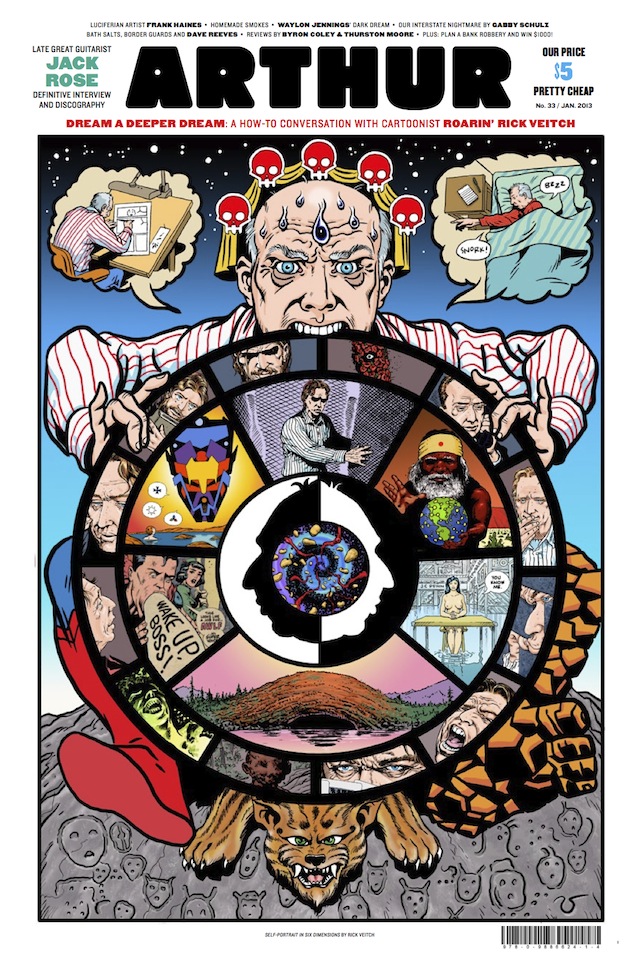
Arthur No. 33 (Jan 2013)
Sixteen 15″ x 22.75″ pages (8 color, 8 b/w)
$5
Published Dec. 22, 2012
“The new oversized print-only issue of Arthur Magazine is even more gorgeous and satisfying than expected. Like a Sunday supplement for heads.” — Jesse Jarnow, author of Big Day Coming: Yo La Tengo and the Rise of Indie Rock
“Beautiful” — Chris Richards, The Washington Post
“A coffee-table newspaper, printed on 16 immense pages of newsprint with minimal ads, and almost every inch covered with words or pictures… The cover, a gigantic piece by surreal comics artist Rick Veitch, is gorgeous, and the crispness and clarity of the print is perhaps the best I’ve seen in a newspaper. Everything in the new [issue] is worth absorbing… Opening the mammoth pages of the new Arthur feels much like unfolding a road map, one that points to strange, unfamiliar worlds.” — Ned Lannamann, The Portland Mercury
“The Haydukes of music/art/culture journalism return…welcome back!” — Team Love Records
After a four-year sabbatical, occasionally beloved revolutionary sweetheart Arthur returns to print, renewed, refreshed, reinvigorated and in a bold new format: pages as tall and wide as a daily newspaper on compostable newsprint, with ads only on the back cover(s). Amazing!
In partnership with Portland, Oregon’s Floating World Comics, Arthur’s gang of idiots, know-it-alls and village explainers are back, edited by ol’ fool Jay Babcock and art directed by Yasmin Khan.
This issue’s contents include…
Dream a Deeper Dream: A how-to conversation with cartoonist ROARIN’ RICK VEITCH by Jay Babcock. Plus “Cartographer of the American Dreamtime,” an appreciation of Rick Veitch and his work by Mr. Alan Moore. Mr. Veitch’s “Self-Portrait in Six Dimensions” graces our cover.
JACK ROSE: the definitive, career-spanning interview with this late great America guitarist, conducted by Brian Rademaekers just months before his death three years ago. Plus: Jack Rose discography compiled by Byron Coley, and an illustration of a classic Jack pose by Plastic Crimewave.
An illuminating/endarkening conversation with sparkling Luciferian artist FRANK HAINES by Eliza Swann
Stewart Voegtlin on WAYLON JENNINGS’ dark dream, with an illustration by Beaver
Columnist DAVE REEVES on Burroughs, bath salts and border guards, with an illustration by Arik Roper
Columnist NANCE KLEHM on new modes of exchange—and homemade smokes, with an illustration by Kira Mardikes
Cartoonist GABBY SCHULZ explores our interstate nightmare
The Center for Tactical Magic on “The Magic(k) of Money” — and how YOU can win $1000 for planning a BANK ROBBERY!
“Bull Tongue” columnists BYRON COLEY & THURSTON MOORE survey happenings in underground culture, paying special attention to new and archival releases from Claude Pelieu; Spectre Folk; United Waters; Devin, Gary & Ross; Jess Franco; Mick Farren; Chris D.; Donna Lethal; Crystal Siphon; Mad River; Horace; Erewhon Calling by Bruce Russell; Toy Love; The Clean; David Kilgour; The Heavy Eights; Chris Corsano; Joe McPhee; Rangda; Ben Chasny; Sir Richard Bishop; David Oliphant; Brothers Unconnected; 200 Years; Six Organs of Admittance; Gary Panter; Marcia Bassett & Samara Lubelski; Cheater Slicks; Ron House; Above Ground; Vacuum; Max Block; Dead C; Axemen; Hamish Kilgour; Circle Pit; Kitchen’s Floor; Bits of Shit; and Boomgates. Plus a special report on The Ex 33 festival at Cafe Oto in East London, featuring The Ex, John Butcher, Zea + Charles, Jackadaw With Crowbar, Mats Gustafsson, Ken Vandermark, Trash Kit, Steve Beresford, Wolter Weirbos, Valentina Campora, Gabriella Maiorino, Andy Moor, Yannis Kyriakides, Anne-James Chaton, Ad Baars, Jorge Vega, Ian Saboya, Enrique Vega, Tony Buck and Roy Paci.
Please keep in mind… Arthur is no longer distributed for free anywhere. Those days are (sadly) long gone, ladies! Now you gotta buy Arthur or you won’t see it. Our price: Five bucks pretty cheap!
TEN YEARS AGO
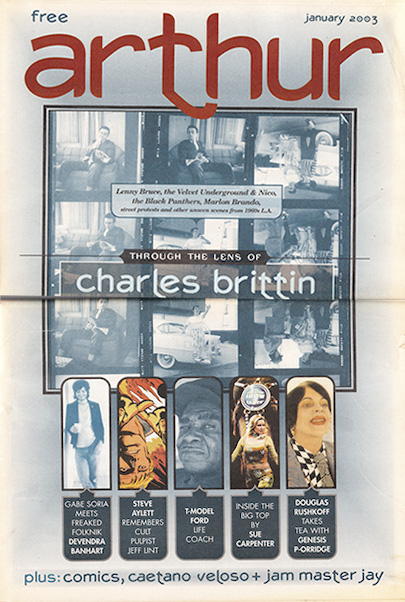
Here’s a scan of the cover of one of the last copies we have of Arthur No. 2, published ten years ago right about now…
It’s a pretty weird issue of the mag — to my eyes, it doesn’t quite hang together editorially, a fault completely my own — but whatever, it might of interest to some folks ten years on. Here’s a list of the contents:
Arthur No. 2 (December 2002)
Color/black and white, 48 pages, newsprint, 11.5 x 14, quarterfoldThe West Coast premiere of the Velvet Underground and the Exploding Plastic Inevitable, in 1966? Lenny Bruce and Anita O’Day waiting to score? James Baldwin, Marlon Brando, the Black Panther Party and other good-souled political activists doing what needed to be done? CHARLES BRITTIN was there, and these are his never-before-published photographs, as curated for Arthur’s readers by KRISTINE MCKENNA.
He plays guitar and he writes/sings songs like you’ve never heard. He’s also 21 and has got a certain elfish charm. Ladies and germs, DEVENDRA BANHART, as witnessed by scribe GABE SORIA and shutterbug SHAWN MORTENSEN.
Depressed? Hair falling out at age 23? Having sex with your cousin? “I know all about that stuff!” says Arthur’s new advice columnist, 78-year-old bluesperson T-MODEL FORD.
Language as incantation, the art of the cut-up, larval culture, neural re-wiring and what does it feel like to live in a post-authorship world: all in a Sunday afternoon’s teatime with visionary artist-provocateur-human GENESIS P-ORRIDGE and hotshit media theorist DOUGLAS RUSHKOFF. Photos by SHAWN MORTENSEN.
In an exclusive excerpt from his new autobiography, legendary Brazilian musician CAETANO VELOSO takes us to the political, cultural and hallucinogenic frontlines of authoritarian Brazil, 1968. It’s all here: tanks, ayahuasca, street protests, witchcraft cults, and of course, Veloso’s fellow Tropicalistas, the musicians Gilberto Gil, Gal Costa and Os Mutantes.
Self-described desk-bound journalist SUE CARPENTER finds out firsthand and feet-first how women are transforming the 21st-century circus. With photographs by LAUREN KLAIN.
Plus: Comics by Kevin Huizenga, Jordan Crane, Anders Nilsen and James Kochalka, and a drawing by Sammy Harkham.
Britwit-novelist STEVE AYLETT revisits the legend of pulp fictionist/”rogue maniac” Jeff Lint, author of One Less Bastard and creator of The Caterer
“Bull Tongue” columnists Byron Coley & Thurston Moore sort the pepper from the bugpoop in underground recordings, performance, poetry and text.
Peter “Piper” Relic remembers JAM MASTER JAY.
Some thoughts on the issue for those keeping score at home — hopefully completely accurate, but it’s ten years, and there’s probably been some memory loss, so be gentle with me if I screw something up here.
This was our second issue. The first issue had done alright. We’d printed 70,000 copies. The printer had folded them the wrong way, which while embarrassing, wasn’t catastrophic, since we’d put the logo at the top of the reverse side (don’t ask). Anyways, less than one week before we went to press with this issue, our old printer told us that our agreement with them would not be honored. They told us they wanted to get out of the quarterfold newsprint business. My partner, publisher Laris Kreslins, scrambled and found a new printer in time for us to not miss our deadline for No. 2. We abandoned the double-cover concept we’d used for Arthur No. 1, which was borrowed from the original format of Rolling Stone, and made it to press.
But finding a new printer at the last moment was only the last of many hurdles in getting this issue out. Ad sales were somewhat lower than the first issue, which, although predictable — second issues are often a harder sell than the big premiere issue, where you can count on a bit of goodwill — was somewhat dispiriting. It made us wonder if we were deluding ourselves that this Arthur thing really had a chance of working, given that it was going in the wrong direction so quickly.
On the editorial end, which I was in charge of, we’d had a major problem, beyond being completely budgetless: the Eddie Dean-penned cover feature on the photography of country music enthusiast Leon Kagarise for this issue, which had been prepared months in advance, had to be pulled near the last moment because… Well, just because. That cover feature didn’t end up running ’til Arthur No. 32, the issue that was to go to press in December 2008, but never made it due to the severe economic contraction that fall…which was the final blow to Arthur in its first incarnation. (You can read Arthur No. 32 by downloading it as a two-part PDF. Click here for info.) Something about that piece did not want to see print in Arthur.
With the Eddie Dean feature delayed to who knows when, we had nothing in hand that seemed—to me, at least—like a cover feature for the issue in front of us. In hindsight, I can see that the Douglas Rushkoff-Genesis P-Orridge conversation was cover-worthy…although we didn’t really have the right kind of photos on hand to make that a cover… And I really liked the interview and photos we’d got with this kid Devendra Banhart — it was apparently the first or second interview he’d ever done in his life—but we couldn’t make him the big cover feature, he was just starting out… So…
Enter the great veteran journalist Kristine McKenna, whose work I’d been reading since I was 14 or 15. For a golden period in the ’80s, Kristine was writing regularly for the Los Angeles Times, covering all the interesting musicians, fine artists, cartoonists, performers and art-thinkers who were there to be interviewed at the time. I devoured anything with her byline; she got the best conversations out of the most provocative people (seriously: see the two collections of her interviews published by Fantagraphics—the list of interviewees is just absurd), and her reviews of records and live performances both exposed me to work I wasn’t aware of and showed me why it was of import or at least worthy of interest. I didn’t see her byline much in the ’90s, and although I’d started writing for the LAWeekly and getting around just a bit in LA cultural circles, our paths never crossed. I wasn’t even sure she was still in L.A.
So. It wasn’t until 2000, when I was working on a feature for Mojo on Black Flag’s pre-Henry Rollins era, that I came in contact with Kristine. I am not sure who gave me her phone number, although I think it may have been Brendan Mullen (RIP). I was looking to talk to an L.A.-based music journalist who wasn’t overly involved in the hardcore scene who could offer some perspective on how Black Flag were regarded in their early days from outside. Kristine seemed like she would fit the bill. I called her, we met, she was extremely generous with her time and ideas, and we became fellow freelancer/comrades, with me of course very much in the extreme junior position. We stayed in touch. In late 2002, when I told her I’d lost the cover for Arthur’s second issue, she had an idea.
Why not cover Charles Brittin, she asked?
Charles (who has since died) was a semi-professional L.A. photographer who had spent much of his life photographing extraordinary scenes that he was involved in, the most exciting being L.A’s avant garde scene of the mid-to-late ’50s (principally around Wallace Berman and his circle) and the social activist period of the ’60s. He had tons of unpublished photos that were just incredible: Lenny Bruce in his prime, the Velvet Underground & Nico onstage in Hollywood, the Black Panthers in action, Marlon Brando at a street protest, CORE members picketing next to white supremacists… and then, Anita O’Day, and Rachel Rosenthal… Art director WT Nelson went nuts when he started seeing what Kristine had found, and with good reason.
For me, the clincher was a wide-angle photo that Charles had taken of an endless sea of marchers, many of them G.I.’s, protesting the Vietnam War on April 4, 1969, right here in Los Angeles, on Wilshire Boulevard near Virgil. Please keep in mind that his was late 2002: America was preparing to invade Iraq. Anti-war sentiment barely existed outside of the usual peacelover/refusenik circles. We decided to run this photograph as a double-page spread, as a centerfold — a de facto poster, available to anyone who wanted it, since Arthur was distributed free of charge. Maybe it would play a small part in helping inspire and encourage people to stand up to these war creeps.
It wasn’t much, we knew, but it was what was available to us. So, we went for it. That was our centerfold, and what the heck, Charles Brittin was our cover.
Thank you, Kristine McKenna!
For those interested in learning more about Charles Brittin and his work, check out Charles Brittin: West and South, a hardcover monograph edited by Kristine and others that was published on the occasion of a 2011 retrospective at the Michael Kohn Gallery.
DON EMILIO & HIS LITTLE DOCTORS by Luis Eduardo Luna (1982)
Last weekend, I read THE BROTHERHOOD OF THE SCREAMING ABYSS, the brand new tell-all memoir by Dennis McKenna, recounting his life with his older brother, Terence, and their adventures together exploring psilocybin, dmt, Terence’s nutty Timewave Zero/2012 idea, and so on. It is a brave, instructive, lucid and (yes) sobering look at the life of two unique psychonauts, one of whom is still with us, and one of whom haunts many of us.
In the book, Dennis mentions “Don Emilio & His Little Doctors,” a film by the scholar Luis Eduardo Luna. The film is available online, in its entirety, with the permission of Mr. Luna.
Here is the description:
This film, by Luis Eduardo Luna, is one of the very first films—if not the first—documenting ayahuasca among mestizo population of the Peruvian Amazon. It was part of Luna’s field work carried out in the Iquitos area during July and August 1981, concentrated on the practices of Don Emilio Andrade Gomez, a “vegetalista” living 12 km from the city. The film Don Emilio and his Little Doctors (1982) was made during that time. It is a complement to Luna’s doctoral dissertation “Vegetalismo. Shamanism Among the Mestizo Population of the Peruvian Amazon”, published in Stockholm in 1986.
Don Emilio was born in Iquitos in 1918. When he was 14 years old, and while working in the Amazon river, near the mouth of the Napo river, he took ayahuasca for the first time. He did it in order to curarse, a term that implies the cleansing and strengthening of the body. When he took ayahuasca for the fifth time, while keeping to the prescribed diet imposed by his teacher, an old man with a flute and a drum appeared in his visions to teach him icaros, magic melodies…
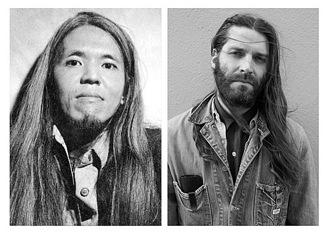
Patrick Rosenkranz on the great SPAIN RODRIGUEZ (RIP)
ATTENTION 2008-ERA ARTHUR MAGAZINE SUBSCRIBERS
If you previously subscribed to Arthur Magazine and still have a balance due to you, please click here to contact us via email. We have good news for you!
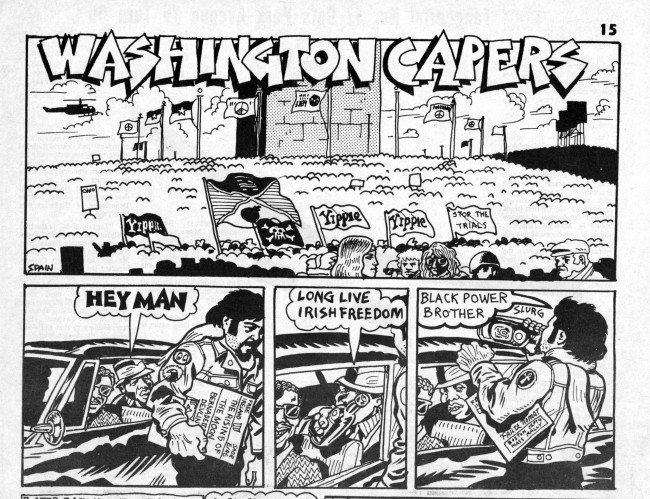
RIP SPAIN RODRIGUEZ
RIP SPAIN RODRIGUEZ, a truly legendary American underground cartoonist and widely beloved human being, dead Wednesday morning at age 72 after battling lung cancer.
Please, even if you have absolutely no interest in comics, or bikers, or revolutionary workers, or lovely people, read the obit below from the San Francisco Chronicle, and weep.
They don’t make ’em like this anymore, seriously.
San Francisco Chronicle – “Spain Rodriguez: Zap Comix artist dies”
TRASHMAN: The Art of Spain Rodriguez from Burchfield Penney Art Center.
Oregon’s Willamette Weekly on THE RESURRECTION OF ARTHUR MAGAZINE
The Resurrection of Arthur Magazine
November 21st, 2012
By ROBERT HAMNews of any import is quick to spread on the web. But even knowing that, the number of outlets reporting on the return of Arthur Magazine was pretty surprising, especially for a print publication that focused on various strains of the counterculture: music, drugs, magic, underground comics, and organic gardening. Yet everyone from The Wire to the New York Times expended a few lines of HTML to announce that, after a four year hiatus, Arthur would be returning to print starting on December 22nd.
“Frankly, the culture is in such bad shape that even something this tiny is being taken as something significant,” says Arthur’s editor and founder Jay Babcock. “If that’s become newsworthy, that’s kind of sad. But you’re the journalist, that’s your call to make.”
I’ll gladly make the statement that Arthur’s imminent resurrection is noteworthy. During its initial run, from 2002 – 2008, the bi-monthly magazine (released for free) covered an impressive amount of territory. Its debut issue set the template: featuring BMX icon Matt Hoffman on the cover, and carrying interviews with confrontational electro-clash singer Peaches and psychedelic drug enthusiast Daniel Pinchbeck, comics by Silver Jews frontman David Berman, music reviews by Sonic Youth’s Thurston Moore, and an advice column from comedian Neil Hamburger. The magazine gained so much attention and fans that they were able to put on music festivals in their L.A. hometown in ’05 and ’06, and released a batch of DVDs and CDs, including the Devendra Banhart-curated compilation Golden Apples of the Sun, which introduced the world at large to the burgeoning freak folk movement.
Read more: Willamette Weekly
The Fader: Why do Arthur again?
Arthur Founder Jay Babcock on the Magazine’s Return to Print
STORY BY: Emilie FriedlanderJay Babcock, founder of Arthur Magazine (for which I once interned), made a surprise announcement last week that the longrunning music and culture periodical, perhaps best known for its dual embrace of psych-folk and radical lifestyle politics, is coming back into print after a four-year hiatus. Among other factors that made the magazine’s return possible, Portland, Oregon’s Floating World Comics is coming on board as a publisher, resurrecting the glossy of yore in the form of a broadsheet, part black-and-white, part color newspaper, which is available for pre-order for the very reasonable price of $5 of issue and hits homes on December 22nd. Babcock jumped on the phone with us from his desert home in Joshua Tree, CA to tell us why Arthur is coming back, and how, even if print may seem a risky prospect these days, the medium is kind of the message.
…
“A: How do you make the best of the analog? How you do what can’t be done in digital? Why do analog if you can just do it in digital for cheaper? Well, do something that digital can’t do, something that takes up a big field of vision. We’re doing Arthur as a newspaper but a newspaper with only ads on the back, so that each page is gigantic, and each two pages is a spread. When you put that in front of your eyes, it’s much, much bigger than a computer screen. The art director gets to take full advantage of that space. We can have things that are suitable for putting up on the wall, which is another thing you can’t do with your computer. And when you’re done with it, you can compost it.
Q:Or you might want to save it, right?
A: Yeah, if you want to save it, it’s easily saved. It’s not going to disappear when Google fails. It’s not going to disappear when the power goes out because of a climate change hurricane. It’s there as long as you can keep it physically near you. With Arthur, we acknowledged that we live in a world that is being overrun by technology, and we use that technology for our own purposes, but we want to have as little to do with it as possible in everything we do. We use every tool that the tech world has put there, but you the know, the tech world has been a really bad thing for the culture. I’m forty-two years old; I watched this happen in my lifetime. I watched [as] the tech nerds and the capitalists behind them always claimed, Just wait. Journalism would come back, everything would resolve, and they were completely wrong. Everything they destroyed has not come back. And that’s in all fields. That’s in journalism. That’s in art. That’s in music. That’s in every single artistic or cultural field you can think of. The internet nerds and the venture capitalists behind them, they said all the destructive work that they were doing was going to get rid of the gatekeepers and open everything up. What’s it’s done is replace the old gatekeepers with new, worse gatekeepers called Apple, Google, Facebook. Worse than ever.”
Read more: The Fader
 Arthur Magazine