Like a gig of old…

Bloguemahone: Dispatches from The Pogues Tour Bus in the lower Circles of Hell by James Fearnley

Shane came into rehearsal Ôø?professionally lateÔø?, as he wittily put it, with that gnashing laugh he has, the first day of rehearsal. I think heÔø?d had to be woken up, in his flat. He wasnÔø?t as sartorial as IÔø?ve seen him of late, though he still has his brothel-creepers that I became familiar with coming across on the dressing room floor when we were on tour at Christmas, as he felt the need to air his rather curious-looking feet (and to air, with Joey, the top half of his body, at least one evening, where were we? Newcastle I think). He staggered in at four in the afternoon wearing a tophat that looked as though someone had attempted to contain a firework inside it.

Rehearsals went reasonably well. After so many years playing these songs, recording them, putting them together, rehearsing them, theyÔø?re Ôø? well, internalized, now, part of our fabric somehow, in our bones. I donÔø?t think we actually needed the two days we set aside for rehearsal Ôø? other to remind ourselves whether or not there were three or four verses before the break in Old Main Drag (on the record, and I remember when Shane wrote the song and we put it together in rehearsal, it was supposed to be symmetrical with three before and three after the break), and for Andrew to get used to the rather springy skin on the bass drum of the rented (with a finish that was almost gold lamÔø?) drum kit, and to remind ourselves of the chords to Thousands Are Sailing, which have always been a problem for a lot of us. As it turned out, when it came to the festival at Stoke Park in Guildford, when Jem put on the gunmetal-blue suit he last wore seven months ago for the Christmas tour and went through the pockets, he found the chord crib-sheet heÔø?d used then, so, at least he knew what to do.

The second day of rehearsals was as enfeeblingly hot as the first day. We ran through the set a couple of times, and, though we didnÔø?t actually have time for it at whatÔø?s known as Ôø?GuilfestÔø?, I was amazed that we hadnÔø?t any trouble with Bottle of Smoke, because that one caused the most problems last Christmas: none of us could say at that time, with any certainty, how the break, which Jem wrote, went. We realized, from the live recording, that Terry was playing one thing, me another, and Jem something else. Last Christmas we spent a bit of time trying to discover some concensus as to how the tune actually went. This time, however, for some reason, donÔø?t know why, it was all there Ôø? maybe a bit of contemporizing from Terry, because the dear boy just canÔø?t help it, but, in the heel of the hunt, well, we just didnÔø?t play it at Guilfest. Perhaps in Japan.

I met the band bus coming down whatÔø?s normally the cycle track across Stoke Park at Guilfest and motioned it in through the artistesÔø? gate, to make my way, donÔø?t ask me why, to the guest entrance. I had to come back to where IÔø?d guided the tour bus in and wait outside for ten minutes in a face-off with a rather red-faced, scottish (why are they always Scottish?) security manager who wouldnÔø?t believe me, until the tour manager came (whoÔø?s Scottish too, hmm) to break the deadlock. The band had a straighforward journey down from London. ThatÔø?s tour managers for you. The Pogues have an exceedlingly good one, whoÔø?s as executively functional as you can get and intimately knows that there are more ways than one to skin a cat. WasnÔø?t always the case with tour managers. It is now.

So, we change into our suits Ôø? Jem into the aforementioned, with the chord sheet in; Philip into something suavely black; Darryl into a suit IÔø?m sure dates from my wedding; Terry into a charcoal number, with his blue shirt tucked out, which IÔø?ve told him about, but will he listen?; Spider, with a new, rather fetching, quasi-Steve Marriot hair-cut (an opening came up, with Sarah, nobody but whom he trusts to go near his hair), in a light grey suit, and his shirt tucked out, but I can handle that, for some reason; myself in the suit I bought at a vintage clothing stall in Santa Monica Civic Center and which has seen me through every gig IÔø?ve done, with the Low and Sweet Orchestra, Cranky George, Pogues, since 1995. Shane obviously hadnÔø?t read the band-meeting minutes and went on-stage in the t-shirt and black trousers IÔø?d seen him in last Ôø? the front of the trousers peppered with cigarette burns (reminded me of the pub game I played once, where you peel the tissue paper from the silver foil of twenty Embassy, stick it over the top of a pint glass, put a coin in the middle of it, and then burn holes in it with cigarettes with the person who makes the coin fall into the bottom of the glass buying the next round).

Shane changed the set round at the last minute, which might have put another band into a panic (although the sound and lighting technicians donÔø?t like it one bit, for all the cues going to shit and everything). I saw him scribbling over the set list in the porta-dressing room, arms on his knees, stabbing at the paper with a marker, wiping his nose with a fore-arm, impatiently cuffing the paper. I left him to it. We all left him to it. DoesnÔø?t do to come between the bowman and his target. As it turned out, the first three songs were just the right sort of songs to open the set with (although the front-of-house sound-man might have wanted something slow to get all the levels sorted out, but, hell, you canÔø?t come out in front of Ôø? how many? DonÔø?t know. Fifteen thousand maybe. Between ten and fifteen. Difficult to tell, although the heads stretched right back to the customary, almost medieval-looking ring of tents at the very back – potato places, shops, that sort of thing, though I didnÔø?t concentrate that much on whatÔø?s out at the very back. Streams of Whiskey, then If I Should Fall From Grace With God, then Sally MacLennane. Those are hard work for an accordion-player that wants to jump around at the dramatic bits. My legs (and the knees of my trousers) are ruined.

Shane brought with him onto the stage a large pitcher of iced water and a wet towel, which he wore for some of the time. He had a familiar old thing going on in his head, for this gig: a recital, a disjointed recital of half-remembered phrases that have passed his way in his life, coming out in a sort of bebop of verbalizing, starting out with some improbable connection heÔø?s made, and then just going off on that. Ôø?ItÔø?s nice to play in Denmark again!Ôø? he said, whereupon, heÔø?s off into Hamlet, but runs dry because he canÔø?t remember the whole graveside soliloquy. Spider, however, came to his rescue with something, IÔø?m not sure, from Henry the 4th (not sure which part), which he does remember in its entirety, because Spider has a photographic memory, but one of those panoramic cameras, if you know what I mean. ItÔø?s great to hear Shane go off into some verbal jazz territory, like the character Ron Perlman plays in Ôø?The Name Of The RoseÔø?, and itÔø?s great to hear Spider spitting out Shakespeare. DoesnÔø?t happen a lot nowadays. In that way, it was like a gig-of-old, the two of them playing off one another.

And, like a gig of old, was the way we played the rest of the show Ôø? by the seat of our pants, with almost bemused looks up from our instruments Ôø? or even not bothering to look up at all Ôø? when Shane neglects a cue, or rides off digging his stirrups into the flank of one of the verses after an instrumental break in Fiesta and would, at one time, have left us a mess of limbs, scrabbling in the dust. Nowadays, however, weÔø?re cheek-by-jowl with his frothing steed and heading it round toward the paddock, or crashing into the barn, one of the two, with Spider banging his head on Ôø? well, not the proper beer tray it should have been, because a runner came back from the shops, having been sent out for beer-trays, with a catering pack of those silver-foil tv-dinner trays which Spider left crumpled on the floor. At the end of Fiesta, Jem went off into some penetrating Coltrane territory.

IÔø?m sure someone will have the set list. I donÔø?t have a copy, and IÔø?m buggered if I can remember how it went. We played Rainy Night In Soho in a way I donÔø?t remember ever playing it Ôø? slow, much slower, and, I think, with a refinement the song hasnÔø?t had for a while. I questioned Terry over the top of the piano if he thought it was too slow, but managed to stop him going over to try to get Andrew to speed it up a bit, because that wouldnÔø?t have done, and besides, I was getting to like it slow like that. Shane forgot how the verse after the break went, but let the crowd remind him how it was, and with a fine sense of etiquette almost, took their cue and started the verse again, once he had it.

ThatÔø?s all I have to say about Guilfest. Afterwards I walked fucking miles through Guildford to get a drink in a hotel bar with holes in both knees of my suit.

Except Ôø? since the BBC Radio 2 vans were out the back, IÔø?m wondering if some of it, or maybe all, might be available on the Radio 2 website. I listened to Fiesta on the radio last night (Saturday) and had a laugh at how we did it.

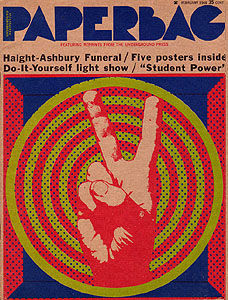
NEW MIKE KELLEY.

Nov 25, 2005 New York Times

Art Review | ‘Day Is Done’

Adults Playing Children’s Scary Games

By MICHAEL KIMMELMAN
The Los Angeles veteran Mike Kelley’s latest show is a sprawling, scabrous spectacle of noisome installations and hilarious videos, occupying the whole of the cavernous Gagosian Gallery in Chelsea. Ingratiating Mr. Kelley’s work never has been, nor is it now. But serious it is, in its brainy, abrasive, black-humored way, and this is by far his most ambitious and perversely entertaining effort, an attempted Gesamtkunst-werk of satanic rituals and advertising jingles mingled with allusions to Godard, German Expressionist cinema and Stockhausen.

That there is a heart at the core of this crazy-sounding, toxic-comic carnival may be hard to detect at first because, as always with Mr. Kelley, the affect is severe. But it’s there. Like all dark social satirists, Mr. Kelley is simultaneously transfixed and outraged by the treacly, sentimental garbage and pointless violence that pass for contemporary culture, and so turns it to his mischievous use. Tapping into the perverse, libidinous, irrational undertow of ordinary American life, he produces something not quite redeeming and rather abstract.

This show is called “Day Is Done” and it extends a conceit of Mr. Kelley’s recent work. He devises oddball dramas and forlorn installations, imitations of amateur stage sets, based on photographs from high school yearbooks. School plays, musicals, square dances and other endearing or pathetic all-American dress-up rituals provide fodder. Mr. Kelley recreates the cheesy backdrops and get-ups worn by teenagers in the original black-and-white pictures, hires more-or-less look-alike actors – adults playing pubescents – then restages the photographs in color.

Occasionally the original photographs are tough to decipher. Mr. Kelley translated the graphics on one girl’s T-shirt as a baby duck on a stilt, a one-eyed kelp, and a tree branch or a pair of mechanical limbs, take your pick. He had a T-shirt made. A friend saw the original picture. It was the Looney Tunes Road Runner. Amused, Mr. Kelley produced an edition of T-shirts in sickly pink and baby-blue emblazoned with his surreal Looney Tune (the shirts are for sale at the show), as a kind of gag metaphor for his whole translating enterprise.

The photographs are the start. They also inspire far-flung riffs on their unknown characters: scripted, bizarro playlets with accompanying musical numbers in helter-skelter genres – image, text and music often clashing intentionally.

There are 28 installations-cum-musical-theater works in the show, a bazaar or a medley, depending on how you look at it. On a video alongside a high-backed chair rotating on a carpeted platform before a red curtain, a vampire belts out in the style of an Andrew Lloyd Webber musical: “Blood is all I crave, sweat is what I get, I hunger for … love.” The lonely vampire vainly waits for someone to sit in the chair, too shy to venture from behind the curtain.

Nearby a boy in a Nativity play slowly gesticulates to a soundtrack of electronic beeps. In the style of the Italian horror-film director Dario Argento, a chase is filmed through a house. Gospel singers wail before a 15-foot-long rocket ship. Heavily made-up barbers menace a kind of wild child who, while waiting for his haircut, thumbs through a porn magazine, then detects a curious similarity between one of the pictures and one of the customers.

A teenage girl dressed like a hillbilly recounts a nonsense parable in the manner of H. P. Lovecraft crossed with William Faulkner as part of a faux-reality show in which each character paints on black velvet a beloved tabloid-troubled celebrity. A catfight ensues with a Kiss-lover who rhapsodizes like a medieval troubadour about Gene Simmons’s tongue.

Did I mention the church confirmation in which a plump female communicant morphs into a devil worshiper, and teenage boys dressed in Nazi outfits suddenly rap about sex with fat women? Or the mesmerizing exotic dancer whose undulating silhouette casts a shadow that splits, mirror-fashion, on a mechanized, rotating curtain? Outtakes from her wiggly show, spliced together, create a separate short video, flat-screened, in the manner of experimental film.

Whatever else it is, Mr. Kelley’s button-pushing shebang is an amazing feat of industry and poetics. (Scott Benzel composed the music with Mr. Kelley.) It can grow on you, as it comes together, visually. Purple backdrops echo across the sea of abject bric-a-brac. A candy-cane throne, copied and turned on its side, makes a kind of Bauhaus-derived shelter, a sculptural echo. Figures crop up from one scenario to another. The boy in the barbershop is in the Nativity scene, and one of his barbers plays a devil. Themes of sexual desires go everywhere unfulfilled. Adults menace children.

That most of the characters are adult actors playing teenagers playing roles from high school dramas layers the irony and locates the emotional center not in juvenile angst but in some adult realm of sublimation and fantasy.

Rhetorical whiplash is Mr. Kelley’s style, and it can seem obfuscating. Coy allusions let an art audience flatter itself. But Mr. Kelley’s deep roots are in the performance tradition going back to the Vienna Actionists. Such raw theater is for some traditionalists art’s nemesis, but it is not meant to be easy.

The sheer ambition of this project suggests a conscious rebuke to the thinness and cookie-cutter-competence of much contemporary art with its go-along, get-along relationship to the market. Mr. Kelley’s art doesn’t get along and it doesn’t preach. He is an unlikely romantic, for whom art, when practiced at a stretch, should stick in your head and your craw.

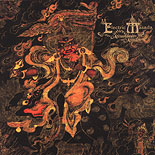
NEW ELECTRIC MASADA

Electric Masada
At The Mountains Of Madness
(Tzadik)

Cat. # 7352-2
Released Nov 2005
cd 1 time – 77:54
cd 2 time – 74:54
US Price $25.00

“Electric Masada combines the raw power and manic speed of Naked City, the improvisational edge of Cobra and the spiritual lyricism of the Masada songbook. Their second release captures them at the end of a long European tour, at the very peak of their powers. Tight as a drum and as hot as a blow torch, these two incredible live performances will leave you breathless. Featuring a level of musical communication, excitement, versatility and complexity very few bands have been able to attain, this is Zorn at his very best. Astonishing group conductions, searing solos and crazed insanity from one of the most amazing bands Zorn has ever had.”

Personnel:
Cyro Baptista: Percussion
Joey Baron: Drums
Trevor Dunn: Bass
Ikue Mori: Electronics
Marc Ribot: Guitar
Jamie Saft: Keyboards
Kenny Wollesen: Drums
John Zorn: Alto Sax

THE CATERER Comic color reprint!

THE CATERER COMI

An oblong gift to fans of 70s pulp and of cult author Jeff Lint

Thirty years after the spectacular collapse of Pearl Comics, a celebration of the cause of that collapse – Jeff Lint’s THE CATERER.

Described by Alan Moore as “the holy barnacle of failure”, The Caterer dragged Pearl into a legal hell when its hero spent the whole of Issue 9 on a killing spree in Disneyland. The smirking Jack Marsden became a cult figure and role model for enigmatic idiots in the mid-70s. His style and catchphrases were such an insider code that hundreds of people got beaten up by baffled or enraged onlookers.

Steve Aylett presents a reprint of Issue 3: this stand-out issue includes the beginning of Marsden’s goat obsession, a fierce appearance by the ghostly Hoston Pete, a great example of the Marsden ‘stillness’ and no less than four classic Marsden hallucinations. The leaning Chief Bayard’s preoccupation with our hero results in the violent deaths of six people, and Jack delivers his infamous ‘lipstick for dog’ diatribe.

Color cover and strange 1970s color throughout – full use of the word ‘thru’, the term ‘strides’ for pants, and repetition of the phrase ‘stroll on’, never used by a single person in real life ever.

For those who read LINT and those who love Lint, an artifact to baffle friends and scorch the eyelashes of one’s enemies.

Includes ads and letters pages in the Caterer style.

This is an oblong gift to fans of 70s pulp and of cult author Jeff Lint.

Color reprint of Jeff Lint’s THE CATERER issue 3
Color cover + 28 color pages.
6.625ins width x 10.25ins depth
(16.83cm width x 26cm depth)
32 pages
$9.45 (around Ôø?5.67)

COURTESY S. AYLETT!

"When Saddam used WP it was a chemical weapon, but when the Americans use it, it's a conventional weapon."

US intelligence classified white phosphorus as ‘chemical weapon’

By Peter Popham and Anne Penketh
Published: 23 November 2005
The Independent

The Italian journalist who launched the controversy over the American use of white phosphorus (WP) as a weapon of war in the Fallujah siege has accused the Americans of hypocrisy.

Sigfrido Ranucci, who made the documentary for the RAI television channel aired two weeks ago, said that a US intelligence assessment had characterised WP after the first Gulf War as a “chemical weapon”.

The assessment was published in a declassified report on the American Department of Defence website. The file was headed: “Possible use of phosphorous chemical weapons by Iraq in Kurdish areas along the Iraqi-Turkish-Iranian borders.”

In late February 1991, an intelligence source reported, during the Iraqi crackdown on the Kurdish uprising that followed the coalition victory against Iraq, “Iraqi forces loyal to President Saddam may have possibly used white phosphorous chemical weapons against Kurdish rebels and the populace in Erbil and Dohuk. The WP chemical was delivered by artillery rounds and helicopter gunships.”

According to the intelligence report, the “reports of possible WP chemical weapon attacks spread quickly among the populace in Erbil and Dohuk. As a result, hundreds of thousands of Kurds fled from these two areas” across the border into Turkey.

“When Saddam used WP it was a chemical weapon,” said Mr Ranucci, “but when the Americans use it, it’s a conventional weapon. The injuries it inflicts, however, are just as terrible however you describe it.”

In the television documentary, eyewitnesses inside Fallujah during the bombardment in November last year described the terror and agony suffered by victims of the shells . Two former American soldiers who fought at Fallujah told how they had been ordered to prepare for the use of the weapons. The film and still photographs posted on the website of the channel that made the film – rainews24.it – show the strange corpses found after the city’s destruction, many with their skin apparently melted or caramelised so their features were indistinguishable. Mr Ranucci said he had seen photographs of “more than 100” of what he described as “anomalous corpses” in the city.

The US State Department and the Pentagon have shifted their position repeatedly in the aftermath of the film’s showing. After initially saying that US forces do not use white phosphorus as a weapon, the Pentagon now says that WP had been used against insurgents in Fallujah. The use of WP against civilians as a weapon is prohibited.

Military analysts said that there remain questions about the official US position regarding its observance of the 1980 conventional weapons treaty which governs the use of WP as an incendiary weapon and sets out clear guidelines about the protection of civilians.

Daryl Kimball, director of the Arms Control Association in Washington, called for an independent investigation of the use of WP during the Fallujah siege. “If it was used as an incendiary weapon, clear restrictions apply,” he said.

“Given that the US and UK went into Iraq on the ground that Saddam Hussein had used chemical weapons against his own people, we need to make sure that we are not violating the laws that we have subscribed to,” he added.

Yesterday Adam Mynott, a BBC correspondent in Nassiriya in April 2003, told Rai News 24 that he had seen WP apparently used as a weapon against insurgents in that city.

Flashback to September 27, 2002

CNN.com – Bush calls Saddam ‘the guy who tried to kill my dad’ – Sep. 27, 2002
From John King (CNN)
Friday, September 27, 2002 Posted: 1:48 AM EDT (0548 GMT)

HOUSTON, Texas (CNN) — President Bush leveled harsh criticism Thursday at the Senate on homeland security issues, but he revised his stump speech to make clear “there are fine senators from both parties who care deeply about our country.”

And, in discussing the threat posed by Iraqi President Saddam Hussein, Bush said: “After all, this is the guy who tried to kill my dad.”

Bush was speaking in Houston at a fund-raiser for Texas Attorney General John Cornyn, the Republican nominee for the U.S. Senate seat being vacated by Republican Phil Gramm.

Houston is the adopted hometown of the president’s father, former President Bush, and in discussing the threat posed by Saddam, the current president offered his staple list of complaints about Iraq’s defiance of the United Nations and his contention that Iraq is working aggressively on chemical, biological and nuclear weapons programs. “This is a man who continually lies,” Bush said.

He said the Iraqi leader’s “hatred” was largely directed at the United States and added: “After all, this is the guy who tried to kill my dad.”

In his speech September 12 to the United Nations on Iraq, Bush mentioned the alleged plot to kill a former U.S. president but did not mention that it was his father. The alleged assassination attempt came when former President Bush visited Kuwait during the Clinton administration. The former president had orchestrated the U.S.-led coalition that pushed the Iraqi army from Kuwait in the Persian Gulf War.