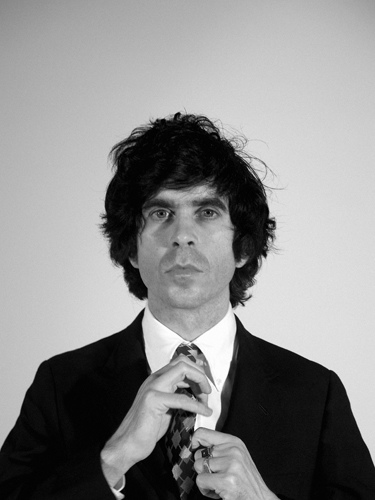
JOSEPHINE FOSTER, profiled by Margaret Wappler (Arthur, 2004)

Originally published in Arthur No. 11 (July 2004)


Born Heller: Josephine Foster and Jason Ajemian


Sharing Time
Josephine Foster and the Supposed would like to teach the world to sing in perfect harmony—or whatever. Just so long as it’s expressive. Margaret Wappler passes on the lessons.

Josephine Foster is a 30-year-old woman but she seems like a child. That isn’t meant as an insult, or some sort of misty New Age proclamation. It’s just that her speaking voice is soft—hardly the force of nature it is while singing—and prone to drifting away mid-sentence, as if distracted by something shiny across the room. And as explanation for her drift, she offers, “I have Thai buffet in my belly” and admits to dozing off just moments before our phone conversation. Granted, these are only the telltale signs of an adult riding out a low blood-sugar crash in the mid-afternoon; they can be dismissed. But in her music, Foster easily sheds twenty-five years and expresses herself the way children do—unequivocally and without regard for solid foundations. Quite simply, she just goes for it.

“There is something to being the song, and not commenting upon it,” Foster says from Bloomington, Indiana, where she is staying with Brian Goodman, her bandmate in her newest venture, Josephine Foster and the Supposed, which also includes Rusty Peterson on drums. Being in the moment is important to Foster, as is expression—full and unhindered, sometimes clumsy. Whether with the Supposed on their debut album, All the Leaves Are Gone (Locust Music), or with her other collaborations, the charmed lullabies of The Children’s Hour and the homespun Born Heller, she explores dark, sticky cavities with no inhibitions. Foster’s voice is a rich quavering alto, that, with its rapid, Joan Baez-like vibrato, makes great leaps over the Supposed’s Age of Aquarius-inspired rock—if the Age had followed its every whim, no matter how labyrinthine, no matter how far it burrowed into the ground. Though the production is pretty clean, All the Leaves Are Gone has a dirty quality, but not sexy-dirty or some flimsy appliqué. It’s more elemental, primordial, as if these songs were recently unearthed. The instruments sound loose, almost broken; the rhythm catch as catch can. Expression trumps. The desire to sing repeatedly a lyric like, “I had a mother, my mother had a mother—no one knows her name!” is followed, giving the music the quality of a child’s inspired ravings.

Foster became interested in opera after watching singers perform in a church. “I was intrigued by the natural amplification of their voices. It just seemed like a sort of bizarre expression… a larger-than-life expression and sound.” Foster, who had studied a “mixed bag” of music, theater and performance in Colorado, her home state, went to Chicago’s Northwestern University to study opera but left after a year. “I sang at this master class for this fairly famous opera singer and I felt like all she did was talk about how I was too skinny and why did I eat only peanut butter and jelly sandwiches? It was really pretty absurd… I enjoyed what I learned but I realized pretty quickly it wasn’t going to be enough for what I wanted to express.”

She quickly met people through Chicago’s tightknit music community and started playing around, often hosting her own “house hootenannies, where everyone would come over and play music.” Attracted to archaic folk and Renaissance songs, she says she knew almost nothing about current pop music. “I wasn’t too interested because it just seemed really subdued and breathy. And pretty tame.” She did, however, have vivid memories of what she heard on the radio growing up and what her “ex-hippie-type guy” father listened to, music like Graham Nash and Jefferson Airplane. In particular, Foster feels a kinship with the latter: “I think there’s some sort of connection between what they’re doing and what we’re doing—they play slightly declamatory, expressive music that’s pretty similar to something like opera in some ways. The human voice is really being sung through.”

After several visits to Bloomington where Goodman was attending college, Foster crashed with him and his girlfriend, burnt out on Chicago and intrigued by the notion of a rock opera. But that idea soon dissolved; Foster thinks she’ll get to it eventually, maybe by collaborating with a filmmaker. Instead, Foster and Goodman, a “human jukebox who knows every rock song,” developed a different batch of Foster’s songs through improvisation and discussion. The title track, for instance, started out “very subdued,” but soon developed into something primordial and shifting, with koan-like lyrics holding down its center.

“I was so bored with [‘All the Leaves are Gone’], because it was really slow, kind of sad, and I was like, ‘Why don’t we just turn it into a dance song?’” The lyrics—which Foster describes as “slightly heavy”—don’t diverge too far from the statements: “There is no end to your sorrow… and tomorrow sorrow it will come again.” But the music, which sounds disarmingly loose and flapping at first listen, soon reveals itself to be joyously warped and unhinged, a lazy, blissed-out resignation to what feels like some sun-hazed dance at the temple right before the sacrifice. Just between falling apart completely and arriving at some destination point beyond the horizon, the rickety train that is Josephine Foster and the Supposed suddenly picks up speed and blows right by you.

Part of what makes their songs seem like a primer, like some recently recovered manual—to what, it’s hard to say—is their quality of following every impulse to its expressive endpoint. Indeed, every song hemming to nothing but its own organic, half-grown-over path serves a dual purpose: “I don’t have a very good memory so in order to remember something I write I usually have to make it something that I want to hear again. I have to make it pretty addictive to myself. So there’s a memorability in the words, a boldness in the imagery.” At their heart, these songs, despite their ornamentations, are constructed to be broken down, carried on, passed around. “It used to be a song was made to be shared and hopefully sung by many others. I hope my compositions go beyond me in terms of utilitarian value. I want them to be remembered, sung, by a tuneful amateur.”

“Kali Can You Hear Me?” by Daniel Pinchbeck (Arthur, 2004)

Originally published in Arthur No. 11 (July 2004)

“Here and Now” column by Daniel Pinchbeck

“Kali Can You Hear Me?”

When I bring up the subject of the “Kali Yuga” in polite company, I find that few people know what I am talking about, let alone that we are in the midst of it. So what is the Kali Yuga? According to Hindu lore, the Kali Yuga is the last of four epochs which can be roughly equated to the Golden Age, Silver Age, Bronze Age and Iron Age known in the Western tradition. Each epoch signifies a decline and a degradation from the previous phase. The Kali Yuga is the bottom of the barrel, where humanity has lost all connection to its sacred source and wallows in lower appetites, materialism and greed. In the Vishnu Puruna, this state is achieved “when society reaches a stage where property confers rank, wealth becomes the only source of virtue, passion the sole bond of union between husband and wife, falsehood the source of success in life, sex the only means of enjoyment, and when outer trappings are confused with inner religion.”

Kali is the Hindu goddess of destruction, usually depicted with four arms, dancing wildly on a corpse, tongue sticking out, blood dripping from her fangs. Kali is the wrathful manifestation of Shakti, the consort of Shiva. While Lord Shiva is the personification of pure consciousness, Lady Shakti represents the current of sexual energy behind all manifestation. The eternal act of love between Shiva and Shakti maintains the balance of forces in the universe.

According to some accounts, the four yugas are immensely long affairs, and there are hundreds of thousands of years left to run in our current Kali Yuga. However, some Hindu sects, such as the Dravidians, say that the entire cycle lasts 60,000 years in total, and we are currently approaching the finish line of the final epoch. The good news about the Kali Yuga is that Hindu time runs in a circle or spiral. The end of the Kali Yuga means a return to the Golden Age, the Satya Yuga, after passage through a transition made in darkness.

According to the French esoteric scholar Rene Guenon, writing in the early years of the 20th century, “We have in fact entered upon the final phase of this Kali Yuga, the darkest period of this dark age, the state of dissolution from which there is to be no emerging except through a cataclysm, since it is no longer a mere revival which is required, but a complete renovation.” Guenon scoffed at the “triumph” of Western values and empirical thought, seeing the modern worship of empirical science as a shallow delusion: “These lower forms of knowledge, so insignificant to anyone possessing knowledge of a different order, had nevertheless to be realized,” he wrote in The Crisis of the Modern World. This realization could only happen at the point where “true intellectuality,” knowledge of a different order, had disappeared or been completely devalued.

The standard liberal, feminist, or left-wing criticism of our society considers it a patriarchal dominator culture that represses the feminine and the natural. This is of course true, as far as it goes. However, in the Kali Yuga, it is the female daemonic current of Shakti energy that has gone berserk, and not the male principle. As Nikolai and Zenia Shreck put it in their entertaining Demons of the Flesh: “During this Aeon, the lunar, sinister current of the Feminine Daemonic is at its zenith, a spiritual condition which allows for the breaking up of all boundaries and the free play of creative chaos, unrestricted by the male ordering principle.” Since Kali is the wrathful manifestation of Shakti, the Kali Yuga could be described as the goddess Shakti throwing a hissy fit.

We find this idea coded into the Biblical story of Genesis. Man was satisfied in Paradise. It was woman, Eve, who bit the apple (of knowledge and desire), and she wants to keep biting. On the deepest level, men are unchanged by history—they are the same soldiers, shamans, and duffers now as they were five, ten, or fifty thousand years ago. Women are the ones who are trying to change. To bite deeper into the apple, “she,” the archetypal feminine, the Shakti-current, needs to be given recognition, permission, affirmation, by man and by the masculine Shiva-force of consciousness.

After giving this much consideration, I suspect that the “fate of the Earth” literally depends on understanding and acting upon this situation. “She” is going to continue to wreak havoc until she gets what she wants in the way that she wants it—which may have nothing to do with contemporary social values or moral and sexual stereotypes. The 1960s provided a dress rehearsal. The Shakti current opened up for a while, after the near-nuclear annihilation of the Cuban Missile Crisis, when the possibility of a global civilization based on love rather than domination became briefly apparent.

The “feminine” also represents the intuitive forms of thought denigrated by our rigidly masculine rationality, as well as nature itself. The Kali Yuga comprises all of recorded history—the last five or six thousand years. Historical time is the duration required for human consciousness to realize its separation from nature, and penetrate into matter through technology. As Francis Bacon put it at the beginning of the era of modern science: “We must torture Nature until she reveals her secrets.” Western science is a Sadean project. Western Man’s incessant probing of nature is, in itself, a quest for knowledge of the lost and defiled goddess whose body is the world.

When the feminine daemonic went berserk, at the beginning of the Kali Yuga, there was a withdrawal of maternal protection and sensual satisfaction from most of humanity. According to Robert Lawlor’s extraordinary book, Voices of the First Day: Awakening in the Aboriginal Dreamtime, this may have occurred through an actual shift or weakening in Mother Earth’s electromagnetic field. The aboriginals live without shelter or clothing on the southernmost continent, staying in constant contact with the planet’s electromagnetic force, its heartbeat. For the aboriginals, every day is the “first day” of creation, the origin point, and there was never a “fall of man” into a degraded state. Because they maintained this pure condition, they had no interest in developing technologies that would permit them to control or dominate nature.

At the core of our word “materialism” is “Mater,” mother. As the polarity of Kali/Shakti suggests, there are two sides to the mother archetype. There is the nurturing, fertile, and benevolent mother, and there is the aggrieved, possessive, devouring mother. In the modern world, we became obsessed with material goods and possessions. This obsession is due to our subconscious enslavement by the “bad mother” archetype. Kali Yuga humans, deprived of “mother’s milk,” of proper nurturing, become devious, depraved, greedy, insatiable, miserly—we have confused matter for Mater.

In his laboratory, the scientist has sought to understand the wound inflicted on him by the aggrieved feminine. He has asked the wrong questions and received the wrong answers. To ask the right questions, he would have to start with a different understanding. Rather than seeking some delusionary final closure, he would have to accept the nature of paradox, and the paradox that is nature.

Obsessed with the urge to escape the limits of spacetime through a direct phallic extension of his ego, through acceleration, man builds racing cars and rockets. Acting out of subconscious rage, man splits the atom in an attempt to annihilate matter/mater. The oceanic feminine waits for the wave to crash. Kali giggles. She whispers: “You do not know me yet, you man, you failed systemizer.”

Technology is an attempt to create a “second nature” that accords with limited masculine rationality. Modern technology imposes a rigid, static, dead order on the flowing fractal chaos that is feminine nature. At the moment of seeming triumph for modern science, the physicist discovers, to his horror, that matter is an illusion—there is only quantum foam, fluctuation, and flux. It is all feminine sinuous motion: Shakti. It is all relational. There is no hard fact, just spectacle and seduction and uncertainty principles. What holds reality together is consciousness, the observer who changes what is observed. Instead of a bedrock materiality, there is what the Hindus call “lila,” divine play.

The Western project of technology and science have been called into being by the secret workings of the aggrieved feminine current. This may seem counter-intuitive at first. However, it should be recalled that men tend to be “passively active,” while women are “actively passive,” impelling activity and erotic advances like magnets. The deviation in the feminine Shakti current impelled the anguished masculine drive towards rationality. My hypothesis is that the ultimate purpose of technology is to aid in the coming-to-consciousness of women—the realization of feminine desire and self-knowledge. At that point, Kali will retract her fangs, pull in her tongue, liberate her victims, and, with the faintest trace of a Mona Lisa smile, turn back into Shakti. As Wilhelm Reich put it: “Sexually awakened women, affirmed and recognized as such, would mean the complete collapse of the patriarchy.” The underground currents of our time lead in this direction. The mass-market success of The Da Vinci Code, a mystery based on the suppression of the sacred feminine by Christianity, is one of many indications.

As it says in The Tao, “Reversal is the movement of the Tao.” I propose that the conclusion of the Kali Yuga is a cosmic synchronization with the end-date of the Mayan calendar in the year 2012. By that time, masculine technology and feminine nature will have reintegrated, and the liberational movements that crested and collapsed during the 1960s will return, reformat themselves, and complete the task of establishing a new age and a new consciousness. The goddess is returning, and this time around, the apple will be eaten down to the core.

“The Dispassion of the Christ” by Daniel Pinchbeck (Arthur, 2004)

Originally published in Arthur No. 10 (May 2004)

“Here and Now” column by Daniel Pinchbeck

“The Dispassion of the Christ”

Like Fast Food Nation, Mel Gibson’s The Passion of the Christ may have converted some of its audience to vegetarianism. The film was like watching a slab of wounded roast beef stagger through an elaborate literalization of the New Testament’s nasty bits. Calling to mind the Smiths’ anthemic “Meat Is Murder,” The Passion was long on flayed flesh and short on fun. Apparently, Gibson escaped cocaine addiction by connecting with his Higher Power, and the film could be seen as a metaphorical enactment of Mel’s ordeal as the stages of the 12 Steps.

Fundamentalists in the US—the core audience for The Passion, and supporters of the Bush agenda—maintain a self-serving and atavistic understanding of the Bible. Since Fundamentalists consider themselves automatically among the “Saved,” they believe they have the right to ignore the most basic Biblical commandments. These still-fresh ideas include “Love Your Enemy as Yourself,” and “Thou Shall Not Kill.” The Fundamentalist attitude seems to be that as long as you are “saved,” you can support a government that kicks global ass, toxifies the biosphere, gobbles the Earth’s resources and converts “developing nations” into cheap labor camps.

At the same time, “spirituality” is increasingly trendy among the wealthy elites of the modern-day West. This “spirituality” generally has an Eastern caste, avoiding Christ and the Bible altogether. Models and their stockbroker boyfriends spend thousands of dollars to attend yoga and raw food retreats, where they practice asanas and mantras in tropical locales. Corporate executives and their trophy wives decorate their country homes with Hindu statues and Tibetan thangkas. Architects incorporate a bit of feng shui into their designs. Nightclubs are called Karma and Spirit, while bands are Nirvana and Spiritualized. Millions meditate and chant, seeking relief from anxiety and some undefined feeling of “unity” with the cosmos.

Words can turn into their opposite. They can be emptied of meaning altogether. This seems to be the case with the common usage of “Spirituality,” which is amputated from the processes of life. Devoid of meaning, the term is banalized into a new system of commodifiable life-experiences, a way of making a pampered and guilt-ridden class feel better about themselves. Although it is crude and perversely violent, The Passion of the Christ does imprint the idea that pursuit of meaningful “spirituality” might require some form of tangible sacrifice that goes beyond vegetarianism or om-chanting.

Over the last few centuries, Christianity’s ambience of guilt and repression and its denial of the flesh increasingly repelled the modern mind—and rightly so. The Christian religion remains a destructive element in world affairs. Yet as Westerners, we can reclaim our own tradition. This requires careful thinking about this tradition, to reach a deeper level of understanding. As the Sufi philosopher Frithof Schuon writes: “The sufficient reason for the existence of the human creature is the capacity to think; not to think just anything, but to think about what matters, and finally, about what alone matters.” Thinking should be part of a spiritual path. Dedication to truth is a spiritual discipline.

Perhaps our separation from the Biblical and Gnostic Christ is a necessary part of the process of return. We needed to be cut off from this tradition so we could recognize it as if it were new and original. The significance of the events relayed in the Gospels can only be revealed to each individual through his or her own process of introspection. You must come to it in your own time, and in your own mind. What follows is my personal interpretation, a thought experiment I have made, borrowing ideas from Rudolf Steiner, Carl Jung, and others.

From my psychedelic experiences, I think of consciousness as a kind of vibration or frequency. There might be an infinite number of possible vibrations of consciousness, of levels of soul-development, at various planes of intensity. In this sense, the purpose of Christ’s “mission” was to bring a more intensified form of consciousness to the Earth.

Christ’s incarnation not only fulfilled the prophetic traditions leading up to his arrival but pointed the way to the future. The vibrational frequency of consciousness that Christ brought to the Earth was too much for humanity at that time—save for a few—and up until the present day. Of course, “descending” as he did from a more intensified phase of Being, Christ knew this would be the case. That is why he said he did not come to bring peace, but a sword—not to unite, but to divide. And indeed, the legacy of Christ’s coming has been two millenia of incessant bloodbaths and primitive horrors.

World avatars are frequency transducers who step up the voltage of Mind. Christ’s parables are not just “mythologemes” but devices to store and transmit higher energies. The receptivity of his audience to his impacted fables and statements was in itself miraculous—as much a miracle as any of his suspensions or transmutations of seeming physical laws. There is an almost cybernetic quality to much of Christ’s discourse. His parables break open ordinary logic to introduce a “supramental” element or higher-level logic that can only be conveyed through symbolic speech. His disciples listened in wonder, but understood only in part. Their amazement becomes apparent through reading a stripped-down version of the Gospel of Thomas, which dates from the same period as the canonical texts.

In the Gospel of Thomas, Christ proclaims the necessity of achieving direct knowledge—gnosis—of the Divine: “Open the door for yourself, so you will know what is.” He also declares: “If you bring forth what is within you, what you bring forth will save you. If you do not bring forth what is within you, what you do not bring forth will destroy you.” The essence of Christ’s “doctrine” can be summed up as: “No more bullshit.” There is no hierarchy, no priest caste, and no mediation.

To trasmit, a receiver is required. Without reception, there can be no meaningful transmission. The Gospel of Thomas, along with other gnostic texts, was found in a jar in the Nag Hammadi desert of Egypt, in 1945. I suspect that these lost scriptures were intended for our time. Throughout Thomas, Christ reiterates: “Those who have two ears better listen!” We are the subjects with the capacity to understand, and it is to the advanced present-day consciousness that Christ directs his statements.

We develop “ears to hear” by reconciling modern empirical cognition, which accepts the quantum paradoxes of spacetime discovered by physics, with a new understanding of myth. Myth is not antithetical to science. A new attitude to myth is described by William Irwin Thompson in his books Imaginary Landscapes and Coming Into Being. Thompson proposes we make a shift “from a postmodernist sensibility in which myth is regarded as an absolute and authoritarian system of discourse to a planetary culture in which myth is regarded as isomorphic, but not identical, to scientific narratives.”

One can understand the meaning of the “Christ event” from several different angles. From one perspective, Christ’s incarnation initiated the descent of the Logos into humanity. This process continues—realizes itself, I suspect—in our own time. Realization of the Logos illuminates the human soul from within. “In the beginning was the Word, and the Word was with God, and the Word was God,” so begins the Gospel of John. The Logos is the light that came into the world, “and the darkness comprehendeth it not.” Through awareness of the Logos, consciousness realizes its self-identity with the Divine.

God is not a conscious being. God is the Logos, who, as William Blake wrote, “only acts, and is, in existing beings and men.” Immanent rather than transcendent, God, the Logos, comes to consciousness in humanity. Man is a Logos-being. Reality is syntax.

Only in stages of intensification that naturally appear in the physical realm as the destructive shocks of a historical process can consciousness be brought to realization of the Logos, and achieve awareness of its direct participation in the creative process. Christ says, “The Kingdom of God is within you.” No external temple or mountaintop contains the Sacred. The Sacred is everywhere. As Black Elk realized: “Every place is the center of the world.” The fact that religions today squabble and make war over particular spots on the Earth only reveals their deficient and outdated mentality.

From the Jungian perspective, Christ’s arrival humanizes the God-image. The tyrannical and patriarchal God-image presiding over the Old Testament represents phases in a dialectic. Humanity looks up to see itself in the mirror of the God-image, the God-image beholds Himself reflected in humanity. Both are shocked by what they find, and evolve as a result. Conflict creates consciousness. As human consciousness develops more sensitivity, the previously barbaric God-image becomes sensitized and compassionate.

In “God’s Answer to Job,” Carl Jung suggests that humanity’s moral and intellectual progress forced God to incarnate in suffering humanity. This is His mercy. First, He “descends” as a special and singular being, the Christ, thereby introducing the new vibrational level of consciousness. Eventually, God incarnates—seeks to know Himself—within the larger body of prosaic humanity. History is this story of the “descent” or incarnation of the Logos into humanity. At the same time, in fulfillment of His wrath, He prepares the Apocalypse. Edward Edinger, in Archetypes of the Apocalypse, describes the Apocalypse as “the momentous event of the coming of the Self into conscious realization.” Like the human psyche, the God-image unifies opposites: Creation and destruction, male and female, being and nonbeing are fused in Him, as in us.

Theorists have proposed that consciousness was not fully individualized in the pre-Christian Era. It may be that consciousness was first experienced as an extrinsic voice or presence—as Julian Jaynes outlined in The Origin of Consciousness in the Breakdown of the Bicameral Mind. For Rudolf Steiner, before Christ’s incarnation, a person identified him or herself with their “group soul” or ancestral line. When the Bible says that Abraham or another patriarch lived for many hundreds of years, it signifies that the descendants of Abraham had an awareness of themselves that was not clearly distinct from their originator, hence the descendants also considered themselves to be “Abraham.” Christ instilled the “I AM” in the human soul. He said, “You have to leave your father and mother to follow me.” In other words, people had to break from any diffuse connection with their lineage or tribe, and awaken to their own individuality. Once the process of individuation is complete, the Ego can be consciously sacrificed.

According to Steiner, the materialization of the Earth and the Ego increased the powers of demonic or Ahrimanic forces, seeking to drag humanity down into the mineral world, the inorganic and the death-trap of technology. Without the spark or seed-impulse provided by the Christ, impelling consciousness and feeling to a new vibratory level, humanity would have surrendered completely to materialism. The separation of human souls into discrete individualities necessitated the new commandment that Christ brought to Earth: “Love one another as you are loved.”

In the modern age, Colonialism on the one hand accelerated the materialist urge in its most destructive aspects. On the other hand, Colonialism spread the “word of Christ” across the planet, although this was done through the most brutal means. This process is, again, dialectical. Despite the genocide and cultural annihilation inflicted upon them by the colonialist powers, indigenous people understood and accepted the doctrine of Christ, incorporating it into older traditions. In this dialectic, the intensifying of consciousness first manifests naturally as destruction and capitulation.

These days, certain movies seem to be noospheric events—a means for the collective unconscious of humanity to speak to itself. This was the case with The Lord of the Rings. I would say that the “ring of power” represents the Ego, with its delusionary temptations of power. The ring has to be carried until all the psychic dark matter is revealed, then tossed away. As Jung wrote, “One does not become enlightened by imagining figures of light, but by making the darkness conscious.” This is one element of the collective process taking place in our time.

It is only as a fully self-reflective individual consciousness that one can make the choice, out of free will, to reconcile with the Divine, the Logos, through sacrifice, or supercession, of the Ego. As Christ says: “He that loveth his life shall lose it; and he that hateth his life in this world shall keep it unto life eternal.”

In his words, his actions, and his inner being, Christ exemplified such a sacrifice. Unfortunately, Christ did not “save our souls” through the crucifixion. Instead, he showed us the path—a model for selfless action that can be internalized, and followed, if we make the free choice to evolve. Christ is only a “savior” when we follow his lead. We still have to save our own souls. Alas, this is no easy task. But without real sacrifice, there is no spiritual progress.

“One-Dimensional Christmas” by Daniel Pinchbeck (Arthur, 2004)

Originally published in Arthur No. 9 (March 2004)

“Here and Now” column by Daniel Pinchbeck

“One-Dimensional Christmas”

This Christmas day, in my annual attempt to avoid the holiday spirit, I sat in an underheated cafe in Manhattan’s East Village and reread the last chapters of Herbert Marcuse’s One-Dimensional Man. Probably the most profound critique of modern industrial society ever written, One-Dimensional Man attacks the fundamental “irrational rationality” of our present system. Mechanized progress could—and logically should—have led to a reduction in labor time and the creation of a post-work and post-scarcity global society–what Marcuse calls a “pacified” existence. Since World War Two, the response to this deep threat to the ruling elite was the creation of “false needs” in the consumer; the perpetuation of the fear of nuclear war and terrorism; and the use of the mass media to enforce consensus consciousness.

Marcuse wrote: “Perhaps an accident may alter the situation, but unless the recognition of what is being done and what is being prevented subverts the consciousness and the behavior of man, not even a catastrophe will bring about the change.” This was clear after 9-11: Awareness opened for a moment, but the media and the government worked overtime to close it and reinforce the usual trance.

The last chapters of One Dimensional Man are tragic—I wept as I reread them. Marcuse realized that with the increasing power of technology, the human imagination—rather than any abstract “necessity”–had become the determining force in creating social reality. Marcuse writes: “In the light of the capabilities of advanced industrial civilization, is not all play of the imagination playing with technical possibilities, which can be tested as to their chances of realization? The romantic idea of a “science of the imagination” seems to assume an ever-more-empirical aspect.” If the imagination running a technological society is one of dominance and death and control, then you get what we now have in the world.

The global misery we are currently enduring is not a problem of reality: It represents, in fact, a failure of the human imagination and of human consciousness. The mass culture, advertising, and propaganda industries work to limit consciousness to a low vibration—a frequency of mindless fear and insatiable material greed—to construct the subjects, the workers and consumers and soldiers, who are the “biomass” or fodder needed to feed the technosphere’s doom spiral. Yet, as Marcuse puts it, “the chance of the alternative” hovers over every manifestation, every moment, of this dreary dystopia.

Continue reading

“Why I am glad George Bush is President” by Daniel Pinchbeck (Arthur, 2003)

Originally published in Arthur No. 5 (June 2003)

Why I am glad George Bush is President
by Daniel Pinchbeck

It is painful to admit it—I flinch away from saying it—but I am glad George Bush is President.
Don’t get me wrong: I consider him the worst and most dangerous leader this country has ever had. He is a smirking abomination, a fascistic fratboy, an avatar of the deepest, darkest murk burbling at the bottom of the American soul. In the 19th Century, Emerson wrote, “The mind of this country, taught to aim at low objects, eats upon itself.” The current administration is the culmination of generations of American minds aiming lower and lower, gnawing upon their own emptiness and projecting it into the void. Attention spans and memories have contracted to the length of one news cycle. ADD and Alzhemier’s are the perfect metaphors for this amnesiac age.

I am glad that George Bush is President because humanity has to make a choice, and our time for making that choice is quickly running out.

In the greater scheme of things, Enron doesn’t matter. Halliburton doesn’t matter. “War on Iraq” doesn’t matter. Israel doesn’t matter. Al Quaeda doesn’t matter. Art doesn’t matter. Film doesn’t matter. TV doesn’t matter. Celebrity doesn’t matter. Ego doesn’t matter. America doesn’t matter.
Only the biosphere matters. Without a radical change in direction, the imminent collapse of the planet’s life support systems is what counts.

The coral reefs are disappearing, the polar ice caps are melting, fresh water is becoming a scarce resource, every ounce of our blood contains a catalogue of industrial chemicals. The fancy gadgets we bought yesterday are leeching toxins into Third World soil today. Around the globe, desperate peasants are fleeing their parched and ruined lands to congregate in the slums of vast “mega-cities.” Within several decades, at the current rate of resource-depletion, there will be no tropical forests left on the Earth. Before that can happen, however, the structures holding together contemporary civilization will have disintegrated along with the environment.

Modern consumer culture is a vast machine of entropy, breaking down the planet’s life support systems and destroying indigenous cultures to continue its unsustainable addictions. The United States-­the worst offender-­consists of less than five percent of the world’s population guzzling 25% of the global production of energy and, by some accounts, more than 40% of the world’s resources. Bush and Cheney are old-fashioned gangsters, but Bill Clinton and Al Gore were smiley faced snake-oil salesmen for the corporate globalization that has unleashed its scorched-earth effects across the planet. Good riddance to them, their lies and their arrogance and their compromises. The changes that need to be made go far beyond what our current political system can enact–even if the system hadn’t been juked by crooked “ATM-style” voting machines and hanging chads.

It is time for the great dehypnotizing of the citizens of Planet Earth.

I agree with Bush’s spiritual advisers: We have entered the Apocalypse in the “Book of Revelation.” But who do they think was being referred to when the prophet wrote: “Destroyed will be the destroyers of the Earth?” And who are the meek who will inherit the planet when the destroyers are done with it? Could it be the indigenous people, who never lost contact with the heartbeat of the planet, who have endured the arrogance of forgotten empires in the past and will continue to endure?

Do you know where “Wall Street” got its name? Is it any surprise that Wall Street refers to the original barrier erected by the Dutch to keep out the Indians? Our economic system was founded on that dialectical divide. From the Indian perspective, the history of America is repression, treaty violation, and genocide. Despite our rhetoric, America has never been shy about using brutal force to loot the resources we desire and murder those who get in our way, whether in the “Wild West” or the Middle East today. Perhaps, when imminent environmental collapse brings the current form of civilization to an end, we will finally lose our contempt for indigenous wisdom. Was it the Indians who polluted their waters, destroyed their forests, irradiated their children, stockpiled nuclear and biological weapons, or added every living and nonliving thing into their maniacal calculus of human greed? But of course, when the Hopis marched to the UN to warn of the imminent fulfilment of their ancient prophecies, nobody took them seriously.

The Lakota shaman Black Elk said, “Without a vision, the people perish.” Ask yourself: What vision is our society following? Is our goal simply to continue maximizing profits and the level of comfort for the privileged few as the global environment melts down and brings a quick end to the human experiment on this planet? And for those privileged few, is the sci-fi fantasy of bio-engineered life-extension in gated communities looking out on a degraded world overwhelmed by desperate refugees an inspiring one? The government’s pursuit of “homeland security” through surveillance and force is an obsolete fantasy that will lead to disaster. Real security can only emerge from authenticity, generosity, transparency, and inner calm. In his Empire of Disorder, Alain Joxe writes, “The only benefit for the globalization of finance and military force for humanity is that it obliges us to think of a global means of equitable distribution, which is the only way to avoid the worldwide civil war that threatens to take the form of cold barbaric violence.”

Ultimately, modern society is an artifice held together by the mesh of people’s faith and belief in the system. When that faith collapses, the system will fall. We saw this, most recently, in East Europe in 1989. An alternative vision to the present consumer society is beginning to emerge and clarify itself. To paraphrase cyber-theorist Pierre Levy, the Internet provides a potential model for a global, horizontal democracy, one that would be “immanent and molecular” rather than the “transcendent and molar” structure of the current system. For Levy, the new system would be based on individual responsibility and on humanity’s “collective intelligence” working together in real-time. There are extraordinary scientists and visionaries who have developed models of alternative economies and currencies, methods to bioremediate toxified land and water, ways of producing clean energy, and industries that make almost no waste (for more info on some of these projects, check out http://www.bioneers.org). The development of modern information technology, the “global brain” of humanity, will facilitate the instant transmission of transformative ideas across the Earth, when it becomes necessary.

What is required is nothing less than the psychic and spiritual regeneration of humanity. To paraphrase the visionary Jose Arguelles, we need a “mass moral revulsion” away from the techno-dystopic direction of our current civilization. Despite current appearances, I suspect this will happen, soon, on a global scale and in a more conscientious and deeply transformative way than it did in “the Sixties.” It can be sensed, now, as an undercurrent, a distant rumbling in the mass subconscious. Humanity’s yearning for liberation and truth is due for an imminent volcanic eruption. And when it happens, I will be glad that George Bush was President, so that I got to watch him fall.

ARTHUR'S ASTROLOGY by Steve Aylett (Arthur 12/March 2004)

ARTHUR’S ASTROLOGY
By guest astrologer Steve Aylett

first published in Arthur No. 12 (March 2004)

VIRGO
(August 23 – September 23)
You will develop the frictionless face of a dolphin and thus enter the bar at greater speed. All present will address you as a “bottlenose bastard.” Incapable of human speech, you will not be able to order. The anecdote will flourish on the rubber-chicken dinner circuit, bringing precious little benefit to you, Virgo. Yet in September your huge button eyes will fall upon a new love and romance will blossom. Understand that this is a time of regeneration. A man who believes in a billion things has a billion used tickets to sell. A clean slate awaits the squeak of a lie—don’t blow it, Virgo!
Reading: Whatever it purports to be, if everyone stops to watch, it is not advisable to drink it.

LIBRA
(September 24 – October 23)
Arriving at work in early July, you will remove your coat and calmly push it into the mouth of your employer. Congratulations! Sympathising with their arrogance might encourage them to rule over you. Evade your responsibilities in September by mounting an adroit display of wasting sickness. A tip: cotton wool soaked in red dye looks like guts! Atone for your work by hurdling gravestones wearing a tail like an arrow. But beware—sooner or later the Supreme Court will have you by the legs. The scales of justice mirror those of your own sign, Libra. Make a freakshow of your tears and tell them a fire-breathing wren told you to do it. This is the sort of nonsense of which courts are disposed to take a tolerant view. They’ll send you away with pity and laughter. Unguarded remarks about Larry Hagman will earn you a smack in the mouth. Keep digging the tunnel.
Reading: Never refer to a large dog as a friend—he is in custody and he knows it.

SCORPIO
(October 24 – November 22)
One of your henchmen will betray you to the fuzz. Saturn in Gemini in your second house leads to the confiscation of illegal earnings, which is how you could afford the second house in the first place. Traitors, all in rare form, are straining every nerve to keep from sniggering. In the festive season eleven bullets will unexpectedly take up lodging in your back. From your wounds the ballistic route will be triangulated to the fuzzy image of your mother, caught in the background of a tourist’s snapshot. She is holding a rifle and has never looked so fulfilled. The corpse of your first victim will be dug up on a nutmeg plantation. A deposit of Iron Age snot will also be detected. In court your shouts of explanation will stray off the charted edges of the alphabet. “Our only option was a grisly disposal at midnight” is no defense, Scorpio. Begging for leniency, you will come to regret that you have only two knees upon which to crawl. I see you in a turmoil of mistrust, weak amid a crowd of cheesy quavers. When you can’t find your pants but can find the front door, a message is being sent. Abandoned by all, you will spring off a building wearing a Hawaiian wreath of donor cards. Closed coffin if you get my drift.
Reading: Knives delight in a snug enclosure—for them it’s freedom.

SAGITTARIUS
(November 23 – December 21)
Saying “Advantage mine” when overtaking someone on the pavement is not a winning attitude. Your pursuit of notoriety comes of the duty to compare. Your ideas end where most people’s begin, Sagittarius. Picture after picture buries your real face. You kiss only the superior graves. You pretend to be a populist by fainting near a barricade. Serenity is painful for you. Status looks outward so unremittingly its heart may stop without concern. Pretty soon you’ll be batting at invisible serpents. A faked photo of you with a smile and yacht bevy will be the last your friends hear of you. An obscure East End chef will serve an elaborate sugar sculpture of your arse. The first incision will reveal that the real arse rests within. Yet even this display of your charms will only reach the latter pages of the tabloids. Disintegration is the constant season.
Reading: Your contribution is condemned to the crowd.

CAPRICORN
(December 22 – January 20)
Put it all on Deathbed Pioneer in the fifth—it’s a lock. The optimist sees the future as a rabbit sees the oncoming truck—getting bigger, not closer. No sense getting all steamed up about things. Remember the philosopher Pandemal who went to hell with the words, “Fatal place, have another bit.” Impish devilry is the order of the day, Capricorn. Attend the theatre in a waterlogged box jacket. Flick a poison spider into the orchestra pit. Slap a musician on the back so he gets his face caught in the thin end of the trumpet. Stare through a grating and frighten the children. Then sit and watch the money roll in.
Reading: Snack in a sniper’s nest —calm before the storm.

AQUARIUS
(January 21 – February 19)
You will celebrate Christmas Day under a fallen door. “Freeze on day of purchase”—there’s a grim double meaning there, Aquarius. Hesitation at the crucial instant releases mayhem, attacks by a screaming chimp, all poise lost. Feeble cries will bring eventual rescue and recovery in time for the multiple tragedies of the New Year.
Reading: A poet can often be found in a block of tar, still expressionless.

PISCES
(February 20 – March 20)
The grim task of wedding a loved one is endured amid prolonged silences. This absurd and demeaning farce will take its toll on you, Pisces. A flower is coloured silk in the dirt, not a symbol. Cross the threshold of pity; can’t get back across the armature. How to compensate for giving up a whole human in bits and pieces? Medication enters your mind like a sinner through the gates of heaven. Starvation is portable almost to the end. Able to do anything, you merely answer the door. Talk of “suction rhythm” will be met with a revolted silence. Escape, Pisces. Don’t even make a scene. Punching a clown makes it hard to steer.
Reading: We bring death and those who claim to be our rivals bring death also. It’s investing everywhere.

ARIES
(March 21-April 21)
You appear to be worried about your plan to steal from the company, Aries. Do not be concerned. You will be fired before the opportunity arises. Collect those crumbs from your eye—they’re trying to tell you something. Despite bearing more than a passing resemblance to a hen, you are despotic and surly. The world has already lost patience with you and your so-called “mystery ears.” Broke in a tux, you impress nobody. Your diatribes send passersby recoiling in disinterest. Yet believing the patronising words of a professional, you will change your name by deed poll to “Babylon Tiger” and wear some sort of wrestler’s cape. In early Fall you will slam into a bar full of mirrors, ferns, frogstands and icy women, vomit against the indoor water feature and wake up naked in a wild bird reserve. Your hoselike nose and tubular morality will not help you then.
Reading: Lady luck means to feed.

TAURUS
(April 21 – May 21)
In September your head will twist open like a flower revealing a small platform upon which a puppetlike drama will unfold, toy maidens dancing about a well which is in fact the stump of your spinal canal. One of the tiny figurines will have the face of your father and as it shuffles across the platform it will whisper “Never to forgive.” And this is only one of the bounties awaiting you this autumn, Taurus. Efforts of the past few years will finally pay off, as an eye defect will superimpose the image of flamingoes in surgical masks over everything you see. This will make your moods unpredictable and often dangerously explosive, the influence of Mars pissing about in the usual way. You may learn that you can justify any atrocious act by connecting it with several years of a stranger’s success—no-one condemns altruism.
Reading: Hang up the phone on a vampire—the definition of carefree.

GEMINI
(May 22 – June 21)
Your crime will be discovered through carelessness. A single omission lays waste to many precautions. Not all publicity is good.
Reading: Fractured masks, the house empty.

CANCER
(June 22 – July 22)
Put aside all doubts about your sexuality—the spaniel in question is The One. Yet an entrepreneurial enterprise which is close to your heart requires further consideration. There are no such things as “Deluge Pants” and there never will be. Remember the tale of the man who, watching evenly-matched nuns in a bare-knuckle fight, bet on the one with the scariest face. Sharp bones are brittle! Consider every angle before making an announcement. You have shown taste and split-second timing before, Cancer, as when you pushed that waiter against the passing student.
Reading: Only the English clear heaven for dignitaries.

LEO
(July 23 – August 22)
Couples: when feeding a guppy, spread the work—one to sprinkle the food, one to frown. You value domesticity, Leo, but sometimes you have to kick your heels and fire a gun randomly into a crowd. A brawl in a sawmill will leave you shaken and drenched with aviation fuel. Friends find your rage unfathomable and frightening—why not make amends? Avenge all wrongs against them, arriving unannounced and fluttering, orbiting the foe in jittery trouble, punching, punching. Take no credit for the vengeance. They will hear of their enemies’ misfortunes and privately bless an angel. Love is granted before we know it, like an escaping bird. Respect is more slow, like a tired badger.
Reading: Tinsel on a man—happiness is dead.


Steve Aylett is the author of cybersatire classics Slaughtermatic, Toxicology, Dummyland and Shamanspace. http://www.steveaylett.com

ARTHUR'S ASTROLOGY by Ian Svenonius (Arthur 10/May 2004)

ARTHUR’S ASTROLOGY
by Ian Svenonius

first published in Arthur No. 10 (May 2004)

Aries
Once, Man looked on the natural world for his metaphors and archetypes… your people were dubbed ‘the ram’ for that animal’s stubborn ferocity. Today the Ram is nearly extinct, an abstraction to the modern techno-child. People are alienated from “nature”; most couldn’t tell you what a ram was, let alone its characteristics. Because astrology, like all other things, must change with the times, you are now Aries—“The Ram”—but named after the pick-up truck by Dodge, hailed by its adherents as “Ram Tough.” This means your astrological qualities now include:
1) Whopping big four-way disc brakes for much better stopping power
2) A frame with hydroformed parts for less vibration
3) A more friendly interior, with more storage space and facilities for child seats and extra passengers
4) Four new grilles, one for each body style, the most muscular going with the Sport model
5) Another 40 horsepower in the base V6 as a result of the swap from the 318-based 3.9 liter to the much more modern 4.7-based 3.7 liter engine. Congratulations!

Taurus
“The Bull.” You’ve ruled the roost for a while now, epitomizing toughness, rutting pompously about and snorting at those who defy you. Unfortunately, due to newly perfected cloning techniques, you’ve been rendered redundant—there is no need for the bull anymore. Your sperm is irrelevant; they’ve got Elsa’s uber-bovine DNA in the lab. Soon, there will be no Taurus astrological column, because there will be no bull. You will be a picture on the Sierra Club’s wall, toasted by donors at environmentalist fund raisers, your name accompanied by tremulous piano plonking. As everyone relates their stories, praising your noble character, only I will have the guts to say you were an asshole.

Gemini
They say that twins often dress the same, act the same and even can use telepathy to communicate with each other. Can you please use that special power to tell what’s-his-face to shut the hell up?

Cancer
As a Cancer, you have a deeply poetic sense which is integrated with a mild form of Tourette’s: You always say something brilliant, yet offensive in public. This leaves a tangled web of wounds and shaken pride in your wake. You are usually oblivious to the carnage, focusing instead on the tiniest problem of your own. This works out fine though, as you surround yourself with masochists who await your next acrid pronouncement with barely disguised glee. Your tiny problems are enshrined by these followers and tended in a garden as their own. These maladies never need disappear, therefore, but can be revisited during assigned “periods of nostalgia.”

Leo
(paid advertisement)
Hey Leo! The Army has got great benefits and college opportunities. You just have to kill some people. Yes, you could get college money by killing people other ways; being a “hit-man” or murdering the rich, but these options would be against the law and, have you considered the logistics? Trying to figure out a dead man’s bank card number? When you join the Army, all killing you do is legal AND counts toward college credits. ARMY: “It sure beats trying to figure out some dead guy’s PIN number.”

Virgo
The time you spend on the toilet is legendary. Here is a ballad written around this epic rite: “The time you spend on the toilet seat is certainly no mean feat if you had a bed in there I’d think it’s where you sleep. When I pass the door I hear the moans and innutterable sounds of a soul left hanging before god as his best work drowns.”

Libra
If Libra were a car, it would be a classy little number, not vulgar but with an engine that meant business. If Libra were a film, it would be foreign, but with a sense of humor—not inscrutable. If Libra were a food, it would be a pasta primavera or something else elegant but suitable for a cafe and with a touch of freshness. Unfortunately, Libra is a person and they are absolutely insufferable.

Scorpio
Some of your subjects seem to suddenly realize they are without what you might call “complete autonomy.” They realize their actions have been guided as from enormous strings from on high, and that you hold the strings. Only, there are no strings. Just a series of mnemonic symbols and repetition-induced brain control as learned via an operative from the CIA. Soothe their fears. Tell them that they’re on a “secret operation,” that brainwashing is just “another kind of cleaning.” People wash their hands—don’t they?

Saggitarius
The great Sagittarian martyrs, Jimi, Jim and Janis, all died from wretched excess. They are admired for their art, but imitated for their bachannalian imbibements; every night young acolytes strive to ingest as much as they did, in deferent homage. The poseurs! They think it’s a matter of choice. They don’t understand that it’s a kind of a curse to be Saggittarius, “the patron saint of consumerism.” It gets tiresome embodying the culture’s endless pursuit of youth, sensation and desire, living as the market’s role model. There can be no rest for you though, this is your destiny. Show these tourists how to “super size” their order!

Capricorn
You are toughest, when it comes down to it. Your resolve always trumps everyone else’s fancy plans. When things get tough, remember the Capricorn Stalin against the Nazis; he could not be defeated! The Capricorn Mao against the imperialist running dogs—“sometimes a retreat can ultimately be an advance”! These are the examples of dogged resistance in the face of almost absolute negative odds you must recall when things seem hopeless. Just don’t think about the Capricorn Nixon, who got set up by his own party with “Watergate.” Ouch! Or Howard Hughes who flopped with that “Spruce Goose” and then became a weird recluse and CIA asset. Wotta loser. Or Bautista…his whole army beaten by twelve guys in the jungle. Don’t think about those Capricorns though; focus on the winners!

Aquarius
You are a spoiled sultan splayed out in the sun, eating “dolmas” or grape leaves. You’ve handpicked the eunuchs and the harem and you’re ready to ravage the latter but you, being “Aquarius,” want to be evenhanded. You will spread your sensual generosity evenly among your sexual slaves without regard to their gender or lack thereof. Bravo! Eunuchs need love too.

Pisces
You are the fish. Few people realize that we are living through the “fish holocaust” right now. That, because of people’s faddish proclivity for sushi and fish in general, combined with the terrifying efficiency of modern fishing trawlers, your kind don’t stand a sporting chance anymore in the wild. To combat your complete eradication in fact, you must enlist the help of the sleeping Leviathan which lies nesting on the floor of the Atlantic. This thing is a monstrous creature, it’s exact size can’t be speculated, but it is quite beyond imagination. The KGB and the NSA are aware of its existence but no one dare speak its name, because a slight tumult on its part would send tidal waves crashing absolute ruin onto “civilization.” Your mission must be to awaken the beast and destroy mankind. The problem is simple logistics. As it is, fish are stratified by level; this is not unlike humanity with their class system, but with fish it is quite literal. Different fish at different levels rarely communicate with one another or even see each other. The lowest fish, the ancient sturgeon and prehistoric glowing fish must be your messenger. The problem is: they don’t understand the gravity of the situation, being so far away, near the bottom and removed from the slaughter of their brethren. Therefore, you must show them this astrology column! Subscribe them to ARTHUR. I will be your messenger!

Ian Svenonius is vocalist for Weird War, whose latest album is If You Can’t Beat Em, Bite Em.

ARTHUR'S ASTROLOGY by Ian Svenonius (Arthur 9/Mar 2004)

ARTHUR’S ASTROLOGY
by Ian Svenonius

first published in Arthur No. 9 (Mar. 2004)

Aquarius
Question: Why are you, an air sign, “the water bearer”? Answer: Air “bears” water during rain, I suppose. A drag… no one likes rain. Except for Ronnie Specter, who enjoyed “Walking in the Rain.” This was probably because the umbrella provided anonymity and she was embarrassed to be going out with a psychopath like Phil Specter. I guess John Lennon professed that he liked the rain too, in the Beatles song “Rain.” And… Yoko Ono is an Aquarius! Wow… Astrology is true.

Pisces
Pisces is the Fish. Fish supposedly developed before mammals in the primordial muck and then slowly clambered onto land in the form of tadpole-type creatures which eventually grew legs and started slithering about until they developed into “man” who, through the cumulative labor of hundreds of thousands of years, created what we know as “modern civilization.” Pisces: I just wanted to say that, through that entire time and all through those changes, I think it’s awesome that you stuck to your guns and stayed a fish!

Aries
The Ram. In popular American songcraft of the twentieth century there is a mythical creature evoked, called Rama-Llama; half Ram and half Llama. This is, for a particular sect, the spiritual rebuttal to the Buddhist’s head honcho, the “Dolly Llama,” who is the merged progeny of a llama and a kind of push cart. The Rama-Llama sect is called “Aries.” A trivial part of the world’s population, I’m happy to note. To the Aries: playtime is over. Stop trying to convert the world to your personal vision of Shangri La. Who but you would feel entitled to poison the water supply? Congratulations anyway, it’s more than anyone ever thought you would achieve. Maybe all that acid will free our minds and end the war.

Taurus
The Bull. There is a legend of a bull in a “China Shop.” The bull charges about the china shop and destroys precious commodities therein, which can’t withstand his legendary girth. This is supposed to illustrate the clumsiness of your breed in gentile and rarified circumstance. It is evoked usually as an insult, but perhaps it is an allegory. Maybe the “shop” is capitalist or colonial China and you are the peasant army, smashing it to pieces under the guidance of Mao! And maybe this legend is just another insipid bourgeois slight against revolutionary movements.

Gemini
You are, at times, tautological and inane. When you speak, the world feels like a character from Edgar Allen Poe: they can’t believe the thoughts that creep into their minds! Do you see them reaching for their knives? As you speak, each word sounds like a deafening tom-tom drum in the jungle, being played by cannibals. They are hypnotized into a state of frenetic fear driven blood lust! For your own sake, maybe you should take a vow of silence for about a million years… Or at least until the cannibals are done eating.

Cancer
You’re always whining about what’s on the TV. Well, most of the TVs I’ve seen were equipped with a knob that switched channels; even one to turn it off. Maybe you should go to some uncharted island where they don’t have soap and razors.

Leo
I guess your species must be going extinct cause you’re trying to procreate with an old dessert mix. In your imagination your genitals are crown jewels… best displayed on Liz Taylor’s bosom. In reality they’re like Nazi gold in a Swiss account: laundered, but with a sordid history.

Virgo
You are always kneeling on beans and ruminating about matters spiritual and ontological. It’s OK; just tell god you were “researching” all that internet porn.

Libra
The Scales. You’ve been thinking about just closing up shop and shutting down for good. You feel that your sign hasn’t been given a fair shake. That maybe it was an afterthought, tacked onto the astrology wheel just for the sake of symmetry. You are the only sign which is an inanimate object for, example, while the other signs are wild animals or heroes or hybrid creatures out of myth. Cosmologically, you feel like the kid who was picked last for the team; just standing at the fence for eternity. Don’t worry though, there’s light at the end of the tunnel. When the inevitable nuclear holocaust occurs and the oxygen is pried from every living thing’s lips in a ghastly storm of fire and ash, non-breathing objects will have the only chance of surviving. Then you will have your day!

Scorpio
When you enter hell, there will be two doors. Behind the first, there is an IKEA and behind the other there is a mega mall featuring a Pannera, a Starbucks, a Crate & Barrel and other such shops. The doors will be marked accordingly, and I suppose your choice will be determined by what you’ll need to make your stay there most comfortable.

Sagittarius
Though you are a centaur, you’ve really gotten into Brazilian-style hot-wax treatment on your entire lower half. So, instead of being half-horse, you’re more half-dinosaur. You should collaborate with Steven Spielberg, who loves dinosaurs and other creatures he can cast as enormous metaphorical phalluses. There’s apparently a lot of money in blockbusters and I think it would be better than running around with a bow in the woods trying to fornicate, but be warned: your character will probably be a metaphor for a penis.

Capricorn
The sea goat. You should be given an award, or made king of the world. I always thought you were just a poseur, a put-on, that you’d gotten your persona from watching some dumb Scorsese movie. But when you had your chef executed just for using cumin, I had to give you props. You are totally real.

About the astrologer: Ian Svenonius is the acting chairperson for the Rock N Roll Comintern and an auxiliary member of the group Weird War.

BULL TONGUE by Byron Coley & Thurston Moore from Arthur No. 12 (Sept 2004)

first published in Arthur No. 12 (September, 2004)

BULL TONGUE
Exploring the Voids of All Known Undergrounds
by Byron Coley and Thurston Moore

The last coupla days a lotta time has been spent listening to the three CDs that Acute Records has released to document the history of one of the French underground’s great legacies of raunch. The first installment is Anarchy in Paris! by METAL URBAIN. Formed in 1976, these guys were the true inventors of drum-box punk, combining overloaded synth, distorted punk guitar and scabrous vocals (imagine the early Stranglers singing gutteral French) into a truly head-melting mix. They released their own first single, then had the first release on the Rough Trade label (“Paris Maquis” is still one of my fave songs ever). The fates were really against them, however, and their popularity never really matched their genius. The Anarchy CD is really well programmed and annotated, and it’s really one of the essentials for any good punk rock library.

When Metal Urbain finally exploded, leader Eric Debris continued the story in two divergent directions. The first was a band that grew more or less organically out of Metal Urbain’s corpse, called METAL BOYS. There is a lost early session by the band, recorded by Hawkwind’s Bob Calvert, and while I’d love to hear that, the stuff on Tokio Airport is satisfying in its own way. The sound of this stuff is mostly very different from the earlier band. The bulk of the recorded material features vocals by an Anglophone named China, whose words are buoyed by a variety of somewhat subversive new wave tropes. And some of it is a little too lightweight to really engage my head, but there are still lots of great moments, some of them very unexpected (as in the virtual Sun Ra tribute, “Outer Space”). And, truly, the more I listen to this, the more acclimated (addicted?) I become to China’s emotionally flat vocals. They really reek of early ‘80s Rough Trade gal dub action, and that’s a flavor that I can never get enough of. Combined with the sort of kilter-less low-key electronics here (like low blood sugar versions of SPK, Clock DVA, the cruder end of BEF, etc.), it sucks you in real sweetly. Unfortunately, Metal Boys remained an even more obscure project than the original had. But Tokio collects pretty much everything you’d want to hear, and if you’ve heard Anarchy, I guarantee you’ll be intrigued as hell!

Debris’ solo project, committed in parallel to Metal Boys, was DR. MIX AND THE REMIX. Wall of Noise shows this stuff (which eventually expanded into an actual band) to be much more aggressive and strange than Metal Boys. Much of the material is covers of older songs—The Stooges’ “No Fun,” the Velvets’ “Sister Ray,” the Troggs’ “I Can’t Control Myself,” etc. But these songs are highly devolved, dub-informed scuzzed-out versions of the originals. At times it sounds a bit like those early Suicide tracks that Blast First released a few years ago, but you wouldn’t really mistake it for anyone except Doctor Mix. At any rate, this trilogy is pretty goddamn ripe. So give it a sniff. You’ll be glad you did.
A friend in England sent me a copy of the latest book by his country’s hardest-hitting polymath, BILLY CHILDISH. The book’s called Handing the Loaded Revolver to the Enemy (Aquarium Gallery) and celebrates a recent show of Billy’s paintings, which are more or less “about” the work of Vincent Van Gogh. They’re totally great color reproductions of Billy’s copies of some of Van Gogh’s work, along with some poetry inspired by it, and a set of manifestos about the nature and intent of art. As always, Childish has created something of great beauty and power. Get behind him. Now.

Since relocating from the hot tar of New York to the wind-blown mountains of southern Vermont, Matt Valentine and Erika Elder have retooled their muses in a variety of ways. Some of that transubstantiation can be heard on the incredible new 2LP set by their (former?) band, TOWER RECORDINGS. The Futuristic Folk of the Tower Recordings Vol. 1 & 2 (Time-Lag Records) is a reissue of two CDRs that Matt and Erika originally put out through their Child of Microtones imprint. And the sessions reprised here are great. Tower Recordings were an awesome group, capable of sweat-free motion from experimental improv to careful folk plucking to absolute psychedelic form-disasterism. They consistently moved with an ease that most bands only show when they’re dodging the bill at a restaurant. The line-up here is comprised of the old regulars, like Tim Barnes, PG Six, etc. plus such exciting fellow travelers as Joshua Burkett and Sara Lubelski. Packed in a typically nice Time-Lag cover, this is a sweet poke from an unknown ridge.

If you ever wondered about the minutae of the New England Underground, you could do much worse than to get the debut issue of SMALLFLOWERS PRESS. This is a solo newsprint mag that contains incredibly detailed interviews with Dredd Foole, Chris Corsano, and all the countless members of Sunburned Hand of the Man. It’s a massive 76-page read, and probably a tough slog if you’re not somewhat besotted by this stuff, but if you are, well, sheesh, this one’s for you.

While there is controversy in some circles regarding the “chops” of ARTHUR DOYLE, those folks who understand that life’s for the living and death’s for the dead have no gripe with the guy. It is true that Doyle no longer manifests the saxophonic lung rushery that was so abundantly evident on Alabama Feeling, but he is still a performer rich with ghosts and power and raw poetry. Doyle’s newest LP is Your Spirit Is Calling (Qbico), a duo session with the always-stellar percussionist, Hamid Drake. Recorded in Milan in 2003, the music has some similarities to the work that Doyle did with his Electro-Accoustic Ensemble, but it is more focused, less lumpy, and far more rooted in the jazz tradition than that crazy shit ever was. Still, Doyle revisits some of the Ensemble’s themes, playing with a bit more formal rigor than he has for a while. His tone still splutters and veers like a taxi cab falling off a cliff, but there’s in an underlying sense of fundamentals that should make even the moldiest free jazz fig, shut the hell up! Ha! Anyone who doesn’t dig the flute/hand drum sequence, just doesn’t know how to dig. Go get ‘em, Arthur!

The proliferation of records, CDs, tapes and visual sundry from the Japanese contempo-psych energy compound of ACID MOTHERS TEMPLE is insanely draining. Each member of the troupe has his and/or her own bag and a spotlight is usually hovering somewhere above master hair rocker Kawabata Makoto. But as of NOW there has been a slight paradigm shift, with this recent offering from Eclipse Records by the other guitarist in Acid Mothers, HIROSHI HIGASHI. Guitar is not really what transcends Hiroshi to cosmo heights, it’s his feel and soul sense with synthesizer. It’s a sound device easily over-extended by any kid who sets fingers upon it, but Hiroshi has seriously attuned hisself to some kind of human smoke signals, coming into a virtual oneness with this instrument in the process. Solo 3 is as heavy and beautiful a solo synth piece as the initial renderings of ‘71/72 Tangerine Dream. Sublimely tripped out with a silkscreened fold over jacket designed by Plastic Crimewave and Min Song and hand-screened by SIWA records lord, Alan Sherry.

Issue #12 is out of Ed Pinsent’s SOUND PROJECTOR and, as is usually the case, it is crammed with reviews, interviews, and drawings. The way Ed organizes his mag is particularly well-suited to bathroom readings. He groups the pieces and reviews into clumps of the like-minded, and the results are very pleasing. Subjects this issue include legendary underground New York folk genius Peter Stampfel, master Bostonian improv-breather Greg Kelley, and Norwegian noise maestro Lasse Marhaug. A non-catholic mix for non-catholic readers. Also un-catholic as all get out is the debut issue of PUSH MY BUTTONS, a zine for and by online sex workers. It has poems, prose stuff & things like a list of the weirdest insults seen by young people (females, mostly, I think) who work their wiles on the web. Cool as hell.

Got a nice new LP by longtime masters of the post-form genre, DEERHOOF. Milk Man (Free Porcupine Society). The music this time is more lilting than you might expect. Indeed, the female vocals and the way they are set will surely make more than one genius imagine what might have happened if France Gall had gotten involved with one of Brigitte Fontaine’s bands, especially if they had collaborated on the soundtrack to a television commercial about dimple cream starring Anna Karenina. Of course Milk Man’s not as monolithic as all that, this is Deerhoof, after all. But the feel is hip-swinging and continental in a way that makes me breathe as though there’s a big bottle of cheese just around the next corner. MMMMMM!

This year began with a hairy-ass bang by all who were lucky enough to catch the cross-country tour of PRURIENT and KITES. We wrote about both these lads in Issue 5, but for all you newbies let it be known since then Load Records released a Kites LP called Royal Paint with the Metallic Gardener from the United States of America Helped into an Open Field by Women and Children and a split 12” by both Kites and Prurient (Load Split Series #4), which is a great starting off point for anyone interested in these freak babies, as both sides are remarkable examples of new American noise moves. Prurient is the solo howl of Dominick Fernow from Providence, Rhode Island. Unlike most snarling filth mongers reveling in the bowel splatter of noise action, Dominick is a rather clean-cut and polite gentleman with a gracious demeanor. But once behind his arsenal of audio pain machines he will nail your soul to the grave. The slaughter sound culture of Providence has always had an element of rock ‘n roll asskick to it and while Prurient recognizes this he may be the one townie who is most purist with his serious noise intent. His homebrew label Hospital Productions has been around for a few years and has released a number of harsh statements by a broiling slough of noise talents: Skin Crime, Richard Ramirez, Macronympha, Nuclear Pig Shit as well as one of the earlier tapes by Hair Police (who did a number of dates on the aforementioned tour). Kites, also from Providence, is the moniker by which young Chris Forbes extends his noise compositions to us lucky fucks. Kites music has a rather sweet episodic nature and tells a story that truly will suck you into a better world whether you like it or not.

Most mysterious NYC band this time around must be GANG GANG DANCE, whose untitled LP (Fusetron) is a totally whacked assemblage of sounds and anti-sounds. The bands roots are thickly intertwined with both Angelblood and Ssab Songs, which should give you some pretty good ideas about the nature of formal composition here. There are female vocals, percussives, and electric instruments, all sounding sorta treated and shot-to-hell, wobbling and wiggling like mice riding roman candles at Coney Island. There don’t seem to be “songs” as much as there seem to be transitions between place and mood and voice. This motion has swings that remind me of some imaginary UK underground aktion of the just post-Rough Trade era, but it’s really hard to untangle the specifics. Suffice to say, if you are one of those people to whom “coherent” is a synonym for “sissy,” you’ll get a hard ride off this LP.

Also, New Yorkish in nature, the second proper album by TUCK TUCK TUCK has arrived. Called The Story of Tuck Tuck Tuck (Skul), it’s a bit more streamlined than the first one. Jandekian aces get pulled from every available sleeve, and the sound is as diffuse as the emotions. As in life, everything here can sound totally lost (even the instrumental bits). And that raises the human stakes to incredible heights at times when you didn’t even realize you were betting. The production sound is pretty mammal-friendly too—a warm sound, like paper tearing in the next room, pervades everything. And it suits the words and the plucked guitar to a goddamn T. Some sections have a sustain that makes me think a little of Dredd Foole’s live shows, but I won’t force the comparison. Okay?

New collection’s out of KAZ’s great Underworld strip. This volume’s entitled My Little Funny (Fantagraphics), and it shows that Kaz has totally mastered the four panel fucked up gag strip. Populated with an ever-expanding cast of hideous characters, the strips writhe with lotsa crude humor, scat jokes galore, and the ugliest faces you’ll see in a month of Sundays. Now that’s good reading!

The bones of the Finnish underground tribal-folk scene are thick with the fat of elk. And Jan Anderzen seems to be a guy who is often found swimming in the marrow of these projects, from Kemialliset Ystävät to Avarus and onward. THE ANAKSIMANDROS is another of his splendidly shambolic concerns, and their album, River of Finland (Eclipse) will make you shout “hair boys versus shirt boys!” faster than a skunk can whistle the opening bars to Holst’s “Jupiter.” The instrumentation is all organic and acoustic, the vibe is pure smoke, mirror & fringe, and you can almost fell the leaves and twigs snapping under everyone’s bare feet as they wander through the starlight.

Be seeing you!

If you have material (vinyl, books, mags, vids, etc.) to be LICKED by BULL TONGUE, please send two copies to:
Bull Tongue
P.O. Box 627
Northampton, MA 01061
USA

Contacts

http://www.acidmothers.com
http://www.acuterecords.com
http://www.aquariumgallery.co.uk
http://www.eclipse-records.com
http://www.fantagraphics.com
http://www.freeporcupinesociety.com
http://www.fusetronsound.com
http://www.hospitalproductions.com
http://www.loadrecords.com
http://www.qbic.web.planet.it/QBICO%20RECORDS.htm
http://www.skulrecordlabel.com
smallflowers press c/o http://www.forcedexposure.com
http://www.thesoundprojector.com
http://www.time-lagrecords.com

BULL TONGUE by Byron Coley & Thurston Moore from Arthur No. 11 (July 2004)

BULL TONGUE
Exploring the Voids of All Known Undergrounds
by Byron Coley and Thurston Moore

first published in Arthur No. 11 (July, 2004)

Girls rule, no problem. We’re all in “agreeance” with that. One girl who is totally ruling right now is KAREN CONSTANCE from East Sussex, England. She’s been peeped a couple of times over here in the USA whenever her loverboy Dylan Nyoukis, mastermind provocateur of exquisite noise mayhem and art through his Chocolate Monk enterprise and his own Prick Decay—now called Decaer Pinga (Spanish for..uhh, Prick Decay)—comes over to lay down his self-anointed “rotten groove.” And there she is, regal and astounding, in her creative flow. But she has yet to really “play” over here. The first time Prick Decay rocked the USA I believe she was part of the ad hoc ensemble then but that was primarily Dylan and his sister Lisa (aka Dora Doll)’s deal.

When we first went to check out the All Tomorrows Parties festival in 1999 we ran into Dylan, Lisa and Karen. At that point Karen, known then as Karen Lollypop, was involved with a couple of projects. One being something called The Polly Shang Kuan Band (named after the great 60s martial arts mistress of Hong King cinema), which was basically Karen and whatever female friendos she saw fit to punk out with. The other was her solo under the moniker of Smack Music 7. The gang were in some kind of holiday spirit vibe, even though it was a cold and wet U.K. spring hell, and they were draining every tall can of Carlsberg in sight. Dylan and Karen ended up taking a nappie-poo in our sound engineer’s bed and were assertively escorted out. We were trying to figure out how someone could fall in love with the genius Nyoukis without being a world-class artist on their own. So we took a chance and asked Karen to do an Ecstatic Peace 7”.

She explained her situation with the two bands, PSK Band and Smack Music 7, and immediately sent us a track each. They were incredible. Each had a sensual and sophisticated measure and moved with a minimalist’s grace. This was not generic squawk and squeal, which we were ready to accept, but something a bit more stately. Karen sent a color collage for sleeve art, which pointed to the fact that she worked as well as a pretty wild visual artist. Needless to say we were proud as a felched pumpkin to throw this baby out there. A few Smack Music 7 releases have come out before and after this: She’s A Mystery Radio CDR (Hells Half Halo), Pep Up Your Monkey cassette (Krush Proof), Exchange In An Earthworm cassette (Spite) and a duo called Lollydor (with the since deceased Phil Garner of Labrador) who did the cassette Stress Sounds (Kylie). Just recently Karen has laid down her most enthralling session to date and has so far split it between two cassette releases Typewriter Hell (Since 1972) and Spittin Hell (Open Mouth). The noise space evinced here is at once old-time, not unlike classic UK/Euro industrial, though strikingly fresh and alurringly understated. These are essential in the miasma that exists now in cassette experimental offerings.

Last I heard was that Since 1972 was preparing to release a split cassette of Smack Music 7 and solo love noise by Tovah O’Rourke of Dead Machines. Which automatically makes Since 1972 best fucking label so far. Damn. The Polly Shang Kuan Band have two CDRs on Chocolate Monk, one untitled and the other The Eye of Horus. There’s also a Karen Constance/Dylan Nyoukis duo CDR called Here Comes Blood Stereo (Absurd— a Greek label which doesn’t list this recording on their site. Nyoukis lists it on Chocolate Monk site as being on the Audiobot label, but assures me through email that it’s on Absurd. But also that Audiobot released a CDR of Dylan in collab with a buncha loose wires including Ms. Constance called Mysterious Blue Soups of the South but, again, Audiobot doesn’t list this on their site either…so…you figure it out). Last issue we hipped you to Bill Nace who plays with Chris Corsano in Vampire Belt and runs the Open mouth label. Whilst bombing around the Chocolate Monk offices in Brighton he and Dylan and Karen formed the heavy fudge-tone unit Ceylon Mange. They have only a few gigs under their belts but have already been a fairly in-demand trio on the subterranean noise skank circuit. The few releases so far have been intriguing if not downright beleaguering: The Dirt Drinkers CDR (Pinkskulls) and Charlotte Church Burners cs (Since 1972). A couple of other musical milestones of Karen’s we have yet to see or hear but are looking forward to swallowing whole are the Karen Lollypop Vs Spiderhorse & Black Alaska cs (Hanson- unreleased) and the Karen Constance & Erikki Sannemaki CDR (Chocolate Monk). If either of those labels could turn us on to this goodness we’ll reciprocate surely with sweet gooed panties. Aside from the music wonderment of Ms. Constance is her killer art. Her paintings and collages feature emotional wildlife and spooked demons in high-color relief. A few images are available to see on a UK art-site but what we really need is someone to print a decent first catalog of sorts.

Speaking of visual artists and noise one of the strangest and most significant artists of the late last century would have to be JACK GOLDSTEIN. Goldstein came out of the initial scene of CalArts, an artist academy in Los Angeles that succeeded in creating an environment where artists coming out of the cool head of ‘60s conceptualism developed the keen idea of actually transmogrifying such non-consumer concepts into sellable Pictures. Indeed, the concept became “Pictures,” and they were, in a very L.A. sense, remarkable, new and suitable to hang. The mentor at CalArts was John Baldesarri who encouraged Goldstein and cohorts to follow this post-modern route and take it to New York City because that’s where the moneyed art world eye was and they would either love it or eat it. As it were, the New York art world loved it and ate it completely up.

The new art culture of these CalArts grads and the New York gallerists they became involved with in the big money ‘80s became competitive and freakish. While David Salle, from CalArts, and Robert Longo and Cindy Sherman, (from Hallwalls in Buffalo, but following the star of the CalArts gang), became world renowned and wealthy, Jack Goldstein became perturbed and offended by the nature of competition and political posturing. Goldstein was an outstanding artist but his work never broke through to mainstream success in the manner his contemporaries did. He battled a weird psychosis of drugs and bitterness, disappearing for lengthy periods throughout his life and in 2003, he killed himself. Before his suicide he spent considerable time putting together a manuscript of his thoughts both biographical and straight-up emotional and it has been collected by his friend Richard Hertz in a gripping book called Jack Goldstein and the CalArts Mafia (Minneola Press).

A lot of these artists—Ericka Beckman, Ross Bleckner, Barbara Bloom, Troy Brauntuch, Eric Fischl, Matt Mullican, David Salle and James Welling—went on to become major players in the ‘80s art market, some more than others. And quite a few of them, as well as various critical voices, intersperse chapters with Goldstein’s writings. What becomes of this is probably the first book written by young artists of this particular generation, the same one that came to a sense of identity alongside the first American nomads of punk rock, wherein the process of art and friendship is divulged in wrenching retrospect. Goldstein’s chapters spill the gut on what was happening not only in the first years of what has become the most influential contemporary school of American art studies but in the pre-real estate boom streets of Soho and the East Village.

I remember these guys bombing around Max’s Kansas City and CBGB and connecting the energy of No Wave and punk to their gallery work. This is where the paths cross with the cranked up guitar compositions of Glen Branca and the slo-mo violence in the paintings of Robert Longo (who did the cover art for Branca’s The Ascension LP; on a similar note the aforementioned James Welling was the photographer who snapped the Sonic Youth Bad Moon Rising cover). It was an enclosed scene hardly venturing above 14th Street and it was fueled by new values in money, sex, art and music. Each chapter is a reflection on these days and is a captivating glimpse at the mindset which existed. And it’s a blast to read as none of it is couched in dry academia (well, some of it us, but not to any detriment) and is very very chatty and gossipy but still delivers the goods on the process of making art and the desire and devotion to that livelihood. Jack Goldstein’s paintings had an exquisite vibe but he also made objects such as records which is where the noise quotient of this review comes to play. The records have become impossible to find but can be heard at http://www.ubu.com/sound/goldstein.html Our favorite is the self-explanatory Two Wrestling Cats. Jack also made a few films early on, such as a mesmerizing loop of the MGM lion roaring ad infinitum. Google Jack Goldstein and you’ll find lotsa good info on this intense and important figure.

Got a few nice new slats of of vinyl from Brooklyn’s cunning Social Registry label. First up is the eponymous debut LP by BLOOD ON THE WALL, a trio who remind me a bit of what a collaboration between late ‘80s Yo La Tengo, Galaxie 500 and the Gibson Bros. might have sounded like. Which means, I guess, that they rock in a sorta hard, smart and guitar-y way but retain a soft French center and have very dark teeth as well. Second is a 2Lp set by ICEWATER SCANDAL, who used to use the much lousier name, AM Radio. This new one, No Handle, makes much more personal sense to me than their last one did, maybe because their sound is so diffuse, so utterly slack, that it really needs to sprawl across yr sofa in order to make an impression. That said, No Handle sprawls pretty well. It also staggers a little and maybe even stutters, which is pretty cool when it’s done in such a low blood sugar kinda way. Guys, gals, all friends now—even for two side-long tracks! Cool. I’m just glad that no one let their youth go to waste. Adjacent to this is the Horizon Fall EP by PAINTING SOLDIERS. This is actually a solo project by Icewater’s Andrea Hansen, and is a severely excellent hoot into contempo free-folk form-stone. Hot and bothersome!

Haven’t heard from the skinny and excitable Japanese noise dude S. ISABELLA. S. Isabella is the same cat as Government Alpha. Government Alpha is in reality a lad named Yasutoshi Yoshida. Basically it’s harsh noise and Yoshida makes it. He has a label called Xerxes, which has released a fountain of harshness through the years. As S. Isabella he becomes more involved with collaboration it seems. We haven’t been keeping up with Yoshida’s torrent of releases but one came dropping at our doorstep with a weird enough slap. It’s an LP of S. Isabella “playing” Stabat Mors called The Relation Between Man and Woman (AbRECt). Stabat Mors are a long standing German dark industrial sick noise entrail spewing evisceration unit. The kind most appreciated by the clean-cut kids of Japanese noise extremism. What’s going on here is actually a collaboration betwixt these two freaks outfits from 1997. They use texts from Yukio Mishima and Heidegger where rotting flesh and the rotten male mind in all its gross typicality are exposed. Fizzing, spiraling deep noise without too much gore spillage which makes it somehow interesting due to these guys not being exactly shy from necroskum power scree. But it does kick out a fair share of super brutal depth charges. As well as bizarro backwards femme vox. The cover is an original painting on wood all in an edition of 100 copies.

Hey, I haven’t written a book all day. But I better get cracking, ‘cause MATT WASCOVICH wrote three and I’ve just finished reading them. Wasco, of course, is a Cleveland bard, as well as an editor of many fine wordsheets via his Slow Toe Publications, which also issued these three hummers while I slept. The first is Level Act, which feels to me like it’s about music and bands and clubs, but I cannot prove it. Suffice to say, the word-clots are balmy. The second is Blinking Envelope—a scattershot travelogue, poeticizing scenes and walks and visions that have gripped Matt’s wanders across the country. Each of them contains a little piece of the essential whuh of place, making it a fine fuck of a read. The third is Thee Closeouts. With its introduction by the great Jack Brewer, and its extremely dense dark imagery, it might be the best place for new fangled readers to begin approaching Wasco’s work. Previously I had been attracted to the growing lightness evident in his newer poems, but the material in Closeouts shreds some serious dick and/or cunt. Check it out.

Is it just my imagination, or do some recent Revenant releases actually sound better now that Runt Records has done them on vinyl? I can’t be exactly sure, but hey, these records are as much a pleasure to hold (and behold) as they are to hear. For my taste, there is just something exquisitely tactile and pleasing about the heft and feel of a vinyl record. Call me a fetishist is you will, that’s the way it is. But I’d be curious if you would not have a similar reaction when handling these items. I refer to JOHN FAHEY’s Red Cross, Disciple of Christ Today, his gorgeously aggressive and dreamy swan-song; American Primitive Vol. One, the virtually dessitive collection of insane pre-war gospel wailers, there is nothing else at all like it; and finally, there’s Earliest Recordings by the STANLEY BROTHERS, which is the ur-source for all lost hillbilly despair. Or so it seems some days. Anyway, these things are damn nice to have on vinyl.

California has been awash with fresh noise blood as of late. One of the more industrious personages is JOHN WEISE who has been issuing split 7”s left and right on his Helicopter label since 1998. A one-time member of the acclaimed noisepunk thrash combo Man Is The Bastard he has recorded as Bastard Noise and Sissy Spacek and has collaborated with everyone from Merzbow to Brume to The Haters to Wolf Eyes. His set up is homestyle electronic input output with software spazz icing the action. Another L.A. insane noise lover, in fact his site is called iheartnoise.com, is PHIL BLANKENSHIP who has performed as LeftHandedDecision before changing the name to the more charming The Cherry Point. His label Troniks has released a bunkerload of slashing fire music all in the key of torching Hollywood’s sick celebrity skull. Both Weise and Blankenship have become the cornerstone proprietors and activists of harsh L.A. noise documentation and are more than worthy of yr hungry nodes.

While we’ll confess to not having played the CD that Jonny Davenport sent of his band, The Frankfurt School, we have checked out his ‘zine, WAVELENGTH (not related to any previous mag of the same name) and it is a totally cool guide to what’s going on in the Toronto underground as regards bands, shows and whatnot. It also has a good review section and nice critical contests (like Cocteau Twins vs. Abba) that will make your next visit to the toilet a sheer pleasure!

Snappiest DVD in a while has to be CAPTAIN MILKSHAKE, a theatrically released film from 1971, directed by Richard Crawford. Filmed in San Diego, it tells the story of a Marine who comes home on leave from Vietnam and falls in with a winsome hippie lass and the politico-druggies with whom she shares a pad. Sounds like a fairly typically ‘60s film, yeah, but there are lotsa extremely interesting moments in the film, and the non-high-budget quality of the shoot gives everything a very realistic quality. The rock clubs they film in are real rock clubs, the protests in they film are real protests, etc etc. The authenticity of locales, plus the mean-edged realism of the straights’ political banter, and the moral confusion of the title character really make Captain Milkshake an outstanding genre flick. Also worth mentioning is the fact that L.A.’s legendary Kaleidoscope actually appear playing live for two of the film’s sequences. There are limited theatrical showings of the film being done, but if you can’t make one, I strongly suggest viewing the DVD, if you have any interest in the visual literature of hippiedom.

We decided to take a red eye out to Australia to see if the noise improv scene had developed any further than the last rumblings we felt from such insane tripzoids as The Menstruation Sisters. The kneepants-sporting customs officials pointed us towards The Rhizome Label just outside of Adelaide. Within the Rhizome warehouse were speakers blaring out shards of electric guitar fuzz and over heated amp destruction. What it was was Rhizome’s newest 3” CD release by the duo of AREK GULBENKOGLU AND ADAM SUSSMAN. These gents are claimed by many localese as probably Australia’s best two improvisers. Arek is based in Melbourne and was/is a member of beautiful free-sound outfit DWORZEC. Adam’s from Sydney and plays sets of gorgeous & brutal guitar. Adam is also in super-minimal outfit Stasis Duo. We snagged this baby up as well as about a dozen other CDs—all with the same kind of tan paper packaging and all fantastic in their new-OZ sacred sound vision. The ones that consistently blew our headphoned minds upon return to USA were THE LOST DOMAIN—Something Is (RHCD10) which is weird folk howls not too far from some of the No Neck Blues Band’s more accidental moves. Also SIMON WICKHAM-SMITH—murrinh kullerrkkurrk (RHCD08/09) which is taken from the Wick’s OZ tour 2000, where he really got inside the ivory soul of the piano and prepped it with teeth and tongue, all the while somehow blowing some strange drone flow from what seems like bagpipes. If any pics are available send ‘em over. Also, JULIAN WILLIAMS—Leaf Rain 1995-2000 (RHCD07). This dude was in the rather excellent Hi-God People as well as Solids, Above Ground Pool and Bamboo Sel. Most of this CD is a composite of smaller releases by the man. He’s logged years into hard drone rock dementia with a sick electronic fuel gassing wicked almost Gate-like walls of sheer wham. There’s a bunch of other ones we checked out, but they’re all sold out such as Rhizome’s proprietor Jon Dale’s heavy switched-on unit MOTH who had a couple a great sides such as The Secret Tapes (RHCD12), Ghost Town By The Sea (RHCD05) and Kodak Ghost Poem (RHCD03X) all of which are heavy-fueled gas drones. Also the long tone mania of LEIGHTON CRAIG on his Organ Notes 3” disc. And some very cool recordings by the classic UK noise/sound improvisors ASHTRAY NAVIGATIONS When You See The Moon, You’ve Got To Howl (RHCD04) and Tristes Tropiques (RHCD02 – co-released with Betley Welcomes Careful Drivers and Black-Bean & Placenta.) and Julian Bradley, Neil Campbell And Sticky Foster’s The Lift, Brighton 14th March 1998 (RHCD01). You may be able to locate some of these lost jewels through Eddie Flowers’ Slippy Town site in the USA or the Fisheye site in the UK. Good fucking luck. But be on the boat when Rhizome releases the Dredd Foole & The Mv/Ee Medicine Show “Buzzin Fly” lathe 8″ and prose booklet and The Blithe Sons lathe 8″ and the Richard Youngs/Simon Wickham-Smith split 10″ and the Leighton Craig Terminal Moraine 3″cd-r and the Armpit Mano O Mano CDR and the Paintings Of Windows CDR and the Jon Dale/Kynan Lawlor 3″CDR. no shit. And, according to the Rhizome Label blog site also expect a Jon Dale CDR on New Zealand’s Birchville Cat Motel’s Celebrate/Psi/Phenomenon label, and a few Jon Dale/Kynan Lawlor duo tracks to turn up on a compilation being curated by Hi-God People head honcho and venerable Bee Gees fan Julian Williams.

As much as the Pacific Rim kicked our asses it was nice to be able to cruise up the West Coast towards the potted air of Eugene, Oregon. Our pals Comets On Fire still live up here and we were hoping they’d be in full psych-rock rage with Ben Chasny slicing atoms with his hypersonik finger stick but it was actually by invitation of Comets electronic junk drawer master NOEL HARMONSON. He mentioned something to us about passing on a tape of Leprechaun music. We could NOT pass this up and fucking balled it up Highway 5 outracing CHIPs and other doofus lawmen. What Noel turned us onto was Leprechaun Pt. 1 on the newly minted Brained cassette label (LEP001). So basically the Leprechaun here is Noel or at least his channeling of what he loves about leprechauns or, at even more least, the movie Leprechaun (his favorite). If you’ve ever seen Comets On Fire in full steam heat you know Noel is a manic motherfucker of the most sick rock electronic workout really not heard since early Allen Ravenstein Pere Ubu. Leprechaun then is Noel unchained and unhinged and unfettered by punkoid rock n rollers and it was worth hitting the north to grab it. Leprechaun 2 is due any day we hear.

Anyone who had tried to assemble a decent set of Lee Perry records has certainly been rump-blasted a few times, by either no-Perry albums masquerading as his, or by crappy compilations annotated in an utterly half-assed and misleading fashion. If this sounds like you, then jump (don’t float) to get a copy of Gary Simons’ SUPER SCRATCH (Secret History Books), which totally lays bare the truth of Scratch’s recordings of the 20th Century. It woulda been nice if there was an index, but Simons give the full story and a critical overview of each record released with any purported Perry involvement up through 1999, and it is a massively useful book.

A swank and very useful record is HAT MELTER’s Unknown Album (Crouton Music). The music was recorded by two duos consisting of cello & percussion (steve Hess, jeff klATt, jon MuEller, matt TurnER—get it?). Their improvised tracks were then plunderfied in the studio by C. Rosenau. The resulting music is quite fantastic. Some passages retain the long-thought stream of the original performances, other bits are shot at your head like fist-sized chunks of rock salt. One kind of sound is more stinging than the other, but it’s not worth quibbling.

For some reason, we still think of GANG WIZARD as a band with its basic thrust in punk muddery. Why this continues to be our sad lot I dunno. ‘Cause their new split eponymous LP with ALGEBRASSIERE (Black Bean and Placenta/Breath Mint/Deathbomb Arc/etc) is a gush of air that is free from all known styles. There is talk (in some quarters) that the Algebrassiere side is the free-er of the two, but such conversation is just a lotta bull! Show us one single non-destroyed form on the Gang Wizard side and we’ll gladly eat your hat. Sure, the tools that these young Californians use are “rock” tools, but the stuff they get out of them is purist munge. It varies between accreted noise-form (feedback-laced, natch) and the kinda free-plonk that makes hot ducks wiggle from sea to shining sea. And truly, they seem to be introducing some new instruments into the mix as well, although the sonics are too crabby for us to get anything like a firm handle on what the hell it is they’re actually doing. Beside pleasing the bejeezus outta listeners, that is. Algebrassiere are from Baltimore and their blow is sweet and weird in a way that almost recalls some of Smegma’s early early crudity. Stylish!

Of all the bands to namecheck, I was surprised as hell to see Portland’s CLOROX GIRLS mentioning early Red Cross. And it probably wouldn’t have crossed my mind as a reference either, but now that they brought it up, well, yeah, I can hear it. The sound on their eponymous Kurt Bloch-produced debut LP (Smart Guy) is clean and classic, just like an early ‘80s SoCal punk band doing Ramones-based tunes. And it may be a little less mush-mouthed than Red Cross, but it has a basic goodness that is harder to ignore than a trouserfull of antlers.

Got a few old favorites back with fresh sheets, as well. The new release by John Fell Ryan’s EXCEPTER is an EP with two tracks, “Vacation/Forget Me” (Live to Stereo/Fusetron/Excepter) that is rather more spacily minimal and proggily electro than the debut. Pulses emerge from the dark and treated vocals and gloops rise up to meet them head-on. Which is about all you can ask some mornings, eh? The new album by OPEN CITY is called The Birth of the Cruel (Thin Wrist) and it brims with the wonderfully cracked sounds you’d expect. Two guitars and a drum crawl slowly over the parched hills searching for water and you can feel the skin bubbling and bursting off their backs. These guys make a sequence of small events feel like a goldang earthquake. Tell Buster Verlaine the news. And several of our good buddies are represented on the BABYHEAD comp LP from Sacramento (SS Records). Duchess of Saigon display their spasmo-anti-punk raunch, Sexy Prison do their pickle-throated electro-gush thing, Klondike & York get it across in splendid drums + tenor-skronk fashion, A-Frames growl as thickly as they can. There are even a coupla great French bands (Blutt, whose “Astrid” is nice avant-punk and Crash Normal, whose “Quit Looking at My Tits” bloots in fine electro-punk-meets-RWA stylee). What more could a thinking mook request?

contacts:
Blackbean and Placenta: http://www.blackbean.tk
Breathmint: http://www.breathmint.net
Captain Milkshake: http://www.captainmilkshake.com
The Cherry Point, Troniks label:
http://www.iheartnoise.com/
Chocolate Monk, Hell’s Half Halo and Since 1972 labels:
http://www.pinktoes.net
Karen Constance art:
http://www.artshole.co.uk/karenconstance.htm
http://www.reversibleeye.com/zine/karen/html/bar1.html
http://www.hoardmag.com/lollypop/1.htm
http://www.tangents.co.uk/art/04/karen_lollypop/
http://www.the-logos.com/culture_more/317_0_6_0_C/
http://www.the-logos.com/printer/306_0_6_0/
http://www.roctober.com/roctober/roc37.html
Crouton Music: http://www.croutonmusic.com
Dearthbomb Arc: http://www.deathbombarc.com
Excepter: http://www.excepeter.com
Fusteron: http://www.fusetronsound.com
Hanson: http://www.hansonrecords.com
S. Isabella/Stabat Mors LP available from: http://www.radiantslab.com/DroneRecords
Kylie: http://www.kylieproductions.com
Leprechaun/Brained/Noel Harmonson: 111 Cypress, SF, CA 94110
Live to Stereo: 382 Jeff Street, Bushwick NY
Mineola Press: http://www.minneolapress.com
The Rhizome Label: therhizomelabel.blogspot.com
Runt: PO Box 2947, San Francisco CA 94126
Secret History Books: gsimons299@earthlink.net
Slow Toe: http://www.slowtoe.com
Smart Guy: http://www.smartguyrecords.com
Social Registry: http://www.thesocialregistry.com
Spite: spite.woodcutter.free.fr/
Thin Wrist: http://www.thinwrist.com
Wavelength: http://www.wavelengthtoronto.com
John Weise, Helicopter: home.earthlink.net/~johnwiese/helicopter.html