ZOINKS III: new music from JOANNA NEWSOM

joannanew

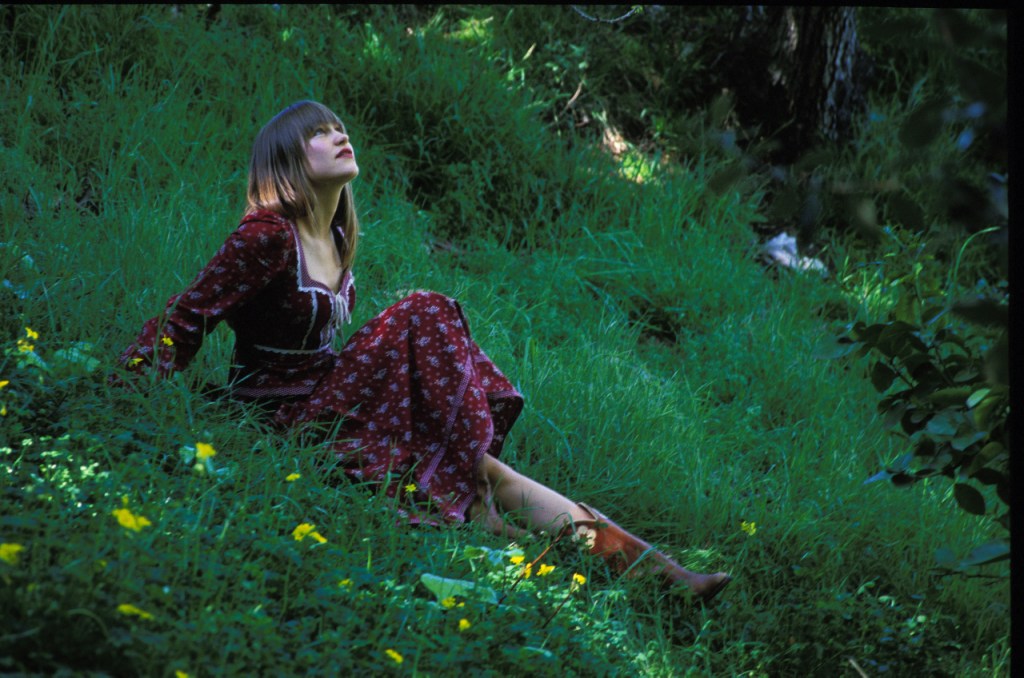
“Kingfisher”: another new song from Joanna Newsom’s forthcoming tripler Have One On Me, via the good folk at Drag City of Chicago.

Stream: [audio:http://www.arthurmag.com/magpie/wp-content/uploads/2010/02/Kingfisher.mp3%5D

Download: “Kingfisher” — Joanna Newsom (mp3, 10.3mb)

Previously:

Stream: [audio:http://www.arthurmag.com/?attachment_id=11443′ rel=’attachment wp-att-11443]

Download: “Good Intentions Paving Company” — Joanna Newsom (mp3)

Stream: [audio:http://www.arthurmag.com/magpie/wp-content/uploads/2010/01/joannanewsom-81.mp3%5D

Download: “’81” — Joanna Newsom (mp3)

Previously in Arthur Magazine:

“Forty-Six Strings and Some Truths”: JOANNA NEWSOM’s first ever major interview, by Jay Babcock, from Arthur No. 10 (April 2004)

“Always Coming Home”: How California harper JOANNA NEWSOM’s masterpiece album Ys grew from a time of personal turmoil, ambitious collaboration and eating hamburgers again. By Erik Davis, from Arthur No. 25 (Nov 2006)

Subscribe to Arthur’s iTunes Podcast and receive music automatically: click here

“Forty-Six Strings and Some Truths”: Harp-playing folksinger JOANNA NEWSOM talks history, theory and inspiration with Jay Babcock (Arthur, 2004)

Forty-Six Strings and Some Truths
Harp-playing folksinger JOANNA NEWSOM talks history, theory and inspiration with Jay Babcock

Originally published in Arthur No. 10 (May 2004), with photography by Melanie Pullen.

Photo by Melanie Pullen.

The Lyon & Healy pedal harp is not a regular presence in rock clubs. It’s expensive, it’s big, it’s complicated. It has 46 strings, which cannot be re-tuned between songs during a performance. It’s difficult to master—basic competence requires years of training and practice. Outside of Bjork’s last album and recent tours, it’s an instrument almost without history in pop music.

So, when the 22-year-old Joanna Newsom appears onstage, alone, playing this exotic device, attention is inevitably paid, not just cuz you never see it done, but because, as Joanna says, the harp is usually associated by contemporary listeners with a single cheesy sound: the glissandi, a simple, artless running of the fingers across a broad span of strings, used as a decorative cue in sitcoms, films and commercials. Which means the simple act of witnessing a harp really being played—of runs of notes plucked with one hand while the other plays a fixed pattern—is gonna be novel. It’s as if your only experience of the electric guitar was the sound of a single power chord, and then suddenly you witnessed the playing of whole riffs, whole rhythms, whole melodic lines, whole songs…

Songs. It’s Joanna Newsom’s songs, it’s her lyrics, it’s her singular voice—accurately described by Currituck Co.’s Kevin Barker as “eight and eighty, dawn and dusk”—that makes the gawkers stick around, after the initial curiosity of seeing a harp played by a pixie from a California Gold Rush town wears off. Cuz what Joanna is doing is neither experimental, avant garde stuff, nor the pretentious bloat generally associated with the use of classical instruments on the rock stage. It’s instead firmly rooted in the folk tradition: verse-chorus songs with careful attention paid to lyrics and vocal performance. When Joanna sings “This is an old song, these are old blues/This is not my tune, but it’s mine to use,” she’s stating fact and ambition. She’s making a claim. It’s one that she’s earned the right to make.

With support and advocacy over the last couple of years from friends and admirers like Will Oldham, Devendra Banhart and Cat Power, she began to record her music and perform live. After making two home-recorded CD-R EPs, she released her full-length debut on Drag City this spring with the stunning The Milk-Eyed Mender, and will be touring with Banhart in the early summer.

Two weeks after seeing her wow drunk hipsters in a Seattle rock club, and after tagging along on the photo shoot for this piece, I interviewed Joanna for an hour by mobile phone. I was struck once again by her essential singularity—it extends even into her conversation, which is learned, humble, passionate and articulate. Here is some of what we talked about.

Continue reading

MUSIC IS NEVER WRONG: A visit with Josh Homme & John Paul Jones of Them Crooked Vultures (Arthur, 2009)

MUSIC IS NEVER WRONG
A visit with Them Crooked Vultures’ Josh Homme and John Paul Jones

Interview by Jay Babcock
Posted: October 15, 2009

Them Crooked Vultures is a new band comprised of guitarist-vocalist Joshua Homme (Queens of the Stone Age, Kyuss), bassist John Paul Jones (Led Zeppelin), drummer Dave Grohl (Foo Fighters, Nirvana) and guitarist Alain Johannes (Eleven), with Jones and Johannes also playing other instruments. These guys really don’t need an introduction so you won’t be getting one here. What’s interesting is what they’re doing: Vultures have spent much of this year together, writing and recording music in a Los Angeles studio, and are now touring without having officially released a note of the music they’ve recorded. No album, no single, no YouTube video, no leak, no official photos, no nothing: the only way to hear Them Crooked Vultures, really, is to see them live.

In some ways, it’s an echo of the Eric Clapton-Steve Winwood-Ginger Baker supergroup Blind Faith, who did a similar thing in 1969, touring ahead of their album’s release, selling out tours on the strength of their collective pedigree. But unlike Blind Faith, who hedged their bets by including renditions of songs from their old bands, Vultures are performing 80 or so minutes of new Vultures music every night: no Zeppelin covers, no Queens jams, no standards. As Homme says onstage on the night I first see them play, it’s a “social experiment” as much as a musical one, and to the audience’s credit, there was not a single shouted request that I could hear for something other than what the band was playing: Vultures’ blind faith is being rewarded.

Perhaps this is down to a collective solidarity with the idea of the independent musician, or a real interest in simply unfamiliar music by trusted faves—or maybe it’s because most of the songs presented on Monday night were strong on first listen, and if listener’s fatigue inevitably set in at some point due to the continued ear-pummeling, then you could just stand there and behold the wonder of 63-year-old John Paul Jones, shoulders bobbing, at the helm of his instrument, smiling with pleasure at Dave Grohl as yet another propulsive, post-“Immigrant’ Song” (or “Achilles’ Last Stand,” or…) bassline locked in with Grohl’s powerhouse thumping and a distinctively Homme guitar riff. Interestingly, Grohl’s drumkit was not on the riser usually associated with big-time rock bands, which I’m sure disappointed some Foo Fighters fans, but it had the crucial benefit of placing the musicians nearer each other, allowing them to create a more cohesive sound in the midst of so much volume; as John Paul Jones said after the show, “I can feel Dave’s kick-drum that way,” and from his smile, you know that’s as much for his benefit as the audience’s.

Smiles. The amount of smiling between the Vultures onstage, as well as the sheer caliber of playing, reminded me of Shakti, the Indian-Western supergroup led by English master guitarist John McLaughlin and Indian tabla genius Zakir Hussain that fuses classical Indian music with Western jazz. I’m not talking about laughs between songs, or witty stage banter, although with Josh Homme at the microphone you’re always going to get that, but the smiles that occur in the midst of the music: the joy that emerges spontaneously in the midst of collective creativity, usually marking some new discovery or progress, or a new threshold being crossed, or something just feeling fundamentally good. In the last two decades of loud guitar music, this kind of uncontrived on-stage joy has been far too rare—outside of Ween shows, of course, and gee wasn’t that the Deaner himself backstage with the champagne on Monday night? Anyways. Josh, who I’ve interviewed before, and who headlined the second night of ArthurBall in 2006 as half of The 5:15ers (a duo he has with longtime collaborator Chris Goss), invited me to talk with him and John Paul Jones in the band’s dressing room just prior to their set at Philadelphia’s Electric Factory on October 12, 2009. Here’s how the conversation went…

Continue reading

"I’LL DO WHAT I CAN TO PLUG THE HOLE IN FOREVER!"

Arthur editor Jay Babcock’s “extreme nostalgia” introduction to the Grant Morrison-written “FINAL CRISIS” hardcover, which collects the epic superhero comic book series in one volume, has been posted online over at the DC Comics blog.

Grant Morrison did a memorable spoken word performance at ArthurBall in February 2006 in Los Angeles. Babcock interviewed him for a cover feature for Arthur No. 12 (available from the Arthur Store).

NYTimes on Arthur's "The Invasion of Thunderbolt Pagoda" release on DVD

August 27, 2006 – Sunday New York Times

Long, Strange Trip for a Hypnotic Film

By JAMES GADDY

It took 38 years, but Ira Cohen’s cult film, “The Invasion of Thunderbolt Pagoda,” which was first screened in 1968 at the high point of the psychedelic hippie head rush, is now commercially available. Given the close calls, the long absences and his chaotic archival system, Mr. Cohen, 71, is a little surprised himself.

“It didn’t really involve patience,” he said in his apartment on West 106th Street in Manhattan, surrounded by books stacked waist high. “It was just reality.”

In 1961 Mr. Cohen built a room in his New York loft lined with large panels of Mylar plastic, a sort of bendable mirror that causes images to crackle and swirl in hypnotic, sometimes beautiful patterns. After a few years experimenting with the technique in photographs, he invited his friends from the downtown scene — like Beverly Grant, Vali Myers and Tony Conrad — to make a film.

Continue reading

How to effectively subvert corporate branding and manufacturing: an interview with Rasmus Nielsen of SUPERFLEX (Arthur, 2005)

Originally published in Arthur No. 14 (January 2005)

A DRINK WITH A TWIST

How art collective/company SUPERFLEX is changing the world, one soda pop at a time.

Text by Jay Babcock, photography by W.T. Nelson.


Openings at art galleries always offer beverages, but this is taking the concept to the extreme: here, at downtown Los Angeles’ Roy and Edna Disney/Cal Arts Theatre (REDCAT) gallery one night this past spring, the drink—which is being bottled and sold in the gallery itself—is the art.

The drink on offer is a berry-flavored energy soda called Guarana Power, jointly developed in the last year by two cooperatives: a three-man Copenhagen-based art collective called Superflex and COIMA, a guarana berry farming collective based in Maues, Brazil. For the next month, REDCAT will be transformed into an in-house Guarana Power bottler and an instructional workshop in a strategy as delicious and inspiring as the drink itself: the exploitation of powerful transnational corporations by an alliance of self-organizing third-world farmers.

Intrigued by the underlying concept, the accompanying literature and the simply unbelievable documentary films being screened in the gallery, I contacted Superflex’s Rasmus Nielsen, in town with fellow Superflexer Jakob Fenger as visiting faculty at CalArts for a semester, for an interview.


ARTHUR: How did the Guarana Power drink come about?

Rasmus Nielsen: We were invited by the Amazon Government to a residency in Brazil. We were contacted by this cooperative of guarana farmers, who wanted to present themselves and wanted to talk about their organization, because we had said we were interested in how various people locally have organized themselves They came to us and explained to us why they had formed this organization.

Guarana is a berry, it looks like an eye, it grows on these bushes, it’s a very old Indian tradition that you dry it and then you pound it and then you mix it with water or juice and then you drink it. It has caffeine and other kinds of energetic elements—it’s like an energy drink, and it’s used in sodas. The biggest soda in South America, bigger than Coca Cola, is a guarana-based soda called Antarctica Guarana.

What had happened was these small breweries had merged and founded their own big company which was called the American Beverage Company, AMBEV. Pepsico was a part of that also, that major fusion. It was kind of a classical trend that comes with globalization, you have these big fusions, which then begin to monopolize the purchase of the raw commodities.

Because they are basically one big group, they can dictate the price they purchase the berries at…

And there’s nothing illegal in that, they’re not committing any kind of crime or anything. But what happened was prices fell 80% in just a couple of years! That affected this area a lot, because selling their guarana is their area’s main income. So these guys had formed this cooperative to try and deal with that situation. They didn’t want to have to sell their guarana to AMBEV at these low prices—but then they didn’t who else to sell it to.

So we agreed on making a workshop. The whole cooperative came and we showed them some ideas we had seen in other places and situations, the main idea being, What if you twist the situation? The way these big multinationals work is they use the raw material coming from farmers. What if the farmers used the raw materials that the company is producing, which is their identity, their brand, their logo, all this kind of stuff?

That was one part of it. We also agreed that unless you have to have some part in the next phase of the commodification of the guarana. If you don’t, you are fucked, basically. This is case for most of the Third World farmers; this is the logic of the present global economic structure. If you are a sugar or coffee producer or whatever, if you’re only a producer of raw materials, then you are screwed. The raw material producers be part of the commodification, or own elements of the chain, that’s the key.

And it’s not gonna be sold as a high-end soda, or a “fair price” soda. A lot of the alternatives to big global market structures try to talk to your moral sense, like “Be ethical. Buy this coffee that costs ten dollars more per kilo.” We don’t wanna go that way. We wanna totally appropriate the rules of the basic soda. This is not gonna be pushed as a fair-price thing, but as a soda, where you like it. Of course you like the idea, but you don’t buy it necessarily because of your moral point of view. Cuz I think those attempts have failed, somehow. Not totally, but it will always only be a small portion of the people. Like, how often do you buy “fair price” coffee? It’s really hard to find! So we try to not make something special, but just do the same thing as the normal sodas, same price as normal sodas. Same level, somehow. But it’s owned by the producers, rather than multinationals.

How did you come up with this idea?

For a long time we’ve worked in Thailand, where copying as an economic strategy. You copy a Rolex watch or a shirt or something and sell it. It’s an economic strategy. But then there’s another element to it, which is the interesting part: you copy something, and you TWIST it a little bit, and then you send it back. Maybe you change the name a little bit. Maybe you add your local flavor.

So we showed the guarana collective a couple examples of this, one of them being an example from France, where some French Tunisian second-generation guys have launched a product called Mecca Cola. They use the Coca Cola imagery with red and white and cursive but then substitute the word “Mecca,” which is the city in Saudi Arabia of great importance. Mecca Cola has succeeded in making politics in the framework of the market, basically: the surplus of the Mecca Cola goes to so-called humanitarian issues in Palestine. I don’t know exactly what that means [laughs] but anyway it makes a policy using Coca Cola as a medium, somehow. That strategy we found interesting.

We also know, because we have communicated with these Mecca Cola people, that the guy who started it was a radio journalist.

They had no experience in making sodas, but they were able to do it.

Right. So people started thinking and then coming up with ideas and what came out of the workshop was, We should make a soda. That’s the most obvious thing. Then we discussed how this would look and things like that. We made a prototype of this soda which we showed in the Venice Biennial in Italy last year. Now we’re showing it here in L.A. The next step is there are some people who want to put money into it. The final goal of course is to get in to a market situation and then make a foundation that owns the recipe and takes care of it. This cannot develop into a copy of the structure that these multinational corporations represent, but something that has a different character, that is owned by the people who are producing the guarana and the idea.

You had to figure out the recipe. Reverse-engineering.

We took one of these big sodas that we were somehow copying, that we wanted to modify, and took it to a chemist. He deciphered it, and came up with a recipe, which is probably pretty close to the original one. Exactly. But then we added a lot more of guarana to it. We modified it. But taste-wise, it follows close to the original one.

Of course this is slightly dangerous. Copyright-wise, you can get into trouble. But that’s consciously built into our strategy. We thought, Well if these people come after us, that also highlights the problem that they are causing.

Have you got in trouble yet?

Not yet. We have with other projects. We made a modified Danish lamp that we had copied in Bangkok, and we made it so it would work with biogas instead of electricity. But that lamp is illegal. I can’t show you a picture of it. It would be illegal! Copyright law is stretching out to more and more areas of society, and of course that’s usually serving the guys on top.

You’re taking the “open source” idea from software development—Linux, etc.—and taking it to things much more fundamental: what we drink, how we light our homes…

Yeah. We did a project in Italy where we had art students copying things from 7-11, like Mars Bars and toothpaste. Copying them, changing them maybe a little bit, and then selling them at a market. When I was a kid, we used to have this soda fountain machine, where you could make your own soda at home. It felt as a kid so empowering. You could make your own soda! Of course it was a soda company selling it to you anyway but that idea of reverse-engineering–I think it’s very interesting. Imagine if you started making your own Mars Bars! It’s a very small political act but if a lot of people would do that it would change fundamental economic structures.

Copying is a strategy of economics, but it’s also a strategy of some kind of counter-identity strategy. The potential empowerment in doing that, taking apart, reverse engineering these brands, this specific capitalist cultural power that comes from these brands, taking it a part bit by bit somehow… It’s about being on top of things you put in your mouth, things you buy, things you wear.

For Guarana Power, it looks like you stamped your new logo literally on top of the “Antarctica Guarana” logo.

Yeah. Actually in the beginning we modified the original logo just a little bit. We were showing it in the National Gallery in Finland, and their lawyer was afraid that they would sued by Pepsico or Ambev or something. Which is interesting that even before you do something in a museum , there’s a lawyer’s copyright checking you! It shows you how far the copyright law stretches out into contemporary culture. We were sitting and talking with her and we said, “Well okay what about if we self-censor it? Just put a black box in front of it.” But she was like, “Yeah but you can still see it in the back.” Then we were like, “Okay we will make it a little bit bigger.” She’s a lawyer, knowing about these things, and then at the end she says, “Okay now it’s big enough, now you can do it.” We ended up kind of liking it, that it was sort of censored but you could still… In South America, you will recognize it. It’s like if you used the red color with a Coke with a black color, then it’s Coca Cola. And Coca Cola tried to copyright those two things together, the color red and Coke, which they failed in. That’s like copyrighting a car, or shoes, or something.

You come from Denmark. How did you become interested in people in the plight of third world farmers?

Basically just being there. We were in a residency in the Amazon, and we were just listening to what they were telling us. Of course they are living in a totally different situation then us—I come from a Northern European, very rich country—but somehow we are part of the same economic structure, and we are both faced with economic and cultural pressure coming from this contemporary capitalist culture. They are the producers of the stuff we drink. Even Coca-Cola takes caffeine out of guarana and puts it in Coke! It’s all very linked. In that way, it’s natural to be interested in where things come from.

I’m trying to think really hard about how did I get interested. I wouldn’t say it’s just ethics: ‘I’m trying to be a good moral person and therefore I should do something good.’ That’s not the issue. Their situation is so typical. You don’t need to be an economist to figure this out. Things get produced in the Third World, gets commodified and branded by the First World, and sold and the profit gets made. That’s why things are so cheap here. That’s kind of how it works. I feel if I could change that just a little bit, that makes my day somehow.

Not all of the projects we do are Third World-based. They all deal somehow with elements of empowerment and self-organizing. It’s somehow a trend in contemporary capitalist logic to disable community structures: it could be family structures in America, it could be guarana farmers in Brazil – so we try to make these tools that empower people with creating their own TV stations, or energy systems, or soda, or whatever.

You come at this from an art angle, not an activist angle. You’re an art collectiove. How can you afford to do this?

We were trained in sculpture at the Denmark Royal Academy of Fine Arts. But the framework of the art world seemed too narrow, somehow. On the other hand, it was a space available that was not totally defined by the same parameters that you would find in business, where you basically have to make a surplus, or in academia where you somehow have to produce a specific kind of result, which is very often also based on some kind of economic thinking. So we found this area that was a white space where you could experiment with things and do things that failed. You could ask questions without necessarily having answers. You could make models, propose projects that may not be sound or economically viable. All these opportunities put together made us not totally leave the art world, while also having an activity that’s going on totally outside.

In a museum situation, like here at Redcat, it’s showing a model, it’s showing a prototype, it’s discussing a problem in a public forum. I guess you could do that somewhere else, also, but in this particular case, the context of art facilitates a project like that. We’re basically just pirating on that structure, and they don’t seem to mind!

Of course there’s potentially also a danger. You have to be aware when you use this strategy, it could also turn out, “Well this is kind of JUST art, therefore it’s not really serious, maybe doesn’t really mean anything.” There’s a certain element of repressive tolerance built in to that structure also. You just have to be aware of that when you work there, that this can happen, that it can be commodified as an art object. Everything can be turned into objects within this context. You just have to work with that, somehow.

And Superflex is a company as well as an artists’ collective.

Yes. If you want to achieve something today, what form can you choose that is most flexible in contemporary society? The role of the artist is definitely pretty limited. You do a project like the soda project or biogas and you go out to an investor, they wouldn’t take you seriously because you’re an artist. But as a corporation? Suddenly they listen. You just use the language that this world understands. It’s somehow about appropriating identities to make things happen.

The projects have different spaces that they operate in. One can be an artspace and one can be a farm in Africa. Sometimes they merge. Sometimes funding from one place goes to the other. Like this biogas project: it’s basically a system that makes energy out of shit. It makes gas in your kitchen, so you can make food on waste, basically. We made a small system that facilitates that. It’s an energy system that enables people to become self-sufficient in energy: you don’t have to buy energy, or firewood or charcoal, you don’t have to walk really far to the forest to get firewood, you can make your own energy from basically the shit that your household generates. It is not a new invention, we took some technology and scaled it down, so it’s basically on a family level for families in Cambodia or Thailand. For that project, there were investors who came and put money in the project as a kind of investment thing, totally outside the art context, and part of that money we have also used within the art context. And vice versa.

You just have to remember in the morning what hat to put on. It’s a little bit confusing sometimes. It’s like applied schizophrenia. You try somehow to avoid specialization, which is a global tendency also. Because, for example, if this project ONLY was an art project, I think it would have limits. It would probably be commodified and then some kind of art collector would buy it and it would end up in a corner in a … That kind of limit.

We think of our work as tools that can work on different levels at the same time, without that sort of opposing each other. Right now we teach at Cal Arts. We’ve also taught at an agriculture school in Cambodia. In that situation, our background as artists doesn’t have any importance at all. It’s not a secret… but in that situation we are agricultural consultants. Again, just remember what hat to wear.

When did Superflex start, and how big are you now?

We started working together in ’93 in art school. There was three when we started and there’s still three and it’s the same three. It’s similar to marriage! [laughs] We live in Denmark, and then depending on the project we go and stay a month here and a month there. Bjorn [Christiansen, the third Superflex] is in Germany now, doing this open-source Mars bar thing with some German students. Basically he’s making a market where you copy things from 7-11 and sell them, close to another 7-11.

For different projects, there’s usually specialists involved. For example with Guarana Power, we work with a chemist. Of course, these technicians we work with, we can’t pay them what they’re worth, but they think it’s interesting to maneuver in different spaces as well. For example this guy we are working with now, he’s making a whiskey for Saudi Arabia, without alcohol. He’s using some kind of chili pepper to fake the alcohol feeling. And he says people get drunk! So, he likes trying out things like that. He gets to play!

POSTSCRIPT: An update from Superflex, October 16, 2004:
“Guarana Power is now on the market in Denmark, mainly in cafes and small shops. It’s small-scale distribution, but it’s going well. We have also opened a Guarana Power Bar in our office that runs every weekend. More info at guaranapower.org


LAist's February, 2008 interview with Arthur editor Jay Babcock

From LAist.com:

LAist Interview: Jay Babcock from Arthur Magazine
by Nikki Bazar

Whether it’s free bands by the river, obscure films at the Silent Movie Theatre or music festivals featuring great non-mainstream bands, Arthur magazine has improved L.A.’s sullied corporate reputation by organizing eclectic, margin-friendly events that embody the magazine’s mission to represent “transgenerational counterculture.” Case in point: Arthur’s Sunday Evenings series at McCabe’s Guitar Shop in Santa Monica, which continues this weekend with eccentric songwriter Michael Hurley and next Sunday evening with psych-rock band Wooden Shjips. On Feb. 13, the magazine also presents a launch of Abby Banks’ new book Punk House at Family on Fairfax. The book features photos of punk houses from across the country ⎯ a few of which are reprinted in this month’s issue of Arthur. We asked Jay Babcock, guru of Arthur magazine, a few questions about the upcoming shows. Continue on to read more about the dire state of L.A.’s all-ages scene, the mysterious absence of our rock ‘n’ roll elders, and the fall and rise of Arthur magazine.

Q: Tell me about the bands you’ve chosen for this series.

Michael Hurley is a legendary folk nomad, one of America’s great weird individuals, who’s been around the block many times. His newest record is on Devendra Banhart’s record label. Alela Diane is another one of these amazing musicians coming out of Nevada City. The Rough Trade record shop in Europe said her album was the best of the year, and they had a point. Matteah Baim put out a really good record last year, a dark folk sound, ice-ghost sort of thing, headed toward Nico’s stuff. On the 17th is Wooden Shjips, a psychedelic raga band from San Francisco; Mariee Sioux from Nevada City; and Headdress ⎯ also wandering nomads who sound like an even darker, slightly more country Brightblack Morning Light. But with several of these artists, I’ve never seen ’em, so there’s a bit of mystery there for me just as there probably will be for most of the audience. Which is part of the fun.

Q: It’s good to see some decent bands on the Westside. How did you land on McCabe’s as the venue?

Jared Flamm at Everloving encouraged me to get in touch with Lincoln Myerson at McCabe’s, who’d told me a while back that McCabe’s and Arthur might be a good match. McCabe’s have been around for 50 years and haven’t used an outside booker/curator since the early mid-‘90s. Lincoln let us book whoever we wanted to do whatever they wanted musically ⎯ within reason, of course. So, the size of the venue dictates a lot of things, like how much money you can offer your talent, and we had to think about who we could afford to put in there and keep the door price low, and also who was available. Given those parameters, the goal was to put individual line-ups together who would form an interesting evening and also attract a mixed-generation audience. I really wanted to work with McCabe’s because it’s very simple ⎯ it’s about music, it’s not about alcohol sales. Also, it’s an all-ages venue. Ever since we did Arthur Ball at the Echoplex, which was 18 and over, I’ve been insistent that we only do all-ages shows, because I don’t think anyone should be excluded from good music. Also, I wanted a transgenerational group of artists. We call Arthur a “transgenerational counterculture magazine,” and we mean it. There is a coherent counterculture that runs from the beats to the hippies to the punks, forward. They have more in common with each other than they do with the mainstream culture. In any of our festivals we do, we try to include older artists as well as younger ones. It’s truly “all ages” onstage, and we’d like to see that more in the audience. There’s so many great artists that live here in Los Angeles ⎯ Tom Petty, Joni Mitchell, John Fogerty, Ray Manzarek, Dylan lives here sometimes ⎯ and you never, ever see them at shows. I assume they don’t participate in the local culture because they got burned one too many times with overhyped crap, or it’s just too much of a hassle to be out in public. Or maybe they just don’t have any interest and they’d rather roll one more at home and listen to Jim Ladd rhapsodize about the past rather than get out there and do something. But they should. ‘Think cosmically, act locally’ is a great credo, you know? You live here? Then BE here. A lot of cool stuff becomes possible when you mix the energy of the youth and the wisdom of the older folks: think of Allen Ginsberg’s continuing, lifelong interest in the best young artists ⎯ his advocacy for them ⎯ whether it was the blues guys or jazz players or the hippies or the punks, it was all the same to him. McCabe’s has such a great history, and is a venue a lot of those people have played at, and it’s so pure in its only interest being music (as opposed to alcohol sales) that I’m hoping some people older than 50 see what’s going on, something that may have more of a spiritual, political or aesthetic resonance with them than they may at first think.

Q: Arthur shut down for a spell in early 2007, then resurfaced with a redesign. Do you care to talk about what happened?

My partner for many years was looking to not be the publisher anymore and eventually, he didn’t want to own it either, so he wanted me to buy him out which I couldn’t afford to do. That’s when the magazine died. Then we made an arrangement that allowed me to gain 100 percent of the magazine. We’d already planned the transition to Mark Frohman and Molly Frances as the new art directors before the whole thing went down, so that’s just a coincidence. After I got full control of the magazine, we decided to go all color and go for it. We’re just continuing to do what we’ve been doing for five years. And there’s always new blood coming in. Next issue, [author] Erik Davis is going to start doing a column for us and there will be a lot of other surprises. So basically, I just took on more credit card debt and a lot of people loaned me money and we were able to go forward.

Q: What sort of things do you hope to do with the magazine that you just aren’t able to right now?

Well, it’d be nice for everyone to get paid what they deserve. We work from our homes in Atwater, we have tea at India Sweets & Spices or lunch at Tacos Villa Corona or Viet’s new noodle place, we sit by the river for inspiration and excitement … It’s not the toughest life. But as a business? We’re making a go of it, but we do want to be monthly and we want to have more pages. There’s so much good stuff to cover. The rest of the media is collapsing and there’s a lot of really good writers, photographers and cartoonists who deserve a wider audience and no one’s giving it to them for some reason. So the main pressure on us is to jam as much stuff into the magazine as possible without making it an aesthetic mess. If we had more pages, it could breathe a little bit more and we could cover a lot more of the good stuff that’s going on.

Q: And you obviously have a love for print.

The free magazine model is a really solid one, and it’s working, and it’s gonna work better in 2008 for us. Print is near-perfect. It’s portable, it doesn’t require batteries, you don’t have to squint, it’s a bigger window, you can do more design things than you can on a computer screen and it gets out there in front of people who aren’t looking for it necessarily. With the web, mostly what you get are people who are already looking for you. And of course, you can read a magazine by the river. Try looking at a website there.

Q: Is it your mission to book a lot of smaller acts that you don’t see as much in some of the bigger 21-and-over venues?

For a city this big, it’s absurd there aren’t more places where people of all ages can get together and hear something other than mainstream arena pop and rock with good quality sound in a comfortable setting. The only real venue in this city where people of all ages can gather together to hear music at a low price with good sound in a comfortable setting at a reasonable hour is Amoeba. You’re in a bad situation as a culture when you’re dependent on a store ⎯ a place of commerce ⎯ for the presentation of music to the public. We’ve written about this in Arthur in our all-ages series. You know, if you’re into music, bars are not the ideal venues. You don’t want to hear other people talking or the cash register ringing or bottles being dropped in a garbage pail. You don’t want to be hanging out with a bunch of amateur drunks. That has a place, but not all music is right for that. There just should be a greater range of venues. It’s also bad for the bands. You can’t build a career by getting one chance to intrigue the hipsters. And if we can help raise the profile of some of these artists by putting our brand name on it, then good. It’s very hard for artists to break in because everything is so calcified on radio and in venues.

Q: Arthur is developing a real presence in the L.A. music scene.

We’re working with people at a very local level who are in it for the right reasons ⎯ the folks at Family and at McCabe’s and The Cinefamily, it’s all labor of love stuff. We like labor of lovers, basically. Doesn’t really matter what it is they love. It’s the loving that is important. Those are our people, those are the people we want to hang out with in such grim times. We’re just trying to use whatever profile or heft we may have to hopefully help other people do what they love too.


Greg Saunier of DEERHOOF on the ALL-AGES gig ethic (Arthur, 2007)

WHERE MUSIC LIVES
Deerhoof dude Greg Saunier on how all-ages is the gig that gives and gives

(originally published in Arthur No. 26/Sept 2007)

Deerhoof are an adventurous art-rock ensemble from the San Francisco Bay Area whose mix of playfulness, technical facility and unpretentious musical/conceptual ambition has gained them an ever-growing (and awesomely devoted) underground following. Not long after seeing Deerhoof play a giddy early-evening set to an all-ages audience of Giant Robotniks, punk rockers, noiseheads, pop geeks, art students and awed musos, I spoke by phone with drummer-keyboardist Greg Saunier about how the band’s insistence on playing all-ages shows has been crucial—perhaps even pivotal—to their continued artistic growth and commercial success. Following is part of our conversation.

Deerhoof ‘s latest album, Friend Opportunity, is available from Kill Rock Stars; a DVD of the Courtney Naliboff-adapted ballet version of Deerhoof’s 2004 concept album Milk Man, featuring students from the K-12 North Haven Community School in Maine, is available from http://www.milkmanballet.com —Jay Babcock

Arthur: What is Deerhoof’s policy regarding playing all-ages shows?

Greg Saunier: Basically we try to play all-ages shows wherever we can. It’s not always possible. I have some friends who have bands that are 100 percent insistent, but by demanding that every show be all-ages, they sometimes go for long periods without playing any shows. Or they aren’t able to play certain cities, period. But wherever we can, we try to do it.

Why is it important?

Greg Saunier: Our music, and I think music in general, is not just for people who are a certain age or who have necessarily already experienced certain things. We aren’t trying to make music that’s meant to be an in-joke, just for people who’ve already lived through certain things or already are familiar with certain bands of the past. We try to make music that could have something to say to any kind of person—or at least any age of person. We’ve had quite a few shows where a kid and her parent will come, and both claim to be fans, which is really mind-blowing to me, and really gratifying, because I want it to feel like it’s not exclusive to a certain clique.

What were some of the shows you saw as a teenager?

Greg Saunier: I grew up in Columbia, Maryland. One of the first concerts I saw was the Police, at a basketball arena. And it occurs to me that the same is still the case—when Christina Aguilera plays a show, she plays arenas so she play all-ages every time. Within the world of pop music, it’s not even an issue. It’s only in this world of—I don’t even know what this world is, but it’s some other world where music is only associated with bars and with drinking and with people over a certain age and with a certain world-weariness already built in, a certain jaded quality. Of course that’s not everybody, and you can retain that kid-like innocence about new things in music your whole life. But I don’t even drink, so the last place I thought I’d be forging a career would be in bars! I actually don’t mind playing in bars, but if we do it’s always about trying to transcend the surroundings and the normal association with bars and what it’s there for and what it’s meant to do.

Were there shows that you wanted to see as a kid that you couldn’t because you were not of age?

This is going to make it sound like as a teenager I was completely obsessed, but actually I remember Andy Summers, the guitar player from the Police, did a solo show one time at the 9:30 Club in D.C., and it was an over-21 show. I remember just being crushed for several weeks that there was no way I was going to be able to go to this thing. I got really involved in starting to listen to classical music a lot, and classical music shows are always all-ages. That’s what I was getting fed by my parents and I gobbled it up and got a lot out of it.

That’s a good point, that classical music is not a “beer experience.”

In a way, it is another alternative music culture. I was totally dependent on either friends or my parents to get around as a teenager, and there was no place to see a concert in the town where I grew up. Any concert-going required going to D.C. or Baltimore. I felt like a rebel, honestly, in my teen and high school years because of the fact that I listened to classical music. It didn’t really make any sense to any of my friends, and I definitely felt like a real oddball. At the same time in high school, as I just barely started to get a slight awareness that there was underground rock music and punk music, I started to make friends with a few people who were into that and I identified with them in a very strange way. The hardcore scene of the early ’80s and classical music scenes obviously couldn’t seem to be more opposite, but for me and my punk rock friends, it served a very similar purpose. It was something that wasn’t already figured out for you. It wasn’t thrust upon you with the sheen of the mainstream, and the mainstream was the only other choice available to kids.

I remember hearing about this straight-edge music and I was absolutely fascinated. I was very much a late bloomer as far as understanding that there was anything called punk rock. I mean, when Minor Threat was going I was listening to Top 40, I had no idea. I later discovered another band from the area called Void, and they are actually from my hometown. They were just a hair older than I was, and looking back, I bet I knew some people who did go see them. But I was just totally entranced when my friends would describe these Minor Threat shows where kids were going there with the express intent of not drinking, and they would never say bad words and everybody was really nice to each other. I just couldn’t believe it, you know? I never experienced it firsthand, so my mental image of it is untarnished: I have a fantasy of this utopian situation where somebody put the kids in charge and they’re doing so much better than when the adults were in charge. Everybody’s getting along and it’s creative and everybody’s happy and everyone’s accepted. I think that I’ve been kind of seeking the re-creation of that fantasy ever since, you know, when I go to show or especially when we play shows. We want to create that kind of feeling.

Was that part of the original impetus when Deerhoof began?

In the beginning we were desperate to play and totally innocent of how to set up shows or tour. And we were very shy people; it was just two of us at first and then [vocalist-bassist] Satomi joined to make three, and she didn’t make the band any less shy than we already were. Basically, if another band asked us to play a show with them, we’d be like ‘Yeah!’ and be unable to sleep for the next week or something! So in the first couple years of Deerhoof we didn’t have the gumption to dictate anything or make any suggestions. We basically just followed whatever was handed to us and felt lucky if we got to play at all. But what ended up happening was we didn’t play all-ages shows, and the first several years of the band, we had no kid fans seeing us, it was all people our age or older. Satomi and I realized that there was something not satisfying about this. I don’t want to spend the rest of my life just playing in bars and having the success of the night be judged merely on how many drinks we got everybody to buy, you know? Probably in 1998 or ’99 I started to feel like this was a dead end. It wasn’t a stimulating situation, always playing with the same bands, playing the same songs to the same people just passing time in a smoky little room. My first impulse was to go back to school so I could get back into classical music. So I went to graduate school for music, and felt very frustrated there too. In both cases, it’s a mutual admiration society. It’s an ‘in’ crowd. The people who go to see Deerhoof, or the people who are studying music at music conservatory, both can have the sealed feeling where everybody’s patting each other on the back. That’s their only audience, you know? So that was a turning point for the band, too, where we felt like ‘We need to start branching out.’ And frankly, that feeling has never gone away. We have managed for the most part to be able to play all-ages shows everywhere we go, but even then it can feel … we still feel confined in some ways.

Like, why do shows always have to be so late at night? And why do they have to cost $18?

Yeah. Even when you call a show quote-unquote ‘all-ages,’ obviously if it’s late at night on a school night and it’s really expensive then no kid’s going to be able to go. So we’re always looking for something other than just the prescribed venue, or the prescribed way that we’ve been told our music is supposed to be presented. That’s the crazy thing about kids, and the many adults who have an open mind: they don’t conform to any marketing person’s concept of their target demographic characteristics. They look for something that’s cool, they look for something that strikes them a certain way, and maybe as they grow with it they figure it out in a more sophisticated way. Kids surprise adults all the time, because adults would never have guessed what kind of styles that kids would come up with. You think of clothes as the obvious example, where adults are constantly rolling their eyes: ‘What are the kids wearing nowadays?!’ But it’s the same thing with music, and it’s very exciting. And that’s another great advantage of playing all-ages shows: sometimes we can play with under-21 bands.

A couple of years ago, we played in Minneapolis, and Minneapolis is actually very difficult for all-ages shows, but there’s one venue called the Triple Rock where we have often played that will do all-ages shows early; basically, before the “real” show that they’re still going to have that night. Anyway, John has an old friend, Milo Fine, who does only free improvisation. The guy’s possibly in his 50s … real hardcore. He doesn’t do free improvisation for fun, but has for decades been cultivating this and only this and refuses to play a single note of written music period, you know? Extremely obscure, but in his tiny circle, he is sort of a legend. Basically, ultra avant-garde and not the type of music that you would normally associate with kids liking. We asked him to open for us. He was playing percussion with another guy in an improvisational duo, and we were talking before the show, and he was sure that he was just going to bomb. The place was filled with kids, and de was like, ‘This is not my normal audience, I normally play in bars.’ So he came out and played and you could hear a pin drop. The kids were just so focused, they were just totally taking it in. They didn’t judge things the same way that a mob of adults might. There were just no preconceptions. After the show he was just kind of stunned, and really really happy. And I felt so proud, too, that we had managed to put this bill together.

Oh! Here’s a story that totally illustrates how important all-ages is. We played on a tour opening for Unwound, and Unwound was one of those bands that insisted on all-ages shows. That was kind of our introduction to the whole concept. We played at the J.C. Hall, just a tiny shack of a room in Biloxi, Mississippi. There’s no stage, we just played on this linoleum floor. A lot of kids were there. There was this one 16-year-old kid who came up to our merch table after we played and he’s like, ‘I want everything, give me everything.’ It was the first time in however many years we’d had the band going where somebody had ever come up to the merch table and wanted to buy everything. Two days later, our show is in Pensacola, Florida, and not only does he show up but he’s so excited he brings his kid brother, who’s 14 and sick with the fever at the time! But they still felt that it was enough of a priority that they needed to come see this band again. We ended up keeping in touch. And that was Chris and Steve Touchton who very soon after that, decided to form their own band, XBXRX. Later, they moved out to the Bay Area and they live here now and are quite successful.

The music XBXRX make doesn’t really sound like Deerhoof—it’s their music, that somewhere deep inside he wanted to make but couldn’t find the permission anywhere in his universe to do what he really wanted to do. When you see something that’s not the mainstream shows, which are the only ones you’re allowed to go to, that’s what can inspire you to say, ‘I’m going to do my own thing, too.’ A person can do something that’s really different and creative. All these rules that I thought were there aren’t really there. [Those rules] are just from tired musicians and tired, bored marketing experts who are just going on some kind of endless rote, trying to recapture the success of last year’s successful band and think that there are all these rules of how your music’s supposed to sound and what’s going to make it sell.

You really want to make sure technically that the show can include people under 21, but once you’re there it’s like… You’d have to actually step back and say, well how would this be different if the ‘kids’ weren’t here? I really can’t tell who is above 21 and who’s are under 21 in a lot of cases. But it’s great at shows when I’m chatting to somebody who came to the show, and I can tell by looking at them that they’re quite young, and they’re telling me that they came because they’re a fan of our music and that they’ve been listening to it, and I think back to when I was at that age and what music I was listening to. And I say to myself, ‘Whatever music I was listening to, that music totally just re-wired my nervous system.’ I just know how important the music that I listened to in those years was to me. And when I think, ‘Wait, here’s a real human being standing right in front of me, for whom that music is our music!’ well you can’t imagine the overwhelming joy that I feel. You want to inspire people, you know?

originally published in Arthur No. 26/Sept 2007


LOVESONGS TO THE WORLD: A conversation with Lavender Diamond’s BECKY STARK (Arthur Magazine, 2007)

beckyportrait.jpg

Is Peace Enough?

Old people cry, young lovers smile and cynical hipsters get confused when she’s onstage. What is Lavender Diamond’s love-and-ecology frontlady BECKY STARK up to?

By Jay Babcock, with photography by Mark Frohman & Molly Frances
Originally published in Arthur No. 26/Sept 2007


Recently Becky Stark and her mother dropped in on Arthur’s Thursday social at a pub in Los Angeles. Talk about the fruit not falling far from the tree: Diane Stark, an ordained minister serving at the Unity Church of Practical Christianity in Grand Rapids, Michigan, effortlessly owned the place. At a table of Becky’s friends, she told stories about her own mother, a spiritualist who gave public lectures on metaphysics in the ‘40s and completed an unpublished book entitled “The Meaning of Love.” She talked about working as a stripper on Sunset Boulevard in the mid-1970s; about witnessing Martin Luther King, Jr. give his “I Have a Dream” speech; about her own life philosophy (“I like to act as if I’m inside a fable”); about how you should hold a loved one when she’s asleep; and, of course, about Becky being born (“She was happy to be here”). Then someone put on Link Wray and it was time for the Stark women to dance—or, as Diane put it, “have a conversation at the energetic level.”

If that doesn’t explain Becky Stark, here are some other true stories. One of the first books she read was a collection of Gandhi’s writings given to her by a friend of the family who was active in the nuclear freeze movement. She joined the League of Women Voters at age seven and in seventh grade, traveled through the Soviet Union with 13 other American kids as part of a cross-cultural exchange initiative called Peace Child. The three-week tour included a stay with 500 Soviet kids at a Young Constables youth camp on the Volka River and participation in a youth choir performance opening for American poodlerockers Skid Row at the Moscow Peace Festival in Red Square. (“Peace Child” was the title of a hit song in Russia, and Becky can still sing it on demand.) From eighth to tenth grade, Becky was the head writer, anchor and host of “Kids’ Point of View,” a weekly 20-minute television show sandwiched on UHF between the World Wrestling Federation show and Gorgeous Ladies of Wrestling. At 14, she started a local youth chapter of the National Organization of Women. As a teenager, she developed her range by studying modern and romantic opera (as well as Tin Pan Alley and other classic American pop music), but her opera singing career was ended when her body failed to develop the large lung capacity required to sing at a professional level. She studied Russian as a Comparative Lit undergrad at Brown, and dance at the Merce Cunningham Conservatory in New York City. In 2000, Time Magazine published a photograph of Stark wearing a bright yellow dress levitating in front of riot police during a protest march at the Democratic Convention. In 2003, she toured across the country with Xander Marro, performing “Birdsongs of the Bauhauroque,” an operatic fable/comedic poem involving puppetry, keyboards and costume drama. Returning to Los Angeles, Stark worked a series of comical dayjobs and started performing solo as Lavender Diamond and doing stand-up at the Improv and other comedy clubs

Over the next two years, Lavender Diamond evolved from a one-woman act into a four-piece symphonic folk-pop band featuring composer Steve Gregoropoulos on piano, Jeff Rosenberg on acoustic guitar and Stark’s boyfriend, the cartoonist Ron Rege, Jr., on drums. The band’s sadness-and-ecstasy four-song EP The Cavalry of Light was self-released in 2005. At ArthurFest that year, they played into the sun with such beauty that left many (including poet Charles Potts) teary-eyed. During the next year, as they were recording with Vetiver/Brightblack Morning Light/Devendra Banhart producer Thom Monahan, Lavender Diamond were signed by the legendary Geoff Travis to Rough Trade in Europe and then to Matador in North America.

Imagine Our Love, Lavender Diamond’s debut full-length, was released earlier this year to the kind of divided response the band has often received live. Stark’s Lavender Diamond persona is unique: think of a cosmic grade school teacher, or maybe Mary Poppins, returned to talk to you later in life, heartbroken at first to have to remind her former pupils about the importance of sharing and respect for Nature, but happy to encourage you to do better, using music, humor and imagination. When Stark sings “You broke my heart” over and over, pointing her finger directly at specific audience members, it’s a loaded—transgressive, even—move in a culture built on evading responsibility; you can see how it might not fly with every jaded urban hipster. But Lavender Diamond’s music is for the entire school, not just the kids too cool to be there. It’s pop music for peace, simple songs pitched somewhere between Linda Ronstadt, Jefferson Airplane and Yellow Submarine. Or, as Stark says, “It’s lovesongs to the world.”

Here’s part of our recent conversation.


Arthur: So many people think you’re being ironic. Does that bother you?

Becky Stark: I thought our music was simple enough for anyone to get, and so it’s kind of confounded me when people think we’re joking. Why on earth would we do that? Every time anyone asks if I’m serious about celebrating peace on earth I have to say, “Are you seriously asking me that question?” For real. I’m the weirdo? For talking about peace? In the midst of a horrific insane war? What? What have things come to that people think it’s a joke to play music that celebrates peace? I guess that in the performance of Lavender Diamond I am trying to create an antidote to the degradation of our times—it’s like we are trying to run an interference pattern. It’s pretty extreme, and maybe that’s why people think it couldn’t be sincere. I think it’s our responsibility to be understood. Maybe some people think we’re kidding because we look silly. Well, I’ll have to work on my delivery and fashions so that we are taken more seriously. Maybe I’ll have to start wearing all grey and black and frowning! Seriously…maybe we just have to be more elegant…? More sexy? We’ll keep working on it. I probably need to be more dignified and not as loopy. If we’re being misunderstood, it’s because we’re not being powerful enough or intelligent enough in our communication.

Talk about the source for the title “Imagine Our Love.”

Ron [Rege, Jr.] was reading Peace Is Every Step by Thich Nhat Hanh and came across the phrase “imagine our love” in a passage about covering the world with loving prayer. Thich Nhat Hanh is a peace activist from Vietnam who was brought to the U.S. by Martin Luther King, Jr. in an effort to end the Vietnam War. Peace Is Every Step teaches how to cultivate the strength and power of a loving heart, about love and communication. How to be a peaceful person—a warrior of peace. He talks about how the people he was with in Vietnam had to heal from the war. It is very beautiful and inspiring and heartbreaking. He’ll be at MacArthur Park in Los Angeles leading a peace walk in September. Peace is every step!

Is peace enough?

Yes. That’s the definition of peace, I think: understanding that we already have enough. Peace, by definition, is enough.

What do you think music is for?

Music is for celebration, for having a great time. Music is like touch, language and medicine: it’s for healing, for uplifting. Music is a source of strength for people in a time of trouble. Music gives people a way of expressing joy and sorrow. Music is for communicating poetry and new ways of living and being, for communicating ideas of how we can transform our world and guide it into liberation of the mind and spirit.

The whole world seems to be getting stupider a la Idiocracy‘s predictions. Have we entered a new Dark Age, and if so, how can smart people—the ones who aren’t sharks or demagogues—survive in a devolving situation?

We have to be smarter. We have to grow. We have to evolve ourselves consciously—by being part of the consciousness revolution. We have to build the understanding of the nature of consciousness until it is understood as a fact like the world being round. People have to understand the reality that all of us have power and responsibility and that everyone matters. Everyone is you. The paradox of your own individuation—how at once your life can be whole and part, like a grain of sand—is a source of great pleasure and mystery. What a glorious paradox! It is liberating to discover that your life has meaning, whether you like it or not.

It’s a good thing that our terracidal economies are coming to an end, because our ways are not sustainable. We have to build new models that work so that when the current idiotic models come crashing down, we can be ready with the new ones. An end is a beginning. We have to build the new beginning! We have to be mischievous and intelligent. We have to build templates and demonstrate how to live in a sustainable way. That way it’ll be all figured out and everyone can just copy. We have to make harmonious living delightful. And exciting. And awesome. We should make eco-amusment parks. We could have rides like “It’s a Small World After All”—but everything demonstrating harmony with nature and sustainability. The energy sources for the rides will be transparently built as attractions. We’ll have the artists and engineers create gorgeous, exciting attractions around the energy sources, so that the kids are mesmerized! We’ll have murals, laser light shows. People can come with their families and have a delightful, uplifting, exciting, healing experience that is all powered by the sun and the wind.

I think that if we put our minds to it we can figure out ways to heal our environment.
Sometimes I think about public healing rituals for the earth, holistic remedies for planetary toxicity, like our toxic urban rivers. Maybe baking soda would work? The best way to treat completely toxic water is to run it through a system of plant filters. A lot of ferns. Another powerful way to filter water is to run it down a path in the shape of a figure 8—it oxygenates the water. In China, they build gigantic figure 8 sculptures in the parks. I’d love to start an eco-village community that’s built around urban river water usage. That way we can figure out how to clean our rivers and live with them again and teach everyone else to do it too.

And—also—I think the way to progress/survive is to practice radical compassion, to relate to the world in a completely non-adversarial way. It’s a waste of energy to be against anything or anyone. We have to stop wasting energy. Change our energy source. Change our relationship to nature. Change our relationship to each other. Redirect our energy source from fear to love. From limited to unlimited. Perceive no enemies and no limitations. I have a feeling that we can come up with all the solutions we need.

But aren’t some people more responsible for what’s going on than others? Like the rich and powerful, for example. They seem fundamentally different to most people.

I love the rich and the poor just the same—it’s the middle class that’s the problem! Just kidding. It is true that sometimes it is staggering to witness the way that the rich go on with lives involved in the accumulation of power. But the rich aren’t the only ones in the death grip of the paradigm of domination and control—everyone is! Well, not everyone—but a lot of people are. Time to give it up! Sure, debutante balls and Wall Street culture are weird and corrupt but your question smacks of bigotry. Everyone needs healing and needs to grow. We have to stop dividing the world! Stop it! The only way to solve the world’s problems is for everyone to work together and love each other no matter what class you come from. I have friends who are homeless and friends who are billionaires. I used to have a lot of class rage but I’ve given it up completely. I grew up in a poor family, on the wrong side of the tracks (literally—the train tracks were down the block), but I can’t stand all this bigotry. It’s a cult mentality, a false reality. So, stop it. The most beautiful and gentle soul I ever met, who taught me chess and tai chi, inherited billions of dollars when he was 21. He died of a drug overdose on the street a year later. He was so lost. I think if people would have embraced him in our community he wouldn’t have gone astray. Who knows what would’ve happened if he hadn’t died? Maybe he would’ve used his money for good. It hurts my heart, all this dividing everybody up. If you think the rich are different from everybody else, you are operating in the paradigm of domination and control just like all the other idiots! When the earth becomes so toxic nobody can live on it, the rich die too! No one escapes!

Sorry, but you made me mad with that question. Don’t pull that shit. [laughter] There’s no time to fight.

Speaking of dividing up: why aren’t Lavender Diamond playing all-ages shows? It seems like all you played on your last tour were over-21 bars and nightclubs.

We realize that our music resonates for people of all ages so we’re playing as much as possible at all-ages places. We’re organizing a tour to schools where we’ll play with the student bands and choirs. But I do like club shows, though, because you can be more wild and dark.

You once told an interviewer “dancing should be the number one priority of the nation.” But I’ve never seen people dancing at your shows!

Maybe Lavender Diamond is part of the problem! [laughter] People do dance at our shows, but not enough. These days I always wish before the shows that we were making a dance party, but it’s true that we are definitely not making a dance party. That’s why our next record is definitely a dance party record. But yes, Lavender Diamond is part of the problem until we start to make better dancing music. Maybe we need help from the DFA, or M.I.A. Or I could help them, Donna Summer style…?

beckyheels.jpeg

Who are your favorite dancers? What are your favorite dances?

In terms of historical dancers and choreographers, I love Alvin Ailey, Martha Graham, Merce Cunningham, George Balanchine, Maria Tallchief, so many great dancers from the 20th century. Busby Berkeley! I would love to make a musical film with David Parsons’ choreography. I love Ryan Heffington. I want to do some Gene Kelly-style duets. I really love the Singing in the Rain dance, the dance from the end of Lili, and the dances from West Side Story. I love the dead doll pas-de-deux from the ballet coppelia. I love the Balanchine Firebird dance—it’s psychedelic! Twentieth century ballet is so extreme. I like folk dancing too: the polka, the waltz, the do-si-do, square dancing, all the hip-hop dance grooves. I like West African dances—they organize their dances according to ritual purpose, so there’s a marriage dance and a crop dance and death dance and so on. And in Mali they don’t differentiate between the word for language, medicine, and dance. Everyone dances, it’s like yoga—healing codes and positions for your body. It’s like the opposite of ballet. West African dance is all down and ecstatic; ballet is lifting up and is really masochistic. I like ballet but I like the folk kind, not the masochistic high art style. Although I do really love to watch the great ballerinas, with them it doesn’t seems to be about suffering but is about ecstasy. And I want to dance with Patrick Swayze! The dance from Dirty Dancing. That reminds me that tango is the best dance ever. I also like meditative dance like tai chi.

And—I love Mecca Andrews. She is my favorite dancer, she dances in our video. I can’t wait to make more dances with her. Also I love the way Miranda July dances, she’s a great dancer. I love the way my sister dances and my mom dances. I love the way Ron Rege, Jr. dances, he’s a great dancer! I love the way Maximilla [Lukacs] dances!

I guess I really love the way that everyone dances. Everybody is a great dancer!