
SEEDY SUNDAY, SKEEBALL & THE IDES OF MARCH by Nance Klehm

chives

WEEDEATER
by Nance Klehm for arthurmag.com (“homegrown counterculture”)

In early February at THE SEED ARCHIVE’S “Seedy Sunday” event in Chicago, 70 people came by to pick up and learn about seeds.

It was a bit of a pile-up.

Four gallons of homemade, homegrown (last season) posole was never slurped so fast. Experienced growers shared their seeds and carefully picked through the collection, taking the most rare and unusual. The inexperienced came empty-handed and stuffed their pockets. As my friend Erik said: “Wait until they have 200 radishes to harvest and have to figure out what to do with them.”

Particularly exciting arrivals to the SEED ARCHIVE were blue lotus, mandrake and white alpine strawberries.

A public-access seed archive relies on its PUBLIC, which to me means a broad, diffuse network of folks growing seeds out and bringing them back. Completing this cycle is essential to not just the seed’s continued life but the vitality of the archive as a community resource.

Seeds require care and discipline. Many seeds can only be stored for a short period of time. Potatoes need to be grown out every year to remain viable. Lettuce seeds last only a year or two before they reach the end of their shelf-life. We can’t just stuff seed away and we can’t just grow things out willy-nilly.

Taking an informal poll here (in case any of you wish to respond, you are invited to): Why were people taking so much seed—far too much to grow and use?

The latter question came to mind as Vandana Shiva stepped up to a podium of a packed auditorium in Chicago a few days later. Here’s a picture…

vandanashivarishikesh2007

Shiva comes from a farming, conservation and teaching family and as an environmental activist has a PhD in quantum physics. She is a GRANDMOTHER WARRIOR fighting Monsanto and the other four transnational corporations that control our global food supply—pushing GMO’s, toxic pesticides and herbicides affecting our seed and therefore farmers and their families, rural communities and ecosystems of plants and animals, soil quality and even us urban consumers. She uses an old form of resistance—inspiring a dedicated (read: strategized) and devoted (read heart-solid) group of people, mostly women to put their bodies on the line. Besides writing over 15 books, she has brought down the likes of Monsanto and Cargill on seeds and Coca-Cola on water rights. Shiva travels the globe extensively inserting toothpicks between our eyelids so we can see what the heck is going on. And like the toothpicks, it ain’t comfortable.

Four years ago I had the privilege of serving her on her week’s teaching residency in England. She was puffy, her breathing heavy, full of congestion. She was so unhealthy that it made me question the ability of a human, any human to hold such a large public identity and still remain whole and vital.

She looked better in Chicago, speaking about the Chipko movement of the early ’70s, an organized resistance to the destruction of forests in India. Village women organized the Chipko. It was thousands of women hugging trees that stopped the destruction, and popularized the action and use of ‘treehugging’ around the world. Chipko’s position was simple: forests support food, fuel and fodder, and stabilize soil and water. In other words, forests are integral to subsistence. That is: Ecology = Economy.

Press coverage of the Chipko movement:

chipko
chipkomovement


Vandana Shiva also spoke about the great Bengal famine of the mid-1940s, when hundreds of thousands of Indians died due to the maldistribution of rice. Finally, women armed with broomsticks confronted the British East Indian Company to demand a lessened “tribute” of their rice crop so they could actually feed their families. Their message being: Let us keep more of the rice we grow or kill us now. Women and broomsticks, mind you. Witchy farmers, but not witches.

Continue reading

Seeding the hidden dimension with AN ACRE OF POPPIES

enlil

Above: Enlil, the Sumerian god of the Winds of the Cosmos

Seeding the hidden dimension with AN ACRE OF POPPIES
by Nance Klehm

for arthurmag.com

Come on then, what are you waiting for?
Nothing. Let’s hurry.
Yes, let’s run!
Come on! Come on! Hurry! Hurry!
Oh look!
You can see it there. It’s wonderful.
Oh…Oh… What’s happening? What is it? I can’t run anymore. I’m so sleepy.
Here, give us your hands and we’ll pull you along.
Oh no, please, I just have to rest for a moment.
You can’t rest now, we’re almost there.

The hidden dimension of a public sphere is the sphere of the imagination. How we locate disorder and remedy it is how we imagine our body and mind. Disease and healing exist largely within our own perception. Individually. Collectively.

Poppies are a successful weed. They pollinate by the wind and drop their seed easily. 4000-year-old large seed heads have been found in the graves of stone age lake dwellers. The most ancient testimony of the poppy is on a small white clay tablet written in cuneiform found in the ancient spiritual center of the Sumerians – Nippur. Nippur held the shrine to Enlil, the god of the Winds of the Cosmos. It was in Mesopotamia, the land cradled between the Tigris and Euphrates and the birthplace of agriculture, less than 100 miles from Baghdad.

Iraq’s seed bank used to be located in the town of Abu Ghraib. After the 2003 American invasion, the Abu Ghraib facility was emptied of its seed-filled glass containers. Iraqi seed bank employees had sent a “black box” of seeds to Syria prior to the invasion. That box contains samples of 200 varieties of 28 of the country’s most important crop plants. This is what is left of Mesopotamian agriculture. These seeds are held in a freezer now, maybe grown out by some scientists, and not circulated. A tragic irony.

I have been gathering, sowing and collecting poppies during the last 15 years. From their frosty green lettuce-y foliage, fuzzy buds emerge and open to four crinkly silky petals, with black or white flares and olive to purple-black dusty pollen. Some are cool pink, but most are salmon colored.

HOW TO SOW AN ACRE OF POPPIES (right) NOW

(I mean NOW. February 28th through the first half of March. Get out there. Poppy seeds need the cold of late winter to wake up to germination.)

1. Find a spot of open ground that the sun will shine down upon.

2. Scratch the soil lightly loosening the entire surface no deeper than the depth of kitten claws.

3. Sprinkle some seeds—just a few, each seed needs space to grow.

4. Don’t cover them. The loosened soil has small rills and furrows that the seeds will settle in.

5. Walk away and let the next moisture event, be it rain or snow, settle the soil and seed. Find another sunny spot and repeat until done.

Don’t hesitate. Sow your part of that scattered acre NOW.

WEEDEATER by Nance Klehm

WEEDEATER
by Nance Klehm for arthurmag.com (“homegrown counterculture”)

Dear Nance:
It’s butt-ass cold outside. What can I do *right now*, inside my home, to move our home and lives closer to an appropriate way of being a human on this planet?
-Anonymous Northerner

Dear Nance:
The holidays are over, it’s the New Year, and I don’t know what I’m doing with my life. I think I may be approaching a full-blown Spiritual Emergency. How can I calm down without going on pharmaceuticals?
–Increasingly Nervous Nelly, Jamaica Plains, New York

Nance Klehm says:

Sounds like both of you are talking about feeling potentiality – the first of you feels you’re at the base of a big hill. The other of you is feeling that you are at the top of that hill looking out and figuring out which way to roll down.

I could suggest to start composting your own crap, write someone an ink and paper letter, get to know the trees on the way to work, sing your personal aria while riding your bike, cook a meal with a neighbor, give your lap to a cat… And those are all great things to do, but I actually have further questions for you both.

Do you ask yourself this question on a sunny day in June? How are you relating to your socio-biological environment? What is your conscious intent? What do you consider “human”?

To ‘know that’ is not necessarily to ‘know how’ which is another way of saying that a good theoretician can be a poor practitioner. Practice proceeds from the theory of it. Heck, what are you doing right now to connect to the larger picture you are a part of?

So you have the option to jump now, scroll down to a simple answer or read on for a story about someone I recently met. (Hoobaby! So many choices!)

I had spent the train ride home with my eyes closed planning my 100 FOLKS CRYING IN PUBLIC action (stay tuned, details later) after I was forcibly told to “calm down” by a security officer in a public building. I had been on the pay phone for over 40 minutes talking to one taciturn civil servant after another. I kept getting disconnected and having to wander around the milling public asking if anyone could break my singles for change to begin again. I wanted to scream and the effort to hold it back was immense so I had started crying. When I ignored him, he summoned two other guards and they stood by at arm length just in case anything escalated as I continued on my phone calls. Was it really so interesting or spectacular that you had to call your friends to watch? How many years are we away from a police state? Would it take three men to successfully restrain a frustrated woman? Maybe.

ANNOUNCEMENT: Emotional displays in public spaces can be seen as cause for alarm by authorities.

Now back to the story… I left the train station and hit the icy sidewalk. A scrapper with a mother lode of over-sized, odd-shaped metal bits all stuffed and tied onto a shopping cart clattered up the middle of the street. He looked young, small, his non-pulling arm was swinging clockwork crazy propelling him forward. Hope flew from my chest. I yelled, ‘Right on!’ and he turned and grinned at me and kept going. I started jogging in the slush to keep pace with him.

On the other side of the underpass, he hit a hill. He was straining, his free arm windmilling, his body low to the ground. I stopped dead and the other me asked me, “What the hell are you doing, Nance?!” and I stumbled over the waist high wedge of dirty snow, joined him at the center line and started pushing that cart. At the next stoplight, I moved to the front, imagining myself as the second horse. That’s when I realized that he was a she. “My name is Nini and I want to tell you, this ain’t no dog-eat-dog world,” she said. “People think it is, but it ain’t.” Then the light changed. The cart was heavy and we were breathing the cold air in deeply. Cars from both directions honked and swerved past. A perpetually sour neighbor of mine sped passed, her face screwed tight. “That’s my neighbor” I said. And Nini and I laughed.

I left Nini off at 25th street. She had three blocks to the scrapyard. She was going to make it there before it closed.

And if you haven’t figured it out already, my answer is: Get on the ground and join hands and hearts with the brave.

Questions for Nance:
editor@arthurmag.com

Nance Klehm website:
spontaneousvegetation.net

NANCE KLEHM on cougars, weeds and mugwort…

Invite the Wild Neighbors to Dinner
by Nance Klehm

from her Weedeater column, originally published in Arthur No. 30 (July 2008)

Charismatic mega-fauna are really taking it on the chin these days. They look great on posters and t-shirts, but don’t let them walk untethered through town!

I was quite upset when, in April, a mountain lion showed up in Chicago, and was shot seven times by the police. I too have always felt a bit conspicuous and unwieldy in the city.

This cougar traveled hundreds of miles to get to Chicago. Perhaps it knocked out a few slow squirrels or stray cats when it touched on the interminable sprawl of Chicago, or Milwaukee, or even Rockford, Illinois, but there were no human attacks. Of course, there could have been—but there wasn’t.

Last year, also in Chicago, a coyote showed up in the refrigerated beverage section of a downtown sandwich shop. After 45 minutes, and after several people-customers took pictures of it with their cell phones, animal control showed up. The coyote was given an overnight stay at a suburban wildlife rehabilitation center and released—probably back into the suburbs.

Most people around here are asking why these animals show up in huge metropolises. I think a better question to ask is this: Don’t you ever feel like one of these animals?

Mountain lions are both protectors and nurturers. They are loners and independent types. They stand for something quite formidable. Heck, they’re lions! It doesn’t seem like city folk are ready to live with such animals. Most have fear rather than respect for them. Lots of fear. Some reasonable. Some not so much.

So, if you feel like you’re a big cat in the big city, how do you protect yourself from being shot?
Perhaps it would be better to adapt the strategy of a weed.

Weeds are plants that were once valued and cultivated but now have escaped cultivation. Some have been further domesticated into a more mild form now recognized as food. For instance, our lettuces are domesticated variations of wild lettuce.

Weeds are really good at hiding in the open. Their secrets are kept close in their invisibility. Their numbers are always spreading.

Be a weed:
thrive no matter where you are
make your own food and oxygen
make soils better for the next inhabitants
send out a gazillion seeds
reincarnate frequently in unexpected places

I want to introduce you to mugwort—Ms. Artemesia vulgaris. She is widespread in the United States. Mugwort pops up in both our urban and rural settings. She is downright plentiful and ready for you to use. (Note: if pregnant, please do not use this herb. Read more about it first.)

Artemis, the Queen of the Beasts, was a wild one. She was an extreme hunter and friend of forest beasts. Artemis found mugwort and delivered it to the centaur. Forever after, it has carried her name.

I recommend you look for Artemesia vulgaris. And when you find her, gently trim a piece and dry it, then simply burn it in a saucer and inhale the smoke. This plant is a protector from evil as well as an aide to communication with the plant world.

Native Americans, Asians, and Europeans have used this plant medicinally and as a healthful culinary herb for hundreds of years. In Europe it was used as the main bittering flavor for ales until cultivated hops took over. My friend, Tree, just shared some of his herby mugwort ale with me while we munched on some homemade cheese. Sweet. Mugwort is used in moxibustion. In acupuncture, this is the smoking punk they hover over your acupuncture points. It draws blood to the skin’s surface and unblocks your body’s meridian points of stuck energies.

Fresh or dried mugwort also repels insects, cleanses your blood of toxins, promotes sweating, and reduces tension. Lastly, you should know it has some of the same properties of its mysterious cousin of a different species (any guesses?).

Mugwort is also used for lucid dreaming. Cut a sprig and put it under your pillow or tuck a sprig into your pocket for protection. Burn some before you settle into an evening outside. Smoke some before you go foraging or before you lie down in a meadow for a nap.

Maybe it is time we invite these charismatic mega-fauna and not-so-charismatic weeds to the table. Set a place for them. I am not talking about putting them on the menu at some upscale restaurant so we can create a demand. I am simply proposing we let them walk through town. They can take up shelter under our porches or feed off the extra bunnies.

Speaking of weeds, please do serve them up, drink them, smoke them, learn about them and love them. Find an overarching but examined respect for them. You should, because the mega-fauna and weeds are already here or on their way.

While riding my bicycle by the train line recently, I saw the ghost image of the big cat out of the corner of my eye. It emerged from the alley and then ducked back in. In other words, the cat’s spirit hasn’t left.

Nance Klehm is a radical ecologist, system designer, urban forager, teacher, artist and mad scientist of the living. She has worked in Australia, England, Scandinavia, the Caribbean and various places in the United States and Mexico. She is a promoter of direct participatory experiences.


Nance Klehm on Bacteria, Digestion and Old-Time Kitchen Folk Magic (Arthur, 2008)

“WEEDEATER” column
by Nance Klehm

illustration by Megan McGinley
from Arthur Magazine No. 32 (Dec 2008)

Breaking It Down: Bacteria, Digestion and Old-Time Kitchen Folk Magic

There are three fundamentals that guide this time of descent into northern-hemisphere darkness. The winter season is one of decline and decomposition, activity below ground and general shadowiness. The fundamentals that guide us are:

Everything comes into this world hungry.
Everything wants to be digested.
Everything flows towards soil.

Everything comes into this world hungry.
Bacteria are the living structure assisting all life forms including ourselves. They are the primary alchemists transforming structures of life into other structures. Bacteria shall from hereon be known as ‘beasties.’

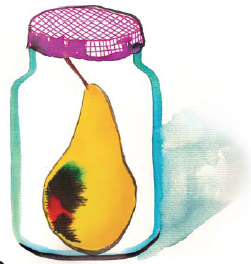
All matter is constantly, biochemically altering as enzymes already present in an organism break down from within, and microorganisms, namely beasties (but sometimes fungi too) settle in to eat and excrete, transforming a pear on your counter, a pile of leaves on the sidewalk, or an animal corpse into a lovely pile of biological goo or soil on the spot where the pear/leaves/corpse formerly rested. It is the end of the line in one way, but the beginning of another too. In other words, the snake eats her own tail. It’s nature’s nature.

Continue reading

THE ART OF THE LONG INFUSION

“Nut in Pocket”
By Nance Klehm

originally published in Arthur No. 31 (Oct 2008)

SEED TIME
Out there, out of doors, it’s between leaf and root time. It’s seed time. In autumn, plants put their efforts into reproducing themselves via seeds, both bare and covered with delicious flesh. Right now it’s time to collect these offspring—juicy apples and pears for cider, seeds to grow next year’s harvest with, and nuts and berries to make healing infusions from.

Here are some seeds to collect before winter settles in:

amaranth seeds
burdock burs
hackberry berries
juniper berries
kentucky coffeetree seeds
lamb’s quarters seeds
rose hips
queen anne’s lace
yellow dock seeds
sumac berries
hawthorn haws
aronia berries
hazelnuts
walnuts
grapes
pawpaws
persimmons
elderberries
pears and apples (for cider…)

Each of these seeds has practical medicinal uses, which you can research on your own. But if you want the full-on benefit from the plants you decide to put in your body, you have to allow the plants to help you.

Long infusions, which are like concentrates, are an easy way to allow plants to do their work on you. You don’t need to use bagged herbal tea or other plant materials from a store to make an infusion. Nor do you have to buy it in bulk. Instead, you can forage, gathering plants that grow wild in our cities.

When you collect from a plant, do it on a dry day. Try to find more than a few and collect from them in a way that won’t damage them. Don’t rip or tear; instead, make clean pinches or cuts with a knife, your fingers or some pruning shears. Take only a few leaves/seeds/fruits—no more than 10% of any individual plant—as it is important that the plant you are collecting from is allowed to thrive and regenerate itself, even if it is considered a ‘weed.’ Plants are generous by nature with what they have to offer. When you are done, thank the plant. Maybe give it a drink from your water bottle. Because that plant is going to help set your liver or blood or mental attitude right. And that is pretty generous of it.

HOT & COLD
When you return home, dry the plant material in paper bags. Drying medicinal weeds is all about allowing air to circulate around the leaves and protecting them from light. Paper bags are perfect for this as they will not trap moisture. Don’t put too much material in any single bag—remember, the air has to be allowed to circulate. I like hanging them upside down in small bundles in my dark and dry pantry, but that’s just me.

When you’re ready to make an infusion, grab a healthy (no pun intended) handful of dried herb and put it in a quart glass jar. Glass is a must—it is stable and neutral. Now pour hot water over it all, until full, and screw on the lid. You use a lid so the volatile oils stay in the brew instead of being released into the air. Of course, that aroma can be enjoyable and part of healing, and will have your home or office smelling terrific.

Let it brew for at least 30 minutes to as long as several hours. You will need to do some research here. Some plant materials have chemical compounds and minerals that require a longer steeping time to get them to release into water. Roots and bark are two examples of this, but certain leaves fit this bill too.

Also, some plants require cold water instead of hot water. Seeds and fruits, for example, require cold water. I also usually steep these longer, often setting my jar up the night before, having a nice sleep while my infusion makes itself and then waking the next day to drink it at room temperature or warming it up with a low flame (stay away from that microwave, yuck!) or even drinking it iced.

Continue reading