“R.L. Burnside at home in Independence, Mississippi, shot by Alan Lomax and crew in August, 1978.”
R.L. Burnside: Fat Possum Records

“R.L. Burnside at home in Independence, Mississippi, shot by Alan Lomax and crew in August, 1978.”
R.L. Burnside: Fat Possum Records
1
Anything cancels
everything out.
If each point
is a singularity,
thrusting all else
aside for good,
‘good’ takes the form
of a throng
of empty chairs.
Or it’s ants
swarming a bone.
2
I’m afraid
I don’t love
my mother
who’s dead
though I once –
what does ‘once’ mean? –
did love her .
So who’ll meet me over yonder?
I don’t recognize the place names.
Or I do, but they come
from televised wars.
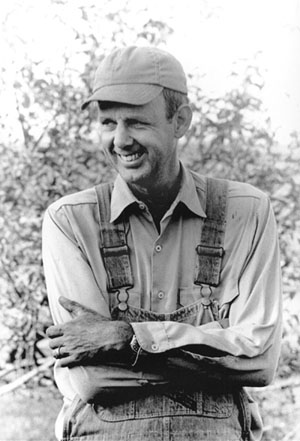
Duality II
by Wendell Berry
What can bring us past
this knowledge, so that you
will never wish our life
undone? For if ever you
wish it so, then I must wish
so too, and lovers yet unborn,
whom we are reaching toward
with love, will turn to this
page, and find it blank.

from : http://spectregroup.wordpress.com/2010/07/22/post-quake-architecture/
What’s Lying Around
http://earthship.com/haiti-disaster-relief.html
http://earthship.com/aboutus
Earthship n. 1. passive solar home made of natural and recycled materials 2. thermal mass construction for temperature stabilization. 3. renewable energy & integrated water systems make the Earthship an off-grid home with little to no utility bills.
Biotecture n. 1. the profession of designing buildings and environments with consideration for their sustainability. 2. A combination of biology and architecture.

Tires + Bottles + Dirt = House
http://blogs.wsj.com/developments/2010/07/20/solving-haitis-housing-problem-with-old-tires-bottles/
“Made from used tires, discarded bottles, cardboard, Styrofoam and other waste materials, Mr. Reynolds designs and builds these homes to be essentially energy self-sufficient. Earlier this month, Mr. Reynolds and two builders went to Haiti intending to survey the area to see how they could help. “There was nothing but tents, nothing but cleanup,” Mr. Reynolds says of what he saw in Port-au-Prince. Instead of just surveying the city, Mr. Reynolds and his team ended up building. A non-governmental organization called Grassroots United had gotten Haitian children to collect tires and plastic bottles from the tent camps. Mr. Reynolds himself had one arm in a cast because of rotator cuff surgery, and the two builders with him both got sick from the water and heat. “The three of us were worthless, pretty much,” he says. But 40 locals, ranging in age from four to 50, built an earthship in just four days under his guidance. “They had nothing to do. They were all eager to learn, and it turns out all the skills we could do, they could do.” The earthship, just 120 square feet, is made of 120 tires packed with dirt – such tires are the main building blocks of any earthship. Designed to be earthquake- and hurricane-resistant, the Haiti earthship is not completely finished. Mr. Reynolds plans to return in October to add plaster to the exterior and a screened-in veranda with flush toilets, as well as outfit it for solar energy and water collection. He hopes the home will be used as a prototype for more in Haiti, an example of what’s possible. Earthships could be a boon for a place like Haiti, says Mr. Reynolds, where even the capital city has little infrastructure like sewage or electricity. “The most substantial thing I saw down there was a plywood shack,” he says. When he returns to Haiti in October, he plans to find a site where he can build a small village of earthships. “It doesn’t have to be in the city because there is nothing in the city anyway,” he says of the lack of infrastructure. “These buildings would provide their own power, their own water, their own sewage (systems).” Most important, Mr. Reynolds says, is a sense of empowerment instilled in those who helped. “They built the building!” he says. “The real thing that shows it’s possible for them to do it is that they did it.””
See Also : Post-Tsunami
http://online.wsj.com/article/SB124510435308816591.html
Q: Where did you get the idea to use trash?
A: Walter Cronkite did a piece on clear-cutting timber in the Northwest. Even in 1969, he predicted massive deforestation would result in wood scarcity and would affect our oxygen levels, things that have become big issues today. Charles Kuralt did another piece on beer cans being thrown all over the streets and highways. So I started playing with beer cans and trying to make them into building blocks. It was a way to kill two birds with one stone. I later decided to try a different material and thought of the mountains of discarded tires that can be found everywhere. Pack them with dirt and they will store energy. Plus they’re strong and resilient, so I built an entire house out of them. I went on to add photovoltaic panels, windmills, water collection and onsite sewage treatment.
Q: And you went overseas with your ideas?
A: For a while… I went wherever there was a desire to use my ideas. After the earthquake and tsunami in 2004, an architect [from the Andaman Islands in the Indian Ocean] that lived right in the middle of the disaster saw our Web site and asked us to come. Their whole community was just wiped out. We paid the local kids to bring us bottles, and we built a house out of them that collects its own water. We gave the plans to the engineers.

Non-Biodegradables as Building Materials
http://earthship.com/materials/the-offgassing-non-issue-tires-are-hazardous-in-piles-not-earthships
http://earthship.com/materials/green-building-construction-materials
“A sustainable home must make use of indigenous materials, those occurring naturally in the local area. For thousands and thousands of years, housing was built from found materials such as rock, earth, reeds and logs. Today, there are mountains of by-products of our civilization that are already made and delivered to all areas. These are the natural resources of the modern humanity. These materials and the techniques for using them must be accessible to the common person in terms of price and skill required to use them. The less energy required to turn a found object into a usable building material the better. This concept is also called embodied-energy.
The Primary Building Block: Rammed-Earth encased in Steel Belted Rubber: The major structural building component of the Earthship is recycled automobile tires filled with compacted earth to form a rammed earth brick encased in steel belted rubber. This brick and the resulting bearing walls it forms is virtually indestructible.
Aluminum Cans and Glass/Plastic Bottles: These ‘little bricks’ are a great, simple way to build interior, non-structural walls. Aluminum can walls actually make very strong walls. The ‘little bricks’ create a cement-matrix that is very strong and very easy to build. Bottle can create beautiful colored walls that light shines through.
Resilient: Earthquakes are an issue in many parts of the world. Any method of building must relate to this potential threat. Since earthquakes involve a horizontal movement or shaking of the structure, this suggests a material with resilience or capacity to move with this shaking. Brittle materials like concrete, break, crack and fracture. The ideal structural material for dealing with this kind of situation would have a ‘rubbery’ or resilient quality to it. This kind of material would allow movement without failure.
Low specific skill requirements: If the materials for easily obtainable housing are to be truly accessibly to the common person they must, by their very nature, be easy to learn how to assemble. The nature of the materials for building an earthship must allow for assembling skills to be learned and mastered in a matter of hours, not year. These skills must be basic enough that specific talent is not required to learn them.”

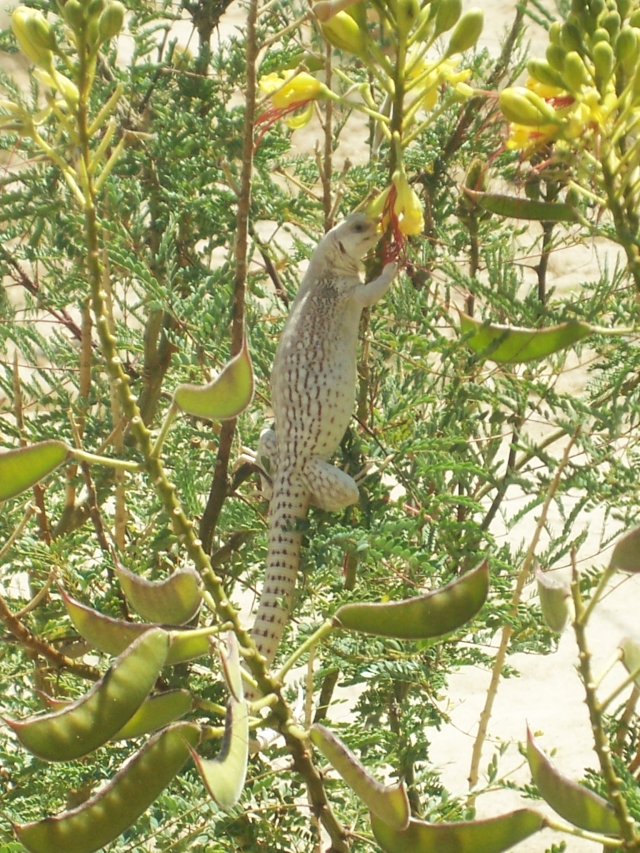

Michaela lives in Providence, RI where she makes comics, prints and posters. She is currently exhibiting work in Print Matter 8 at Giant Robot New York http://www.grny.net/. Island Mountain is a the beginning of a comic she created specially for Arthur readers. Maybe we’ll have some more to show you soon! In the meantime check out lots of awesome artwork and comics on her website. http://www.michaelacolette.com/
—Jason Leivian
If you find yourself in Southern California this Saturday and aren’t checking out the Arthur-presented, free, all-ages evening of psychish rock at Pappy & Harriet’s Palace in Pioneertown (info here), may we recommend your attendance at these two shows…

“L.A. RECORD has been a fan and supporter of DIY rock ‘n’ roll label Wild Records ever since thee mighty Norton Records (home of the Sonics, the Dictators, thee Midniters, etc.) re-released Luis and the Wildfires’ rock ‘n’ roll destroyer BRAIN JAIL. L.A. RECORD editor Chris Ziegler profiled Wild in the L.A. TIMES magazine last month in a story explaining how Wild bands are giants in Europe but relatively little known in their own hometown. Now for the first time ever in L.A., Wild will be presenting virtually its ENTIRE line-up at one $15 show! Fans of real-deal Sun Records rock ‘n’ roll, garage and even jump-blues will not be disappointed!” More info and advance tickets: Ticketweb
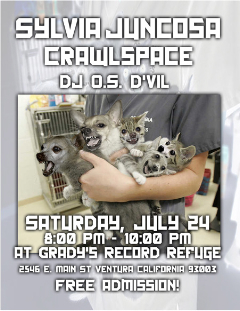
WHEN: Saturday, July 24, 8-10pm
WHERE: Grady’s Record Refuge, 2546 E. Main St.., Ventura, 805-648-5565
WHAT: Sylvia Juncosa, Crawlspace, and DJ OS D’vil
“LA’s legendary shred-mistress meets LA’s sedentary rubble-rousers in what is sure to be a very rockin’ evening! DJ OS D’vil between sets. Don’t miss! Sylvia plays @8pm, Crawlspace plays @9pm”
poster artwork by Pete Toms

Arthur Magazine is super psyched to welcome longtime office favorites (and ArthurFest ’05 alumni) Radar Brothers, Sleepy Sun and Assemble Head in Sunburst Sound to High Desert honkytonk Pappy and Harriet’s Palace in Pioneertown, California, near the Joshua Tree National Park.
The Radars—makers of “space cake/ice cream art rock” (their words)—are touring behind their sixth album, The Illustrated Garden, recently released by Merge Records. Gorgeous as always, it’s their first with a new rhythm section, which picks up the pace here and there from the usual Radars lope and burn. (You can listen to a stream of the album at the Merge site.)
Arrive early, as our friends from Los Angeles will go onstage at 8pm, as the sun goes down over the High Desert—in other words, right when and where they belong.
Around 10pm, Assemble Head in Sunburst Sound will take the stage. Here’s a warm, almost mournful slice of archetypal West Coast psychedelic guitar rock off When Sweet Sleep Returned, the Bay Area quartet’s second album, out via Tee Pee Records.
Download: “By the Rippling Green” – Assemble Head in Sunburst Sound (mp3)
Pappy and Harriet’s is located in Pioneertown, which is about 2.5 hours’ drive from Los Angeles. It is next to Yucca Valley. The Joshua Tree National Park is 20 minutes’ drive away. Daytime in the summer is bright and hot, but, because of the high elevation (4,000 feet), significant cooling occurs as the sun sets and the stars come out. This ain’t Palm Springs or Coachella—nights are really pleasant here. Especially if you bring some space cakes.
Bonus: there is almost zero cel phone reception in Pioneertown, which helps you to enjoy where you are…
For inexpensive motel and camping options right behind Pappy & Harriet’s, check out
and
 Arthur Magazine