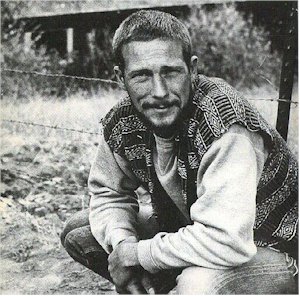
WHITE STRIPES, LATE 2000

Peppermint Twist: The White Stripes’ blues in the red zone

by Jay Babcock

Originally published December 28, 2000 in LAWeekly

“I don’t want to talk about that. It’s kind of a personal thing.”

Jack White of the White Stripes is on the phone from Detroit, and he’s not giving up the secret. I’ve got a lot of questions for him about the astonishing things I saw him do at Spaceland last week. Things like Dolly Parton’s “Jolene,” done straight-up, gritty and desperate. Slide runs on a weird semi-acoustic guitar during an “In My Time of Dying”-esque number that would make Jimmy Page swoon. Sweet, almost Kinks-y pop-tinged songs with titles like “You’re Pretty Good Looking” and “Apple Blossom.” A monumental cover of the country-blues standard “Death Letter” that was full of spit ’n’ bitterness. Vintage Cramps-like menace riffs slowed down to two-player bombastic blues, topped by gasp-worthy field hollers. This was honest, open-hearted music by someone with preternatural skills and an ambitious range — music that not once lapsed into strutting licksmanship or bonehead cave-stomp. Music as much evocation as invocation, a congeries of train whistles and assembly-line clangor, of the scent of buttercups and bacon grease.

It was a performance so good that I witnessed an act that’s usually beneath members of L.A.’s infamous bet-you-can’t-impress-me audiences: After the show, a dude stood at the foot of the deserted stage, thought for a few seconds, then furtively pocketed one of Jack’s spent guitar picks.

At Spaceland that night, something mighty powerful happened. The kind of thing that can get you thinking that deeper, potent forces are at play. I don’t know if this is the devil’s music, but I do know it’s something well beyond what a red guitar pick can reveal.

The White Stripes are Jack White, 25, on guitar, vocals and piano, and Pippi-tailed sister Meg, 26, on drums. They were born and raised in southwest Detroit in a Catholic family in a Catholic neighborhood. They are the youngest of 10 children. Jack is the seventh son.

Their latest album, De Stijl, was recorded on 8-track in the living room of the house Jack owns — he bought it from his parents when they moved out.

“It’s a wooden house, three floors,” says Jack. “I think it was built in 1911 — my whole life I grew up here. I was a drummer for a long time, from 11 on. About 15 or 16 I picked up the guitar — I used to play guitar with my friends after school. We’d record Bob Dylan songs on 4-tracks. When my parents moved out, they left a piano and I taught myself how to play it. I don’t really know what it is I’m doing. I’ve got this thumb-and-pinky technique and I just base things off of that. I know how I want it to sound.”

When did you start listening to blues music?

“Since I was 18. I’ve always loved blues, especially Son House. A few years ago, I didn’t have a lot of money to go out and buy records, so I only had, like, the major things — Robert Johnson, Muddy Waters. But some friends in Detroit started working at record stores where I could get discounts! So now I have a pretty nice collection. Blind Willie McTell I only got listening to last year. I fell in love with him immediately.”

The records a musician hears can change everything. Robert Johnson listened to phonographs by Leroy Carr and Lonnie Johnson. Son House listened to Charley Patton’s records, he once said, “before I ever started to play or think about trying to play.” House also learned from a Clarksdale musician named Lemon, who had in turn listened to [Dallas] Blind Lemon 78s. Dylan checked out records by “Bukka” White — who had learned from Patton’s records. It doesn’t sound like the White Stripes have been spending much time listening to the wheedle-ee beer-commercial boogie stuff that’s passed for mainstream blues in this country for the last 30 years.

“I’m not too big a fan of electric blues. I don’t like Buddy Guy, Stevie Ray Vaughan and all those guys. I like Muddy Waters and Howlin’ Wolf, that’s the only electrics that I think are any good. It’s a difficult line to walk, though, being white, and having had the influence of the Yardbirds and Cream and other bands in the ’60s that already did this kind of electric blues in a hard style. At least they knew they wanted to go where the dirt was, and go where that real feeling of soul was.”

White people have been doing blues in the last five years in “alternative” circles, but it always seems to be done with smarmy, ironic cool.

“An easier way for white people to be involved in the blues is to make it like it’s a parody of wild, bluesy antics. All this stuff with raunchiness and swearing and talking about naked girls and all that, I’m really turned off by that kind of stuff. Lyrics are real important to me. I wish music could be more like Cole Porter and different Broadway writers from back in the ’30s and ’40s — more melody and idea instead of just chords and lamenting about girls and cars or drugs. That’s really getting old.”

The album artwork for De Stijl — as well as for the White Stripes’ first album, in fact the band’s whole visual aesthetic — uses the red-white-black color scheme, which is the strongest color combination in alchemy and most of the West’s magical systems, as well as in voodoo.

“I’ve never heard about that one. I’ve heard of red, white and black being the most powerful combination. That peppermint candy, that’s where we got the band name from. I thought we’d call the album De Stijl because [the early 20th-century Dutch De Stijl art movement] broke the art form down to the simplest parts, and they had to abandon it because they couldn’t get it any simpler than it was. It was a question of how simple should the White Stripes be, what’s out of bounds for us, and what are we supposed to be doing with this band?”

The White Stripes do a lot of covers — Son House, Blind Willie McTell, Robert Johnson, Dylan, Joe Primrose’s “St. James Infirmary Blues” — and the new Sub Pop single is all choogle-n-yelp Captain Beefheart. Beefheart did the theme song (“Hard-Working Man”) for the Schrader brothers’ 1978 film Blue Collar, starring Richard Pryor, Yaphet Kotto and Harvey Keitel as beat-down workers at one of Blake’s “dark Satanic mills” — a Detroit auto plant. It’s a lost classic.

“I’ve heard the song from that movie, yeah. For the single we did ‘China Pig’ from Trout Mask Replica as an acoustic blues song, and on ‘Ashtray Heart’ and ‘Party of Special Things To Do’ we used different recording techniques, going straight into the board, with fuzz guitar and bass. That was the first time we’ve ever done that. When a song feels like it needs something, I just wanna have it there.

“We want to start working on our new album, I think it’s gonna be called White Blood Cells. We’d like it to be a double album, ’cause there’s enough material. I’m thinking about doing one disc at a real studio and one disc here at home. Just a bunch of country songs and a lot of piano songs that I’ve written.”

All of which are helpful answers. But the main question. It’s something like what people asked Robert Johnson when he came back from his trip to Arkansas, or what Pete Townshend wondered after he first saw Hendrix: How did Jack White get those sounds onstage?

“There’s a technique I have where I can put my pick in the palm of my hand and pluck with my free fingers. And I can pull it out whenever I want to switch it back to the pick to play loud again. It just came naturally, I dunno . . . ”

And what about those two guitars: the snazzy red-and-white electric one, and that acoustic guitar that looked like it was made out of paper?

“The red one is an Airline, a guitar that Montgomery Ward sold in the ’60s. And the other one is, yeah, it’s . . . um . . . Actually, I don’t want to talk about that. It’s kind of a personal thing.”

God is in the details, said architect Mies van der Rohe. And sometimes something else lurks there too.


NEW MUSIC: Reverend John Wilkins

Download: “You Can’t Hurry God” — Rev. John Wilkins (mp3)

Stream: [audio:http://www.arthurmag.com/magpie/wp-content/uploads/2011/02/01-You-Cant-Hurry-God.mp3|titles=”You Can’t Hurry God” – Rev. John Wilkins]

Gorgeous title track off Reverend John Wilkins’ debut album You Can’t Hurry God—which is otherwise pretty foot-stompin’ and hand-clappin’—just out on CD for 13 bucks from Mississippi’s Big Legal Mess Records, a label all music fans should be keeping an eye on. Big Legal Mess is an offshoot of Fat Possum Records, more in line with their ’90s/early ’00s commitment to releasing new albums by underheard local blues musicians like Junior Kimbrough, RL Burnside, Cedell Davis, T-Model Ford, and many others, that were free of the studio polish and cheesy showboating of most American blues recordings from the last three decades. This treasure of an album, produced by Amos Harvey and recorded by Fat Possum vet Bruce Watson, is very much in that ’90s Fat Possum vein.

There’s a lot to say about John Wilkins, and where this music comes from—go to the Big Legal Mess website (address below) for the full scoop—but real quick: Wilkins played guitar with O.V. Wright in the ’60s, as well as performing in local churches, parties and clubs, very much in the North Mississippi Hill Country country-blues style of his father Reverend Robert Wilkins, whose 1930s version of “That’s No Way To Get Along,” entitled “Prodigal Son,” was later covered by the Rolling Stones on Beggars Banquet. Since the early ’80s, Reverend John Wilkins has been pastor at Hunter’s Chapel Church in Tate County, Mississippi. Past members of this congregation include Fred McDowell and his wife Annie Mae, Other Turner and Napolian Strickland. Its singers recorded the album Amazing Grace: Mississippi Delta Spirituals By The Hunter’s Chapel Singers Of Como, Miss. for Testament Records in 1966.

You Can’t Hurry God sports a full bass-drums-guitar-Hammond lineup, with Reverend Wilkins’ daughters on backing vocals. Wonderful and hallelujah!

Tons more biographical, recording and ordering info: http://biglegalmessrecords.com/revwilkins.htm

A Poem from Carrie Fountain

Tonight the Neighbors Spell JESUS on Their Lawn in Christmas Lights
by Carrie Fountain

Walking by tonight, we’re reminded
there must’ve been a first time
for everything–one green shoot, a drop
of bluish water, a few red cells.
The letters wink at us as if they know
what they’re for, and we go by, saying
“Oh God, look at that,” as if we did, too.

Mornings, the lights are left on
to call very palely to the large,
uninterested sky. “We are all alone,”
they cry. And the sky answers back
by not moving an inch.

-From her latest book, Burn Lake

ANARCHISM IN MOTION

From the New York Times:

ALEXANDRIA, Egypt — At the first protest, on Jan. 25, Majd Mardini noticed that an ambulance could not get through the crowd of demonstrators. Outgoing, voluble and anything but shy, he began asking people to step aside, parting the crowd so the ambulance could get through.

From this small gesture, Mr. Mardini, 37, and several other men who stepped in to help discussed the fact that citizens would have to work together if the protests against the Egyptian government were going to proceed without tearing their city apart.

Out of these humble beginnings, the Popular Committee for the Protection of Properties and Organization of Traffic was born. “What we tried to do first was protect the electricity, water, gas — even the state-owned ones,” Mr. Mardini said, his voice a hoarse whisper after starting on the street at 8 in the morning on Sunday and finishing at 6:30 a.m. Monday, with a two-hour nap before hitting the road again. His stubble is gaining on his soul patch, and if he does not shave soon he will have a full beard.

Compared with the chaos in Cairo, Alexandria has seemed relatively orderly, though only relatively. In some neighborhoods the only building that has been destroyed is the police station, though there has been looting in others. The streets are filled with volunteers.

“We want to show the world that we can take care of our country, and we are doing it without the government or police,” said Khalid Toufik, 40, a dentist. He said that he also took shifts in his neighborhood watch, along with students and workers. “It doesn’t matter if one is a Muslim or a Christian,” he said, “we all have the same goal.”

“I am glad, that they are all on the streets to protect us from robbers,” said Hannan Selbi, 21, a student. “We are sure that it’s in the interest of the government to create chaos.”

Soon after Mr. Mardini’s first tentative steps, committee members were recognizable by the simple white armbands they wore, often just strips of fabric. They created logos and distributed fliers asking for more help from the public. Some wear photocopied pieces of paper on their chests like marathon runners’ numbers. Mr. Mardini wore a badge that read simply People’s Committee in red Arabic. But the way people walked up to him and began talking, it appeared he needed no introduction.

The civic enterprise is now divided into four branches: traffic, cleanup, protection and emergency response.

Though others refer to him as the head of the committee, Mr. Mardini said: “We don’t have a leader. This is our country, and we all have to protect it.”

Mr. Mardini, of Syrian and Egyptian descent, has lived in Alexandria for 15 years. He studied in Britain and may have unwittingly prepared himself for his current work when he was employed at the Dubai airport in passenger services. His English is quite good, but he kept forgetting the word “demonstration.” “I never actually had to use the word ‘demonstration,’ ” he said, describing himself as apolitical until he became fed up with the police and corruption and joined the protests.

In his black jacket, black jeans and black boots, Mr. Mardini, who cites Che Guevara as a hero, looks like he should be on a motorcycle, but he said that he walks to stay in touch with as many of the youths directing traffic at intersections and manning checkpoints as possible.

“We have water, juice, chocolate for the kids, because we don’t want to scare them,” he said. “Any problem, and we can call the military to handle the situation.”

In his neighborhood, Sidi Bishr, volunteers had caught and turned over 20 accused criminals to the military as they searched vehicles and checked registration papers against identity cards. The young men at the checkpoints look scary holding knives and heavy pipes but are polite, and despite being volunteers, professional.

Mr. Mardini said he was doing it for free elections. Asked what kind of government he wanted, he said he did not care, even if he disagreed with it, as long as it represented the people’s will.

But when those elections come, he said he would be back managing his small computer business and raising his three young sons, not running for office.

“Candidate? No, I don’t want that,” he said. “I’m a normal guy.”

Four Changes by Gary Snyder

Here is a fantastic essay by Gary Snyder that resonates with a lot of what this column is about. Considering this essay was penned in 1970 it now seems a strange combination of prophetic, slightly naive, and yet still challenging.  I recommend checking out more of Snyder’s non-fiction in his book A Place in Space.

Gary Snyder – Four Changes

I. POPULATION

Humanity is but a part of the fabric of life — dependent on the whole fabric for our very existence. As the most highly developed tool-using animal, we must recognize that the unknown evolutionary destinies of other life forms are to be respected, and act as gentle steward of the earth’s community of being.

There are now too many human beings, and the problem is growing rapidly worse. It is potentially disastrous not only for the human race but for most other life forms.

ACTION:

First, a massive effort to convince the governments and leaders of the world that the problem is severe. And that all talk about raising food-production — well intentioned as it is — simply puts off the only real solution: reduce population. Try to correct traditional cultural attitudes that tend to force women into childbearing — remove income tax deductions for more than two children above a specified income level, and scale it so that lower income families are forced to be careful too — or pay families to limit their number. Take a vigorous stand against the policy of the right-wing in the Catholic hierarchy and any other institutions that exercise an irresponsible social force in regard to this question; oppose and correct simple-minded boosterism that equates population growth with continuing prosperity. Work ceaselessly to have all political questions be seen in the light of this prime problem.

Share the pleasure of raising children widely, so that all need not directly reproduce to enter into this basic human experience. Adopt children. Let reverence for life and reverence for the feminine mean also a reverence for other species, and future human lives, most of which are threatened.

II. POLLUTION

Pollution is of two types. One sort results from an excess of some fairly ordinary substance — smoke, or solid waste — which cannot be absorbed or transmuted rapidly enough to offset its introduction into the environment, thus causing changes the great cycle is not prepared for. (All organisms have wastes and by-products, and these are indeed part of the total biosphere: energy is passed along the line and refracted in various ways. This is cycling, not pollution.) The other sort is powerful modern chemicals and poisons, products of recent technology, which the biosphere is totally unprepared for. Such is DDT and similar chlorinated hydrocarbons — nuclear testing fallout and nuclear waste — poison gas, germ and virus storage and leakage by the military; and chemicals which are put into food, whose long-range effects on human beings have not been properly tested.

The human race in the last century has allowed its production and scattering of wastes, by-products, and various chemicals to become excessive. Pollution is directly harming life on the planet: which is to say, ruining the environment for humanity itself. We are fouling our air and water, and living in noise and filth that no “animal” would tolerate, while advertising and politicians try to tell us “we’ve never had it so good.”

ACTION:

Effective international legislation banning DDT and related poisons — with no fooling around. The collusion of certain scientists with the pesticide industry and agribusiness in trying to block this legislation must be brought out in the open. Strong penalties for water and air pollution by industries. Phase out the internal combustion engine and fossil fuel use in general — more research into non-polluting energy sources; solar energy; the tides. No more kidding the public about atomic waste disposal: it’s impossible to do it safely, and nuclear-power generated electricity cannot be seriously planned for as it stands now.

Stop all germ and chemical warfare research and experimentation; work toward a hopefully safe disposal of the present staggering and stupid stockpiles of H-Bombs, cobalt gunk, germ and poison tanks and cans. Laws and sanctions against wasteful use of paper etc. which adds to the solid waste of cities. Develop methods of recycling solid urban waste. Recycling should be the basic principle behind all waste-disposal thinking. Thus, all bottles should be re-usable; old cans should make more cans; old newspapers back into newsprint again. Stronger controls and research on chemicals in foods. A shift toward a more varied and sensitive type of agriculture (more small scale and subsistence farming) would eliminate much of the call for blanket use of pesticides.

Use fewer cars. Cars pollute the air, and one or two people riding lonely in a huge car is an insult to intelligence and the Earth. Share rides, legalize hitch-hiking, and build hitch-hiker waiting stations along the highways. Also — a step toward the new world — walk more. Boycott bulky wasteful Sunday papers which use up trees. It’s all just advertising anyway, which is artificially inducing more mindless consumption.

Refuse paper bags at the store. Organize Park and Street clean-up festivals. Don’t work in any way for or with an industry which pollutes, and don’t be drafted into the military

III. CONSUMPTION

Everything that lives eats food, and is food in turn. This complicated animal, homo sapiens, rests on a vast and delicate pyramid of energy-transformations. To grossly use more than you need to destroy is biologically unsound. Most of the production and consumption of modern societies is not necessary or conducive to spiritual and cultural growth, let alone survival — and is behind much greed and envy, age old causes of social and international discord.

Humanity’s careless use of “resources” and our total dependence on certain substances such as fossil fuels (which are being exhausted, slowly but certainly), are having harmful effects on all the other members of the life-network. The complexity of modern technology renders whole populations vulnerable to the deadly consequences of the loss of any one key resource. Instead of independence we have over-dependence on life-giving substances such as water, which we squander. Many species of animals and birds have become extinct in the service of fashion fads — or fertilizer, or industrial oil. The soil is being used up; in fact humankind has become a locust-like blight on the planet that will leave a bare cupboard for its own children — all the while in a kind of Addict’s Dream of affluence, comfort, eternal progress — using the great achievements of science to produce software and swill.

Goals: Balance, harmony, humility — growth which is a mutual growth with Redwood and Quail (would you want your child to grow up without ever hearing a wild bird?) — to be a good member of the great community of living creatures.

ACTION:

It must be demonstrated ceaselessly that a continually “growing economy” is no longer healthy, but a Cancer. And that the criminal waste which is allowed in the name of competition must be halted totally with ferocious energy and decision. Economics must be seen as a small sub-branch of Ecology, and production/distribution/consumption handled by companies or unions with the same elegance and spareness one sees in nature. Soil banks; open space; phase out logging in most areas.

Plan consumer boycotts in response to dishonest and unnecessary products. Politically, blast both “Communist” and “Capitalist” myths of progress, and all crude notions of conquering or controlling nature.

The inherent aptness of communal life: where large tools are owned jointly and used efficiently. The power of renunciation: If enough Americans refused to buy a new car for one given year it would permanently alter the American economy. Recycle clothes and equipment. Support handicrafts — gardening, home skills, midwifery, herbs — all the things that can make us independent, beautiful and whole. Learn to break the habit of unnecessary possessions — a monkey on everybody’s back — but avoid a self-abnegating, anti-joyous self-righteousness. Simplicity is light, carefree, neat, and loving — not a self-punishing ascetic trip.

It is hard to even begin to gauge how much a complication of possessions, the notions of “my and mine,” stand between us and a true, clear, liberated way of seeing the world. To live lightly on the earth, to be aware and alive, to be free of egotism, to be in contact with plants and animals, starts with simple concrete acts. Simplicity and mindfulness in diet is a starting point for many people.

IV. TRANSFORMATION

We have it within our deepest powers not only to change ourselves but to change our culture. If we are to survive on earth we must transform the five-millennia-long urbanizing civilization tradition into a new ecologically-sensitive, harmony-oriented, wild-minded scientific/spiritual culture.

Goal: Nothing short of total transformation will do much good. What we envision is a planet on which the human population lives harmoniously and dynamically by employing a sophisticated and unobtrusive technology — in a world environment which is “left natural.”

Specific points in this vision:

  • A healthy and spare population of all races, much less in number than today.
  • Cultural and individual diversity, unified by a type of world tribal council. Division by natural and cultural boundaries rather than arbitrary political boundaries.
  • A technology of communication, education, and quiet transportation, land-use being sensitive to the properties of each region.
  • A basic cultural outlook and social organization that inhibits power and property-seeking, while encouraging exploration and challenge in things like music, meditation, mathematics, mountaineering, magic, and all other ways of authentic being-in-the-world. Women totally free and equal. A new kind of family — responsible, but more festive and relaxed — is implicit.

ACTION:

Since it doesn’t seem practical or even desirable to think that direct bloody force will achieve much, it would be best to consider this a continuing “revolution of consciousness” which will be won not by guns but by seizing the key images, myths, archetypes, eschatologies, and ecstasies so that life won’t seem worth living unless one is on the transforming energy’s side.

New schools, new classes, walking in the woods and cleaning up the streets. Create an awareness of “self” which includes the social and natural environment. Consider what specific language forms, symbolic systems, and social institutions constitute obstacles to ecological awareness. Let no one be ignorant of the facts of biology and related disciplines; bring up our children as part of the wild-life. Some communities can establish themselves in backwater rural areas and flourish — others maintain themselves in urban centers — and the two types work together, a two-way flow of experience, people, money, and home-grown vegetables.

Investigate new lifestyles. Work with political-minded people where it helps, hoping to enlarge their vision, and with people of all varieties of politics or thought at whatever point they become aware of environmental urgencies. Master the archaic and the primitive as models of basic nature-related cultures — as well as the most imaginative extensions of science — and build a community where these two vectors cross.

We are the first human beings in history to have all of humanity’s culture and previous experience available to our study — the first members of a civilized society since the early Neolithic to wish to look clearly into the eyes of the wild and see our selfhood, our family, there. We have these advantages to set off the obvious disadvantages of being as screwed up as we are — which gives us a fair chance to penetrate into some of the riddles of ourselves and the universe.

Illogical Comics #7 – Thomas Toye

Thomas Toye is an artist living in Patterson, NY. He and his brother print all kinds of stuff out of a shed in their backyard. They both run Portal Prints. They are watched over by Gumpster Pussy and the Great Cobra.

I came across his art on one of Mickey Z’s blog posts.  I thought it was cute that he did two versions of a silkscreen poster, a Sega Genesis version with red blood and a SNES version with green blood.

He has self published 8 issues of Illogical Comics so far.  We decided to share issue 7 with you since it is out of print and otherwise unavailable.  All other back issues are available for purchase on his blog.

A Poem from Alexandra Batson

Emphysema
by Alexandra Batson

I was nine
when I watched my mother cough until she couldn’t breath;
I never thought that would be me.
Now sixty-three,
my lungs collapse and my heart is worn out; a flower fighting to survive slow murderous frost.

I long for just one more cigarette –
I sit on the white bench stained with rust on the back porch and imagine the ember
blazing against the last cold bite of April air.
I would die to feed on the filtered tip, to feel the darkness tingle my tongue.

Instead oxygen is fed to me through a tank
like a mother feeds a child.

Husbands? Who needs ‘em? I had a few, I’d be lying if I said they didn’t mean anything.
I have all I need now – an oxygen tank, and a daughter who lives in my house, and brings me vodka.

I look up at my soon-to-be garden through an empty glass, vision distorted,
the glass used to be filled with a vodka tonic
this garden used to be filled with growth my
body used to be filled with life.

In a month, “Will I make it another month?” I ask out loud, to make sure I’m still alive. Tina and I will shop for flowers to fill the space the winter cold has taken hostage: Widow’s Tears, Bleeding Hearts, German Irises, Panseys

The world lives to see another spring, everything comes back to life.
Curtis, the little black boy from down the street will ride his bike to come chat
with me on the back porch.
Rebirth and youth come together while emphysema picks another victim to meet Death.
What about the grandchildren? I promised the oldest, when she was the only,
that I would live forever. She will remember this while she sits at my side…

Will anyone tell Curtis where I went?

Teaser and a bravo for Who Know What Tomorrow Might Bring

Here’s a two-minute tiny teaser:

[audio:http://www.arthurmag.com/magpie/wp-content/uploads/2011/01/WKWTMB-Teaser.mp3|titles=WKWTMB Teaser]

Here’s a bravo from Krist Novoselic (!): “I’ve downloaded this compilation and enjoy it very much. Well worth the money.”

This new 16-track compilation/mixtape is now available direct from Arthur to your internet connection as a pay-what-you-please digital download. It’s a collection of songs from recent (or forthcoming) releases that we’ve been digging lately that you might not have heard.

Here’s the track listing:

1. PURLING HISS – “Run From the City” (Woodsist Records)
2. TED LUCAS – “It’s So Easy (when you know what you’re doing)” (Om Records)
3. DOUG PAISLEY – “No One But You” (No Quarter Records)
4. SONNY AND THE SUNSETS – “Stranded” (Fat Possum Records)
5. TENNIS – “Take Me Somewhere” (Fat Possum Records)
6. THE INTELLIGENCE – “Like Like Like Like Like Like Like” (In the Red Records)
7. MARNIE STERN – “Building a Body” (Kill Rock Stars)
8. NOBUNNY – “Gone for Good” (Goner Records)
9. THE FLIPS – “I Just Don’t Know Where I Stand Anymore” (HoZac Records)
10. IDLE TIMES – “There You Go” (HoZac Records)
11. WOODS – “Suffering Season” (Woodsist Records)
12. JIM DICKINSON reads “The Congo” by Vachel Lindsay (Birdman Records)
13. LIMES – “Good Times” (Goner Records)
14. PETER STAMPFEL & BABY GRAMPS – “Bar Bar” (Red Newt Records)
15. THE GROWLERS – “Sea Lion Goth Blues” (Everloving)
16. LOWER DENS – “Truss Me” (Gnomonsong Records)

Compiled and sequenced by Jay Babcock
Cover photography by Kevin Bauman
Design by Stephanie Smith
Engineered by Bobby Tamkin at The Sound Ranch

Click one of the following links to purchase using a debit card, credit card or Paypal account. A link containing the “Who Knows What Tomorrow Might Bring” zip file (digital music files [192kpbs mp3s], artwork, credits sheet, etc.) will be emailed to you upon payment.

All proceeds help Arthur Magazine to resist economic pressures. Please pay what you can. (All entities on the desert food chain—okay, all price levels—receive the same download.)

BUY NOW – $4.20 – “Silver Cholla Cactus”
BUY NOW – $8.40 – “Pallid Winged Grasshopper”
BUY NOW – $16.80 – “White Tailed Antelope Squirrel”
BUY NOW – $42.00 – “Coyote”
BUY NOW – $100.80 – “Turkey Vulture”

Thank you kindly, hope the rest of you enjoy!

The Arthur Gang