METHANE-BASED

from : http://spectregroup.wordpress.com/2010/06/10/methane-based/

the Simplest Answer is Often Correct
http://nasa.gov/topics/solarsystem/features/titan20100603.html
What is Consuming Hydrogen and Acetylene on Titan?
“Two new papers based on data from NASA’s Cassini spacecraft scrutinize the complex chemical activity on the surface of Saturn’s moon Titan. While non-biological chemistry offers one possible explanation, some scientists believe these chemical signatures bolster the argument for a primitive, exotic form of life or precursor to life on Titan’s surface. According to one theory put forth by astrobiologists, the signatures fulfill two important conditions necessary for a hypothesized “methane-based life.” One key finding comes from a paper that shows hydrogen molecules flowing down through Titan’s atmosphere and disappearing at the surface. Another paper maps hydrocarbons on the Titan surface and finds a lack of acetylene. This lack of acetylene is important because that chemical would likely be the best energy source for a methane-based life on Titan. One interpretation of the acetylene data is that the hydrocarbon is being consumed as food. On Titan, where temperatures are around minus 290 degrees Fahrenheit, a methane-based organism would have to use a substance that is liquid as its medium for living processes, but not water itself. Water is frozen solid on Titan’s surface and much too cold to support life as we know it. The list of liquid candidates is very short: liquid methane and related molecules like ethane. While liquid water is widely regarded as necessary for life, there has been extensive speculation published in the scientific literature that this is not a strict requirement. In addition Cassini’s spectrometer detected an absence of water ice on the Titan surface, but loads of benzene and another material, which appears to be an organic compound that scientists have not yet been able to identify. “Titan’s atmospheric chemistry is cranking out organic compounds that rain down on the surface so fast that even as streams of liquid methane and ethane at the surface wash the organics off, the ice gets quickly covered again,” Clark said. “All that implies Titan is a dynamic place where organic chemistry is happening now.””

Methane-Based Life
http://dailygalaxy.com/my_weblog/2010/03/life-of-saturns-titan-could-it-be-methane-based.html
“Saturn’s giant moon Titan has water frozen as hard as granite and Great Lakes-sized bodies of fed by a complete liquid cycle, much like the hydrological cycle on Earth, but made up of methane and ethane rather than on water. Methane-natural gas-assumes an Earth-like role of water on Titan. It exists in enough abundance to condense into rain and form puddles on the surface within the range of temperatures that occur on Titan. “The ironic thing on Titan is that although it’s much colder than Earth, it actually acts like a super-hot Earth rather than a snowball Earth, because at Titan temperatures, methane is more volatile than water vapor is at Earth temperatures,” even going so far as to call Titan’s climate ‘tropical’, even though it sounds odd for a moon that orbits Saturn more than nine times farther from the sun than Earth. But on Titan, which rotates only once every 16 days, “the tropical weather system extends to the entire planet.””


The team found two types of bacteria living in Lost Hammer that feed off the methane and likely breathe sulfate.

Non-Hypothetical
http://sci-tech-today.com/story.xhtml?story_id=73778
Bacteria Suited for Life on Mars Discovered
“Researchers have discovered that methane-eating bacteria survive in a unique spring located on Axel Heiberg Island in Northern Canada. The Canadian spring’s sub-zero water is so salty it doesn’t freeze and it has no consumable oxygen in it. There are, however, big bubbles of methane that come to the surface, which had provoked the researchers’ curiosity as to whether the gas was being produced geologically or biologically and whether anything could survive in such an extreme hypersaline sub-zero environment. “We were surprised that we did not find methanogenic bacteria that produce methane at Lost Hammer,” Whyte said. “But we did find other very unique anaerobic organisms — organisms that survive by essentially eating methane and probably breathing sulfate instead of oxygen.””

Flammable Methane Rivers, Flammable Methane Rain
http://newscientist.com/article/dn6910-methane-rivers-and-rain-shape-titans-surface.html
“Hills made of ice and rivers carved by liquid methane mark the surface of Saturn’s giant moon. Scientists speculated long ago that some kind of hydrocarbon liquids might flow on Titan. They now know that the fluid that carved the moon’s rivers and channels is methane. “Titan is a flammable world.” But all the oxygen is trapped in ice. “That’s a good thing, or Titan would have exploded a long time ago.”


imagery from Galileo showing emission of gases
Adios Buenaventura

Buenaventura Press Closed

Without Buenaventura Press it’s possible I wouldn’t have been inspired to start Floating World Comics. Kramers Ergot (Buenaventura published volumes 6 and 7) was a game changer, and Buenaventura was there to pick up the ball and rewrite the rules. They published some of the best comics of the decade, from Vanessa Davis’ Spaniel Rage, to Jerry Moriarty’s Jack Survives, to Johnny Ryan’s Comic Book Holocausts, to new work by Matt Furie and Lisa Hanawalt. It’s sad to see them go but also interesting to reflect on how much comics have been changed since they started. It’s the Velvet Underground effect. Their books have inspired new comic scenes all over the world. I look forward to seeing the next generation rise from these ashes. — Jason Leivian

Alan Moore discusses breakthroughs

Personal apocalypse; acid, Canned Heat and Hyde Park, 1970; magic, transrationalism… and in the following parts, a bit about why the announced collaboration with Damon Albarn/Gorillaz for an opera about John Dee isn’t happening, after all… “It didn’t work out, shall we say.” But Moore’s libretto will be appearing in upcoming ish of the ever-intriguing Strange Attractor Journal

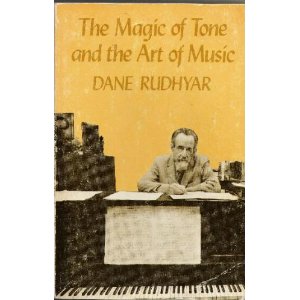
"Creative Man" (Dane Rudhyar, 1947)

“…Commercialism has completed the destruction of the spirit of devotion to Art, the spirit of real participation in the performance. The public comes to it in search of sensation rather than prepared to experience life as and through Art. The greatest need perhaps of the New Art is a new public; the greatest need of the Artists is a consciousness of their true relationship with their public. The Artist has ceased to consider himself a provider of Spiritual Food, an arouser of dynamic Power; he has ceased to consider his position an ‘office,’ himself as an officiant. He thinks but of expressing himself, but of releasing forces which he cannot handle within himself. Why such releasing? He does not care to consider. He does not face deliberately and willingly his spiritual duty to the Race. Thus he does not attempt to mould the Race, to gather around his work the proper public for this work. He sells his wares. He is no longer a Messenger of life, attracting by the very example of his own living, human beings to the Message of which he is the bearer.” (Dane Rudhyar, 1895-1985)

“So it is almost inevitable that over the next few years, as labor markets struggle, the humanities will continue their long slide. There already has been a nearly 50 percent drop in the portion of liberal arts majors over the past generation, and that trend is bound to accelerate. Once the stars of university life, humanities now play bit roles when prospective students take their college tours. The labs are more glamorous than the libraries.” (David Brooks, New York Times, June 7, 2010)

An Introduction to Arcanorium College

An Introduction to Arcanorium College

From The Chancellor, Peter James Carroll

Throughout history, Magical ideas have been debated and spread by word of mouth or by books. Despite that magical ideas have so often inspired tremendous human advances; such word of mouth transmission have frequently faced suppression or even burning at the stake. Books have had to be smuggled across borders and hidden from the eyes of inquisitors. The ideas of magic have usually threatened the status quo.

Nevertheless, so much of our knowledge has its roots in magic. Astrology gave rise to Astronomy and Cosmology, Alchemy underlies Metallurgy and Chemistry, Numerology gave birth to Mathematics and Cryptography, and both Medicine and Psychology owe a huge debt to Magical and Mystical ideas. Magical ideas have almost invariably underpinned the foundations of all the world’s religions. Miracles remain both the ultimate justification and the Achilles’ heel of all faith based systems.

So what does magical thought have to offer the 21st century? I suspect that it has a seminal role to play, much as it has for the last 25 centuries.

Like most technical advances, the internet took off as a military innovation to decentralize command, control, and intelligence in the event of nuclear attack, and then it got used by science as a means of exchanging papers by hypertext. Recently it has become dominated by commerce, entertainment, and pornography, which seem to be humanity’s greatest concerns at the time of writing. The military now has an alternative network.

However, whilst a relative state of anarchy and absence of censorship prevails on the internet, we will take advantage of it to explore what the magical perspective has to offer. Accordingly I have asked a number of the finest Adepts of my acquaintance over the last 3 decades to prepare material for discussion for a planet-wide discussion of The Magical Perspective.

The College provides a variety of discussion and workshop facilities which remain open throughout the year, plus specialist lecturers give courses which normally last about 6 weeks. Our academic year consists of six by six week semester periods with breaks of a week or two between each. There will usually be about three courses going on simultaneously during the semester periods. Members may participate in as many of these as they wish.

The range of topics currently embraces Sorcery, Divination, Tantra, Runes, Neurolinguistic Programming, Chaos Magic, Thelema, Enchantment and Results Magic, Alternative Physics, the History and Culture of Magic, and Magical Software Design. The College also features an extensive Library of Archives and Links, Common Room areas for debates and socialization, and workshop facilities with online magical tools which remain open between semesters.

Membership follows quickly after registration. Application must be at least 18 years of age. A modest annual registration fee is levied to cover the cost of maintaining the College and to discourage frivolous applicants, but no further expenses need be incurred by members…

More info: arcanoriumcollege.com

June 10, L.A.: "The Alchemy of Things Unknown" opening at Khastoo

This looks intriguing. Here’s the press release…

The Alchemy of Things Unknown (and a Visual Meditation on Transformation)
at Khastoo Gallery (7556 W. Sunset Blvd., Los Angeles, CA 90046 / (323) 472 6498 )

June 10 – July 31, 2010

Opening reception: Thursday, June 10th, 6pm – 8pm
With a film performance by Raha Raissnia, sound by Charles Curtis.

“After the cursing comes laughter, so that the soul is saved from the dead.”
– Carl Gustav Jung, The Red Book

This exhibition intends to examine and expose individual works of art in relation to theosophy, sacred tradition and devotional practice. From William Blake’s illuminated works of divine imagination to Carl Gustav Jung’s drawings of collective symbolic unconscious, the visual is undoubtedly an integral creative tool for reaching, exploring, animating and pervading the indefinable spaces beyond body and mind.

The artists in this exhibition, some more explicitly than others, sought after or seek spiritual truths through art making and employ an almost fervent and reverent experimentation to their practice, one that is both ritualistic and against the grain. This mystic behavior is what defines the show; the persistence on new and unorthodox visual experimentation reaches beyond the worldly sphere to heightened states of consciousness.

This exhibition is made possible, in part, by the generous contributions of William Breeze, Ordo Templi Orientis, Richard Metzger, John Contreras, Scott Hobbs, David Brafman, William Swofford Cameron, Hetty Maclise, and The Estate of Alfred Jensen.

More info:
http://www.khastoo.com

"We thought, 'Wouldn't it be great if you're playing a concert and you look out and everyone's a dog?'"

Laurie Anderson’s free concert for dogs…

From Associated Press:

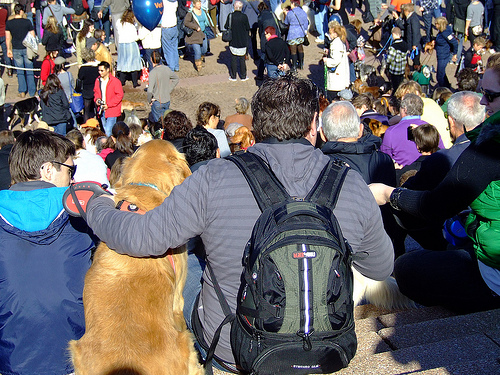
SYDNEY – …Laurie Anderson debuted her original “Music for Dogs” composition outside the Sydney Opera House on Saturday.

Hundreds of dogs and their owners bounced around as Anderson entertained them with 20 minutes of thumping beats, whale calls, whistles and a few high-pitched electronic sounds imperceptible to human ears.

“Let’s hear it from the medium dogs!” Anderson called out from the stage, as a few dogs yipped in return. “You can do better than that — come on mediums! Whoo! WHOOOOOO!”

The performance was part of the city’s Vivid art and music festival, which is being co-curated by Anderson and her husband, rock legend Lou Reed.

Anderson — who often plays music for her rat terrier Lollabelle — said the idea originated during a chat with cellist Yo-Yo Ma while the two were waiting backstage at a graduation ceremony.

“We thought, ‘Wouldn’t it be great if you’re playing a concert and you look out and everyone’s a dog?'” Anderson said. “So I thought if I ever get a chance to do that, I’m gonna do it. And today was it. So this is like a highlight of my life.”

The music had varying effects on the pooches, with a series of high-pitched whale sounds working several into a frenzy. Many wagged their tails and barked in apparent encouragement, while others stared at the stage with glazed eyes.

“Yo!” Anderson shouted from behind her keyboard. “Beautiful work, dogs!”

Not all of the pups were thrilled. Oliver, a Jack Russell terrier who tends to have issues with high-pitched noises, folded his ears back and exploded into a barrage of frantic barks as he lunged toward the stage, dragging owner Jacqui Bonner along with him.

Others appeared entranced. April Robinson giggled as her small dog Spot swiveled his head toward the stage, ears perked high.

“He loves it!” she squealed while Spot stared wide-eyed at Anderson.

The concert was originally billed as a performance for dogs’ ears only, and was going to be largely limited to electronic noises played at a frequency too high for human ears. But Anderson changed things up when she decided she wanted people to have some fun, too.

“We didn’t want to do something that humans couldn’t hear,” she said. “We brought the octaves down into our hearing range so we could all have the experience.”

Anderson, who turned 63 Saturday, said the crowd was one of the best-behaved she’s ever played for, and considered the whole event a howling success.

“That was the most amazing concert I’ve ever, ever gotten to give!” she said with a grin. “It’s really a dream.”

"It basically comes from love": John McLaughlin in conversation with Robert Fripp, 1982

Recently came across this piece, originally published in Musician No. 45, July, 1982…


Coffee and Chocolates for Two Guitars
by Robert Fripp

Weather shut England and delayed the jammed flight to Paris by three hours, so I landed at 1:30 pm. A mad taxi driver helped to make up the lost time by driving like a mad taxi driver (the only madder ones than Paris’ are in Milan). This guy only hit one car but we nearly collected a second-a young Parisian jumped the light so we took it kinda personal, sped up and aimed. He backed down when he sized the opposition. Then we drove through the No Entry sign to John’s street; his number was inconveniently at the wrong end. I got out at the front door of the quintessentially French apartment building, in what looked suspiciously like a pedestrian zone, a small back lane of one of my two favorite cities in the world.

John McLaughlin should need no introduction, but I suppose editorial etiquette necessitates an exposition of the highlights of his extraordinary career. John probably would be equally admired had there been no Mahavishnu Orchestra—his turn-of-the-decade work with Tony Williams’ LifetimeTony Williams’ Lifetime and his contributions to Miles Davis’ epochal Bitches Brew (known forever as the first fusion album) and A Tribute to Jack Johnson would have ensured that—but it is unquestionably the Mahavishnu Orchestra, with its jagged explosions of cosmic fire and odd-metered funkiness that remains McLaughlin’s best loved and most celebrated band. The Orchestra’s cheerful acceptance of rock ‘n’ roll and other non-jazz idioms never diluted the pyrotechnical excellence of its musicians, Billy Cobham, Jan Hammer, Jerry Goodman, and Rick Laird.

Both before and after Mahavishnu, McLaughlin quietly established his jazz credentials as a band leader in a more subdued but more personally expressive medium with such brilliant albums as Extrapolation, My Goals Beyond (recently rereleased), the underrated Johnny McLaughlin – Electric Guitarist, his collaboration-meditation with Carlos Santana Love Devotion Surrender and his latest, Belo Horizonte. McLaughlin is one of the very few guitarists who have consistently held my respect. Not all his music is my bag of bananas, but I’ve learned from all of it. And he’s still moving. The traditional arguments about technique—no feel, no music—don’t work with this man. My hunch is that the streams of notes don’t even come close to the tearing, ripping spray of what is trying to get out. Except sometimes.

I am warmly greeted by John and his attractive roommate (and the keyboard player in Belo Horizonte), Katia LeBeque. Katia and her sister are a classical music duo with a four-hands piano rendition of Gershwin’s Rhapsody in Blue selling modestly in Europe. John is a dapper dresser; today he’s in grey: flannels and pullover, shirt and tie not quite matching and just enough so that either you knew that he knew, or maybe he knew you didn’t. This subtlety of stressing the discontinuities, some exquisite Basque confectionery placed between us, the charm of the apartment—in mellowed pink, the ceiling veeing into the roof, spiral stairs—hinted at an intermezzo between the acts of flying. John is straightforward, friendly, and a gentleman. He speaks softly in a curious mix of Scottish, Indian, and French accents. We discussed the several occasions we had previously met for a time, and then I assumed a more journalistic role.

Fripp: Why do you think you became a musician?

McLaughlin: Happily, my mother was an amateur musician; she was a violinist and there was always music going on in the house. We got a gramophone one day, and someone had Beethoven’s Ninth, and on the last record, which is at the end of the symphony, there’s a vocal quartet in which the writing is extraordinary…the voices and the harmonies. I must have been about six or seven when I distinctly remember hearing it for the first time. I suppose that’s when I started to listen. Because when you’re young, you’re not paying attention. What do you know when you’re a kid? It was unbelievable, what it was doing to me was tremendous. I began to listen consciously to music and I started taking piano lessons when I was nine and went on to guitar at eleven…

Fripp: Did anything trigger the guitar in particular?

McLaughlin: Yeah, it was the D major chord. My brother showed it to me on the guitar, and I had this feeling of the guitar against my whole body…

Fripp: Did you have the F# on the bottom string?

McLaughlin: No, no. I was playing full-note chords. Eleven years old…what are you going to do? You have a small hand and, you know…What about you? Did you have a similar experience?

Fripp: I was ten. Definitely no sense of rhythm, and I spent a long time wonderting why it was that such an unlikely candidate would become a professional musician. But I knew right away that I was going to earn a living from it. Thinking about it over the years, I think music has a desire to be heard, such a kind of compulsion to be heard that it picks on unlikely candidates to give it voice.

McLaughlin: Yeah, I think that it basically comes from love. I mean, the kind of attraction that you have when you listen to it when you’re young. It’s inexplicable in a way.

Fripp: It’s a direct vocabulary…

McLaughlin: Exactly. Perhaps what you say is truth insofar as the music itself chooses, but it’s not a one-way street from music’s point of view. In a sense, you know, we fall in love with the muse and the muse falls in love with its prospective voices.

Fripp: The sentence I would add is that the music needed me to give it a voice, but in a feeble way. I needed music more, far more than music needed me.

McLaughlin: The most difficult thing, I think, in being a musician is to get out of the way.

Fripp: How do you get out of the way? Do you have specific techniques or regimens that you use? Can you just get yourself out of the way without thinking about it?

McLaughlin: If I’m thinking about it, I’m in the way. You have to forget, to forget everything. The minute we forget everything is when we’re finally found.

Continue reading