"The unemployment rate for the 16-to-24 age group reached a record 19.6 percent in April, double the national average."

From the May 31, 2010 New York Times, “Job Outlook for Teenagers Worsens”:

The unemployment rate for the 16-to-24 age group reached a record 19.6 percent in April, double the national average. For those job seekers, said Heidi Shierholz, an economist at the Economic Policy Institute, “This is the worst year, definitely since the early ’80s recession and very likely since the Great Depression.”

Or as researchers at Northeastern University, who issued a report in April on youth unemployment, put it, “The summer job outlook does not appear to be very bright in the absence of a massive new summer jobs intervention.”

Still, the poor numbers this year are not solely a symptom of the continued weak economy. For generations, government data shows, at least half of all teenagers were in the labor force in June, July and August. Starting this decade, though, the number of employed teenagers began to drop, and by 2009, less than a third of teenagers had jobs. This year, the number could fall below 30 percent.

That is a stark contrast to the job market for recent college graduates seeking full-time employment — a market where this is actually a slight increase from this time last year.

There is no simple explanation for the large drop-off in summer jobs this decade, though experts say that more high school students are choosing to volunteer and do internships to burnish their college applications. But the Northeastern researchers said a large number of youths had been left out of the work force and wanted to get back in.

The forecast for this summer is so dire that high school students took to the streets this year in Washington, Boston and New York to push lawmakers to come up with money for summer youth jobs programs as Congress did last year, allocating $1.2 billion for a program for low-income youths.

On Friday, the House passed a measure that included the summer jobs provision, though its future in the Senate this week is uncertain.

The Northeastern researchers estimated that an additional $1 billion federal infusion would create some 300,000 job slots this summer, barely putting a dent in the demand for jobs.

Read the whole article: New York Times

TONIGHT, Wed June 2, Brooklyn 8pm: $8 ALL-AGES BENEFIT for the victims of BP's oil catastrophe (co-presented by Arthur Magazine)

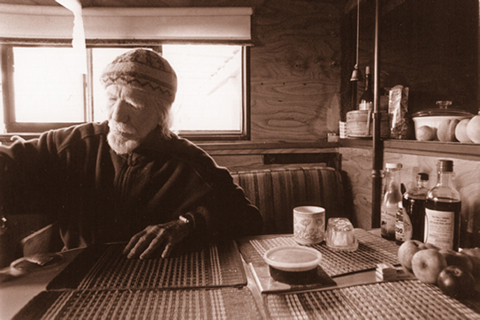
Bruce Vilanch still has his hair, as far as we know… but Willie Nelson cut his pigtails? Hmm. Well, every follicle counts in mopping up this BP mess.

Also counting is this emergency benefit concert going down tonight, WEDNESDAY, JUNE 2 at Shea Stadium in Brooklyn, pulled together with care and attention by Solid PR.
More info on all the bands, the cause and the beneficiaries follow.

Do Earth a solid and attend if you can. It will be CATHARTIC. Transport by bicycle is encouraged. T-shirts and posters will be available for benefit purchase, courtesy Enemy Ink.

And if you can’t attend, do your own. Cuz there are a whole lotta victims, and it’s gonna get even worse when the Gulf of Mexico catches fire, like the Cuyahoga used to in Cleveland

Who: Zs / Child Abuse / Controlled Bleeding / Cellular Chaos / DJ 1000TimesYes
What: A benefit to help the victims of the Gulf oil spill disaster
Where: Shea Stadium (20 Meadow St) Brooklyn, NY
When: Wednesday, June 2nd, 8pm
How much: $8
ALL AGES ALL AGES ALL AGES

Over the past few weeks, Solid PR has been saddened to hear of the devastation brought on by the recent oil spill disaster in the Gulf of Mexico, and have tried to think of ways we could help those affected and shine a brighter light on the situation as a whole.

It’s been reported that to date more that 30 million gallons of oil have spilled into the Gulf affecting an area of more than 4,900 square miles, and leaking at a rate speculated at being hundreds of thousands, to millions of barrels of oil per day. It’s also reported that there is a likelihood of the oil making its way into the “loop current” taking the spill from the Gulf, around the Florida Keys and Miami, and up the East Coast. Just today, yet another major news source reported the size of the slick to be that of a small country, currently threatening Louisiana’s fishing and coastal tourism industries, in addition to destroying its various nature reserves, and possibly affecting the state’s fragile marshes for decades.

We at Solid PR care about the delicate ecosystem of our planet and have decided to put together a last minute event to help raise awareness and help those affected by the Gulf oil spill disaster. All proceeds from this event will go to The Greater New Orleans Foundation put in place to offer assistance to those in need of help. If you’re interested in learning more, please visit http://www.gnof.org. More information on The Greater New Orleans Foundation below.

* This event is being presented in conjunction with our friends at Arthur Magazine.
Please feel free to spread the word and we look forward to seeing you.

About the bands:

Zs
Brooklyn’s veteran avant-garde band Zs have been causing quite a stir and raising a ton of eyebrows as of late with its brand of jazz-fusion, prog, industrial, punk, no wave, and drone stylings, most recently catching the attention of The NY Times who said of the band’s new album, “These pieces are all brain-benders; they’re conceptual art objects that set form and content against each other – like, say, a perfect birthday cake made out of sawdust, or a perfect hammer made out of bird feathers.” – Zs latest album, “New Slaves,” is out now on The Social Registry.
myspace.com/zstheband

Child Abuse
New York’s Child Abuse have just released their latest album, “Cut and Run,” on Lovepump United (currently home to the likes of Health and Clipd Beaks, and run in part by Genghis Tron frontman Mookie Singerman) to wild accolades. The band plays a completely twisted and manic form of industrial-strength grindcore and put on one of the most brutally unreal live shows around. Child Abuse is a definite must see each and every time they take the stage.
myspace.com/childabuse

Controlled Bleeding
Dating back to 1987, New York’s Controlled Bleeding are probably best known as being one of the earliest pioneers in the industrial and noise scenes, which included their appearance on the legendary Wax Trax “Black Box” box set alongside bands like Coil, Ministry, Clock DVA and others; although, as stated on the band’s Wikipedia page, “Controlled Bleeding’s sound is confusingly varied from album to album and has contained elements of dub, free jazz, noise, prog, sacred music, dark ambient, classical and musique concrète. To their own detriment, the group has never cared much about generating or maintaining an audience, but just sort of does whatever inspires them in the moment.” We have a feeling we’re all going to be treated to something extra special as the band is recently back together and performing as a duo for the first time.
myspace.com/controlledbleeding

Weasel Walter’s Cellular Chaos
Very little is known about the latest project from experimental hero Weasel Walter, dubbed Cellular Chaos, but if Mr. Walter is involved you can pretty much guarantee mind-blowing great times are in your future. The band has already performed alongside the likes of Liturgy and White Mice, and we hear the material shreds, so needless to say we’re very excited.

About The Greater New Orleans Foundation
The Greater New Orleans Foundation is one of the oldest and largest philanthropic organizations in the region. Every day, the Foundation joins other foundations, nonprofit organizations, community leaders, and government officials to address the needs of the community and build consensus for solutions. Together with our family of donors, the Foundation has invested over $100 million in our region since it opened its doors over 25 years ago to respond to community needs. The ultimate goal of the Greater New Orleans Foundation is to create a resilient, sustainable, vibrant community in which individuals and families flourish and in which the special character of the New Orleans region and its people is preserved, celebrated, and given the means to develop. We believe the Foundation has a critical role to play in attaining this goal, as community leader and convener; as champion of civil society; and as supporter of effective nonprofit leaders and organizations. By serving as a philanthropic partner to members of the donor community, we can help add meaning and value to the giving of individuals, families and institutions, increasing the effectiveness of their philanthropy and connecting them with the very best nonprofit work in Greater New Orleans and surrounding regions.
gnof.org

For more information, visit:
www.solidpr.com

NEW SPIRITUAL MUSIC: Daniel Higgs "Hoofprints on the Ceiling of Your Mind"

Above: Daniel Higgs – Waggon – Offenbach, Germany – 2009-10-20 | © Laurent Orseau

Stream: [audio:http://www.arthurmag.com/magpie/wp-content/uploads/2010/05/01-Hoofprints-On-The-Ceiling-Of-Your-Mind-Disc-1-.mp3%5D

Download: “Hoofprints On The Ceiling Of Your Mind”—Daniel Higgs (mp3) (twenty-nine mb)

From Say God, available now from Thrill Jockey on double vinyl and double cd. More info here.

Arthur Radio Transmission #19 w/ live set by The Beets

Above: This week’s collage with artwork by Matthew Volz

Swimming out from the Subterranean Melodic Fancifalities Exploratorium onto dry land, amorphous and amphibious flaneurs Hairy Painter and Ivy Meadows find the Newtown Radio garden has sprung us The Beets! We catch Brooklyn’s noble busybodies – not to be confused with The Beets, nor The Beats, The Beat, Beat, or The Beatles – in a brief hometown interlude betwixt their South North American (with German Measles) and North North American (with The Mountain Goats) tours, with just enough time for them to stomp us up some radio gold. The live set – abundant with garage harmonica, amp humping, flute solos, toy theremins, sing alongs, set-up banter, and a newly balanced gender distribution – is then followed by a bonus set of the band spinning recent favorites from the road into the wee small hours. Viva!

Stream: [audio:http://www.arthurmag.com/magpie/wp-content/uploads/2010/05/The-Beets-5-23-2010.mp3%5D

Download: Arthur Radio #19 w/ live set by The Beets 5-23-2010

A portion o’ playlist awaits beneath…
Continue reading

MALL FARMING

from : http://spectregroup.wordpress.com/2010/05/27/mall-farming/

Mall as Organic Greenhouse
http://deadmalls.com/
http://rentedspaces.com/2010/03/12/future-farmers-of-the-mall/
“Shopping malls may be on the brink of major reinvention and adaptive reuse…as farms. The Galleria Mall in Cleveland, Ohio is leading the way by growing organic food for mall patrons and local restaurants. The mall has transformed the lost retail space within its glass-top confines into a gigantic, organic-food greenhouse. The idea sprouted when the mall’s marketing and events coordinator Vicky Poole teamed up with Jack Hamilton, a business owner in the Galleria. Together they began operating Gardens Under Glass, a hydroponic garden in the Galleria at Erieview in downtown Cleveland. The project is funded by a $30,000 start-up grant from the Civic Innovation Lab. Gardens Under Glass at the Galleria will start with lettuce, spinach, peas, tomatoes, and herbs, and, if successful, add fruits, more vegetables and edible flowers. Food will be raised hydroponically, aquaponically and in organic soils through a combination of raised beds, vines and vertical structural supports. The plan also includes composting and using nutrient-rich waste from aquariums to nourish the plants. The duo hopes that the project will be a model for sustainable farming, while bringing additional visitors or curious onlookers to the mall’s stores. If successful and implemented at the mall on a larger scale, Gardens Under Glass could help extend Ohio’s short growing season and increase the amount of food dollars spent locally. It could also serve as a case study for communities struggling to figure out productive uses for otherwise underutilized or abandoned shopping malls. The adaptive reuse of the space is not without obstacles. For example, even though the glass ceiling provides ample light and the interior location significantly reduces possible pests, the mall was not built to be insulated and heated like a typical greenhouse. So, hardy crops need to be selected. Another challenge — and opportunity — is finding people to tend the mall’s gardens. For now, the workers will be volunteers, but one can easily imagine a future where farmers are hired to work inside the mall. It’s predicted that shopping malls and other “single use” structures will slowly disappear over the next thirty years. That could be the extreme pressure required for positive reinvention.”

Food Court
http://civicinnovationlab.org/newly_funded.aspx
http://web.me.com/gardensunderglass/gardensunderglass/Opportunities.html
http://blog.cleveland.com/metro/2010/02/galleria_has_gardens_now.html
“Millions in Cleveland have passed through the Galleria at Erieview, sun glinting on its barrel-shaped glass roof. But it took a nurseryman’s granddaughter to look up and think: This place looks like a giant greenhouse. Now Vicky Poole, the Galleria’s marketing and events director, who worked on her grandpa’s farm as a child, expects that by late spring or early summer, there will be fresh tomatoes for sale among the shops and galleries at the downtown Cleveland mall. Very fresh — as in vine-grown in bags and troughs hanging from steel stair banisters and ceiling beams in the shopping center that stretches between East Ninth and East 12th streets. “I know of no other urban garden in the country like this,” said Hamilton about Gardens Under Glass. Poole got the idea last year when she spotted a photo of dozens of plants growing on a two-story window grid in a New York cafe. “I said, ‘That’s our food court.'” They dream of hosting school groups and teams of volunteer urban gardeners eager to work beds of herbs and greens and vine systems raised hydroponically, aquaponically and in organic soils. On Thursday, Poole gave a presentation to the Cleveland chapter of the American Institute of Chemical Engineers, composed of professionals and students. “One of the students came up to me after and said, ‘Have you ever considered growing aereoponically?’ ” said Poole. “I invited him to come in and help me set up a system.”

Because of Ohio’s short growing season and the fact that the Galleria will not be heated to greenhouse temperatures, Poole is focusing on easily raised greens, herbs and tomatoes. That is good news for the manager of Sweetwater’s Cafe Sausalito, a long-established Galleria restaurant. He sells a lot of salads at lunchtime. “I’m very excited about the project,” said Chandrababu, who has already given a list of the herbs the restaurant uses to Poole. Michele and Mark Bishop, who operate Urban Organics from their Brunswick farm, will soon provide Sweet Peet, an organic mulch, as well as organic soils to Gardens Under Glass. Meanwhile, Poole, 57, and Hamilton, 44, have collected products from other such vendors to grow the plants they are purchasing with grant money. “So far, we haven’t had to pay for a thing,” said Poole, who is also searching for a composting system that would take care of scraps from the food court. Within two weeks, two portable 6-by-12-foot beds will be installed on the first floor of the Galleria, where passers-by will watch greens grow. “We’ll be propagating seeds for that this week,” said Poole. By summer, she expects lush banister mountings of greens and tomatoes. “It will be beautiful.”

Contact
Vicky Poole & Jack Hamilton
http://facebook.com/gardensunderglass
e-mail : gardensunderglass [at] yahoo

Seed Libraries
http://seedsavers.org/
http://www.ecologycenter.org/basil/
http://treehugger.com/files/2010/05/maker-faire-2010-seed-libraries-prove-tough-to-sprout.php
“SPROut is based on gardeners taking only the seeds they need for the plants they’re really going to grow (one doesn’t need a whole packet of seeds of broccoli when they only have room for 5 plants) and bringing back at least one seed of that type of plant. The more gardeners who participate, the more diverse the seed library becomes as members contribute the plants that they enjoy the most.

Co-operatives
http://www.ncba.coop/ncba/about-co-ops
http://www.forbes.com/2010/05/13/cooperatives-co-op-leadership-citizenship-ethisphere.html
“Many co-ops, from purchasing ones–people who pool together resources to buy in bulk–to agricultural ones, have reported positive or at least even sales through the recession. Why? Perhaps at least partly because the public has grown more hospitable to cooperative values. Cabot Creamery, an agricultural cooperative that sells dairy products nationally, hasn’t suffered during the recession. The people there believe it’s because of customers’ affinity for their brand, which stresses its ownership by farmers and its stewardship of the land. Most U.S. farmers don’t own the brands under which their goods are sold; they’re just atomized commodity producers. At Cabot each farmer can participate democratically in running the co-op. That and their shared ownership gives them great loyalty to it. Cabot’s strengths have kept it financially healthy even as households have cut back on spending.”


Farmland in Trinoma’s center lobby

SPADES & HOES & PLOWS by David Wrench

SPADES & HOES & PLOWS is the third solo album by Welsh producer, pianist and songwriter David Wrench, and was commissioned for Julian Cope’s Black Sheep by Cope and Fat Paul. The album presents four traditional folk themes from the British Isles, all performed in an eerily upfront and cadaverous manner, reminiscent of such late black metal as Furze, or perhaps a radical hybrid of Andrew King and an acoustic Khanate. But this is hardly a radical new course for Wrench, whose obsessions with cultural marginalia began as long ago as the late 80s with Nid Madagascar, his Welsh language acid house band. In 1997, Wrench released the turbulent BLOW WINDS BLOW, a dark set of songs influenced by Peter Hammill and John Cale. As the co-leader of the short-lived glam-sleaze duo Bubblegun, Wrench grabbed the ear of Julian Cope, whose particularly enjoyed the earnest electro-ballad ‘Beautiful Cunt’. David Wrench’s next solo album was THE ATOMIC WORLD OF TOMORROW, a horny melange of politically charged hi-energy synth pop. As an Engineer/Producer and Mixer, he has recently worked with Caribou, mixing most of the new album Swim, and previous album ANDORRA, engineering the Mercury prize nominated TWO SUNS by Bat For Lashes, WHEN THE HAAR ROLLS IN by James Yorkston, and producing the critically acclaimed albums GOODBYE FALKENBURG by Race Horses, GOTHIC ROAD by Jackie Leven, MIRACLE INN and BORE DA by Euros Childs, and THE QUICKENING by Kathryn Williams. He recently was awarded the BBC Radio Cymru C2 award of Producer of the Year for the 3rd time. He joined Julian Cope’s group Black Sheep in 2008, performing vocals on their 2009 album KISS MY SWEET APOCALYPSE 2.

More info: http://www.headheritage.co.uk/spades-and-hoes-and-plows/

Red Goo, Paper Cut-Outs and Conscious Digressions: filmmaker MIKE MILLS on Henry Jacobs’ handmade absurdism (Arthur, 2007)

Originally published in Arthur No. 26 (Sept 2007), as a companion piece to Joel Rose’s profile of Henry Jacobs

Red Goo, Paper Cut-Outs and Conscious Digressions: Mike Mills on HENRY JACOBS’ handmade absurdism

The Fine Art of Goofing Off
Three 30-minute episodes, 1971
Dir. Henry Jacobs
Available on The Weird World of Henry Jacobs DVD/CD (Important, 2004)

“Well, ‘goofing off’ is not really being what you’re really supposed to be doing.”
—boy’s voice in Episode 1

Each show begins with the same image: a gallon of paint thrown onto a black and white target. Red gooey paint, probably the worst tool for the job a target suggests—hitting the center and the center only, and all the competition, judgment, and evaluation therein. There’s no specificity, linearity, no ability to pierce—just thick gooey amorphous wrap-around-everything-non-solidness.

And so the game begins, The Fine Art of Goofing Off, or as I mistakenly remembered it “Taking Goofing Off Seriously.” Glad I’m not in charge of remembering, but there’s something to my mistake. Under all the home-made/hand-made qualities of the show, the claymation, construction paper cut-outs, the felt pen animation, and the rambling structure, under the constant humor and seeking of fun is a deceptively serious mission—to derail oneself from “what you’re supposed to be doing” (or as the genius of the kid mistakenly put it, “not being what you’re supposed to be doing”). Goofing off is the giving up of all things Western Civilization worked so hard to make soul crushing: progress, work, betterment of self, basing everything on the future and linear time and the always wanting that time to be faster and more convenient. Not to mention the primacy of the plot and drama at all costs in storytelling, the anything-less-than-success as shameful construct, and the sadness as failure feeling, and the exploitation of any and all substances you can gather to ease all the worries us European-descenters are so prone to.

Yes, this is what this kid show addresses. And this little confrontation was happening on public television, broadcast across the airwaves in 1971. It’s handmade absurdism was mixed in the airwaves with Nixon, the Vietnam war, with the Weather Underground bombing the U.S. Capitol in protest of the invasion of Laos, with Apollo 14 landing on the moon, with Willie Wonka’s theatrical release, with Evan Goolagong winning Wimbledon. The Fine Art of Goofing Off was pushing its gooey red paint into antennas, and the imaginations of children/adults.

We won’t dwell on how impossible this show would be now, but actually we will for just three small points: 1. The great contemporary tendency to protect children from everything would not allow something so “dangerous” and “adult” to be on the air. 2. Our cleaned-up “professionalized” visual culture would never allow so much felt-tip-pen animation out in the world. 3. The positivity-openheartedness-vulnerability expressed in this show would be mocked by most mainstream and counter-culture makers of today. Softness is so easily beaten-up. But this is a digression, and really, how scary is it to digress, to not know what you’re doing, or what’s going on, or what’s next, or worse, to not have anything next. But this is the space Goofing Off was trying to make, the rich and conscious digression from what we’re supposed to be doing.

The end of episode three has a thank you list which includes: Walt Disney, Sigmund Freud, Leonardo DaVinci, The Beatles, Ray Bradbury, Federico Fellini, Marcel Marceau, Rene Magritte, Dali, Picasso, Alfred E. Neuman, Krishnamurti, Marshall McLuhan, John and Yoko, D.T. Suzuki, Jacques Tati, Benito Mussolini, Oral Roberts, Buckminister Fuller, The Eames, Corita Kent, Charlie Chaplin, J.R.R. Tolkien. What a party that would be. And while this list is playfully implausible, part of the magic of the whole show, it’s funny to see how many of these people thought of a different world, or, our world differently. Freud, populizer of the unconscious as the real source of all our actions. Marceau, the mime that explained his art as “documentaries” of human behavior mirrored back to us so we can transform. Suzuki and Krishnamurti (still trying to finish those books). The utopian popular modernism of Fuller-Eames-Kent. Alfred E Neuman’s scope of satire, nothing was beyond Mad’s reach. Disney, the maker of “the happiest place on earth,” maybe the most powerful shaper of “childhood” for any of us born after the Fifties. Henry Jacobs, Bob Mcclay, and the community that made this were playing at influencing imaginations on this big scale while not falling for the seriousness that turns revelations into rules. They disguised their insurgency in felt-tip pen and construction paper cut-outs. The revolution will be funny, inventive, unprofessional, small-scale, for children/adults and televised.


Mike Mills is a filmmaker and graphic artist living in Los Angeles. His latest graphics can be seen at humans.jp

Friendship, as designed by a systems engineer

From “Faux Friendship” by William Deresiewicz:

They call them social-networking sites for a reason. Networking once meant something specific: climbing the jungle gym of professional contacts in order to advance your career. The truth is that [David] Hume and [Adam] Smith were not completely right. Commercial society did not eliminate the self-interested aspects of making friends and influencing people, it just changed the way we went about it. Now, in the age of the entrepreneurial self, even our closest relationships are being pressed onto this template. A recent book on the sociology of modern science describes a networking event at a West Coast university: “There do not seem to be any singletons—disconsolately lurking at the margins—nor do dyads appear, except fleetingly.” No solitude, no friendship, no space for refusal—the exact contemporary paradigm. At the same time, the author assures us, “face time” is valued in this “community” as a “high-bandwidth interaction,” offering “unusual capacity for interruption, repair, feedback and learning.” Actual human contact, rendered “unusual” and weighed by the values of a systems engineer. We have given our hearts to machines, and now we are turning into machines. The face of friendship in the new century.

Entire article: The Chronicle of Higher Education

“One Man Goofing: A visit with legendary Zen humorist Henry Jacobs” by Joel Rose (Arthur, 2007)

This article was originally published in Arthur No. 26 (2007), alongside an appreciation of Henry Jacobs’ The Fine Art of Goofing Off by artist/filmmaker Mike Mills. With the very welcome news that a) a new Henry Jacobs release is on the way, and b) the extremely highly recommended The Wide Weird World Of Henry Jacobs/The Fine Art Of Goofing Off cd/ & dvd set is finally back in print, we thought it was time to brush off the dust from this piece and offer it online for the first time. Here goes…

One Man Goofing: A visit with legendary Zen humorist Henry Jacobs
by Joel Rose

Once a week, Henry Jacobs drives to a community center near his house in Marin County, California to play ping-pong with his neighbors. But it’s ping-pong with a twist: Jacobs, a natural righty, insists on playing with his left hand. “I don’t know if I’m as good,” he says. “But I sure have a lot more fun, because I can surprise myself. With my right hand, I never surprise myself.”

The 82-year-old Jacobs has been playing left-handed ping-pong every Monday night for the last seven years. At first, he says, the neighbors were skeptical. But they’ve gradually come around and started playing with their off-hands, too. Jacobs recently started filming interviews with his fellow left-handed ping-pong players for a documentary. “I envision it mainly for the Third World,” he says, and for a second it’s hard to tell whether he’s joking or serious. “The motive is to try to clean up the rather ugly image [of Americans] in the last 50 years or so,” culminating with the present conflict in Iraq. Jacobs says he wants to offer an alternative view of American culture, and ping-pong is the perfect vehicle because of its popularity around the world. “The economics of it are pretty basic. A paddle which you could make out of banana leaf or whatever,” he deadpans. “It’s not about wiping out the planet. It’s about a simple activity called ping-pong.”

Jacobs sees the new documentary—which doesn’t yet have a title—as a kind of sequel to The Fine Art of Goofing Off, the series of animated television programs he worked on in the early 1970s. He says he’s filmed eight or nine interviews so far. Instead of shooting them head on, Jacobs had his subjects invent tasks to perform. (“One guy is fixing an electric lamp. Another guy is diddling around with some paintings.”) The point, says Jacobs, is they’re involved in what they’re doing, even while they’re talking out loud about ping-pong. “They’re not forced keep trying to remember all the points they wanted to make,” says Jacobs. “They can stop talking and get the screw-driver in the right place. It takes the pressure off to constantly be producing something useful and intelligent.”

And of course, “all this will be edited mercilessly. So you’ll only get little pieces of anything.” This, says Jacobs, was point of The Fine Art of Goofing Off: “Never do something so long as to bore someone.”

Continue reading