Love Workshop: Put On a Happy Face (courtesy WFMU)

WFMU’s Beware of the Blog: Love Workshop: Put On a Happy Face

Shooting out of Phoenix in 1976, The Love Workshop was a 15 minute radio comedy show on rock station KDKB. In it’s heyday, the station was a daring album-rock station that acquired a rabid fan base. Two station employees, Russ Shaw and Tod Carroll, created alter egos Vern and Craig, and then happily pushed the boundaries of good taste in the name of fun.

Derrick Bostrom’s Bostworld blog recently uncovered this lost radio gem, and he describes it thusly:

n one segment, they microwave then eat a small boy surrounded by an accompaniment of jawbreakers and new potatoes. In another, they seduce the recently widowed wife of a Vietnam vet with bourbon and Quaalude. In another, they punch out the subject of a public television “empowerment” program after calling her a stupid lesbian. In still another, they force a guest to try out an I.U.D made of pop tops and bottle caps attached to a dead scorpion.

The writing on the show was brilliant. Their sense of comic timing and attention to detail was impeccable. And in the climate of the mid-seventies, the scorched-earth nature of material didn’t raise as many eyebrows as it would now. But not everyone admired it, apparently. Just as the show was poised to expand into other markets, it was suddenly cancelled as part of a controversial housecleaning of KDKB management.

Russ, the voice talent, went on to real estate (and occasional voice over work, like the classic Discount Tire Company ad), while Vern, who produced and wrote the show, went on to National Lampoon and later wrote screenplays. Check out all the details at Bostworld’s intense Love Workshop page, including this interview with 1/2 of the Love Workship, Russ Shaw.

And thanks to Derrick also for allowing us to repost many of the Love Workshop shows. Unfortunately, there are no airdates available, so these aren’t in any real order. But still, here is a chance for you to check out their show for yourself:

Powered by ScribeFire.

14% of American adults are now on antidepressants

From the Oct 8, 02007 L.A. Times:

At therapy’s end
As depression eases, patients often want to stop treatment. But are they better? Will they relapse?

By Josh Fischman, Special to The Times

PEOPLE come into Andrew Leuchter’s office, saying they’re better, saying they want to stop. “Oh, gosh, it happens all the time,” says Leuchter, a psychiatrist at UCLA’s Semel Institute for Neuroscience and Human Behavior. “They say they feel OK, that they don’t need drugs or any other help, and that they’ve recovered. On one hand that’s very encouraging, but on the other hand we have to be very careful, because the cost of being wrong — if they are not ready — can be very high.”

These are not drug addicts saying they want to go cold turkey. They are not alcoholics. These are people with depression who want to stop treatment.

Nearly 20 million Americans suffer from some form of depression, according to the National Institute of Mental Health. About 14% of adults now take antidepressants — triple the percentage during the late 1980s — and most stay on them for at least six months.

A study published in this month’s issue of the Archives of General Psychiatry estimated that mental disorders, largely depression, cost Americans 1.3 billion days of normal activity each year. Many people with such illnesses say they feel hopeless, helpless, unable to face life, unable to find solutions to their problems, and at times think of killing themselves. Some of them do.

Depression treatment, such as antidepressant drugs Prozac or some version of talk therapy, can help about two-thirds of sufferers. But as it does, patients start to ask: Am I better? Am I cured? Can I stop my therapy?

The answers are not simple. Measuring depression is hampered because there’s no physical marker that indicates whether a patient has it or does not. Information about that comes from behavior, thoughts and feelings, which can’t be assessed as easily as, say, blood pressure.

Rating scales can show how far symptoms, such as trouble sleeping, have receded, but psychiatrists say they put even more stock in a patient’s overall mood: whether he or she takes joy from life again and whether the person thinks he or she is back to a pre-depression emotional state. That too can be difficult to determine.

Now results from large, long-term studies are beginning to paint a clearer picture of the course of depression and are sharpening decisions about stopping treatment. If a person has had just one episode of depression, the chances of a long-lasting recovery are fairly good. But those chances go down with every subsequent episode.

Once people reach their third episode, Leuchter says, “then we need to discuss ongoing maintenance therapy, even if they are feeling better. I don’t like to use the phrase ‘lifetime treatment’ with patients. But, essentially, that’s what we’re talking about.”

Continue reading

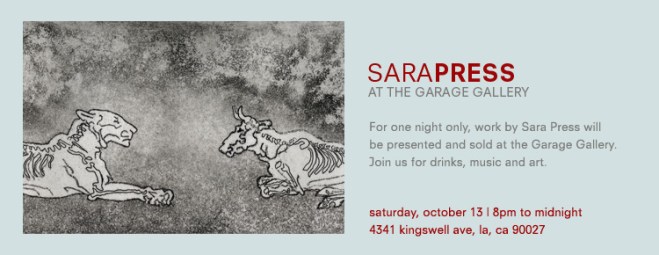
This Saturday in L.A.

sarapressinvite.jpg

from Sara Press:

“Dear L.A. area friends (and those who might be here visiting or in spirit) —

“I would love to see you next Saturday night at the Garage Gallery for
a one-night showing of my printmaking and book arts work!

“Join us for drinks, music, and animal-themed art.”

Saturday, October 13th
8 pm to midnight
4341 Kingswell Ave
LA, CA 90027

The Salvia divinorum User's Guide

From www.sagewisdom.org/usersguide.html:

“Salvia divinorum is an extraordinary visionary herb. It is not a recreational drug. It produces a profoundly introspective state of awareness that is useful for meditation, contemplation, and self-reflection. Its effects are unique and cannot be compared with the effects of other drugs. The effects of Salvia do not appeal to many people (young or old). The people who are most drawn to it are both mature and philosophically minded. Beware of inaccurate information. There are many unethical vendors who try to lure naive customers by portraying the effects of Salvia as more appealing than they are. The news media often sensationalizes stories about Salvia, exaggerating its effects, risks, and popularity. Much of what has appeared in the popular press is inaccurate and misleading. Salvia is not ‘legal pot.’ It is not ‘legal acid.’ It is not a substitute for any other drug. Before trying Salvia, it is important that you know about its effects, appropriate uses, and the potential risks associated with irresponsible use.

“Do NOT use Salvia until you have read through this guide. Salvia is unique. You cannot make assumptions about its effects based on experiences you may have had with other herbs or drugs. Salvia has much to offer: fascinating psychoactive effects, sensual enhancement, magical journeys, enchantment, apparent time travel, philosophical insights, spiritual experiences, and perhaps even healing and divination. It should not be used casually. It should always be used in a thoughtful, intelligent manner, and only by responsible adults that are of sound mind and clear intent.”

>>>READ THE ENTIRE GUIDE HERE.< <<

BRIAN ENO: Taking Parliament Square (by strategy)

This ban will not stop us
Parliament might want to forget about Iraq, but we will march on Monday to remind them

Brian Eno
Saturday October 6, 2007
The Guardian

Our leaders would undoubtedly be happy if we “moved on” from Iraq. They don’t want to talk about it any more: it was a dreadful blunder, and reflects little credit on any of them. Presumably this is why the question has hardly been debated in parliament. Although the majority of the public were always against the war, this was not reflected by their elected representatives. The government behaved in a way that was transparently undemocratic but the Conservatives won’t call them on it, for without their almost unanimous support the whole project couldn’t have happened.

But to conveniently forget Iraq now is to forfeit the only possible benefit the war might have: the chance to rethink the dysfunctional political system that got us into this hole. If we don’t, we risk digging a series of ever deeper holes. The Iraq adventure was justified as the planting of a beacon of democracy in the Middle East. Not only did it utterly fail at that, it also undermined our democracy. Appealing to our paranoia more than our vision, George Bush and Tony Blair obtained restrictions on freedoms that had taken centuries to evolve. They said these were necessary to ensure our security – a device used by authoritarian leaders since time immemorial.

Civil liberties never seem important until you need them. But by definition, that is the very time you won’t be able to get them, so they have to be in place in advance, like an insurance policy. In his book Defying Hitler, the historian Sebastian Hafner describes how Germany slid into nazism. At first people laughed at Hitler and played along with what seemed trivial changes in the law. For most Germans it was all rather abstract, and they were expecting things to return to normal when Hitler faded back into obscurity. Only he didn’t, and civil liberties were so compromised there was no way to stop him.

If we don’t stand up about Iraq then we tacitly sanction the next steps in this deadly experiment of democratic evangelism. Those will likely include an attack on Iran, a permanent force of occupation in Iraq (probably always the intention), the complete militarisation of the Middle East, and a revived nuclear future.

Stop the War Coalition planned a march from Trafalgar Square to Parliament Square on Monday – the day parliament resumes – to draw attention to the fact that a lot of us are still thinking about Iraq and to call for the immediate withdrawal of troops. Using an archaic law (the 1839 Metropolitan Police Act), that demonstration has now been banned. Now why would that be? Stop the War Coalition has organised dozens of such demonstrations, and as far as I know not one person has been hurt. So it can’t be public safety that’s at stake.

No, it’s the elephant in the room. This government wants to show itself as clean and new, and doesn’t want attention drawn to the elephant and the mess it has left on the carpet. So it invokes an old law, to shave a little more off the arrangements by which citizens communicate their feelings to government (a process, by the way, called democracy).

It would take courage for Gordon Brown to say: “This war was a catastrophe.” It would take even greater courage to admit that the seeds of the catastrophe were in its conception: it wasn’t a good idea badly done (the neocons’ last refuge – “Blame it all on Rumsfeld”), but a bad idea badly done. And it would take perhaps superhuman courage to say: “And now we should withdraw and pay reparations to this poor country.”

I don’t see it happening. But the demonstration will, legal or not: on Monday Tony Benn will lead us as we exercise our right to remind our representatives that, even if Iraq has slipped off their agenda, it’s still on ours. Please join us.

• Brian Eno is a musician. Stopwar.org.uk