
“YOU WERE ALWAYS HERE, WAITING FOR YOURSELF TO ARRIVE.” — GRANT MORRISON’S BUDDHIST XMEN.

By Cahal Milmo 09 February 2004 The Independent Global retailers, includingBritish supermarkets are, systematically inflicting poor working conditions Extra |
P-FUNK (Pedro Bell Interview) (From Roctober #11, 1994) No band has had more outrageous looks, costumes, masks, shows and grooves than Funkadelic and the other bands in their family (Parliament, Bootsy’s Rubber Band and the rest). And after George Clinton, the man in charge, no one else left a more indelible mark on the space age crazoid imagery associated with the best Funkadelic music than cover artist Pedro Bell. In 1971 Pedro was a young man kickin’ around college radio, hearing (and “borrowing”) the new records that were dropping, when Funkadelic’s “Maggot Brain” came in. As soon as he heard it he knew he’d found the sound and contacted the band. He did local promotion and flyers for them and when they came to their first Chicago show to a packed mixed race house at the University of Chicago’s Mandel Hall he met the band and was soon doing the colorful, freaky, futuristic raw, marker and mixed media collage-heavy cover art for albums for all the Funkadelic and George Clinton solo LP’s from “Cosmic Slop” (1973) to “R&B Skeletons in the Closet” (1986). In addition to that artwork, he’s tried his hand at animation, screenwriting, comic books and his own music. Currently of his many musical projects the one he’s most excited about is Tripzilla, which will be released as soon as a label can meet his artistic terms-a gatefold vinyl edition to display is artwork is a necessity! A score or so after that original historic P-Funk set, Roctober’s Jake Austen, Randy Lancelot and James Porter sat down in the cafeteria in Mandel Hall and talked about his glorious history. Without further ado, let’s let the Bell ring out… RETURN OF THE CRAZOID ROCTOBER BRINGS ARTIST EXTRAORDINAIRE PEDRO BELL BACK TO THE SCENE OF THE CRIME WHERE HE FIRST MET FUNKADELIC Jake Austen: This issue is going to be about masks. I want to hear about your space age masks and designs. Pedro Bell: Well, masks-masks…it’s funny you should mention masks, because the last Funkadelic album, called “By Way Of The Drum”, I designed a mask for that, it’s a combination of low tech and high tech. It’s never been released. “By Way Of The Drum” was actually the world’s oldest unpublished Funkadelic album. I started in 1982, I finished in 1989, it hasn’t been released yet. Randy Lancelot: There was a promotional 12″ that had the song “By Way of the Drum” released about 1989 or 90. PB: Yeah, but it was released without their permission. It was a standard (no art) sleeve. JA: Were you into comic books when you were a kid? PB: Well comics, I really couldn’t get a lock on those because my Mama wasn’t into having — she was one of those types where it’s said, “No comic books.” So, if I left a comic book in the living room or the kitchen, it got trashed, so I never did get that full lock on comics. But, uh, the first comic type thing that I was exposed to was some ads by this car customizer called Big Daddy Roth. And one of the artists he was bringing up was Robert Williams, who got his own reputation later. So at that point it was the underground comics. So my influences were the later ’50s and ’60s, Big Daddy Roth and Mouse… JA: Rat Fink. PB: Right, Big Daddy Roth designed him. I had teachers in high school told me my style was, uh, Salvador Dali, but I didn’t know anything about him until after, when I checked out to see what was happening with him. JA: But where are you coming up with these album covers? Were they telling you what to do? PB: No, I designed all that stuff. Pull out “R & B Skeletons In The Closet” (by George Clinton). Here’s a typical example of how something like this would come about. I heard from some of his Powertoylah boys about the George Clinton thing, and because they had these little legal battles between me and Capitol, he said why don’t you do this: they don’t never seem to complain about what you do on the back of the album, so why don’t you make the front real clean and safe, and you stretch out and go crazy on the back. So I said yeah, OK. So instead, I just said, I’ll make a parody of a clean album. And that I did. So once I made up what I was gonna do, I just went automatically. Clinton didn’t know anything about what I was doing until I was finished with it. When he did see — sometimes he doesn’t see the album until after its printed — but he did see, and his one and only thing he had done was the circle (around George’s face) was in color, and he had them do it in black and white. James Porter: I’m curious about the cover of “Hard Core Jollies” . . . is that woman giving birth? PB: (laughs) Awww, man… JP: That’s the way it looks to me. PB: Yeaaahhh . . . wellll. . . JP: This lady’s in the bathtub and she’s got this little child’s head pokin’ out. PB: Ah, that was merely an angle coincidence. That was something a lot more scandalous. JP: Really scared me when I was a child. JA: Did you ever do a straight comic book? PB: Ah, got one now. Actually it’s a compilation of what I call the Artusi Tribe. The main man for that is Seitu Haiden. It’s called, “Ain’t that a Blip” and it’s going to be published later on this year. JA: Are the album covers mostly painting, colored pencils . . . PB: Most of them are markers. Some of this is ink. I’ll use anything. JA: What do you have going through your mind when you turn these people into these space-age freakazoids? PB: Drugs! Drugs! Basically Funkadelic was like the alterego to Psychedelic. Funkadelic is like a Shock Theater, Thriller, Twilight Zone kinda tangent. You know, aliens make it always crazoid, out the box, I guess to sell more units. JP: There were a lot of rock bands at the time exploring the dark horror movie side of psychedelia, like Alice Cooper, but it seems like Funkadelic always had to go to the extreme. PB: That’s it, you know. I was following orders. RL: Did you ever get to tour, or did you just deal with them when they were in town? PB: I was asked a few times to tour, but I’d seen enough of that chitlin circuit back in the early days, and I didn’t see anything cool about going from town to town, strange food, strange wenches and all that. I’d go out to L.A. or Detroit to see a show, but a full-blown tour, there’s nothing fun to me about that. JA: George Clinton’s put out two really bad album covers in a row. What’s he going to do about it? PB: Well both of them were on Paisley (Park, Prince’s label). Well there was a concept, which I am going to reuse, for “The Cinderella Theory.” It was actually going to be a combination robotic-photographic combination. And George had done his part as far as the photography, and I’d done my part, and then somewhere in Paisley Park, the Purple One said no. JA: Now that Paisley Park has been dropped by Warner Brothers, where does that stuff stand now? PB: George doesn’t have any shortage of sources. Somebody in Detroit’s setting up some kind of label. Somebody said Uncle Jam’s label’s coming back. JA: Are you going to have input? PB: Parliament Funkadelic is the next one coming out by me. It’s called “Dope Dogs.” They have to use Parliament Funkadelic because they lost the right to use Funkadelic as a stand alone name. JP: Speakin’ of which, there was a real wack Funkadelic record that George Clinton had nothing to do with called “Connections and Disconnections.” PB: There was nothin wack about that! That album was Baaaad! JP: Sorry, sounds like Gap Band outtakes to me. Keep expecting someone to say, “Oops Upside Your Head.” PB: In relationship to “Electric Spanking of the War Babies” that was out at the time, no contest. The material on there was far superior to official Funkadelic. Tell you a little scandal that went down. When Warners found out about this they went to George’s face saying what’s this group claiming to share the name, and Clinton said, “Well there was some paper, but it was in a foreign country.” Well the foreign country turned out to be Canada. Which turns out trademarks and registrations Canada is not considered a foreign country. What happened when Warner Brothers found out that Clinton didn’t have any legal power, they said, we’re just gonna have a strong promotional campaign. So they came out with a 45 of this (with a sleeve) that was in color, which was kind of unusual, because 45s were starting to wind down as far as doing it like that. And Warner Brothers paid me to do an editorial about the other Funkadelic, and the title was, “Will the real Flunkadelic Shut the Flunk Up.” Then they turned around and did me a serious injustice on a little money matter, so to make up the difference I was approached by LAX records, the other boys, so they paid me to do the rebuttal to the editorial I wrote. RL: Did you use the same name? PB: No, I made up an alter ego, but they knew it was me. But like I said, compared to “Electric Spanking,” no comparison. Now there were some tracks that were not on “Electric Spanking” originally supposed to be a two-album set, but anyway, somebody was obviously on the pipe. I got a few tracks that weren’t on the final version, and they’re better than the garbage that was on that. They could have sent that straight to tje bargain bin. JA: You crack on the back of one of those George Clinton solo albums, “Use Pedro Bell art, or it’s straight to the bargain bin.” But all those solo Clinton’s went straight to the bargain bin. That’s where I got mine. JP: Even though they had “Atomic Dog.” PB: Last I heard — everyone and they mama know that bad boy went gold, but Capitol swears to this day . . JA: that “Atomic Dog” is not gold!?! They must just not want to pay you guys, thinking you’re more trouble than you’re worth. PB: “They” — Clinton and company — make that distinction. JA: Hey, it’s a family, you can’t . . . PB: Yes I can — disavow myself. Everyone knows I’m a mercenary. Once upon a time, yes, terrible as it may seem, KISS approached them as far as having me do something for them. RL: KISS approached Funkadelic and wanted you to do something? JA: And they wouldn’t let you? PB: Well, they gave them some story that they couldn’t find me or that I busy or something, and I don’t appreciate that. Cause they would’ve paid. In fact, I don’t know what they were tripping about, if they woulda hooked that up, oooohhhh… JP: P-Funk would have been bigger. PB: Right! JA: Those KISS people would start buying these records. Do you know what record it was? PB: No, but it was when they was still slammin’ on the charts. JP: Amongst Black kids, the same people who liked Parliament liked KISS, so if only it could have gone the other way around. PB: It would have helped. JA: Finally, what do you want to tell the people about Pedro Bell? PB: All the people in the Funk community who thought I’d faded into oblivion, that’s not true. I am in full effect. I will be doing things for all levels for ’95 — I will be all the way live. ROCTOBER #11/THE HISTORY OF MASKED ROCK N ROLL (FALL 1994) OFFSET, 52 PAGES, 2 COLOR HEAVY STOCK COVER BY SLINK MOSS CONTENTS: “PUNK’NHEAD” COMIC BY JAKE AUSTEN “ROCKIN ACE” COMIC BY SLINK MOSS WAYMON TIMBSDAYLE REVIEWS PREHISTORY OF MASKED ROCK N ROLL BY ANNA SCOTT AND JAKE AUSTEN BLACKFACE BY NAJUMA STEWART “THANK YOU MASK MAN” BY GENTLEMAN JOHN BATTLES LUCHA LIBRE, THE MASKED MARVEL, THE PHANTOM BY KING MERINUK (W/ ILLUSTRATION) MONSTER ROCK N ROLL SUNGLASSES AT NIGHT, MASKIN’ IN THE MOVIES, MASKIN’ IN THE 60S, 70S, 80S, 90S, RON HAYDOCK COMIC BY JOE CHIAPETTA BANANA SPLITS BY JAMES PORTER KIM FOWLEY INTERVIEW MASK MAN AND THE AGENTS COMIC BY JOHN PORCELINNO PEDRO “FUNKADELIC” BELL INTERVIEW GLAM, KISS BY BRIAN CALVIN BLOWFLY COMIC BY JASON MITCHELL ORION BY KELLY KUVO BLACK LONE RANGER, SKIMASK INTERVIEW MUMMIES/PHANTOM SURFERS INTERVIEW BLACK METAL BY THINNING-THE HERD FUCKERS COMIC BY JASON HELLER GOBLINS BONUS: ORIGAMI MASKED BAND TOY BY JEROME GAYNOR https://roctober.rocks/ |
COURTESY IAN CHRISTE!
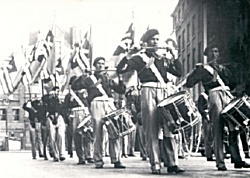
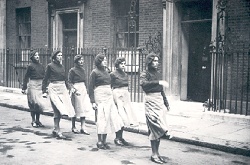
| A History of the Kibbo Kift On August 18, 1920, a group of young men met in a London hall to formalise the foundation of a new movement to be known as the Kindred of the Kibbo Kift. The aims of this movement had been written down two months earlier in the form of a seven-point Covenant, which ran as follows:Open Air Education for the Children. Camp Training and Naturecraft.
COURTESY: ANDREW M. |
| Human Rights in Israel/Palestine September 29, 2003 Jon Elmer, FromOccupiedPalestine.org: Jessica Montell, B’Tselem Elmer: In BTselems Montell: Apartheid has symbolic Elmer: Current figures estimate Montell: Our figures are Elmer: In North America the Montell: Beginning with Operation Elmer: Another concern about Montell: We have not been What Elmer: Does BTselem have Montell: Assassinations are Elmer: Because it is clearly Montell: Right, its political Elmer: Escalating from ticking Montell: Right. Elmer: The so-called separation Montell: Very few Palestinians Elmer: Can you describe the Montell: In most areas of Elmer: Predictions are always Montell: To the extent that —————— Jon Elmer is a freelance |
| FOOD WITCHES if you want your fate reversed don’t eat lard or liverwurst if you’re wretched if |
Bottom left corner: still from the notorious “Something for Joey” video.
Who put the kick back?
Post-gig interrogation:
Mercury Rev’s Jonathan Donahue
ORIGINALLY PUBLISHED IN FILLER MAGAZINE, APRIL, 1996
LIFE IS KNOTTED with frustrations and disappointments, but if you can wait them out and stay alive, you might just see some payoff after all. At least, that’s what the area’s Mercury Rev fans learned on a cold snowy night in December, when the Buffalo group finally brought its stoned soul picnic back to Toronto. After an embarrassment of riches early in the band’s career — with two Toronto appearances in the space of a year — Rev fans were then stymied at every turn. Dinosaur Jr’s J. Mascis threw them off a double bill at the last minute in April 1993, and Rev then mysteriously failed to make a scheduled bill-sharing with Luna in September of ’95.
So it was a much-changed group that finally did take the stage at Lee’s Palace, December 5 [1995]. Nominal frontman David Baker had been ousted, leaving songwriter and guitarist Jonathan Donahue to consolidate his position as the Mercury Rev alpha cat, and the group was touring behind a brand-new Bakerless LP, See You On the Other Side. The new model is still terminally trippy — check out the epic transcendence of “Racing the Tide,” which then segues effortlessly into an Eastern-flavored lovefest dubbed “Close Encounters of the Third Grade” — but more focussed and potent than ever before, boasting better use of Suzanne Thorpe’s lovely flute.
Live, the new Mercury Rev was a head-rattling affair, with a deafening wall of whitenoise giving way to barely perceptible shifts in tone and melody (and they did sneak in a solid cover of the Velvets’ “Ocean”). Throughout the set, looped images were projected onto the stage, filling up the wall behind the group with the repeated sight of an alien autopsy at one point, and two androgynes fucking at another. And the jovial Donahue waxed candidly about the group’s problems crossing the border: they were nailed for “contraband” merchandise (T-shirts to sell), for unspecified drug offenses, for “having an alias” (presumably thanks to guitarist Grasshopper), and, just for good measure, for firearm possession.
That last took our naively Canadian sensibilities a bit by surprise, though in retrospect, it shouldn’t have come as too much of a shock, since a close look at the back cover of See You On the Other Side reveals a morose Donahue contemplating his trusty revolver and its scattered lead cargo. In any event, Dave managed to nab the armed one for a quick interview after the set to probe the matter (among others) further. And although talking to two fanboys immediately after a show cannot be high on anyone’s list of things to do (unless, of course, he was actually having the time of his life, and his perpetually pained expression could be put down to a simple hemmorhoidal itch), Donahue was unfailingly courteous and straight-up.
The gospel is as follows: read, or yo’ soul be lost. [DW]
You mentioned during the show that you “hit for the cycle” at the border crossing today. What happened?
Basically, they got us, it just boils down to that.
Are a lot of fines coming your way?
Yeah, we paid a lot in fines to get here. We didn’t actually get thrown in the slammer, we had a choice to post fines.
What were they for?
Well, there were different fines for different things. There was a lot of problems — drugs and weapons and contraband. The shirts were illegal, and using an alias. It was just a big mess.
What were the drugs?
I don’t… I can’t really comment.
What were you doing bringing a gun into Canada?
We’ve had a lot of problems on tour recently, a lot of crazy people. I’ll use the word “stalker,” not like a sexual rapist, but just crazy people who went beyond the bounds of fan-band relationships and started doing things that were really sort of sinister and dangerous.
Is this the reality of touring in America today?
No, not generally, it’s a reality of where we live. We don’t live in the ghetto, we live in the mountains where there’s just lots of rednecks, and lots of crazy people, bears and coyotes. I carry a gun all the time, just to check my dog from getting eaten by a black bear or to protect me from walking down the wrong country lane some night and getting jumped by yahoo rednecks in pickup trucks.
Do you feel more paranoid in the countryside than the city?
Neither one… actually, both of them. It’s not like walking around with a Glock in your hand ready to pop somebody, it’s just the nature of the business where we live. Everyone in the bars carries them, there’s no real fistfights. If you have a problem with someone in a bar, the guns are drawn. It’s immediate, and it’s not something you either fuck around with or take very lightly.
This isn’t the first time you’ve had problems getting to a show in Toronto. You were supposed to play here about two months ago.
Right, we were supposed to play with Luna, but that had nothing to do with the border. It was more internal problems, trying to get people together. We just didn’t get it together in time for that.
What happened with the scrapped Dinosaur Jr. show you were supposed to play in ’93?
We quit the tour in Buffalo the night before, it just wasn’t working out so well.
Rumour had it that Mascis booted you guys.
No, I think what it was, was that J. [Mascis] thought somewhere along the line that we were a bit too weird for his audience. Along the same lines we started playing street hockey during sound checks. He didn’t like it, so we just left. He later came and saw us at Lollapalooza and apologized to us, and said he was having problems with his mind or something and didn’t want us playing games.
So, the ball hockey story is true?
Oh yeah, the hockey story is all true.
I take it you’re a sports fan… apparently you’re all Buffalo Bills fans.
Oh yeah…yeah, yeah.
The last time you played Toronto was the night after their third Super Bowl.
Yeah, that was their first one against Dallas when they got blown out, that would make sense. It was pretty much like the Bills were in the Super Bowl every year of our existence, the first four or five years.
I remember after the show David Baker was pretty bummed about it. Anyhow, he’s gone now, so can you tell us about the circumstances of David’s departure from the band?
It was personality. That’s what it boils down to. He didn’t write any music or anything, so it didn’t have anything to do musically. There was a lot of personality clashes between him and some of us, and it seemed like it wasn’t becoming productive to make music any more. It was too difficult.
At the Toronto shows, he’d leave the stage periodically to sit on the stage or go to the bar and drink while you guys played. Was this typical for him?
Yeah, he didn’t like us to play songs like “Car Wash Hair” or “Frittering” because he didn’t sing on them, so we didn’t play them very much, but when we did he’d go for a walk or something.
As far as the tension existing with David in the band, do you find it more comfortable now without him?
Yeah, musically it’s eased a lot, we’re able to play a lot of songs that people wanted to hear but he wouldn’t really allow us to play too much.
You totally ignored Boces tonight. Are there songs from the first two albums that you don’t feel comfortable playing now?
Boces was really painful to make. There was a lot of drug abuse and alcoholism, just a lot of tough times making it. I love it a lot, but it’s kind of like seeing an ex-girlfriend where you had a really painful breakup, and it’s just not easy going up to her every night and saying, “Hey, how’s it going, how’s your new boyfriend?” It’s one of those situations, so every once in a while we’ll choose something off there, but we really gotta work up to it.
Stories were built up in the British music press about the fistfights with the band. Was this exaggerated?
No, not in the early days, there was plenty of fights on stage, I was there in the middle of it. I threw punches, I got hit, y’know, whether or not we carried on like in the British press for weeks on end as if it was Mike Tyson versus Riddick Bowe, it wasn’t like that. But there was plenty of fights, plenty of drunken backstage brawls.
Do you recall the last one?
Probably when David was in the band, probably at some point during Boces. I don’t recall the specifics of it though.
What do you think of his newest project Shady?
[pause] … I listened to the album and thought he probably could have taken a little bit more time with it. But I was very proud of him for doing that, because he’d never written any music and didn’t know how to play any instruments, and so for him to jump right out of our band and do that was, I think, very good for him. It kept him mentally happy and took the pressure off from just being an ex-lead singer who didn’t do anything again.
Have you spoken with him since?
Yeah, he comes to see us when we play. He lives in Chicago, we actually saw him a week ago.
He has a lot of guests on his record, including members of Rollerskate Skinny. I’m interested in your opinion of them, given that some people have come to call them the British Mercury Rev.
They toured with us on their first tour ever, and I think they could’ve been the next great thing, they could’ve taken what Mercury Rev was doing and even gone a step further, they were really amazing. But they had internal problems and now Jimi Shields lives in Chicago. I don’t know whether the rest of the band is still together, but Jimi’s now got a band called Lotus Clown that’s kind of like Rollerskate Skinny but with a twist. They were just on tour with us up until last night.
Are the reports of Mercury Rev never rehearsing in the early days accurate?
Yeah, we never practiced up until the new record, because it was too difficult getting six people like us in the same room. You couldn’t even tune up before two people would be going at it, so you’d just go, “Fuck it, let’s go to Denny’s and eat and forget about it.”
Dave Fridmann’s not with you either. Did he start the tour? What’s his status?
The thing with Dave is that he writes and records with us, but he’s married and he has a kid, so he can’t do the six-week tours. We just record and write with him, but he has to stay in Fredonia, down in Buffalo, that’s where he lives. So he sticks around there and does a lot of studio work with a lot of other bands.
He just did some production work on the latest Flaming Lips record. You were formerly with the Flaming Lips…?
That’s right, for two records.
Why’d you leave?
Well, I started Mercury Rev first. Mercury Rev started recording Yrself Is Steam around 1987. I got about halfway through that and I’d known Wayne [Coyne] for a little bit. I just started writing with them, not really thinking that Mercury Rev was going to be doing anything more than making nature film soundtracks, so I did two records with the Flaming Lips, In a Priest-Driven Ambulance and Hit to Death in the Future Head. When I was in the band, they were very lean years, there wasn’t any money. We were making great records, but nobody was paying attention like there is now. Really, we had no money, so the success they have now is long overdue.
Will Dave Fridmann continue to be part of future Mercury Rev projects?
Oh yeah, yeah, he’s been in the band all along. We hired two friends of ours from Kingston to fill in for the live show on the bass and piano.
Kingston…?
Yeah, I’m from Kingston, it’s right on the Hudson River in the Catskill Mountains of upper-state New York.
How’d you end up in Buffalo?
Some of us went to college at UB [University of Buffalo] — some did, some didn’t — and that’s how we sort of met in Buffalo for four or five years in the mid-80s.
You were film students, right?
Grasshopper’s the film student-major-master.
One of your instructors was Robert Creeley?
That’s right. I took a lot of English classes with him, he’s a great poet and a big influence. I can’t remember if I ever even graduated… I don’t think I did, because I went out on tour and stuff like that. Creeley grew to become our — what’s the word? — mentor or something. We studied and we talked with him a lot just about different things, we were really in love with what he was doing and still are.
What other writers are you fond?
Antonin Artaud… I’ve read a lot of his stuff. I read the Bible pretty much daily, I stay up on that.
Any particular reasons for reading the Bible?
[Mimics a gospel/blues singer]
If ahh don’t read mah Bible, mah soul be lost, nobodies fault but mine.
A handful of you also took courses with Tony Conrad…
He was sort of Grasshopper’s teacher and mentor at UB. Grasshopper still stays in contact with Tony from time to time.
You said Grasshopper was the film student. Was he responsible for the “Something For Joey” video?
A lot of the ideas for that was David Baker’s. He was also a media studies student, and he and Grasshopper would do a lot of the ideas for the videos. That was what drove David and made him happy, doing the videos. I think that’s where he had the most prominence actually, at least in the band.
The video was slightly controversial. Did it receive any play on MTV?
It probably got the typical two or three plays on 120 Minutes, but where it got the most was on the Playboy channel. It was us and Aerosmith for, like, five months, ten times a day.
How did you score Ron Jeremy [porn star] for that video?
Through a stripper friend of ours. He wanted two hundred bucks, so that’s what we paid him.
How many videos have you made?
We’ve made five now, I think.
Are those available for purchase?
Not as of yet. We’d like to do a compilation in a couple of months after we’ve made a couple more videos for this record. We’ll probably put out the compilation just for fans, so they can buy the older stuff and get some weird footage.
You record your music on 35mm magnetic tape…?
Yeah, not all of it. The first album was recorded on it, on an old film machine we stole from the University at Fredonia. We did Yrself Is Steam on it, some of Boces, and a bit of See You on it, but it’s real old and doesn’t work very well. Songs like “Close Encounters” have it, and I think bits of “Racing the Tide” and “Empire State.”
You like the sound it produces?
Yeah, we do. It’s kind of broken, so it has a warbly effect to it that sounds like one of those bad tapes you put in your VCR. We’re just never able to reproduce these sounds on a regular fifty-thousand dollar machine.
Is it cheaper to record using the film machine?
No, no, you have to buy mag stock film and all this kind of crazy stuff. It’s actually more expensive.
How did the Dean Wareham collaboration come about? We read somewhere that you and Jimy Chambers did a little session work for Galaxie 500.
No, that’s not true. We’d met Dean just as Galaxie 500 had broken up, but never played with them. Grasshopper plays on a couple of Luna records and Jimy might’ve played on one, but Galaxie had broken up a few months before we got Dean to record on “Car Wash Hair” with us. I guess the relationship had started up with Grasshopper, he hooked up with Dean in New York somehow.
The North American release of See You On the Other Side came a half-year after the British release. Why such a long delay?
They had to bounce their production schedule so they’d be able to move some things around. By the time they get the tapes, they need another month-and-a-half to kick it out.
So, it wasn’t a problem with Columbia having other priorities or having trouble marketing you?
No… well, sometimes they prefer it. The big labels take a lot longer getting their wheels in motion, at least in America. In England it just flies out the door as soon as they get it.
The lyrics weren’t printed with the CD sleeve here like they were in Britain, either…
No, we were disappointed about that. They are in the U.K. and we asked them to do the same here, but they claimed time constraints and said they couldn’t put the lyrics in without postponing the September release date.
Why did you sign with Columbia, and how long is the deal?
Well, we first signed to Rough Trade for a week, then they went bankrupt. We then signed to Columbia for a four firm record deal, which presumably means they wouldn’t drop us for four records. Yrself Is Steam was the first, so we’ve still got another to do. I don’t know what we’ll do after it’s expired. They’ve never said they wanted to drop us, so we’ll have to wait and see.
Are you satisfied with how they’re handling you?
I don’t know any other labels that can offer us better. We had millions of offers, but we chose them because of the offer they gave us, and they had Bob Dylan and a lot of classic bands. They didn’t have any, like, Stone Temple Pilots at the time. We wanted to be around the Miles Davises and stuff. Columbia had this vast amount of archives, old photos and tapes and stuff that you can go through. We just took it for that, because it was like signing to a big library with a world of history of music.
You played with Bob Dylan. Was that through a label contact?
No, I don’t think so, that was through Bob’s manager or somebody like that.
I’ve seen that gig alternately mentioned as having taken place in England and Yale University…
No, it was definitely at Yale, we never played with him in England.
How did that show go?
Well, it was only the second or third show we’d ever played, so we didn’t know what we were doing. We didn’t even know what we were doing to record, so we just went out and slopped out some of the songs from Yrself Is Steam and made a lot of noise.
It was around this time that you played the Reading Festival in England.
Yeah, that’s right, that was about our third show. I think it went… we played a show in Fredonia at BJs Bar, which holds about ten people, that was our first show. Then Bob Dylan, then another small show, and the Reading Festival. I think that’s the order … two, three, four, something like that.
So, tell us what that was like-going from an audience of ten people, then straight to Bob Dylan and the Reading Festival for your first-ever batch of shows.
[pause] … It was pretty fucked up, man. You can imagine when some guy in England calls and says, “We want you to come over and play.” So you think, alright, we’re going to go over and play for twenty people. So we said, “What … for twenty people?” And he said, “Yeah, there’ll be twenty.” We said, “Well, that doesn’t seem like that’s going to make us any money, playing for twenty people.” He said, “No, not twenty. Twenty-thousand.” We’re like, “Whaddaya mean, twenty-thousand people!?! That record’s only been out three weeks, there’s not twenty-thousand people in the world who’re going to listen to Mercury Rev in three weeks. Who the fuck’s going to want to see us…?”
So we showed up, and there were tons of bands on the bill, and we went out and John Peel was with us. He announced us, and interviewed us and gave us some really good plugs. He was a big fan, and that sort of catapulted us.
How was the buzz in the U.K. stirred up about the band in the first place?
We went over and played a small club just before Reading and we rocked. There was about 400 people there, most of whom were apparently journalists.
Where did their interest originate?
Somebody had gotten a hold of Yrself Is Steam when we were making our nature soundtracks. A lot of those songs were just for nature film soundtracks.
What were these…? College projects?
No, just sitting around the house, doing what young bands do, dicking around recording to the television with some polar bears, y’know. Somebody got the tape and said that if we could do a few more songs that we might be able to put it out as an album. We didn’t really care, so we did a few more. He put them out in England, then we got a call saying we were getting some good reviews. It was all a bit of a joke to us because we didn’t know England from, like, y’know, Albany, or any of those papers. Even being in the Flaming Lips, they had not done anything there yet or broken in any way or had any British press, at least not to the extent that I had any idea or could understand what was happening to Mercury Rev.
Your albums all feature a real diversity of sounds — What sorts of music you were listening to growing up?
I imagine in high school it was probably everybody from AC/DC to the Clancy Brothers. My mom was right into Broadway shows, she has almost every Broadway show record ever made, so that’s certainly a factor … some old cowboy songs … nothing like alternative or punk rock, neither was a big factor. I loved the Sex Pistols, but beyond that I didn’t find much merit with a lot of what was going on at the time.
Growing up and hearing a lot of Broadway show tunes, I presume “Everlasting Arm” was pretty much your idea.
Yeah, I generally write most of the songs, not to say all of it, but the lyrics and the chords and the idea of the atmosphere are mine, then the rest of the band comes in and puts their stuff on top. I’ve always liked Broadway shows. I don’t mean like wimpy Andrew Lloyd Webber, but the older stuff like Camelot. I’ve always liked the way the songs were constructed, very intimate, lots of atmosphere, and they didn’t need, like, thirty-thousand Marshall stacks to make a really powerful song for people to remember. That’s always intrigued me, and that’s what we tried to do with the new record, to show people and prove to ourselves that you don’t need tons of distortion to have a really powerful song.
Do you see yourself writing more music for the visual arts?
We’ve done a lot of films already, but unfortunately, none of them are the size of Ace Ventura or Batman, so you don’t see our name in lights. But we do a lot of work for things like the BBC and nature films; we’ve done a bit of ambient stuff for some independent filmmakers, particularly European ones. We’ve done lots of obscure independent films, recorded for some of Howard Nelson’s films.
There were rumors about the new record having some of the songs recorded in Elvis’s jungle room at Graceland, and at Cape Canaveral…
We recorded some things at NASA but not in the jungle room, at least not that I’m aware of. Baker and Grasshopper would sometimes bring in some little cassettes with noises, and they may have been giggling in Elvis’s jungle room, but I’ve never been to Graceland so I wouldn’t know where that story came from.
Tell us about the recording at NASA.
I think at the time our interest was perked about some space stuff and we went down and they had these huge old warehouse laboratories, some of them they would barely use. We would just go in there, wandering away from the guided tours for about twenty minutes here and there, turn some shit on, and then with our little portable Mister Microphone we’d go, “Yah yah yah, blah blah blah, we’re in NASA, whoo hoo, we’re in NASA, isn’t this funny, ha ha ha ha!” Then they’d kick us out and we’d take the tour the next day and go do it again. We did it for three days — go and sit in some spacecraft, and Baker would sing and we’d all be banging with sticks on the sides. It was just stuff that little kids do, having fun.
Was any of the tape used on record?
Yeah, some of it was used on Boces, probably the “Space Control” segment [“Continuous Drunks and Blunders”] and probably one or two other things as well. I mean, it was never set up with drums or anything, it was just some weird odd effects that we’d try to wing and hope we’d get enough to tape before the tour guides said, “What the fuck are you guys doing?!?”
You played the Velvets “Ocean” tonight. Do you play any other covers with any regularity?
We used to do “Tears of Rage” by The Band. They live about ten miles away from us in the Catskills. We love them, they’re a big influence. The Velvets and The Band are two of our biggest influences. We used to do a cover of Miles Davis’ “Shhh/Peaceful” which went into “Very Sleepy Rivers.”
You mentioned before the possibility of a future video release. Before we wrap up, could you talk about plans for a new record?
Well, new Mercury Rev material is still slowly being worked on and is still a long way down the road, but we’ve got a side project called the Harmony Rockets. We’ve got a record that’s coming out in January. It was out for a week here and they recalled it for some artwork. It was what we played before we went on tonight. It’s mostly instrumental, but there’s some vocals on the beginning of it, it’s me singing. Basically, what it is, is most of Mercury Rev, that you see up there [on stage], were trying to kill a Friday night in the mountains, got really wasted and wandered down to a local Civil War bar. They needed an opening band, so we brought some old analog effects with us and some guitars and just whooped up whatever we were doing for, like, forty minutes and stopped. Somebody had a tape, figuring it was y’know, Mercury Rev, so they sorta recorded it shittily.
So, the entire album is live?
Yeah, just made up on the spot. There’s not a damn thing that was practiced ever, it just sort of happened, but it came out really nice. We like it, we were pretty surprised.
Okay, I guess we should let you go and pack your gear.
Yeah, definitely. Thanks, take care.
Text & photos copyright
D. Weiler and D. G.
Poe’s birthday celebrated with cognac and roses
BALTIMORE, Maryland (AP) — A small crowd gathered at the old church where Edgar Allan Poe lies buried, waiting, as they do every year, for the arrival of a stranger.
A black-clad man arrived just before 3 a.m. Saturday, marking the poet’s birthday with the traditional graveside tribute: three red roses and a half bottle of cognac. Only this and nothing more.
It is a rite that has been carried out by a mysterious stranger every January 19 since 1949, a century after Poe drank himself to death in Baltimore at age 40.
This year’s birthday tribute was normal and subdued compared with last year, when the stranger left a note that enraged Baltimore Ravens fans.
Borrowing from Poe’s “The Masque of the Red Death,” the note read: “The New York Giants. Darkness and decay and the big blue hold dominion over all.”
Red and blue are the Giants’ colors and “the big blue” is a team nickname. The Ravens, who take their name from Poe’s most famous poem, were to meet the Giants later that month in Super Bowl XXXV. The Baltimore team ended up winning the game handily.
“My own theory is that after the near riot that occurred last year when he insulted the Ravens, this guy thought, ‘I’ll just stick to the tradition and not cause the trouble,’ ” said Jeff Jerome, curator of the Edgar Allan Poe House and Museum. Jerome and 15 invited guests watched from inside the church.
Jerome said the man, wearing the traditional black hat and coat, with a white scarf concealing his face, appeared to be different from last year’s so-called Poe Toaster.
“He appeared to be a younger man,” said Jerome, who has witnessed the ritual for 20 years. “He stood erect and walked quickly.”
The man made no gestures, other than the secret signal he sends Jerome to show he is the genuine Poe Toaster, as he laid the tribute.
The three roses represent Poe, his wife and his Aunt Maria Clemm, who are buried beneath the newer monument. The cognac is a mystery, Jerome has said, because there are no prominent references to it in Poe’s works.
Poe was born in Boston and raised in Richmond, Virginia. But Baltimore, where he lived for several years during the 1830s, has adopted him as one of its own.
A prolific poet and critic, Poe wrote comedies, detective stories and tales of the macabre, including “The Fall of the House of Usher,” “The Pit and the Pendulum” and “The Tell-Tale Heart.”
TERENCE MCKENNA: “I assume that we’re all peasants, really. When was the last time you spent time with someone who formulates American foreign or social policy? I don’t spend time with those people. We’re rich peasants, of course. Don’t confuse poverty and peasantry. We’re rich peasants, but we’re totally in the dark, and the great ones come and go on their sleighs to and from the castle, and we mark their comings and going, but we have no idea what’s brewing up there. Every once in a while, they stumble, and we get LSD, or the Internet, or something else that slips through the cracks. It’s impossible to control history, and it’s wonderful that so many people are trying, because it makes for such an interesting game.”
(from a Jan 1998 interview with Charles Hayes, printed in Shaman’s Drum, Number 60)
FROM TODAY’S NEW YORK TIMES:
The Balance of Media Power Is Poised to Change
By THE NEW YORK TIMES
Regulation: F.C.C.’s Chief Seeks to Remove Restraints
If all goes according to plan, 2003 will be the most important year in the tenure of Michael K.
Powell as head of the Federal Communications Commission.
Mr. Powell
is preparing to unleash a set of proposals in the next few months that
will unshackle the nation’s largest broadcasters and telecommunications
conglomerates from restraints that have prevented them from growing. He
is armed with a broad deregulatory agenda and a series of court opinions
that have questioned or struck down some of the agency’s most pivotal and
longest-lasting rules.
“This
will be the most important year for these industries and the commission
since the passage of the Telecom Act seven years ago,” said Scott C. Cleland,
the chief executive of the Precursor Group and a regulatory analyst.
While
many of the issues before the commission defy traditional partisanship,
it does not hurt that with a Republican Congress, many of Mr. Powell’s
strongest allies now control the relevant House and Senate committees and
are likely to provide few political obstacles.
In the
Senate, for instance, Mr. Powell will now be reporting to a commerce committee
that will be headed by Senator John McCain, the Arizona Republican who
recruited him for the job of F.C.C. commissioner in 1997. Mr. McCain replaces
Senator Ernest F. Hollings, Democrat of South Carolina, who was Mr. Powell’s
toughest critic and opposed many of his proposals.
At
the top of Mr. Powell’s list is his plan to relax or eliminate a variety
of restraints on the size of the nation’s broadcasters and cable owners.
The
ownership rules that the commission will reconsider restrict a newspaper
from owning a TV station in the same city. They prevent a media conglomerate
from owning two television networks. They prohibit a network from owning
stations that broadcast to more than 35 percent of the nation’s homes.
They restrict a broadcaster from owning two television stations in the
same market unless there are at least eight other competitors. They restrict
a company from owning more than eight radio stations in the same market.
And they prohibit a cable company from owning more than 30 percent of the
national market.
The nation’s
largest local telephone companies are also expecting to win substantial
regulatory relief this year, from requirements that they provide the individual
elements of their networks to competitive startups at à la carte
prices that the phone companies say are too low.
“This
will be a very pro-investment deregulatory decision,” said Mr. Cleland.
“It will
encourage the incumbents to invest more because they won’t have to resell
at lower prices. It will be great news for the incumbents and for the Lucents,
Nortel and other equipment players. It will be very bad news for the competitors
who depend on regulatory subsidies.”
STEPHEN LABATON
Satellite Television:
DirecTV Is at Center of a Power Shift
After
more than two years of shifting alliances, ferocious bidding wars, and
behind-the-scenes regulatory wrangling, the media moguls Rupert Murdoch
and John C. Malone are within striking distance of acquiring control of
the satellite television service DirecTV, a strategic beachhead that could
alter the balance of power in the industry.
With
11 million subscribers, DirecTV, part of the Hughes Electronic subsidiary
of General Motors, is the largest satellite broadcaster in the country
and the third-largest pay television service. Federal regulators recently
blocked a deal for G.M. to sell Hughes to its satellite rival EchoStar
Communications as anticompetitive, leaving Mr. Murdoch, the chairman of
the News Corporation, and Mr. Malone, the chairman of the investment company
Liberty Media, as the two remaining contenders for the business, and they
are currently bidding as partners.
They
want DirecTV in part to help their channels. The News Corporation owns
Fox News and Fox Sports, and Liberty Media owns Starz Encore and has stakes
in Discovery, Court TV and others. A satellite system would guarantee distribution,
increasing the channels’ leverage in talks with the six major cable operators,
which together account for 80 percent of the nation’s cable subscribers.
Both
Mr. Murdoch and Mr. Malone are old hands at using control of major pay
television systems to benefit favored channels. Mr. Murdoch operates a
satellite network that stretches from Europe to Latin America.
Mr. Malone
built Liberty Media while he was the chief executive of Tele-Communications
Inc., which before it was sold was the largest cable company in the country;
he made investments in new pay television channels and then carried them
on his company’s systems. Owning a major satellite service would make it
easier for both companies to once again start channels, said Derek Baine,
an analyst at Kagan World Media.
But it
may mean stiff new competition for cable companies. Analysts say that the
News Corporation can use its size to lower expenses for satellite equipment,
possibly enabling the company to set lower prices, while using its channels
to promote DirecTV. Mr. Baine said both companies are likely to make DirecTV
into a much more vigorous competitor for cable customers.
And the
means of their competition could send ripples through the rest of the television
business: DirecTV is already wooing customers with digital video recorder
set-top boxes that make it easy for subscribers to record programs, view
them when they want, and fast-forward past the commercials. Analysts say
that they expect the new suitors to escalate the effort, an ominous possibility
for broadcasters who sell advertising.
DAVID D. KIRKPATRICK
Magazines: U.S. Publishers
Take Cues From the British
The success of Maxim, the
bawdy British-owned men’s magazine whose start-up in the United States
has taken young male readers by storm, has publishers on this side of the
Atlantic wondering whether the American way is the only way.
The British
publishing industry is a frantic place that is driven by the whims of the
newsstand 80 percent of magazines come from single-copy sales. American
publishers have noticed that British editors know their way around a newsstand
and have been hiring them in droves. With costs escalating and advertising
slumping, American publishers are looking to reduce the expense side of
producing a magazine and maximize its impact, a formula the British seem
to have down pat.
British
magazines may not be the qualitative equivalent of American publications,
but they seem to have no trouble meeting the needs of the magazine-buying
public. Many British magazines make do with staffs that are half the size
of their American counterparts and much less well compensated. And the
lack of layers means that there is no endless editing and reiterating of
copy until as some writers might claim most of the life dribbles out
of an idea.
“The
age of celebrity editors and monstrous staffing are over,” said Felix Dennis,
owner of Dennis Publishing. “This is not a business of sufficient margin
to permit that kind of excess.”
There
are some components of the British publishing environment that no one in
America is in a hurry to emulate. The dogfight at the newsstand has compelled
publishers to start using “cover-mounts,” a practice in which a consumer
product is “poly-bagged” with the magazine. That means British consumers
can get a garden trowel or a pair of thong underwear along with their magazine.
Underwear
aside, even the quintessentially American publisher, Time Inc., is looking
to IPC Media, the British publisher the company bought last year, for new
tactics.
“Postage
is going to continue to increase and paper will rise, so costs are going
to have to be looked at,” said Norman Pearlstine, the editor in chief of
Time Inc., a unit of AOL Time Warner. “There are differences in the market,
but I think there are some approaches in Britain that are worth thinking
about.”
DAVID CARR



 Arthur Magazine