FINAL GENE WEEN RECORDINGS

From the bandcamp site:

After 20+ years of near-fatal drug & alcohol abuse (thankfully culminating with intensive but successful rehab), AARON FREEMAN (aka Gene Ween) was left in a dire financial situation. All proceeds will go directly to Aaron, as he continues down the path toward creative freedom and personal health.

These demos represent the final writings and music of Gene Ween, before he departed and the inner FREEMAN emerged. On that note, we have received a two word personal statement from Aaron: “stay tuned.”

TOOOOO MUCH

THIS is the main gig of Arthur contributors Stewart Voegtlin and Beaver. Via 20 Buck Spin

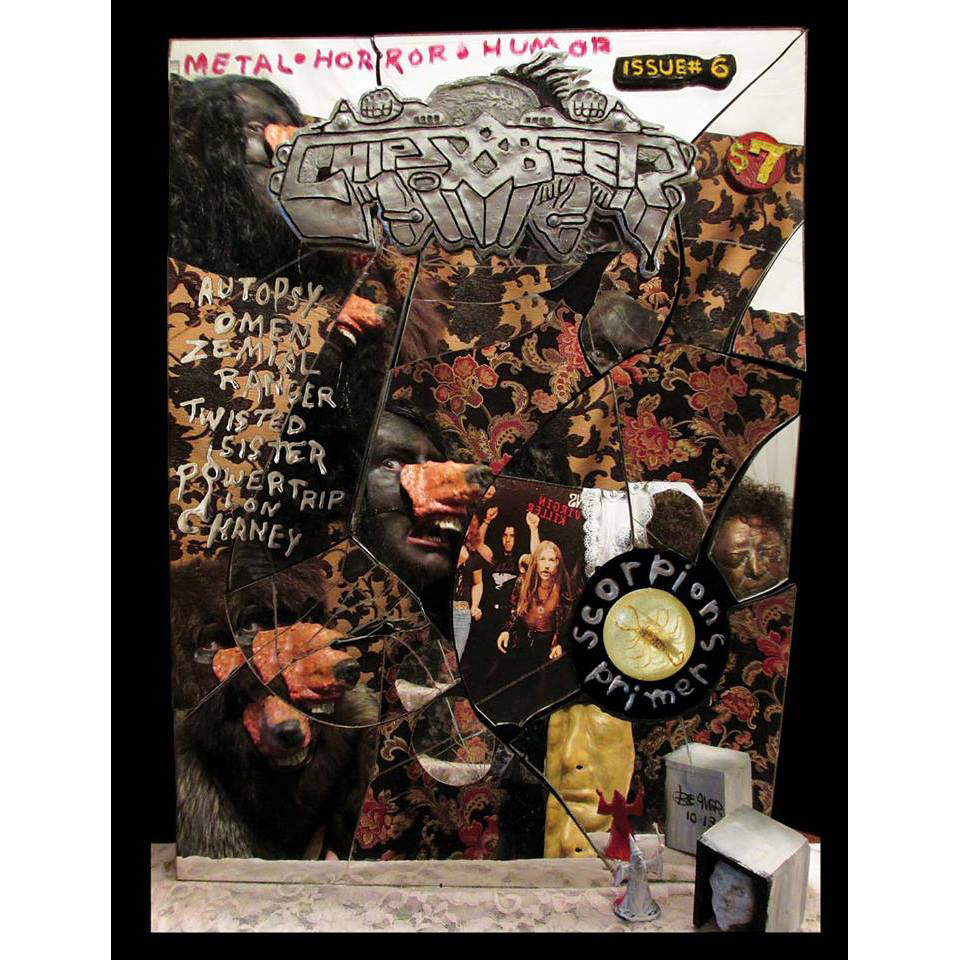
chipsandbeer6cover

CHIPS & BEER THE MAGAZINE #6
Read Dawn: Chips & Beer Mag #6 features all the usual bizarro features, rantings and ravings from the most loved writers in the Heavy Metal Pantheon. Interviews with some band called Scorpions, a guy named Uli Jon Roth and another named Herman Rarebell. Not to mention Omen, Ranger, Autopsy, Zemial, Power Trip, Chris Bruni, incredibly thoughtful think pieces on the Twisted Sister Documentary, The Bad News Bears, Lon Chaney and other panty wetting fun. 128 pages. Welcome to the party pal.

Chips & Beer the Magazine: The Tumblr

“When quiet, plot the bee’s course, mapping out the sweet spots”

A full-page piece of artwork by Leif Goldberg was published in Arthur No. 9, back in March 2004. Here’s a new interview with the great transnaturalist, now living in Vermont…

Q: Can you describe your artistic process a little?

A: It’s called the hollow frog approach. You hollow out a frog and then climb inside. Try to see through the frog’s eyes. Then, wish very hard that you were a salamander that could always change to bend around its surroundings. Listen like a deer, for shifting timbres from the earth’s crust, and move carefully. When quiet, plot the bee’s course, mapping out the sweet spots. Arrive like airplanes on autopilot at La Guardia. Dial it in and let it happen.

More at the Cinders Gallery blog

“Having racked up hundreds of billions of dollars in opaque Fed subsidies, U.S. banks have seen their collective stock price triple…”

Via Bill M. from Brooklyn…

From The Wall Street Journal

Andrew Huszar is a senior fellow at Rutgers Business School, is a former Morgan Stanley managing director. In 2009-10, he managed the Federal Reserve’s $1.25 trillion agency mortgage-backed security purchase program.

Confessions of a Quantitative Easer
We went on a bond-buying spree that was supposed to help Main Street. Instead, it was a feast for Wall Street.

by Andrew Huszar

Nov. 11, 2013 7:00 p.m. ET

I can only say: I’m sorry, America. As a former Federal Reserve official, I was responsible for executing the centerpiece program of the Fed’s first plunge into the bond-buying experiment known as quantitative easing. The central bank continues to spin QE as a tool for helping Main Street. But I’ve come to recognize the program for what it really is: the greatest backdoor Wall Street bailout of all time.

Five years ago this month, on Black Friday, the Fed launched an unprecedented shopping spree. By that point in the financial crisis, Congress had already passed legislation, the Troubled Asset Relief Program, to halt the U.S. banking system’s free fall. Beyond Wall Street, though, the economic pain was still soaring. In the last three months of 2008 alone, almost two million Americans would lose their jobs.

The Fed said it wanted to help—through a new program of massive bond purchases. There were secondary goals, but Chairman Ben Bernanke made clear that the Fed’s central motivation was to “affect credit conditions for households and businesses”: to drive down the cost of credit so that more Americans hurting from the tanking economy could use it to weather the downturn. For this reason, he originally called the initiative “credit easing.”

My part of the story began a few months later. Having been at the Fed for seven years, until early 2008, I was working on Wall Street in spring 2009 when I got an unexpected phone call. Would I come back to work on the Fed’s trading floor? The job: managing what was at the heart of QE’s bond-buying spree—a wild attempt to buy $1.25 trillion in mortgage bonds in 12 months. Incredibly, the Fed was calling to ask if I wanted to quarterback the largest economic stimulus in U.S. history.

This was a dream job, but I hesitated. And it wasn’t just nervousness about taking on such responsibility. I had left the Fed out of frustration, having witnessed the institution deferring more and more to Wall Street. Independence is at the heart of any central bank’s credibility, and I had come to believe that the Fed’s independence was eroding. Senior Fed officials, though, were publicly acknowledging mistakes and several of those officials emphasized to me how committed they were to a major Wall Street revamp. I could also see that they desperately needed reinforcements. I took a leap of faith.

Continue reading: The Wall Street Journal