Byron Coley and Thurston Moore’s “Bull Tongue” column from Arthur No. 28 (Mar 08)

BULL TONGUE
by Byron Coley and Thurston Moore

from Arthur No. 28 (Mar 2008) [available from The Arthur Store]

Stream: [audio:http://www.arthurmag.com/magpie/wp-content/uploads/2010/06/kites_final-worship.mp3|titles=KITES – “Final Worship”]

mp3: KITES – “Final Worship”

Load has dropped a warm totem pole of new guh, most notably the fourth release by Kites called Hallucination Guillotine/Final Worship. Kites is the solo sound art project of Providence, RI’s Chris Forgues and it’s always a curiosity where this cat is gonna land. His last record Peace Trials had him delivering weird and exciting song-based ideas but this one has him not so much returning to noise form as refining it in a more succinct, minimalist way. The musicality of harshness is achieved in an impressive and contemporary style. Kites is almost considered old school these days in the hyperventilating world of noise but this is some new juice.

Chris also has a new art book issued by Picturebox called Powr Mastrs which is the beginning of a ten-part journey through the mystic world of a psycho-warrior tribe. If you can dig the exquisite graphic vibe to his record covers then you definitely need to score this.

mp3: YELLOW SWANS—”Our Oases”

Stream: [audio:http://www.arthurmag.com/magpie/wp-content/uploads/2010/06/yellowswans_our_oases.mp3%5D

Another new one on Load is At All Ends by the West Coast duo Yellow Swans. It’s their most thought-harmonic release we’ve heard yet and we’ve heard quite a bit from these drone squall pups. Awesome sweet chug with considerable cooze flow.

mp3: MOUTHUS – “Your Far Church”

Stream: [audio:http://www.arthurmag.com/magpie/wp-content/uploads/2010/06/mouthus_yourfarchurch.mp3%5D

Yellow Swans had an early autumn tour in the USA with Brooklyn’s magnificent Mouthus. Mouthus we continually rave about and their fistful of self-released CDs have been always welcome whippets of dense blacked-out snort tone but we were fully unprepared for the royal roar of their new Load load Saw A Halo. The heaviest of rock-mind meltdown engorged by buckets of brain fry amp smoke and experimental percussion in its most NOW of sound states. Proves Mouthus to be at the forefront of what we hoped and desired from a post-Dead C factory of art/magic. Fucking sweet.

mp3: SWORD HEAVEN – “Town Hag”

stream: [audio:http://www.arthurmag.com/magpie/wp-content/uploads/2010/06/swordheaven_townhag.mp3%5D

The amazing slamming sweatpig sensuality of Ohio’s Sword Heaven is in full flesh-thumping effect on their Load LP Entrance. The duo of Aaron Hibbs and Mark Van Fleet is one of the most crucially hardcore bizarre performance ritual acts since post-early Swans intensity. Finally a record is out which captures their brutal meat. In excellent b+w gatefold sleeve.

“Television is great. The wind blows across a screen in Nevada, Utah. That’s great, greater than Utah…” – an excerpt from a collaboration between New York poet Ron Padgett with Larry Fagin and Bill Berkson, two contemporaries of Padgett’s and all three from a long history of late 20th-century St. Mark’s Poetry Project and beyond poetics. Continue reading

Byron Coley and Thurston Moore’s “Bull Tongue” column from Arthur No. 29 (May 08)

BULL TONGUE by Byron Coley & Thurston Moore
from Arthur Magazine No. 29/May 2008

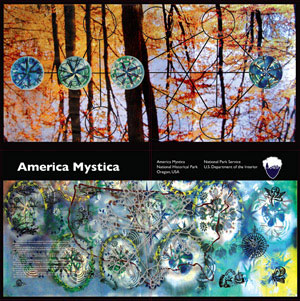
Great new LP by Portland’s Jackie O Motherfucker may be our fave of theirs since Flat Fixed. Spaced out jabber and float with casual/urgent female vocals that almost sounds like certain moments of Fuzzhead at their most blues-wailin’est, interspersed with Velvetsy volk moves, and overlaid with swabs of smoke & jibber. The slab is called Valley of Fire (Textile) and it’s a monster. Also out from Jackie O is a sprawling 2 LP set, America Mystica (Dirter Productions), which was recorded in various caverns by the touring version of the band between ’03 and ’05. Not quite as precise as Fire, but its muse is savagely crunchy in spots and never so formal as to appear in a bowtie. It’s an open-ended weasel-breeze you’ll happily sniff in the dark. Is that a hint of Genevieve’s crack?

This young noise dude from Minneapolis named Oskar Brummel who records and performs under the name COOKIE has released his first entry into the new new American underground noise forest and it is frothingly balls-deep: good n’ harsh. It’s a cassette titled Ambien Baby and it flows with both a FTW sexual undertow and a strange-feeling/shit-coming rejoice. There should also be rejoicing over the fact that Times New Viking seem to have made their transition to Matador with their instincts intact. Their new LP, Rip It Off, is as grumbly and fucked sounding as any blast of gas they emanated previously. Nice thick vinyl, too. I guess you need it heavy when the needle’s buried this far into the red. Smooth!

It has taken a little while to actually read the bastards, but now that it’s done, there can be little doubt that Process Books has blasted out three of the best music-related tomes to have been peeped by our tired eyes. First up is the new edition of John Sinclair’s Guitar Army. This is one of the great American underground revolutionary texts—ecstatic, naïve, visionary and powerful. It’s a little funny to glom a few of the embedded old (old) school opinions about what is happening, but it’s still a wonderful read, and a doorway into eternal truths, if you can stay open to its music. The new layout is pretty good. We miss a few visual aspects of the old one (like, where’s the Frantic John flyer?), but the new pics more than make up for it, and the bonus CD—music, interviews, rants, poetry—is fantastic. As is Paul Drummond’s Eye Mind: The Saga of Roky Erickson. We’ve read endlessly about Roky over the last 30 years, but this book is jammed (JAMMED) with new facts, reproductions of fliers, posters, photos and ephemera we never even imagined, and Drummond really covers the subject the way he deserves to be covered. It’s really an overwhelming effort. The same is true of Robert Scotto’s Moondog: The Viking of 6th Avenue. The writing can be a little sere, but the story is juicy enough to mitigate this dryness. We finally get to read the story of how the collaboration album with Julie Andrews came to be. There are meetings with Arturo Toscanini and Edgar Varese. It’s quite a tale, and Scotto has done his homework. The only frustrating note is that there really isn’t a comprehensive straight discography. If there’s a second edition, it would be a welcome addition. Also, while the CD tracks are bitchen—especially the early recordings by (one presumes) Steve Reich—some notation there would be cool, too. Other’n those quibbles, we couldn’t be more celebratory ‘bout popping our corks. Buh!

We reported a while back how the horn has become a significant sound source in basement noise life with the weirdo bleat/junk processing of John Olson’s reed kill with Wolf Eyes, Dead Machines etc., and certainly Slithers, and to a mighty free jazz extent the always amazing Paul Flaherty. Furthering all this way hep ghost-trance-sense improv is Dan Dlugosielski’s new(ish) project Uneven Universe. Dan oversees the EXBX Tapes label and has recorded great gunks of noise-jam as Haunted Castle, plus he’s spooged out a few Uneven Universe documents. The one we keep going back to is The Rattling Caverns, on sweet Ohio label Catholic Tapes. It will make you wanna huff smoke-think and drink brews and maybe get some arm-around. If you’re lucky.

Continue reading

DIY MAGIC: "Dropping the Spoon"

From the Editor: Let’s have a warm Arthurian welcome for Anthony Alvarado, whose “DIY Magic” column—first installment below—will be appearing every other week on the Arthur Magazine website. Anthony comes to us via a recommendation from Arthur’s comics editor, Jason Leivian of Floating World Comics (thanks Jason!). Anthony has published a handful of poetry chapbooks, most recently “Throwing Bones,” an illustrated short story collection of aleatory writing, derived from words chosen by chance. Previous employment includes work in theater and turns as a telephone psychic, a forest firefighter, and a high school science teacher. But it was the lonely and haunted hours working the night shift guarding an empty deer field that proved to be the best place to study the arcane, which will be the subject for his column. Take it away, Anthony…

Dropping the Spoon
by Anthony Alvarado

Tools required:

1 comfortable chair, preferably of the cushy recliner variety
1 metal spoon
1 metal bowl or large ceramic plate
notepad and pencil
time – about half an hour depending on current state of alertness

It grants visionary states of consciousness, enhances creativity, and is not currently regulated by U.S. federal drug laws. No I’m not talking about Salvia divinorum, but hypnagogic imagery. Before you go looking for that at your local headshop, take note you already experience it every single day (well night).The trick is remembering it.

You know the feeling. You are laying in bed, or even better napping on the couch; and the images of the day, the background thoughts which are always there, a constant hum, begin to take on a certain Cheshire cat-grin leer, fanciful and odd images begin to swim by as effervescent as soap bubble rainbows, fairy wings, a blue stag, patterns of red and blue (for me there is often a tunnel or kaleidoscope quality to the imagery) all swirl about, just as your consciousness relaxes its grip on reality.

Hypnagogia in Greek means roughly abducting into sleep, or leading to sleep, depending on how you would translate it. It is that liminal in-between state where you are just beginning to dream but are still conscious.

The most famous example we have of hypnagogia fueling the creation of art is perhaps Samuel Taylor Coleridge‘s best known poem, “Kubla Khan,” which came to him after his reverie was broken by a knock on the door, some might blame his visitor for interrupting the creation of the poem, but the truth is without the knock on the door Coleridge would not have been cognizant enough to begin writing anything down. Creative types from writers to inventors and scientists have long been aware of the rich trove of insight from our unconsciousness which can be made available to us through hypnagogic imagery. The list of inspired people who have made use of hypnagogic imagery is impressive; Beethoven reported obtaining ideas while napping in his carriage, Richard Wagner was inspired by hypnagogic imagery to write his Ring Cycle, Thomas Edison reported that during periods of “half-waking” his mind was flooded with creative images, the philosopher John Dewey said creative ideas happen when “people are relaxed to the point of reverie.” My personal favorite is the French Surrealist poet Gérard de Nerval (the guy with the pet lobster) who in Aurléia described it thus:

A vague subterranean world reveals itself, little by little, and there the pale, grave, immobile figures that dwell in limbo loosen themselves from shadow and darkness. And thus, the tableau shapes itself, a new clarity illuminating and setting into play these bizarre apparitions; the world of spirits opens itself to us.

Other geniuses knowledgeable of this technique include Carl Gauss, Sir Isaac Newton, Johannes Brahms and Sir Walter Scott, but the person perhaps most successful at harnessing the creative energy was Salvador Dalí.

A well-read student of Sigmund Freud, Salvador Dalí—who never used drugs and only drank alcohol (especially champagne) in moderation—turned to a most unusual way to access his subconscious. He knew that the hypnologic state between wakefulness and sleep was possibly the most creative for a brain.

Like Freud and his fellow surrealists, he considered dreams and imagination as central rather than marginal to human thought. Dalí searched for a way to stay in that creative state as long as possible just as any one of us on a lazy Saturday morning might enjoy staying in bed in a semi-awake state while we use our imagination to its fullest. He devised a most interesting technique.

Sitting in the warm sun after a full lunch and feeling somewhat somnolent, Dalí would place a metal mixing bowl in his lap and hold a large spoon loosely in his hands which he folded over his chest. As he fell asleep and relaxed, the spoon would fall from his grasp into the bowl and wake him up. He would reset the arrangement continuously and thus float along-not quite asleep and not quite awake—while his imagination would churn out the images that we find so fascinating, evocative, and inexplicable when they appear in his work…” —from Provenance is Everything, Bernard Ewell

How simple, how obvious and elucidating this is! To think that those images of towering giraffes, lions stretching out of pomegranates and 4-dimensional tesseract crucified Christs were in fact straight of out dreams makes one realize that the mojo of the king of surrealism (not to mention a potion for creativity strong enough to intoxicate the likes of Newton and Beethoven) is in fact available to us right here and now, and the only cost would be trading in a nap for a drowsy state of temporary self-denial, the hardest part is simply not letting yourself go all the way to sleep.

My experiments have shown that a ceramic plate works just as well as a metal bowl. Of course some may prefer trying this experiment with a tape recorder instead of a pencil but I have found operating “technologically advanced” equipment to be counter-productive towards fostering the desired dream state. Obviously if you are hunting for images rather than words then only a pencil and paper will do. Another tip—you may want to dim the lights or even try writing with eyes closed. You will be surprised at how easy this is, you don’t need to watch your hand to be able to scrawl somewhat legibly, your hand knows what it’s doing!

So, it is as simple as that. And best of all there is absolutely no hangover, or come down to this trip. It is most pleasant, however, if you allow yourself the time to take a full and proper nap after you have gotten your notes and sketches down.

A Poem from David Berman

Imagining Defeat
by David Berman

She woke me up at dawn,
her suitcase like a little brown dog at her heels.

I sat up and looked out the window
at the snow falling in the stand of blackjack trees.

A bus ticket in her hand.

Then she brought something black up to her mouth,
a plum I thought, but it was an asthma inhaler.

I reached under the bed for my menthols
and she asked if I ever thought of cancer.

Yes, I said, but always as a tree way up ahead
in the distance where it doesn’t matter

And I suppose a dead soul must look back at that tree,
so far behind his wagon where it also doesn’t matter.

except as a memory of rest or water.

Though to believe any of that, I thought,
you have to accept the premise

that she woke me up at all.

R. Crumb's Book of Genesis at the Portland Art Museum, June 12 – September 19, 2010

(photo by Aaron Colter)

Robert Crumb at the Portland Art Museum?  It’s true.  All 207 individual pages from his ambitious adaptation of the Book of Genesis are on display this summer.  Seeing the artwork in person is awe inspiring.  The obsessively perfect brush strokes fill the page with black ink.  Yet all of his forms are rendered so clearly and naturally.  It’s also great to see the human touches on the page, little dabs of white out, a bit of the pencils underneath.  You can ponder the choices the artist made.  Why did he decide to white out that panel border and redo it?  The original looked fine…

I’m not sure if I’ll ever read the book from cover to cover, but at the exhibit I found myself focusing on single panels for minutes at a time.  I like how Crumb brings some excitement to even the driest parts of the story.  You know the genealogy stuff, so and so begat this guy, so and so begat these folks.

There’s an inconsequential line in chapter 26: “Esau was forty years old and he took as wives Judith, the daughter of Beeri the Hittite, and Basemath, the daughter of Elon the Hittite.  And they were a source of provocation to Isaac and to Rebekah.”

His interpretation is as scandalous as anything you’d see on a daytime talk show.  The two women are fighting in front of a tent, pulling hair and causing a ruckus.  Maybe all that lineage stuff was more gossipy and exciting back then if you had a vague sense of who these families and tribes were.

FREE admision to the Portland Art Museum on fourth Fridays from 6-8pm.  If you’re in town I recommend seeing the exhibit at least once.  Check their schedule for a full list of events.  They have guest speakers from the comics community and drawing workshops through August.  Also the NW Film Center is presenting two screenings to coincide with the exhibit.

This summer, the Museum will present the drama and sweep of the Book of Genesis as illustrated by the internationally celebrated artist R. Crumb. Organized by the Hammer Museum, Los Angeles for a national tour, the exhibition of more than 200 drawings is the culmination of four years of labor by Crumb to illustrate every word of the fifty chapters that make up Genesis in the Bible.

Portland Art Museum

1219 SW Park Ave

Portland, OR 97205

For more information, visit specialexhibitions.pam.org/rcrumb/.

Northwest Film Center Films

CRUMB

Friday, July 2, 7pm

Saturday, July 3, 4:30 and 7pm

Director: Terry Zwigoff, US 1994

This documentary focuses on R. Crumb’s seminal work in the ’60s and ’70s.  Essential viewing for visitors to the R. Crumb exhibition. (119 mins.)

COMIC BOOK CONFIDENTIAL

Saturday, July 31, 9:15pm

Sunday, August 1, 4:30pm

Director: Ron Mann, Canada 1988

This acclaimed documentary traces comic book art from the 1930s to the 1970s. (90 mins.)

Byron Coley and Thurston Moore’s “Bull Tongue” column from Arthur No. 30 (July 08)

BULL TONGUE
by Byron Coley and Thurston Moore

from Arthur No. 30 (Oct 2008) [available from Arthur Store]

This new Little Claw 7” on the Physical Sewer label which they had on their last roadtrip doesn’t even sound like them. But what do they sound like anyway? They sounded like the greatest goddamned fucking band on the planet the time we saw ‘em. Two minimalist drummers, a guitar dude with a nice underhook rhythm rip and a girl with a badass no wave slather tongue tearing hell out of her slide guitar given half the chance. And not all hellbent rage either—some nice licorice melt drizzle crud groove too. Fuckin’ awesome. This 7” sounds amazing but like some other weirdness was at play in the living room or wherever this beautiful session went down. You’re fucking nuts not to locate this—try their myspace roost.

Although the material is clearly posed, the new Richard Kern book, Looker (Abrams), is as voyeuristic as Gerard Malanga’s classic Scopophilia and Autobiography of a Sex Thief. Kern’s volume combines a feel of chasing a subject and photographing her without her knowledge, with some purely 21st Century tropes (dig the upskirt end papers), but the feel seems to also be a tribute to the ’70s Penthouse mag vibe. The nudes and font and the introductory essay by Geoff Nicholson all combine to create a volume with a much more gentle charge than Kern’s last book, Action. On the virtual opposite end of the photographic spectrum is David B. McKay’s Yuba Seasons (Mountain Images Press), which has some of the best nature photography we’ve seen in a long time. McKay has spent 40 years photographing this Northern California river and the area around it, and he has captured something really mind-blowing about the interaction of water and light and stone. The landscapes are great, but the river shots are beautiful, mysterious, fast and deep. You can feel them as much as you see them. Really fine.

There’s been a whole ark-full of gospel comps the last few decades and Lord yes they are always welcome but just when you think the well is dryin’ up along comes this motherfucker of a manic backwoods backstreet romper Life Is A Problem (Mississippi Records, 4007 N. Mississippi Ave., Portland, OR 97227 tel.: 503-282-2990). It’s been out a while and is even in a second pressing (without the first pressing’s bonus 7”) and is compiled by Eric and Warren from the Mississippi record store and label in Portland, OR and Mike McGonigal, who also annotated. It’s a 14-song set with some really raw guitar blowouts, handclap n’ chant fever stomps and sweet as ‘Bama honey singing. Some names on here we know like the lap-steel slasher Reverend Lonnie Farris but there are some straight up surprises. Particularly “Rock & Roll Sermon” by Elder Charles Beck, where he rails against the devil’s music, all the while kicking rock n roll ass. More sanctified sounds promised from this label in the future. Before this LP they issued a comp called I Don’t Feel at Home in this World Anymore 1927-1948 which is also sheer beauty digging into tracks released by immigrants to America delivering early Zydeco, Salsa, Hawaiian slack key, etc.

Continue reading

THEY WERE AFRIRAMPO, by Oliver Hall (Arthur, 2005)

Originally published with photography and design by W.T. Nelson in Arthur No. 18 (Sept. 2005)

They Are Afrirampo
Oliver Hall encounters Osaka’s number one freedom paradise rock duo.

When Oni and Pikachu arrived at the Smell in downtown Los Angeles there was nothing about them that suggested the powers they would soon deploy on stage. Certain performers have a way of carrying themselves in venues that tells you not to approach them unless you have something important to say about the sound system or how many drink tickets they get, and Afrirampo, despite looking road-weary, and dressed down in floral prints with naked faces, held themselves with that kind of authority. Not that it stopped (male) fans from approaching the two, or the band from receiving them graciously. But they did not look like the creatures you’d expect to see after reading any of their press: sex demons, noise futurists, musical athletes, punk sibyls who, when asked for their favorite three albums of all time responded, “1. AFRIRAMPO 2.AFRIRAMPO 3. AFRIRAMPO”. . .

Here is the description of Afrirampo on the band’s website:

young Japanese girls rock duo from Osaka JAPAN!
Naked rock!!!!! Naked soul!!! Red red strong red dress!! Freeeeeeeeedam
paradice rock! Jump! With improvisation.
Sooo fantastic & wild performance!

Afrirampo’s recording career began with A (not to be confused with A’, presumably to be read “A-prime,” a collection of early recordings), a shrieking garage-thrash record with guitar, drums and two girl voices; if the music on this record has any antecedents, it’s the startling moments of weirdness and the playful, conspiratorial spirit of the ealry ‘80s Swiss female punk band Kleenex/LiLiPUT, who, like Afrirampo, enjoyed letting music wreak havoc with familiar vowels. Afrirampo’s latest release, Kore Ga Mayaku Da on John Zorn’s Tzadik Records, is similarly playful but more elaborate and scary, like classical theater. I interviewed them around the corner from the Smell, before they were in costume and makeup; a little over an hour later, their set came to a close with the crowd bearing Pikachu from the stage to the front door as Oni took over the drums and sang Sayonara! Sayonara!

My intention was to interview Afrirampo at the bar behind the Smell on Main, but as we turned from Harlem Alley onto Third Street, Oni exclaimed, “Japanese food!” They had identified something that would relieve their homesickness: a plain burger restaurant with a marquee-style menu behind the counter, sparsely decorated with objects whose strangeness I wouldn’t have noticed if Oni had not been so taken with them.

“I like frogs,” she said, pointing to the giant ceramic vase in the shape of two frogs on the counter. There were plastic pieces of fruit spread out like a rebus on the shelves in one wall and a painting of two ballerinas in a dance studio hung opposite.

“Looks like Japanese,” said Pikachu.

“European,” said Oni. They seem to contradict each other often in conversation in this breezy way, just as one of them will suddenly, frighteningly take over a song in the middle of a performance. When I asked them how music in Japan, especially in their hometown Osaka, is different from music in America, Pikachu frowned, “It’s the same!” “Very different,” said Oni. “Especially in Osaka, like underground scene? Noise? Strong, and also more deep, especially in Osaka, for now. Interesting, more than America.”

Oni seems to love the words “strong” and “deep,” referring, for example, to Keiji Haino, Acid Mothers Temple and the older generation of out Japanese musicians they’ve played with as “deep, deep, crazy old guys.” Despite these connections, Afrirampo does not see itself as a noise band. When I tried to argue that American noise aesthetics have more in common with Japanese noise’s love of pure sound than the conceptual abstractions of European, industrial noise, they seemed to think I am calling them a noise band.

“Not only noise music,” said Oni.

“Actually, not noise music,” said Pikachu.

“Strange music,” said Ono.

“I want to know more about strange music of America,” said Pikachu.

Continue reading

WHEN GOOD PRANKSTERS GO CHRISTIAN: Christopher Noxon on the L.A. Cacophony Society (Arthur, 2003)

Originally published in Arthur No. 6 (Sept. 2003)

When Good Pranksters Go Christian
For years, the L.A. Cacophony Society was a haven for creative misfits with a sense of humor. Then tragedy struck, and everything changed.

By Christopher Noxon
Photography by Jack Gould

A new product appears on the shelves of a Los Angeles toy store. It’s a stuffed white teddy bear, sweet and fluffy and unremarkable but for one thing: It’s filled with concrete. The bear’s name, the label announces, is “Cement Cuddler.” A warning is attached: “Unfortunate child, do not mistake me for a living thing, nor seek in me the warmth denied you by your parents. For beneath my plush surface lies a hardness as impervious and unforgiving as this world’s own indifference to your mortal struggle.” Baffled clerks quickly remove the item.

A bus traveling through the Mission District of San Francisco pulls to a stop and picks up a man in a purple wig, pancake makeup and a polka dot jumpsuit. He takes a seat and flips open a newspaper. At the next stop, a woman wearing a rubber nose and carrying a toy poodle pays her fare and plops down with a sigh. Another clown climbs aboard at the next stop, and the one after that, the bus gradually filling up with men and women in full clown costumes, each apparently unaware of the others.

A knot of spectators gathers at the 22-mile mark of the Los Angeles Marathon. Others along the route flash thumbs-up signs and offer hoots of encouragement, but this group has other things in mind. As the weary athletes pass, they offer malt liquor, lap dances, donuts, pork rinds, and lit cigarettes, which they call “sport smokes.” One holds a sign: just give up.
Such are the works of the Cacophony Society, a loose group of art pranksters and satirists based in San Francisco and active in Los Angeles, Brooklyn and 20 other cities in the U.S. and Canada. Members don’t join for God or profit or art or politics. They join for what they call “the pursuit of experiences beyond the mainstream,” which translates as elaborate pranks and public spectacles that, just for a moment, tear the fabric of everyday life.

The Los Angeles chapter is among the most active of Cacophony’s “lodges,” organizing more than 500 public stunts and nonsensical spectacles since 1991. You might have spotted them outside the Academy Awards, picketing for more onscreen male nudity. A week later, the same group hosted a “yard sale from hell” in which customers pawed through bottles of expired prescription drugs and mud sculptures. A few years ago the Cacophonists filled four charter buses with 200 drunken revelers dressed in Santa costumes and made a stop at a holiday display sponsored by the Church of Scientology. After heckling the costumed elves, juggling the prop presents and yanking Scientologist Santa’s beard, the red-suited mob retreated to the bus and peeled away.

In certain counter-culture circles, Cacophonists are modern day Masons, mixing social activism with acts of goofy public exhibitionism. Los Angeles membership hovers around 200, with a core “strike force” of 40 including a Jet Propulsion Laboratory engineer, a guy who removes dead animals from under houses, and a number of semi-employed artists, punks, eBay merchants, and dot-com casualties. Among these assorted malcontents, Cacophony has fostered something approaching contentment. “When I was growing up, I was always called immature or crazy or strange,” says Michael Perrick, a Web site designer who performs as a party clown called Fucko. “I was told I’d never have a normal life. Then I met these people who, when I said, ‘I want to run down the street naked and covered in mud,’ they wouldn’t bat an eye. Someone would grab a camera and say ‘Let’s go.'”

The group also attracts weekend eccentrics who use Cacophony as a way to safely dip their toes in the underground while remaining on solid footing in their everyday lives. What’s unusual is that no one appears to dwell on–or even make–distinctions between the full-time freaks and the recreational ones, says TV writer Michael Perry, who has fallen in and out of Cacophony between stints on Law & Order, NYPD Blue and The Practice. “I have no idea what most people in Cacophony do for jobs, and they know nothing of what I do for a job, and that’s kind of great,” Perry says. “L.A. can be so craven and horrible, and here there’s none of the corporate cultural element that blinds you to the actual possibilities of life.” (Perry helped organize a “JFK assassins reunion,” in which participants came costumed as their favorite suspect – for one night a dingy downtown bar was overrun by mob bosses, CIA agents, Cuban revolutionaries, and a communist bear. The evening ended with the messy detonation of a papier-mache JFK head.)

* * *

I first encountered Cacophony six years ago when I took some out-of-town friends to a Halloween haunted house in the flats of East Hollywood. Our friends were visiting from Sonoma, where they collect vintage wine and grow organic vegetables. Stepping inside, we were greeted by a man wrapped in cellophane fondling a length of sausage between his legs. Nearby was a fellow in a blood-drenched butcher’s smock and a plastic baby mask. On the walls were pages torn from fat-fetish porn magazines. Exiting the room required passing through a curtain of beef tongues. By the time it was over, we’d been flashed by a woman in a Mother Teresa costume, offered pieces of Spam sushi, and witnessed a guy in surgical blues remove with a vacuum cleaner the viscera of a man lying on a gurney.

Back on the sidewalk, my friend the earth mother looked up from her blood-splattered blouse and smiled brightly. “That sure was more interesting than the Getty Center.”

Over the next few years I stopped by several more Cacophony events, including a screening of hygiene movies and the bonfire of a member’s personal belongings on a beach below the runway of Los Angeles International Airport. Some of the events seemed anti-consumerist, others purely obnoxious. Cacophonists walked the finest of lines, of constantly being in on the joke but playing as if they weren’t. When I first started talking to Cacophonists I found I didn’t know when they were being serious. A few months later, I realized that most of the time, they don’t know when they’re being serious.

Then about two years ago, the simmer of insincerity boiled over. Over the course of a few weeks, the group was consumed by an escalating series of in-jokes, put-ons, half-truths, and one shocking tragedy. Members who had become so adept at mocking the mainstream found their attention turned on themselves, as they traded threats of lawsuits, rumors of resurrections, and then, suddenly, grief over the mysterious and utterly unfunny death of one of their own.

What had seemed funny for so long was suddenly very sad.

* * *

Continue reading