BULL TONGUE by Byron Coley & Thurston Moore from Arthur No. 15 (March 2005)

first published in Arthur No. 15 (March, 2005)

BULL TONGUE
Exploring the Voids of All Known Undergrounds
by Byron Coley and Thurston Moore

80 Goddamn Good Things Of 2004

1/ ALBERT AYLER Holy Ghost box set (Revenant)
As Sun Ra so aptly put it, “It’s a motherfucker, don’t ya know?” Seems quite unlikely that there will be another release with such gushing importance and pleasure, mixed so sweetly, in our lifetime or the next.

2/ Here comes BLOOD STEREO cdr (Absurd)
Local Brighton UK housecleaners Dylan Nyoukis and Karen Constance (has anyone there reading this ever hired these guys? curious…) continue to amaze after years of startling da-da dropdead music as Prick Decay and Decaer Pinga. Now they are Blood Stereo and are even more deadly.

3/ MARCIA BASSETT Assembling box
Because I never actually sent her my piece I’ve never seen the finished thing, but Marcia’s tribute to Flux collectivism and correspondence art sounded like the Project of the Year to me, and I bet it’s fucking boss.

4/ JOHN OLSON’s stapled skull
Minneapolis summer slice. Seen a lot of fucked shit happen on stage these last few decades but seeing Olson whipping a knight’s mace over his head in sick noise frenzy only to have it shave a bit of cranio-meat and, hence, blood spoo all upon his tronix box and then keep on rockin for 40 more minutes was heavy.

5/ THURSTON MOORE nice war (flower + cream press)
Political shit box rattlers in non-prose form by a puissant who swigs where most swag. What’s not to like?

6/ BILL KNOTT The Unsubsciber (Farrar, Straus & Giroux)
Out-of-nowhere mainstream publication of work by the poet both Richard Hell and Tom Verlaine pointed to as an aesthetic signifier to their own vision spiel back in the early ‘70s. Knott has been making and issuing self-published staple books for years, all great, and this is an easy way to cach his drift—a remarkable humorist/tragedist balance.

7/ GARY PANTER Light Show with Joshua White at Anthology Film Archives & Jimbo in Purgatory (Fantagraphics)
The new Jimbo book is totally maxed-out, something like a core dump of everything Panter’s head has consumed for a while. A better Dante I don’t expect to read any time soon. And the lightshow collaboration with Fillmore veteran White (plus a variety of musicians) was a shotgun blast to every brain that saw it. Sweet!

8/ JOSHUA Life Less Lost cd (Spirit Of Orr)
Joshua Burkett at one time was a dragon slayer of noise insanity with the late great Vermonster but the last few years has him journeying thru wonderful folk/acoustic passages. This latest CD is killer.

9/ JULIE DOUCET Journal (l’Association)
Hilarious new novel-length, illustrated diary by this always amazing artist. Supposedly an English translation will be coming along soon, but this is a great read even if your French is perfunctory.

10/ DEVILLOCK/CHARLIE DRAHEIM 2xcs (Tone Filth)
The Minneapolis/Detroit nexus of suburban gore drone gets fully realized here with Minnieapple’s own Devillock (headed by Tone Filth label honcho Justin Meyers) and Michigan street rat Draheim. Cities on flame!

11/ SAVAGE PENCIL Trip or Squeak in The Wire
It has been a long time since the classic Rock & Roll Zoo strip, but Sav’s ferocious new comic strip has just been gathering strength and weirdness as it rolls along. For my money, it’s the best work he has ever done. Total crack fantasia.

12/ VALERIE WEBB & PAUL LaBRECQUE Trees, Chants & Hollers cdr
This fucker is sold out and we can’t sem to get a copy even tho these two kids live next town over. Having heard these two as The Other Method as well as their participation in Sunburned Hand of The Man we know how awesome they are. this CDR must be the shit as it’s just them—anyone got one? All reports is that it is “amazing”..damn…

13/ JOHN FAHEY The Great Santa Barbara Oil Slick cd (Water)
Incredibly swank live Fahey sets from the Matrix in ’68 & ’69 with superb Glenn Jones liner notes and lovely packaging.

14/ BILL DWIGHT radio grapple
Waking up every school morning to Bill Dwight’s almost free radio show made 2004 that much easier to bear—but he was too good and they got someone who maybe tows the line more or something.—whatever—Air America wants him—here’s hoping he returns…somewhere.

Continue reading

BULL TONGUE by Byron Coley & Thurston Moore from Arthur No. 14 (Jan. 2005)

first published in Arthur No. 14 (January, 2005)

BULL TONGUE
Exploring the Voids of All Known Undergrounds
by Byron Coley and Thurston Moore

Some new and excellent small presses have been rampaging across the USA. First up is Matthew Wascovich’s SLOW TOE PUBLICATIONS, which has been hellbent on issuing stapled 8.5×11 paper poetry screeds at a rate of almost once a month. Most of these are Matthew in conjunction with one or more other writers, either vintage heavyweights from his beloved Cleveland scene or underground noise freaks. The dude has an ear for who out there may be spilling righteous verbiage, such as Elisa Ambrogio and Pete Nolan both of blasted headcase rockers Magik Markers. Anyone who’s seen that group twist and spout will know that, yeah, they must have some kind of wowsville poetry wheel just going off in their heads n’ hearts. And they do. As does Tyondai Braxton, Dylan Nyoukis, Dead C’s Bruce Russell, Charalambides/Scorces’ Christina Carter, Valerie Webber et al. Don’t expect “rock” poetry, this is all way more out there and off the tracks. Wasco hears it with the same brain that has read the primordial greatness of the long-flowing history of Cleveland’s heaviest. Peeps such as Tom Kryss, Kent Taylor and Alex Gildzen, all constituents of the famed Asphodel Bookshop, where the recently and dearly departed Jim Lowell held court and where the visionary and law-hounded poet d.a. levy burst forth. Slow Toe has been slipping out a few CDRs lately as well, mostly of Wasco’s bent brain guitar expressions either solo or in group-mode as Real Knife Head.

There is something eternally appealing about women playing punk rock, negating (as it does) the testosterone monotheism that is so synonymous in the field. A fine new entry in this area is the debut album by Chicago’s MANHANDLERS. Their self-titled LP (Criminal IQ) is more like a vicious update on late period Runaways than some others inside the genre, since they don’t shy away from flash-qua-flash, or rely on the primitivist approach favored by the post-Riot Grrrl generation. The album is just slamming, high-speed, old school punk of the early OC variety. As such it is a splendid thing. Criminal IQ have another punk winner with the eponymous LP by THE FUNCTIONAL BLACKOUTS. It has been out for a while, but it’s really a world-class destroyer in classic CA punk terms. Filled with reckless noise owing small debts to bands like Crime and the Weirdos, but powered by lotsa pumice unique unto itself.

We’ve been languishing in the strictly female scribulations of NYC’s BELLADONNA BOOKS lately. This long running series of pamphlet poetry editions has been edited by the poets Rachel Levitsky and Erica Kaufman since the mid ‘90s, and is getting close to its 100th issue. Each zine is a succinct piece by a female poet, all of whom share a common sense of adventure and active consciousness. Great writing from Anne Waldman, Eileen Myles, Nada Gordon, Lynne Tillman, Lisa Jarnot, Rosemarie Waldrop and so many others. So if you’re in the market for deadly nightshade, this is the place for you. An adjunct press to Belladonna is Erica Kaufman’s own BOKU BOOKS, which is just getting started releasing some good new staplebound killers. Her own the two coat syndrome and Chris Martin’s The Day Reagan Died are verily hep.

Brooklyn label The Social Registry has also released a handload of jake new wax. THE ELECTROPUTAS’ 3 LP continues their strategy of investigating Can Groove Land, then blasting it with all kindsa crude noise hand grenades. I mean, just when you’re about ready to settle back into a ‘Turtles Have Short Legs” mood, the forest starts to melt around you. Pretty cool, and then some. Damn nice, also, to have vinyl on the new HALL OF FAME album, Paradise Now. Samara, Theo and Dan continue to kick out the smoke with their fourth, giving spatial folk stylings a disturbed urban underpinning. The way they layer rondelays of slithering acoustic muzz and scarily genteel vocals is as killer as ever. It’s good to see that the time Samara spent hanging with Jackie O Motherfucker didn’t spoil her campfire ghost-spirit. Dan’s is another story. Give it a spin.

Some really nice tactile offerings have been sloughing out of Woodstock, NY by way of SHIVISTAN PRESS, which is run by the charmed beard of local cosmo-poet Shiv Mirabito. Shiv is one of those cats who somehow manages to trounce back and forth from India a few dozen times a day. How he travels we’re still trying to figure out, but it’s certainly produced some groovy results. The Woodstock community remains rich in deep literary vibes with the likes of The Fugs’ Ed Sanders, nomad spirit seducer Louise Landes Levi, right-on Janine Pommy Vega and hard lovin’ Andy Clausen, all of whom have books pub’d by Shivastan. Meta-thought warrior Ira Cohen, famous for his mylar photo LP jackets of Hendrix and John McLaughlin, has a hip book just pub’d here. Like Ira’s prescient Bardo Matrix press, whose publications are as now rarified as god’s nipple junk, these books are all manufactured in Nepal utilizing Nepalese woven paper. The heft and olfactory sublimation put you in direct line with a strange bliss-out. A good place to start may be with the Woodstock mountain poetry journal series Wildflowers, but they’re all pretty tasty.

Got a really good booklet of poems called Birthmarks & Plastics (So & So Publications) by Bill Cassidy. Know nothing about the guy, except that he seems to live in New York, and has fine-tuned himself to the music of Ted Berrigan and Joe Brainard, and a lotta other really fucking good NY poets. There’s a fake sonnet, a few aphorisms, and some really striking imagist writing about being young and adrift. Cassidy’s work seems untainted by the stodgy academic bullshit that holds so many back, and his stuff is revelatory without being confessional. And that’s pretty cool.
Aa (big a little a) has a very swank one-sided LP out on Narnack. It’s the first release from this Brooklyn combo, and has a very beautiful way of shifting its center in unexpected ways. The album is pressed on white vinyl, the jacket contains a passel of very righteous inserts by a buncha artists who are in (or are friendly with) the band, and the single side of music is a fat-shifting tableau of the kindsa sounds that young people should be making and enjoying in bistros from here to Kalamazoo. Having not espied them, it is not simple to discern their true nature, but what the fuck? Here they club out bite-sized hunks of neo-no, new-wave-electro-murk, disco-noise-readymades, French duck calls and a buncha other stuff. And it sounds quite pleasing!

Continue reading

[Sunday Lecture] "The Case For The Watershed As An Organizing Principle" by Freeman House

Freeman House is a former commercial salmon fisher who has been involved with a community-based watershed restoration effort in northern California for more than 25 years. He is a co-founder of the Mattole Salmon Group and the Mattole Restoration Council. His book, Totem Salmon: Life Lessons from Another Species received the best nonfiction award from the San Francisco Bay Area Book Reviewers Association and the American Academy of Arts and Letters’ Harold D. Vursell Memorial Award for quality of prose. He lives with his family in northern California.”

That’s the biographical note for Freeman House on the Lannan Foundation website. We would add that earlier in his life, Freeman edited Innerspace, a mid-1960s independent press magazine for the nascent psychedelic community; presided over the marriage of Abbie and Anita Hoffman at Central Park on June 10, 1967; and was a member of both New York City’s Group Image and the San Francisco Diggers.

This is the eighth lecture in this series. Previous lectures are available here: http://www.arthurmag.com/contributors/sunday-lecture/.


The Case For The Watershed As An Organizing Principle

by Freeman House

[I’ve rarely given a talk in circumstances more alien to my life experience. This talk was presented a roomful of county and state bureaucrats charged with implementing a five-county wetlands protection and restoration effort. The five counties were the southwestern-most part of California, stretching from Santa Barbara to San Diego, a part of the state that makes me feel like I’m in a foreign country. As if to accentuate the weirdness, the luncheon was held at Sea World, a theme park in San Diego.]

I’ve had quite a bit of time to puzzle about what qualifies me to be here. I feel a little like a visiting diplomat or more accurately, an anthropologist dropping into a whole other culture. Up in the backwoods of northern California, where I come from, we tend to think of ourselves as living in Alta California. Los Angeles and San Diego seem like another place, although they shouldn’t, considering that the voters around here determine a lot of what goes on in the state of California. Which is where I live regardless of the fact that it’s much easier for me and my comrades to think of ourselves as part of the Klamath Province.

I have worked at watershed restoration for 20 years, but in a drainage where there are no dams, and where there are still three species of a wild salmon population holding on. An eighth of the land base is managed benignly by the federal government as the King Range National Conservation Area, another eighth not so benignly by corporate timber interests, and the rest is held either in ranches or private smallholdings. It has a human population density of less than ten folks per square mile. Not too many similarities. And most of the people in this room probably know more about wetlands biology than I do.

Since it was a book I wrote that inspired the organizers to invite me and the book, Totem Salmon, is mainly about attempts to invoke a new (or rather very old) kind of community identity that lives within the constraints and opportunities of the place it finds itself, that’s what I’ll go ahead and talk about.

It could be my best credentials for being here today is the fact that I was born in Orange County. The earliest memories are of my first five years spent at my grandparents’ home in Anaheim, pre-Disneyland. Set in the middle of town, I had two acres to run in haphazardly planted to oranges and lemons and avocados, and for a long time that Edenic space was my model for paradise. Each weekend, we’d drive in my grandfather’s 1935 Buick sedan for maybe ten minutes to a local farm to buy our week’s supply of eggs and milk and vegetables. When we extended our drive to visit Aunt Florence in Pomona, we drove through 60 unbroken miles of commercial orange groves, another image of paradise. I’m revealing my age when I tell you that the air was wonderful, the light incredible.

Since then, I’ve learned something about the settlement of contemporary Anaheim. The existence of Anaheim is entirely dependent on 19th-century amateur efforts in social and physical engineering. Hard as it may be to believe when trying to find the freeway exits to Anaheim today, it was largely settled in the 1860s by polyglot groups of urban utopians who had few of the skills required for the kinds of agriculturally-based communitarian paradigms they were pursuing.

One thing was clear to all of them, however, and that was that their dreams were dependent on importing water to the arid lands they hoped would support them. One of the groups, composed mainly of German mechanics in San Francisco, collectively purchased 1,165 acres sight unseen, subdivided it into 20-acre farmsteads and appointed a certain Mr. Hansen to supervise the construction of a ditch seven miles long. That ditch diverted water from the Santa Ana River along with 450 miles of subsidiary ditches that delivered the precious water to each parcel. Thus the name of the place: Ana for the river on which their venture depended plus heim, German for home. The work was done with picks and shovels by local Mexican-Americans, and was finished in three years, during which time no one of the blue-collar workers laid eyes on their future paradise. Each of them was supporting the effort to the tune of about eight dollars a week, a considerable sum in the late 1850s.

Continue reading

“Leminiscences”: James Parker on the autobiography of Mr. Kilmister (Arthur, 2004)

Originally published in Arthur No. 10 (May 2004)

Leminiscences
James Parker on the autobiography of Mr. Kilmister

Reviewed:
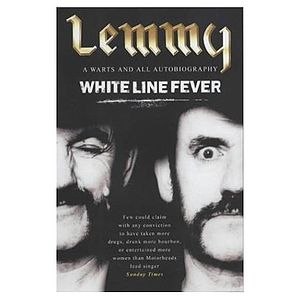
White Line Fever
by Lemmy Kilmister with Janiss Garza
(Citadel Trade)
320 pages, $14.95

When I was at an English boarding school in the Seventies, a sweatless boy among sweatless boys, all of us with scuffed shins and hard little minds, there was a brief craze for fainting. It swept through the school like some hot new type of dance. Chapel was the place for it: eight o’clock in the morning, leaky grey light, prayers humming their moth-wings, and the pale unbreakfasted boys would sigh and slump from their pews, one after another, in mild reversals of boy-energy. Low blood sugar had something to do with it—we were scandalously, I would say almost criminally underfed—but you couldn’t doubt the narcotic properties of the prayers themselves. There was this Marian chant from the 15th century which we would do from time to time: the Litany Of Loreto. A real trance-inducer. “Mystical rose!…PRAY for us…Tower of David!… PRAY for us… Tower of Ivory!… PRAY for us”—and so on, repeating and building in pounding, swaying dactyls until the brain cuts out. Years later I heard this rhythm again, in the same call-and-response measure, on a re-release of Hawkwind’s live album Space Ritual—“Time we left… (This world today!)… Brain police… (Not far behind!)… Trying to make you… (Lose your mind!)” Bastards! I smelled again stale pieties of incense, and felt a draught upon my knees as if I were in short trousers.

But this is all by the by, and only slenderly related to my theme, which is the new book White Line Fever, by Lemmy with Janiss Garza. Lemmy was of course in Hawkwind, playing his bass, and for a while he was the best thing about them—Space Ritual is dark hippy wreckage anyway, a huge crude monomanic bummer with drums dolefuly thrashing and vocals following sax following guitar following bass through riff after drug-blind riff. Quite impressive, in other words, but one wearies of the mindfuck. One wearies of Bob Calvert sneering “Sonic attack—in your dist-rict!” through metallic sinuses, the seedy psychedelic warlordism of it. Only the steady, earthy rumble of Lemmy’s bass keeps you listening. I love his sound on this record—surging, human, refusing the pull of outer space and the gnawings of paranoia. It’s not the definitive Lemmy sound, not the tremendous slobbering chordal attack he perfected in Motorhead, but it’s full of personality. In the midst of the Hawkzone, it’s comforting. Lemmy is very funny about Hawkwind in White Line Fever, about DikMik’s fit-inducing sound machines and Dave Brock’s regular delusion that he’d bitten his own tongue off, or his habit of leaning out of his car to shout “Spank! Spank! Spank!” at passing schoolgirls; “Hello girls! Spanky-spanky!” About Nik Turner—“one of those moral, self-righteous assholes, as only Virgos can be”—Lemmy is candidly bitchy, which is even better. Only prolonged night-after-night exposure to Turner’s farmyard sax-playing, his bleats and clucks and moos, could have distilled this weary disenchantment: “He was holding the saxophone and capering–he was a great caperer, Nikky.” Or (my favorite line in the whole book) “He’d get drunk as a cunt on wine.”

I’d like to know precisely how White Line Fever was written, the mechanics of authorship as it were. Behind every book like this is a very interesting sub-book, which is the story of the hack and his or her subject, and how they got it together, how long it took, and how they suffered mutually, etc. White Line Fever smells of Lemmy in his quarters, his LA apartment with the curtains drawn against the late afternoon and the walls prickling with WW2 memorabilia, and the great man filling ashtrays and bullshitting away, forgetting names, remembering dates, swirling through anecdotal loops, mumbling and thinking and chuckling. Nine-tenths of it is unmistakably Lemmy’s speaking voice, the voice of a roughened but still elegant old-school raconteur: “But back to Robbo. I’d known him for years—we met under a table at Dingwalls.” Lemmy’s memories—his Lemmories or Leminiscences—have a patchy, refracted fog-and-strobe quality, which is just as it should be. It gives them depth; early in the book we get a prismatic flash of the Beatles at the Cavern, playing odd-shaped guitars, telling jokes and “eating cheese rolls while singing” and headbutting hecklers. They sound as violent as the Marx Brothers. “Hard men,” says Lemmy, and goes on to disparage the Rolling Stones: “Fair enough, the Stones made great records, but they were always shit on stage, whereas the Beatles were the gear.” The gear! Later on we are granted a piercing glimpse of Sid Vicious, “this fucking bundle of pipe cleaners in a pair of tennis shoes,” taking on a huge Maltese bouncer. Now and again the prose turns professional, breaking into jauntily anonymous as-told-to-ese—“We only had a fortnight to record Overkill, our second album and first for Bronze. Considering our checkered recording history, however, it was a world of time for us”—but that’s just Ms. Garza doing her job, getting the facts in. By and large the Lemmy ramble flows phlegmy and untainted. “I did die once—well the band thought I had, at least. But I hadn’t. The whole thing started when we were going home from a gig in the van. This guy, John the Bog, was our driver—actually, he died, about two years after this incident, come to think of it…”

Continue reading

“Consumer Imperialism” by Charles Potts (Arthur, 2003)

Originally published in Arthur No. 5 (July 2003)

Consumer Imperialism
by Charles Potts

(prolog)

While our attention is distracted by Iraq
Take time to object to some of the other wars
The American empire is fighting concurrently as well, such as
The war in The Philippines, the war in Columbia,
The war in Korea, the war in Afghanistan,
The war in Israel, the war in Pakistan,
The war in Yemen, the war on Terror,
The war on poverty, the war on drugs,
The war on The Bill of Rights,
The war on common sense itself.

The war of America against the world
Can’t be about anything grander than
The president’s pathology and popularity.

Not since King Lear have speakers of English been mislead
By a leader so completely ‘round the bend.
Power is dangerous enough in the hands of ordinary plodders.
In the hands of the crazy and uneducated
The danger expands exponentially.

The last time Congress declared war was 1941.
62 years later the siege mentality still rules.

The 18th century supposition behind the Separation of Powers, ie
Congress shall have the power to declare war;
The president shall be the commander in chief of the armed forces
Presupposed that a declaration of war would precede
Any armed forces to command

Since we devolved to a permanent military
With the president as the commander
We have perpetual war
With Congress towed along like the tail of a kite.

Someday we’ll lift the siege and see
The pitiful men behind the curtains pulling strings.

Consumer Imperialism

1
In 1946 the Truman Administration cobbled together policy
That will guide America and the United States into a grave:
Stimulate domestic consumption and search for foreign markets.

World War Two propelled Americans across the world
Destroying their distinguished isolation
And Woodrow Wilson’s doctrine of self determination of nations,
Putting Hershey Bars and atom bombs along with GI Joes
Into the world word bank
Along with the great American coinage, OK.

OK can mean anything from yes to you are on your own.
OK, if that’s the way you want it,
OK with me.

It might have been OK if they’d confined domestic consumption to
The simple facts of warm clothes, adequate housing, and nutritious meals,
The need for which food stamp Americans have in common with everybody else.
“One third of the nation is ill fed, ill clothed, ill housed,” FDR declaimed seventy years ago.
It’s still true for radically different reasons one depression later.

In 1946 the American people were hungry to forget
The Great Depression
With its soup lines, dust bowls and railroaded hobos
As the speculated roaring of the twenties simpered out into
The savage thirties whine.

The exact point in the relationship between
Dying early to save the system money and
Working to consume yourself to death efficiently
Hasn’t quite been worked completely out to policy maker’s actuarial satisfaction.

Americans stood 19th century Maytag frugality on its head:
Build it well and make it last,
Darn your socks, grind your wheat, make your own soap,
Do without until you can afford it,
Into a plastic credit card throw away civilization
Destroying the environment on the side as a
Mildly regrettable cost of doing business
Symbolized by the shopping cart in the trough with
Wal-Mart’s predatory criminal labor and retail practices.

2
In the old days prior to 1946, except for Mexico, Louisiana, Oregon and the Indians,
The United States government had confined its actual imperialism
To the Roosevelt Doctrine’s annual obligatory invasion of Latin America

With a few cruel Hawaiian exceptions such as when their empire of ironic slaughter
Was taken to the limit in Aguinaldo’s Philippines
Led by Teddy Roosevelt’s “secret” admiration of the British Empire

Who goaded American into building a navy
Sufficiently enormous eventually to make the basket catch
Of the British Empire’s bases and other falling stock in the Atlantic Charter.

Post 1946 when imperialism became the way of life
Colonial wars piled up in the history books alongside Syngman Rhee’s Korea,
Hoh Chi Minh’s Viet Nam, Salvadore Allende’s Chile,
And Saddam Hussein’s broken Babylon.

Some of the secret history rarely gets recited in public
Like General Eisenhower’s perpetual overthrow by his CIA Army of
Governments in Guatemala, Iran, Cuba, The Congo, Indonesia and Vietnam.

“It’s about jobs,” George Bush the 1st gesticulated nervously
When asked to rationalize the Gulf War he’d goaded
The allies into reestablishing the British Empire’s toehold on the oily Emirate of Kuwait.

The United States military has been under siege
Real or imagined,
Sometimes both; never neither,
Since the bombing of Pearl Harbor–
Sixty plus years of the war that never stops.

It’s what these southern kleptocrats desire
Under siege like the Confederates
Where they lost the battles and built the shrines
The basis (es) of their military theocracy preys upon.

Semi-Colon half an asshole Powell used to claim with a straight face that
The exit strategy is the most important aspect of Colonial War.
There is no exit from Consumer Imperialism.

Consumer Imperialism, World War 3.1

World War 3.1 was a knife fight at 20,000 feet.
Have your will up to date.

Never lose sight of the fact that the “faith based initiative”
Which took out the twin towers of the World Trade Center
Was carried out by trainees of the CIA once removed
Unleashing a relentless wave of video military fascism.

Win the war on terrorism by training counter terrorists
To terrorize other people in a war on abstract nouns.
Government by sarcasm is an unfit substitute for self rule.
Help wanted: somebody to shovel the horseshit off the information superhighway.
.
With each side referring to the other side as evil
It makes one wonder if both sides are right.
Evil is that which has power over you.
God doesn’t take sides; that’s what makes God God.
Human beings have no faith in their own story,
So they drag in God as the author of
Their Christian and Moslem shenanigans.

Flying hijacked commercial airliners into the World Trade Center and Pentagon
Was a reckless act of freedom
Rather than an attack on it or democracy as claimed by the unelected
President Bush who obtained office by judicial fraud,
Hardly an unimpeachable spokesman for Democracy.

There was no attack on
The Samuel J. Tilden New York Public Library or
The Statue of Liberty.
That would have been an attack on Freedom and Democracy.

The world trade towers were a symbol all right:
A symbol of the Rockefeller brothers’ capacity
To manipulate the public policy of the
New York and New Jersey Port Authorities into
Rescuing some of their down in the mouth real estate
At the lower end of Manhattan.

The attack was on World Trade and Consumer Imperialism.

The design competition will create a monument to the victims.
How about creating a world trade system that is fair to all participants?
Now that would be an enduring monument.

War is now perpetual when it used to be punctuated by peace.
America is a winner’s tragedy; freedom destroyed in a pitiful exercise to save it.

Et Tu Bruté?

There’s nothing left of Caesar except a salad and a haircut.
Klipschutz

Caesar, Julius, who
Killed half the able bodied of France
To bring those reluctant frogs
Into a Roman pond

Who bridged the Rhein near Speyer
In ten short days
Without an environmental impact statement
Or German permission.

Comilitones, he intoned,
I have crossed the Rubicon.
Cut the Gordian Knot
As Alexander did.
Cut the umbilical cord
Across his mother’s belly
Up out from down under her narrow birth canal.
This is the way to the Cesarean section.

Not everybody born by the knife
Can grow up to be both
The Queen of Bithnyia
And the Emperor of Rome.

My fellow toddlers it is still
Government by assassination.
We can’t avoid the history of
The Meiji Restoration and Eisenhower’s CIA.
Brutus honey, is that you?

American presidents elected every twenty years since Lincoln
In zero years to match their accomplishments
Have either been assassinated or the attempt was made:
Garfield, McKinley, Harding, Roosevelt, Kennedy, Reagan.
Among these august dead did the living
Have even half a chance?

What if Bush the younger
Brought into office by black robes
In the year of double zeros
Would take a silver bullet
To match the silver spoon
He’s been porking out in
The public lunch box with.

If some Shakespearean character in a play would say:
“Bush should be assassinated
To meet the rhythm test of history,”
She’d be making an observation
Not a threat.

Pity and terror are the Draino of literature
According to Aristotle and Herb Ruhm.
Therefor, making war on terror is an infringement
On poet’s rights.

Bring me the chicken Caesar
Hold the haircut.

Terror is half our stuff.
What’s next,
A war on pity?

The Rocket’s Red Glare

The empire can be managed to a soft landing
Or it can be kicked apart
By the idiots who rule it and their intended victims.

The second half of the war on Iraq
Suggests the American empire will
Fight colonial wars ad infinitum
Until they exhaust themselves.

Knowing this doesn’t knock me out with happiness
But it would save protesters a lot of time
If they can agree it’s the inevitable
Fate of empires
Who imagine they’re immune to history
While merely being ignorant of it.

“Fellowship of the Vine”: an interview with shamanic psychonaut-author Daniel Pinchbeck (Arthur, 2002)

Originally published in Arthur No. 1 (October, 2002)

“The Garden of Magic; or, the Powers and Thrones Approach the Bridge” by Alan Moore (1994)

Fellowship of the Vine
An interview with shamanic psychonaut-author Daniel Pinchbeck

Daniel Pinchbeck is a New York-based writer and journalist who co-founded the literary magazine Open City in the early ‘90s. The son of the writer Joyce Johnson (a member of the Beat Generation and author of Minor Characters) and the painter Peter Pinchbeck, Pinchbeck has been on a passionate intellectual quest for the last years that has taken him across Nepal, India, Mexico, the Amazon and West Africa, writing pieces on art, psychedelics, and altered states of consciousness for Rolling Stone, The Village Voice, Wired, Salon, and The New York Times Magazine, among others. His new book, Breaking Open the Head: A Psychedelic Journey Into the Heart of Contemporary Shamanism (Broadway), is an account of that quest, blending cultural history, personal narrative, and metaphysical speculation. The original interview was conducted by Joseph Durwin on the eve of Breaking Open the Head’s publication; there’s been some slight futzing of the text by Arthur’s editor.

Arthur: In your book, you talk about exploring many of the same hallucinogenic drugs—LSD, magic mushrooms, ayahuasca—that postwar Westerm bohemians like the Beats and the Hippies were interested in. How does your quest compare to those of people like William Burroughs, Allen Ginsberg, Ken Kesey and Timothy Leary?
Daniel Pinchbeck: The Beats were working by instinct and intuition. They realized that modern society had become a horror show, and that their task was to begin to uncover, in Allen Ginsberg’s words, “a lost knowledge or a lost consciousness.” They took that process as far as they could in the context of their times and their individual personalities.

I believe that my approach—and my book—is more scientific and analytic, because that is the task of the “counterculture” in our time. Perhaps I am the only person who feels this way, but I see a clear goal ahead. This goal is a direct legacy of the counterculture —but it is actually hundreds, if not many thousands, of years older than that. In fact, it is the mission that we must somehow accomplish. Think of it as a secret raid to be carried out deep behind enemy lines, despite incredible odds, and with no possibility of failure.

The Beats and the Hippies saw through the abrasive insanity gnawing at the soul of America–this warmongering, money-mad, climate-destroying monstrosity, which is now casting a dreadful shadow across the planet. Where the Beats acted intuitively, from the heart, we now have the necessary knowledge to put together a new paradigm that is simultaneously political, ecological, spiritual, and far more scientifically accurate than the out-dated Newtonian-Darwinian model which is propping up the doom-spiraling status quo. The psychedelic experience supports the physicist David Bohm’s vision of a “holographic universe,” which is also identical to the alchemical perspective of “As above, so below.” We now have the tools to reinstate the archaic cosmological perspective on a firm scientific basis. Once that sinks in, it becomes obvious that the true goal of human existence is psychic and spiritual development, and the entire thrust of the capitalist system is a samsaric delusion that is keeping humanity from recovering its birthright.

Perhaps there is a reason that humanity has been frantically seeking to develop a “global brain” through the Internet, cell phones, and satellites: I suspect that a moment will come when complete social transformation becomes not only possible, but inevitable. That moment may be sooner than we think.

What were the circumstances that led to pursuing the experiences you relate in your book?
I first tried mushrooms and LSD in college–as many people do—and my experiences left me intrigued but puzzled. It seemed extraordinary that such vast alternative dimensions of consciousness could be revealed with such shocking immediacy. And it was equally extraordinary that the mainstream culture didn’t find this a worthy subject of discussion or thought. After college, I put psychedelics aside to enter the “real world.” When I hit my late twenties, I began to feel increasingly desolate and despairing. I was lucky enough to be connected to the New York media world, the art world, and the literary world, but all these scenes began to seem unbearably empty to me. I realized that I needed to know for myself if there was a spiritual dimension to existence–I really thought that I might literally go insane or prefer to die without access to some form of deeper knowledge. I didn’t think a bit of yoga was going to do the trick. At a bookstore, I heard about iboga, an African tribal psychedelic plant used in Gabon and the Congo that is said to show initiates the African spirit world. Most people just take it once in their lives–it lasts for thirty hours. I got an assignment to go to Africa and go through the initiation, and that was where my quest began.

Continue reading

“Dizzying Heights”: Animal Collective interviewed by Trinie Dalton (Arthur, 2005)

Originally published in Arthur No. 19 (Nov. 2005)

Dizzying Heights
How do the four humble critters that are Animal Collective make such wildly beautiful and beguiling sounds?
By Trinie Dalton

Photography by Susanna Howe

As pathetic as this sounds, I originally started listening to Animal Collective because they were an “animal band,” and I make a point of hearing all new animal bands because I’m obsessed with animals. There are so many animal bands these days, especially lupine ones: Wolf Eyes, Wolf Parade, Wolfmother…I figure anyone who names their band after animals must like animals too, so we have something in common, and maybe they’re also into classic animal bands, like The Animals and The Turtles. So far, this theory for checking out new bands has worked, and I like most animal bands. But Animal Collective are by far the best. They’re King of the Jungle.

This is an especially lame confession because the members of Animal Collective barely even like having a name; they’d much prefer to be individuals who come together in various combos and in various locations to make intriguingly titled albums, like Danse Manatee, Campfire Songs, or Here Comes the Indian, sans band name. That’s one refreshing thing about Animal Collective: they aren’t glory hogs. In animal terms, they’re like prairie dogs, bees, or penguins—humble critters that understand the definition of teamwork. In the beginning, Animal Collective often wore masks and costumes hiding their individual identities, and they’ve always used nicknames to keep alive the secret society element of what they do: Dave Portner is Avey Tare, Brian Weitz is Geologist, Josh Dibbs is Deakin, and Noah Lennox is Panda Bear. Having a band name is too traditional, they say; they only have one because record labels have told them that listeners need to identify the group as a cohesive, named unit.

Which is important, because Animal Collective are one of those rare bands who sound completely different live and on record. Sung Tongs, their last full-length album, is infused with psychedelic wall-of-sound production, Brian Wilson-style. Sung Tongs is so classic it gives me chills. I imagine Sung Tongs on the cover of that Arthur issue 50 years from now featuring the best albums of the past century. The cool part is, I’ll recall how I nearly went deaf hearing tweaky live versions of harmonious tunes like “Leaf House” and “Kids On Holiday.” On headphones, certain Animal Collective songs sound sleepy and hypnotic, while live those same songs make the club’s floor vibrate from heavy bass and guitar distortion. Hearing Animal Collective live is nearly my favorite pastime. Recently, while living in Berlin, I was so dying to see them that I almost flew hundreds of miles to southern France to catch their gig. Getting a grip, I reminded myself that this was a little extreme, not to mention expensive. Each show is different, though: live versions of songs render them unrecognizable or mutate into new songs, so you can’t say, I’ll just stay home and listen to the album.

Feels, Animal Collective’s new release, is heavily injected with sentiment without being sappy. Dedicated to such lofty romantic themes as Love, Purple (the color of passion) and (they say) “synchronicity, or connections between people,” Feels is highly emotive. As opposed to Sung Tongs’ choral vocal layerings and druggy nods to Smiley Smile, Feels contains fewer vocal harmonies but compensates with an abundance of rock-out moments balanced by a “warm hum” of instruments. I can’t wait to see these songs performed live, since the instrumentation on Feels is so elusive. This new record also further distinguishes Animal Collective from the Freakfolk bands they’ve sometimes been lumped together with. I never thought they sounded even remotely folky; Feels instead sounds a lot more influenced by their early inspirations, My Bloody Valentine and Pavement.

Animal Collective are childhood friends. Noah and Josh met in second grade in their hometown, Baltimore. In 1996, Josh hooked up with Brian and Dave, who were also high school buddies from Maryland. They all hung out sporadically throughout college, and by 2000, they were all living in New York, where they recorded and released Spirit They’re Gone, Spirit They’ve Vanished, which gave them their first taste of success. Since then, they’ve made several albums and started a record label, Paw Tracks, home to artists like Ariel Pink and The Peppermints. Prospect Hummer, their last record, is testament to all the European touring they’ve done; they met and recruited Vashti Bunyan in England for vocals on it. Three of the band left New York years ago—Noah for Lisbon, Brian for D.C., and Dave for Europe—so Animal Collective functions via satellite, in a way, until they convene for recording sessions and tours. Even interviewing them was a feat—I received four separate phone calls from around the world—although I really enjoyed it because Animal Collective were so friendly. Each man spoke highly of the others, discussing how the group sound has evolved instead of geeking out on who plays what. They gave uncannily similar answers, and Brian confessed that Animal Collective may know each other “too well.” I had this feeling before, but I know it now—Animal Collective are four best friends committed to experimenting and having fun.

Arthur: What are your ideas about collectives? Animal Collective’s lineup is constantly changing, so your aesthetic is extremely dynamic. Live, for instance, you always play new songs instead of the songs from the album you’re touring for.
Josh (Deakin): The word “collective” is oddly touchy for us because it has a certain political air. The idea of calling ourselves a collective was for our own state of mind. We weren’t thinking of it in a broader sense. We’re a fairly exclusive collective. There are people are in our lives that we work with who we consider part of it, in a way, but we aren’t a collective in the big sense. We’ve known each other since we were kids, and really enjoy doing this together. We don’t want to just form a regular band where it’s like “he plays guitar, he plays bass, and I sing.” We came up with the idea in college, when we couldn’t always all work together. Originally, our records had their own titles without band names attached. It’s this idea of creating an environment where you’re not wed to specific habits. Habit contributes to complacency. We wanted to allow for as much change and development as possible. My perception of collectives is that there is some kind of collective consciousness that is an element for us, but mostly we’re strong individuals who have different ideas and like to share them with each other.

Continue reading

“So Righteous to Love”: Devendra Banhart, interviewed by Trinie Dalton (Arthur, 2004)

Originally published in Arthur No. 10 (May 2004)

So Righteous to Love
Devendra Banhart is here and he plays folk music. Trinie Dalton finds out where he’s coming from.
Photographs by Melanie Pullen.

A few months ago I hiked high on mushrooms in the Redwoods, and Devendra Banhart’s first album served as my bridge between fantasy and reality. His music isn’t about tripping out on drugs—I’m not belittling it that way—but its soothing quality makes one feel peaceful in any state of mind. As I interviewed him over the phone in late February about a myriad of topics, Devendra often returned to talking about folk music’s universality, about how one of its most noble purposes is to make listeners feel comfortable.

Hearing 23-year-old Devendra talk like this reminded me of how closely related late-1960s psychedelic rock bands were, in spirit and sense of idealism, to the folk singers Devendra loves so much from the same period: their considerations for listening to and hearing music were at the forefront of their playing. But Devendra’s tastes extend into the present, and there appears to be just as many neo-psychedelic musicians playing today as there are neo-folk rockers. Is it due to the current abominable political state? I don’t know. I didn’t care to discuss politics with Devendra because I was more fascinated by his reverence for nature—by his belief that music can bring one closer to not only self-understanding but also learning about one’s place in the environment, whether it be forested or urban.

Devendra’s new album Rejoicing in the Hands cultivates this respect for life under the auspices of yet another new hybrid-Banhart sound, this time combining old-time blues with the troubadour-ish balladry, psychedelic rock and acoustic guitar traditions of folk. The sound of this record is both familiar and absolutely unique, although Banhart’s singing does gets compared in the press to Marc Bolan’s and Billie Holiday’s to an unfortunate, almost annoying degree. Rejoicing in the Hands is perhaps his best work—it’s hard to say that, cuz they’re all so great—in that the guitar playing achieves more complexity, at times becoming as strong a force as the vocals. Not that his first two releases, 2002’s Oh Me Oh My album (Young God), and 2003’s The Black Babies EP (Young God), didn’t feature some fantastic guitar sounds, but until Rejoicing, I’d heard Devendra’s guitar as more a complement to his vocals than having its own individual drive.

I figured this increased guitar-playing skill must mean his shows are getting better and better, so I started our talk by asking him about performing live. His speaking voice became more melodic and animated when he talked of things he felt passionately about. When he began to talk about his favorite types of venues to play, things got interesting…

Arthur: You prefer to play galleries and churches…
Trinie Dalton: I try…I don’t entirely like playing rock clubs and bars because it doesn’t lend itself too well to the kind of music we’re playing. When I play a church, the acoustics are so wonderful. You have to play an environment that suits what you’re doing, and churches are built to have incredible acoustics. Some Aztec churches, the acoustics are built so wildly, they’re so psychedelically manipulative, that if you clap into a certain passageway, it responds like the sound of a sacred bird that the Aztecs worshipped. They really thought about it. It makes sense for people who play non-electric music, or quieter music to play in a place that augments that instead of in a place that drowns it completely out. Those people that are used to dealing with 8000 amps and four drum sets, the whole building [a rock club] is built to suck in the sound.

It gives your music a richer sound, or has a more spiritual atmosphere or something…or there’s more than just sound going on, with the other senses too.
There’s a vibe.

I think of your music as a mixture of folk and psychedelic. I read up on your big influences, but you didn’t mention psychedelic bands, more of the folky psychedelic rock, like Incredible String Band, Fairport Convention. Do you listen to that kind of music?
I really do. “Psychedelic,” to me, just means a sharp awareness of your surroundings, and a heightened aesthetic sense, and a sensitivity…it’s like this ultra-sensual state. Psychedelic words bring out that state in objects that might be considered mundane. Usually they’re in nature, because usually you’re not going to find psychedelic qualities in a stapler, you know? But a tree, you feel it. It’s like a magic spell, or alchemy, using certain words to bring out the psychedelic life and energy, the core, god’s vein, the blood of the gods.

Back to the music, I’m so easily influenced and affected by music. I love Incredible String Band. But I’m not as big a fan of them as I am Clive Palmer, the guy who started them. He played on the first record. The real song to me, on that one, is Clive’s song… “You know my ____ friends/ Singing baby…” [starts singing it] I like Robin Williamson’s solo records, they’re incredible, and I like Mike Heron’s solo records. It’s unbelievable to think that they’re both fucking Scientologists now. Some of these records are just getting re-released, so they won’t just be available on bootleg anymore. Like Clive’s Original Band, and Clive’s Famous Jug Band. As far as British psychedelic stuff, Fairport Convention has never been too psychedelic, they’re more like rock-folk. Then there’s Trader Horne…Currently, I’ve been getting into more current psychedelic stuff, via my friend, Steve Krakow, who goes by the name Plastic Crimewave. He has a magazine devoted to all things psychedelic, that he hand draws and hand writes, called Galactic Zoo Dossier. He also has a band called Plastic Crimewave…he’s a scholar of the psychedelic ways, he’s an incredible person. It’s a good road to go down. A band that I recently saw that was the awesomest epitome of bar psychedelia, is Comets on Fire, they get everybody grooving.

Continue reading

ASK NEIL HAMBURGER (Arthur, 2002)

Originally published in Arthur No. 1 (October 2002)

Ask Neil Hamburger

Each issue, comedian Neil Hamburger will answer Arthur readers’ queries about relationships, career, sexual intercourse, table manners and particle physics. Email your questions to editorial@arthurmag.com and we will pass them along to Neil at our next Cappuccino Blast party. For this special premiere issue of Arthur, we didn’t have any questions from our readers for Neil, mostly because we don’t have any readers yet. So we adapted the following questions from The Sun.

“HER CALLS AND TEXTS ARE SO EROTIC”
I am 22 and living with my 20-year-old girlfriend of two years and our baby son. Our relationship is routine and boring. I’ve never been in love with her and only stayed because of the baby and because it was somewhere to live. My life changed a few months ago when I met this beautiful, intelligent older woman. We met at the gym where she works out most days. She doesn’t look anywhere near her true age. I am younger than her children but I don’t care about the age difference between us, although she does. She asked me out for a drink and afterwards we went back to her house and ended up making love. She is the most fantastic lover a man could wish for. Her calls and texts are so erotic, I’m addicted. She asks what underwear I like, then buys it for me. She laughs at my jokes, listens to everything I say and she’s only interested in me. Even without sex, being with her is good fun. We recently sat on the beach for hours just talking – something I’ve never done with my partner. But my lover is married and says she will never leave her husband. They live in a fabulous house and I think it’s only the money that keeps them together. I’ve promised my lover that if ever I win the Lottery I will take her away with me. She agrees we could be blissfully happy together if we had money. She is going away on holiday soon and I worry she will meet another young guy who does have money and head off with him instead. I’m pretty sure my girlfriend knows something is going on because of the text messages. I feel bad but I can’t live without this woman. My partner is trying hard to please me but I just want my lover. Will she ever leave her husband so I can have her to myself? —Who’s Laughing Now

Dear Who’s, I can relate to your wish to win the Lottery. But the rest of your problem is somewhat foreign to me. I haven’t had this sort of situation, unfortunately. You say, “She laughs at my jokes.” I would love to meet a woman that would laugh at MY jokes. It seems that at far as that is concerned, sir, you HAVE won the Lottery! A lot of times I have done shows to huge crowds and received no laughs at all. Here you have a situation where this woman laughs at your jokes…and still you complain! I don’t understand what your problem is. Except where you say “I worry that she will meet another young guy who does have money, and head off with him instead.” Because I’ve had that happen to me, which ruined my marriage. Except that it wasn’t a young guy…it was a dentist! So my advice is, yes, keep playing the Lottery. And suggest to your lady-friend that she brushes her teeth three times a day, thus ensuring that she stays away from the dentist. A good, name-brand baking soda-based toothpaste should solve your problem, as it neutralizes the acids that cause cavities.

“IT WAS A BIT ROUGH BUT IT WAS THE BEST I’D EVER HAD.”
I’m a 17-year-old girl and this happened after I’d gone to a nightclub with some of my mates. After a few hours they were bored and decided to go on somewhere else but I wanted to stay as I’d seen a really cute guy standing at the bar. He’d been looking at me all evening and when they left he came over and bought me a drink. We got chatting and seemed to hit it off straight away. At the end of the evening he said he’d walk me home but as we started walking down an alleyway he suddenly pushed me against the wall and started kissing me. I was surprised at first but we ended up having sex. It was a bit rough but it was the best I’d ever had. Now I’m desperate to see him again. I’ve looked out for him in the club and around town but he’s nowhere to be found. I don’t know whether to tell my mates or keep it to myself. —Likes It Rough

Dear Likes, This happens to me all the time. People leaving nightclubs to have sex, thus missing my act. Oftentimes they leave shortly after my set starts, which doesn’t look good in the eyes of the club owner. These nightclubs are reluctant to book you a second time if people are walking out during your set, whether it’s to have “rough sex” or just to get some cigarettes across the street. It’s people like you who are ruining my career. Yes, I do have some advice to you! Next time you are out at one of these nightclubs, watch ALL the acts on the bill, particularly the comedy segments of the night. Be patient—and THEN go home and have your rough sex, however you want to have it. It’s just common courtesy.

“I COULD HARDLY BELIEVE MY EYES WHEN I DISCOVERED THE VIBRATOR.”
My girlfriend and I are both in our thirties and have been together for three years. Last weekend she went to her mum’s with our baby daughter so I could decorate our bedroom. As I tidied the wardrobe a bag fell out and curiosity made me peep inside. I could hardly believe my eyes when I discovered the vibrator. I haven’t mentioned it to her yet. I’m so confused and upset I don’t know how to deal with my feelings. Should I say anything? —Seeing Is Believing

Dear Seeing, This is a very modern age, so this is the sort of problem that comes up now and again. Unfortunately, we men have to accept the fact that we are now replaceable, because of the invention of the battery. You can say something to your girlfriend, but you’ll probably be told that you are impeding “progress”, that you are a fossil, a relic of a by-gone era. Nowadays they have computers that can do anything…including comedy routines! The old-style comedian, such as myself, must make do with bookings in smaller towns in which the computer age has not yet arrived. This is why I have so many bookings in Oklahoma. This is what I suggest you do: find one of these small-town girls who has not yet been exposed to the new technology, who still believes in the simple things, like the human touch.

“I LOVE HIM WHEN HE’S KIND BUT NOT WHEN HE’S BEING A SEXUAL DEVIANT.”
I am 29, my husband is 39 and we’ve been married just over a year. When we met he was everything I ever wanted in a man and–as a bonus–he accepted my son who absolutely idolizes him. But things started to go wrong within weeks of marrying. He likes to experiment sexually and his sexual demands are getting worse. I go along with his wishes to keep him happy but I don’t enjoy most of it. Stupidly, I agreed to a threesome. He found her through an advert. She was quite matter-of-fact but I had to drink a bottle of wine before I could go through with it. I feel totally worthless now and I can’t understand why he needs someone else if he loves me. I have refused to do it again but he won’t stop asking. What am I going to do? I love him when he’s kind and gentle, but not when he’s trying to be a sexual deviant. —Liquored Up

Dear Liquored Up, I see what you mean. I had a show booked recently in Denver, Colorado, at a little nightclub there. It was supposed to be just myself and my opening act, Pleaseeasaur, which is also a comedy-oriented act—we often travel as a package deal. Anyway, we both arrived in Denver early, prepared to do this show…but when we got there, we found that a “third party” had been added to the bill, making the night a “threesome,” as you call it. I felt totally worthless because I had believed that we were able to perform adequately for the Denver audience without needing another act on the bill to keep the evening going. And to make matters worse, this third party, a band called “The Fire Show,” sat in the back of the club all night saying bad things about my act, and about Pleaseeasaur. I had to drink a bottle of wine before I could sit through their set. But you know what: we were vindicated, in that no one bought any of this third party’s merchandise afterwards, not a single thing! Yet we sold quite a few Neil Hamburger souvenir CDs, fridge magnets, buttons, and T-shirts. So my advice is to hang in there, because, as the legendary entertainer Phil Harris used to say, “cream always rises to the top.”

Neil Hamburger says his next comedy album, Laugh Out Lord, is due soon on Drag City Records. For more information, say hello to http://neilhamburger.tvheaven.com

“ICE CREAM FOR CROW: In the Shadow of the Valley of the Bomb Pop” by Eddie Dean (Arthur, 2002)

Originally published in Arthur No. 1 (Oct. 2002)

ICE CREAM FOR CROW: In the Shadow of the Valley of the Bomb Pop
Last Notes from the Great Lost Big Lik Expedition
by Eddie Dean, with photography by Dave Brooks

I first discovered the power of a Fudge Bomb when I was surrounded by a family of Blue Ridge Mennonites who hadn’t seen the ice cream truck for a week. All their Fudge Bombs had run out days ago, and their Snow Cones and Chocolate Chump Bars, too. Their sturdy white frame house sat on a hill in Greene County, Virginia, and I was parked before it in my truck, both of us coughing up dust after the long climb up the winding gravel driveway. These people were hurting badly. We were here to help them.

For generations, locals have found this rocky region as poor as a snake. But it’s been a goldmine for interlopers—first the folk-song collectors and then the government men and the social workers and finally the movie stars here for peace of mind and land for their trotting horses. The movie stars didn’t buy ice cream, not off a truck anyway. Just about everybody else did, though. At least, they did back then. This was 20 years ago, before gourmet ice cream and the culture of instant gratification. If you lived in Greene County, the only way you could get a Fudge Bomb was from my truck.

A Fudge Bomb is a brown and yellow “quiescently frozen confection” impaled on a stick and molded in the shape of a Sputnik-era nuclear warhead. It is infused with an equatorial stripe of artificially flavored banana that beads with tropical sweat when unveiled in the July heat by a Mennonite housewife in a gingham dress. At the time I was selling them, a Fudge Bomb cost 60 cents, a crucial dime more than its red-white-and-blue cousin, the Superstar Bomb Pop, but well worth the extra investment. No mere popsicle, a Fudge Bomb is a bona fide meal.

The Mennonites are a strict denomination. For them, every day is a holy day, and they dress and try to behave as such. But there is nothing in their rules that forbids the indulgence of sweets. And no visiting preacher ever inspired more joy than did the driver of the truck with the BIG LIK license plates. I would often linger in the shade as the family members gathered on the green lawn, becalmed by the sacrament of ice cream. The rippling folds of the Blue Ridge mountains stretched to the horizon, as big white clouds drifted by like so many covered wagons. At such a moment of a bright Sunday many summers ago, I understood why their ancestors decided to nestle here instead of pushing west. This perch would do fine until the Battle of Armageddon.

Those were good customers, that family, one of several Mennonite families on the route. They even bought ice cream for their livestock. They had a goat named Curly leashed to a tombstone in the family graveyard, a stone-walled plot near the driveway. His reward for keeping the grass trim was an ice-cream sandwich. The Mennonites were businesspeople themselves. I’d often pass roadside stands where they sold homemade peanut-butter pies to the weekend tourists from Washington D.C. They were better off than most of my customers, who had little in worldly possessions other than the junk accumulated on their ramshackle properties. Yet even the most destitute were no less faithful when that ice-cream bell came ringing. For them, the unbidden arrival of the BIG LIK truck was proof that even if they weren’t among the affluent or the righteous, they would not be denied their just desserts–even if it meant scraping together a fistful of pennies for a 25-cent popsicle.

Behind the wheel of BIG LIK, in the shadow of the hazy, hallucinatory Blue Ridge, I believed I’d found my calling, though at 20 I would have never used such a word. All I knew was that it didn’t seem like work and it beat delivering pizza in a borrowed car. What began as a seasonal job during my time at the University of Virginia held me in Charlottesville well after graduation. It wasn’t driving the truck that hooked me: I fell for the geography. I’d grown up in the lowland Piedmont of Richmond, and there was something about this rugged landscape that moved me. Whatever the reason, the mountains cast a spell that I couldn’t shake.

Continue reading