Science fiction pioneer Philip José Farmer died today. Farmer was the man who introduced sex to sf with his first published story, ‘The Lovers’, in 1953. Decades before The League of Extraordinary Gentlemen there was the Wold Newton Universe. Hugely prolific, he was one of the few authors capable of writing Edgar Rice Burroughs’ Tarzan in the style of William Burroughs (‘Jungle Rot Kid on the Nod’). Audacity and intelligence are always in short supply; he’ll be missed.
From the beginning of the 14th century through the following five hundred years, the Ottoman Empire spread from Anatolia north through the Balkans, east through Persia, south through Arabia and west across nearly the entire North Coast of Africa, expanding across just slightly less land than the Roman Empire at its peak. After collapsing slowly through the 19th century and early 20th century, the Treaty of Lausanne in 1923 dissolved the last of the Empire and formalized the successor state of Turkey. The cultural and political fallout of five centuries of Turkish administrative and cultural domination over the Eastern Mediterranean lands will continue through generations still to come.
Coincident with the waning years of the Ottoman Empire was the birth of the sound recording industry, and thousands of recordings were made of the music of the Turks and the ethnic minorities that they governed within the Ottoman territories. Two juicy websites offer substantial collections of the sounds of the musical art of the Turks and Arabs before the radical cultural shifts of the early and mid-20th century (and two decades before the invention of the microphone!), all gratis.
To top it all off, there is plenty of the great master Cemil Bey to be had on the internet, but this flabbergasting fiddle performance from the 10s on YouTube is absolutely not to be missed. (I have no explaination for the groaning, atonal, gestural passages which bear stunning resemblance to “radical” developments in mid- and late-20th century jazz and Western classical music, although I’d be grateful for any information on this piece that anyone can offer.) Tanburi Cemil Bey – Janik Nini
Nate Silver at FiveThirtyEight crunches the polling figures:
We all know that Michael Phelps was on something. But perhaps he was also onto something. Three recent polls show that Americans are more sympathetic to the idea of legalizing marijuana than ever before.
The first poll, conducted last week by Rasmussen Reports, has 40 percent of Americans in support of legalizing the drug and 46 percent opposed. The second, conducted in January by CBS News, has 41 percent in favor of legalization and 52 percent against. And a third poll, conducted by Zogby on behalf of the marijuana-rights advocacy group NORML, has 44 percent of Americans in support of legalized pot and 52 percent opposed.
That all three polls show support for legalization passing through the 40 percent barrier may be significant. I compiled a database of every past poll I could find on this subject, including a series of Gallup polls and results from the General Social Survey, and could never before find more than 36 percent of the population (Gallup in October, 2005) stating a position in favor of legalization. (More.)
And speaking of Michael Phelps, how’s this for a business headline? Dumping Phelps Over Bong Rip Damages Kellogg’s Brand Reputation.
Out of the 5,600 company reputations Vanno monitors, Kellogg ranked ninth before it booted Phelps. Now it’s ranked 83. Not even an industry-wide peanut scare inflicted as much damage on the food company’s reputation. (More.)
But in the unlikely event that anyone ever holds a gun to my head and demands to know, “who is your favorite musician in the city?” I’ve got my answer all ready: Susan Alcorn.
Alcorn is a Texas native who plays the pedal steel guitar. The journey from playing country and bluegrass and straight jazz to her mature style has aided by advice from Muddy Waters and Paul Bley. The wide-open ears, keen intellect, emotional sensitivity and rigorously-honed skill as a player that she has developed has brought her into collaborations with Pauline Oliveros, Peter Kowald, Eugene Chadbourne and Jandek among many others. But it’s her solo work as a composer, improviser and interpreter of songs, which are more aching sequences and clusters of crystaline sounds than tunes, that always blows me away.
With clarity and precision and a gift for invoking sweeping landscapes, Alcorn is able to perform arrangements of Curtis Mayfield or Olivier Messiaen highlighting both their structural and spiritual aspects simultaneously and then attacking the strings zen-slap-loud or hovering stained-glass mobiles of sound-clouds. Dreamy stuff, full of emotion and one of the more Universalist twists on Americana.
The way to introduce yourself to her work is to see her live and solo, if possible, or to track down a copy of her utterly superlative LP And I Await the Resurrection of the Pedal Steel Guitar, released by Olde English Spelling Bee a couple years ago (or, if you can, her Curandera CDR). But until she and her work are more readily available to more households, this short group of video excerpts from a solo concert in Baltimore earlier this month where she presented a musical autobiography will act as a sampler of her sound palate, if not the emotional arc, of her performances.
With vintage Russian black humor, Orlov described the social collapse he witnessed in Russia in the 1990s and spelled out its practical lessons for the American social collapse he sees as inevitable. The American economy in the 1990s described itself as “Goldilocks”—just the right size—when in fact is was “Tinkerbelle,” and one day the clapping stops. As in Russia, the US made itself vulnerable to the decline of crude oil, a trade deficit, military over-reach, and financial over-reach.
Russians were able to muddle through the collapse by finding ways to manage 1) food, 2) shelter, 3) transportation, and 4) security.
Russian agriculture had long been ruined by collectivization, so people had developed personal kitchen gardens, accessible by public transit. The state felt a time-honored obligation to provide bread, and no one starved. (Orlov noted that women in Russia handled collapse pragmatically, putting on their garden gloves, whereas middle-aged men dissolved into lonely drunks.) Americans are good at gardening and could shift easily to raising their own food, perhaps adopting the Cuban practice of gardens in parking lots and on roofs and balconies.
As for shelter, Russians live in apartments from which they cannot be evicted. The buildings are heat-efficient, and the communities are close enough to protect themselves from the increase in crime. Americans, Orlov said, have yet to realize there is no lower limit to real estate value, nor that suburban homes are expensive to maintain and get to. He predicts flight, not to remote log cabins, but to dense urban living. Office buildings, he suggests, can easily be converted to apartments, and college campuses could make instant communities, with all that grass turned into pasture or gardens. There are already plenty of empty buildings in America; the cheapest way to get one is to offer to caretake it.
The rule with transportation, he said, is not to strand people in nonsurvivable places. Fuel will be expensive and hoarded. He noted that the most efficient of all vehicles is an old pickup fully loaded with people, driving slowly. He suggested that freight trains be required to provide a few empty boxcars for hoboes. Donkeys, he advised, provide reliable transport, and they dine as comfortably on the Wall Street Journal as they did on Pravda.
Security has to take into account that prisons will be emptied (by stages, preferably), overseas troops will be repatriated and released, and cops will go corrupt. You will have a surplus of mentally unstable people skilled with weapons. There will be crime waves and mafias, but you can rent a policeman, hire a soldier. Security becomes a matter of local collaboration. When the formal legal structure breaks down, adaptive improvisation can be pretty efficient.
By way of readiness, Orlov urges all to prepare for life without a job, with near-zero burn rate. It takes practice to learn how to be poor well. Those who are already poor have an advantage.
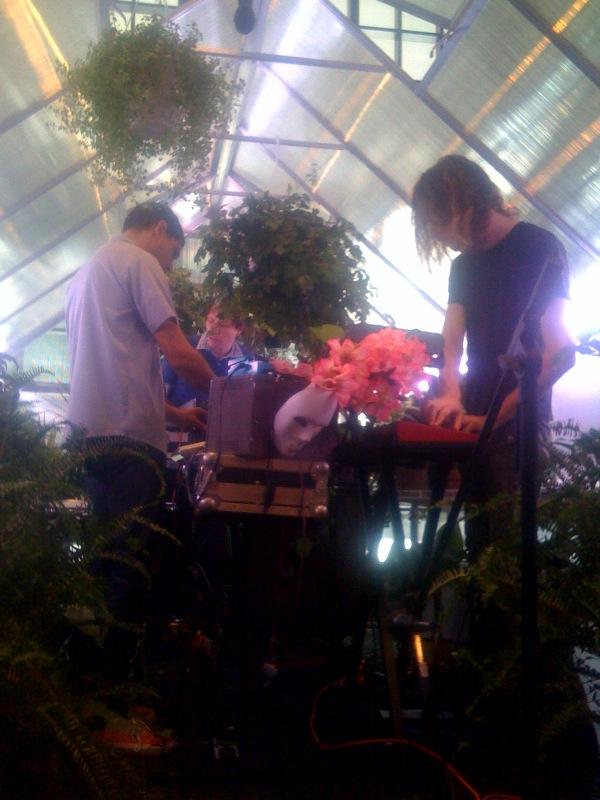
Need a break from the physical world? Come to The Smell and let yourself dissolve into the soft, murky synths and sound effects of Silk Flowers (featuring ex-members of Soiled Mattress and The Springs). Relax on a cloud of dream-like meanderings from City Center and Former Ghosts. If you find yourself drifting away, Tik Tik is there to jolt you awake.
Date & Time: Thursday, February 26th – 9PM Venue: THE SMELL (L.A.) Location: 247 S. Main Street / Los Angeles, CA 90012 (For driving directions, go here) Price: $5
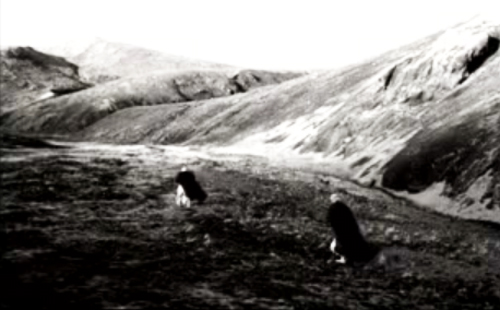
What sounds more meditative than watching a 98 minute film following the Three Magi as they cross “scorching deserts, climb the highest mountain in Spain, and hike through rocky plains in an environment of barely controlled anarchy” on their quest to visit baby Jesus? Well, maybe a lot of things, but it sure does sound like a visual trip worth taking. Biblical undertones aside, Albert Serra’s EL CANT DELS OCELLS (Birdsong) is above anything a treat for your senses; the story was shot in the Canary Islands on 35mm film in black and white, thereby capturing some of the most beautiful landscapes in a way that you will never, ever see through your own eyes.
Date & Time: February 25th – March 3rd, 7PM and 9:15PM. Additional screenings on Saturday and Sunday at 3PM. Venue: ANTHOLOGY FILM ARCHIVES Location: 32 Second Avenue / New York, NY 10003 Price: $9 General Admission / $7 Students, Seniors and Children
Go to the premiere screening on Wednesday, February 25th to see Serras introduce the film in person! The making-of documentary, WAITING FOR SANCHO, will be showing February 28th and March 1st at 5PM.
there’s been a lot of black flag video uploaded in the last year. many of these clips are mislabeled or undated. my information is corrected as best as possible given spot hasn’t written his book yet:
keith/greg/chuck/migdol, I Don’t Care, probably Wurm-hole, hermosa bch, Dec. 1977…
keith/greg/chuck/robo, White Minority, polliwog park, manhattan bch, July 22, 1979…
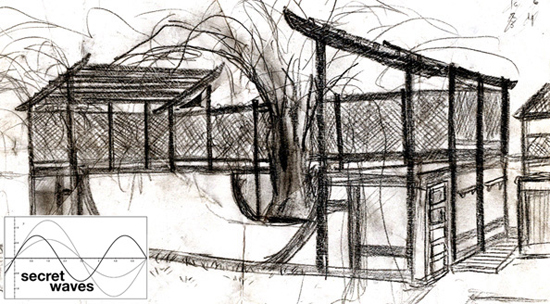
Years ago I built a 5′ tall, 20′ wide mini-ramp in my backyard. I’d recently moved in with Reza Bahador, my Hapkido instructor, and we were both keen on using our immediate physical surroundings to full capacity, taking advantage of every space to develop ourselves physically and spiritually. Beyond the momentous task of designing and building the structure, which was a challenge and process in itself, the ramp soon became my training ground and my temple, a place for me to clear my mind of confusion and connect to the real world.
When I moved, I broke down the ramp and kept the wood in storage, and in the last few months the Land Of Plenty interns have revitalized the sleeping behemoth out in the mountains of Los Angeles. I am so happy that what might have otherwise been discarded was effectively recycled, and now some other young skaters have the opportunity to enjoy the fruits of their own backyard ramp. In a world of fenced-in skateparks and the ever increasing criminalization of skateboarding in the streets, there is a special magic to containing your own secret skate wave in the privacy of your home base. It’s a place to learn and grow and share.
Arthur readers in particular should be hip to this situation. On one hand, skateboarding is of the world- you can, and should, do it anywhere. Break down the barriers and run wild. On the other hand, it is an opportunity to go inside, to create the most introverted sacred space available and find the silence within. If you are lucky enough to have a yard, use it! A backyard ramp is like a playground set for the spirit. Transitioned walls reverberate a spiritual energy right up into the heavens. You can skate for hours, with your friends and family around, playing music, burning fires, drinking tea and dancing into the night. This link will take you to a page I created about the LOP ramp development process: taking a look at the space you have available, cultivating a design from your imagination, and then building that imaginary construct with your hands. As with skating, there are no rules, but there are some conventions that tend to result in the most constant and progressive skating: circular transitions, flatbottom, platforms, coping… but anything is possible, using any number of materials, and there is no reason to limit yourself to what has already been done.
I’m currently working on some small, portable ramp designs, and waiting for the universe to land me in a ramp-ready situation again. In the meantime, I hope you can find some inspiration in the LOP ramp, and maybe look at your backyard in a new way. If you don’t skate, don’t worry about it- once you have a ramp, you’ll probably start, and either your kids or the local kids will be able to roll through and show you how to have an endless good time with the simplest things: earth, wood, wind, and fire. Light it up.



 Arthur Magazine