“Here are sixteen reports, differing approaches that, through their own individualized methods, access the one ground. It’s a privilege and blessing to have known many of the musicians on this disc, to have shared in song with some, and stages with others. In all cases I have been the healed recipient of their craft sitting alone with my headphones… Here is their auditory journal.” —Al Cisneros February 2009
ALBUM OVERVIEW
by Daniel Chamberlin, Arthur contributing editor
For a while there was a lot of talk around Arthur HQ about the idea of “life metal”–as opposed to death metal–and how that applied to a lot of the bands we were listening to. These were artists making introspective, expansive metal that stood out as flashes of color in the unified spectrum of blackness that dominates the genre. Think about the sunshine Sabbath jams of Wino’s various incarnations, the core-cleansing live rituals of Sunn O))) and most of all, the contemplative rhythms of Om.
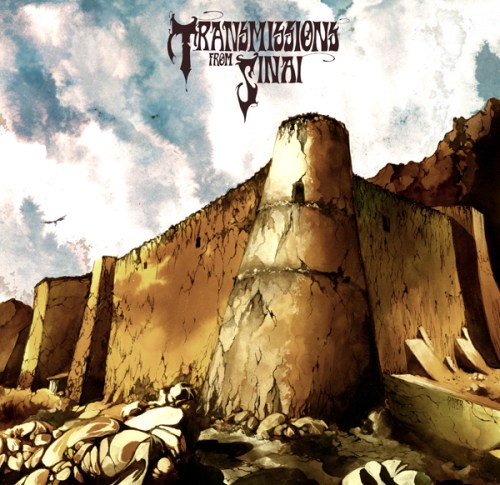
Om rose from the ashes of long-form drone-metal icons Sleep, and has since produced three albums of thoughtful, minimalist metal composed entirely of bass, drums and vocals. Transmissions From Sinai, the compilation curated by Om’s bassist/vocalist Al Cisneros plays like a companion piece to those albums; the band’s influences and fellow wanderers united by a deep narrative thread of rhythm, resistance and meditation.
Transmissions opens with Lichens’ “Kopernik Trip Note,” eight minutes of vocal tones flowing like liquid mercury through a haze of keyboard drones. The focus on rhythm is clarified with Linval Thompson’s “Wicked Babylon,” a rocksteady classic from the guy that, in addition to producing endlessly satisfying reggae albums of his own, was also responsible with lacing dub legend Scientist with some of his best rhythms.
Grouper’s “Everyone In Turn” is a cascade of vocal melodies underscored by a fog-shrouded piano. The cryptical envelopment continues with Current 93, David Tibet’s long-running Gnostic-apocalypse folk project, and is reinforced by acoustic work from former Neurosis guitarist Scott Kelly, the brushed marching drums of Quix*o*tic’s “The Breeze” and Hush Arbor’s mournful guitar dirge, “The Valley.”
Om tour-mate Mia Doi Todd marks the midpoint of the journey with the romantic bongo jam “Night Of A Thousand Kisses,” followed closely by Six Organs of Admittance’s shimmering “Bar Nasha,” one of several previously unreleased songs in this collection. This flows into the narcotic beats of Om drummer Emil Amos in his Holy Sons guise. A counterpoint follows with Pantaleimon’s gentle folk, all crisp guitar melodies and cool, clear whispered vocals.
From there it’s a downhill run through the blissed-out sunshine psychedelia of Grails’ “Acid Rain,” the intricate contortions of Sir Richard Bishop’s finger-picked raga “Almeria,” and a twin blast from two legendary guitar lifers: J. Mascis, performing the previously unreleased “War” and Wino with a churning anthem of hope, “Silver Lining.” Transmissions concludes with “David and Goliath,” a melodica-and-keyboard-drenched fable of resistance and survival from contemporary British reggae outfit Alpha & Omega.
Transmissions is a countercultural signpost: a diverse collection of music–from searing life metal through gauzy ambient piano ballads to the heaviest of dub –that serves as a soothing balm for whatever may ail you in these troubled times.
Sasha Watson talks to artist Marc-Antoine Mathieu about creating a graphic novel for the most famous museum in the world and “pulling the image out of time” with his comics.
Note to the reader: Click each image for a full-size version.
It had been several years since I’d last spoken with comics artist Marc-Antoine Mathieu but when I got him on the phone, I remembered how thrilling and exhausting it could be to talk to him. Within moments of making the connection between his home in France and mine in Los Angeles, I was mentally dashing after him as he leapt from particle physics to the significance of the first cave paintings to Proust and the nature of time. Mathieu is well-known in France as a graphic novelist who, with every book, expands the boundaries of the form. He does this with a unique combination of intellectual weightiness and the purest sense of play. It’s the same in conversation; he’ll be discussing a mathematical or philosophical concept, about which he’s read widely and consulted several experts, and then suddenly he’s laughing—you’re both laughing—at some comical application of the idea. Trying to keep up with him is thought-provoking and funny and exhilarating, and it’s all those things at the exact same time.
Mathieu’s recent book, The Museum Vaults, just out in an English translation from NBM ComicsLit, perfectly encapsulates his mingling of intellect and lighthearted fun. Published in France in 2006, it was the second book in a series of four put out by the Louvre museum and the French graphic novel house Futuropolis, in which four comics creators were asked to produce a stand-alone book for the series.
In spite of the almost unbelievable prestige attached to such a publication, when the editors first approached Mathieu, he told them he didn’t want to take part.
“Comics represent total freedom for me, and I was a little afraid of being constrained by any specific requirements,” said Mathieu in our recent phone conversation. “Besides,” he added, “the Louvre is an intimidating subject. What hasn’t already been said about the museum, about art, about beauty?”
It was a good question, and one that has its roots in the history of French comics. During the political turmoil of the ’60s, comics rose up on the tide of cultural upheaval. The form could be as rebellious and irreverent as the young intellectuals of the time, and they held it out as a banner of a new and more vital culture.
“See?” they said, picking up their comic books and thumbing their noses at old guard institutions like the Louvre, “This is art to us.”
It’s no wonder then that there should be some head-scratching as to what these two cultural symbols have to say to one another. Fabrice Douar, head of the Louvre’s publishing division, and Sebastien Gnaedig, editorial director of Futuropolis, understood Mathieu’s concerns. “The universe of the Louvre is extremely rich,” says Douar, in what might be considered a wild understatement, “and that can be discouraging.”
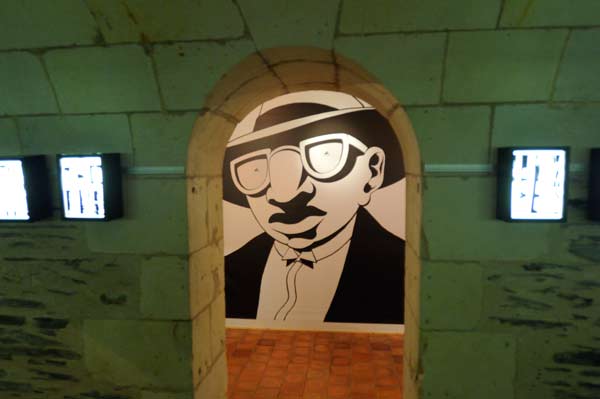
Julius Corentin Acquefaques in a doorway
Douar and Gnaedig assured Mathieu that the only requirement was that there be a link to the Louvre—“an artwork, the building, a gallery, whatever, as long as there was a link,” said Douar—and that no restrictions would be placed on the work itself.
But there was still the question of whether the topic was simply too paralyzing for Mathieu to have any fun. Arguably the most famous museum in the world, the Louvre has been a universally recognized symbol of French cultural hegemony and the very highest of high art since the French Revolution. For Mathieu, there seemed little reason to illustrate “this enormous and almost too visible entity”.
Douar and Gnaedig weren’t looking for an homage to the museum, though. They were looking for artists whose creative vision would flourish, even when faced with the Louvre’s historical and cultural magnitude.
“We hoped to find graphic novelists who had their own very strong personal universes,” Douar says, “and then to encourage the confrontation of their world with that of the Louvre.”
In other words, the editorial team wanted nothing more than for Mathieu to do the book his way. Once this became clear, Mathieu’s ideas began to take shape.
“I started out imagining fantastical spaces that would give me total freedom to talk about a Louvre that was invisible but universal—an infinite space, like the space of art itself,” he says. To find this space, he had to “look sideways, out of the corner of my eye, take a significant step back from the subject right from the beginning.”
Of this method, Douar says, “Marc-Antoine Mathieu created a universe that is like the Louvre, but not exactly. It’s a kind of parallel world in which he examines, not the work, but the discourse around art.”
It is just this refusal to look directly at the subject, and thereby to generate multiple images of it, that characterizes Vaults. Even the name of the museum at the center of the story is a mystery. It is called by turns, (in the English translation) u rude love muse; the museum of the louver; muse, lure, loud, eve; oeuvre due slum; loud muse revue, etc. The main character, Eudeus, informs us in the first chapter that, “all these names are nothing but anagrams of the museum’s real name, which has been forgotten.” The name of le Musée du Louvre is never directly mentioned in the book.
There is humor in this approach. In looking, not at the works of art but at “what’s in the wings, and what surrounds them: the frames, the guards, the archives… the flip side of the painting,” Mathieu finds a lot to laugh at. There are the guards who learn in class the exact tone of the “Tsssk,” that they use when a patron gets too close to a work of art and there are the restorers who accidentally add too large a “schnoz” to a broken classical statue.
But there is also a deeper reflection at the heart of Vaults, in which art itself is seen as infinite. “A work of art is a world,” says Mathieu. “The museum, a world of worlds, a morsel of the infinite.”
To emphasize this point, the book opens with a quote from Henri Bergson, the philosopher whose work inspired Proust’s meditations on time. The epigraph reads, “Time is an invention, or it is nothing at all.” According to Bergson, chronology was a false order imposed on consciousness, in which many experiences and states of being coexist. Mathieu’s museum is an illustration of this concept. In it, all moments of art, from the first anthropomorphized pebble to the Mona Lisa to the sequential pictures of graphic novels, are simultaneously made manifest.
For Mathieu, this concern with time is an inherent fact of his medium. Comics allow the reader to move backwards and forwards, to look up or down. “When you’re watching a movie,” says Mathieu, “you’re a prisoner of time. I think, ultimately, this is why I chose to work in comics and not in film. Proust, Faulkner, and the greatest filmmakers, too, Herzog, Godard, Tarkovsky, all tried to pull the image out of time. I try to do this in comics.”
When I first encountered Mathieu’s work, I’d just graduated from college and I was living in Oxford with a grad student friend, trying to figure out how to be a poet. I was a snob in the way a lot of people are when they want to be artists but haven’t done much about it yet—out of terror. Comics were not on my radar.
But when L’Origine, Mathieu’s first book, arrived in the mail from a French friend, that changed.
“This book contains something I’ve never seen before!” enthused my friend in the letter that still holds the page in my book. “I’m sending you my copy since I couldn’t find it at the store. Hurry up and tell me what you think.”
L’Origine opened my eyes to new worlds of art. Suddenly I knew that great art could exist in many forms, not only those sanctioned by artistic and scholarly institutions.
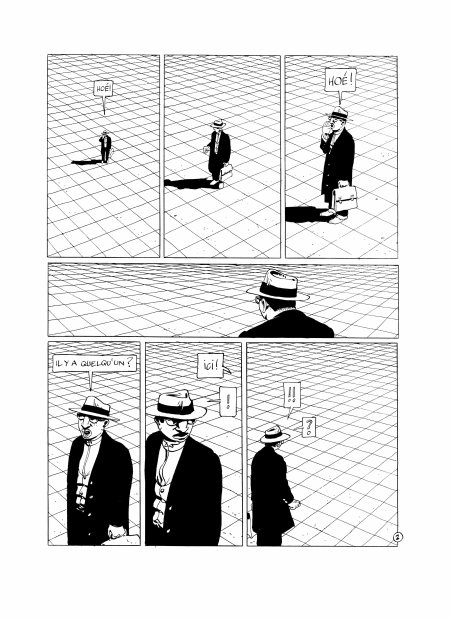
The first surprising thing about L’Origine, and what my friend referred to in his note, was that the book itself had become a character in the story. An impassive hero with a hefty name, Julius Corentin Acquefacques, receives an envelope in the mail. Inside, he finds a page torn out of the very comic we are reading. Through a series of investigations, he comes to realize that he is reading pages from his future, and that he is the hero and savior of his own comic book world. Mathieu had, in a sense, broken through the fourth wall of the comic, allowing the character to become aware of the limits of his world, and of the reader.
But Mathieu’s easy bypassing of the normal boundaries of his art went far beyond this intellectual sleight of hand. In all five books of the Julius series, Mathieu seamlessly combines varied realms of thought and levels of discourse. In Julius’s world, absurdist humor mingles with philosophical reflection, poetic reverie with mathematical speculation.
My surprise at the richness of Mathieu’s work was more than a reflection of my own naïveté regarding comics. His breadth of references really is startling. For one thing, a host of literary greats watch over his universe. Kafka—whose name turned backwards and then spelled out phonetically makes “Acquefacques”—holds dominion, but the Surrealists are here, too, alongside Borges, Perec, and many others. Of these literary presences, Mathieu says, “It’s a very intimate relationship, the way you’re touched by an artist. It’s like family. You do what they did. You redo Borges the way Borges redid things from Cervantes. We all have a compost pile, a nucleus, a trunk, something precious like that.”
The compost pile that feeds Mathieu’s work isn’t restricted to literature. His mathematical explorations in the Julius books were interesting enough to attract the attention of scientists at CERN, the world’s largest particle physics laboratory, located in Geneva.
“They work on questions of entropy and chance,” said Mathieu. “That’s always interested me, and it must show in my work because they invited me to come there several years ago.”
Mathieu compares what he does in comics to what these scientists do. “Every day they invent a world that’s completely inconceivable,” he says. “Math is a language that lets you conceive of things that would be impossible to conceive of without it. Comics are sort of the same thing. You create a language to say something that you couldn’t have said in any other way. I’ve always liked to change position, change the dialectic, change my galaxy.”
As with The Museum Vaults, there’s a philosophical underpinning to the Julius books as well. For all the slapstick humor and clever wordplay that fill Julius’s days, the real question revolves around his place in the universe, and whether he has any control over it. His discovery of pages of his future leads to an extended meditation on free will. On entering a bookstore in which volumes are stacked several stories high, Julius muses, “All these books, all these memories, one on top of the other, give rise to a strange question… Was I, like them, written?”
If the lack of free will acts as an overarching constraint, the highest level of the bureaucracy in which Julius lives, there is also a built-in release valve. The full title of the series is Julius Corentin Acquefacques, prisonnier des rêves—prisoner of dreams. In his dreams, Julius overcomes the limitations imposed on his world. He climbs out of the panel, sees in color, flies away from the pages on which he’s drawn. The absolute freedom that he experiences in his dreams provides a stark contrast to his daily life, to which he is forever being rudely awakened.
Mathieu follows an oulipian code, imposing strict limitations on his work in order to release the imagination. This is why he works almost entirely in black and white. “It’s in a field of black or a completely white space that you as a reader can bring something to the work,” he explains. “Colors say too much; they take away from your imagination. It’s a political choice, too, to say to the reader, ‘Figure it out, it’s up to you to take over here, to imagine what there is in the darkness.’”
On top of all this, Mathieu refuses even the constraints of the book itself. Every volume in the Julius series includes a startling bookmaking flourish—the missing panel of L’Origine, the pop-out spiral of Le Processus, and the pages in 3D, along with 3D glasses, of La 2,333e Dimension.
For me, reading L’Origine for the first time was like being lifted by a twister, twirled in the air and then set down again, magically intact and incredibly exhilarated. My reaction, as it turned out, was right in line with the my-head-is-about-to-explode tone of the reviews. Critics loved the self-referentiality, the meta-gaze, and the way Mathieu used the two-dimensionality of the book to pull off his high wire act.
In 1991, Mathieu won the Alph-art coup de coeur prize at Angoulême, the world-famous French festival of comics. The prize, which is for the best first book by a new comics creator, has been awarded to some of the best current French graphic novelists, including Lewis Trondheim in 1994; Emmanuel Guibert and Joann Sfar in 1998; and, most famously, in 2001, Marjane Satrapi for the first volume of Persepolis.
Since then, Mathieu has published several stand-alone books in addition to the five volumes of the Julius series. One of these, Dead Memory, was published in an English translation by Dark Horse Comics in 2003, but the Julius books, for which he’s best-known in France, remain untranslated.
Prior to meeting Mathieu, six years after first reading L’Origine, I’d been warned by someone who knew someone who’d once worked with him that he was “difficult”. On the hour and a half train-ride from Paris to Angers, where he lived, I braced myself for a haughty intellectual, a disdainful French artist. But when I walked out of the train station in Angers that Saturday morning in July, I saw something very different. Short, brown-haired, in his late 30s, Mathieu was unintimidating. He looked, I thought, not totally unlike Julius, with his rounded shoulders and pronounced, Gallic nose. The difference was that Julius’s eyes are covered by the blank lenses of his glasses, remaining expressionless throughout his wildest adventures, while Mathieu’s were warm and brown, his expression open and kind.
“Why don’t we call each other tu,” he said when I addressed him at first with the formal vous. “It’s easier that way.”
On the way to his studio, Mathieu pointed out the Angers cathedral. The small city, positioned at the westernmost point of the Loire Valley, began life as a Roman fortification, and then became the medieval stronghold of the Angevin Empire. Today, it is known for its flowers, its chateau, and a series of tapestries that show a gory version of the Apocalypse. Asked if he’d ever thought of moving his design business to Paris, Mathieu said no, that he preferred a slower pace. “There’s more space to think here,” he said. “More room to create.”
When we’d set up this interview, Mathieu had told me about his graphic design business, Lucie Lom, and offered to show me the studio. I’d agreed but the truth was, I wasn’t all that interested. Lucie Lom was his day job, I figured, what paid the bills so that he could do the creative work of his graphic novels.
Mathieu pulled up in front of a small building on a tree-lined street, where cars were parked lazily in the dirt outside. As he showed me around the comfortably messy studio, filled with projects left out the evening before, I began to realize that Lucie Lom was not at all what I’d thought.
In 1985, Mathieu and his business partner, Philippe Leduc, were just finishing art school at the Ecole des beaux-arts in Angers.
“I felt very free, very open and ready to start something new,” says Mathieu. “Philippe had the idea to start a design company that focused on installations and poster art. We both wanted to do work that was out of the ordinary and that had an ethical basis, and we both wanted to tell stories. All of our ideas start out as stories.”
Leduc and Mathieu’s first large-scale project was an installation exhibiting post-war Polish poster art, which they showed in the basement of the theater in Angers.
“We tried to recreate the atmosphere of the places where the posters were created,” he explains. “We showed Trepkowski’s early posters in a little room that we decorated to look like the ruins of Warsaw.”
The pair spent six months on the project, spending (and losing) their own money to put it together, but the exhibit was a success. In the wake of that show they were asked to do an installation at the Angoulême festival, and they’ve done many more since.
Mathieu leads me up a creaky staircase to the second floor, where Leduc, laying out a poster in the back room, waves hello. I flip through posters they’d made over the years. One, for a theatrical version of Animal Farm shows a small pig crawling out of the neck of a military uniform; a bleeding crescent moon on a green background advertises protests in support of Algeria in 1999; others advertise plays, concerts, dance performances.
When I ask how he and Leduc choose their projects, Mathieu talks first about the negative side of advertising.
“People are more and more used to consuming images whose only purpose is to sell them something,” he said. From the beginning, Lucie Lom’s purpose was different. “We try to do work that says something, that has meaning. We try to make sure that every image we create is unique. We think about the influence it might have on the people who see it.”
Far from a day job, Lucie Lom is an essential part of Mathieu’s creative output. “I need the balance,” he says, when I ask how he feels about having two careers. “Writing is very solitary and when I draw I go totally into my own thought, my own imagination. With installations, you’re working collectively with a team of people, which is both wonderful and very good for me.”
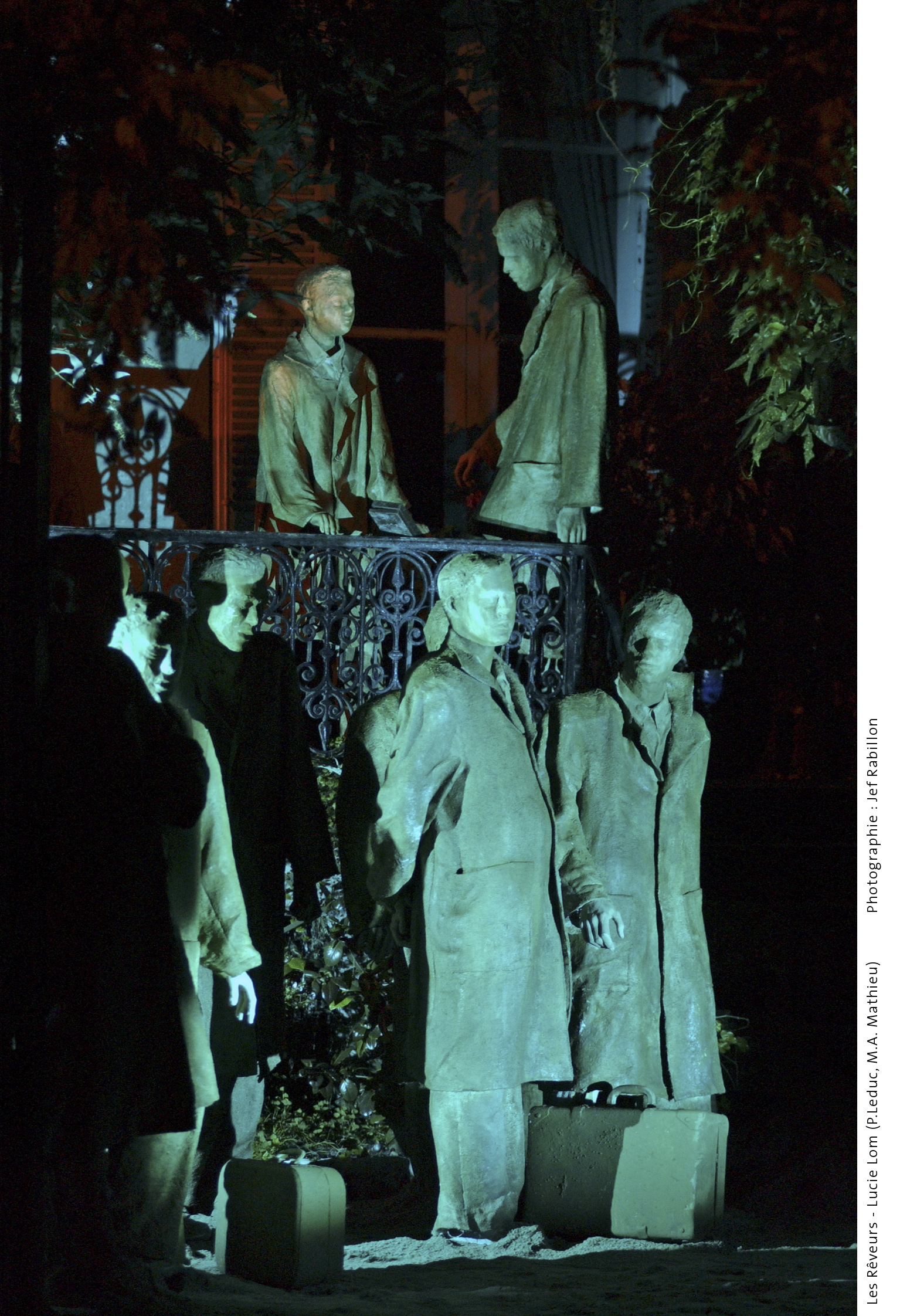
As we left Lucie Lom that day in 2004, we walked through a courtyard past a crowd of white plaster statues that were leaning against the outer walls of the building. These, Mathieu told me, were the Dreamers, plaster men in business attire, buttoned trench coats and wingtips. It was a project that Lucie Lom had done the year before as part of a week-long festival of the arts held annually in Angers. Each evening, the Dreamers appeared in a different spot around the city. One night they stood clustered by a street map, all gazing curiously at the routes they might take. Another night, they were in an alley, looking in puzzlement at the street’s cobblestones, several of which were illuminated. On yet another, they stood in front of a store window, where mannequins lay discarded in various states of undress.
On the final night of the festival, the Dreamers were found by the river Maine, the offshoot of the Loire on whose border the city rises. For the first part of the evening, they stood as they had on previous nights, blank and frozen. But then, at a certain moment, they began to move. As if by magic, the stiff-backed statues stretched and bent. That night dancers painted the color of plaster, stood in place of the statues.
Several weeks after visiting Mathieu in Angers, I traveled to Lille, the northern city that served as that year’s European Capital of the Arts, a year-long festival that changes location annually. Lucie Lom had recently put up an installation called La Forêt suspendue—the suspended forest.
I exited the train and walked toward the central plaza. From a distance, I saw trees hanging upside down over the square, their leaves and branches clustered together, shading the pavement beneath, their trunks rising toward the sky. As I stepped under the canopy’s shade, I heard birdsong coming from the branches and saw lights playing among the leaves.
“People can come to sit or walk beneath it,” Mathieu had said when he described the suspended forest to me. They come play music, talk, whatever they want. It’s like a fairytale setting.”
The forest became one of the flagships of the Lille celebration, the image of leaves and branches hovering over the square and stretching down side streets, symbolizing the beauty and fantasy of the festival. Standing beneath it, I thought back to my conversation with Mathieu in Angers the week before. At a certain point, he’d suddenly changed the subject.
“I don’t believe in free will,” he’d said. “It’s hard to find anyone to talk to about that. Nobody wants to discuss it.”
At the time, I’d thought this was why he was an artist then, so that he had a place to explore the ideas that no one would discuss with him. Now, though, I realized that Mathieu’s art was also a release from those ideas. Maybe there is no free will—the book has an ending, whether you know what it is or not—but there is also the dream that opens up the panel, the dancer that moves in place of the statue, the fairytale forest in the middle of a busy city. It is here that Mathieu’s art resides, in a place outside of time, where the harshest restrictions of intellect open up to the most joyful release of creation.
Sasha Watson‘s first novel for young adults, Vidalia in Paris, came out in October. She is currently living in Marfa, Texas.
Chicago indie powerhouse Touch and Go cuts distribution service, staff
Touch and Go Records, a pillar of the Chicago music scene and independent music worldwide, announced Wednesday that it is drastically shrinking its business, cutting ties with 20 independent labels and laying off an unspecified number of employees.
“The current state of the economy has reached the point where we can no longer afford” to provide manufacturing and distribution services for the labels, including stalwarts such as Chicago-based Drag City, All Natural, Overcoat. Flameshovel and Atavistic Records; Merge in North Carolina,; and Kill Rock Stars in the Pacific Northwest, said Touch and Go founder Corey Rusk.
The move could drastically hamper the ability of these labels to get their new releases into retail outlets in a timely manner, and could affect their ability to stay solvent during the current economic downturn.
Touch and Go will continue to operate as a label; it has released more than 400 records in the last 28 years including more than 100 on its Quarterstick subsidiary. But the decision to cut distribution will force Rusk to shrink his staff of about 25 people. He would not give specifics in a phone interview Wednesday, but said the decision was “painful for everybody involved.” Several employees reported being “blindsided” by the announcement.
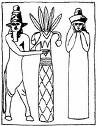
Above: Enlil, the Sumerian god of the Winds of the Cosmos
Seeding the hidden dimension with AN ACRE OF POPPIES by Nance Klehm for arthurmag.com
Come on then, what are you waiting for? Nothing. Let’s hurry. Yes, let’s run! Come on! Come on! Hurry! Hurry! Oh look! You can see it there. It’s wonderful. Oh…Oh… What’s happening? What is it? I can’t run anymore. I’m so sleepy. Here, give us your hands and we’ll pull you along. Oh no, please, I just have to rest for a moment. You can’t rest now, we’re almost there.
The hidden dimension of a public sphere is the sphere of the imagination. How we locate disorder and remedy it is how we imagine our body and mind. Disease and healing exist largely within our own perception. Individually. Collectively.
Poppies are a successful weed. They pollinate by the wind and drop their seed easily. 4000-year-old large seed heads have been found in the graves of stone age lake dwellers. The most ancient testimony of the poppy is on a small white clay tablet written in cuneiform found in the ancient spiritual center of the Sumerians – Nippur. Nippur held the shrine to Enlil, the god of the Winds of the Cosmos. It was in Mesopotamia, the land cradled between the Tigris and Euphrates and the birthplace of agriculture, less than 100 miles from Baghdad.
Iraq’s seed bank used to be located in the town of Abu Ghraib. After the 2003 American invasion, the Abu Ghraib facility was emptied of its seed-filled glass containers. Iraqi seed bank employees had sent a “black box” of seeds to Syria prior to the invasion. That box contains samples of 200 varieties of 28 of the country’s most important crop plants. This is what is left of Mesopotamian agriculture. These seeds are held in a freezer now, maybe grown out by some scientists, and not circulated. A tragic irony.
I have been gathering, sowing and collecting poppies during the last 15 years. From their frosty green lettuce-y foliage, fuzzy buds emerge and open to four crinkly silky petals, with black or white flares and olive to purple-black dusty pollen. Some are cool pink, but most are salmon colored.
HOW TO SOW AN ACRE OF POPPIES (right) NOW
(I mean NOW. February 28th through the first half of March. Get out there. Poppy seeds need the cold of late winter to wake up to germination.)
1. Find a spot of open ground that the sun will shine down upon.
2. Scratch the soil lightly loosening the entire surface no deeper than the depth of kitten claws.
3. Sprinkle some seeds—just a few, each seed needs space to grow.
4. Don’t cover them. The loosened soil has small rills and furrows that the seeds will settle in.
5. Walk away and let the next moisture event, be it rain or snow, settle the soil and seed. Find another sunny spot and repeat until done.
Don’t hesitate. Sow your part of that scattered acre NOW.
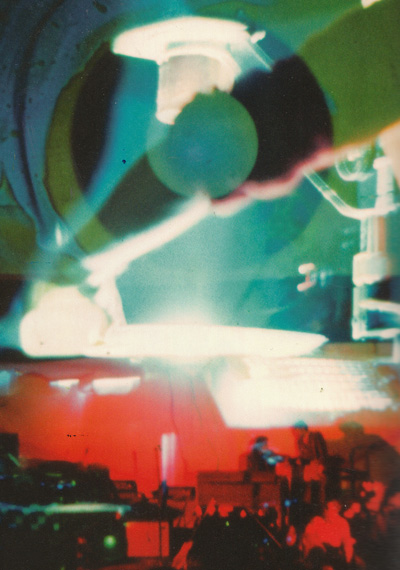
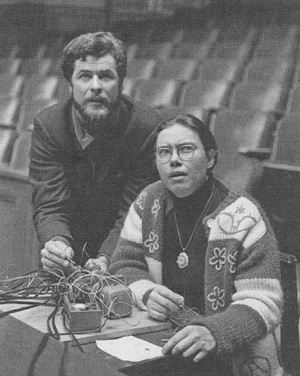
If you have a love for mind-bending experimental electronic music and euphoria-inducing light shows of swirling color, or if your copy of “A Rainbow in Curved Air” is worn down from being played more times than you could possibly count, consider yourself one lucky duck! This is your chance to see analog electronic music pioneer Pauline Oliveros collaborate live with visual composer and light manipulator Tony Martin in their piece Sound. Light. Migrations for Mills Music Festival 2009, followed in the same night by the wizard of the minimalist movement Terry Riley, woodwinds jazz maestro Roscoe Mitchell and Jean Jeanrenaud of the Kronos Quartnet. Hoo-boy! California, here I come!
Time & Date: Saturday, February 21st – 8PM Venue: MILLS COLLEGE (Oakland, CA) Location: Mills College Concert Hall / 5000 MacArthur Blvd. / Oakland, CA 94613 (More info & directions here) Price: $20 regular admission / $12 for seniors and alumnae, free for Mills College students (Purchase tickets here)
(Above: Tony Martin and Pauline Oliveros at Mills College in 1966)
In the last Depression, neighborhoods routinedly banded together to physically resist landlords, banks and their tools (police or hired thugs) from carrying out evictions on anyone on the block. Yesterday the NYTimes reported on efforts by Acorn and others (including the brave ‘n’ bright Rep. Marcy Kaptur of Ohio, who you can watch in the clip above, given a full fucking right on four-minute speech on the House floor) to organize resistance to foreclosure evictions on homesteaders, using 21c tools.
Keep in mind that many of the evictions that are happening now, and are likely to keep on happening, are on foreclosures of questionable legality; the entity doing the eviction often doesn’t have the paperwork in legal order because the mortgages have been sold and re-sold and packaged so many times in the market that it is difficult to figure who owns what, and what its value is. Or so I’m told.)
The New York Times – February 18, 2009
Effort Takes Shape to Support Families Facing Foreclosure
By FERNANDA SANTOS
As resistance to foreclosure evictions grows among homeowners, community leaders and some law enforcement officials, a broad civil disobedience campaign is starting in New York and other cities to support families who refuse orders to vacate their homes.
The community organizing group Acorn unveiled the campaign with a spirited rally on Friday at a Brooklyn church and will roll it out in at least 22 other cities in the coming weeks. Through phone trees, Web pages and text-messaging networks, the effort will connect families facing eviction with volunteers who will stand at their side as officers arrive, even if it means risking arrest. Continue reading →
Williamsburg’s resident former-Italian bakery, now-comic and artists’ book store Desert Island is hosting a free opening for “I Saw You: Comics Inspired by Real-Life Missed Connections” edited by Julia Wertz as well as comic books by over a dozen other cartoonists including Gabrielle Bell, Sam Henderson and Neil Swaab. On top of this, enjoy perusing the treasure trove of comics, zines, silkscreened artwork, and other bounty regularly available in the store for you to drool over.
Date & Time: Friday, February 20th, 7-9PM
Venue: DESERT ISLAND (BROOKLYN)
Location: 540 Metropolitan Ave / Brooklyn, NY 11211
Price: Free
Our pal Jody over at When You Awake has a new mixtape up, put together by Akron/Family member Dana Janssen. It’s called Top 10 Songs To Ride A Bike Thru NYC To and it features pedal-pushing hits from Harvey Milk, Fela, Tinariwen and Lil Wayne. It’s an annotated mixtape, naturally, so you can also look for tips on what to look out for (curbs) and drink after the ride (kombucha). Check it out here.
She also reminds us that Akron/Family will be playing a three-night run at the Steve Allen Theatre here in Los Angeles on March 10, 11 and 12, no doubt previewing material from their new album, Set ‘Em Wild, Set ‘Em Free, due out on May 5. The show is presented by Arthur and Aquarium Drunkard, and all you need to know is found by clicking here.
While you’re over at When You Awake you should also totally check out their double-disc set of post-Valentine’s Day jams, Music For The Morning After, featuring one disc of songs selected by bands like Vetiver, Howlin Rain and Beachwood Sparks. Disc two has another set of jams picked by writers, bloggers and DJs including Aquarium Drunkard, Little Radio, and a very special foresty nugget contributed by your humble Arthur Magazine contributing editor. Go get it here.
More on our selection, Kate Wolf’s “Early Morning Melody,” plus a bonus track after the jump.
In a technological down-shift that will warm many an aging Deadhead’s heart, cassette tapes continue to be the medium of choice deep in the American underground. This embrace of outmoded audio technology is old news to regular readers of Bull Tongue, Byron Coley and Thurston Moore’s Arthur column — new installments of which will be featured here on the Arthur site — but even old hands can find this network of brilliant and often purposefully obscure music tricky to navigate.
Among the many resources that your contributing editor consults in searching out the latest drone and psychedelic noise releases is Expressway To My Skull, an audioblog and review site maintained by Vancouver’s Mark E. Rich. Rich is on vacation at the moment, but prior to leaving he posted Expressway’s Guide To The Cassette Underground, a handy digest of “earth psych” labels, DIY distributors and cassette-only radio shows.
You can also check out his monthly cassette review columns by clicking here. Have a nice vacation, Mark.
Fascinating cultural anthropology perspective on American pro and college sports’ eras from Bourgeois Surrender blog, excerpt below. If anyone has any good leads on particular NFL Films and other archival/ethnographic sports films, pass em on in the Comments section…
Pro Football’s aesthetic peak spanned roughly the era of the 14-game schedule, 1961-1977. I might even restrict it to the 60s, before the AFL-NFL merger, because I like smaller, exclusive leagues, and the 70s saw the debut of a lot of new and ugly stadiums, but there was also a lot of interesting stuff going on in the early-mid 70s–the George Allen Redskins, the colorful Raiders teams, the great Miami teams, the great early Steelers teams, the very good Minnesota teams back when that franchise played outdoors in what wouldn’t be an acceptable stadium for a Division II college team today. The outstanding work of the NFL Films company in this era, when the corporate arm of the league as well as the coaches and players took themselves considerably less seriously than they do today, reveals all kinds of fascinating nuggets of detail about both football and everyday life in the 1960s and 70s that are astounding to see, or in some cases be reminded of, now. Everything was comparatively so small-time, or perhaps I would better say, on a reasonably human scale. The stadiums, the media coverage, the money, the players’ bodies, the locker room amenities, are all phenomena well within the realm of ordinary experience. The crowd at a modern game is so individually insignificant and stifled, overwhelmed by the spectacles of technology, money and modern security, as to be little better than ants. In most of the stadiums (stadia?) of the 60s they tended to be closer to the field, in more intimate communion both with the players and other people around them, less distracted by other demands on their attention; the filmed crowd shots of the era reveal livelier and more engaged expressions (as well as better clothes) than fans have nowadays, who if they are acting in an energized manner are probably responding to television or some other media provocation than anything they can see with their eyes. MORE











 Arthur Magazine