
Author Archives for Jay Babcock
GOD BLESS JELLO BIAFRA (Arthur, 2005)

Originally published in Arthur No. 14 (January 2005)
Photography and art direction by W.T. Nelson
God Bless Jello Biafra
The inspirational former Dead Kennedy and veteran punk gadfly talks with Sorina Diaconescu about what to do when the going gets grim.
Is there anybody better suited to comment on the absurdities and contradictions of America today than Jello Biafra—musician, activist, performer, poet, indie entrepreneur, First Amendment champion, scathing satirist and all-around radical artist that has inspired generations of young ‘uns the world over?
Here’s a man who at the tender age of 20 formed his first band, the visionary hardcore punk outfit Dead Kennedys, and was born anew as a frontman with a peculiar, quivering bark and a stage name contrived to invoke “plastic America and its overseas results.”
A legit icon of West Coast punk rock rebellion, the dude has withered blows that would have broken the hearts and the bones of the baddest motherfuckers out there. All the more, he did it with a big, lopsided grin smudged on his face, and an extended middle finger proudly pointing skyward.
Jello is now 46—which means he occasionally says things like, “you know, I’m not Iggy Pop and I’m not Henry Rollins, and I’m working my ass off trying to get in better shape and compensate for my age.” But his goal, as stated over the years, remains the same: “to kick over the apple cart of corruption.” While his avenues of expression have shifted back and forth between music and spoken word one thing is for sure: he can still provoke and enlighten, as his latest collaboration, with legendary iconoclasts Melvins, Never Breathe What You Can’t See, amply demonstrates.
Interviewing Jello is predictably fraught with intensity and drama but also deeply inspiring and laugh-out-loud hilarious. Time has not mellowed him. He’s still the same character we punk rock kids grew up loving: an articulate guy with a boundless imagination filled with ideas sick, funny and violent enough to score him enemies like Tipper Gore (who pretty much pegged her “Parental Warning” stickering campaign on his work) and the D.A.s’ offices in L.A. and San Francisco: In one of L.A.’s most notorious First Amendment lawsuits of the ‘80s, Jello and a cast of co-conspirators were charged with peddling obscene material to minors via sleeve art for the DKs record Frankenchrist. (The jury hung, the charges were dismissed, and even the D.A. who pursued the case in court eventually admitted to the press that his son “adores Jello and he plays his music all the time.”)
Continue readingDAVID CHAIM SMITH

How lucky are we to have David Chaim Smith posting new work regularly—and taking questions at his fbook page.
From bio on his website —
“1997: all activity in visual art suspended in favor of practical mysticism”
Amen, brother!
JUNIOR KIMBROUGH
VERY LATE NIGHT PARTY MUSIC FROM AN AMERICAN GENIUS, JUNIOR KIMBROUGH
EXCERPTED FROM THE ‘DEEP BLUES’ DOC FILM
JUNIOR’S BEST RECORDS AVAILABLE FROM FAT POSSUM
JESSE MOYNIHAN – LATEST
CISNEROS, DUDES
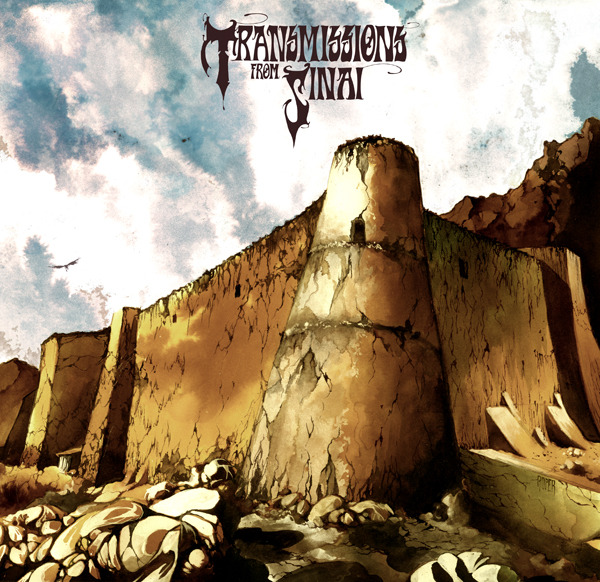
Al Cisneros of Om (and Sleep, and Shrinebuilder) put so much work into this compilation — curating and carefully sequencing a wide-ranging selection of tracks, going over the mix and master four times to make sure it was perfect — for so few people to know about it. Chalk it up to unfortunate timing (2009 was a very rough year). We have a couple hundred copies left of the first (and only) printing. Cover artwork by longtime Cisneros collaborator and Arthur contributor/ally Arik Roper. $8 US. Track listing and order info:
http://bit.ly/GZukmf
RIP ROBERT CAGE
From Fat Possum Records, July 23, 2012:
We regretfully report the passing of bluesman Robert Cage. 1937 – 2012

REIGN IN BLOOD: The secret mark that French pulp villain FANTOMAS left on the Twentieth Century, by Erik Morse (Arthur, 2008)
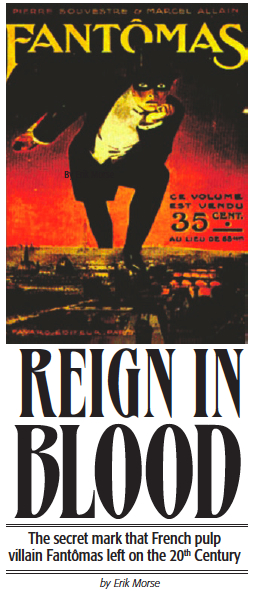
REIGN IN BLOOD
The secret mark that French pulp villain Fantômas left on the Twentieth Century
By Erik Morse
Art direction by Mark Frohman and Molly Frances
Originally published in Arthur No. 28 (March, 2008)
Early in 1911 popular French publishing house Fayard released the first of 32 monthly serial novels of Marcel Allain and Pierre Souvestre’s Fantômas. Subtitled ‘A Shadow on the Guillotine,’ this ultra-violent pulp tale recounted the exploits of the eponymous master villain as he reined blood and magick upon the boulevards of Paris. Pursued by police inspector, Juve, and his journalist sidekick, Jerome Fandor, Fantômas slaughters members of French high-society indiscriminately before stealing away with their wealth and, often, their very identities—in his travels between the Dordogne and Paris, Fantômas dispatches the Marquise de Langrune, her steward Dollon, Lord Beltham, Princess Sonia Danidoff, the famed actor Valgrand and a passenger liner full of travelers en route to South America. When Fantômas, alias Etienne Rambert, alias Gurn, is apprehended by Juve at Lady Beltham’s villa, he is brought to trial at the Palais de Justice, found guilty of murder and condemned to the guillotine. However with the aid of his mistress, Fantômas steals away from his Santé prison cell and fills the vacancy with an unsuspecting look-a-like who is left to the blade. When Juve discovers the ruse, he proclaims, “Curses! Fantômas has escaped! Fantômas is free! He had an innocent man executed in his place! Fantômas! I tell you, Fantômas is alive.”
Within months of its February debut, the Fantômas serial became a pop smash with the reading public, profiting no doubt from the French public’s unquenchable thirst for violence, mayhem and pulp. At 65 centimes a copy, sales for each volume reached easily into the hundreds of thousands. American poet and Fantômas enthusiast John Ashbery contends that the real success of the serial was its transcendence of class, education and sex, from “Countesses and concierges: poets and proletarians; cubists, nascent Dadaists, soon-to-surrealists. Everyone who could read, and even those who could not, shivered at posters of a masked man in impeccable evening clothes, dagger in hand, looming over Paris like a somber Gulliver, contemplating hideous misdeeds from which no citizen was safe.” Such was the popular reaction to the Fayard publication, Marcel Allain would later recall, with some hyperbole, “The adventures of Fantômas have surpassed those of the Bible.”
Nearly a hundred years later, we can see the frightening metastasis of the master of crime’s “brand”—from his beginnings amongst the Right Bank sophisticates who released him upon the world, to the marauding gangs plundering and murdering in his name, to the sacrificial cults who would congregate at the witching hour to reenact his sins. His trangressions—bold, fiendish and inexplicable—were the narratives of nightmares. Fantômas captured the imagination of his admirers and extended his influence through the artistic genealogies of Europe, leaving a catechism of excess, debauchery and violence to a brood as varied as Pablo Picasso, Andre Breton, Jean Cocteau, Georges Bataille, Alain Robbe-Grillet, James Joyce, Guillaume Apollinaire, Robert Desnos, Jean Marais, Alain Resnais, René Magritte, Francois Truffaut; and the Mike Patton-Buzz Osbourne-Trevor Dunn-Dave Lombardo art-rock superband of the same name. In their major contributions to the century, the words and deeds of France’s supreme villain pullulate still more revolutionary achievements and still darker crimes.
Here, in this extended fait-diver, is the unedited, uncensored and untold history of the criminal of the century.
Continue readingWONDERFUL NEWS: Vanessa Veselka's ZAZEN wins her a major prize from PEN

Author VANESSA VESELKA has won the 2012 PEN/Robert W. Bingham Prize for her novel Zazen, serialized on Arthur’s website during 2009 and published by Red Lemonade in 2011.
From PEN.org:
2012 Winner
Vanessa Veselka, Zazen
The judges wrote in their citation:
“When practicing zazen, the disposition of our mind should be to see without being marred by what we see. This definition stands in stark contrast to the experience of reading Vanessa Veselka’s keen dystopian novel Zazen: we can’t help but be injured and destabilized. We can’t help but find the contents at once disturbing and funny, explosive and muted, encyclopedic, intimate, and painfully honest. On top of all this, Veselka has thrown herself into every single sentence of this lyrical, incisive, nervy book, turning even the most nightmarish scenes and satirical dialogue into effortless beauty. An ambitious encapsulation of our modern times, Zazen tackles counter-culture hipsters, geology, Buddhism, consumerism, terrorism, veganism, family drama, and, above all, love. In doing so, Zazen brings to the foreground the most fragile aspects of living the 21st century life, and how, in the end, we as a society can become the very thing we fear.”
The PEN/Robert W. Bingham Prize honors an exceptionally talented fiction writer whose debut work—a novel or collection of short stories—represents distinguished literary achievement and suggests great promise. The winner receives a cash award of $25,000, a stipend intended to permit a significant degree of leisure in which to pursue a second work of literary fiction. The winner is also encouraged to become an active participant in the PEN community and its programs.
2012 Judges: Lauren Groff, Dinaw Mengestu, and Nami Mun.
Past winners: Carolyn Cooke, Matthew Klam, Manil Suri, Jonathan Safran Foer, Monique Truong, Will Heinrich, Christopher Coake, Janna Levin, Dalia Sofer, Donald Ray Pollock, Paul Harding, Danielle Evans, and Susanna Daniel.
CHARLIE NOTHING WAS SOMETHING ELSE
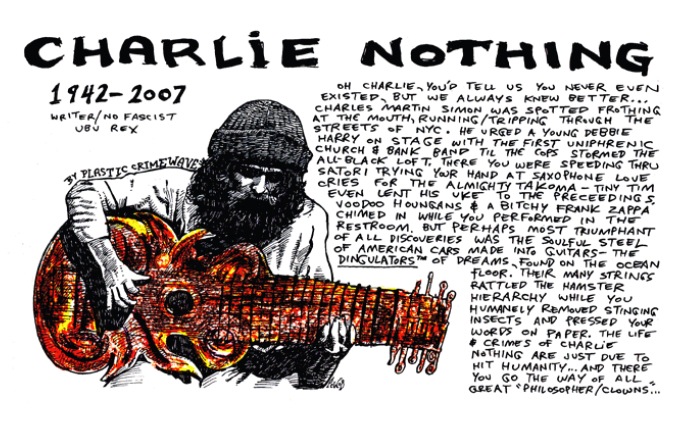
CHARLIE NOTHING, memorialized by Plastic Crimewave.
Originally published in Arthur No. 28 (March 2008), avail for $5 from The Arthur Store.
More Charlie Nothing: de stijl records
 Arthur Magazine