
NYPD covert surveillance for RepubCon 04 – update

The New York Times- August 7, 2007

Judge Orders Release of Reports on ’04 Surveillance

By ROBERT D. McFADDEN

A federal judge yesterday rejected New York City’s efforts to prevent the release of nearly 2,000 pages of raw intelligence reports and other documents detailing the Police Department’s covert surveillance of protest groups and individual activists before the Republican National Convention in 2004.

In a 20-page ruling, Magistrate Judge James C. Francis IV ordered the disclosure of hundreds of field intelligence reports by undercover investigators who compiled dossiers on protest groups in a huge operation that the police said was needed to head off violence and disruptions at the convention.

But at the behest of the city and with the concurrence of civil liberties lawyers representing plaintiffs who were swept up in mass arrests during the convention, the judge agreed to the deletion of sensitive information in the documents to protect the identities of undercover officers and confidential informants and to safeguard police investigative methods and the privacy of individuals caught up in investigations.

The city had largely based its contention for nondisclosure on the need to protect those identities and methods, and had also argued against disclosure because the public might misinterpret the documents or the news media sensationalize them.

But the civil liberties lawyers insisted that the documents — even without the sensitive materials — were needed to show in court that the police had overstepped legal boundaries in arresting, detaining and fingerprinting hundreds of people instead of handing out summonses for minor offenses.

The ruling was the latest development in the long-running case, which posed thorny questions about the free speech rights of protesters and the means used by law enforcement officials to maintain public order.

It appeared that the plaintiffs, who had denounced the police for trampling on the civil liberties of protesters who were fingerprinted and detained at length for minor offenses, had largely won the day, while the city had achieved a more limited objective.

The city and the Police Department have come under intense scrutiny over the surveillance tactics, in which for more than a year before the convention undercover officers traveled to cities across the country, and to Canada and Europe, to conduct covert observations of people who planned to attend. But beyond potential troublemakers, those placed under surveillance included street theater companies, church groups, antiwar activists, environmentalists, and people opposed to the death penalty, globalization and other government policies.

And as the convention unfolded, more than 1,800 people were arrested, mostly for minor violations, and many were herded into pens at a Hudson River pier and fingerprinted instead of being released on summonses or desk appearance tickets, which are more customary for such minor charges.

As scores of federal lawsuits challenging the mass arrests on Aug. 31, 2004, were filed in Federal District Court in Manhattan, with plaintiffs claiming wrongful detentions of up to two days and other violations by the police to keep protesters off the streets, the outlines of the extensive covert surveillance operation began to emerge from court records.

In March, The New York Times disclosed details of the sweeping operation, including a sample of raw intelligence documents and summaries of observations from field agents and the police cyberintelligence unit. Some plaintiffs and their lawyers, seeking to bolster their cases, asked the court to disclose the documents. In May, Judge Francis allowed the disclosure of 600 pages of secret documents relating to preconvention security preparations.

But a second batch of documents, including pictures and reports by undercover agents detailing which protest groups were infiltrated and the results of the surveillance operations, remained in contention. The city argued that disclosure would reveal sources, methods and other information that might compromise current and future investigations, while the plaintiffs contended that the reports would disprove city claims that the protesters planned to engage in violence, and would show that mass arrests had been unnecessary.

In his ruling yesterday, Judge Francis acknowledged that some information in the documents needed to be protected. He himself edited out what he regarded as privileged law enforcement information in many “field intelligence reports” from agents covering confidential sources and techniques. And he did not order the release of documents in which the Republican convention was not mentioned.

But he rebuffed city arguments that general information gathered about an organization would necessarily jeopardize confidential police matters. “It is difficult to imagine how someone could determine the identity of an undercover officer simply from the fact that he or she was present at a meeting or protest attended by dozens, if not hundreds, of people,” the judge declared.

"Kingdom of Fungi" Mouse Pad by Taylor Lockwood

“Another show-stopper from Taylor Lockwood, this durable rubber-backed computer mouse pad features a breathtaking photographic composition of colorful forest fungi. Not some photo-booth quick-print accessory that will quickly smudge or fade, this is a high-quality, professionally printed product that will grace your desk or workstation for years to come. Measures 9 1/4 x 7 3/4″ , with a 3/32″ rubber backing.”

Available from Fungi Perfecti, of course. Be a dear and tell them Arthur Magazine sent you.

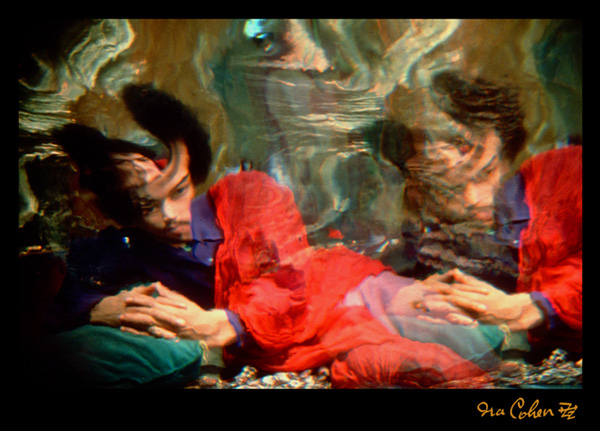
ENDS AUG. 7 – ebay auction to benefit Arthur Magazine: Jimi Hendrix, photographed by Ira Cohen in the mylar chamber (1968) – ltd edition signed print

TITLE: Jimi Hendrix
YEAR: 1968
SIZE: 16” x 20”
FORMAT: cibachrome, signed and unframed

All proceeds from the sale of this photograph will be donated to support ARTHUR MAGAZINE.

Currently on exhibit at the Whitney Museum’s “Summer of Love” program

“Looking at these pictures is like looking through butterfly wings …” – Jimi Hendrix

“A rare portrait of Jimi Hendrix with his double, one of the last portraits taken in the Mylar Chamber and one of the most memorable.” – Ira Cohen.

IAN MACFADYEN ON IRA COHEN’S PHOTOGRAPHS

MacFadyen on Ira Cohen: ” Cohen’s colour photographs are reflections in sheets of mylar, images of reversal and transformation, the human form in fluid metamorphosis. These images split and coalesce and vibrate in phantasmagoric configurations, suggesting both the flux of psychedelic consciousness and the reconstitution of physical matter at the atomic level. Henri Michaux, in The Major Ordeals of the Mind, writes of this “disorganizing flux, the frenzied surge which overflows in every direction, which cannot be controlled, retained or contained…” Cohen’s photographs do in fact frame and fix this delirium to an extent, which Michaux saw as the function of the artist who has been there, and brought back evidence: “For someone who knows how to deal with it…there exists a possibility of transforming the scattering, dissipating, dislocating, devastating, breaking, tearing, disco-ordinating convulsiveness into an ally, into the prop, the support of a future radiance and illumination, the very springboard of transcendence…”.

Every few years we exist in a new body, down to the last molecule, and in these hallucinatory photos we see ourselves as shape-shifters, fugitive apparitions of life which dematerializes all around us, every day, in secret. We are, in Deborah Levy’s phrase, the ‘Beautiful Mutants’. It is as if Cohen, recognizing the quality of pose and arrangement in his black-and-white portraits, at some stage felt compelled to shatter the image of contained consciousness, fixed body, permanent personality. His mylar pictures reveal to us another world, an anti-world of anti-matter where sub-atomic particles spin in an orbit reverse to the world we think we know. In Cohen’s swirling, vertiginous movie The Invasion of Thunderbolt Pagoda, the human form becomes pure image–stretched, twisted, continually in the process of appearing and disappearing. These mutations and metamorphoses of body and consciousness resemble psychic ‘spirit photography’ of the 1920s, La photographie Transcendantale. Significantly, Cohen refers to these mylar images as astral projections and clearly they have emerged from the outer regions of photography itself – etheric spectres of the Image, psychic apparitions and alien visitations. This is the photography of the séance, and the quantum photography of other worlds.”

MORE ABOUT IRA COHEN – www.iracohen.org


"Until he came to London Kumti Majhi had never worn shoes before – he had never needed to."

Mining giant faces tribal protest

06 August 2007 – The Independent

Until he came to London Kumti Majhi had never worn shoes before – he had never needed to. A member of the Dongria Kondh, one of India’s most traditional tribes from the forested hills in the state of Orissa, he had never had any need to put any protection on his feet.

But the tribal leader knew shoes would be needed if he was to try to halt the construction of a £400m bauxite mine on the Niyamgiri Mountain, the Dongria Kondh’s homeland and a hill they worship as their god.

Since building of the mine and its adjacent alumina refinery first began in 2004 by the UK-based mining giant Vedanta Resources, a battle has raged between the FTSE-100 company on one side and environmentalists and tribal members on the other who say the mine has already caused untold misery and is an ecological disaster waiting to happen.

Last week Kumti Majhi travelled from his village to the annual general meeting of Vedanta Resources to inform shareholders of the fate of his people. Although reporters were banned from attending the AGM, The Independent spoke to Mr Majhi outside the Mayfair conference centre.

“Niyamgiri Mountain is a living god for us,” said the father of four who until now had never left the state of Orissa. “It has provided us with food, water and our livelihoods for generations. Even if we have to die protecting our god we will not hesitate, we will not let it go.”

On Thursday critics of the mine will finally find out whether their three-year campaign has been successful when the Indian Supreme Court sits to rule on the construction’s legality. Three petitioners have brought cases against Vedanta in what could be a landmark ruling .

A Supreme Court committee has already accused Vedanta of “blatant violation” of planning and environmental guidelines. A separate report from the Wildlife Institute of India also criticised the project citing its “irreversible” impact on the environment.

Activists say the project is a threat to the environment and to the distinct culture and practices of the three Kondh tribes that for centuries have had a symbiotic relationship with their sacred mountain, foraging and hunting in some areas and eschewing other areas out of respect.

Vedanta rejected accusations that the rehabilitation of families was unsuitable and strongly defended its environmental record saying the company had abided by all environmental regulations.

"He is Twilight's Last Gleaming."

The government has commissioned living weapons of mass destruction to wage war on terror. The survivors return home broken, bitter, insane. Some form gangs, some go psycho. Some turn into ‘A’ list celebrities with ‘A’ bomb fists. The city is now a war zone.

San Futuro needs a Super Cop to enforce summary justice. His eyes will reflect the rocket’s red glare. He is Twilight’s Last Gleaming.

MARSHAL LAW

A bad choice is better than no choice at all.

**********************************

“Top Shelf is proud to announce that it has just signed Pat Mills and Kevin O’Neill’s MARSHAL LAW, and will publish a MARSHAL LAW Omnibus next year — THE all-up one-volume, full-color, 500(+)-page definitive MARSHAL LAW collection.”

The decline of the magazine cover

vogue.jpg

“In the 20’s and 30’s and on into the 40’s and even 50’s and 60’s the image on a magazine cover was all important, and standing out from the competition on the shelves was regarded as fundamental to its success. Stunning ‘Poster Covers’ as they were called were fêted by every magazine from Vogue to Vanity Fair, Esquire and Harper’s Bazaar, and of course Life magazine in photographic terms.

“Over time however the ‘Poster Cover’ and its defenders in the magazine’s Art rooms began to slowly lose favor to the philosophy of ‘cover lines‘ and what would begin as a whole new direction in magazine cover design. This I think can also be seen as a sure sign of the rising influence of marketeers and advertising suits within a magazine’s boardroom and the increased marginalization of its art department’s influence. The magazine cover had become in many cases no more than a grotesquely enlarged small ad.”

Continues here.

"Bread and Puppet continues, more than 40 years on, to live an ideal of art as collective enterprise, a free or low-cost alternative voice outside the profit system."

The New York Times- August 5, 2007

Spectacle for the Heart and Soul

By HOLLAND COTTER

GLOVER, Vt.

FOR the first time in many summers the Bread and Puppet Theater will travel nine hours from northern Vermont for a New York City gig, at Lincoln Center on Wednesday evening. Then the troupe will turn around and ride back to its farm just below the Canadian border, where it will put on the same show. You can easily spot the group en route: 1963 school bus, painted sky blue, with a mountain landscape, an angel and a beaming sun on the side.

People who know of the troupe without really knowing its work tend to link it to political street theater of the 1960s, an accurate but incomplete association. Recently I’ve been thinking of the theater in a contemporary context. At a time when the art industry is awash in cash and privilege, and theater tickets routinely go for $100 or more, Bread and Puppet continues, more than 40 years on, to live an ideal of art as collective enterprise, a free or low-cost alternative voice outside the profit system.

I have another association with the troupe: Bread and Puppet gave me the single most beautiful sight I’ve ever seen in a theater. That was in 1982, in the sloping, wide-open field that is part of the theater’s farm in Glover, Vt. There the collective was presenting a two-day festival, Our Domestic Resurrection Circus, as it had done almost every summer since relocating from the Lower East Side of Manhattan in the early 1970s.

The circus, a bunch of political skits, concerts and vaudeville acts, took place in the afternoon, and it was fun. (The troupe’s Lincoln Center appearance will follow more or less this format, on a smaller scale.) Then at sunset came the pageant, a kind of morality play told in epic visual terms. During Vietnam the themes had been specific. Wrongs had a name and a solution: Stop the war. By the 1980s the issues had become many and complicated — threatened nature, global consumerism, nuclear dangers — and remedies far less sure. The 1982 pageant had an odd tone, brusque and apocalyptic. It opened with a bucolic scene: little cutout houses and trees carried onto the field, followed by puppets of dancing cows. Villagers in masks arrived, milked the cows, settled down to bed, woke up, had children who within minutes had children of their own. This was ordinary life set to haunting music: vigorous, low-church American folk hymns from the 19th-century collection “The Sacred Harp.”

Suddenly four dark puppet horses with devil riders wheeled in from afar, backed by a huge dragon. Almost without warning the devils waved black banners over the villagers, who fell to the ground, dead. The devils then piled the houses and horses together and set them alight. Good and evil alike were in flames. Moral chaos. End of story.

But not quite. As the fire burned, a half-dozen great white gulls or cranes — muslin kites carried on sticks by runners — soared up from the horizon and started flying in our direction. They came right to the flames and soared over them as if looking for signs of life. Then they circled back across the field, melting into darkness. It was fantastic. Only when they were out of sight did I see that night had fallen and stars were out. It felt like an impossible trick of stagecraft, a miracle. I had been simultaneously transported and pulled back to earth.

Continue reading

"Workers of the world… relax!"

THE ABOLITION OF WORK
by Bob Black

No one should ever work.

Work is the source of nearly all the misery in the world. Almost any evil you’d care to name comes from working or from living in a world designed for work. In order to stop suffering, we have to stop working.

That doesn’t mean we have to stop doing things. It does mean creating a new way of life based on play; in other words, a ludic revolution. By “play” I mean also festivity, creativity, conviviality, commensality, and maybe even art. There is more to play than child’s play, as worthy as that is. I call for a collective adventure in generalized joy and freely interdependent exuberance. Play isn’t passive. Doubtless we all need a lot more time for sheer sloth and slack than we ever enjoy now, regardless of income or occupation, but once recovered from employment-induced exhaustion nearly all of us want to act.

The ludic life is totally incompatible with existing reality. So much the worse for “reality,” the gravity hole that sucks the vitality from the little in life that still distinguishes it from mere survival. Curiously — or maybe not — all the old ideologies are conservative because they believe in work. Some of them, like Marxism and most brands of anarchism, believe in work all the more fiercely because they believe in so little else.

Liberals say we should end employment discrimination. I say we should end employment. Conservatives support right-to-work laws. Following Karl Marx’s wayward son-in-law Paul Lafargue I support the right to be lazy. Leftists favor full employment. Like the surrealists — except that I’m not kidding — I favor full unemployment. Trotskyists agitate for permanent revolution. I agitate for permanent revelry. But if all the ideologues (as they do) advocate work — and not only because they plan to make other people do theirs — they are strangely reluctant to say so. They will carry on endlessly about wages, hours, working conditions, exploitation, productivity, profitability. They’ll gladly talk about anything but work itself. These experts who offer to do our thinking for us rarely share their conclusions about work, for all its saliency in the lives of all of us. Among themselves they quibble over the details. Unions and management agree that we ought to sell the time of our lives in exchange for survival, although they haggle over the price. Marxists think we should be bossed by bureaucrats. Libertarians think we should be bossed by businessmen. Feminists don’t care which form bossing takes so long as the bosses are women. Clearly these ideology-mongers have serious differences over how to divvy up the spoils of power. Just as clearly, none of them have any objection to power as such and all of them want to keep us working.

You may be wondering if I’m joking or serious. I’m joking and serious. To be ludic is not to be ludicrous. Play doesn’t have to be frivolous, although frivolity isn’t triviality; very often we ought to take frivolity seriously. I’d like life to be a game — but a game with high stakes. I want to play for keeps.

Continue reading