zZz is playing Grip

Grip is a video clip for the band zZz. Grip is a one take, top shot videoclip with professional trampoline gymnasts simulating typical video effects. The video has been recorded live as part of the opening ‘Nederclips’ at the Stedelijk museum ‘S-Hertogenbosch SM’S (curated by Bart Rutten).

“The project was commissioned by the TAX-videoclipfonds and an important criteria was that the audience of the opening was be able to witness the whole shoot, another criteria was that it should be added to the exhibition immediately after the shoot was done. So we had no option to reshoot or edit if something went wrong. This made us so focussed that we did better that any of us have could imagined.”

Scenes from L.A.'s R&B past…

from an AMAZING and long-overdue piece of photojournalism on L.A.’s old-old-OLD school R & B scene by DUMB ANGEL MAGAZINE…

South Central Los Angeles R&B Venues of the ’50s and ’60s

By Domenic Priore and Brian Chidester, Summer 2007

“Los Angeles is quite often overlooked as a major center of R&B and Soul during the first rock ’n’ roll era. The Central Avenue Jazz and R&B scene from the ’20s through the early ’50s is well documented by the book and companion CD box set Central Avenue Sounds. That fantastic series ends as the Central Avenue scene disperses with the integration of L.A. jazz musicians into the clubs and movie soundtrack work to come in Hollywood. After that, a neighborhood Northwest of the core Central Avenue area would flourish as a new African-American nightlife center. Beginning near the corner of Pico and Western Avenues, then heading South to Santa Barbara Boulevard (now Martin Luther King Jr. Boulevard), with a right turn (West) to Crenshaw on MLK, a myriad of new clubs would open up and host some of the most brilliant R&B from the period…”

hipped to this by Peter Relic!


Owsley surfaces: "What I did was a community service."

For the unrepentant patriarch of LSD, long, strange trip winds back to Bay Area

Joel Selvin, Chronicle Senior Pop Music Critic

Thursday, July 12, 2007 San Francisco Chronicle

The small, barefoot man in black T-shirt and blue jeans barely rates a second glance from the other Starbucks patrons in downtown San Rafael, although he is one of the men who virtually made the ’60s. Because Augustus Owsley Stanley III has spent his life avoiding photographs, few people would know what he looks like.

The name Owsley became a noun that appears in the Oxford dictionary as English street slang for good acid. It is the most famous brand name in LSD history. Probably the first private individual to manufacture the psychedelic, “Owsley” is a folk hero of the counterculture, celebrated in songs by the Grateful Dead and Steely Dan.

For more than 20 years, Stanley — at 72, still known as the Bear — has been living with his wife, Sheila, off the grid, in the outback of Queensland, Australia, where he makes small gold and enamel sculptures and keeps in touch with the world through the Internet.

As a planned two-week visit to the Bay Area stretched to three, four and then five weeks, Bear agreed to give The Chronicle an interview because a friend asked him. He has rarely consented to speak to the press about his life, his work or his unconventional thinking on matters such as the coming ice age or his all-meat diet.

Sporting a buccaneer’s earring he got when he was in jail and a hearing aid on the same ear, he keeps a salty goatee, and the sides of his face look boiled clean from seven weeks of maximum radiation treatment for throat cancer. Having lost one of his vocal cords, he speaks only in a whispered croak these days. At one point, he was reduced to injecting his puree of steak and espresso directly into his stomach.

Continue reading

The Fugs at Printed Matter NYC…

COPENHAGEN, DENMARK – MAY: Tuli Kupferberg of The Fugs performs on stage in Copenhagen in May 1968. (Photo by Jan Persson/Redferns)


“A sixth-floor walkup band”: The Fugs in Sweden, 1968 (photo: Jan Persson)

The Dope-Thrill Fugs
Recommendations by R.C. Baker

July 3rd, 2007 Village Voice

‘Fuck for Peace: A History of the Fugs’
Printed Matter
195 Tenth Avenue Through September 8

‘Celebrate Independence Day with flagrant free speech and populist ridicule of the ruling class at this bracing exhibition of protest ephemera. An example of the former: songwriter Ed Sanders’s 1967 poetry collection, Fuck God in the Ass; of the latter: a photo of Nelson Rockefeller flipping the bird, which adorns the cover of bandmate Tuli Kupferberg’s Less Newspoems, a chapbook that sold for “70 cents (2 for 69).” With music self-described as “anti-war/anti-creep/anti-repression” and “dope-thrill chants,” the Fugs (whom Lester Bangs characterized as “not a garage band so much as a sixth-floor walkup band”) represented a major fault line in the cultural tectonics of the ’60s. Somehow they signed with Frank Sinatra’s Reprise label, though they often parodied the hep cats of yore (Kupferberg did a rousing rendition of the “Goldfinger” theme, substituting “Stink-fingaaaaah . . .”). It’s fascinating to see the men’s magazine Cavalier present the band in East Village dishabille near an ad touting a swell in top hat and tails fondling a “Life-Size Instant Party Doll.” The times were certainly a-changin’, and in that grim year of 1968, with the Vietnam War grinding on and Nixon newly elected to lead it, one reviewer, a World War II vet, confessed to surprised admiration for the group in an article headlined “Cause to Worry: Fugs Make Sense.” Album covers such as Star Peace anticipated the Day-Glo tubular stylings of the Blue Man Group, while It Crawled Into My Hand, Honest features Wagnerian costumes worthy of Bugs Bunny’s “What’s Opera, Doc?” Just as wandering through Rome’s Santa Maria del Popolo, surrounded by Caravaggios and Carracis, can sweep you back to the Baroque era, this bookstore’s walls—plastered with mimeographed flyers, loopy fan mail, smutty posters, and FBI surveillance files—truly capture the ’60s at street (or perhaps more accurately, gutter) level.’

link courtesy Michael Simmons!

Arthur feature in The Nation

Arthur: The Little Magazine That Could

You thought Arthur was gone for good? The indie magazine beloved for its music coverage and antiwar politics will resume publishing this summer.

by KEVIN MCCARTHY

THE NATION — July 16, 2007 issue

In 2002 a free counterculture music magazine, Arthur, came onto the underground scene and won readers in just about every city where young people (and some older ones) still flouted local noise ordinances. Edited by LA-based music journalist Jay Babcock and published by Philadelphia-based independent media veteran Laris Kreslins, it was distributed by volunteers across the nation who delivered issues to coffee shops, record stores and bookstores. With contributors like Thurston Moore of the legendary punk/noise band Sonic Youth; T-Model Ford, the elder blues statesman and Arthur advice columnist; and writer Trinie Dalton, the magazine specialized in long stories and interviews on wide-ranging subjects, from ’60s “White Panther” leader and MC5 manager John Sinclair, to ambient music pioneer Brian Eno, to novelist J.G. Ballard, to contemporary folk musician Devendra Banhart–each representing a segment of the counterculture.

Arthur’s music coverage has been among the most influential of its era, but the magazine was never just about music–it was from the beginning fiercely political. Babcock, who studied political science at UCLA, had at one time worked for Congressman Henry Waxman and drafted Waxman’s anti-NAFTA position paper. As the magazine was launching, the war in Iraq was being sold, and Arthur defined itself as a virulently antiwar publication; the magazine dedicated its fifth issue to a critique of the war. (The cover of that issue depicted comedian David Cross as a soccer mom cheerleading the war surrounded by the words “Hooray for Empire” and “USA #1 with a Bullet.”) The editors never stopped questioning the war and military recruitment. In 2004 Arthur teamed with the American Friends Service Committee (AFSC) to run a PSA for antirecruitment campaigns in its pages. Then in May 2006, in an issue of Arthur, Babcock challenged Sully Erna of the rock band Godsmack for licensing his music to the military for use in recruitment ads and for using military images at concerts. The magazine’s pages were a regular space for artists and writers like Talking Heads frontman David Byrne and Kyp Malone, of the indie band TV on the Radio, to speak out against the war and President Bush.

Earlier this year, Arthur announced that it would no longer continue printing. Not long after, however, Babcock reached a deal with Kreslins and is about to relaunch the magazine as its editor and publisher. The next issue will arrive in record stores sometime in August. The Nation recently spoke to Babcock by phone about publishing a counterculture magazine in the current economic and political environment.

What drove you to start Arthur?

[As a culture/arts journalist] I grew more and more frustrated with the limitation of subject matter, technique and the length of story available to me in the outlets that existed. I realized that many other writers were feeling the same way. I thought the only way to do what I wanted to do was instead of campaigning for somebody to come to their senses, I would start my own magazine.

How did you get the magazine going?

I didn’t come from money, and I didn’t have any money. Laris didn’t come from money. So we pooled our credit cards and were able to start to pay the printer and so forth. The publishing situation in the United States has gotten to the point where you really do have to be wealthy in order to publish. Everyone can have access to a printing press, but hardly anyone outside the wealthy has access to the newsstands. It requires a huge amount of capital to start up a magazine and print it, and then convince the distributors that it deserves to distributed, and then be able to wait for them to pay you. The newsstand distribution system in this country is notoriously inefficient and corrupt…. That wasn’t an option for us. So what we did was, we created essentially an underground, alternate form of distribution.

What is the vision behind Arthur?

The biggest underlying idea is that the culture drives everything else. Culture creates the metaphors and the landscape on which politics and economics and so forth take place. And so then you ask: What kind of culture are you making, or taking part in, or helping to exist? Our idea was to do what all the other underground magazines or publications in America have done over the last 200 years or whatever, which was to attempt to infuse into the culture at large all of the liberatory, progressive and expansive ideas of freedom and values from the traditional underground, and to celebrate them, propagandize for them and push them.

What were your models?

We want to be in the tradition of the American underground press. Especially the twentieth-century underground press. Whether it’s the punk magazines, or the rave magazines, or the amazing underground press that was happening in the late ’60s and early ’70s, or the mimeo scene before that in the ’60s and ’50s, with the Beats and the whole literary poetic scene–there’s a whole tradition you can go back to: anarchist magazines, Wobbly magazines and so forth. And there’s always been artists and poets, and the serious ones have always been political, engaged and very far to the left.

Arthur grew more and more political. The fifth issue is dedicated almost entirely to looking at American imperialism. How did that political consciousness develop?

By the second issue the war stuff was starting to happen, and by coincidence we had a section about [civil rights and antiwar protest photographer] Charles Brittin. We found out that he had a photo of a parade of veterans against the Vietnam War that happened in LA in the late ’60s. It’s an incredible photo from the corner of Wilshire and Vermont that was just mind-blowing for those of us who live here in LA, to see this familiar landscape filled not with cars and billboards but with ex-soldiers protesting the war as far as the eye could see. So we elected to make that a centerfold.

For the third issue we did a back page that said “What War Looks Like,” and it was a picture from a book by [LA punk musician] Exene Cervenka, a photograph of an Iraqi soldier, dead, from the first Gulf War, with parts of his body blown off. It’s an extremely gruesome black-and-white photo that says all sorts of things about what war is, what it does to people, what people who kill have to look at. And you look at what the soldier was wearing–he’s wearing dress shoes, which shows how mighty the Iraqi army was that we were so afraid of. It was nothing–they didn’t even have boots.

And by the time we got to the fifth issue the war had started already and it was getting worse. We went all the way. We solicited special advertising saying we were doing an emergency issue of Arthur. We assembled it in just four weeks. Arthur isn’t exactly the biggest megaphone–but the megaphone that we did have was very carefully directed at this cultural class where things develop and bubble up occasionally into the mainstream consciousness. We wanted to be an incubator space. No other pop culture or culture magazine was taking any stand like that. We did it and we didn’t think we’d have much effect, but we did think we would be a comfort and an aid to those people in the culture who were doing good work but who needed to know that they weren’t the only ones out there, which would allow them to go on with what they were doing and to feel that what they were doing was worthwhile.

You mention in the editor’s notes in a later issue that you got a lot of mail about the fifth issue, some supportive and some very critical.

When you’re a small magazine, you need every issue that you put out to say the same thing over and over about what you’re doing, so that people who see it for the first time can get an idea about what it is you do. So it was very dangerous for us to completely depart from any music coverage, any arts coverage, and devote almost an entire issue to a radical political position stated in pretty blunt terms. We thought, Are we endangering our relationship with our advertisers? But because what we had done was something no one else was doing, it worked in our favor as a business. It won us a good amount of readers who were just shocked that there was this publication in record stores and coffeehouses for free, where you’re usually supposed to find pretty superficial status quo stuff—instead you’re finding this radical, impassioned and very smart talk about what was going on that you couldn’t find elsewhere. That a tiny magazine, with no budget and no capital, could put that together and nobody else could do that with their vast hundreds of millions of dollars, while the Hollywood liberals were all wringing their hands–that says something, not about how great we were but about how awful everybody else was.

Whom were you trying to reach?

We were very conscious that our audiences, our people, were artists themselves, musicians themselves, the record store clerks of America, and we wanted to remind them that they’re being told to shut up and not have an opinion and not state your opinion unless you are a politician or a Middle East expert. And we wanted to remind them that actually the voice of the poet, and the artist, and the musician is often where the deeper wisdom comes from. Those voices have always been heard, have always needed to be present and have always played a role.

By the time you get to the ninth issue [of Arthur], every artist we’re covering is talking out loud about what’s up. In that issue we ran a whole page put together in conjunction with the AFSC about how to counter military recruitment on campuses, in high schools and colleges. We’d already moved to the next part–you can’t have a war unless you have soldiers, so let’s try to convince kids not to be soldiers. That’s something everybody can do in their own neighborhood. Anywhere you live in America there is a high school.

You got a lot of attention for your interview with Sully Erna of Godsmack, in which you confronted him for allowing the military to use his band’s music in its recruitment ads and for using military images at concerts. That seemed to me to be kind of a cultural turning point–after years of hearing people called traitors and such for speaking out against the war, here’s someone challenged to explain why he supported it, and in the end he tried to distance himself from Bush and the war.

I conducted that interview over the telephone just a couple days after Stephen Colbert did his speech at the White House Correspondents Dinner. I believe that was the real turning point. At the time, the mainstream media didn’t pick up on it. It took a few days before they realized that it was the hottest thing on YouTube. The cultural press had figured out that it was the real story, not George Bush and his doppelgänger doing a comedy routine. Colbert had done something absolutely heroic. And Neil Young was just about to come out with his Living With War record. So there was this sort of surge that happened, and the interview with Godsmack happened right in there. I’d been waiting to talk with that guy for years. When that invitation to interview him arrived in the mail, it was like a gift.

So you had been following him?

Oh, I’d been following him for years. I keep files. I do my best to do what Ed Sanders does–to keep files, and wait and wait. It’s the only way to be a journalist and advocate sometimes–keep track of stuff the best you can, and when the moment happens, seize it. To me it’s fair game to ask someone why they’re licensing their music to a certain cause. I would be derelict in my duty as a journalist to not talk about that in a time of war. When someone’s doing live concerts that are essentially war rallies, that naturally should be a subject of conversation with that person.

In a later issue, you talked to Kyp Malone, from the band TV on the Radio, about his experiences playing shows where the promoter had allowed military recruiters in to sign up kids against the band’s contract. Is this something you’ve seen a lot of with the artists you cover?

Kyp was the main one who would talk about that, but there have been other things that had happened. [The country-soul band] Brightblack Morning Light had some trouble in Tucson, because they have it in their rider that they don’t want recruiting to go on at their concerts. It’s kind of ridiculous that you’d have to say that…. But if word gets out that that’s in your rider…that was a problem for them.

Have you noticed artists that you cover becoming more radical or speaking out on politics or against the war?

I think that most musicians in the underground tend to be antiwar, peace people, and some of them are more open about it than others. Some of them feel more confident about it and have figured out a way to deal with it onstage or in the press in a way that they think is going to get across something valuable. Devendra [Banhart] didn’t have antiwar songs on his early records, but he did on his last album, and that’s clearly because of what’s been going on and because the situation keeps getting worse and worse.

Do we have someone just churning out the anthems like John Lennon was doing? He was writing song after song over a few months that would go from his guitar to being sung by people in protests. There is nobody doing that right now. I think there are people that are capable of doing it, but they’re not high-enough profile yet.

"Pedophiles Competition" by Paul Krassner

“Pedophiles Competition” by Paul Krassner

From the lead story on the front page of the LA Times:

“The Archdiocese of Los Angeles agreed Saturday to a $660-million settlement with 508 people who have accused priests of sexual abuse, by far the biggest payout in the child molestation scandal that has rocked the Roman Catholic Church nationwide…dwarf[ing] the next largest settlements in the U.S., including those reached in Boston, at $157 million, and in Portland, Ore., at $129 million….”

There was no mention of the contest for predator priests in Coney Island, where the winner ate 66 altar boys in 12 minutes.

———
Satirist Paul Krassner will perform at M Bar in Hollywood on July 20.
More info: paulkrassner.com

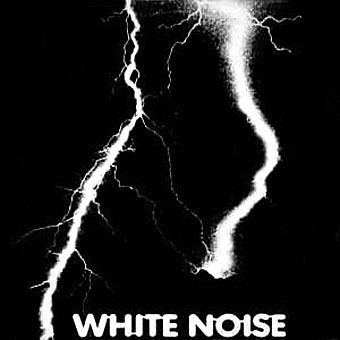
White Noise: Electric Storms, Radiophonics and the Delian Mode

white_noise.jpg

Many sounds have never been heard—by humans: some sound waves you don’t hear—but they reach you. ‘Storm-stereo’ techniques combine singers, instrumentalists and complex electronic sound. The emotional intensity is at a maximum. Sleeve note for An Electric Storm, Island Records, 1969.

An Electric Storm by White Noise is reissued in a remastered edition this week. It’s a work of musical genius and I’m going to tell you why.

Hanging around with metalheads and bikers in the late Seventies meant mostly sitting in smoke-filled bedrooms listening to music while getting stoned. Among the Zeppelin and Sabbath albums in friends’ vinyl collections you’d often find a small selection of records intended to be played when drug-saturation had reached critical mass. These were usually something by Pink Floyd or Virgin-era Tangerine Dream but there were occasionally diamonds hiding in the rough. I first heard The Faust Tapes under these circumstances, introduced facetiously as “the weirdest record ever made” and still a good contender for that description thirty-four years after it was created. One evening someone put on the White Noise album.

It should be noted that I was no stranger to electronic music at this time, I’d been a Kraftwerk fan since I heard the first strains of Autobahn in 1974 and regarded the work of Wendy Carlos, Tangerine Dream, Brian Eno and Isao Tomita as perfectly natural and encouraging musical developments. But An Electric Storm was altogether different. It was strange, very strange; it was weird and creepy and sexy and funny and utterly frightening; in places it could be many of these things all at once. Electronic music in the Seventies was for the most part made by long-hairs with banks of equipment, photographed on their album sleeves preening among stacks of keyboards, Moog modules and Roland systems. You pretty much knew what they were doing and, if you listened to enough records, you eventually began to spot which instruments they were using. There were no pictures on the White Noise sleeve apart from the aggressive lightning flashes on the front. There was no information about the creators beyond their names and that curious line about “the emotional intensity is at a maximum”. And the sounds these people were making was like nothing on earth.

I recall sitting up and struggling through THC-delirium thinking (aptly) “what the fuck?!” when the orgy sounds first appeared in My Game Of Loving, a multi-tracked multiplicity of orgasmic groans which make Jane Birkin’s expirations on Je t’aime… moi non plus seem like the limpest Gallic ennui. (I must have missed the middle eight of Love Without Sound which quite possibly depicts an unwelcome erotic encounter between a woman and some ratcheted robotic contraption.) These were weird songs; the melodies were weird, the ideas were weird and the sounds were very weird.

After the Jean-Jacques Perrey-inspired hilarity of Here Come The Fleas and some druggy (and weird) psychedelia, we were into side two and The Visitation, a lengthy song/audio drama concerning a dead biker who returns to see his weeping girlfriend for the last time. The middle section is an electronic road journey that predates Kraftwerk’s similar sequence in Autobahn by five years. The simple musical theme was sublimely creepy, the sound effects literally out of this world. To my drug-addled brain this mysterious group had actually managed to create in sound the experience of being dead. This was exhilarating and deeply unnerving. Artist Mati Klarwein once related how it felt hearing Bitches Brew for the first time after Miles Davis had made him snort a line of coke beforehand: “When I heard the tapes I couldn’t believe the music. At first I thought it was the cocaine. Then I realised it was just incredible.” I know how he felt; the emotional intensity was at a maximum.

The final track was the icing on the cake. Of all the musical attempts to depict some kind of Satanic netherworld this is easily the most chilling and convincing. I don’t care what gaggle of blood-drinking, face-painted diabolists you want to bring to the virgin sacrifice, Ozzy and co. included; all must prostrate themselves before a polite bunch of English technicians. Electric Storm In Hell sounds exactly like its title and achieves its ferocity without guitars although the group did rely on a thundering phased drum kit to hold together those sounds of screaming souls being struck by lightning in a godless void.

After this first exposure I quickly acquired a copy of the album myself and played it to death, eventually gaining a reputation for foisting the horrors of side two on people when they were tripping. (To be honest I only did that once…)

udp_studio.jpg

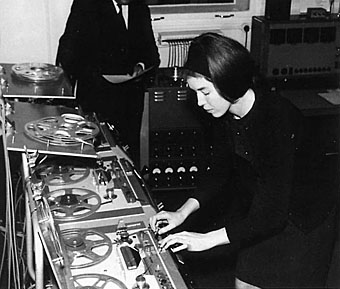
Electronic music the hard way: the Unit Delta Plus studio, 1966.

So why was it so good, why does it still sound like nothing else in the history of music? Two words: Radiophonic Workshop. White Noise was a chance grouping of music and electronics student David Vorhaus together with Delia Derbyshire and Brian Hodgson of the BBC’s Radiophonic Workshop who’d been indulging in some extra-curricula activity under the name Unit Delta Plus, a short-lived experimental music project. The Radiophonic Workshop was a special department of musicians and engineers who provided jingles, theme tunes and sound effects for BBC radio and television. Delia’s most famous production was (and still is) her arrangement of Ron Grainer’s Doctor Who theme which she created using tape collage and very primitive oscillator equipment. Despite being reworked many times that original version still sounds unearthly. Not only was this the world’s first electronic TV theme but in 1963 it would have been the first electronic music most people heard at all.

The Radiophonic composers were tasked with creating music and sound effects the hard way, pre-syntheziser, using tape edits, varispeed and whatever rudimentary electronic devices they could lay their hands on. This was all they did, each day and every day, with the BBC footing the bill. So when a producer called asking for something unusual they had a formidable range of techniques that could be applied. Brian Hodgson’s TARDIS sound effects for Doctor Who are still in use today, and all that time spent producing theme tunes meant that Derbyshire and Hodgson were used to applying tape effects and audio collage in the context of popular music, rather than the more usual contemporary classical setting of electro-acoustic composition. David Vorhaus gave the pair the impetus to re-brand themselves and try something new, which is how An Electric Storm came about, with a proposal to Island Records for a vaguely psychedelic single, Love Without Sound. Chris Blackwell was enthused by the idea, gave them some money and told them to come back with an album.

Producing a novelty single was often as far as most electronic musicians got at this time especially given the huge amount of effort required to produce enough music to fill forty minutes. What’s extraordinary about the Electric Storm album is that all of it works, all the songs are great, strange songs. The only thing comparable is the equally wonderful album by Joseph Byrd‘s United States of America released the year before which featured similarly great songs with outré arrangements, mostly the product of ring modulators and other crude equipment. Yet that album sounds dated now, albeit in a good way. Many of the songs, despite their lyrical perversity, aren’t so far removed from Jefferson Airplane and the album as a whole owes much to the structural ambition of Sgt Pepper. A few of the White Noise songs sound of their time—Love Without Sound, Firebird (which would have been the single B-side) and Your Hidden Dreams especially so—but the otherworldliness of the arrangements lift them completely out of their era. So many of the tape sounds are completely unprecedented that it didn’t matter that synthesizers were coming along to replace all that laborious cutting and pasting and re-recording. Minimoogs were surprising and new in the early Seventies but now sound like…..Minimoogs; they’re as dated as wah-wah pedals. An Electric Storm still sounds like nothing else ever made. I place much of the originality and the sonic darkness at Delia’s door, she had a genius for the sinister that was evident as far back as the sucking reverse envelope that runs through the Doctor Who theme and the fluttering, purring noise that comes in at its very end. This unique quality has become more evident with the posthumous reissues of her library music and other TV and radio themes and it’s sad that she didn’t live to see the real influence and appreciation of her work that’s blossomed in recent years. In a field usually dominated by male nerds she was brilliant and dedicated and fiercely original.

delia.jpg

Delia Derbyshire.

David Vorhaus continued with White Noise after An Electric Storm but his second album lacks the magic and quality of the first; it lacks, I’d suggest, the Delian Mode, to borrow a title from one of Derbyshire’s solo compositions. More crucially it also lacks the song elements that make An Electric Storm such a success. Those original recordings had a curious afterlife, however, turning up in remixed form when Derbyshire and Hodgson worked on another children’s TV series, The Tomorrow People, with Dudley Simpson, and parts of Electric Storm in Hell are played during the invocation scene in Dracula AD 1972, the music there being far more chilling than anything in the rest of the film. Derbyshire and Hodgson also provided a suitable spooky and minimal score to The Legend of Hell House in 1973, a clone of The Haunting which makes me wish that Delia had produced the score for Robert Wise’s original film in place of Humphrey Searle’s orchestral bombast.

Two decades later groups such as Pram and The Orb were sampling from An Electric Storm (listen to Outland on The Orb’s Adventures Beyond the Ultraworld for a repetitive trill swiped from Love Without Sound) while Peter Kember of Spacemen 3 did much to bring Delia back to the attention of the music world before her untimely death in 2001. The work of the Radiophonic people has had a lasting influence on a new generation of British musicians, cited by Aphex Twin, Add N to (X), Broadcast, Pet Shop Boys (who had a track, Radiophonic, on their Nightlife album), Saint Etienne and many others. Most recent of these inspirations come from the Ghost Box collective who combine the jauntiness of Seventies’ library music and TV themes with a particular strain of English spookiness to brilliant effect.

This new CD reissue will be a welcome replacement for the poorly-produced edition from 1992 with its error-ridden insert notes. For more about the history of the Radiophonic Workshop, including an interview with Brian Hodgson and footage of Delia Derbyshire at work, the great BBC documentary, Alchemists of Sound, is on YouTube.

“Love Without Sound” 2:57 (Derbyshire/Vorhaus)
“My Game Of Loving” 3:38 (Duncan/Vorhaus)
“Here Come The Fleas” 2:31 (McDonald/Vorhaus)
“Firebird” 2:43 (Derbyshire/Vorhaus)
“Your Hidden Dreams” 4:25 (McDonald/Vorhaus)
“The Visitations” 11:45 (McDonald/Vorhaus)
“The Black Mass: An Electric Storm In Hell” 7:04 (White Noise)

Credits:
Effects—David Vorhaus
Electronics—Brian Hodgson, Delia Derbyshire
Percussion—Paul Lytton
Producer (Co-ordinator)—David Vorhaus
Vocals—Annie Bird, John Whitman, Val Shaw

John Coulthart

Queer Fossilization, Or, A Tour through the Museum of Gay Unnatural Herstories

Outfest Screening at Redcat
Saturday 7/14 9:30 PM $12.00, Curated by José Muñoz and Nao Bustamante.

-Live Performance by My Barbarian
-A Family Finds Entertainment
Directed By: Ryan Trecartin
-Artist Statement
Directed By: Daniel Barrow
-Bra Burn
Directed By: Marget Long
-Dynasty Handbag: The Quiet Storm
Directed By: Jibz Cameron,
-Mata Hari
Directed By: Alexis Del Lago
-Nelson & Christina
Directed By: Robert Coddington

Additionally 2 other great looking screening of shorts Sunday Night 7 & 9:30.