SIT WITH THIS REALITY

F.e.y PRESENTS:

Diane Cluck & Anders Griffin

Malcolm Rollick

The Unwin-Dunraven Literary Ecclesia

October 29, 2008: 7pm

Donations Appreciated

8335 NW Whitney Ave
Portland, OR 97217

Just over the Saint Johns Bridge, and in the thick of Oregon’s temperate rainforest exists an apocalyptic opposite-igloo designed and built by f.e.y founders Tigerlilly Holyoak and Larissa Hammond. This “igloo” reflects the current state of the forest. Trees are suffocated by invasive ivy causing them to lean at impressive angles and eventually crash to the ground. Spiders build their webs again and again, seemingly undeterred by the surrounding destruction. It’s a beautiful forest that demands reverence for all it has lost and all it still offers.

f.e.y invites you to sit with this reality; to listen to the prophecies of The Unwin-Dunraven Literary Ecclesia and musical un-resolutions of Malcolm Rollick and Diane Cluck. Show goers are encouraged to bring their own art for display on scattered boards or, perhaps, to bury in the ground.

http://www.myspace.com/feyvenue

http://www.myspace.com/dianecluck

http://www.malcolmrollick.com

http://www.unwin-dunraven.org


Calculating the economic value of forests

Story from BBC NEWS:
http://news.bbc.co.uk/go/pr/fr/-/2/hi/science/nature/7662565.stm

Nature loss ‘dwarfs bank crisis’

By Richard Black
Environment correspondent, BBC News website, Barcelona

The global economy is losing more money from the disappearance of forests than through the current banking crisis, according to an EU-commissioned study.

It puts the annual cost of forest loss at between $2 trillion and $5 trillion.

The figure comes from adding the value of the various services that forests perform, such as providing clean water and absorbing carbon dioxide.

The study, headed by a Deutsche Bank economist, parallels the Stern Review into the economics of climate change.

It has been discussed during many sessions here at the World Conservation Congress.

Some conservationists see it as a new way of persuading policymakers to fund nature protection rather than allowing the decline in ecosystems and species, highlighted in the release on Monday of the Red List of Threatened Species, to continue.

Speaking to BBC News on the fringes of the congress, study leader Pavan Sukhdev emphasised that the cost of natural decline dwarfs losses on the financial markets.

“It’s not only greater but it’s also continuous, it’s been happening every year, year after year,” he told BBC News.

“So whereas Wall Street by various calculations has to date lost, within the financial sector, $1-$1.5 trillion, the reality is that at today’s rate we are losing natural capital at least between $2-$5 trillion every year.”

The review that Mr Sukhdev leads, The Economics of Ecosystems and Biodiversity (Teeb), was initiated by Germany under its recent EU presidency, with the European Commission providing funding.

The first phase concluded in May when the team released its finding that forest decline could be costing about 7% of global GDP. The second phase will expand the scope to other natural systems.

Key to understanding his conclusions is that as forests decline, nature stops providing services which it used to provide essentially for free.

So the human economy either has to provide them instead, perhaps through building reservoirs, building facilities to sequester carbon dioxide, or farming foods that were once naturally available.

Or we have to do without them; either way, there is a financial cost.

The Teeb calculations show that the cost falls disproportionately on the poor, because a greater part of their livelihood depends directly on the forest, especially in tropical regions.

The greatest cost to western nations would initially come through losing a natural absorber of the most important greenhouse gas.

Just as the Stern Review brought the economics of climate change into the political arena and helped politicians see the consequences of their policy choices, many in the conservation community believe the Teeb review will lay open the economic consequences of halting or not halting the slide in biodiversity.

“The numbers in the Stern Review enabled politicians to wake up to reality,” said Andrew Mitchell, director of the Global Canopy Programme, an organisation concerned with directing financial resources into forest preservation.

“Teeb will do the same for the value of nature, and show the risks we run by not valuing it adequately.”

A number of nations, businesses and global organisations are beginning to direct funds into forest conservation, and there are signs of a trade in natural ecosystems developing, analogous to the carbon trade, although it is clearly very early days.

Some have ethical concerns over the valuing of nature purely in terms of the services it provides humanity; but the counter-argument is that decades of trying to halt biodiversity decline by arguing for the intrinsic worth of nature have not worked, so something different must be tried.

Whether Mr Sukhdev’s arguments will find political traction in an era of financial constraint is an open question, even though many of the governments that would presumably be called on to fund forest protection are the ones directly or indirectly paying for the review.

But, he said, governments and businesses are getting the point.

“Times have changed. Almost three years ago, even two years ago, their eyes would glaze over.

“Today, when I say this, they listen. In fact I get questions asked – so how do you calculate this, how can we monetize it, what can we do about it, why don’t you speak with so and so politician or such and such business.”

The aim is to complete the Teeb review by the middle of 2010, the date by which governments are committed under the Convention of Biological Diversity to have begun slowing the rate of biodiversity loss.

courtesy Will Swofford!


The Lamb Lies Down in San Pedro

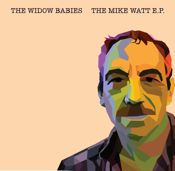
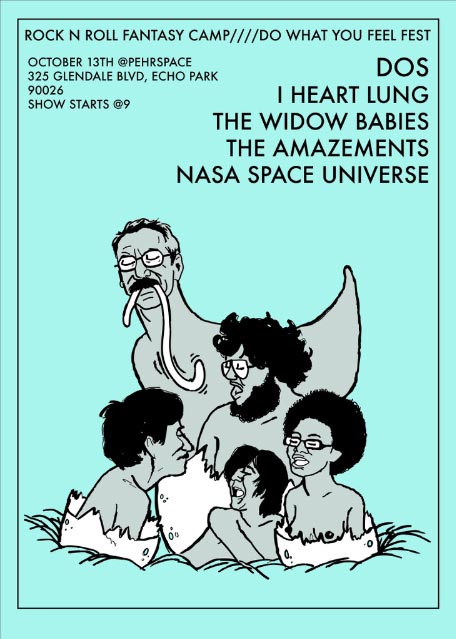
mike-watt-e-p-gig.jpg

monday, october 13 at 9 pm
at pehrspace
http://pehrspace.org/location/index.html
325 glendale bl.
los angeles, ca
(213) 483-7347

from Chris Schlarb:

The first song I ever heard The Widow Babies
play was “Mike Watt Created The Universe With
A Bass Solo”. I was recording the group at the
request of concert promoter and musical
provocateur, Sean Carnage for a music film
called Friends In Other Dimensions. Sean knew
my musical leanings and said I might be
interested in the group as they seemed to
cross a wide chasm of my own influences, Yes
among them. We were on the second floor of a
narrow old house on Sepulveda Blvd that sat
atop a battered storefront. The group and I
both set up quickly and they ripped through
three takes in less than eight minutes. I was
sold.

At the time, mid-February 2008, I was in the
middle of at least four ongoing music
projects and felt compelled to take on a
fifth. I told the band that I was available
to produce an album and we exchanged numbers.
After a few phone calls we set up a recording
session at Matt Wignall’s Tackyland studio in
Long Beach just a month later. Drummer Tabor
Allen and guitarist Danny Miller told me
“Mike Watt Created The Universe With A Bass
Solo” was the first part of a six song paean
to the myth of the Minutemen bassist. We
finished five of the six tracks on March 22nd
and went out for pizza at Me-N-Ed’s pizza. It
was a quick days work with the band recording
their takes with youthful ferocity and
vocalist Elise McCutchen recording all of her
vocal overdubs as soon as the music was put to
tape.

A month later we met at my apartment for
mixing and the recording of acoustic epilogue
to the album. I continued to work on the mix
for the next few weeks until I felt confident
that The Widow Babies sounded the way they
should: raw, fun, excited, awesome and
awestruck.

From the opening drum fill to the closing
acoustic guitar The Mike Watt E.P. runs a
cool twelve and a half minutes, it’s over
before you know what you’ve just heard: a
parallel universe where Genesis and Melt
Banana combine to make The Lamb Lies Down in
San Pedro. In a time and place where
attention spans are further on the wain and
the listeners of the world are becoming more
judicious The Widow Babies cram in Brazilian
rhythms and timbales into “Vanity Thy Name Is
Lincoln” and meaty double tracked guitars ring
out on “Evil Triumphs Over The Awesome Powers
Of Kayak” where bassist Neil Marquez
continues to reveal his remarkable facility
on the instrument. I had a hunch from the
beginning that Watt would be proud.

Track Listing
01. Mike Watt Created The Universe With A Bass Solo
02. Vanity Thy Name Is Lincoln
03. Whatchu Thinkin’ Vampire Lincoln???
04. Evil Triumphs Over The Awesome Powers Of Kayak
05. In Which Watt Wins His Hands Back And Basses A River Into Existence
06. Epilogue

[All songs written by The Widow Babies]

the-mike-watt-ep-cover.jpg

More info on the ep here


DID YOU GIVE MONEY TO ARTHUR?

Thanks to all who donated cash to Arthur when we really needed it back in June. Arthur is doing better now, but times are getting scarier for many of us with each passing day. In the spirit of generosity that you showed to us, we would like to make this offer: if you gave to Arthur back in June and are now in real financial jeopardy, please let us know by sending a money request to us via the same PayPal account you used to send us money in June. We will get your money back to you as soon as possible. As Lewis Hyde says in his book The Gift, we’ve got to keep the money moving. Even if all we’ve got are credit cards…

Stay strong, generous and peaceful,

Jay Babcock
Arthur Magazine


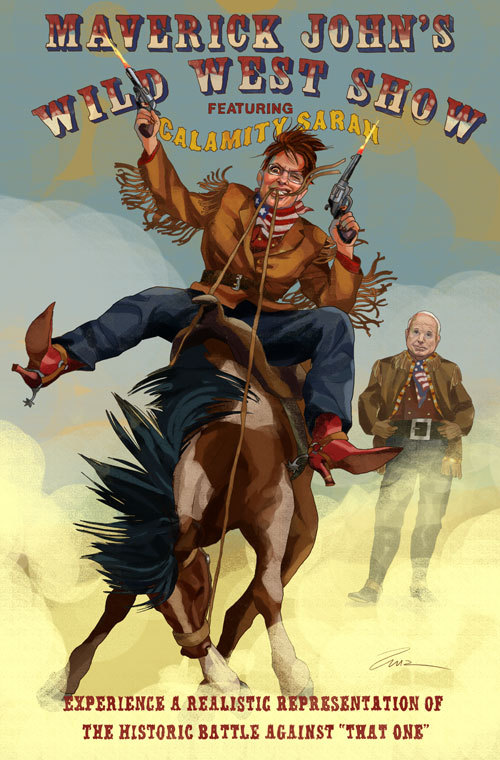
"The troopers come home to roost" by Zina Saunders

Art and text from Zina Saunders:

trooper.jpg

The troopers come home to roost.

As governor of Alaska, Sarah and hubby Todd tried their hardest to get ex-brother-in-law State Trooper Mike Wooten fired after his bitter divorce from Palin’s sister.

Wooten’s boss, Walt Moneghan, refused to fire Mike. So he was fired by Palin.

After refusing to cooperate with an investigation into the matter, the report from the legislative probe has come to the conclusion that she abused her power. “Governor Palin knowingly permitted a situation to continue where impermissible pressure was placed on several subordinates in order to advance a personal agenda,” the report said.

So, although she wasn’t found guilty of any criminal activity or carted off to jail, she was called to account … a little…

To read more, here’s a CNN article about it.


PAUL KRASSNER ON DENVER COPS

toprotectandserve.jpg

“The Denver Police Department is facing several lawsuits over confrontations with protesters at the Democratic National Convention. The officers had conducted mass arrests and detentions of 154 individuals before and during the convention. One cop, for example, was videotaped pushing a woman to the ground with his baton as he yelled, “Back up, bitch!” The police are being charged with systematically condoning violence against antiwar demonstrators, and now, a commemorative T-shirt (pictured above) created and distributed by their union, the Denver Police Protective Association, could be offered as evidence of the cops’ state of mind.” CLICK HERE TO CONTINUE READING


On Dan Deacon and what's at stake

Arresting Development

Dan Deacon, Myth, and Magic: Some Notes On Exploding Up From The Underground

By Rjyan Kidwell

June 11, 2008 Baltimore City Paper

I’ve seen Dan Deacon many times on his home turf, the warehouse show. After moving to Baltimore in 2004, he mastered that setting over the course of three years of ambitious touring and regular local performances in his living space at the Copy Cat, the old artists’ dojo three blocks east of Penn Station. As his blade got sharp, the crowds grew and grew, eventually exceeding what the space could support, and it strained his relationship with the landlord. I was supposed to play a show with Deacon one night last August, a show on his 26th birthday intended to break a yearlong abstinence from performing in the building. After the first two acts, though, Deacon had to get on the microphone and tell everyone–at least 300 kids–to leave. Something to do with the police, I think–I was never totally clear on the details, but I know neither of us got to play that night. Now Deacon is a very positive guy, but I could tell it burned him, returning from a few immensely successful tours to be hassled trying to play in his old home. That was the first night that I started to see the outline of Deacon’s heroic mission, and I began to truly understand how his destiny and our city had intertwined. I could also see that the last challenge rising up between him and that destiny was the very sort of beast he had to face Friday, May 30, in the big room at Sonar: an enormous mob of voyeurs.

You’re probably curious as to how I knew that virtually all of the 900 people at the club that night were voyeurs, and I’m tempted simply to explain about the kind of sensitivities you develop over 14 years of working in establishments that combine strangers and alcohol and loud music. But in the interest of full disclosure I must confess: I’m actually part voyeur myself. Not a big part, but it does run in my family. Between nature and nurture, my voy-dar is pretty damn reliable.

I went down to Sonar and, as I suspected, the voyeurs were swarming. Most were dressed to blend in and dancing like horny zombies, all of them animated by expectations drawn from the images and video and sound they found with their computers: digital glimpses of Deacon’s show made accessible by today’s efficient compression algorithms. While waiting for his set to start, I got bored and tried to buttonhole a few random people; it’s about as fun as poking pill bugs, but feels less cruel. Both of the hulking, frat-tastic gentlemen I tried to engage just gaped at me as if I had asked them to hold a severed penis until I walked away. I had better luck with a smaller guy named Ian, a recent transplant who works in the video-game industry. I asked him if he loved Dan Deacon, and he said yes without any hesitation. When I asked why, Ian squinted and looked up at the ceiling and thought about it. After a minute or two, standing there watching him think started to make me anxious, so I waved my question away and changed the subject to video games.

Meanwhile, the wisest parts of the mob were clumping in front of the stage. Deacon, as usual, set up his table of gear on the floor, and, normally, if you don’t push up for a good spot you won’t be able to see much other than a couple of flashing lights in the middle of a churning sea of hair. As Deacon began his performance, I thought about penetrating the mob for a closer look but quickly reconsidered when a better view appeared projected on either side of the stage. A layer of psychedelic video effects obscured some of the details, but settling for the screen made it less likely I’d have to enter a teenager’s personal space.

Before playing any music Deacon addressed the crowd over the PA, leading them through a maniac warmup routine that involved stretching and pointing and kneeling down, and then a series of contradictory gestures and light stranger-interaction. This continued for almost the length of a song, and the crowd was enthusiastically participatory.

Then the music started, and it sounded immense. You could feel the kick drums in your throat and behind your ribs. Deacon does very upbeat material, and positive music is always much more convincing when it’s loud as hell. The voyeurs were convinced immediately, and they pushed like crazy right up onto Deacon’s table and at every side of him. His songs are four-fifths climax, so they don’t have to stop pushing until the song is over, and they get especially riled when Deacon sings dramatically, his voice transposed up an octave or two by a Digitech Whammy IV.

The music itself sounds like Lightning Bolt covering John Philip Sousa on Nickelodeon–and I’m not just playing the “this sounds like that” game here, either: This is crucial genealogy. Deacon and his Wham City crew’s warehouse shows have always drawn heavily from the mythology surrounding Lightning Bolt and its productive Providence, R.I., art space, Fort Thunder. The Fort Thunder building was demolished in 2002 to make room for a Shaw’s supermarket parking lot, but in the six years prior, the artists who lived in Fort Thunder created many bands, comics, posters, costumes, and video work that would gradually be discovered and adored by younger aspiring artists. Their eccentric aesthetic mixed dystopian anxiety with youthful energy. Deacon’s music definitely seizes way more on the latter of those two aspects, but when you hear his jams blasting out of a big-ass system, the gnarlier part of the Providence aesthetic peeks–and peaks–through, too.

At the end of the first song Deacon tried to convince everybody to spread out and use more of the space in the room, but most people appeared to assume he was talking to somebody else, and the mob pretty much stayed concentrated around him. As the set continued, he alternated songs with more surrealist calisthenics and two rather complex group activities: an unfortunately short-lived two-man dance circle and a much more successful dance “gauntlet.” He shouted out the rules for the complicated games clearly and concisely, but with the kind of urgency often encountered with instructions about how to exit a flaming aircraft.

It built gradually in the tone of his entreaties, and then halfway through the set Deacon confirmed the scent of tension I detected when he announced that he felt “like a second-grade teacher.” He was putting it all down, but those voyeurs, they weren’t picking it all up. In that great big sweaty great time, there was a dramatic struggle happening just under the surface. Deacon alluded to this struggle in a recent interview with Pitchfork, explaining how his new compositions focused on “mass movement” instead of conventional “dancing at a party.”

“As long as the crowds don’t become too rowdy or violent, I’m excited for my audience to grow,” he said. It sounds clear to me that Deacon has big ideas about what can happen when large groups of people get together in one room, but that he expects the audience to trust and commit completely to his leadership if something transcendent is to be achieved. The crowd that night was undeniably happy, everything was good and fine–the set certainly fulfilled the expectations aroused by the internet images many times over, and that’s good as it needs to be for a voyeur. But the underlying tug of war was never completely resolved–it didn’t seem good enough for Dan. I have the feeling it won’t take many more shows in rooms like that one to teach Deacon that the voyeurs–even when they appear to resist–truly and deeply desire to be bossed around and made into instruments of action. They just sometimes need something more forceful than a friendly invitation to get there.

When voyeurs start to realize they’re affecting the thing that they desire, the protective barrier that defines voyeurism begins to crumble. Walls coming down, outside coming in–always a scary thing, and most people’s instinct is to pull back. But if you wanna go skinny dipping, you have to jump in the pool: Trying to wade in a little at a time is for suckers; it just doesn’t work. It’s happening on both sides, too. I sense that Deacon might still be a little scared of the power that comes with conducting enormous crowds–it can taste a little bit fascist. He’ll get used to it, though. I mean, Superman is a little bit fascist, too, right? And look at the symbolism underlying the title of Deacon’s most recent (and most popular) album, Spiderman of the Rings: Peter Parker, the ordinary boy who gets superhuman powers and decides, despite the challenges presented by his ordinariness, to dedicate himself to the well-being of his fellow man; and Tolkien’s epic tale about the little man-child whose bravery saves his whole world from apocalypse. These aren’t just cheeky references to popular culture. I think Deacon, Frodo-style, is creeping his way up the mountain to face the very evil that decimated the home of his artistic forebears and has interfered with his own attempts to set up a stable location for Wham City: the forces of greed and gentrification that are cannibalizing American cities and culture.

Back in Providence, in 1999, after persistent rumors of the Fort Thunder building’s sale eventually proved to be true, members of the Fort and others sympathetic to the cause spent more than a year trying to influence the process, meeting with preservationists, community activists, and politicians. Despite an outcry of support from far and wide–I personally heard about the threat to Fort Thunder when a Japanese record label mass-mailed a call to arms to every band that had ever performed there–the out-of-state developer Feldco demolished the old mill building and built its strip mall. Later there would be rumors that Feldco slyly bought its way out of promises to set aside a certain number of affordable studio spaces in the new property, the main concession that was made to those protesting the development plan.

The story of Fort Thunder and its frustrating ending looms heavily over the artists and performers in Baltimore today–in every major city, really. We’ve watched the condos follow us around long enough now to know that we are the unwitting pawns of opportunistic entrepreneurs. We go to “undesirable” places, places the bourgeoisie fear and avoid, because that is where rent is affordable on an artist’s wages. If we do not thrive there, we are ignored, but if we do, developers and speculators quickly buy up the neighborhood, erect prohibitively expensive luxury housing, and whine to the police and politicians about the crowds at our shows and the noise made by our bands. Deacon is easily one of the most famous one-man bands in the country right now, but so far he’s been powerless to settle the score with the inhumane elements that mercilessly reshape our city around their materialistic ambitions–and so Deacon knows that conventional success is not enough. He knows he’s still approaching the climax of his own story, that his destiny lies at a higher altitude. I honestly believe that this man, whom some might call “wacky,” aspires to the kind of heroism that far exceeds what it requires to get over with Pitchfork.

When Deacon is comfortable and in control of a crowd, he makes it appear quite easy to turn a familiar situation into a unique and empowering experience. He makes it fun to believe in him. The stretching and pointing, though–that’s just a warmup to the real “mass movement” I expect from him. It might only take the symbolic step of raising his table up off the floor, for all to see, and commanding the crowd from an elevated position, or perhaps it might come with the transition from prerecorded electronics into a live band, a plan he described excitedly near the end of his set. But when he does master these 1,000 capacity clubs the way he mastered the warehouse setting, I think Dan Deacon and his army of acolytes are destined to face off with the real estate-obsessed parasites who have been exploiting the artistic community for years. And wouldn’t that be wacky?

SUNSPOT GENESIS

from spaceweather.com:

“Oct. 11: A new sunspot is emerging near the sun’s northeastern limb. It’s the biggest active region in months and appears to be a member of new Solar Cycle 24. Readers, if you have a solar telescope, now is the time to watch sunspot genesis in action. Image from Pete Lawrence of Selsey, West Sussex, UK…”

newsunspot.jpg

“Coronado’s Personal Solar Telescope–PST for short–is a great way to get started with solar astronomy. The telescope is small, portable, and inexpensive–but it is a big performer. Looking through the eyepiece of a PST you can see vast dark solar filaments, red glowing prominences, and seething active regions where sunspots break through the sun’s surface.

“At the heart of the PST is a Coronado ‘H-alpha’ filter tuned to the red glow of solar hydrogen. It reveals phenomena invisible to ordinary white-light telescopes and, best of all, it is utterly safe. You can’t hurt your eyes looking through a PST.”