New York Times obituary: Pandit Bhimsen Joshi Dies at 88; Indian Classical Singer
Monthly Archives for February 2011
[SUNDAY LECTURE] "I will speak to you now from the future."

Note: This piece was first published in Summer 1992 on the sesquicentennial of Columbus’ landing on North America in the Journal of the Society for Ecological Restoration.
DREAMING INDIGENOUS
One hundred years from now in a northern California valley
by Freeman House
Contact between whites and natives didn’t happen here in my part of North America until 150 years ago, which makes it easier to think like this. You can still see enough of the earlier patterns in the landscape to be able to guess at what it looked like then. Once contact did happen, however, it proceeded with unrelenting fury. Within a seven year period ending in 1862, the 10,000-year-old culture that had been so wonderfully adapted to this little tuck in the Coast Range was reduced to a few broken individuals hanging on locally and a handful more isolated from the source of their identity, bereft of home on the reservation a hundred miles away.
Life was pleasant for the whites, in a rough sort of way. For a hundred years or so, pleasant enough so that even now some cowboys look back on that time as the very peak of existence. It was the usual scene for the North American West: a few steers and dairy cows, some hogs for market, and an economic boom every 30 or 40 years to keep things interesting—and growing. The tanbark boom kept quite a few of the boys busy for a time. And even though the oil boom fizzled, it brought the aura and glamour of the great world into the valley for a while, and Petrolia got a hotel. Come the bust, as it always did, well, subsistence was not so bad, with salmon and venison steak to fall back on.
The really big boom, the one that makes you wonder if anyone will survive the bust, came as a windfall to the handful of large landowners. A whole slew of events, historical and technological, had conspired to make the ubiquitous Douglas-fir worth something, worth a lot, after decades of laying it down around the edges of the prairies and burning over it year after year to expand the pasture. Three quarters of the landscape was suddenly marketable after three generations of living well enough off the other one quarter.
It came out fast—90 percent of three quarters of 300 square miles of timber from some of the most erodible forest slopes in North America, all in the space of a single generation. No one paid any attention to what anyone else was doing. There was no awareness, really, that a whole watershed was being stripped of its climax vegetation all at once. For most of the years between 1950 and 1970, several mills were kept running ‘round the clock, and the trucks taking timber out of the valley were so numerous and frequent that their drivers had to agree on one route out and another one in. There was a lot of money; anyone could find a job who wanted one. The schoolteacher worked at the sawmill at night.
Two 100-year storms within a ten year period was bad luck, they said, coming at a time when so many acres of soil were exposed to the sky. But exposed they were, and a vast warm rain on top of an unusually heavy snowpack on the ridges sent thousands of tons of sediment into the creeks and then into the river. In one week in 1955, the structure of the river was altered completely, from a cold, stable, deeply channeled waterway enclosed and cooled by riparian vegetation to a shallow, braided stream with broad cobbled floodplains, warm in summer, flashy in winter. And then it happened again in 1964.
When the new homesteaders began to arrive in the early 1970s, all we knew was that the king salmon and the silver salmon were almost gone. A few of us tried to do something about it, and by 1981 had established a sort of volunteer cottage industry in salmon propagation. We learned quickly that the key to the restoration of wild populations was habitat, and we found ourselves creating jobs along with volunteer and educational programs in reforestation, in erosion control. One thing leads to another—now we hear ourselves talking landscape rehabilitation, watershed restoration planning, water quality monitoring,
We were only vaguely aware that we were engaged in something called environmental restoration, and it wasn’t until the Restoring the Earth conference in Berkeley in 1988 that we realized that we were part of a planet-wide movement. Even before that, however, we had become aware of some of the pitfalls of this new terrain of consciousness. Logging was still a part of the essential economy of our valley. It was happening on nowhere near the scale of the bad old days, and practices had improved considerably thanks to well-reasoned timber harvest rules established during the Jerry Brown administration, but ecological systems were still being disrupted in ways not clearly understood. As we became more skilled in repairing damaged areas, we became aware of the danger of becoming the source of cheap janitorial services for corporate industry and others that might be opening up new wounds even as we were attempting to heal the old ones. It was not enough to become expert in putting back together what had been torn apart. Unless we adopted the cause of local ecological reserves, unless we tried to educate ourselves against destructive land use practices and tried to prevent them when education failed, unless we helped establish new small-scale resource extraction industries rooted in the ethic of ecosystem health, we were in danger of becoming Roto-Rooter persons for a dysfunctional society. If we practiced environmental restoration out of the same short-term assumptions that had created the disturbances in the first place, where could we end but as apologists for new deserts? Even the Roto-Rooter man tells the homeowner to stop pouring bacon grease down the toilet!
We are now concerned with the cultural content of the next 150 years because our experience tells us we must be. A successful sustainable human culture is a semi-permeable membrane between nature and human society, with information flowing freely in both directions. Having put ourselves in the way of some of the physical data coming toward us from the natural world, we are given both the rationale and the imperative for our roles in social transformation. Having perceived the reciprocal relationship between natural systems and local cultures, we have little choice but to work to make the latter more adaptive, more indigenous.
* * *
In making my contribution to this collection of restorationists’ reflections on the 500th anniversary of Columbus’ landing, I will allow myself two assumptions: that profound cultural shifts can happen suddenly and at any time; and that we are now in the midst of a pivotal era that offers us chances to abandon our more deadly economic practices, and begin to seek ways to adapt—and survive.
Because indigenous culture is always a response to locale, I will paint an imaginary picture of some aspects of life in our little valley 100 years from now. I will take a look at how a future might look if the insights available to one environmental restorationist were available to everyone. I will portray a future where timber, fish, and ranching are still the mainstays of economic life because I wish it to be that way; any other alternative seems less attractive. And for the treeplanter who is irritated by heady abstractions—who asks little more, after all, than for good work unfreighted with ambivalence—I will focus on some of the workaday themes of everyday life.
I will speak to you now from the future.
Continue reading
A Poem from Edward Hirsch

Early Sunday Morning
by Edward Hirsch
I used to mock my father and his chums
for getting up early on Sunday morning
and drinking coffee at a local spot,
but now I’m one of those chumps.
No one cares about my old humiliations,
but they go on dragging through my sleep
like a string of empty tin cans rattling
behind an abandoned car.
It’s like this: just when you think
you have forgotten that red-haired girl
who left you stranded in a parking lot
forty years ago, you wake up
early enough to see her disappearing
around the corner of your dream
on someone else’s motorcycle,
roaring onto the highway at sunrise.
And so now I’m sitting in a dimly lit
café full of early- morning risers,
where the windows are covered with soot
and the coffee is warm and bitter.
First footage of uncontacted tribe in Brazil
This aerial footage showing one of the world’s last uncontacted tribes living in the Amazon rainforest of Brazil was filmed by the BBC for their new series “Human Planet” and released via uncontactedtribes.org on February 4, 2011.
“Without proof they exist, the outside world won’t support them,” says José Carlos Morelos, whose job it is to monitor the endangered tribe’s land and protect it from invaders. “One image of them has more impact than a thousand reports.”
Arthur Radio Transmission #35 w/ MOUNTAINHOOD
For this episode of Arthur Radio, our dear friend Michael (aka warbling troubadour Mountainhood) left his woodland home in northern California and trekked across the vast continent to join us in wet, grey Brooklyn. His live set, recorded in Hairy Painter’s living room, somehow captures the dewy green landscape he inhabits out west; the quiet of the wind rustling the treebranches, the feeling that a four-legged creature may be watching from nearby, protectively…
Mountainhood’s songs capture a sense of both solitude and oneness with nature that is for the most part difficult to find in the concrete jungle of New York City. Michael, however, feels at home in both environments– and is more than happy to share his stories, songs and artwork with friends new and old alike, wherever his journey takes him.
Timeline below…
Hairy Painter n’ Ivy Meadows intro DJ set @ 00:00
Live set by Mountainhood @ 57:43
I. Lace of Ectoplasmic Cum
II. Wild Animals
III. Owl Lazr the Nocturne
Outro DJ set @ 1:13:53
TEN THOUSAND YEARS
“I insist on sensuality. I guard my smoked pheasants, old guitars, and quiet as jealously as any miser guards gold. They can do far more to protect me from what we humans have become: insensate, insensitive, inhuman. For the millions of years of evolution that made us, the ability to fully sense food and sex was the foundation of our humanity and the core determinant of survival. For ten thousand years, those same pleasures have been reserved for a few of us. Complete indulgence of sensuality is rare, and, as a rule, the purview of the rich. For ten thousand years, Homo sapiens has been unable to take its humanity for granted. Those who would resist dehumanization do so by daily staking a claim to it, by self-consciously adopting an aestheticism our hunter-gatherer forebears practiced by simply living. With the advent of agriculture, those qualities that united us—in fact, quality itself—came to divide us. Civilization did indeed modify the human genome, but only slightly, around the edges. We remain at our genetic core largely what our hunter-gatherer history made us, which is to say, sensual beings. All of humanity at some level still requires the aesthetic. What was invented with civilization was the ability of some to deny sensuality to others.” —Richard Manning, Against the Grain: How Agriculture Has Hijacked Civilization (North Point Press, 2004)
TRINIE DALTON SPEAKS

Interview with American fabulist author, critic, artist and longtime Arthur contributor and inspiration Trinie Dalton: http://twodollarradio.blogspot.com/2011/02/qa-with-editor-trinie-dalton.html
*TONIGHT* Tues. Mar 1, Silver Lake: Arthur presents ENDLESS BOOGIE & ARBOURETUM at The Satellite — $8
Arthur presents
THERE WILL BE ROCK
IN TWO EXCELLENT EAST COAST VARIETIES

* ENDLESS BOOGIE *

* ARBOURETUM *
Tue, March 1, 2011 8:00 PM
The Satellite
1717 Silverlake Blvd, Los Angeles
21 and Over
Advance tickets only $8.00
* DON’T THINK – BUY! *
Go here: http://www.ticketfly.com/purchase/event/26655
NEW MUSIC: Skull Defekts with Daniel Higgs

Download: “Fragrant Nimbus” – Skull Defekts (mp3, 14mb)
Stream: [audio:http://www.arthurmag.com/magpie/wp-content/uploads/2011/02/06-Fragrant-Nimbus.mp3%5D
Six and a half this-just-in minutes off Peer Amid, a new album by Swedish band Skull Defekts, who now feature the sui generis tattooist-shaman-Lungfisher Daniel Higgs on vocals. It’s a brilliant album, and I wish we could share a different track—as good as this one is, it’s not quite representative of the album’s overall occultist Sonic Youth vibe—but here you go. Figure it out for yourself. Cover artwork by Frederik Söderberg.
Details on the band and how to obtain a copy of this album, which is out Feb. 22, here: http://www.thrilljockey.com/catalog/index.html?id=105205
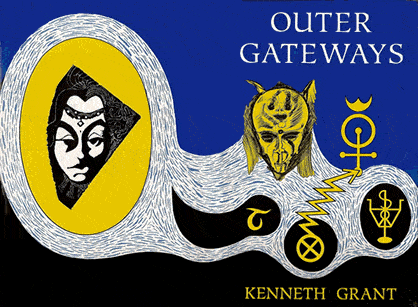
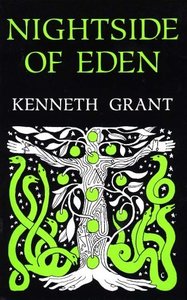
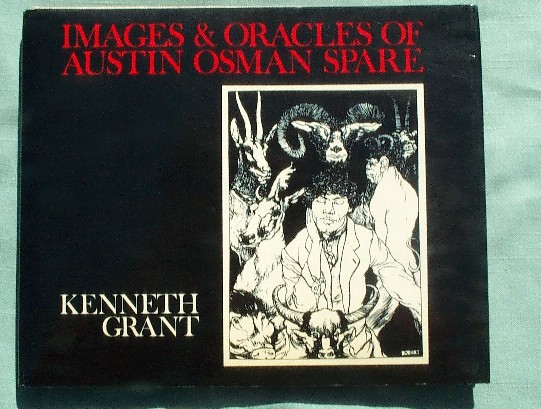
KENNETH GRANT, 1924-2011

Announcement of Kenneth Grant’s death: http://www.starfirepublishing.co.uk/main_frames_page.htm
Tribute to the great man/magus/scholar/visionary by John Coulthart: http://www.johncoulthart.com/feuilleton/2011/02/03/kenneth-grant-1924%E2%80%932011/
Covers for some of Kenneth Grant’s truly beguiling books: