In the summer of 1979, Gary Weis and six film crew members drove from Manhattan to the South Bronx every day for two weeks, a journey that each day left Mr. Weis in awe and despair.
“It was almost like going to a foreign country,” said Mr. Weis, 63. Bombed-out buildings, heaps of rubble and stripped cars; he compared it to postwar Dresden.
Mr. Weis, then a director of short films for “Saturday Night Live,” spent those days on the Grand Concourse, between 167th and 170th Streets, making a documentary film about two of the most ruthless gangs in the Bronx: the Savage Skulls and Savage Nomads.
The result, a 60-minute documentary titled “80 Blocks From Tiffany’s,” was intended to fill one of “SNL’s” weekly time slots on NBC, open every third week that summer. But it was never broadcast. Executives found it too controversial, and after a screening at the Los Angeles Film Festival in 1980 and a limited VHS release in 1985, the film was shelved.
An unusual breed of Asian snakes can glide long distances in the air, and the Defense Department is funding research at Virginia Tech to find out why.
“Basically . . . they become one long wing,” said John Socha, the Virginia Tech researcher who has traveled extensively in Asia to study the snakes and to film them.
“The snake is very active in the air, and you can kind of envision it as having multiple segments that become multiple wings,” he said. “The leading edge becomes the trailer, and then the trailer become the leading edge.”
It gets stranger. During a technique not yet understood, some of the snakes can actually turn in air. What’s more, they all take a flying leap off their perch to get airborne, then drop for a while to pick up speed before starting the motion that keeps them aloft much longer than they would otherwise.
Socha’s initial research was sponsored by the National Geographic Society, but his most recent work and paper were funded by the Defense Advanced Research Projects Agency. The agency is involved in advanced military technologies of all kinds, and Socha said the physical dynamics of snake flight (and how other creatures stay in the air) is of great interest to the agency. (Washington Post)
“Young people in their exploratory years are making choices. It’s the choice between following the good energy in the universe or choosing to forsake that and follow the opposite. Follow the opposite, the problems are going to be maximum.
“[Some people that I knew] were experimenting with things that did not allow their lives to go full-term. I didn’t participate in that. I don’t need it! But, yes, it was everywhere and we lost a few that we loved. … I’m sorry, it makes me cry to think about this. … One died from an overdose, another, I don’t know if he’s still on the physical plane. Of these two people that I thought were so strong, I am the one that ended up being the strong one.
“We are all in this together. It’s not new versus old. Artists are going to approach the same questions of the old world with the tools of the new world. Just hopefully they keep their balance with the organic. We have to remember that these technologies require a power source. Without that they go down instantly. That power source is not man-made. It comes from a higher place in the universe.”
Came across this document in Issue No. 15 of the “Upriver/Downriver” newsletter, published sometime in the early ’90s, at that time edited by Freeman House and Seth Zuckerman. Sez there, “The manifesto was originally published in Mesechabe, the bioregional journal of the Mississippi Delta region.”
THE SURRE(GION)ALIST MANIFESTO by Max Cafard
Dedication
Here we cast anchor in rich earth. — Tristan Tzara, Dada Manifesto (1918)
“Just as the turtle cannot separate itself from its shell, neither can we separate ourselves from what we do to the earth.” —Ted Andrews
For our Mother the Earth, we set sail on Celestial Ships. Anchored in Erda, we ride the wind. For Gaia, we take flight, spreading terrifying Cafardic wings. No longer trembling at the emasculating, defeminizing sound: the Name of the Father. We re-member Mama. Papa dismembered Mama. We now re-call the suppressed Names of the Mother. Anamnesis for anonymous Inanna. A surre(gion)al celebration, a Manifestival for Mama Earth. This is dedicated to the One we love. For the One Big Mother, in her thousand forms, here it is: the Mama Manifesto (1989).
Principia Logica
Breton said “we are still living under the reign of logic.” Today this is true more than ever. Indeed, we are now living under the Acid Rain of Logic.
There are Logics and there are Logics. Eco-Logics, Geo-Logics, Psycho-Logics, Mytho-Logics, Ethno-Logics, Socio-Logics, Astro-Logics, Cosmo-Logics, Onto-Logics, Physio-Logics, Bio-Logics, Zoö-Logics, et cetera.
Yet all of these are transformed into subsets of the one universal Techno-Logic. Techno-Logic, the death of Truth. Techno-Logic, the enshrinement of Truth. The burying of Truth under a crushing burden—under a Wealth of Knowledge.
Authentic knowing requires the “search for Truth,” the pursuit of Truth, the chasing after Truth, the hunger and thirst for Truth, the following of Truth along all her devious paths of Logic, through her labyrinths of the Logics. It means climbing logical mountains, plunging to logical ocean bottoms, traversing an infinitude of unparalleled planes. The search for Truth means always allowing her escape.
Scrambling the Cosmic Egg
“The Region regions” said Heidegger the Egg-Hider, hiding his eggs. Edelweiss und Eselscheisse! Scion of a Scheisse-ridden race! Shyster Lawyer of Being! The “Region” does not “region.” It’s exactly the reverse. (For the Time Being).
Where is the Region, anyway? For every Logic there is a Region. To mention some of particular importance to us, the Surre(gion)alists: Ecoregions, Georegions, Psychoregions, Mythoregions, Ethnoregions, Socioregions, and Bioregions.
This is no joke! We are Bioregionalists only if we are Regionalists. And once we begin to think Regions, we discover a vast multiplicity. Of Regionalisms and Regions, of Regions within Regions, and Regionalisms within Regionalisms. Thus, Surre(gion)alism.
Regions are inclusive. They have no borders, no boundaries, no frontiers, no State Lines. Though Regionalists are marginal, Regions have no margins. Regions are traversed by a multitude of lines, folds, ridges, seams, pleats. But all lines are included, none exclude. Regions are bodies. Interpenetrating bodies. Interpenetrating bodies in semi¬simultaneous spaces. (Like Strangers in the Night).
Region is origin. It is our place of origin. Where all continues to originate. Origination is perpetual motion. Reinhabitation means reorigination. We return to our roots for nourishment. Without that return, we wither and die. We follow our roots and find them to extend ever deeper, and ever outward. They form an infinite web, so all-encompassing that uprooting becomes impossible and unthinkable, deracination irrational.
Regions are multiple and arbitrary. Techno-regionalism says, in a Techno-Rational rage for definition, that when less than 90% of the species of one defined area are present in another defined area, then each is a separate Bioregion. How Techno-Logical! How Scientific! Or so it sounds. For such a definition is entirely self-annihilating, and absurd in its very technicality. This is, of course, its beauty. It is entirely valid, if taken as part of the Science and Logic of the Absurd. An infinite number of Regions can be defined by such criteria. Occasionally the Region will run after a stray organism (calculator in hand). This is a hallucinogenic Logic. (Though it is seldom taken in this way—even in small doses).
The Region always suffers the danger of capture by Techno-Logic. But Science can also be captured by the Aesthetic. Thales, the first metaphysician and scientist, said “All is Water,” and thus became the first humorist, also. And Technics can also be captured by Erotics. (Fourier proposed a “New Amorous Order” in his Phalansteries, based on tactics of Utopian Technique.)
Off Center
The Region is the end of Centrism. Centrism is an obsession. Perhaps there’s nothing wrong with obsessions, as long as we know that we’re obsessed. Take, for example, Mr. Alan Fairweather, whose entire life revolves around his obsession with, study of, and consumption of potatoes. In Mr. Fairweather’s words:”I suppose you could say I have a potato-centric view of the world.” (Newsweek, 5/30/88.) But centrists are seldom so healthy.
Anthropo-centrism has been our world-champion Centrism. It’s come close to K.O.ing the Earth (a T.K.O.—a Technical Knock-Out). But it’s long been on the ropes. Astro-Logic knocked Anthropos off Cosmic center. Bio-Logic knocked him off Planetary center. Psycho-Logic even knocked him off Ego center. And Techno-Logic itself melts him into air. We hardly need any post-structuralist Post-Logic to “de-center” the vapor that remains.
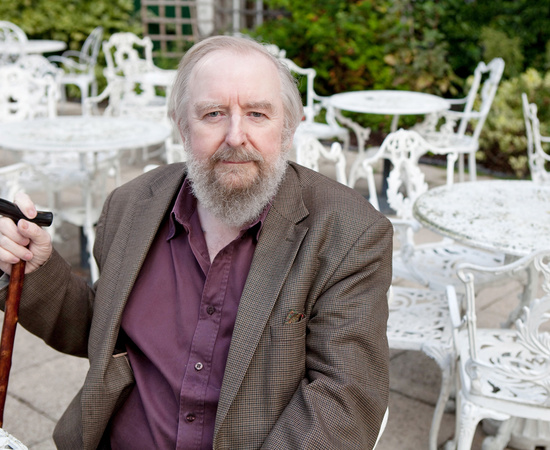
“I’m actually very anti-nostalgia, but I am interested in the past… I’m nostalgic for 1967, because that was when I was young and having a wickedly good time, but that’s about it. I knew that the 60s weren’t going to last, and so I decided that this is a golden age, and that it’s probably got about another 10 years, and I’m going to get everything I can out of it! And I had a great time. When people say, this didn’t happen or that didn’t happen, well, you weren’t there mate, you know! So yeah, that’s the only nostalgia I have, and even that, you know… I was also doing bad things as well, just bad things that everybody does, as it were.
“The thing was, everyone was in Ladbroke Grove or Notting Hill at that time; there were bands everywhere, and you felt that there was something wrong with you if you didn’t play some sort of fretted instrument! Almost everybody did, and I’d been in bands before that; right from the 50s; I’d been in a skiffle group, and I made that transition to blues, R&B, the way a lot of people did. And then I’d kind of given it up because I found it was more comfortable to sit there working in a chair than sitting in the back of an old van, and then being screwed when you got to a gig, the usual sort of crap. So I just stopped doing it. I’ve said this a lot of times but I think it’s actually worth saying: a lot of us did this, we went for rock & roll and science fiction because they weren’t respectable, and there was no criticism at all. There were no magazines that dealt with it; there was no body of criticism. There was nothing. Melody Maker, if you were lucky, you got a cartoon of Elvis Presley in the back, and they didn’t think it was going to last.
“But it was something that you could make of it what you wanted. So you went into the studio – when you went into the studio – not really knowing what you were going to do. And sometimes it was better than you thought it was going to be. Sometimes it was bloody awful. But again, it was just that sense of having something that was your own. I think that gaming [role-playing games, such as Dungeons and Dragons and Runequest, which frequently drew on Moorcock’s work] became that for another generation, and there’s other stuff that goes on. I think if you’re 18, you’re always going to be looking for something where there isn’t your dad telling you, you know, how it should be or how it used to be. You’d rather somebody said ‘what the hell are you doing, wasting your time?’ Now it’s a respectable career. ‘Dad, I want to be a rock & roll musician!’ ‘Okay, we’ll send you to rock & roll school!’ And it’s just not, you know, who wants to do that?
“I think the 60s were really about ’63 to about ‘75; I mean what people call the 60s. I see it as finally ending with Stiff’s last tour. That was for me the kind of end of it all, the last record company that had come up from nothing, that was really going after new talent, that was really wide open to pretty much anything, a very broad spectrum of popular music. And classical music, if anybody had gone to see it. I know [Stiff label boss] Jake Riviera, if somebody had said to Jake, come on Jake, let’s get Birtwhistle, he’d probably have said yeah, alright, great, let’s try it. And that was in a sense what the so-called sixties were all about. But it also happened because there were huge amounts of money, and we were the richest kids that had ever been, and have ever been. That went as well. I think the tricks that Margaret Thatcher played on us all put the money into the hands of the powerful people who were interested in money. But for a short while the money was in the hands of people who were actually interested in doing something with the money.”
Rosaire makes lovely experimental comics written in abstract languages for the brain to decipher.
“untranslated” is an abstract comic with asemic writing.
It’s true I’m more interested in possibilities than conclusions. Is this a fault? Refining a possibility to the brink of resolution, keeping it in a state of suspension… The infinite combinations of writing and images make for a continual renewal of language.
“A full colour calendar comprising all-new artwork in a psychedelic interpretation of Through the Looking-Glass and what Alice found there. The 1860s collide with the 1960s in lurid efflorescence!”





 Arthur Magazine