Originally published in Arthur No. 35 (August 2013)…
Column: Applied Magic(k) Author: The Center for Tactical Magic Title: “The Deception of Robot Demons” Illustration: Aaron Gach
Seldom used in stage magic today, automata (self-operating mechanical figures) featured prominently among conjuror’s acts before the 1900’s. Skillful craftsmen offered public demonstrations of elaborate clockwork characters that could perform entertaining miracles. Perhaps the most famous automaton of all time was the chess-playing spectacle known as The Turk. From the late 1700’s through the mid-1800’s, the turban-topped, robe-wearing, moustachioed machine amazed audiences in Europe and the Americas as he defeated the majority of his opponents, including Ben Franklin and Napoleon Bonaparte.
Despite an intense amount of public speculation and scrutiny, the mystery of its inner workings remained a closely guarded secret for many years. Although some correctly suspected that The Turk was in fact a mechanical illusion that concealed a human chess master, these theories were particularly difficult to prove since The Turk was opened up at the beginning of performances to provide the audience with a view of its interior.
In crafting illusions, it is essential for magicians to deflect suspicion by guiding audience perception. This may occur through misdirection, camouflage, patter—or, in the case of The Turk—a combination of all three presented through a carefully orchestrated sequence of events that gives a false appearance of reality. The final effect in this case was an amusing battle of wits apparently between man and machine that was way ahead of its time. Resonating with some of the earliest fears and hopes of the posthuman condition, it predated Mary Shelley’s techno-angst classic, Frankenstein, by nearly 50 years, and IBM’s Deep Thought chess computer (which lost to chess champion Garry Kasparov in 1989) by more than 200 years.
Somewhere between the horror of Frankenstein and the hubris of Deep Thought a melange of other mechanistic mayhem has emerged with far less entertaining implications. Although Nikola Tesla first conjured the notion of a squadron of remotely piloted warplanes in 1915, it has only been in the past decade that drone warfare has moved from from the shadows into the spotlight. In this “theater of conflict,” we find ourselves once again presented with the illusion of intelligent machinations. As with The Turk, we are often presented with a well-choreographed display intended to subvert our logic through partial truths and deceptive patter.
Drone strikes (particularly when they run afoul) are frequently discussed by government spokespersons as if the machines were making their own decisions, with zero accountability for their human operators, strike teams, or the officers and officials who authorize and oversee these missions from an air farce base outside of Las Vegas. When US missiles kill people in countries that we’re not even at war with, should it even matter if the aircraft had a human being sitting in the cockpit?
Originally published in Arthur No. 34 (April 2013)….
DIAGRAMMING THE DIVINE SPARK Is there a way to examine the nature of existence at its very foundation? Esoteric mapmaker DAVID CHAIM SMITH say yes—but there’s a price. by Jay Babcock
I first encountered David Chaim Smith’s remarkable, bewildering work through Pam Grossman’s Phantasmaphile newsletter, a daily email bulletin spotlighting a contemporary or historic personage up to something witchy and beautiful, usually in the visual arts. Smith’s work was particularly striking in its unusual combination of diagrammatic composition, simple media (pencil!?!) and unapologetically rarefied Kabbalistic-Gnostic content. Generally that would be more than enough to warrant further investigation, but it was the work’s difficult-to-grok provenance that intrigued me the most: these pieces looked like plates that could have been included in Alexander Roob’s Taschen compendium of dazzling Medieval alchemical artwork, The Hermetic Museum (alternative title, courtesy of Adam Egypt Mortimer: The Original Face Melter Times A Thousand). They seemed like the kind of work that’s usually brought to light by accident, decades after the a recluse’s death or disappearance (or committal to a mental ward): strange, highly charged devotional work rescued from a trashbin, the details of its artist’s life and practice gone to dust, Iain Sinclair on the case.
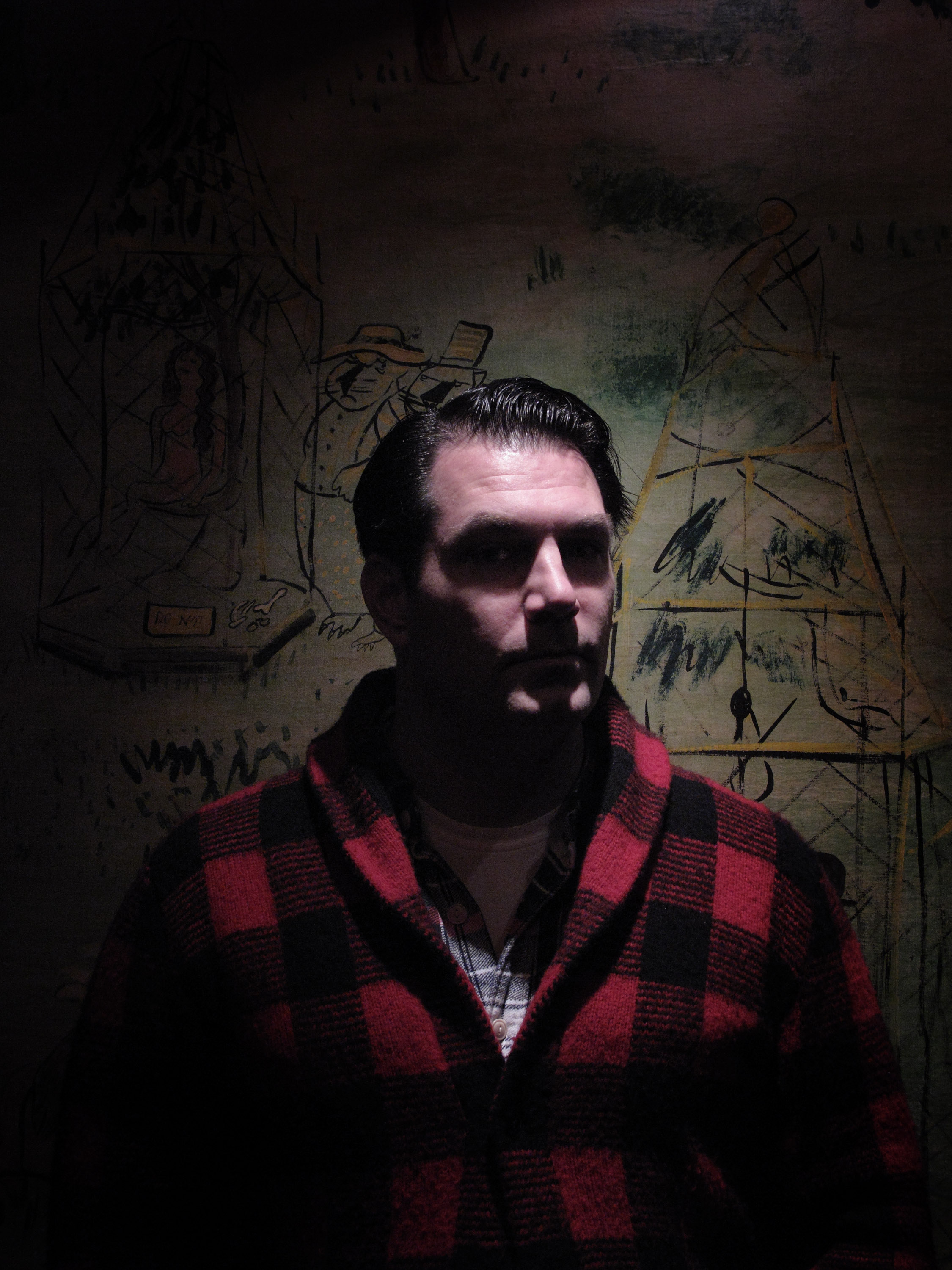
And yet, the author of these stupefying drawings is alive and well—David Chaim Smith [above] is a contemporary New York artist with an MFA, a publisher and (until recently) a gallery. Despite living a semi-monastic life, Smith seems eager to engage with a curious public. He has a website. He’s on Facebook. Dig a little and you’ll find a few occultist-oriented podcast interviews and accounts of public talks he’s given in the last few years around the publication of his two books—2010’s esoteric exegesis The Kabbalistic Mirror of Genesis: Commentary on Genesis 1-3 (Daat Press) and 2012’s massive art/text collection The Sacrificial Universe (Fulgur)—and a 2010 gallery show. And now, here he is on the other end of the telephone line in late January, just days after completing his new book, Blazing Dew of Stars, set for publication this springOctober 23, 2013 by Fulgur. A surprisingly garrulous fellow, Smith spoke frankly about who he is, where he comes from and how his day-to-day life and spiritual practice generates such artwork. What follows is a condensed version of our conversation.
Originally published, with additional photos, in Arthur No. 35 (August, 2013).
CHEW THE LEAVES, GET IN THE TANK Inside Baltimore’s T Hill, new kinds of experiments with Salvia divinorum are going on. Text and photography by Rjyan Kidwell
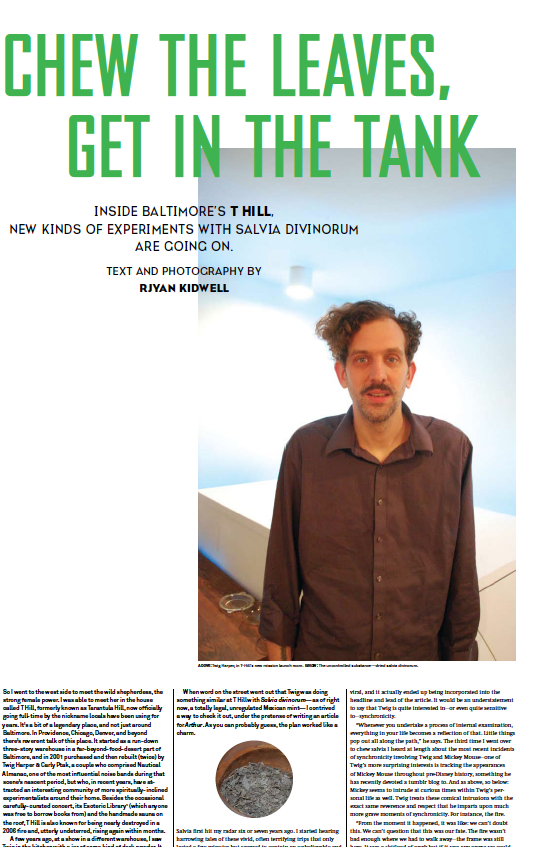
SO I went to the west side to meet the wild shepherdess, the strong female power. I was able to meet her in the house called T Hill, formerly known as Tarantula Hill, now officially going full-time by the nickname locals have been using for years. It’s a bit of a legendary place, and not just around Baltimore. In Providence, Chicago, Denver, and beyond there’s reverent talk of this place. It started as a run-down three-story warehouse in a far-beyond-food-desert part of Baltimore, and in 2001 purchased and then rebuilt (twice) by Twig Harper and Carly Ptak, a couple who comprised Nautical Almanac, one of the most influential noise bands during that scene’s nascent period, but who, in recent years, have attracted an interesting community of more spiritually-inclined experimentalists around their home. Besides the occasional carefully-curated concert, its Esoteric Library [see Endnote 1] (which anyone was free to borrow books from) and the handmade sauna on the roof, T Hill is also known for being nearly destroyed in a 2006 fire and, utterly undeterred, rising again within months.
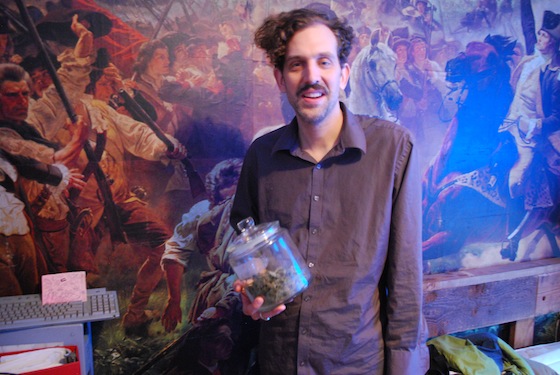
A few years ago, at a show in a different warehouse, I saw Twig [pictured above] in the kitchen with a jar of some kind of dark powder. It turned out to be something called yopo and he was inviting people to try it. Two at a time excited volunteers would sit down beside each other on a couch and inhale the powder. Then, for about five minutes or so, they would be enter some kind of pre-verbal (post-verbal?) state, utterly unresponsive to any attempt by others to communicate with them, interacting with something else none of us could see, but without leaving their seat. Moreover, these reactions seemed unique to each volunteer. I saw two of my friends sit down together—one of them, who I often refer to behind his back as Lord Byron, writhed and contorted as if he were riding an rusty rollercoaster after downing a liter of worms. The other guy barely moved at all, but giggled and smirked adorably, watching something that seemed to be hovering at eye level a few feet in front of him. I’d never seen either of them behave in a way anything like those naked exaggerations of their core personalities. I was impressed. Twig observed everything that happened in an amused but careful way and listened as everybody explained their perspective of the experience afterwards. His genuine curiosity about each person’s trip was clear. Personally, I was way too scared of what strange secret I might myself betray in that strange five minutes, so I didn’t step up to the couch. I’ve always regretted that decision.
When word on the street went out that Twig was doing something similar at T Hill with Salvia divinorum—as of right now, a totally legal, unregulated Mexican mint—I contrived a way to check it out, under the pretense of writing an article for Arthur. As you can probably guess, the plan worked like a charm.
THE BIOPHONIC MAN Guitarist, composer and analog synthesizer pioneer BERNIE KRAUSE left the recording studio to find that really wild sound. What he discovered was far more profound. by Jay Babcock Illustrations by Kevin Hooyman
“…The entity’s life will be tempered with song, music, those things having to do with nature.” — Edgar Cayce, the 20th-century American psychic, from a ‘life reading’ given when Bernie Krause was six weeks old, as reported in Krause’s Notes From the Wild (Ellipsis Arts, 1996)
Has any single person—any entity—ever been better situated to explore music’s Biggest Questions—that is: what is it, what’s it for, why do we like it, where did it come from, why does it sound the way it does—than Bernie Krause?
Check the biography. Born in 1938, Krause grew up a violin-playing prodigy with poor eyesight in post-World War II Detroit. By his teens he had switched to guitar and was making extra money sitting in as a session player at Motown. In 1963, he took over the Pete Seeger position in foundational modern American folk band The Weavers for what would be their final year of performances. He then moved west to study at Mills College, where avant garde composers Stockhausen and Pauline Oliveros were in residence. Soon he encountered jazz musician and inventive early analog synth player Paul Beaver, who was introducing the Moog to psychedelic pop music. They formed Beaver & Krause, an in-demand artistic partnership that released a string of utterly unclassifiable acoustic-electronic albums in addition to doing studio work with adventurous pop musicians (The Doors, George Harrison, Stevie Wonder, etc.) and composing and recording for stylish TV and film projects (The Twilight Zone, Rosemary’s Baby, Performance, etc.). After Beaver’s sudden death in 1975, Krause began to shift his attention towards field recordings of natural soundscapes.
This wasn’t such a great leap. In the late ‘60s, inspired by an idea from their friend Van Dyke Parks, Beaver and Krause had first tried to record outdoor sounds for use on their eco-musical album In a Wild Sanctuary. Now, Krause followed this thread more intensely, traveling to seemingly every far corner of the globe, innovating techniques and utilizing new technology to more accurately capture the sound of what’s left of Earth’s rapidly diminishing wild.
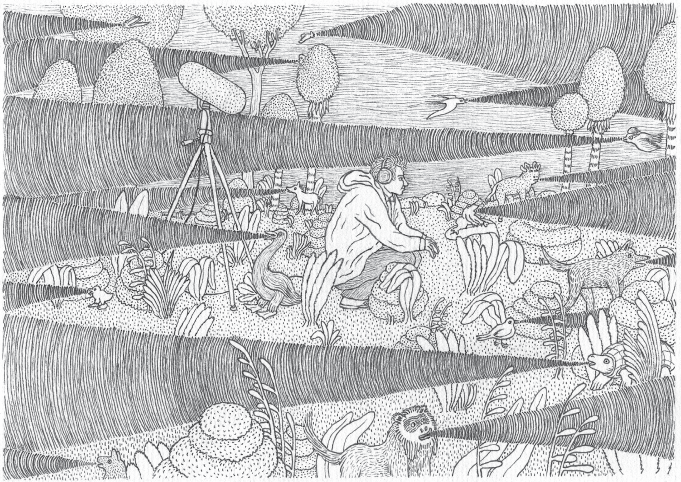
What Krause discovered there, and how it compares to what we now experience in daily life in the un-Wild, is the subject of his latest book, The Great Animal Orchestra: Finding the Origins of Music in the World’s Wild Places, published last year. Writing with a scientist’s precision, an artist’s poetic wonder and a human being’s persistent outrage, Krause tosses in astonishing highlights from decades of field notes (elk in the American West are into reverb; the sound of corn growing is “staccato-like clicks and squeaks…like rubbing dry hands across the surface of a party balloon”; ants sing by rubbing their legs across their abdomens; the fingernail-sized Pacific tree frog can be heard more than a hundred yards away; “You can actually determine the temperature by counting the number of chirps made by certain crickets”; etc.) as he make several interweaving arguments about the aforementioned Big Questions of Music. One thesis is that the sound of animals in a healthy habitat is organized, a sort of proto-orchestra. What follows from this is the startling argument that gives the book its title: our music comes from early humans mimicking the sounds of the soundscapes they were enveloped in—we “transform(ed) the rhythms of sound and motion in the natural world into music and dance… [O]ur songs emulate the piping, percussion, trumpeting, polyphony, and complex rhythmic output of the animals in the place we lived.” And we developed our music(s) not just by imitating animals such as the common potoo, who sings the pentatonic scale, but also by mimicking other natural sounds: in one of the book’s most striking episodes, Krause recalls hearing the church organ-like sound of wind passing over broken reeds in Lake Wallowa in northeastern Oregon. “Now you know where we got our music,” a Nez Perce tribal elder tells him. “And that’s where you got yours, too.”
This past spring, I interviewed the entity Bernie Krause via the far-from-ideal set-up of two speaker phones. Ah well. Following is some of our conversation, condensed by me, and edited with additional thoughts by Bernie via subsequent emails.
WHAT THE SUFIS TAUGHT ME Swap-O-Rama Rama founder Wendy Jehanara Tremayne wanted to understand what motivated her life-long anti-consumerism. She found the answer underground…
As surely as we inhabit the environment, the environment inhabits us. — Pir Zia Inayat-Khan
I kept the rubber breathing tube clutched firmly between my front teeth. I probed it with my tongue to make sure that a small movement would not separate me from it. What if a bug above ground crawls in? I’ll have to blow it out. . . or eat the critter.
I didn’t know if I could get out of my earthen grave. The weight of the earth above my naked body prevented me from taking a full breath. When I inhaled, the earth pushed back on my lungs, informing me of my limited capacity. I took small sips of air and imagined the winter woods above as the cold came through the narrow plastic tube. In 30 minutes my partner, Isfandarmudh (“angel of the earth” in Persian), would dig me out of the grave. Then I would bury her.
I turned my attention away from the fear of things that could go wrong. I relaxed my active mind with a long, slow exhale, imagining my skin fading into the earth that pressed against it.
My bones, teeth, and nails conversed with the minerals in the stones and tectonic plates of the earth. The heat in my body reached out to find the molten core of the underworld. I wondered if the bugs that crawled behind one of my ears, under my arm, around the top of a fingertip, and all along my body were taking in moisture from the thin layer of perspiration on my surface. I felt something behind my knee.
I am made mostly of water, I thought as I considered the geothermal waters that filled veins in the earth and made up most of my body, the rain that poured from dark cumulonimbus clouds and saturated the ground from which I myself drank. There is one water on earth, I reminded myself.
From head to toe I felt life wiggle and walk. Don’t panic, Jehanara. This was my new Sufi name. This is what it feels like to host life. Giving up fear to the forces of gravity and the magnetic fields that banded the planet, I knew that I could never overwhelm the massive systems with my worry. I felt no different from a tangled root or a wedge of clay. The grave smelled like mildew and growth.
It was good to be the earth. I reviewed a long history: a singularity split in two, gaseous explosions, a hot lava-covered sphere of volcanic eruptions and shifting plates, a cooler water world, a single cell advancing to more complex organisms: fish, bird, mammal. I was curious. What next?
Life’s lust is life, I thought as I considered that life’s persistence over billions of years has led to me. I felt obliged to use my senses so that this life could know itself.
The feeling of earth that pressed against me from every direction changed my view. I imagined it as a hug. You are loved. That’s what the Sufi teachers said to do if I ever forgot that I was loved: Feel the tug of gravity. In this moment death did not feel definitive. My sense of self expanded to include all time. I remembered the words that I had read in that little book written by a Sufi. Nature is the truest book. The sound of a metal shovel breaking through the ground above me brought me back. I hope she doesn’t hit me with that!
* * *
Sometime in the mid-’90s I was thumbing through a book by Idries Shah when I noticed a reference to the Freemasons. Shah called them a bastard sect of the Sufis. That got my attention because I had been exploring the occult, and was particularly attracted to the Masons due to their tendency to keep secrets.
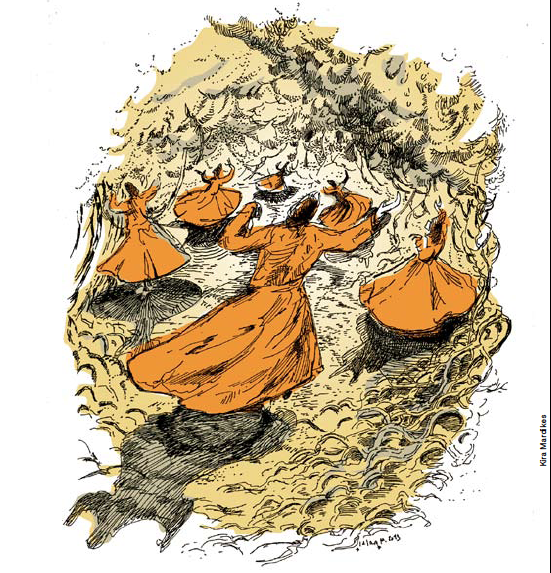
I ended up loving Shah’s book (The Sufis, 1971) because it told what a Sufi is by telling what a Sufi isn’t. As I read, I sensed that there was more available in the text than what I was able to read, a code hidden. I was intrigued. Soon I discovered that many Sufi texts are coded — some can be read on as many as seven levels. The level a reader perceives is a match to his or her own tuning, which may change. In this way the writings of Sufis are like barometers.
Originally published in Arthur No. 35 (August, 2013)
“Everything we grow, we touch”: Norm Fetter and Heather McMonnies-Fetter (plus special helper) of Woodland Jewel Mushrooms
THEY’RE MEDICINAL! Text and photography by Camilla Padgitt-Coles
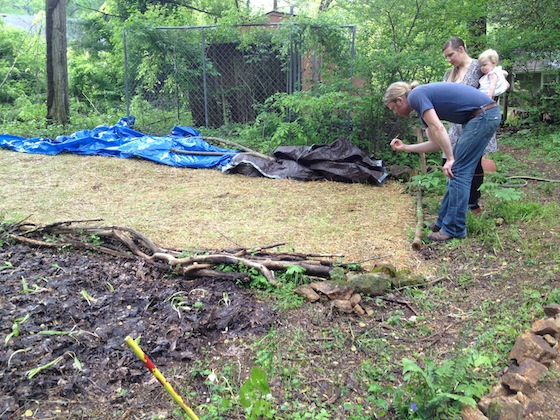
I first met Norm Fetter and Heather McMonnies-Fetter a few years ago in their backyard in Philadelphia’s Fishtown neighborhood. We had an outdoor meal with ingredients the couple had grown in their abundant garden, which was overflowing with vines and healthy-looking edible plants. At the time, Norm also had a recording studio set up in their row house and was making music under the alias Enumclaw—think Klaus Schulze’s Crystal Motion or Ricochet-era Tangerine Dream, but with a warmer, more serene and optimistic overtone. Since then, the couple have moved out to the countryside of Pennsylvania, had two adorable kids, begun construction of their family farm and opened a business, Woodland Jewel Mushrooms.
Late this past spring, I took a train out from New York to interview them for Arthur, listening to Enumclaw’s Opening of the Dawn album on my headphones.
The window scenery changed from buildings to rolling hills and open skies, the sparkling synthesizer soundscapes falling like a calming mist. Heather picked me up from the station in her car with three-year-old Leif in the backseat, and told me the story of how she had given birth to their second child, Cymbeline (named after the Pink Floyd song), in that same backseat as they were en route to the hospital the year before. After arriving at the farm we ate a lunch of delicious oyster mushroom soup and quinoa-oyster mushroom burgers, then headed up to the barn, where I spoke with Norm about what they’re up to…
Norm’s hand holds a bagful of golden oyster mushrooms.
Arthur: When you moved out here did you know you were going to be farming mushrooms? Norm Fetter: We knew we wanted to do something. We had already decided to radically change our lifestyle by moving out here and having kids. But we weren’t quite sure what it was gonna be, yet. Heather had been working at the art museum in Philly and I had been doing freelance construction and carpentry. Luckily, shortly after we moved out here, we met a couple that have a really successful microgreens business, and they were super influential. They kind of took us under their wing and really got our confidence up. We had been growing mushrooms on a hobby scale at home for a couple years, but had never really considered making the jump to actually trying to do it as a livelihood. But these guys were like, “Yeah, we did it, we started with a small greenhouse in our backyard and now have a 35 by 120 foot long greenhouse.” (laughs) They were super-influential. And they helped us get into the restaurant scene in Philly and start meeting chefs. If it weren’t for them, it would’ve taken us a lot longer to get up and running.
Do you have a science background, or how did you get into farming this way? Through mushrooms, really. We just started growing them at home. Just occasionally, in our row house in Philly, just for friends.
What kinds did you start with? Oysters and Shiitake. When we expand, that’ll include a lot more: Maiitake, Lion’s Mane, Pioppino. But there are so many huge mushroom farms down in Kennett Square, which is about 40 miles south of us. That’s actually considered the mushroom capital of the world. I think 60-70% of all the mushrooms produced in the country come from this one town. That’s why we were on the fence forever, we were like, “Do we really wanna start an independent mushroom farm 40 miles from the biggest corporate mushroom center in the world?” But the more we looked into it, it turned out, as you can assume, those huge farms go through big distributors, the stuff sits in warehouses, and by the time it gets into the hands of chefs, it’s wilted. So we decided to focus on certain varieties that they don’t necessarily grow that much, and deal directly with chefs, and people. We try to harvest the day of delivery or the day before delivery, so by the time they’re in your hands you can’t get them any fresher. And they’re super perishable, they don’t have really a great shelf life anyway. We’ve been able to find a niche of people who really wanna deal with a smaller scale farmer. And it’s advantageous being that close to Philly, too, there are so many great restaurants in Philly. And everybody’s on the whole “eat local” vibe, so… We’re going to start doing farmers’ markets, which will be cool. It’s nice to deal with chefs, but I’m really excited to do the farmers’ market thing for the social aspect, meeting people, talking about what we’re doing, getting excited about it. Meeting other purveyors and other farmers there, too.
Illustration by Lale Westvind. “You’re going to need a good orange or pink leather jacket and a helmet with a Mohawk sewn into it. People think motorcyclists wear this stuff because they are dicks. Not at all. Motorcycle people dress like assholes in order to be noticed. The rider wants you to hate him, because not being seen on a motorcycle is to risk being invisible forever more.”
If ever the world gets to be too much there’s nothing like a good near-death experience to cheer you up. I know this because I got one parked in the driveway.
It’s called a motorcycle and you need to get one. Cheap insurance. Less gas. No pesky seatbelts. And those two wheels mean inherent instability, a condition familiar to readers of this magazine.
Admit it, when you’re stuck in your cage in traffic and a motorcycle enthusiast blows by on a rolling vibrator with a girl hugging onto him real tight you hate him. That’s the natural reaction of a loser when confronted with pure energy conservationalist. Despite all appearances, a stinking apehanger Harley rider and his niece risk their lives to use less gas, tires and common sense than anybody in a car. The man is hero, a conscientious objector to the oil wars. He and his ilk have the moral high ground on every liberal in his gas guzzling, slave labor-manufactured Prius.
Sure, a lot motorcyclists gang up with mean names like Mongols or Cretins or CHIPS. That’s just to cover up how much they care for the earth. I’m here to tell you from long experience that motorcycle gang members don’t waste water by showering, hardly ever even use a toilet and if they do, they never flush.
No, you cannot borrow mine. A motorcycle, like guns and heroin, can’t be lent out. This is because of the Death in it. Nobody can hold your hand to walk you into something cool as Death. Nossir, you got to walk that lonesome valley all by yourself.
So come and join the friendly world of motorcycling, a sport that you’ll enjoy for the rest of your life, however short that may be. Here are some helpful pointers to help you get the rubber on the road.
First off, don’t go running your mouth about buying a bike before you do it. Keep it hush-hush because people who love you are going to beg you not to get one. And they are going to cry. But people who love you be damned. What do they know?
Your so-called family members will fixate on the tabloid dangers of motorcycles, overlooking the myriad health benefits. For instance, there is no way to smoke while riding a motorcycle. And you can cry all you want inside your helmet and no one can see you. I know that crying isn’t really a health thing, but it was all I had.
They say that the first week you ride your bike is the most dangerous, except, of course, for your last week. Hee hee. Gallows humor is the funnest part of being a “donorcyclist.” It’s a way of coping, because it ain’t nothing nice on the street. Traffic snarls and jams. Riding safely is about making choices rapidly, any of which might be your last. Chances are that a driver will apply ketchup to a French fry while taking a left and BAM. All those right choices you made were for nothing. So, yuk it up while you can.
You’re going to need a good orange or pink leather jacket and a helmet with a Mohawk sewn into it. People think motorcyclists wear this stuff because they are dicks. Not at all. Motorcycle people dress like assholes in order to be noticed. Same thing with the loud pipes. The rider wants you to hate him, because not being seen on a motorcycle is to risk being invisible forever more. How many of my two-wheeled brethren will ride out this evening only to see the dawn in Valhalla? Not enough to stop global warming.
There’s no rhyme or reason to who gets chewed up by the road. Riders both good and bad are routinely mashed up by random winds, sexting and 16-year-olds. Nothing to be done about it except pay it forward at the blood bank.
Motorbikers develop a spiritual side because a lot of their friends are dead. As a responsible ‘cyclist you’ll learn little tricks like keeping a flask in your suit to put the fun back in the funeral. Funeral tip: never Ouija board with the widow!
The next step to becoming a motorcyclist is to decide with which brand he or she affiliates. A motorcycle is a fashion accessory, like a hat for your ass. These are some helpful guidelines as to who rides which type of asshat:
Harley Davidson- if he isn’t a dentist then there’s a 90 percent chance that he’s in need of one. Honda people – chicken hands. Triumph- soccer not football. Kawasaki- kills Armenians like Turkey. Goldwing- half a Buick. BMW guys- overserved Bloody Marys. Ducati- Catholic damage, likes to rage. Two-stroke dirt bikers- conceived in a porta jon.
When purchasing a death trap it also may behoove one to consider the reputed reliability of each manufacturer. If history is a guide, Bavarian Motor Works are proven in all terrains, as BMW’s have blitzkrieged Moscow, chewed up Tunisia and flown the English channel. Conversely, no one has ever flown a Harley Davidson airplane, anywhere.
It’s important to pick your machine carefully as you would a religion, as you’ll have to go to the Mechanic to drink shitty wine, pay obeisance and tithe one or five times a month. The first rule of fixing a motorcycle is no one can really fix a motorcycle. This means you’ll get to know your grease monkey—excuse me—Grease God, very well, and over time, you might even learn to not hate him.
Mechanics say cryptic shit, charge you more money than you thought it was possible and then take a month to look at your bike. This is normal mechanic behavior. Show no fear, make yourself bigger, advance. Make offerings. They like the good stuff in life like whippets, Jim Beam and the ravings of insane women at dawn.
After the initial bribe party, if things went well, and you are cool enough, the mechanic will begin to pretend to fix your bike. You’ll renegotiate a price. After the price is agreed upon it will go up again. Who are you to complain? The combustion chamber of a motorcycle engine burns what little lead the liberals have left us in our fuels to make a golden flame to power your steely mount. Alchemy was never cheap. Whatever you have to tell yourself to pay the money and shut up. Resistance is futile, because the second rule is all motorcycles are about to break down all the time. Here’s a hint: when finally The Mechanic works on your bike chew up a couple Adderals and spit it in his drink to help him focus.
Once you get that motorcycle going, it’s totally killer, dude. The great god Pan flutes through gaps in your helmet and teeth. A flick of the wrist truncates ten foot dividing lines to little white orbs. Which reminds you to take your pills. Or maybe you did already? You can’t remember. Anyway. Riding a motorcycle is an emotional experience and, as with all emotional experiences, it helps to be a little drunk. Sober people don’t ride down the road between cars full of people watching pornos in their headrests. That would be crazy.
As with all attempts at near death, proper dosage is key. There are a lot of factors to be considered in how many beers a person should drink in order to pilot a motorcycle safely. Also, it’s important to remember what you ate that day, and if it was laced. It’s up to you to know this stuff as a motorcycle driver because policemen won’t pull you over to give you the friendly drunk reminder ticket like they do for cars. They know that, sooner or later, drunk bikers get pulled over by the great Cop in the Sky. So, rule of thumb is drink exactly one or two drinks per hour or twenty minutes of riding.
The enormity of the danger inherent in two wheeled motorized transportation forces the motorcyler to become a student of luck, and luck is a pagan thing. So, you have to worship the Devil. Buddhism is also an alternative, due to the fact that karma doesn’t kill. It is with this axiom in mind that I do a bad deed a day: steal candy from babies, prank call old ladies, litter—anything to exploit the “karma doesn’t kill” loophole and ride my machine longer. If the good die young then I’m going to live forever.
Though Dave Reeves has been riding a motorcycle in Los Angeles for six years straight, the article he wrote this month scared him from riding anymore. Dave Reeves chickened out and bought a truck. He is a cowardly war mongerer. Dave also writes movies and is probably working on a book.









 Arthur Magazine