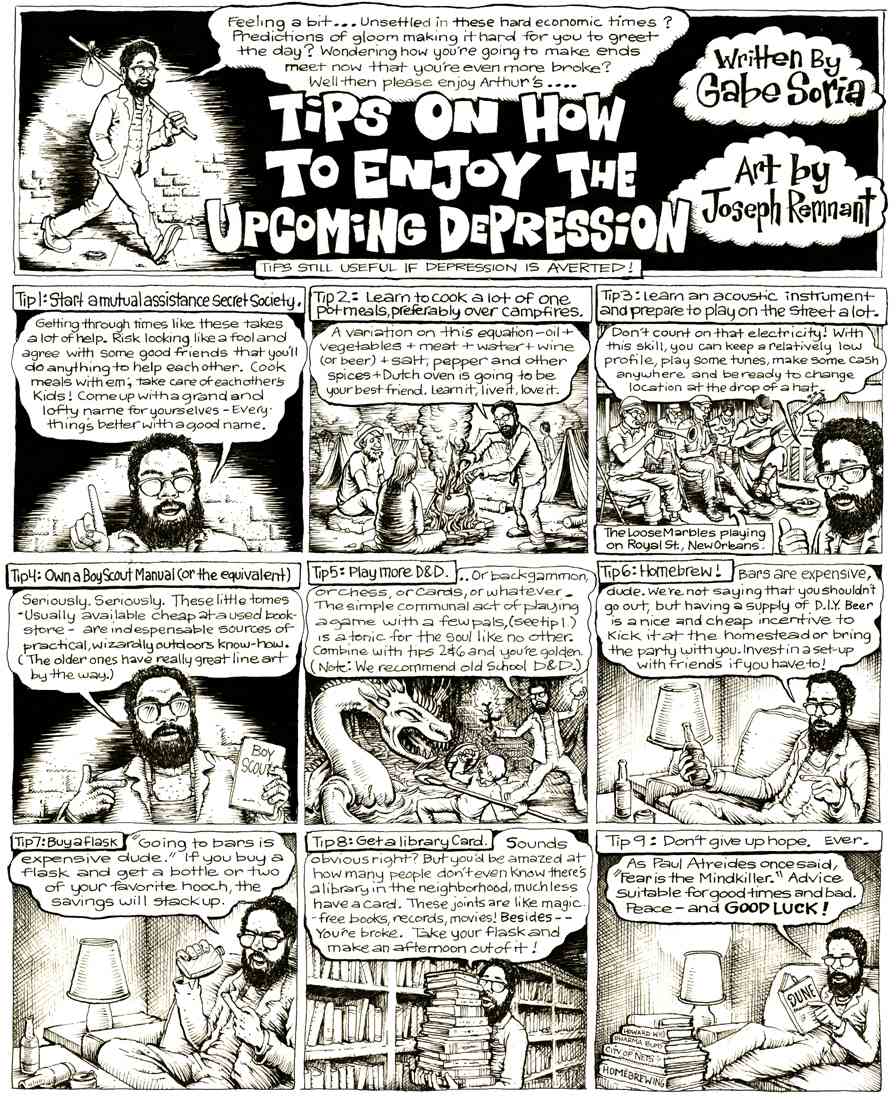
Strike March 4th California and Pre-Game Communiqué

That’s Not the Sky, That’s the Ceiling.

With the slogan We Are The Crisis, California’s public and private universities, college and community college campuses are experiencing a mass wave of radicalism and revolutionary heat unseen in like forever. With whole academic departments and unions acting in solidarity with occupiers and strikers, the planned actions for tomorrow (March 4th) are gonna be interesting to say the least.

Get hip to the goings on in your area, how you can support the struggle, and the underlying issues at stake here.

Occupy Everything

Anti-Capital Project

In the Golden State with massive public sector cutbacks all ready in effect and more looming, with privatization schemes afoot in many cities and municipalities, with contract labor unemployment and under-employment the norm, with incessant rise in fees and costs, with stagnation and cons in Washington and Sacramento, the future has all ready slipped away. Now’s the time to act.

OCCUPY EVERYTHING

ARTHUR RADIO VOYAGE #7: Alien Receptor

Another freeform blast set off from a location hidden deep inside the Newtown Radio labyrinth…sit back and allow the soundwaves to reverberate over you as the Arthur Radio team busies itself with scooping musical gems out of the debris.


Stream: [audio:http://www.arthurmag.com/magpie/wp-content/uploads/2010/03/Arthur-Radio-2-28-2010.mp3%5D

Download: Arthur Radio 2-28-2010

This week’s playlist…
Continue reading

Let's help 'em get it done…

You may remember BOB FASS, the charismatic New York City counter-culture radioman, from 2005’s Arthur No. 13 (available from Arthur Store), wherein he spoke about his role in the 1967 exorcism of the Pentagon. Or perhaps you saw him profiled by Marc Fisher in the New Yorker in December, 2006. Now, thanks to the good folks who made the great Holy Modal Rounders documentary from a couple years back, we’re about to get a full-length documentary film on Bob and his long-running “Radio Unnameable” show. But first, they need help to get the job done. Here’s where you come in…

From the “Radio Unnameable” documentary Kickstarter page

THE STORY Radio Unnameable is a documentary film about influential radio personality Bob Fass who revolutionized the FM airwaves by developing a patchwork of music, politics, comedy and reports from the street, effectively creating free form radio as we know it today. And for nearly 50 years, Fass has been heard at midnight on New York City listener-sponsored station WBAI. Radio Unnameable documents Fass’s eventful and controversial career, his involvement with some of the most gripping cultural movements of our time, while placing his story in a larger context of the struggle to keep free expression on the dial.

HOW FAR ALONG ARE WE?
We started shooting in Spring 2007 and are about to begin editing the film. Our goal is to finish by the end of 2010 then premiere at a major film festival in 2011.

WHY PLEDGE? WHAT WE NEED.
For the most part, we have been self-financing the film over the past few years. In order to meet our deadline to finish the project, we need your support…

Friday, Mar 5, W-burg 7-9pm: all-star artshow "TIME TUNNEL" curated by Pali Kashi opening at Charlie Horse

….PRESS RELEASE FOLLOWS… PRESS RELEASE FOLLOWS… PRESS RELEASE FOLLOWS…

timetunnel

film still from “One Flew Over the Cuckoo’s Nest” by Pali Kashi

Charlie Horse Gallery presents:

Time Tunnel

Curated by Pali Kashi

Mira Billotte
John Brattin
Eric Copeland
Jeff Davis
Spencer Herbst
Pali Kashi
James Kendi
Adam Marnie
Keith McCulloch
Rich Porter
Leif Ritchey
Arik Roper
Francine Spiegel
Ruby Sky Stiler

The Large Hadron Collider is the world’s largest and highest energy particle accelerator, and lies in a tunnel 175 meters beneath the Franco-Swiss border. Physicists hope that the LHC will help answer the most fundamental questions in physics, concerning the basic laws governing the deep structure of space and time.
–Brian Greene reporting for The New York Times

“Time Tunnel” proposes a collision of art-making traditions with the uncertainty of time and space. The collective unconscious is infused with ritual and mysticism, and has become dislodged and reinterpreted. The reformed amalgam of paint, wax, clay, sand, and plaster that is presented here are artifacts of this convergence. Totem poles are now made of monster masks, images of prairie women have paint splattered on them, Roman relics are fractured, sand mandalas are blurred, and our spirit animals have been unleashed into the wild.

Mira Billotte is an artist and musician (White Magic) interested in the “Music of the Spheres”; the belief that the planets of the solar system and stars beyond each create a tone in perfect harmony. Mira’s installations and sand mandalas reference transcendental rituals practiced throughout time.

John Brattin is a multi-media artist who uses sculpture, drawing, and painting to further inform his personal stories and myths which are eventually made into short films. He is currently working on a western.

Eric Copeland’s collages are visual remnants of his pondering of the moon, phallices, faces, and piles of trash. His abstracted compositions use repetition and disjunction much like the music he is known for making.

Jeff Davis’s two-dimensional work usually takes on “mysteriously ceremonial and often orgiastic configurations”. His totem-like structures are made from casting rubber halloween masks with multi-colored wax.

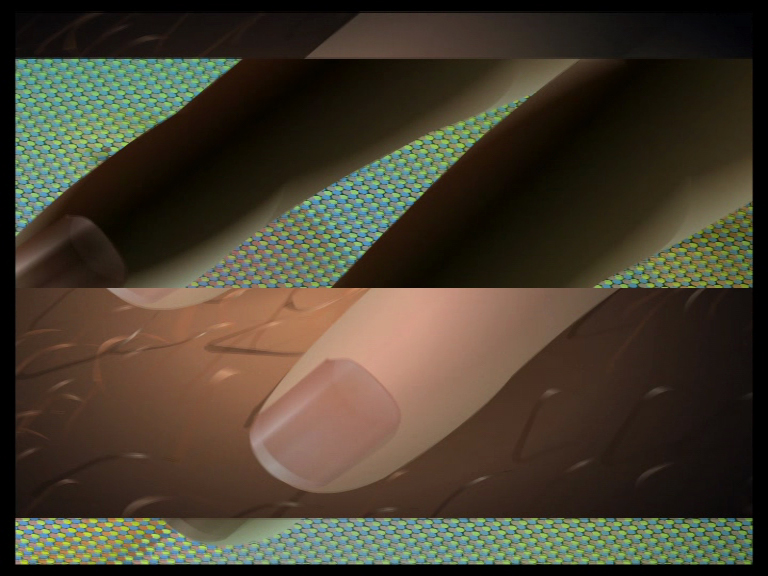
Spencer Herbst’s dadaist videos are a microscopic look into our everyday surroundings. His magnification of objects strewn about his apartment, salt crystals lying on a countertop, and wood grain in the floorboards are examined so closely that they take on an other-worldly reality.

Pali Kashi’s work presents the natural world through the power symbol of the triangle, which grants the viewer a new kind of portal into frozen moments of time.

James Kendi’s photographic process begins with asking people what their spirit animal is. He then creates a mask of that animal and photographs his subjects wearing the mask in the animal’s natural environment.

Adam Marnie is a mixed media artist interested in the sculptural presentation of images. By splicing traditional still life painting with pornography, he can sharply pierce us with flashes of flesh where we are expecting to see stems and roses.

Keith McCulloch’s watercolors meander through a maze-like interior filled with strange yet familiar apparitions.

Rich Porter depicts an array of primordial figures, focusing on the unseen molecular network between our bodies and landscape.

Leif Ritchey is an archaeologist of the sublime accumulations of his everyday surroundings. The objects he extracts from puddles near a sewer or broken glass hidden under a bush are taken back to his studio to be corralled into his futuristic vision.

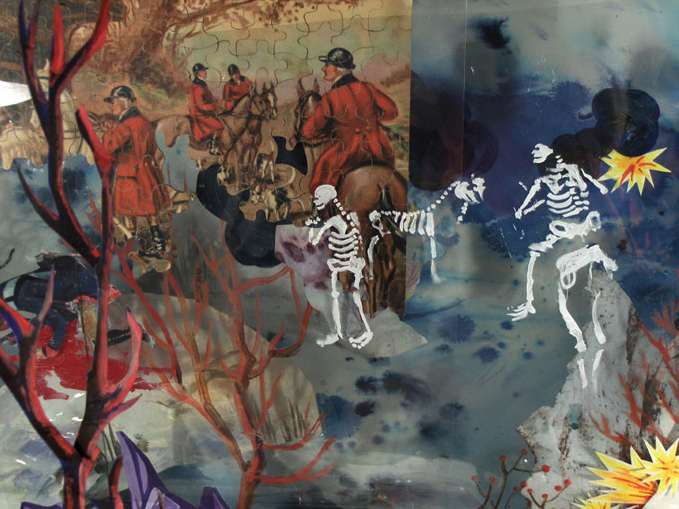
Arik Roper’s work depicts a fantastical reality filled with mythical warriors, smoky terrain, and decaying skulls. His paintings breathe life into our uncharted history.

Ruby Sky Stiler rummages the storage cellar of historical artifacts to incorporate classic iconography into the context of her own relics. Her fragmented reliefs of ancient Greek and Roman imagery question the potency of sculpting the human form.

Francine Spiegel’s performance, The Curse of the Century Old Egg, which took place at Deitch Projects this last fall, was a literal mish-mosh of the past and present. The eerie happening gathered six women together in a curious ritual of transformation. The repetition of slime-dumping and paint-slinging turned these prairie-esque women, in ruffled regalia, into monstrous beasts over the course of an hour.

Time Tunnel will be on display from March 5, 2010 – March 17, 2010
Opening reception will be from 7-9 pm on Friday, March 5, 2010
Live Performances by Mike Bones and Luke Roberts

Charlie Horse Gallery
28 Marcy Ave
between Metropolitan and Hope
Take L or G train to Union Ave stop, walk down Metropolitan Ave 3 blocks and make a right onto Marcy

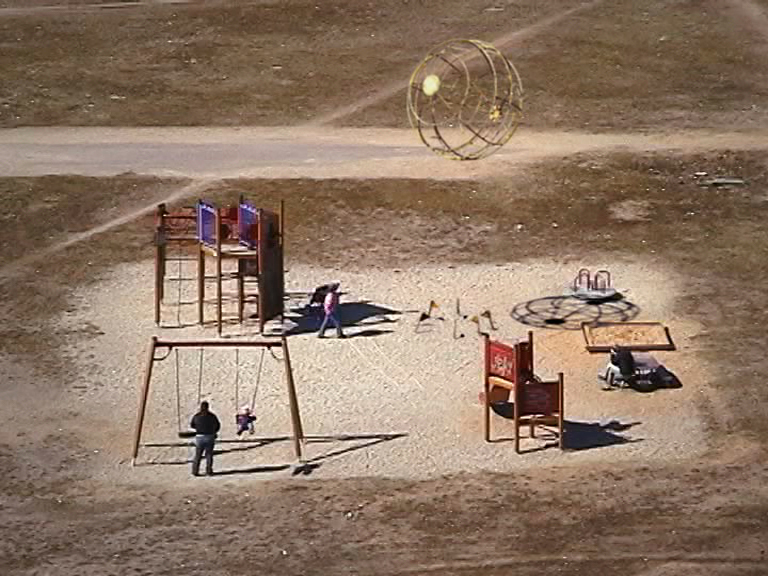
CARTUNE XPREZ 2010 – FUTURE TELEVISION TOUR

pipe

Hello cartoon friends,
This marks the beginning of CARTUNE XPREZ’s 2010 future television tour. After a wildly spiraling tour through Europe this past autumn we have returned to North America for more strange loops:
02.26 -Reno, NV – Joe Crowley Theater
02.27 -Oakland, CA – Lobot
02.28 -Los Angeles, CA – The Silent Movie Theater
03.04 -Santa Barbara, CA – Santa Barbara Contemporary Arts Forum
04.03 -Minneapolis, MN – The Soap Factory
04.07 -Chicago, IL – The Nightingale
04.10 -Syracuse, NY – Spark
04.17 -Providence, RI – AS220

This program includes work by (click on each link to see a preview of their work):
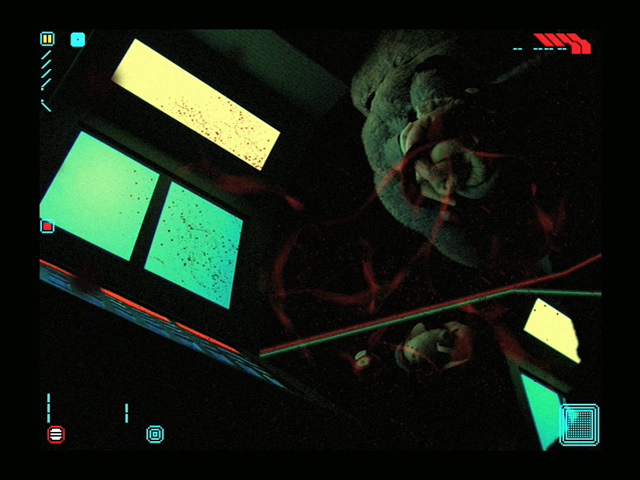
Nate Boyce
Martha Colburn
Sebastian Buerkner
Rimas Sakalauskas
Christine Gensheimer
Brandon Blommaert
Jim Trainor
Allison Schulnik
David Daniels
and others…… Adding to the spectacle, Hooliganship will be premiering a new electroluminescent stage show to frame the whole scene.

At the end of this trip I will be heading to Europe to host a series of FUTURE TELEVISION events (the details are still in a dark foggy box). Check cartunexprez.com in the near future for details, or email me! I will be returning to the USA in the mid-summer….. so look for more USA shows to come then!

xo
peter

'GWC', part 5+6 by Jesse Moynihan, now available in High Third-Eye Definition

281_gwcpage23

Get ready for more transpersonal vision and non-locality
as Jesse Moynihan’s GWC continues!
Click to read the new GWC

We are proud to announce the launch of Arthur Comics brought to you by Floating World. Stop by our new oasis, http://www.arthurmag.com/comics, for a leisurely bath in our new interactive format, an exclusive collaboration with GreenerMags / グリーナーマガジン. Enjoy the next eight pages of GWC, followed by all our previous editions in sequence. Check back soon for the full Arthur Comics archive!

About Jesse Moynihan:
Jesse Moynihan self published 2 books in 2005, and ran a strip in the Philadelphia Weekly. He’s been featured in Meathaus and Canicola anthologies. This year, Bodega put out a larger volume of his work called Follow Me. He recently collaborated with Dash Shaw on a strip that will appear in an upcoming issue of Believer Magazine.

Meanwhile Jesse has been plugging away every Thursday on his webcomic, Forming, which is a sprawling account of human origins, transgender aliens, and ripped gods.

FAKING THE MARS LANDING

from : http://spectregroup.wordpress.com/2010/02/25/faking-the-mars-landing-pt-3/

Personnel Issue : Not All Pretend Astronauts Equally Serious
http://geekosystem.com/mars-desert-research-station-mdrs/
http://gizmodo.com/5476462/fake-mars-mission-befallen-by-real-drama

“The two-week simulations, including various experiments and equipment tests, take place at the Mars Desert Research Station, located outside Hanksville, Utah. The volunteers who participate are expected to take the matter very seriously—after all, our future Mars colony depends on it. But of course, some pretend Mars astronauts are more dedicated than other pretend Mars astronauts and this is where the trouble starts. After days of snits and snubs, the tension came to a head on February 15. In that day’s report, Commander Vermeulen explains: “…The growing frustration that after 9 days PE, Nora and Margaux are still not able to manage the Hab systems/ standard engineering reporting system (and even don’t consider this as a problem!), exploded during the lunch. The lack of dedication to the mission of some people overloads the others and it had to be spoken out. The problem was already there from the first day, when it came out that some people didn’t prepare anything for the mission, didn’t look at the manuals, which were send to them months ago and didn’t even prepare the tasks for their own role. The accusation into my direction that I didn’t brief enough about the systems was too much. Nicky almost exploded. Arjan reacted double: At one hand he couldn’t stop criticising the incompetence of some others during last week, but during the discussion he acted as if he was from Barcelona (don’t know anything). He has his own mission and own world…” The Commander’s Reports for the last days of the mission, which ended yesterday, obscure the interpersonal conflicts that paralyzed the crew. Only a few bloody noses are referenced, perhaps as physical manifestations of the crew’s frustrations.”

Boredom Practice, Minus Actual Danger
http://newscientist.com/article/dn18025-whats-the-point-of-a-fake-500day-mars-mission.html

“A few aspects cannot be simulated, however. There will be no radiation exposure or zero gravity, and if there is a real emergency during the simulation, volunteers will have the right to get out at any time. A study by Peter Suedfeld of the University of British Columbia in Vancouver, Canada, argues that such experiments lack some key attributes of real long-haul space flight, such as dangerous voyages through unknown territory and the impossibility of rescue. Suedfeld concludes that mission planners would better identify the psychological stresses likely to be experienced by Mars explorers by reading the diaries of explorers on long expeditions over sea and land in previous centuries. Some behavioural scientists feel Antarctic research stations or nuclear submarines offer better analogies to prolonged space flight. But although Antarctic outposts have the necessary elements of danger, confinement and isolation, they lack the high level of automation found in space flight. Nuclear submarine control rooms are more like spacecraft, but military secrecy puts them off limits for academic research. A better model may be the experience of astronauts aboard space stations orbiting Earth. Their stays have lasted up to 438 days. By and large, space station missions have gone without incident. However, NASA astronauts on a three-month mission to Skylab in 1973 went on strike for a day saying they felt overworked and unsupported by their ground crew. In 1982, two Soviet cosmonauts spent most of a 211-day flight in silence because they got on each other’s nerves. Three years later, a six-month Soviet mission was cut short when a cosmonaut had a nervous breakdown. Sexual harassment could also endanger a mission. In an eight-month space station simulation in 2000, a man twice tried to kiss a woman against her will. As a result, locks were installed between different crew compartments. Astronauts in orbit often express feelings of neglect by ground crews, in part because of lags in communication and perhaps also because of a need by astronauts to take out their frustrations on others. As a result, ground crews as well as astronauts now receive psychological training.”

Alone Time
http://newscientist.com/article/mg18925421.400-in-space-no-one-can-hear-you-scream.html
In space no one else can hear you scream at each other

“You and your fellow inmates are bound to have survived some hair-raising, potentially fatal crises, and everyone’s nerves will be in tatters. The pilot won’t talk to the engineer. And if that geologist looks at you and rolls his eyes one more time, you’ll punch his lights out. Despite the exciting goals, a crewed mission to Mars would mean enormous psychological stress. The centrepiece of each station in the Utah desert and in the outback in Southern Australia, is an 8-metre-wide cylindrical habitat, or hab. Crews of four to six live and work as if they were on Mars, testing reconnaissance robots and collecting rocks in mock spacesuits. During Eggins’s studies, the volunteers completed questionnaires to assess their interactions with others. This revealed that people tend to cluster into cliques that often put their own goals ahead of the whole mission’s objectives. This led to a mishap in a Utah simulation in 2003, when the group split into three teams. One stayed in the hab, and two went out on separate rover trips, returning at about the same time. One person in the second rover damaged his helmet and was theoretically leaking oxygen. “It was obvious to everybody that in theory, if this was really Mars, then this guy would die,” says Eggins. However, the first team insisted on getting into the hab first and told the others to wait their turn, she says: “The first team were not thinking at all in terms of the overall goal of the mission, just of their own rights and the distinct subgroup.” In another Utah simulation last summer, Eggins’s colleague Sheryl Bishop of the University of Texas in Galveston studied the differences between an all-male crew, who lived in the hab for two weeks, and an all-female crew who moved in for the following fortnight. Both teams performed well and were very productive, but they did differ. Personality surveys showed that several of the men scored low on “agreeableness” and “conscientiousness”, and the group’s behaviour echoed this. Every night, the women filed daily reports to mission control by the agreed time. But the men were persistently late. They said they preferred to use the time to explore outside on the buggies.”

Volunteering Not To Leave Earth
http://newscientist.com/article/dn9770

“More than 70 people have volunteered to be confined in a mock mission to Mars – for 520 days. It would be the longest simulation of its kind. The Institute of Medical and Biological Problems (IMBP) in Russia is undertaking the isolation study to learn more about the personal dynamics of long-duration space travel, according to Russian media reports. An actual round-trip mission to Mars could last about 30 months – about twice as long as this simulation. Five people will be eventually be selected for the study. They will spend 250 days on a simulated space trip to Mars. Then, three of the five will leave the mock spaceship for a simulated “landing on Mars” that will last 30 days. The five participants will then embark on a 240-day journey “back to Earth”. They will communicate with mission control by email. The simulations lack some of the appeal that draws people to spaceflight, so researchers may end up studying a different group of people than those who would actually fly on a space mission, he says. The IMBP has tried to minimise this issue by using cosmonauts and astronaut candidates in the past. And they are giving preference in this simulation to applicants who are doctors, biologists and engineers between the ages of 25 and 50. But Musson says a long-duration space mission may take a different type of astronaut than those who go on shorter trips to space. He points out that on the International Space Station and on Russia’s former Mir space station, some of the go-getter astronauts with multiple academic degrees found themselves bored by some of the mundane tasks onboard. Musson says someone with a more laidback personality might be better suited for a long-duration mission to Mars.”

Previously On Spectre :
Faking The Mars Landing
http://spectregroup.wordpress.com/2007/04/24/faking-the-mars-landing/
Faking The Mars Landing, pt 2
http://spectregroup.wordpress.com/2007/07/24/faking-the-mars-landing-pt-2/